
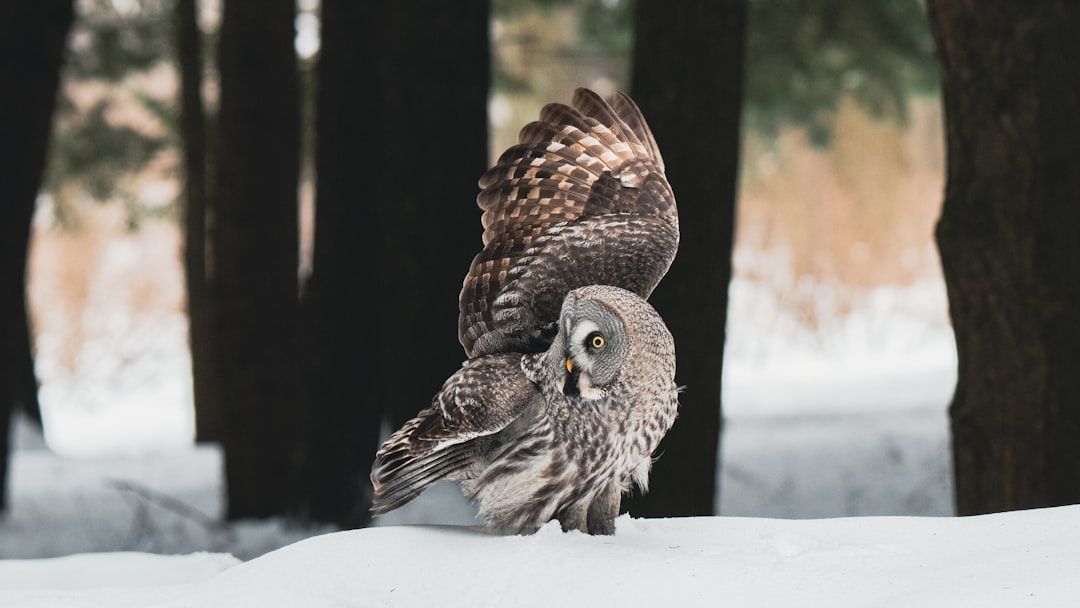
There’s something deeply unsettling, in the best possible way, about watching an owl slowly rotate its head to stare directly behind itself. It looks like something out of a horror film. Honestly, the first time most people really see it up close, there’s a moment of genuine disbelief. Did that bird just do that?
What makes this even more fascinating is that the science behind it took researchers decades to fully unravel. There’s a whole hidden world inside that feathered neck, a kind of biological engineering so clever it leaves scientists genuinely impressed. Let’s dive in.
The 270-Degree Myth vs. the 270-Degree Reality
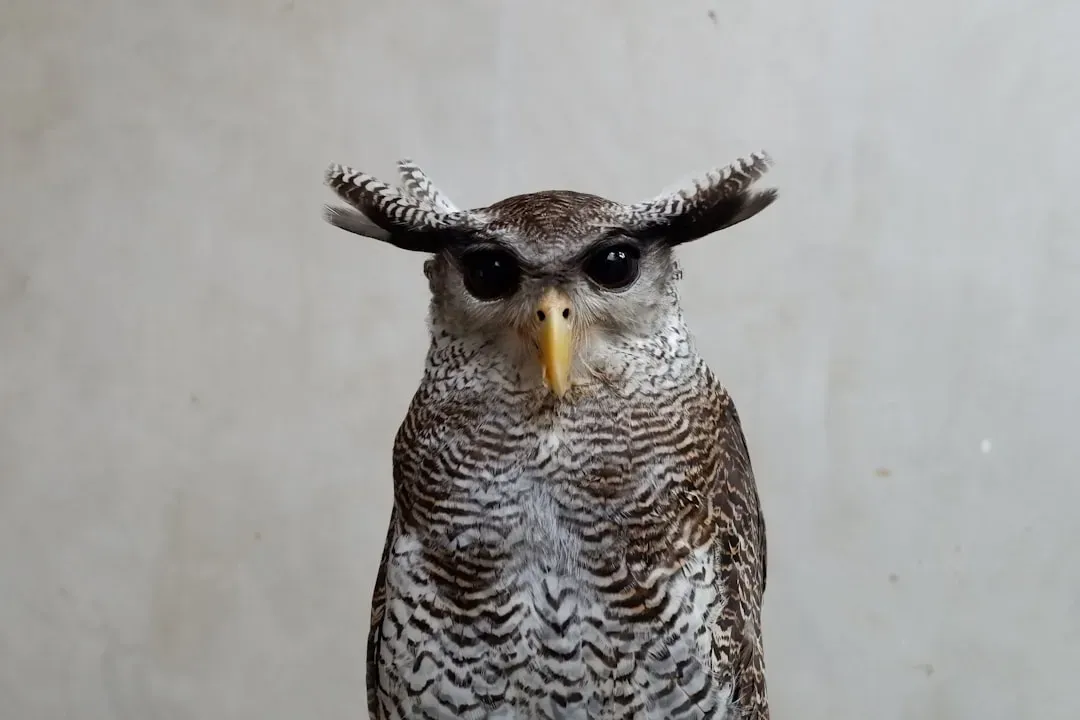
Here’s the thing, most people assume owls can spin their heads in a full circle, like a wheel on an axle. It’s one of the most common myths in popular wildlife knowledge. The idea that owls can turn their heads a full 360 degrees is a common misconception.
The reality, however, is still jaw-dropping. Owls can rotate their necks a maximum of 270 degrees without breaking blood vessels or tearing tendons. That is three quarters of a full rotation. To put that in perspective, imagine being able to look almost directly behind you from a forward-facing position, without moving your shoulders even slightly.
Many owl species are capable of turning their heads 270 degrees in either direction, meaning they can look to the left by rotating all the way to the right, or vice versa. It’s a trick that seems to defy the limits of biology. Yet, it’s entirely real, and the anatomy behind it is even more remarkable than the spectacle itself.
Why Owls Can’t Simply Move Their Eyes Instead
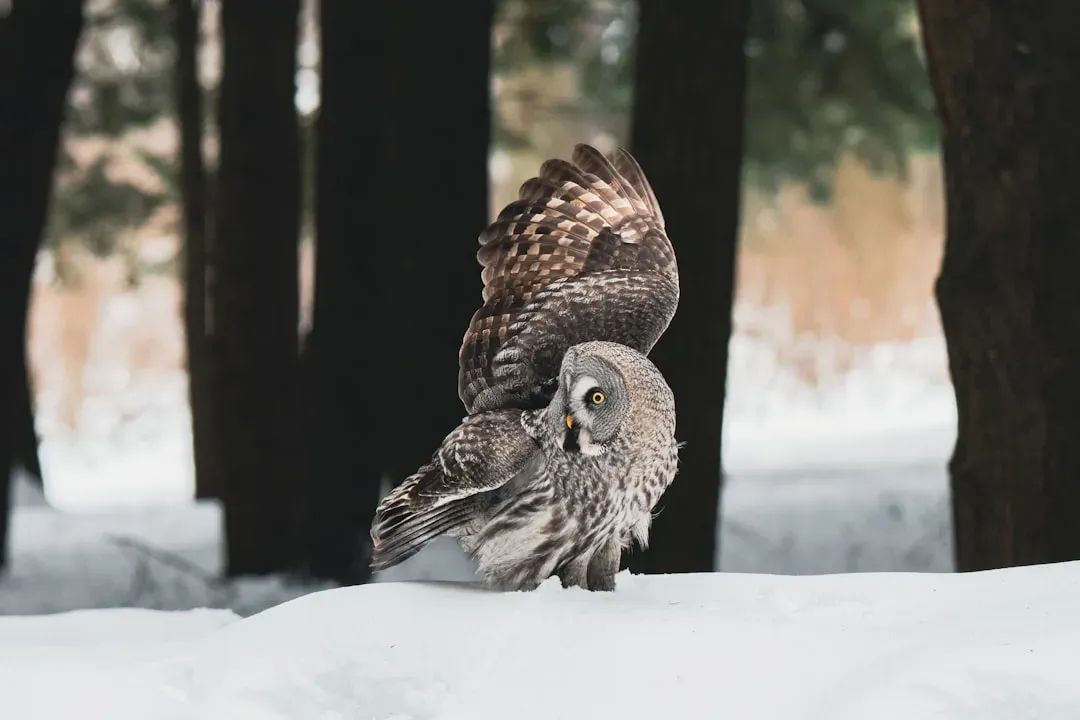
Before you wonder why owls don’t just use their eyes the way we do, there’s a crucial reason they can’t. An owl’s eyes are held in place by bony structures called sclerotic rings, and because they lack eye muscles, they can only look straight ahead. Think of them like two fixed telescopes, extraordinary at focusing, but completely locked in position.
Owls only have a field of vision of around 110 degrees, and their field of vision is compromised by the fact that they cannot move their eyes. That’s significantly less visual coverage than humans have without even turning our heads. So for an owl, rotating the entire head isn’t a party trick. It’s an absolute survival necessity.
To compensate for their lack of eye movement, owls are able to move their entire heads instead, and they also turn their heads to triangulate sounds, helping them identify the sounds of prey. The head rotation is essentially doing the job of both eyes and ears simultaneously. It’s multitasking at its most elegant, really.
Twice the Vertebrae, Twice the Freedom
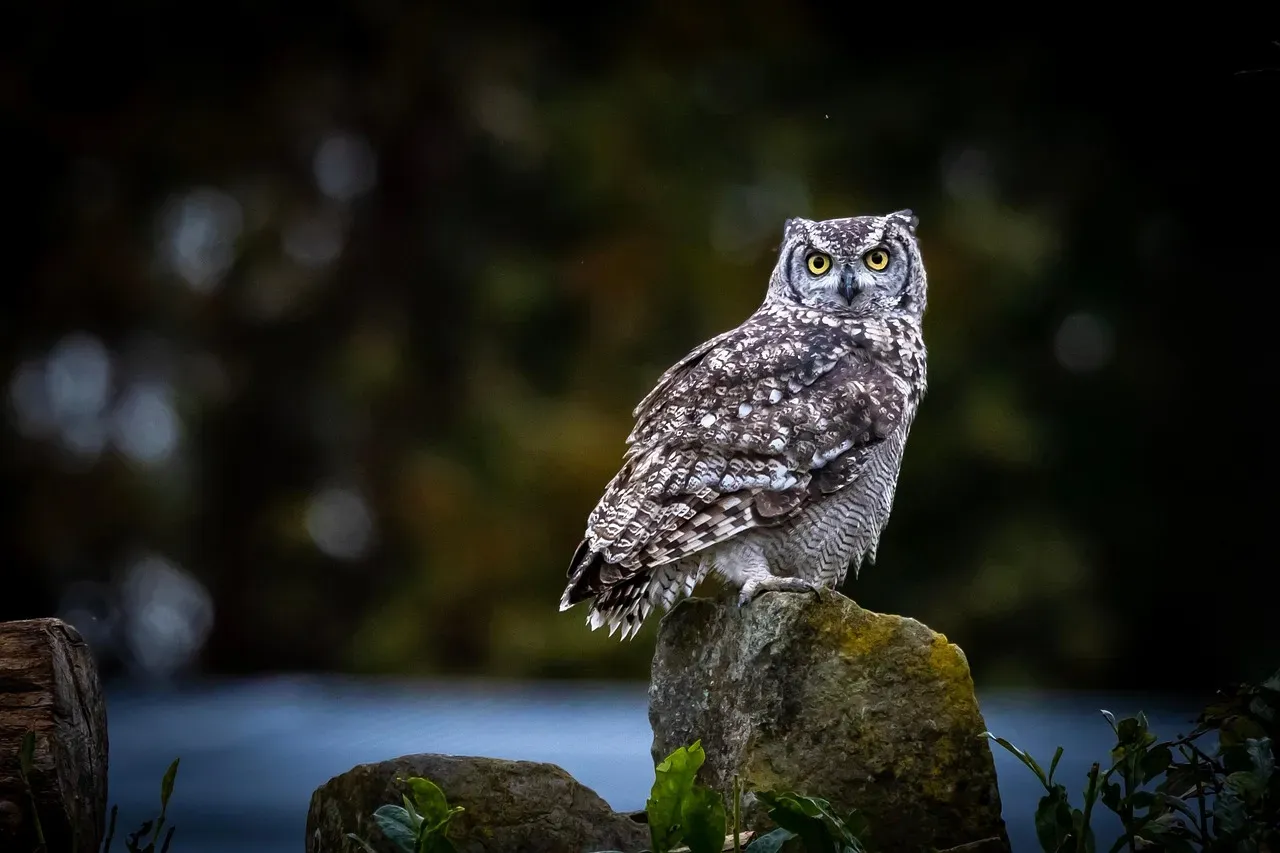
Now we get into the real anatomy. One of the most fundamental differences between an owl’s neck and a human’s is sheer bone count. Humans are limited to only 180 degrees of rotation because we have seven cervical vertebrae in our neck, while owls have 14 cervical vertebrae, which gives them far more range of motion. That’s literally double the building blocks of flexibility.
More vertebrae means more individual joints, and more joints means the rotation load gets distributed across a much larger structure. Think of it like bending a long garden hose versus a short, stiff pipe. The hose wins every time. The upper joints mainly perform yaw movements, especially in the second half of large head rotations, while the lower joints show roll movements, mainly at the beginning of large head rotations.
This coordinated division of labor across the cervical spine is genuinely elegant. The neck doesn’t just twist as one unit. It moves in a precisely choreographed sequence, with different regions handling different types of motion. The analyses suggest a functional division of the cervical spine into several regions, with the upper region showing high rolling and yawing capabilities.
The Oversized Bone Holes That Protect the Arteries
Here’s where it gets seriously impressive, almost hard to believe. Inside the owl’s vertebrae are bony channels through which the major arteries pass. In most animals, including us, these channels fit snugly around the arteries. In owls, it’s an entirely different story. The owls’ neck bones, or vertebrae, contain holes that are much larger than those found in other birds or humans. In humans, the hole in the vertebra is about the same size as the artery, but in owls the hole is about 10 times larger than the artery.
Ten times larger. That’s not a minor variation. That’s a completely different design philosophy. The extra space in the transverse foraminae creates a set of cushioning air pockets that allow the artery to move around when twisted, and twelve of the 14 cervical vertebrae in the owl’s neck were found to have this adaptation.
So when the head swings dramatically to one side, the arteries don’t get pinched or torn. They simply glide within their oversized channels, cushioned by air, like a ball bearing in a very generous socket. Those two features make it less likely that bone will collide with delicate tissue and injure it. Simple in concept, extraordinary in execution.
Blood Reservoirs and the Brain’s Secret Supply
Preventing torn arteries is only half the problem. The other challenge is keeping the brain supplied with blood even when vessels get partially compressed during extreme rotation. This is where the owl’s vascular system does something truly unlike almost any other animal on the planet. Unlike a human whose arteries tend to get smaller and smaller as they branch out, the owl’s blood vessels at the base of the head get larger and larger so that blood reservoirs form, allowing the owl to meet the energy needs of their large brains and eyes while they rotate their heads.
Researchers at Johns Hopkins discovered this through a genuinely clever experiment. When researchers injected dye into the owls’ arteries to mimic blood flow and then manually turned the birds’ heads, blood vessels at the base of the owls’ heads, just below the jawbone, kept expanding as more of the dye flowed in, eventually pooling into tiny reservoirs. It’s like a biological backup battery for the brain.
There’s yet another safety net layered on top of that. Small vessel connections between the carotid and vertebral arteries, not usually seen in adult humans, allow blood to be exchanged between the two blood vessels, and these so-called anastomoses allow for uninterrupted blood flow to the brain, even if one route is blocked during extreme neck rotation. It’s redundancy built right into the biology. Quite brilliant, if you think about it.
What This Means for Humans and Medical Science
It’s easy to just marvel at owls and move on. But this research has genuine implications for human medicine. If humans attempted to turn their heads as quickly or as far as owls do, artery linings would tear, causing blood clots to form and potentially leading to a stroke, not to mention broken necks. In fact, this kind of injury isn’t just theoretical for humans.
People have torn their neck arteries riding roller coasters, doing yoga, going to the chiropractor, or being rear-ended in a car, even leaning back for a beauty-parlor shampoo. Those are everyday situations, nothing like what an owl does. Yet they can cause strokes. The contrast is sobering.
The mechanics of owl neck rotation have been the subject of fascinating scientific research, and in 2013, scientists at Johns Hopkins University conducted groundbreaking studies using imaging technology on owl cadavers to understand how these birds achieve their remarkable neck flexibility without injury. The insights from those studies have helped neurologists better understand vascular fragility in the human neck. In a sense, the owl became an unlikely teacher of human medicine.
Conclusion
The owl’s head rotation isn’t just a cool wildlife curiosity. It’s the product of millions of years of evolutionary engineering, where bone structure, vascular design, and neurological need all converged into one seamless, silent, spectacular adaptation. Every component, from the oversized bony canals to the blood reservoirs at the base of the skull, serves a precise purpose.
I think what’s most remarkable here isn’t that owls can do this. It’s that for so long, no one fully understood how. Brain imaging specialists who deal with human injuries caused by trauma to arteries in the head and neck had always been puzzled as to why rapid, twisting head movements did not leave thousands of owls lying dead on the forest floor from stroke. The answer, when it finally came, was elegant in every detail.
The owl, that ancient symbol of wisdom, turns out to be even wiser than we imagined, at least anatomically. Next time you see one rotate its head in that slow, deliberate arc, you’ll know you’re not just watching a bird look around. You’re watching one of nature’s most intricate biological feats in real time. What other secrets do you think nature is still hiding in plain sight?
