
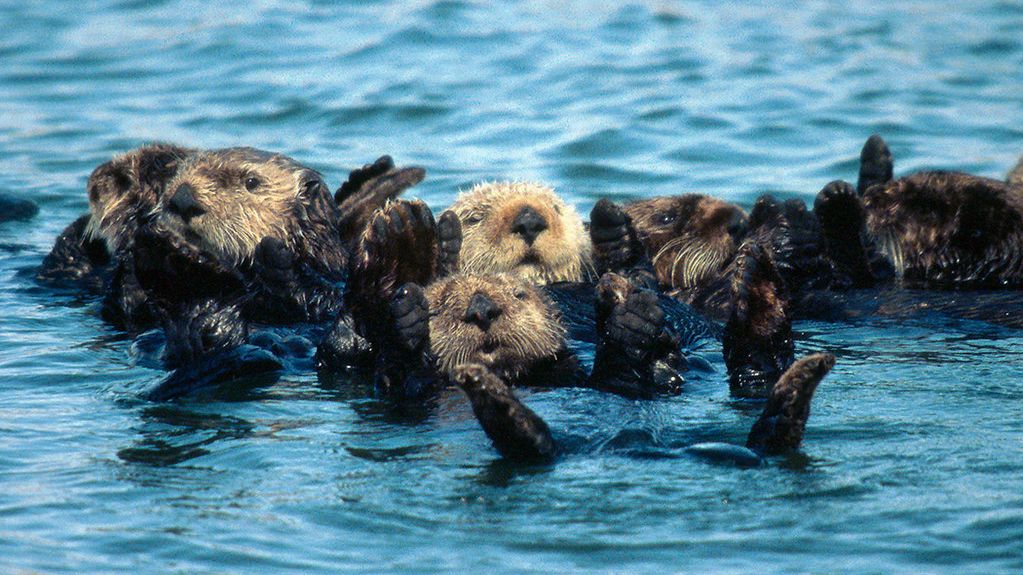
Picture this: two small, fluffy creatures bobbing gently on the surface of the Pacific Ocean, paws interlocked, eyes closed, completely at peace. It’s one of the most endearing sights in the entire animal kingdom. Sea otters holding hands while they sleep has melted millions of hearts across the internet, spawned viral videos, and turned these marine mammals into global icons of cuteness.
But here’s the thing. The real story behind this behavior is far more fascinating than a simple act of affection. There’s survival, strategy, family loyalty, and clever ocean navigation all packed into one tiny clasped paw. So before you assume it’s just the ocean’s version of a romantic gesture, prepare to be surprised. Let’s dive in.
The Ocean Current Is the Real Villain Here
Honestly, the most straightforward answer to this whole mystery is also the most overlooked one. The ocean is constantly moving. Even in calm, sheltered waters near the coastline, currents never truly stop.
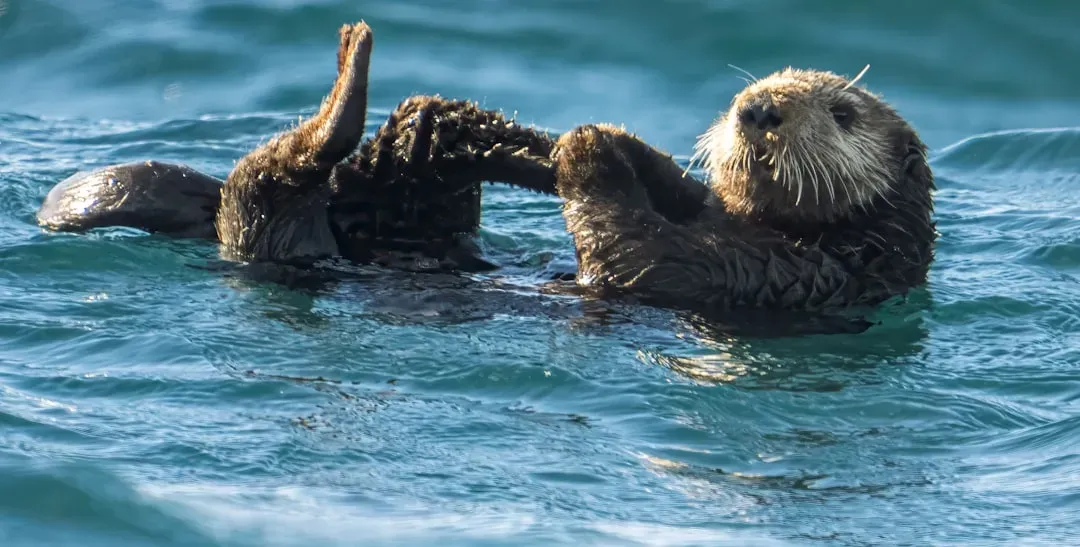
Sea otters primarily hold hands while they sleep. They may roll over onto their backs and float in the water while sleeping, and they usually choose a place near the shoreline where the water is calm. Yet even calm sea currents will allow untethered otters to drift apart. Think of it like falling asleep on an inflatable raft in a swimming pool. You close your eyes, and by the time you wake up, you’ve floated to the opposite end of the pool. Now imagine that pool is the Pacific Ocean.
To prevent themselves from drifting away in the current, they often hold hands with each other, forming what is sometimes called a “raft” of otters. Sometimes, they will even wrap themselves in kelp to anchor down. It’s a brilliantly simple solution to a very real problem.
What Exactly Is an Otter “Raft” and How Big Can It Get?
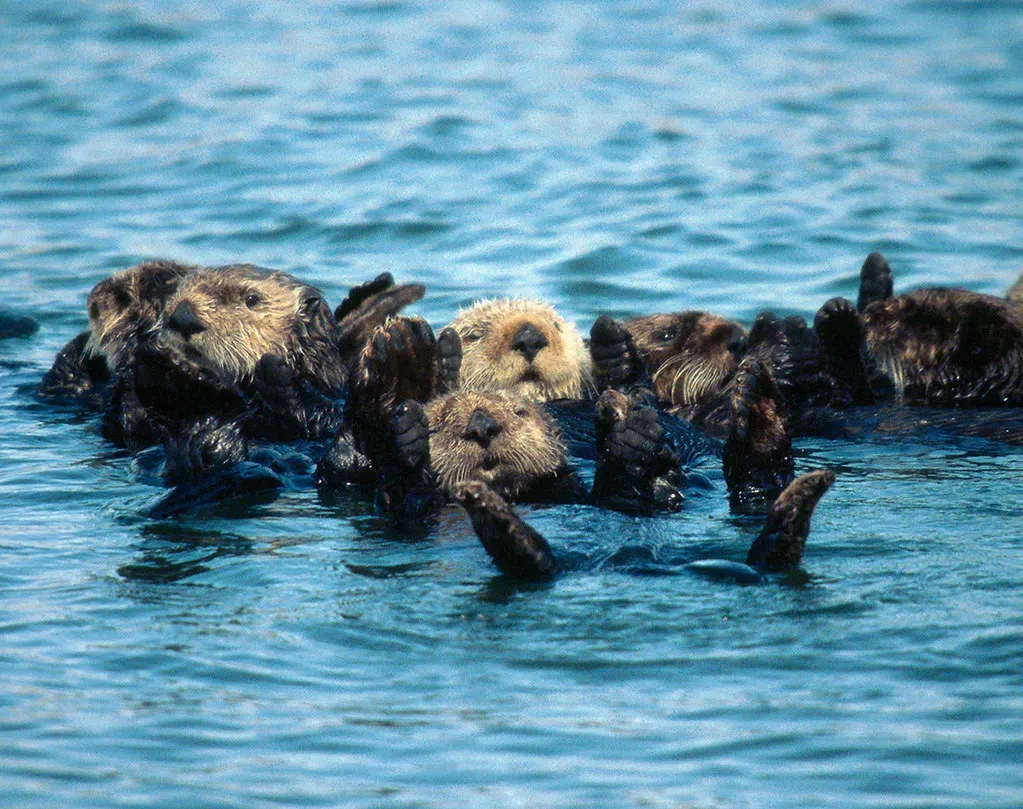
The term “raft” is not just a cute nickname. It’s the actual scientific term used for a group of sea otters resting together on the water’s surface. And these rafts can get impressively large.
A raft typically contains 10 to 100 animals, with male rafts being larger than female ones. The largest raft ever seen contained over 2,000 sea otters. Two thousand otters. All floating together. That is genuinely mind-blowing.
In the wild, sea otters typically travel and sleep in large groups known as “rafts.” Rafts are typically segregated by gender, and otters stay connected to others in the raft through more casual physical contact, or by wrapping themselves in kelp. So the hand-holding, while the most photogenic behavior, is actually just one small part of a much larger social system at work on the water.
Sea otters usually separate their rafts by gender, with males forming their social groups while females and their pups stick together. It’s almost like two very different neighborhoods floating side by side.
Survival, Warmth, and the Cold Hard Truth About Otter Biology
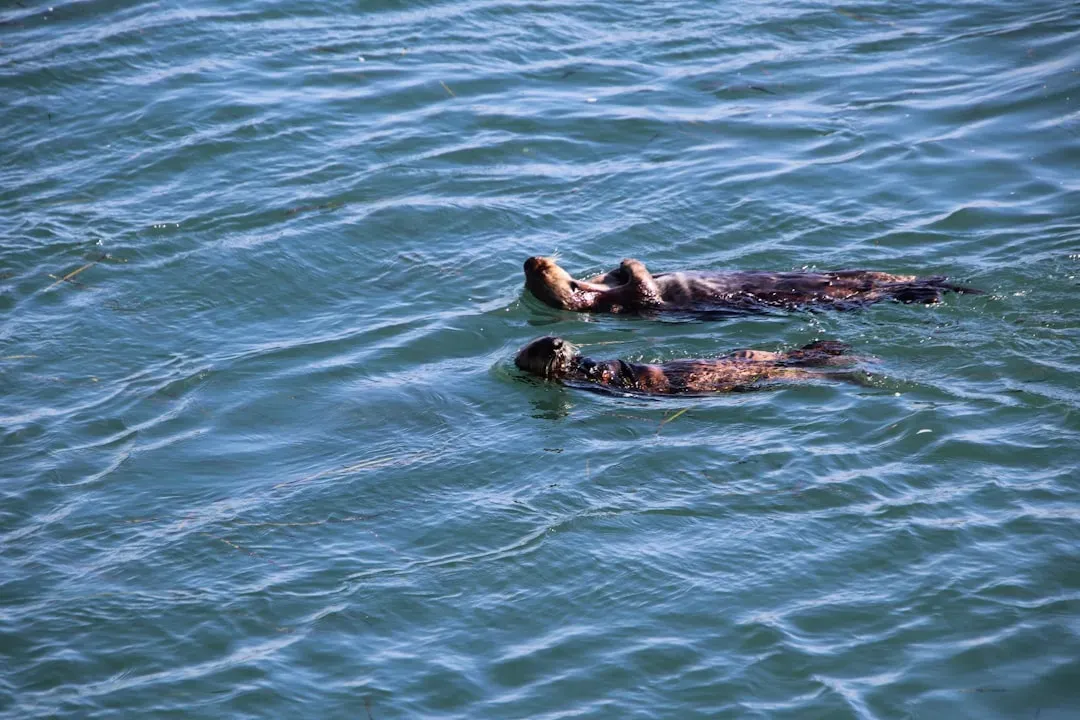
Here’s where things get really interesting, and where the hand-holding behavior connects to something deeper than social bonding. Sea otters have a genuine biological vulnerability that most people don’t know about.
Unlike many other aquatic mammals, sea otters don’t have a layer of blubber to keep them warm. Their thick fur coats are their main source of warmth, but they also rely on burning calories for heat, meaning they eat up to roughly a quarter of their body weight on any given day. That is an extraordinary metabolic demand. Think of it like running a car engine at full throttle constantly.
One of the most well-known sea otter fur adaptations is its incredible density, the densest of any animal, with up to one million hair follicles per square inch. This dense fur is vital for insulation as sea otters do not have a blubber layer like other marine mammals. The fur traps a layer of air close to their skin, which helps keep them warm in the cold Pacific waters.
Forming rafts helps sea otters stay protected from predators, conserve energy, and keep warm while they nap. So when they huddle together and link paws, they are quite literally conserving precious body heat. It is less of a romantic gesture and more of a well-designed survival system.
Predator Protection and the Power of the Group
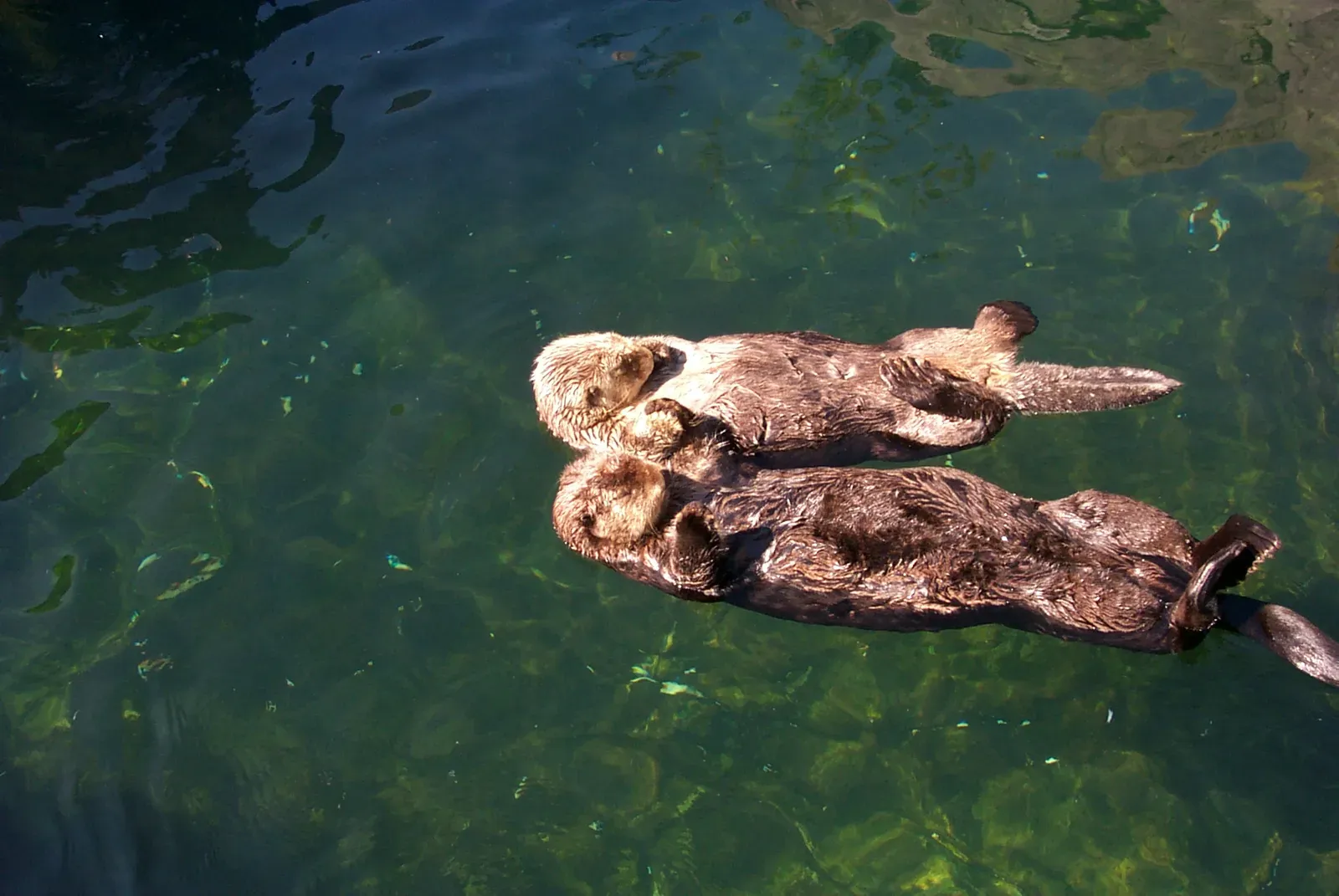
Let’s be real. The ocean is not a safe place to take a nap. A sleeping otter is easy prey for apex predators like sharks and killer whales. A raft of otters will appear more formidable, possibly discouraging an attack. There is genuine safety in numbers here.
This behavior is called rafting, and in the wild, you can see large groups of 15 to 20 otters rafting together, all linked by holding paws. Otters engage in rafting as a protective behavior. In the wild, there is strength in numbers. It is the ocean equivalent of walking home in a group at night rather than alone.
Another reason why otters hold hands is to stop drifting too far from their food source. The current can move them away from their food source, and the added weight of others helps them stay in one place. So the strategy serves multiple goals at once: warmth, safety, proximity to food, and family togetherness. Not bad for a small mammal with tiny paws.
What About the Babies? The Most Heartwarming Part of All
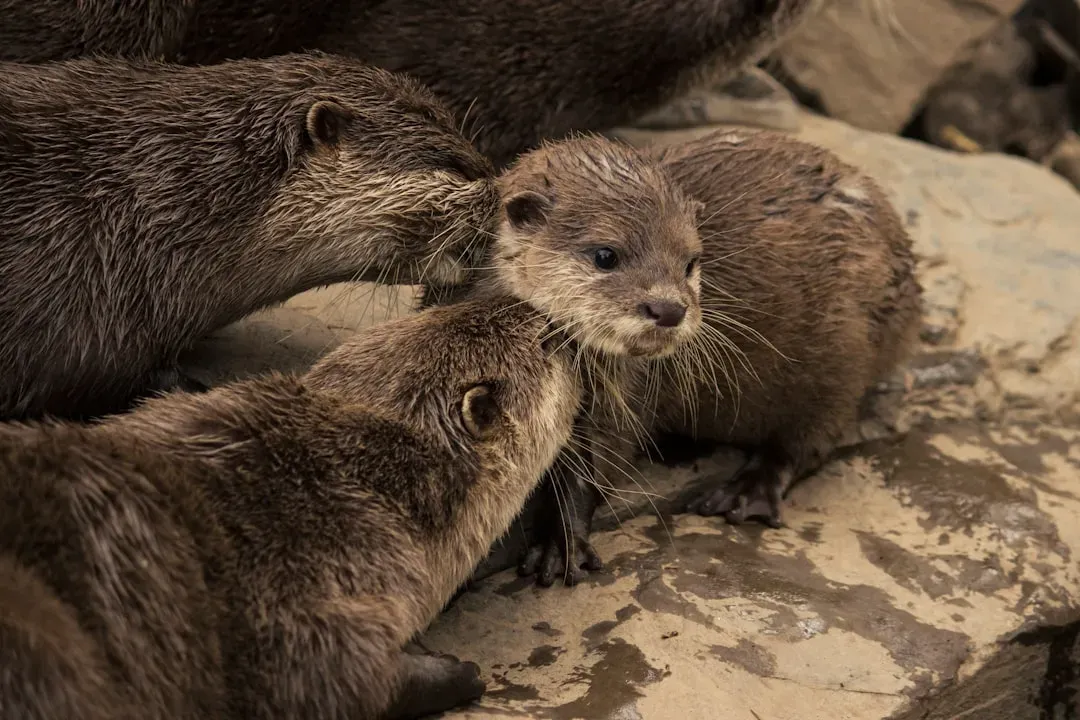
I think the most genuinely moving aspect of all this involves the mothers and their pups. Pups are small and especially vulnerable to predators. Until they can swim, pups ride on their mother’s chest. When it’s time to forage, the mother sea otter wraps her baby in kelp to keep it from drifting away.
When a mother sea otter needs to hunt for food, she carefully wraps her pup in a protective blanket of seagrass or kelp to keep them from drifting away with the ocean current. Fortunately, sea otter pups also have a thick and buoyant fur coat. The mother sea otter blows warm air into her pup’s fur, which helps to keep them warm and stay afloat while she’s away.
Otters don’t just hold hands randomly. They choose their partner or a family member, and their excellent sense of smell helps them tell each other apart. That detail alone shifts the entire picture. This isn’t random cuddling. It’s intentional, smell-based, family-first connection.
Conclusion: A Survival Instinct That Happens to Be Adorable
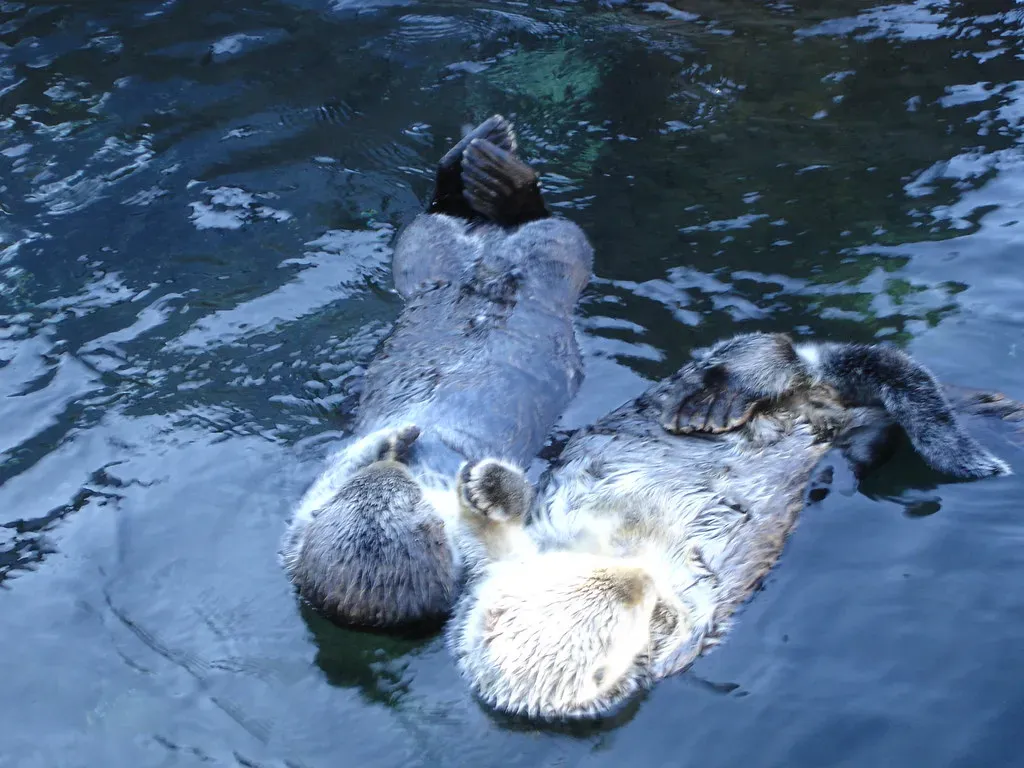
It is rare that nature hands us something that is simultaneously scientifically brilliant and visually heart-melting. Sea otters holding hands is both. While the notion of sea otters linking hands as a sign of affection or romantic love is sweet, there is no evidence to support this idea. On the contrary, courting sea otters are more likely to tussle aggressively.
The real story is better though. It is a story about staying warm in a cold ocean, staying safe from predators, staying close to food, and above all else, staying together as a family while the tides do their best to pull everything apart.
These fluffy creatures have been spotted holding each other’s paws and cuddling to prevent drifting away from one another while they sleep. This is not only heartwarming, but also part of a clever survival tactic. That combination of tenderness and practical intelligence is what makes sea otters so uniquely special in the animal world.
Next time you see that viral image of two otters clasped together on the ocean surface, you’ll know the whole story now. Nature didn’t build them to be cute. It just turned out that staying alive looked a lot like love. What do you think? Does knowing the science behind it make it more or less magical? Let us know in the comments.
