


The great white shark has long been celebrated as the undisputed apex predator of the ocean. Popular culture has painted it as an unstoppable hunter capable of striking fear into virtually every marine creature it encounters. Yet beneath the waves exists another predator that has repeatedly challenged—and often defeated—the mighty great white.
That predator is the orca, also known as the killer whale.
Over the past two decades, scientists have documented a growing number of encounters in which orcas have hunted, killed, and even selectively harvested organs from great white sharks with astonishing precision. These incidents have reshaped what marine biologists thought they knew about the ocean’s food web. Rather than relying on brute strength alone, orcas demonstrate intelligence, cooperation, and learned hunting techniques that place them among the most sophisticated predators on Earth.
Far from being random attacks, evidence suggests these hunts are deliberate, efficient, and often focused on obtaining one specific reward—the shark’s nutrient-rich liver.
Orcas Are Not Whales in the Traditional Sense

🔥 Would you like to save this?
We'll email this post to you, so you can come back to it later!
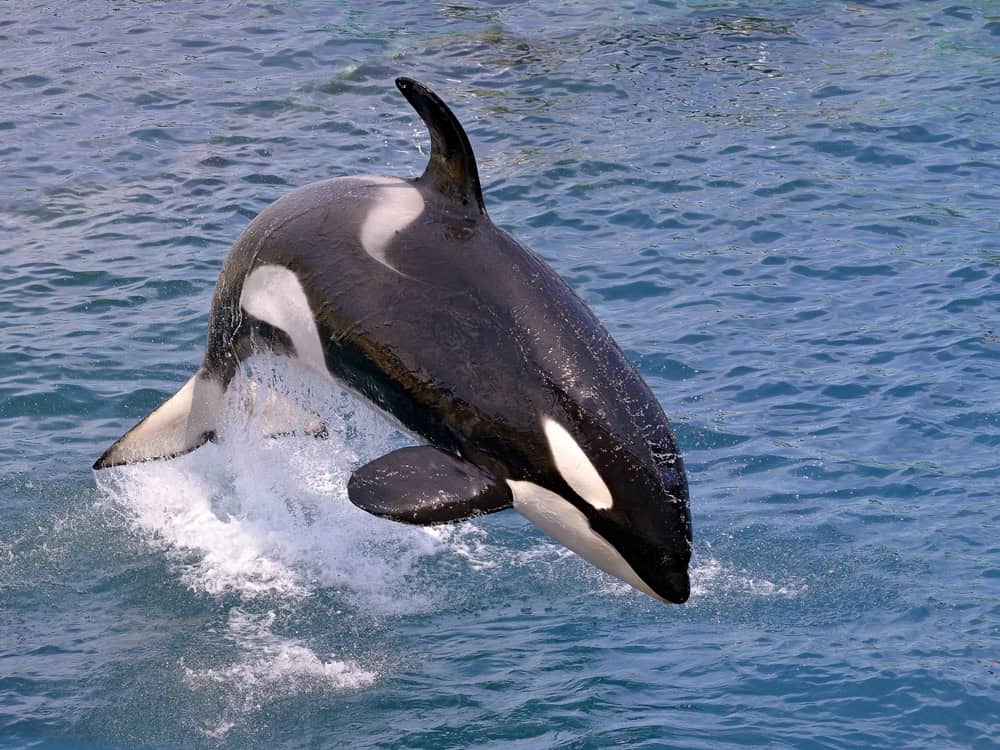
Despite their common name of “killer whale,” orcas (Orcinus orca) are actually the largest members of the dolphin family. Found in every ocean on Earth, from the icy waters of Antarctica to tropical seas, they are among the planet’s most adaptable marine mammals.
Adult males can reach over 30 feet (9 meters) in length and weigh more than 10,000 pounds (4,500 kilograms), while females are generally smaller. Their striking black-and-white coloration is instantly recognizable, but their intelligence is what truly sets them apart.
Unlike solitary predators, orcas live in stable family groups known as pods. Some pods remain together for life, with offspring staying alongside their mothers for decades. This social structure allows knowledge to be passed down through generations, creating distinct hunting traditions unique to each population.
Intelligence Is the Orca’s Greatest Weapon

🔥 Would you like to save this?
We'll email this post to you, so you can come back to it later!
Scientists consistently rank orcas among the most intelligent non-human animals.
Their brains are highly developed, particularly the regions associated with communication, social behavior, and problem-solving. Each pod possesses its own vocal dialect, enabling family members to recognize one another and coordinate hunting strategies.
Perhaps even more remarkable is their ability to teach.
Young orcas do not simply instinctively know how to hunt. Adult pod members actively demonstrate techniques, allowing calves to practice before mastering increasingly difficult prey.
This cultural transmission explains why some populations specialize in salmon while others target seals, dolphins, rays, or even massive baleen whales.
In certain regions, shark hunting has become another learned specialization.
Why Great White Sharks Become Targets
🔥 Would you like to save this?
We'll email this post to you, so you can come back to it later!
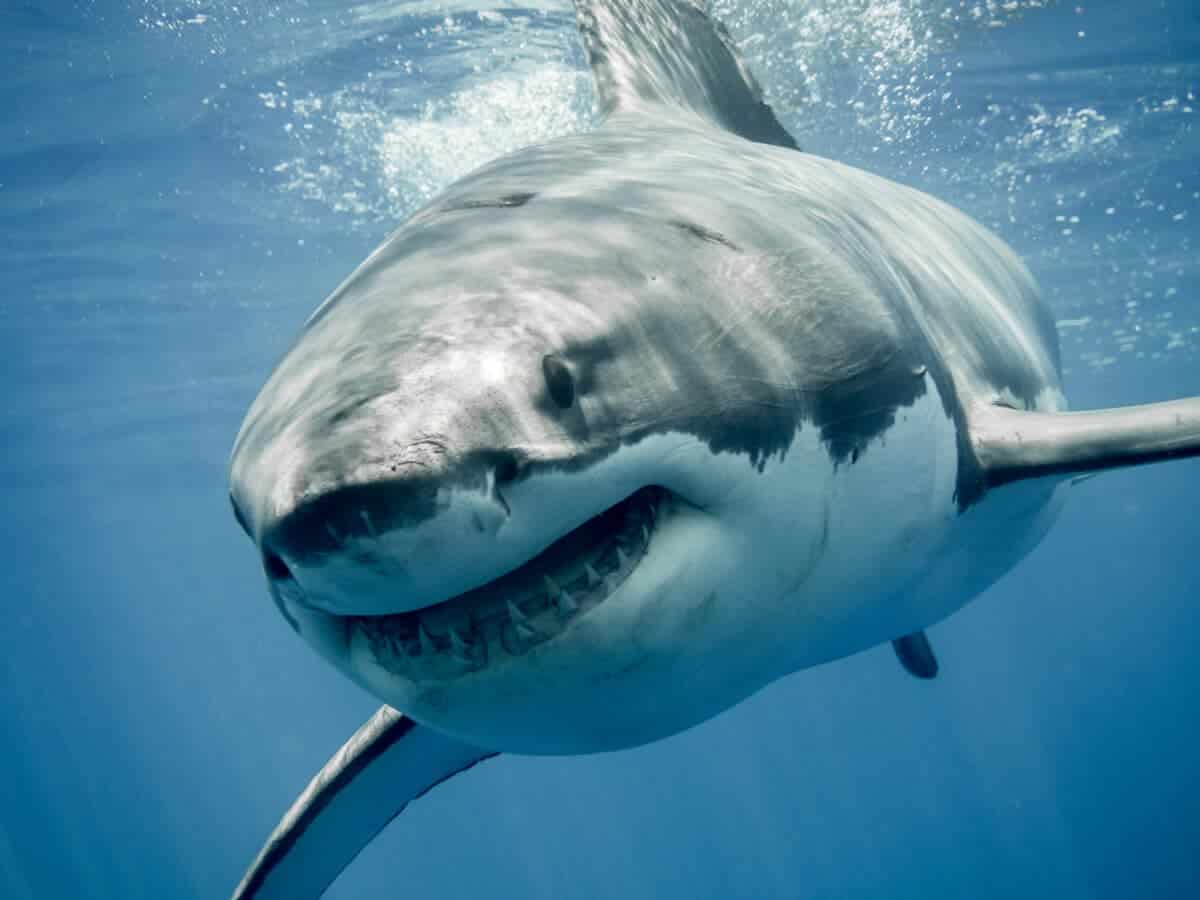
At first glance, attacking a great white shark appears risky.
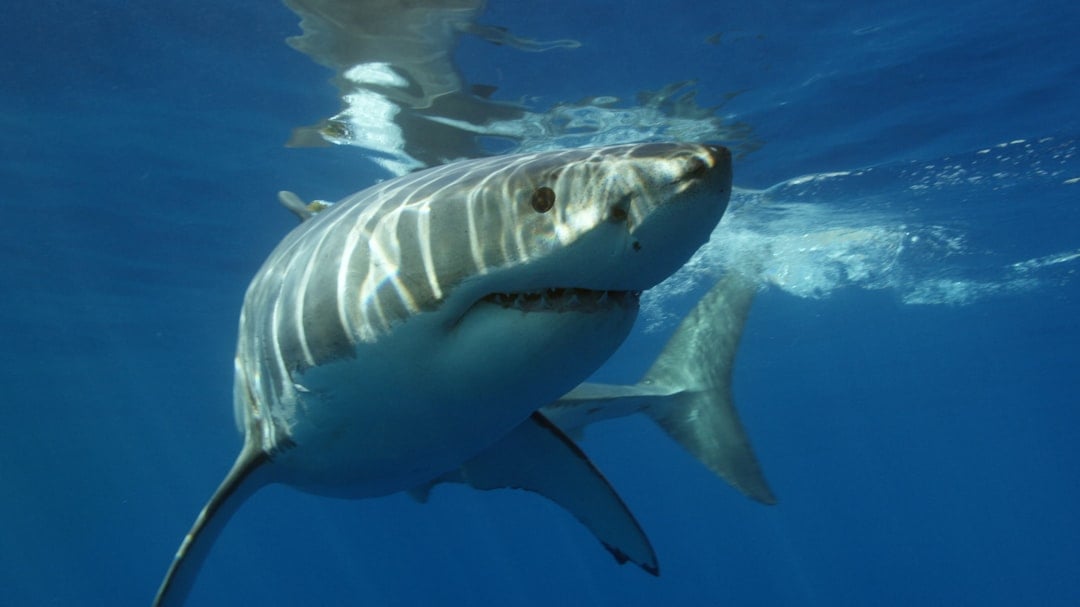
An adult great white possesses rows of razor-sharp teeth, tremendous bite force, and explosive acceleration. Hunting one requires far more than strength.
Orcas succeed because they possess several critical advantages:
- They hunt cooperatively rather than alone.
- They communicate constantly during attacks.
- They can surround prey from multiple directions.
- They tire sharks through repeated harassment.
- They understand shark anatomy remarkably well.
Instead of engaging in prolonged battles, experienced orcas often employ highly efficient strategies that quickly disable the shark before delivering fatal injuries.
Researchers have observed that entire great white populations sometimes abandon coastal regions shortly after killer whales appear, suggesting sharks actively avoid confrontations whenever possible.
The Secret Weapon: Turning Sharks Upside Down

🔥 Would you like to save this?
We'll email this post to you, so you can come back to it later!
One of the most fascinating techniques documented among shark-hunting orcas involves inducing a temporary condition known as tonic immobility.
By rolling or forcing a shark upside down, an orca can trigger this natural paralysis-like state. The shark becomes temporarily motionless and significantly less capable of defending itself.
Although tonic immobility occurs naturally in several shark species, experienced orcas appear to exploit this biological weakness during hunts.
Once immobilized, the shark becomes far easier to manipulate, allowing the orca to access specific internal organs with remarkable precision.
This behavior highlights not only physical dominance but also an extraordinary understanding of prey vulnerability.
Why the Liver Is Worth the Hunt
🔥 Would you like to save this?
We'll email this post to you, so you can come back to it later!
Perhaps the most extraordinary aspect of these encounters is that orcas often ignore most of the shark’s body.
Instead, they target one organ: the liver.
A great white shark’s liver is enormous, sometimes representing up to 25–30 percent of its total body weight. Unlike mammals, sharks lack swim bladders, so the liver performs an essential role in buoyancy.
It is also packed with energy-rich oils, particularly squalene, making it one of the most calorie-dense organs in the marine environment.
For an apex predator with high daily energy requirements, this is an exceptionally valuable food source.
Scientists examining shark carcasses have repeatedly documented the same pattern:
- The liver has been removed.
- The incision is often surprisingly precise.
- Other organs frequently remain intact.
- Much of the shark’s muscle is left untouched.
This consistency strongly suggests that the liver—not the shark itself—is often the primary objective.
Watch a 60 year old Orca grandmother named Sofia take down a great white shark here
Specialized Hunting Is a Learned Tradition
🔥 Would you like to save this?
We'll email this post to you, so you can come back to it later!
One of the defining characteristics of orcas is that not every population hunts the same prey.
Marine biologists describe these differences as ecotypes, with each group developing unique dietary preferences and hunting techniques over generations.
Examples include:
- Fish-eating populations that rarely attack mammals.
- Seal-hunting pods that intentionally create waves to wash prey off ice.
- Whale-hunting groups capable of exhausting animals many times their size.
- Shark-specialist pods that focus on rays and large sharks.
These behaviors are passed culturally rather than genetically.
This means young orcas learn by watching experienced relatives, creating regional hunting traditions that may persist for decades.
The precision observed during shark hunts likely represents thousands of successful lessons accumulated across generations.
How Orcas Influence Entire Marine Ecosystems

🔥 Would you like to save this?
We'll email this post to you, so you can come back to it later!
The impact of killer whales extends far beyond the sharks they kill.
Studies from South Africa, California, and Australia suggest great white sharks rapidly leave areas where orcas appear. In some cases, sharks have abandoned productive feeding grounds for weeks or even months.
These movements create ripple effects throughout marine ecosystems.
When great whites disappear:
- Seal populations may temporarily increase.
- Other shark species sometimes move into the area.
- Predator-prey relationships shift.
- Entire food webs can be reorganized.
Ecologists refer to these changes as behaviorally mediated trophic cascades, where the fear of a predator influences ecosystems as much as actual predation.
Fascinating Facts About Orcas
Beyond their hunting abilities, orcas possess an astonishing list of biological achievements.
Quick Facts
- Orcas are found in every ocean on Earth.
- They are the largest members of the dolphin family.
- Pods often remain together for life.
- Every pod has unique vocal dialects.
- Females can live 80 years or longer.
- They have one of the highest brain-to-body ratios among marine mammals.
- Different populations rarely interbreed because of cultural differences.
- Orcas have no known natural predators.
Their adaptability has allowed them to occupy ecological roles unlike almost any other marine species.
Why Scientists Continue Studying These Extraordinary Hunters
Much of what researchers know about shark-hunting orcas has emerged only in recent years.
New drone technology, underwater cameras, satellite tracking, and long-term ecological studies continue revealing behaviors that were previously impossible to observe.
Every documented hunt helps answer important questions:
- How do hunting traditions develop?
- Why do only certain pods target sharks?
- How are techniques transmitted to younger generations?
- What role do killer whales play in regulating shark populations?
Despite decades of research, scientists believe they have only scratched the surface of orca behavior.
Each new observation demonstrates that these animals possess levels of social learning and hunting sophistication once thought unique to humans and a handful of terrestrial mammals.
The Ocean’s True Apex Predator?
Nature rarely fits neatly into human rankings.
Calling either the great white shark or the orca the “ultimate” predator oversimplifies a far more complex ecological story. Great whites remain among the ocean’s most efficient solitary hunters, perfectly adapted for ambushing seals and other marine mammals. Orcas, however, bring something different to the equation—cooperation, culture, communication, and intelligence.
Their ability to identify a shark’s most valuable organ, exploit biological weaknesses like tonic immobility, and pass specialized hunting methods from one generation to the next makes them one of the most sophisticated predators ever studied.
In many ways, the relationship between orcas and great white sharks reminds us that evolution does not simply reward strength. It rewards adaptability, learning, and teamwork. As researchers continue uncovering the hidden lives of killer whales, one conclusion becomes increasingly difficult to ignore: in the hierarchy of the sea, intelligence may be the most powerful hunting tool of all.

- 14 Wildlife Permits Waived for Americans the Year They Turn 62 - November 5, 2026
- Machu Picchu’s Engineering Feats Were Far Ahead of Its Time - November 5, 2026
- 12 Most Beautiful American Cities To See Before You Die - November 4, 2026