

For centuries, humans believed we were uniquely gifted with complex memory systems, while animals operated primarily on instinct with limited capacity to remember past events or plan for the future. This anthropocentric view has been dramatically overturned in recent decades as revolutionary research techniques have unveiled sophisticated memory capabilities across the animal kingdom. From elephants that never forget to corvids that can remember thousands of food cache locations, animal memory has proven to be far more complex than we ever imagined. This article explores the fascinating journey of how science is finally beginning to understand animal memory, why it took so long to recognize these abilities, and what these discoveries tell us about our place in the cognitive landscape of Earth’s species.
The Historical Underestimation of Animal Cognition

Until the late 20th century, scientific understanding of animal cognition was severely limited by philosophical and methodological constraints. René Descartes’ influential 17th-century view that animals were essentially automatons—complex machines lacking consciousness—cast a long shadow over scientific inquiry. This “beast-machine” hypothesis posited that animals operated purely on instinct and reflex, with no true memory capabilities beyond simple conditioning. The behaviorist movement of the early 20th century, led by researchers like B.F. Skinner, further reinforced this view by focusing exclusively on observable behaviors rather than internal mental states. Even discussing animal memory or consciousness was considered unscientific anthropomorphism. This intellectual environment created a significant blind spot in our understanding of animal cognition, with scientists actively discouraged from investigating complex memory systems that we now know exist across numerous species.
The Challenge of Measuring Memory Without Language

One of the most formidable challenges in studying animal memory has been methodological: how do you measure memory in beings that cannot verbally report their experiences? Human memory studies rely heavily on participants describing what they remember, but this approach is impossible with non-human animals. This language barrier created a significant hurdle for researchers, requiring the development of innovative, species-appropriate testing methods. Early attempts often relied on conditioning paradigms that could be explained by simple associative learning rather than complex memory. Only in recent decades have scientists developed sophisticated experimental designs that can distinguish between different memory types in non-verbal subjects. These include delayed matching-to-sample tasks, novel object recognition tests, and maze studies that reveal working memory, long-term memory, and even episodic-like memory in various species. The relatively recent development of these methodologies explains why our understanding of animal memory has expanded so dramatically in recent years.
The Technological Revolution in Animal Cognition Research

The rapid advancement in our understanding of animal memory correlates directly with technological breakthroughs in research methods. Modern neuroimaging techniques have transformed our ability to observe the brain activity associated with memory formation and retrieval in animals. Functional MRI studies now allow researchers to watch memory processes unfold in real-time in animals’ brains, while miniaturized GPS tracking devices enable scientists to monitor natural memory-dependent behaviors like migration or food caching in the wild. High-definition cameras and computer vision algorithms can detect subtle behavioral changes indicating recognition and recall, while implantable electrodes can directly measure the activity of individual neurons during memory tasks. Perhaps most impressively, computational models now allow researchers to simulate and predict memory processes across species. These technological innovations have collectively created an unprecedented window into animal cognition, revealing memory capabilities that were simply undetectable with earlier research methods.
Episodic Memory: Not Just a Human Trait

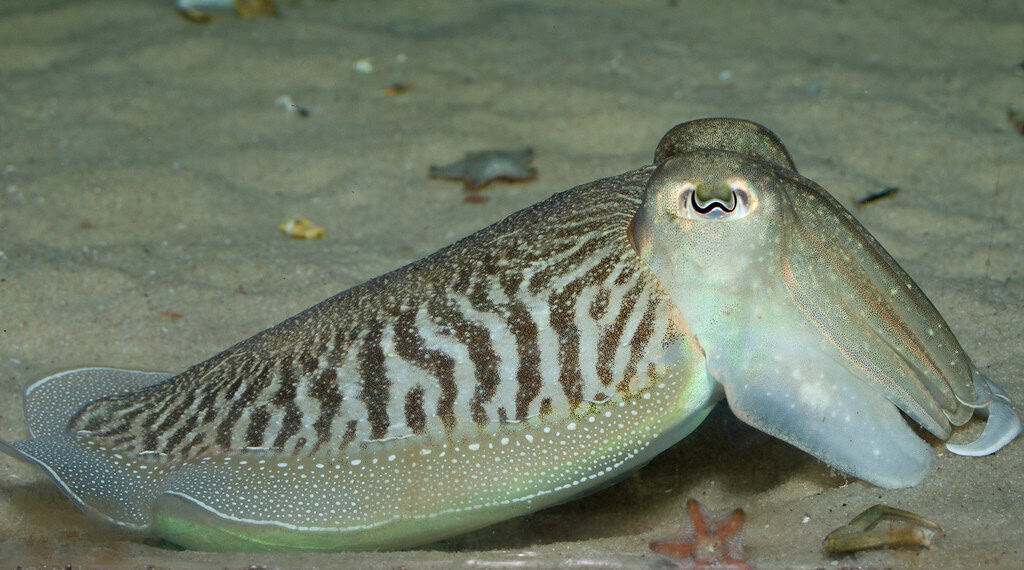
Perhaps the most surprising discovery in animal memory research has been the identification of episodic-like memory in non-human species. Episodic memory—the ability to recall specific personal experiences with their what, where, and when components—was long considered uniquely human. Endel Tulving, who first defined the concept in 1972, initially believed it required self-awareness and mental time travel beyond animals’ capabilities. However, groundbreaking research with scrub jays by Nicola Clayton and Anthony Dickinson in the late 1990s challenged this assumption. These birds demonstrated they could remember what food they cached, where they hid it, and when they stored it—the three critical elements of episodic memory. Subsequent research has revealed similar capabilities in rats, great apes, dolphins, and even cuttlefish. While debates continue about whether animals experience subjective consciousness during recall as humans do, the evidence clearly shows that episodic-like memory extends far beyond our species. This realization has profoundly shifted our understanding of animal cognition and the evolution of memory systems.
The Astonishing Spatial Memory of Food-Caching Animals

Some of the most impressive memory feats in the animal kingdom come from species that cache food for later retrieval. Clark’s nutcrackers, a type of corvid, can remember the locations of up to 10,000 seed caches across dozens of square miles—and recall these locations months later. This extraordinary spatial memory allows them to survive harsh winters when food is scarce. Similarly, black-capped chickadees can remember thousands of seed locations with remarkable precision. What makes these accomplishments particularly impressive is that these birds have brains many times smaller than ours. Research has revealed that food-caching birds have an enlarged hippocampus—a brain region critical for spatial memory—compared to non-caching relatives. Even more fascinating, these birds’ hippocampi actually grow larger during caching season, showing remarkable neural plasticity. The study of these specialized memory adaptations has revolutionized our understanding of memory as an evolved trait shaped by specific ecological pressures rather than a generalized cognitive ability that simply scales with brain size.
Working Memory and Executive Function in Primates
Our closest evolutionary relatives have provided remarkable insights into the development of complex memory systems. Chimpanzees, bonobos, and other great apes demonstrate sophisticated working memory—the ability to temporarily hold and manipulate information—that rivals young human children in some contexts. Studies using touchscreen computers have shown that chimpanzees can remember sequences of numbers flashed briefly on a screen and recall them in the correct order, sometimes outperforming human adults on these specific tasks. This working memory connects to impressive executive function capabilities, allowing apes to plan multi-step processes to solve problems. For example, chimpanzees can remember the location of tools needed for future tasks and retrieve them proactively. Orangutans in the wild plan travel routes days in advance, remembering the locations of fruit trees and their ripening schedules. These studies have been crucial in understanding the evolutionary continuity of memory systems between humans and other primates, suggesting that many of our cognitive abilities differ in degree rather than kind from our evolutionary cousins.
The Elephant’s Legendary Memory: Fact or Fiction?

The saying “an elephant never forgets” has proven remarkably accurate according to modern research. Elephants possess exceptional long-term social memory, recognizing and remembering specific individuals—both elephant and human—after decades of separation. This remarkable ability serves crucial ecological and social functions in their complex societies. Studies by Karen McComb and others have demonstrated that older female elephants (matriarchs) can remember specific calls from up to 100 different elephants and distinguish between familiar and unfamiliar families. This memory allows them to make critical decisions about potential threats or alliances. Even more impressively, elephants remember migration routes and water sources across vast landscapes, passing this knowledge down through generations. During Namibia’s severe 1981-1982 drought, matriarchs led their herds to distant water sources they hadn’t visited in many years, suggesting decades-long spatial memory. The elephant’s memory capabilities, once dismissed as folklore, have been scientifically validated and demonstrate how critical sophisticated memory can be for species survival in challenging environments.
Unexpected Memory Champions: Pigeons and Bees
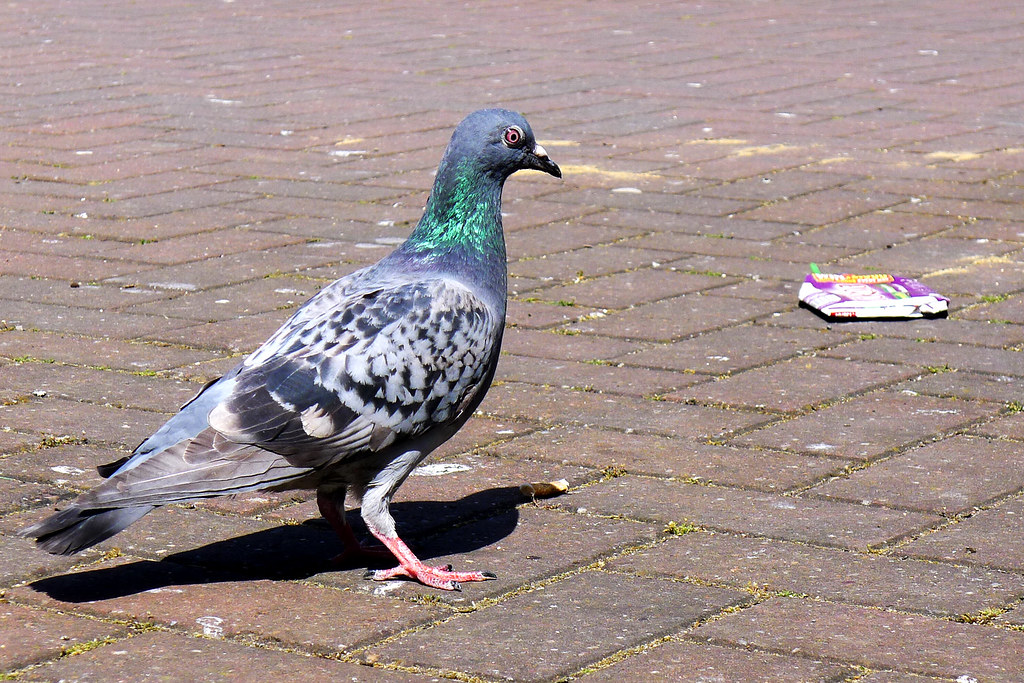
Some of the most surprising memory discoveries have come from species traditionally considered cognitively simple. Pigeons, often maligned as “flying rats,” possess remarkable visual memory capabilities that sometimes surpass humans. In controlled studies, pigeons can remember over 1,800 distinct images with up to 95% accuracy after years have passed. They also demonstrate extraordinary facial recognition abilities, distinguishing between dozens of different human faces even when the images are altered. Even more surprisingly, honeybees—with brains containing fewer than a million neurons—demonstrate complex memory capabilities including categorization, numerosity, and conceptual learning. Bees can remember the locations of hundreds of flowers, the time of day when each species produces nectar, and complex flight paths covering miles of territory. They communicate this information to hivemates through the waggle dance, a sophisticated memory-dependent communication system. These discoveries in “simpler” species have forced scientists to reconsider fundamental assumptions about what neural structures are necessary for complex memory and how memory capabilities evolved across diverse animal lineages.
Memory in Marine Mammals: Dolphins and Their Remarkable Recall

Marine mammals, particularly dolphins and orcas, have demonstrated extraordinary memory capabilities that have only recently been appreciated. Bottlenose dolphins can remember the signature whistles of former companions even after being separated for more than 20 years—the longest social memory documented outside humans. This remarkable ability supports their complex fission-fusion social structures, where individuals maintain relationships despite not interacting for long periods. Dolphins also show impressive working memory and concept formation, understanding symbolic language representations and remembering sequences of gestures in human-designed communication systems. In the wild, orcas appear to remember migration routes and hunting techniques across generations, with distinct pods maintaining unique cultural traditions through social learning and memory. This sophisticated memory plays a crucial role in their survival strategies and social cohesion. The field of marine mammal cognition has been particularly challenging to study due to their aquatic lifestyle, explaining why many of these discoveries are relatively recent despite these animals’ large brain size and complex social structures.
The Ethical Implications of Recognizing Animal Memory

Our evolving understanding of animal memory capacity has profound ethical implications for how we treat other species. If animals can remember past experiences, anticipate future events, and maintain social bonds through memory, then many common practices may cause more significant suffering than previously recognized. Animals in captivity may remember and be traumatized by past negative experiences for years or decades. Farm animals may anticipate future processing procedures they’ve previously witnessed. Wildlife displaced by habitat destruction may remember and mourn lost territories and social groups. These realizations have begun to influence policy changes, with some countries granting legal personhood status to great apes and elephants based partly on their demonstrated memory capabilities and psychological complexity. The European Union’s recognition of animals as “sentient beings” in the Treaty of Lisbon was influenced by cognitive research showing sophisticated memory and emotion in many species. As our scientific understanding of animal memory continues to expand, we face increasingly complex ethical questions about our responsibilities toward the other cognitive beings with whom we share the planet.
Memory, Consciousness, and the Mind-Body Problem

The discoveries about animal memory have reignited ancient philosophical debates about consciousness and the mind-body relationship. If non-human animals possess episodic-like memory—the ability to mentally revisit past experiences—does this suggest they have some form of conscious awareness? Researchers including Michael Gazzaniga and Joseph LeDoux have proposed that episodic memory may require a form of self-awareness to distinguish personal experiences from general knowledge. The presence of these memory systems across diverse species suggests consciousness may exist on a continuum rather than being uniquely human. Some philosophers argue that memory capabilities in animals challenge traditional Cartesian dualism by demonstrating that complex mental processes emerge from evolved neural structures rather than requiring an immaterial mind. The field of comparative cognition has thus become an unexpected contributor to philosophical debates about consciousness, with memory serving as a crucial bridge between observable behavior and internal mental states. This represents a fascinating convergence of neuroscience, evolutionary biology, and philosophy that is reshaping our understanding of minds across species.
Future Frontiers in Animal Memory Research

The study of animal memory stands at an exciting frontier, with several promising research directions emerging. Advances in non-invasive neuroimaging may soon allow researchers to observe memory processes in awake, behaving animals in more natural settings. Machine learning algorithms are being developed to decode neural activity patterns associated with specific memories, potentially allowing scientists to “read” what animals remember. The emerging field of cognitive phylogenetics seeks to trace the evolutionary history of memory systems across species, identifying when and why different memory capabilities evolved. Comparative genomics approaches are beginning to identify the genetic foundations of memory differences between species, with potential applications for understanding human memory disorders. Perhaps most intriguingly, research into convergent evolution of memory in distantly related species like corvids and primates may reveal fundamental principles about how complex cognition emerges in different neural architectures. These advancing frontiers suggest that our understanding of animal memory is still in its early stages, with many more surprising discoveries likely in the coming decades.
Conclusion: Rewriting the Cognitive Map of Life on Earth

The revolution in animal memory research has fundamentally transformed our understanding of cognition across species and our place in the natural world. What was once considered uniquely human—the ability to remember specific experiences, plan for the future, and maintain long-term social memories—has been discovered across an astonishing diversity of animals, from birds and bees to elephants and apes. This recognition has occurred remarkably recently, primarily due to technological advances, methodological innovations, and shifting philosophical perspectives that finally allowed scientists to ask the right questions in the right ways. As we continue to uncover the sophisticated memory capabilities of more species, we’re creating a new cognitive map of life on Earth—one that reveals intelligence and memory as diverse adaptations shaped by unique evolutionary pressures rather than a single ladder of cognitive advancement. The journey of understanding animal memory reminds us of the dangers of anthropocentric thinking and the remarkable cognitive richness that exists beyond human experience, challenging us to expand our moral circle and deepen our appreciation for the minds that share our planet.

- This River Delta Is a Magnet for Endangered Birds - July 17, 2026
- New Fossils in Baja California Reveal a Never-Before-Seen Grouper - July 17, 2026
- The Most Venomous Animal on Land—And How It Kills - July 17, 2026