


In the vast Star Wars universe, creatures often blur the line between science fiction and fantasy. Yet remarkably, our own planet harbors wildlife that would seem right at home on Tatooine, Endor, or Dagobah. The bizarre evolutionary paths taken by Earth’s animals have created beings that rival the imagination of sci-fi creators. From deep-sea dwellers with bioluminescent properties to desert-adapted mammals and insects with seemingly impossible abilities, our world showcases nature’s creativity in ways that parallel the exotic creatures of the Star Wars galaxy. This article explores Earth’s most Star Wars-worthy wildlife – creatures whose appearances, adaptations, and behaviors would make them perfect additions to that iconic universe far, far away.
The Axolotl: Naboo’s Missing Amphibian

With its external gills resembling head tentacles, the Mexican axolotl (Ambystoma mexicanum) could easily inhabit the underwater cities of Naboo alongside the Gungans. These unique salamanders maintain their larval features throughout adulthood, a process called neoteny, giving them an alien appearance that would fit seamlessly in Star Wars’ aquatic scenes. Their most remarkable quality – regenerating entire limbs, organs, and even portions of their brain – surpasses the medical capabilities shown even in bacta tanks. Their permanent smile and feathery external gills create an otherworldly appearance that wouldn’t require any CGI enhancement to appear alongside Jar Jar Binks. Critically endangered in the wild, axolotls embody the kind of rare, specialized species that Star Wars often features on its diverse planets.
Tardigrades: Micro Force-Wielders

If midichlorians needed physical manifestations, tardigrades might be their prime candidates. These microscopic “water bears” demonstrate nearly indestructible qualities that border on Force powers. Tardigrades can survive in space’s vacuum, endure radiation levels that would kill most organisms, and enter a dehydrated state called cryptobiosis where they can remain dormant for decades before reanimating. Their eight-legged, barrel-bodied form with a strange sucker-like mouth would make perfect tiny inhabitants for a Jedi temple or sacred text. One could imagine these creatures serving as microscopic guardians of ancient Force knowledge, living symbiotically with Jedi masters. Their resilience in extreme environments parallels the harsh conditions found on many Star Wars planets, from icy Hoth to scorching Mustafar.
The Mantis Shrimp: Kashyyyk’s Underwater Warrior
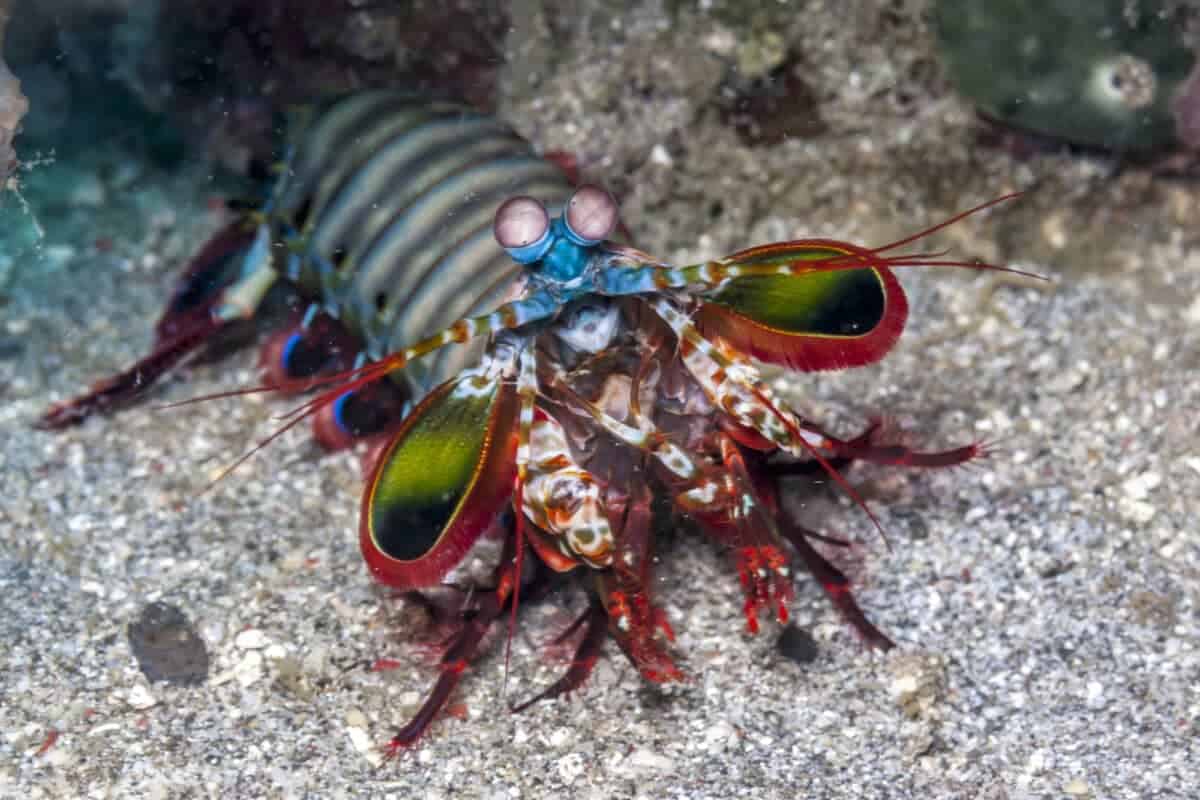
The mantis shrimp possesses combat abilities that would impress even Wookiee warriors on Kashyyyk. These marine crustaceans wield what are effectively biological lightsabers – specialized limbs that strike with such acceleration (up to 23 meters per second) that they create cavitation bubbles that collapse with a flash of light and heat reaching nearly 4,800°C. Some species have “smashers” that deliver blows with the force of a .22 caliber bullet, while others have harpoon-like “spearers.” Most remarkable are their eyes – the most complex in the animal kingdom with 16 color receptors (humans have three) allowing them to see a spectrum from ultraviolet to infrared, plus polarized light. Their vibrant coloration and armored exoskeleton complete the picture of a creature that looks like it evolved in another galaxy entirely, perhaps as a favored pet of the Mon Calamari.
Pangolins: Living Droids of Earth

With their fully articulated armor of overlapping scales, pangolins resemble living droids or protocol units from the Star Wars universe. These mammals, the only ones covered in scales, could easily be mistaken for mechanical creations designed by the Trade Federation. When threatened, pangolins roll into an impenetrable ball, similar to droideka destroyer droids. Their specialized tongues can extend longer than their bodies, with sticky saliva for capturing prey – a biological tool that mimics the utility of many Star Wars gadgets. Sadly, pangolins have become the most trafficked mammals in the world, threatened by poaching and habitat loss, a storyline that would fit within the environmental destruction often depicted on planets exploited by the Empire. A pangolin-inspired species could inhabit the forests of Endor or serve as loyal companions to desert dwellers on remote worlds.
The Frill-Necked Lizard: Tatooine’s Defender
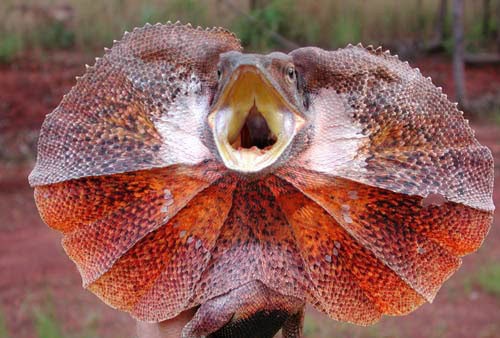
Australia’s frill-necked lizard (Chlamydosaurus kingii) displays a defensive behavior straight out of a Star Wars cantina scene. When threatened, this reptile extends a large frill around its neck, increasing its apparent size dramatically, while opening its bright yellow mouth and hissing loudly. This display wouldn’t be out of place in a hostile encounter on Tatooine. The lizard’s bipedal running style, racing on hind legs at speeds of up to 30 mph, resembles the movement of many Star Wars aliens. Their desert adaptations, including the ability to change color to regulate temperature, mirror survival traits necessary on arid planets in the Star Wars universe. One could easily envision these creatures as either the pets of moisture farmers or wild predators hunting womp rats in rocky outcroppings.
Hagfish: The Sarlacc’s Cousin
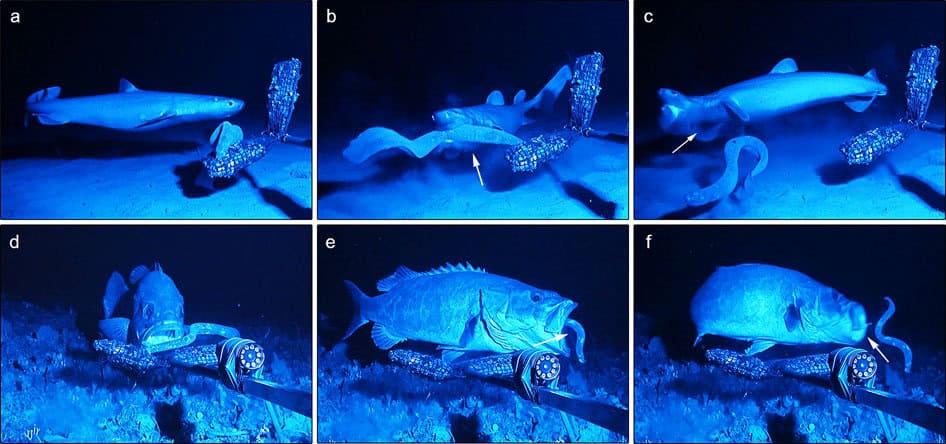
The hagfish, an ancient jawless fish, possesses abilities disturbing enough to rival the Sarlacc pit from Return of the Jedi. When threatened, hagfish produce copious amounts of slime – up to 5.5 gallons from a single fish – that expands when it contacts water, clogging the gills of predators. This defensive mechanism feels straight out of the Star Wars playbook of unusual creature abilities. Their eel-like bodies, primitive features (including a partial skull made of cartilage), and ability to tie themselves in knots to escape predators or clean off their own slime make them prime candidates for a creature dwelling in the trash compactor of the Death Star. Their feeding habits involve burrowing into dead or dying creatures, where they absorb nutrients through their skin – a process eerily reminiscent of how the Sarlacc was said to digest its victims over a thousand years.
Glowing Fungi: Illuminating the Forests of Endor

Bioluminescent fungi like Mycena chlorophos and Panellus stipticus would feel right at home in the forests of Endor, providing natural illumination for Ewok villages. These fungi emit an ethereal blue-green glow through a chemical reaction involving the compound luciferin, creating light without heat. This natural phenomenon mirrors the ambient lighting often seen in Star Wars forest scenes. Some species like Foxfire respond to oxygen when disturbed, glowing brighter when touched – a feature that could serve as natural security systems for forest dwellers. The mystical appearance of these glowing organisms connects to the spiritual aspects of the Force, perhaps serving as natural indicators of Force-strong locations. In Star Wars lore, such naturally luminescent flora would likely be attributed special properties, perhaps used by native healers or sought by offworld collectors.
Peacock Spiders: Tiny Cantina Performers
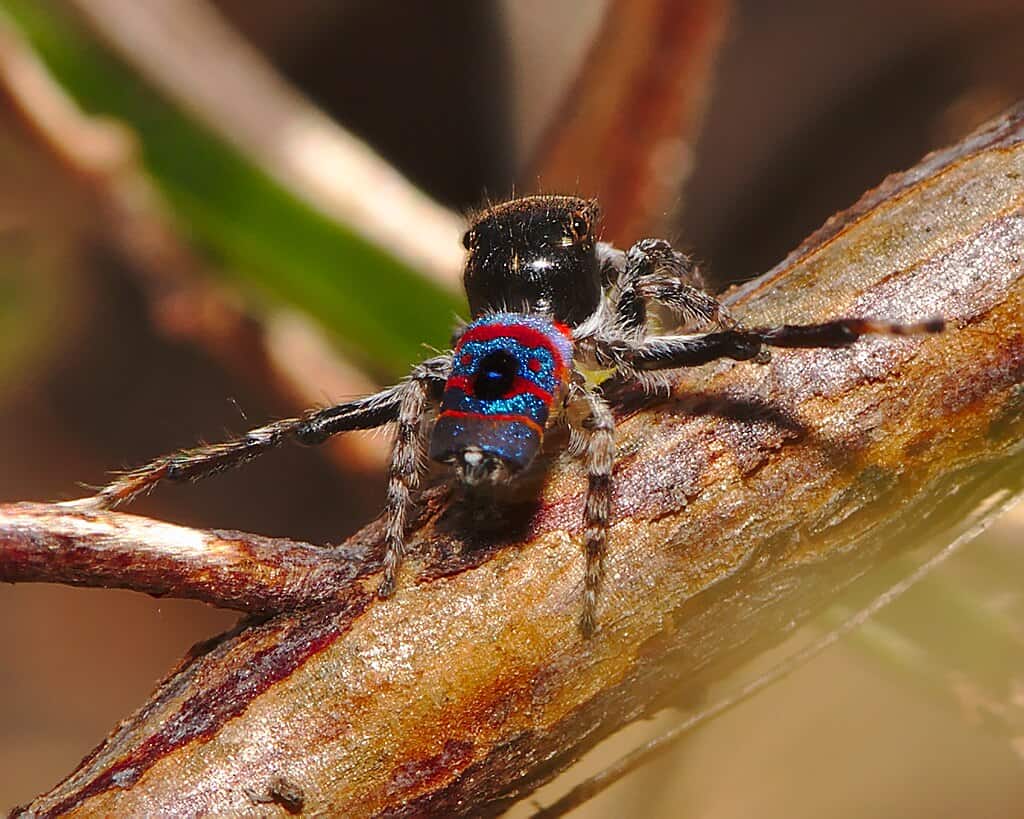
The elaborate courtship displays of male peacock spiders (Maratus species) would make them perfect entertainers in any Star Wars cantina. These tiny arachnids, measuring just a few millimeters, perform choreographed dances while displaying vibrant, iridescent abdominal flaps that unfold like colorful fans. Their precise movements, including synchronized leg-waving and abdomen vibrations, resemble the calculated performances of droids or aliens attempting to impress potential mates or clients. Their kaleidoscopic patterns of blue, red, and gold would stand out even in the diverse Star Wars creature palette. Native to Australia, these small but charismatic spiders embody the kind of surprising biodiversity that Star Wars planets often showcase in brief glimpses. One could imagine them as popular pets, dance performers, or even as gambling tokens in underground establishments throughout the galaxy.
Leafy Seadragons: Mon Calamari’s Elegant Fauna

The leafy seadragon (Phycodurus eques) appears so fantastical that it would require no modification to inhabit the oceans of Mon Calamari alongside Admiral Ackbar’s species. These relatives of seahorses are adorned with elaborate leaf-like appendages that serve as perfect camouflage among seaweed and kelp forests. Their otherworldly appearance, with bodies covered in what look like floating plant matter, represents the kind of boundary-blurring between animal and environment that Star Wars often employs in its creature design. Leafy seadragons move using nearly invisible fins that ripple with hypnotic rhythm, creating an impression of floating rather than swimming – movement that resembles the ethereal quality of certain Force-sensitive beings. Their specialized feeding tube and lack of stomach (they must eat constantly) would make for interesting biological details in expanded universe materials about Mon Calamari ecology.
The Giant Japanese Spider Crab: Kashyyyk’s Ocean Terror
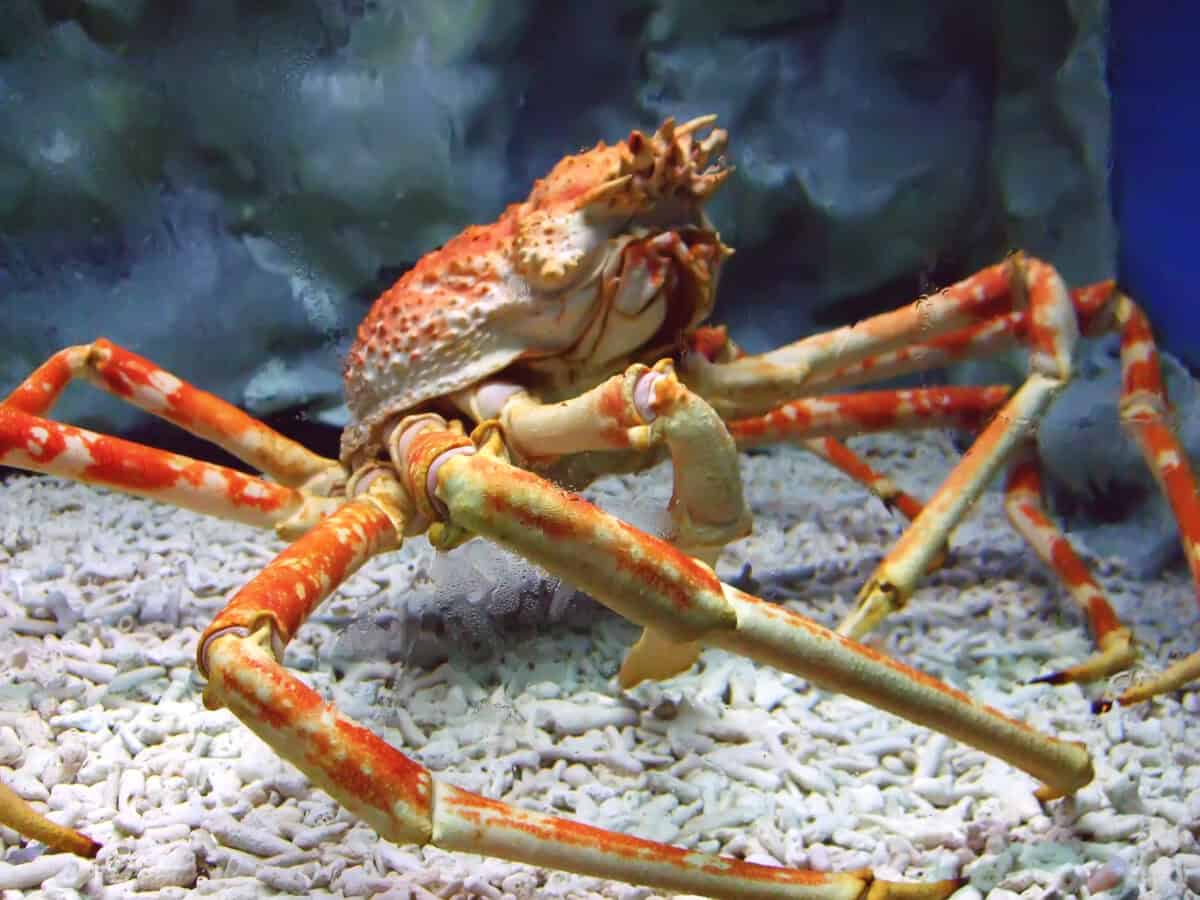
With a leg span reaching up to 12 feet, the Japanese spider crab (Macrocheira kaempferi) could easily feature as a terrifying predator in the oceans of Kashyyyk or other Star Wars water worlds. These massive arthropods, with their menacing appearance and gangly proportions, evoke the same sense of prehistoric danger as many Star Wars monsters. Despite their intimidating size, they move with unexpected grace in their deep-ocean habitats, sometimes decorating their shells with sponges and other marine organisms for camouflage – a survival technique that would translate well to the strategic hunters often featured in Star Wars. Their extraordinary longevity (up to 100 years) parallels the extended lifespans of several Star Wars species. The image of these massive crabs emerging from murky depths would create the perfect tension for an underwater sequence, perhaps as obstacles faced by characters traversing oceanic regions of forest planets.
Bombardier Beetles: Living Blasters
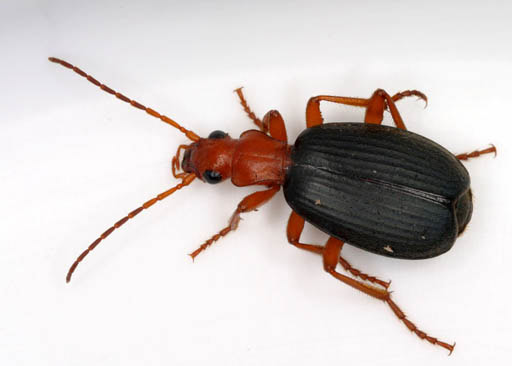
Bombardier beetles employ defensive chemistry that rivals the weapons technology of the Star Wars universe. When threatened, these insects mix chemicals from separate abdominal chambers to create an exothermic reaction, ejecting a boiling hot, noxious spray with an audible popping sound – their own biological blaster. This chemical weapon, which can be aimed with remarkable precision, reaches temperatures of nearly 100°C and can be fired in rapid pulses or as a fog-like spray. Such defensive adaptations mirror the specialized equipment carried by bounty hunters like Boba Fett. A beetle-inspired species in Star Wars might be harvested for their chemical compounds or trained as living weapons. Their intricate internal chemistry would likely fascinate characters like Dr. Pershing or other scientists studying biological adaptations for military applications in the Empire or New Republic.
The Mimic Octopus: Master of Disguise

The mimic octopus (Thaumoctopus mimicus) displays abilities that would make it the perfect spy in the Star Wars universe. This remarkable cephalopod can transform not just its color and texture but its entire body shape and behavior to impersonate at least 15 different marine species, including lionfish, sea snakes, and flatfish. This level of deception exceeds even the shapeshifting abilities shown by Clawdites like Zam Wesell. The mimic octopus makes split-second decisions about which dangerous species to impersonate based on the specific threat it faces, showing intelligence that would be prized by either Rebellion or Imperial intelligence operations. Their problem-solving abilities, including using tools and navigating complex mazes, would make them valuable companions or adversaries in the Star Wars galaxy. One could easily imagine these creatures being trained by the underworld for heists or by intelligence agencies for infiltration missions.
Earth’s wildlife demonstrates that the fantastical creatures of Star Wars aren’t as removed from reality as they might appear. Through millions of years of evolution, our planet has produced beings with abilities and appearances that rival anything created for science fiction. From regenerating axolotls to near-indestructible tardigrades, from chemical-wielding beetles to shape-shifting octopi, Earth harbors creatures that would require little modification to appear in the next Star Wars installation. This convergence highlights how the most imaginative science fiction often draws inspiration from the remarkable adaptations found in nature. It also emphasizes how protecting Earth’s biodiversity preserves not just ecological systems but living examples of what we often consider to be purely fictional attributes and abilities. In studying these remarkable animals, we gain not only scientific knowledge but a deeper appreciation for the creative wellspring that inspires human storytelling across galaxies both real and imagined.

- Cuddling for Warmth: How Meerkats Stay Cozy - July 18, 2026
- This U.S. Lake Is Mysteriously Disappearing—Here’s What Scientists Say - July 18, 2026
- This Jellyfish Hunts in Packs - July 18, 2026