

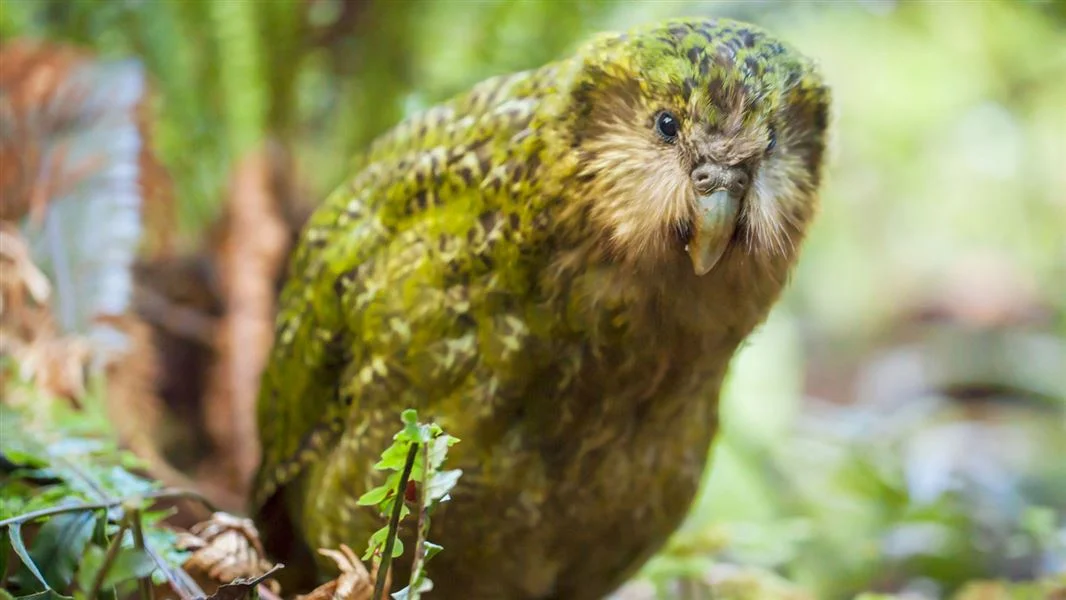
A Kākāpō from Codfish Island (Image Credits: Pixabay)
New Zealand’s Codfish Island – Deep beneath the roots of a rātā tree, a tiny camera has opened a window to one of the planet’s rarest creatures. More than 100,000 viewers worldwide have watched Rakiura, a 24-year-old female kākāpō, nurture her chicks in an underground nest.[1][2] The live feed, known as Kākāpō Cam, streams nonstop from this predator-free sanctuary, revealing the daily rhythms of the world’s heaviest parrot species.[3]
A Flightless Wonder Under Threat
The kākāpō stands out as the only flightless, nocturnal parrot, with males reaching weights of about 8.8 pounds before breeding.[4] Females like Rakiura tip the scales at 3.3 to 4.4 pounds. Once abundant across New Zealand, their numbers crashed due to introduced predators such as cats and stoats, leaving just 236 individuals today.[2][4]
All surviving kākāpō live on offshore islands managed under the Kākāpō Recovery Programme, which has lifted the population from 51 birds in the 1990s. Every bird receives a name and close monitoring. Rakiura herself hatched on Codfish Island in 2002 and has produced nine descendants over six breeding seasons.[2]
Rakiura’s Remarkable Breeding Timeline
Rakiura mated naturally on January 15, 2026, and underwent artificial insemination days later using sperm from top males. She laid her first egg on January 22, followed by two more on January 25 and 28, all captured live except the initial one.[3][2] Conservation teams shuttled the eggs to incubators for better odds, replacing them with stand-ins.
Chicks began hatching in late February. Vori-A1 arrived on February 24, Nora-A2 on March 2. The older chick moved to a foster mother on March 8, and by March 14, Rakiura welcomed a gold-ranked male chick named Heather-A3 into her nest. This marks the first major breeding since 2022, driven by a rimu tree fruiting boom – 60% of tips fruited, far above the 10% threshold.[4]
Daily Drama in the Nest
Viewers tune in for hours of Rakiura sleeping, tidying her nest, and shielding her chick beneath her green wings. Nighttime brings action: she forages, jostles with the chick’s kazoo-like squeaks for food, and repels intruders like mottled petrels.[1] One February 22 defense left an infertile egg intact.
The nest, reused since 2008, features reinforcements for drainage and warmth, plus an access hatch for checks every three days. Chicks start as 30-gram fluff balls, evolving into gangly “dinosaurs” with oversized feet. Rakiura broods them for months, providing all food and protection.[1]
- Sleeping marathons during the day.
- Nest maintenance and preening.
- Chick feeding amid squeaky protests.
- Intruder skirmishes at night.
- Occasional human interventions for chick swaps.
Record Season Boosts Recovery Hopes
This year produced 78 nests, 247 eggs, and 57 chicks so far – potentially a record.[1][4] “The biggest kākāpō breeding season we’ve had on record,” said Dr. Andrew Digby, the Department of Conservation’s science adviser.[1] The cam offers unprecedented data on female behavior.
Deidre Vercoe, Kākāpō operations manager, explained: “This is the only camera in a kākāpō nest this season, and the only nest we’ve ever streamed live.”[4] Watch at DOC’s YouTube channel, which logs over 356,000 views.[3] More details appear on the official DOC page.[2]
Key Takeaways
- 236 kākāpō remain, all named and tracked.
- First live nest stream aids nesting research.
- Record 2026 breeding tied to rimu fruiting.
As Rakiura raises her foster chick, the stream underscores a conservation triumph amid fragility. Public investment in these “characters,” as Digby calls them, fuels recovery efforts. What do you think about this feathered family’s story? Tell us in the comments.

- Urban Coyotes Show Remarkable Adaptability, Learning to Thrive in City Environments - July 22, 2026
- Beavers Are Nature’s Engineers, Creating Vital Habitats for Other Wildlife Species - July 21, 2026
- The Recovery of the California Condor Offers Hope for Other Critically Endangered Birds - July 21, 2026