

You walk through the front door after a long day, and there it is. That frantic, full-body celebration that makes you feel like you’ve just returned from a five-year expedition. Your dog’s tail is going absolutely wild. It’s one of the most universally understood animal signals on the planet, and yet most of us have completely misread it our entire lives.
The truth is, that wagging tail is not just a greeting. It’s a neurological event. A tiny broadcast of emotional data. Scientists have spent years unpacking the biology behind what looks like the simplest gesture in the animal world, and what they’ve found is genuinely fascinating. So buckle up, because this is far more interesting than you probably expected.
A Wagging Tail Is Not Always a Happy Tail

Here’s the thing that surprises almost everyone: a wagging tail does not automatically mean a happy dog. Let’s be real – most of us grew up believing it did. The tail wagging behavior of a dog may not always be an indication of its friendliness or happiness, as is commonly believed. Tail wagging can also be an indication of fear, insecurity, challenging of dominance, or even a warning that the dog may bite.
Think of it less like a smile and more like a tone of voice. The same words can sound friendly or threatening depending on how they’re delivered. Contrary to the popular belief that a wagging tail always signals happiness, tail movement is a sophisticated form of canine communication. The speed, direction, and position of the wag can express everything from excitement to unease.
Like human infants, dogs must learn their language. Puppies aren’t born knowing what a wagging tail means any more than newborn babies understand words. When puppies are about a month old, they recognize the need to communicate with their mother and siblings, so they pick up the lingo. That detail alone should shift how we think about this behavior entirely. It isn’t hardwired instinct in the way most people assume. It’s a learned social skill.
The Brain Science Behind Which Direction the Tail Wags
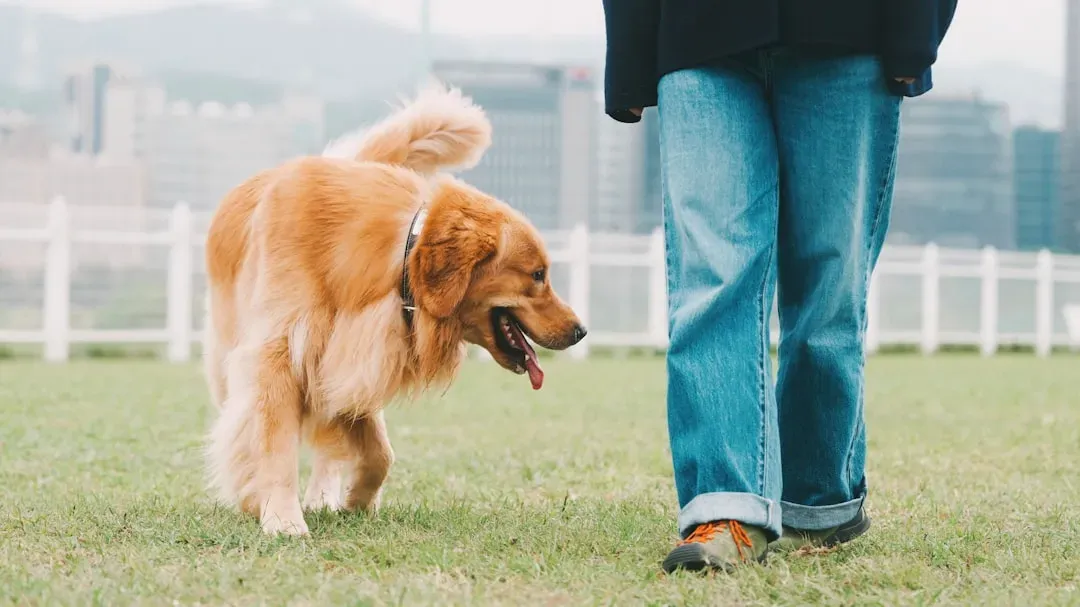
This is where things get genuinely mind-blowing. Scientists discovered that the direction a tail wags is directly tied to which hemisphere of the dog’s brain is active, and that asymmetry tells a very specific emotional story.
In a groundbreaking study conducted by neuroscientist Giorgio Vallortigara and his team at the University of Trento, Italy, it was discovered that dogs tend to wag their tails to the right when they experience positive emotions and to the left when they experience negative emotions. This asymmetrical tail wagging is linked to the different functions of the brain’s hemispheres.
A dog’s brain is organized somewhat like a human’s, with different sides responsible for different emotions. The left hemisphere, controlling the right side of the body, is associated with positive emotions. Meanwhile, the right hemisphere, influencing the left side, deals with negative feelings.
If a dog is about to receive a treat, their tail will likely move with a bias towards its right. On the other hand, negative feelings are typically connected with a bias towards its left side. If a dog is being approached by another dog and feels threatened, the dog’s tail will usually move more to its left. Honestly, once you know this, watching dogs interact will never look the same again.
Speed, Height, and the Helicopter: Decoding the Full Vocabulary
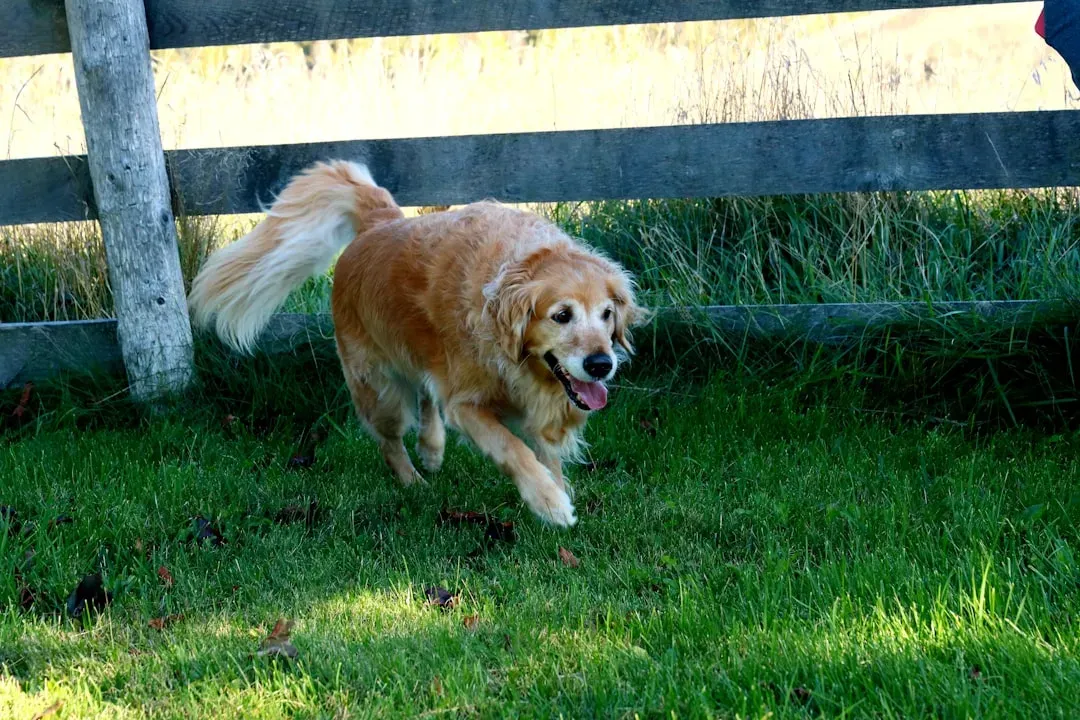
Direction is only one piece of the puzzle. The full language of the tail involves speed, height, and even circular movement – and each of those carries its own distinct message. I think a lot of dog owners are shocked when they realize how much nuance they’ve been missing.
A wide, fast-moving tail wag usually indicates excitement and happiness. Dogs display this type of wag when they see their favorite humans, are about to receive treats, or are engaging in playtime. This is often accompanied by other friendly body language, such as a relaxed face, wiggling body, and perky ears.
A stiff tail wag held high often indicates dominance or alertness. Dogs that are feeling assertive or protective may hold their tails up and wag them in small, controlled movements. If a dog exhibits this type of wag while staring intently or stiffening its body, it could be signaling a warning.
Then there’s the rarest and most delightful variation of all. Dogs can also have “helicopter tail,” or “circle wag,” which is when their tail goes around like a helicopter blade – a sign of extreme joy. If you’ve ever seen it, you already know it’s impossible not to smile. That circular wag is essentially your dog’s version of jumping up and down with excitement.
Dogs Can Read Each Other’s Wags Like a Language
Here’s where the science takes an even more remarkable turn. It isn’t just humans trying to interpret tail wags. Dogs are reading each other’s tails in real time, and they’re remarkably good at it.
Dogs looking at moving video images of conspecifics exhibiting prevalent left- or right-asymmetric tail wagging showed higher cardiac activity and higher scores of anxious behavior when observing left- rather than right-biased tail wagging. In other words, watching another dog wag to the left was enough to physically stress a dog out – heart rate and all.
Canines that see tails wagging to the right are more relaxed, whereas they become more stressed when they see tails wagging to the left. The responses are a result of the differing roles played by the left and right hemispheres of a dog’s brain.
Dogs interpret tail cues differently depending on the length of the tail, as well as the size of the dog interpreting and expressing the behaviour. Dogs are more likely to approach other dogs with long tails when they exhibit wagging behaviour. They are less likely to approach dogs with short tails, even if they exhibit the same wagging behaviour. It’s a bit like how a billboard is easier to read than a sticky note – the signal is the same, but the visibility completely changes the social dynamic.
Domestication’s Role in Shaping the Wag
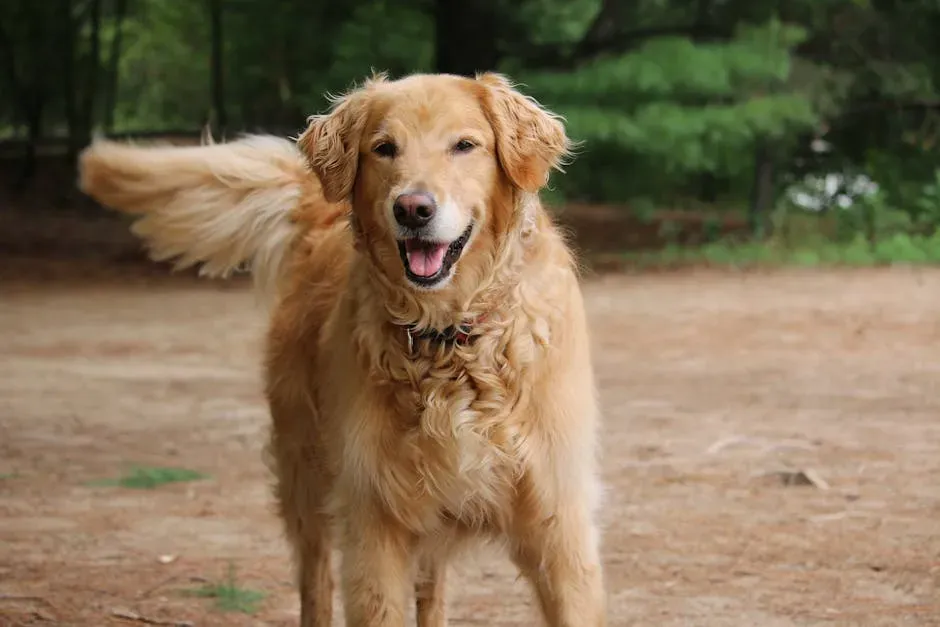
Perhaps the most surprising dimension of all this research is what tail wagging reveals about the ancient history between dogs and humans. The fact that dogs wag far more than their wolf relatives is not a coincidence.
One study that looked at more than 40 species over a four-year time span found that the domestic dog was the species that wags its tail most. Another group of researchers found that dogs wag their tails at a younger age and more often than wolves.
During the domestication process, enhanced rhythmic tail wagging behaviour could have arisen as a by-product of selection for other traits, such as docility and tameness, or been directly selected by humans, due to our proclivity for rhythmic stimuli. Think about that for a moment. Humans may have literally bred dogs to wag their tails more, because we found it irresistible. We were essentially voting for waggier dogs over thousands of years without even knowing it.
A recent review of the science of tail-wagging led by biologist Silvia Leonetti of Italy’s University of Turin suggests that people may have selectively bred dogs to wag their tail because humans responded to its rhythmic nature like they do to beats in music. That idea is wild to sit with. Your dog’s tail might, in some deep evolutionary sense, be performing for you.
Conclusion: The Tail That Tells Everything
A wagging tail is not a simple reflex. It’s a window into the brain, an emotional broadcast, a social signal shaped by thousands of years of coevolution between two very different species. The more science peers into this everyday behavior, the more layers it finds.
Understanding why dogs wag their tails is important partly from an animal welfare perspective, as it could help dog owners read their pups’ cues better. That’s a genuinely important point. Misreading a tail wag isn’t just an intellectual error – it can lead to real misunderstandings between dogs and the people who love them.
Next time your dog greets you at the door, take a second look. Notice the height. Notice the speed. Notice which way the tail leans. You might just realize your dog has been saying something very specific all along – and you finally know how to listen.
What other signals do you think we’ve been misreading in our dogs all this time? Tell us in the comments.
