

Picture this: you’re hiking through a misty cloud forest when suddenly you spot a flash of emerald and crimson feathers above your head – the legendary quetzal, a bird once worshipped by ancient civilizations. This magical moment perfectly captures why Costa Rica has become the ultimate destination for wildlife enthusiasts around the globe. This tiny Central American country, representing just 0.1% of the world’s landmass, is home to over 500,000 species – roughly 4% to 5% of all species found on Earth. From the deepest rainforests to pristine beaches, Costa Rica offers encounters with animals that seem almost too incredible to be real.
10. The Elusive Jaguar – King of the Rainforest
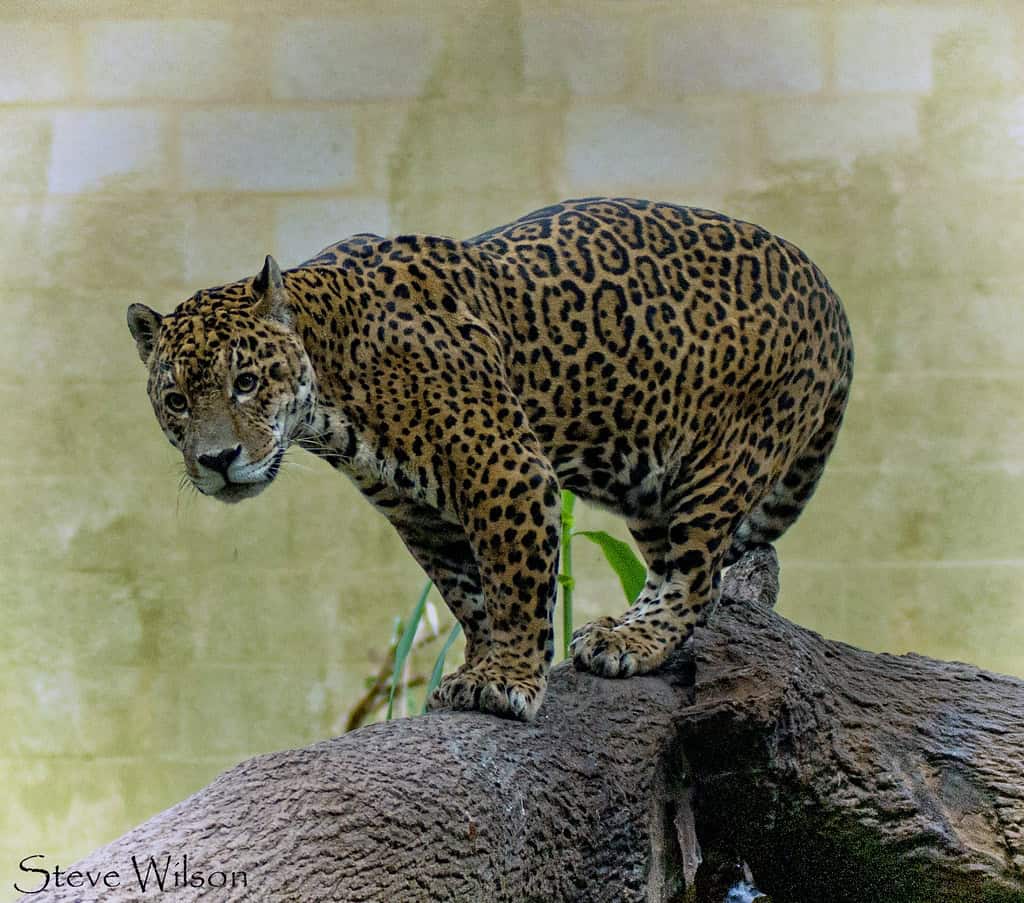
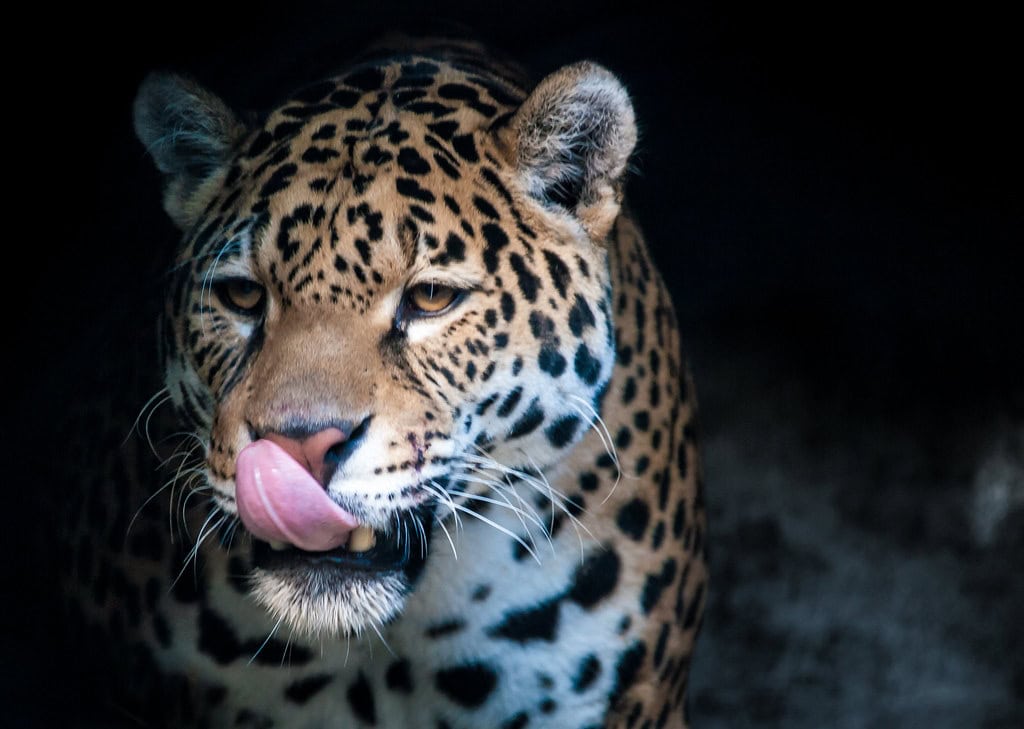
Sly jaguars roam Costa Rica’s forests, but spotting one of these magnificent cats in the wild is like winning the wildlife lottery. The jaguar is the largest wild cat in Costa Rica and can grow up to 2 meters, though their numbers continue to decline drastically. Costa Rica’s Corcovado National Park is witnessing a remarkable increase in jaguar sightings, thanks to effective conservation efforts, giving visitors hope for this once-in-a-lifetime encounter. Hunting was legal here until the 1980s, and as a result the big cats are extremely shy, with sightings occurring in the Talamanca Mountains and coastal national parks being extremely rare. Their golden coats decorated with distinctive black rosettes make them one of nature’s most beautiful predators. With its camouflage coat, the jaguar can move through the jungle like a ghost, earning it a mythic status among indigenous peoples, moving freely and silently in the jungle underbrush or high in the canopy but most commonly seen along river edges.
9. The Dazzling Blue Morpho Butterfly – Living Jewel of the Forest

The blue morpho butterfly is one of the most beautiful animals in Costa Rica, with these brightly colored insects being a sight to behold and one of the most popular insects for wildlife lovers to spot. Here’s what makes them truly magical: this pretty critter’s wings aren’t technically actually blue – they just appear that way because of the way the light reflects off them. You’ll find blue morpho butterflies all over Costa Rica but they’re especially common at the butterfly gardens in La Paz Waterfall Gardens or in Manuel Antonio National Park. There are about 1,251 species of butterflies and at least 8,000 species of moths, with ten percent of known butterfly species worldwide residing in Costa Rica. When one of these iridescent giants flutters past you on the trail, it’s like watching a piece of blue silk dancing through the air. Their wingspan can reach up to six inches, making every sighting feel like a personal light show put on by nature.
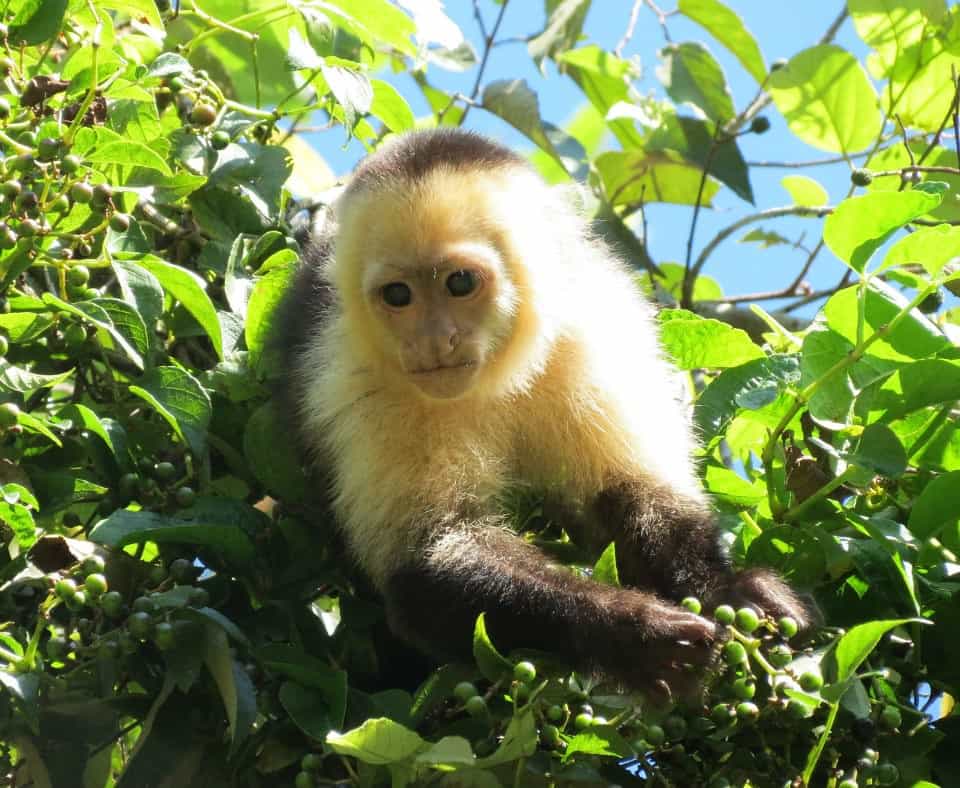
8. The Playful White-Faced Capuchin Monkey – Forest Trickster

They are also known as Capuchin monkeys and are among the most intelligent primates of the Americas, and you can see them in Manuel Antonio National Park. You should hide your lunch from the white-faced capuchin monkeys in Manuel Antonio National Park, as these monkeys are highly intelligent and mischievous, so it’s best to keep food and personal items secured in a zippered bag. These clever little acrobats have mastered the art of being both adorable and troublesome at the same time. Their white faces framed by dark caps give them an almost theatrical appearance, like nature’s own little performers. Costa Rica has four species of monkeys including squirrel monkeys, howler monkeys, spider monkeys and capuchin monkeys, found all over the country but mainly in coastal areas. Watch them swing from branch to branch with incredible agility, or laugh as they curiously investigate your backpack when you’re not looking carefully enough.
7. The Colorful Keel-Billed Toucan – Nature’s Rainbow Bird
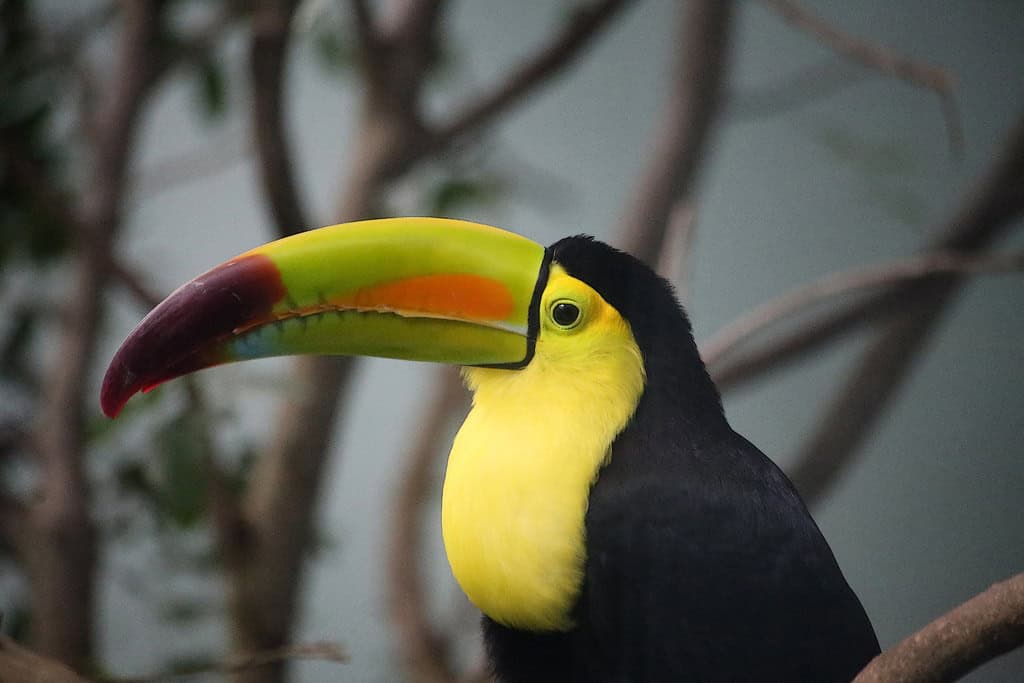
Costa Rica is home to six species of toucans including the colorful Keel-billed Toucan, the large Chestnut-mandibled Toucan, the rare Yellow-eared Toucanet, the vibrant Collared Aracari, the striking Fiery-billed Aracari, and the smaller Emerald Toucanet. A toucan’s bill serves multiple purposes, including feeding on fruits and insects, thermoregulation by radiating excess heat, and attracting mates with its bright colors. The Keel-billed Toucan, with its rainbow-colored beak, looks like it stepped straight out of a children’s storybook. When it comes to spotting these birds, you will most likely hear them before you see them as they are quite vocal birds with a unique call, and they usually are in large groups so if you see one, you will most likely see more. Toucans exhibit follow-the-leader behavior – whenever one toucan flies off, the others will follow a few seconds later, usually following each other within minutes. Their oversized beaks might look cumbersome, but these birds are surprisingly graceful fliers.
6. The Adorable Three-Toed Sloth – Master of Slow Motion

No other Costa Rican animal is more iconic than the sloth – the world’s slowest animal – locally called oso perezoso, with their lethargy being a consequence of their entirely leaf-based diet, which takes up to two weeks to digest. Officially the world’s slowest mammal, the Three-toed Sloth moves with so little pace that algae can grow on its fur, and as nocturnal animals sleeping 15 to 20 hours a day, sloths live high up in the treetops and are very difficult to spot. It’s nearly impossible not to smile when you spot a sloth, with their cartoonish faces, long limbs, and exceptionally slow pace seeming to embody that easygoing pura vida vibe. There are two species of sloths in Costa Rica: the Brown-Toed Sloth and the Three-Toed Sloth. Their permanent smile and zen-like existence make them the perfect ambassadors for Costa Rica’s laid-back lifestyle. Finding one hanging peacefully in a cecropia tree feels like discovering a real-life teddy bear in the wild.
5. The Majestic Resplendent Quetzal – Sacred Bird of the Ancients
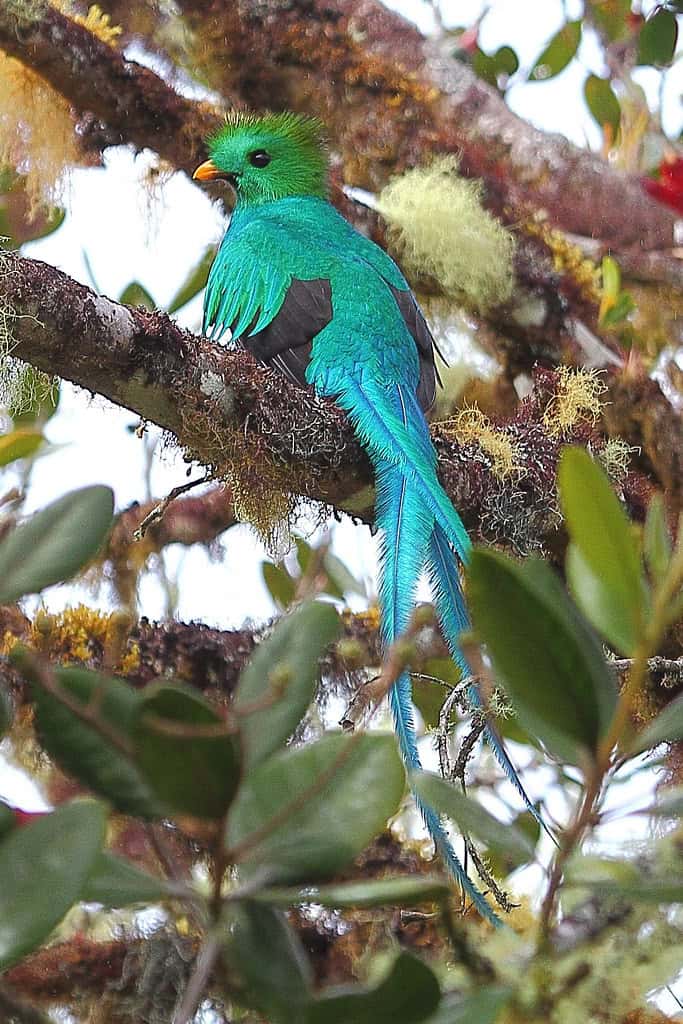
This is the most amazing bird species in Central America, known for its amazingly vibrant plumage and its long tail that is visible in adult individuals, and you can find it in national parks such as Poas Volcano and La Amistad. Costa Rica’s folklore features many mythical birds like the Resplendent Quetzal, a symbol of freedom and divinity. Also, look out for the Resplendent Quetzal found in the humid rainforests mainly in San Gerardo De Dota and Monteverde – this amazing bird is picture perfect. The male’s emerald green body contrasts beautifully with its brilliant red chest, while its tail feathers can grow up to three feet long. Ancient Mayan and Aztec civilizations considered this bird so sacred that killing one was punishable by death. Today, seeing a quetzal in the wild feels equally sacred – it’s a moment that connects you to centuries of reverence for one of nature’s most spectacular creations.
4. The Vibrant Red-Eyed Tree Frog – Tiny Tropical Gem
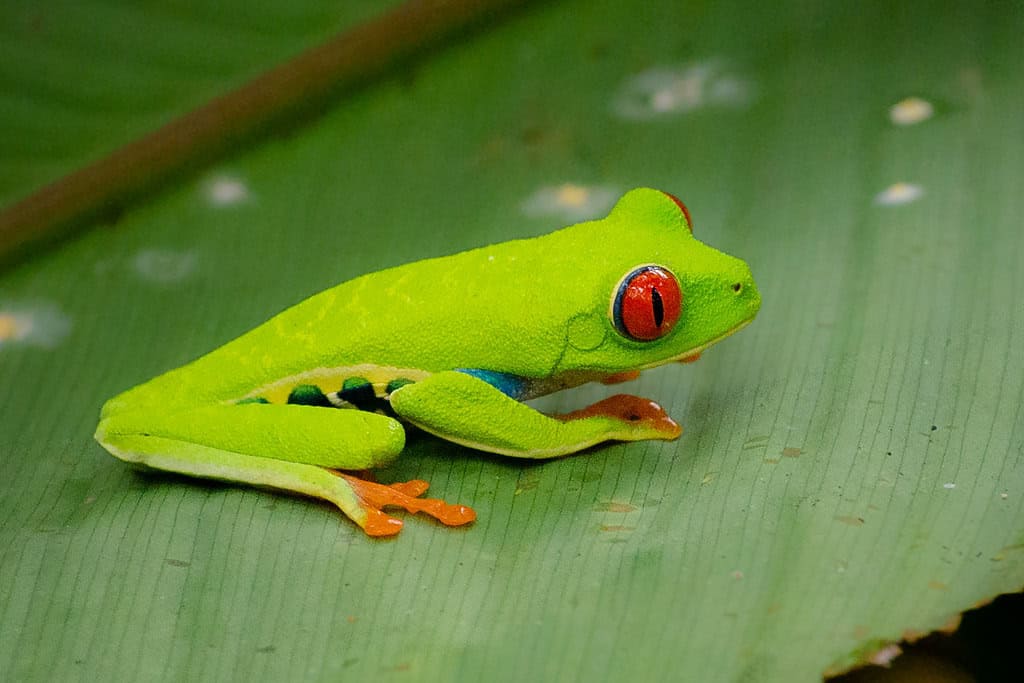
This amphibian is iconic for its vibrant colors of the body – its body is lime green with a white underbelly and it also has blue and yellow stripes on its inner legs. Despite being no larger than your thumb, the red-eyed tree frog packs more personality per square inch than most animals ten times its size. Their ruby-red eyes seem almost too large for their tiny faces, giving them a perpetually surprised expression that’s impossible not to love. Costa Rica is home to around 175 amphibians, 85% of which are frogs, with frogs having interesting ways of finding fishless water to raise their young in. These little acrobats spend their nights hunting insects and their days sleeping on the undersides of leaves, perfectly camouflaged until those striking red eyes pop open. Their bright colors serve as a warning to predators, but to humans, they’re simply one of nature’s most charming masterpieces.
3. The Enormous Baird’s Tapir – Living Fossil of the Forest
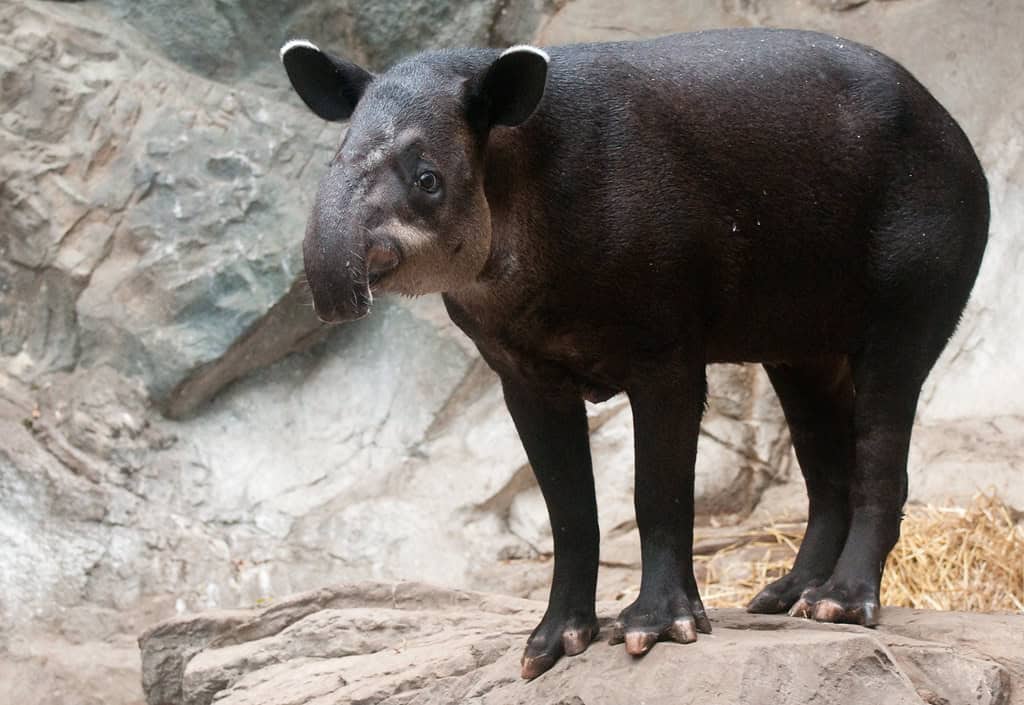
One of Costa Rica’s most unique animals, Baird’s tapirs look like a mix between a rhino and a pig wearing a mini elephant trunk, and they can reach up to about two metres (six feet) and weigh up to around 363 kg (800 pounds). Despite being the largest land animals native to Costa Rica, they are not easy to find because of their low numbers – only around 1,000 Baird’s tapirs exist in Costa Rica and can be spotted in a variety of habitats that include swamps, marshes, the rainforests of Corcovado National Park, and the cloud forests of Monteverde. The Baird’s tapir is highly endangered. These gentle giants are like living remnants from prehistoric times, with their distinctive trunk-like snouts and massive build. They’re excellent swimmers and love wallowing in mud or rivers to cool off and protect themselves from insects. Meeting one of these ancient-looking creatures in the wild feels like stepping back in time to when megafauna roamed the Americas.
2. The Acrobatic Squirrel Monkey – Tiny Forest Gymnast
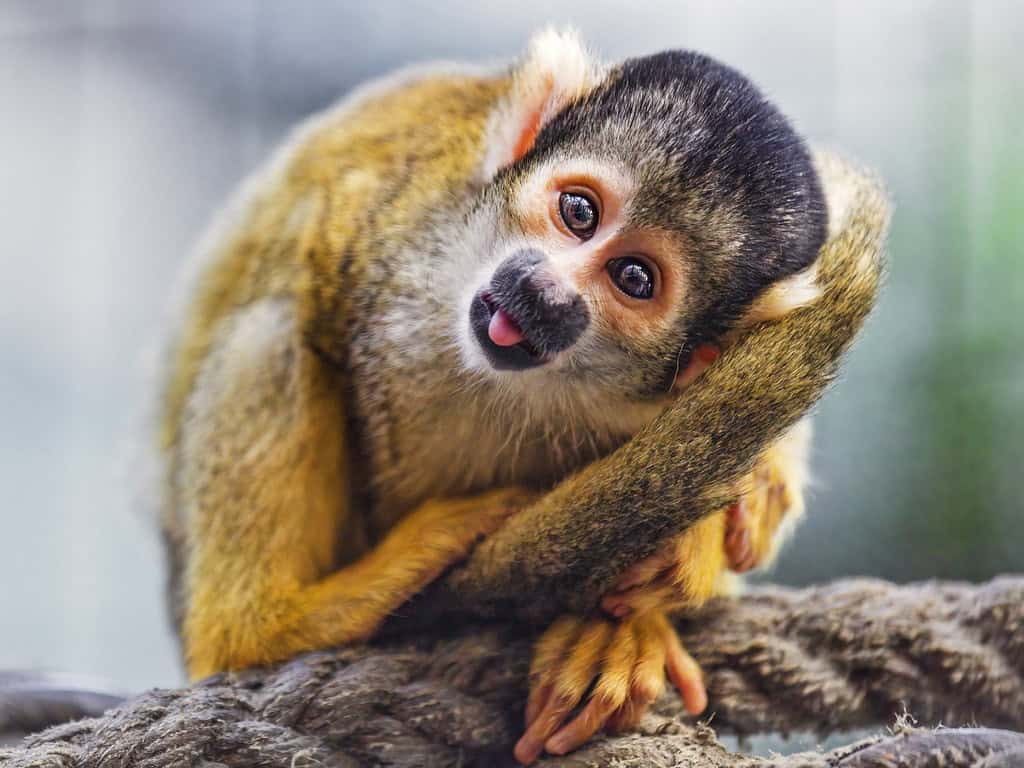
They are among the smallest primates in Costa Rica and the most endangered ones, living exclusively in Manuel Antonio National Park. One of many species of monkey found in the tropical forests of Costa Rica are Squirrel Monkeys, spending 99% of their lives in the trees, so look out for these cute, fluffy faces up above your heads. The Squirrel Monkey is the smallest. These tiny athletes are pure energy in motion, bouncing through the canopy like furry ping-pong balls. Their golden fur and expressive faces make them look like living stuffed animals, but don’t let their cute appearance fool you – they’re incredibly agile and can leap distances that seem impossible for their size. Watching a troop of squirrel monkeys navigate the treetops is like watching a high-speed acrobatic performance where gravity seems optional. Their distinctive alarm calls echo through the forest, often alerting you to their presence long before you spot their small, quick forms darting between branches.
1. The Magnificent Humpback Whale – Ocean Giant

From the Pacific coastline, where migrating humpback whales and mega pods of dolphins swim past for most of the year, Costa Rica’s wildlife abounds in every element, with the Pacific and Caribbean coasts seeing plenty of dolphin action, including common bottlenose, pantropical spotted and spinner dolphins on the Pacific Coast, and bottlenose dolphins in the Caribbean. Whale and dolphin watching activities developed in coastal communities like Uvita, Dominical, Drake Bay, Caño Island and the Golfo Dulce, and extended to the central coast at Manuel Antonio, Jaco, Montezuma and Quepos. These magnificent marine mammals migrate thousands of miles to reach Costa Rica’s warm Pacific waters, making it one of the few places on Earth where you can witness humpback whales from both the Northern and Southern Hemispheres. When a 40-ton humpback breaches the surface in a spectacular display of power and grace, launching its entire body out of the water, it’s a moment that reminds you just how incredible our planet’s wildlife truly is. You can spot the stunning humpback whales in Drake Bay, Osa Peninsula. Their haunting songs can travel for miles underwater, and witnessing a mother teaching her calf to breach is an experience that will stay with you forever.
Conclusion
Costa Rica’s incredible biodiversity offers wildlife encounters that feel almost surreal in their beauty and wonder. Costa Rica supports an enormous variety of wildlife due in large part to its geographic position between North and South America, its neotropical climate, and its wide variety of habitats, representing nearly 5% of the species estimated worldwide. From the tiniest poison dart frog to the massive humpback whale, each animal represents a unique piece of nature’s grand puzzle. Whether you’re a seasoned naturalist or someone who simply appreciates the magic of the natural world, Costa Rica’s wildlife will leave you with memories that last a lifetime. The country’s commitment to conservation ensures that future generations will also have the chance to witness these incredible creatures in their natural habitats. What would you have guessed would be the most challenging animal to spot in this tropical paradise?

As a little kid, I fell in love with nature, wildlife, and animals. Living in the USA, South Africa, Italy, China and Germany gave me the opportunity to discover the world's Wildlife. My favorite animals are Mountain Gorillas, Siberian Tigers, and Great White Sharks.
I'm a certified PADI Open Water Diver, went to Everest Base Camp and Trekked Gorillas in Uganda. I hold a Master of Science in Economics and Finance.
Please send any feedback to feedback@animalsaroundtheglobe.com
- Why the Great Barrier Reef Is the Best Place to Spot Sea Turtles - June 3, 2026
- 2 Animals With Super Sized Body Parts and What They are For - June 3, 2026
- Explore The Azores - June 3, 2026