


Fishkeeping enthusiasts know that creating a harmonious aquarium depends largely on selecting compatible tank mates. While many aquarists are drawn to the vibrant colors and unique personalities of different fish species, not all fish play well with others. Some thrive in community settings, forming fascinating social structures and even appearing to develop bonds with their aquatic companions. Others, despite their beauty or popularity, can turn a peaceful tank into a battleground. This comprehensive guide explores ten fish breeds that genuinely enjoy company and three notorious troublemakers that tend to display aggressive behaviors when housed with other fish.
The Social Nature of Aquarium Fish

Fish exhibit complex social behaviors that have evolved over millions of years. Many species naturally school or shoal in the wild as a defense mechanism against predators, for efficient foraging, or as part of their mating rituals. These natural tendencies translate to aquarium settings, where some species demonstrate clear preferences for companionship. Social fish often display reduced stress levels, more natural behaviors, and even improved health when kept in appropriate groups.
Understanding the social needs of different fish species is crucial for responsible fishkeeping. Fish that evolved to live in groups may experience stress when kept alone, potentially leading to compromised immune systems, reduced lifespan, and abnormal behaviors. Conversely, territorial or aggressive species forced into community settings can cause injury to themselves or others through constant confrontations. This delicate balance makes knowledge of fish sociability essential for creating thriving aquatic environments.
10. Neon Tetras The Classic Schooling Fish

Neon Tetras (Paracheirodon innesi) are perhaps the most recognizable community fish in the aquarium hobby. These small, brilliantly colored fish feature a distinctive horizontal blue stripe above a red stripe that runs from mid-body to tail. Native to the blackwater streams of the Amazon Basin, Neons have evolved to live in large schools of hundreds or even thousands of individuals. This schooling behavior serves as protection from predators in their natural habitat.
In home aquariums, Neon Tetras thrive when kept in groups of at least six individuals, though larger groups of 10-15 create more impressive displays and provide greater security for the fish. When properly schooled, these fish exhibit synchronized swimming patterns that are both beautiful and indicative of their well-being. Neons become noticeably stressed when kept in insufficient numbers, often hiding, showing faded coloration, or becoming susceptible to disease. Their peaceful nature makes them ideal companions for other non-aggressive species of similar size.
9. Corydoras Catfish The Sociable Bottom Dwellers
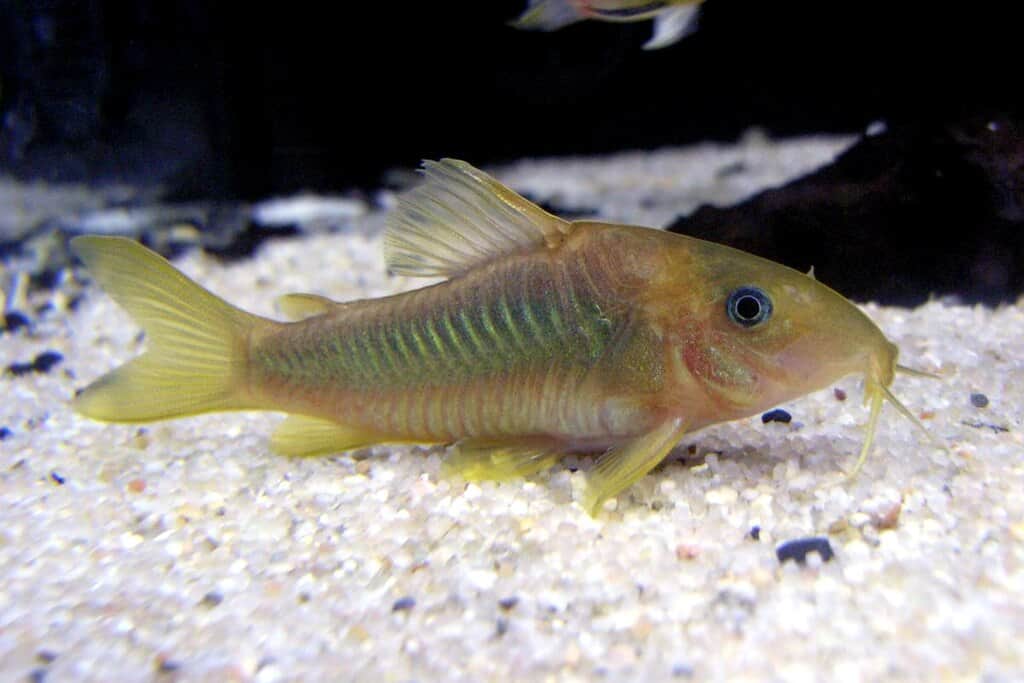
Corydoras catfish represent a large genus of armored catfish that have won the hearts of aquarists worldwide with their peaceful temperaments and endearing behaviors. These bottom dwellers, native to South American waterways, possess downward-facing mouths perfectly adapted for sifting through substrate for food particles. While they come in various sizes and patterns—from the bronze Corydoras aeneus to the panda-patterned Corydoras panda—all species share a strong preference for companionship.
Corydoras should be kept in groups of at least four to six individuals, preferably of the same species. When properly grouped, these catfish display fascinating social behaviors: they forage together, rest side by side, and even appear to communicate through subtle body movements. Aquarists often observe what looks like playful behavior as groups of Corydoras suddenly dart to the surface together for air (they are facultative air breathers) before returning to their bottom-dwelling activities. Their sociable yet unobtrusive nature makes them excellent community tank citizens that help maintain cleanliness without bothering other fish.
8. Guppies Colorful Social Butterflies
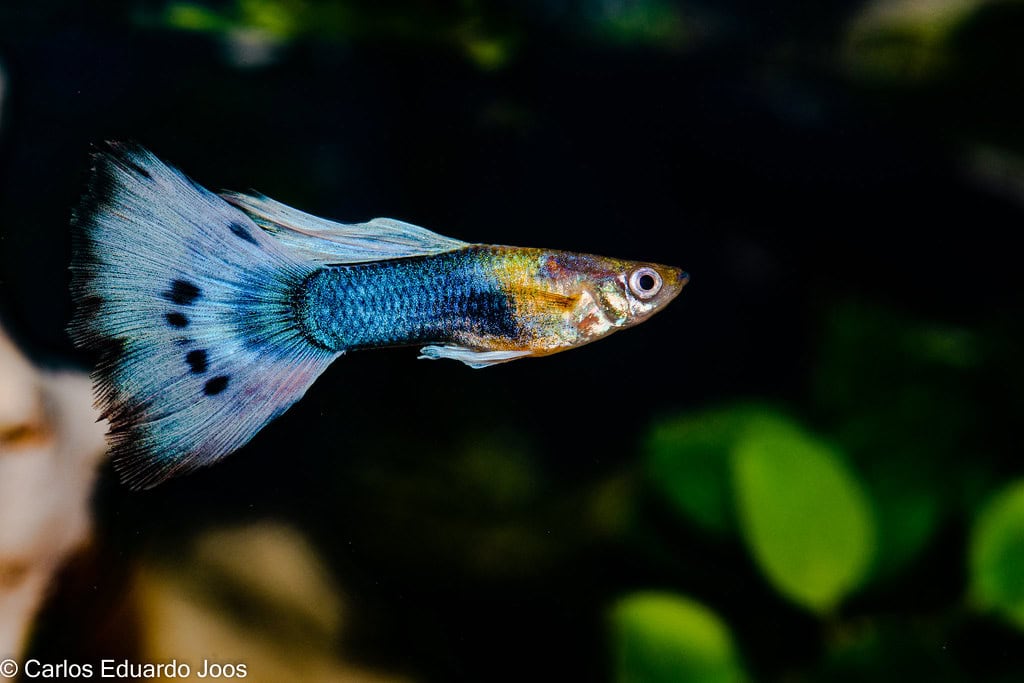
Guppies (Poecilia reticulata) have earned their popularity through stunning color variations, easy care requirements, and social dispositions. These livebearers, originally from Trinidad and parts of South America, have been selectively bred into countless color morphs featuring elaborate tail shapes and vibrant patterns. In the wild, guppies naturally form loose social groups, particularly in areas with reduced predation pressure.
In aquariums, guppies thrive in groups where males can display to females and establish a natural social hierarchy. A ratio of two or three females to each male is recommended to prevent females from being harassed during mating pursuits. Guppies actively interact with one another through displays, chasing, and what appears to be social recognition. They’re known to recognize and prefer familiar tank mates over strangers, suggesting a level of social complexity. Their constant activity and interaction make them engaging community fish that bring life and movement to any appropriate tank setup.
7. Harlequin Rasboras Elegant Schooling Companions
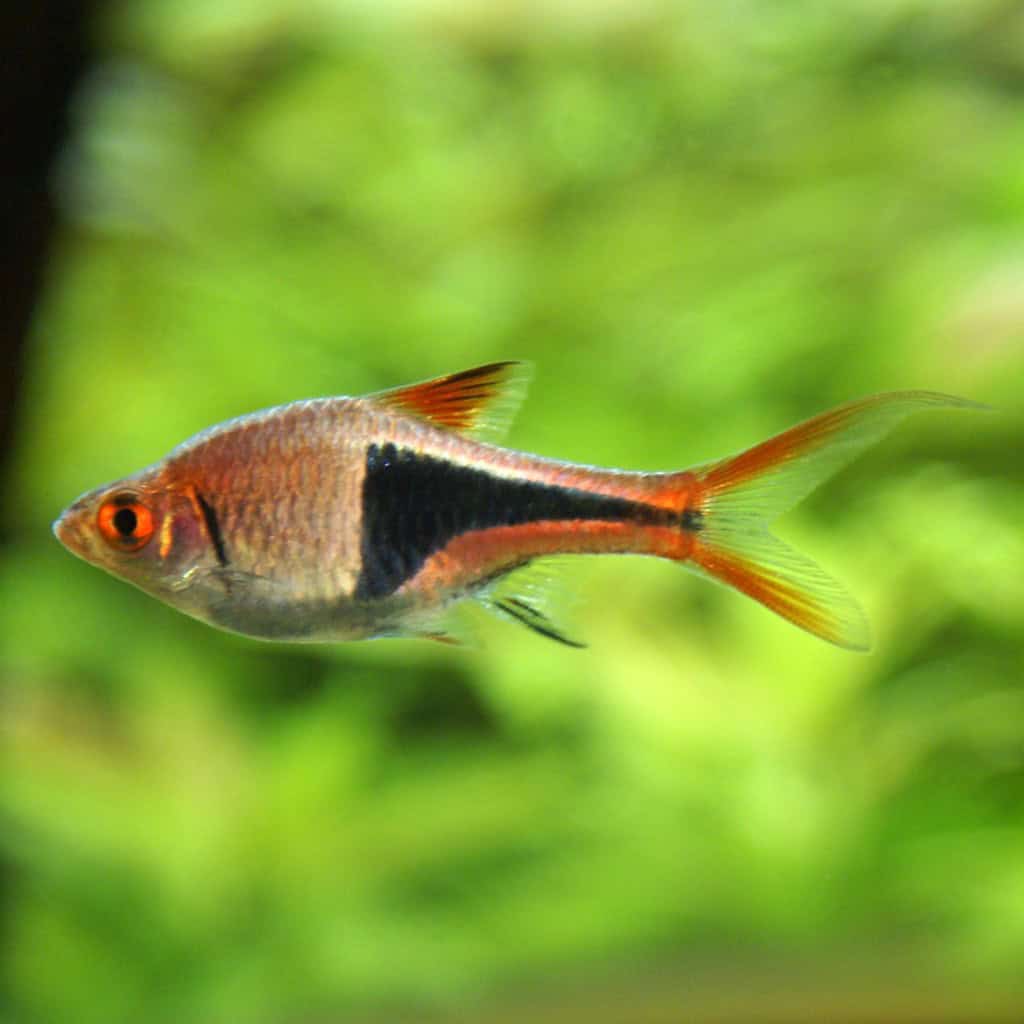
Harlequin Rasboras (Trigonostigma heteromorpha) are distinguished by their copper-orange bodies marked with a distinctive black triangular patch. Native to the tannin-rich waters of Southeast Asia, these small, peaceful fish have become staples in community aquariums due to their hardy nature and striking appearance. In their natural habitat, they form tight-knit schools that move as cohesive units through blackwater streams and flooded forests.
These rasboras demonstrate a strong schooling instinct that should be accommodated in home aquariums with groups of at least six individuals, though groups of ten or more create more impressive displays and better mimic natural conditions. When kept in proper numbers, Harlequin Rasboras maintain a close formation, particularly when startled or during feeding times. Their schooling behavior creates a dynamic, living element in planted aquariums, with their warm coloration contrasting beautifully against green plants. Unlike some schooling species that loosen their formations when comfortable, Harlequins tend to maintain their group cohesion even in established tanks.
6. Cherry Barbs Social Jewels for Small Communities
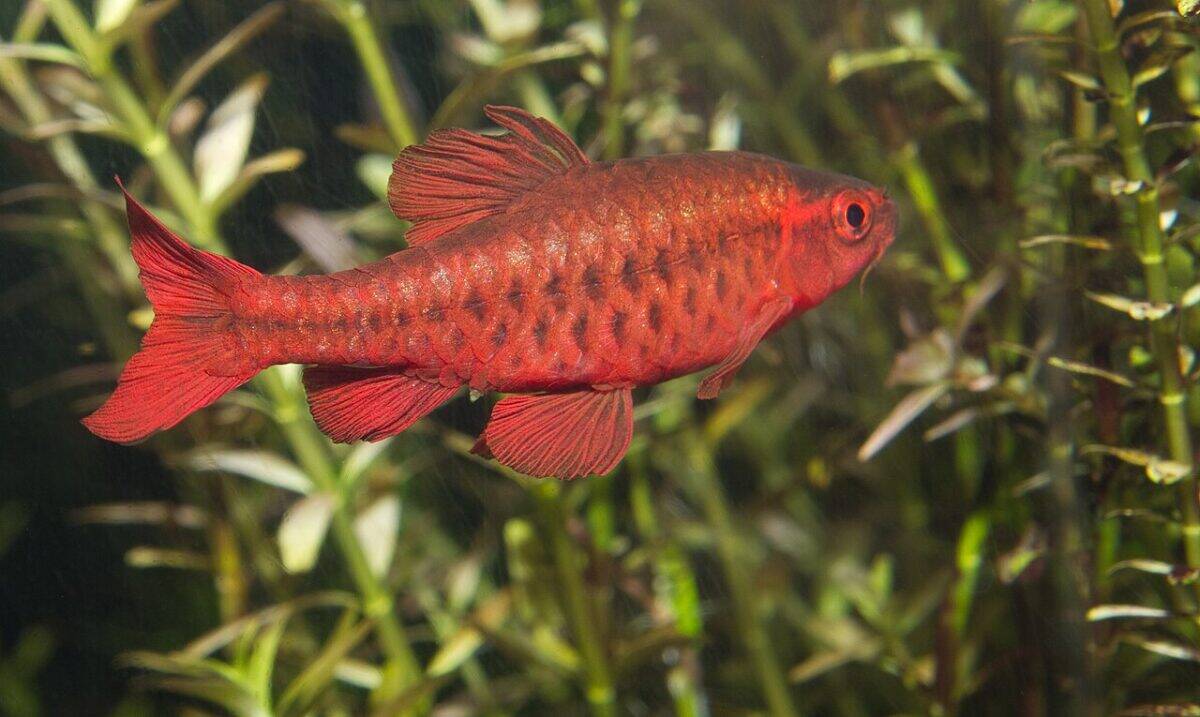
Cherry Barbs (Puntius titteya) are aptly named for the brilliant red coloration that mature males develop. Native to Sri Lanka’s forested streams, these small cyprinids face endangerment in the wild due to habitat destruction, though they breed readily in captivity. Cherry Barbs display fascinating social dynamics that make them engaging community residents. Males perform impressive displays for females, intensifying their red coloration and engaging in dance-like movements that showcase their fins.
These barbs should be kept in groups of at least five, with a higher ratio of females to males to distribute any male attention. Unlike some barb species that can be nippy or aggressive, Cherry Barbs remain peaceful even during breeding displays. Their social nature is evident in how they interact not just during breeding but in everyday activities—they forage together, rest in loose groups, and often swim in synchronized patterns. Their moderate activity level and mid-water swimming habits make them visible without being hyperactive, creating balanced movement in community tanks.
5. Zebra Danios Energetic Schoolers for Active Tanks
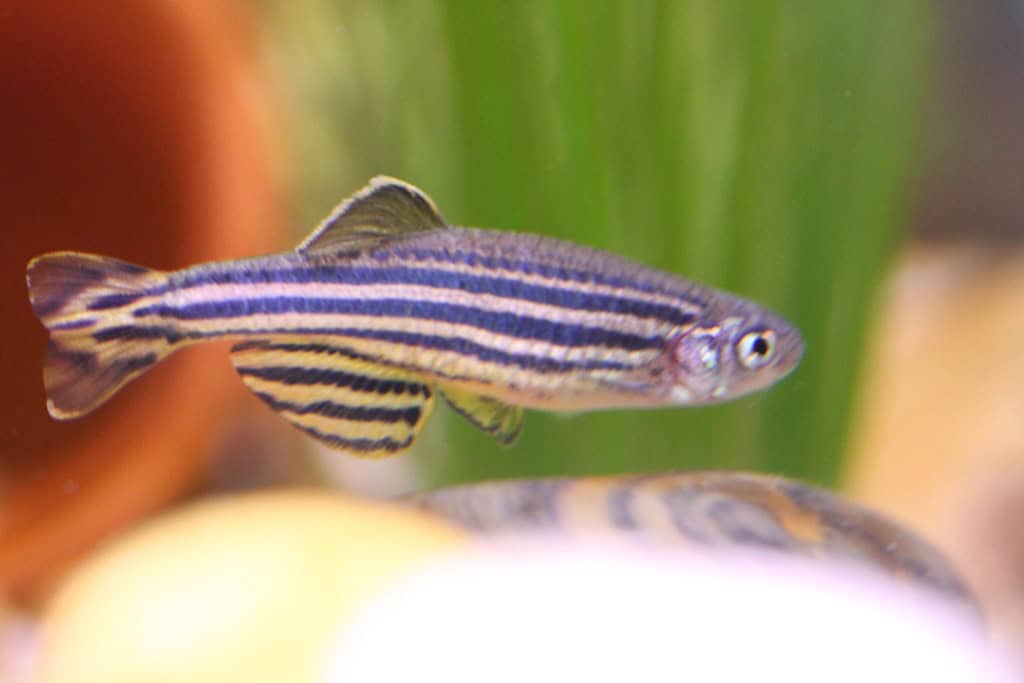
Zebra Danios (Danio rerio) have become scientifically important as model organisms in research while remaining popular in the aquarium hobby for their hardiness and active nature. These fish, recognizable by their horizontal blue and white stripes, originate from the Ganges region in Eastern India and Bangladesh. In nature, they form large, active schools that dart through streams and rice paddies, constantly on the move as they search for food and avoid predation.
In home aquariums, Zebra Danios require groups of at least six individuals to satisfy their strong schooling instinct. When properly grouped, they display constant, coordinated movement throughout the upper and middle water column. Their high energy level and quick movements serve as excellent dither fish, encouraging shyer species to emerge from hiding. Zebra Danios show reduced stress when kept in larger groups and appropriate tank sizes (at least 20 gallons for a proper school), evidenced by stronger coloration, better feeding response, and more natural behaviors. Their sociability extends to peaceful interaction with most similarly sized community fish.
4. Rummy Nose Tetras Synchronized Swimming Champions
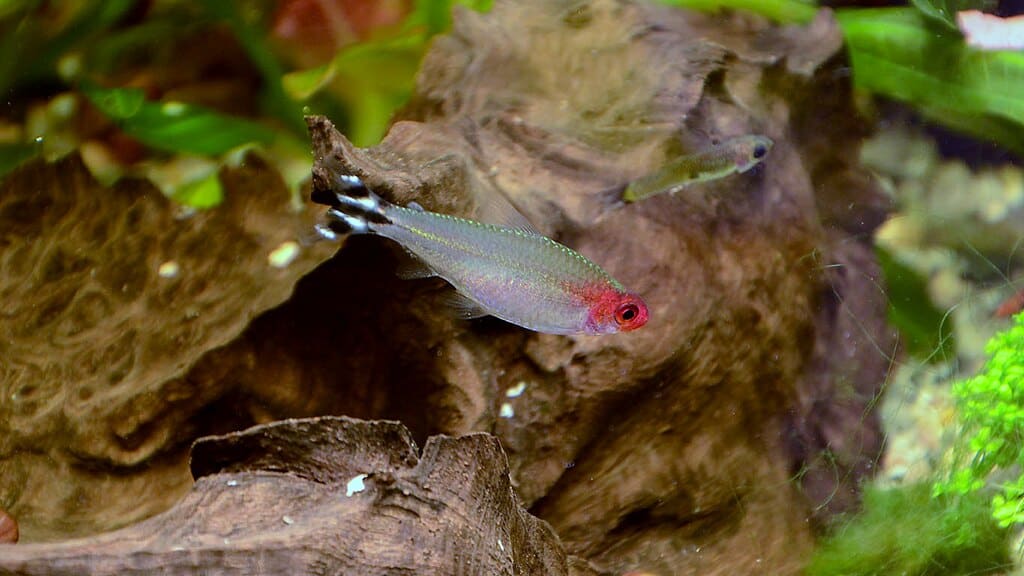
Rummy Nose Tetras (Hemigrammus rhodostomus) are celebrated for both their distinctive appearance and impressive schooling behavior. These small characins feature a bright red “nose,” black and white checked pattern on their tail fin, and silvery bodies. Native to the Amazon Basin, they’ve evolved to live in tight-knit schools that move with remarkable synchronization through blackwater habitats, providing safety in numbers against the numerous predators of their ecosystem.
Among all community fish, Rummy Nose Tetras display perhaps the most cohesive schooling behavior in aquariums. When kept in groups of six or more (with ten or more being ideal), they swim in perfect unison, turning and changing direction as if choreographed. This synchronized swimming isn’t just aesthetically pleasing but indicates their comfort level—Rummy Nose Tetras are known to loosen their tight formations when water parameters deteriorate, making them living water quality indicators. Their social bonds appear strong, with individuals rarely straying far from the group and quickly rejoining when separated.
3. Discus The Social Cichlids
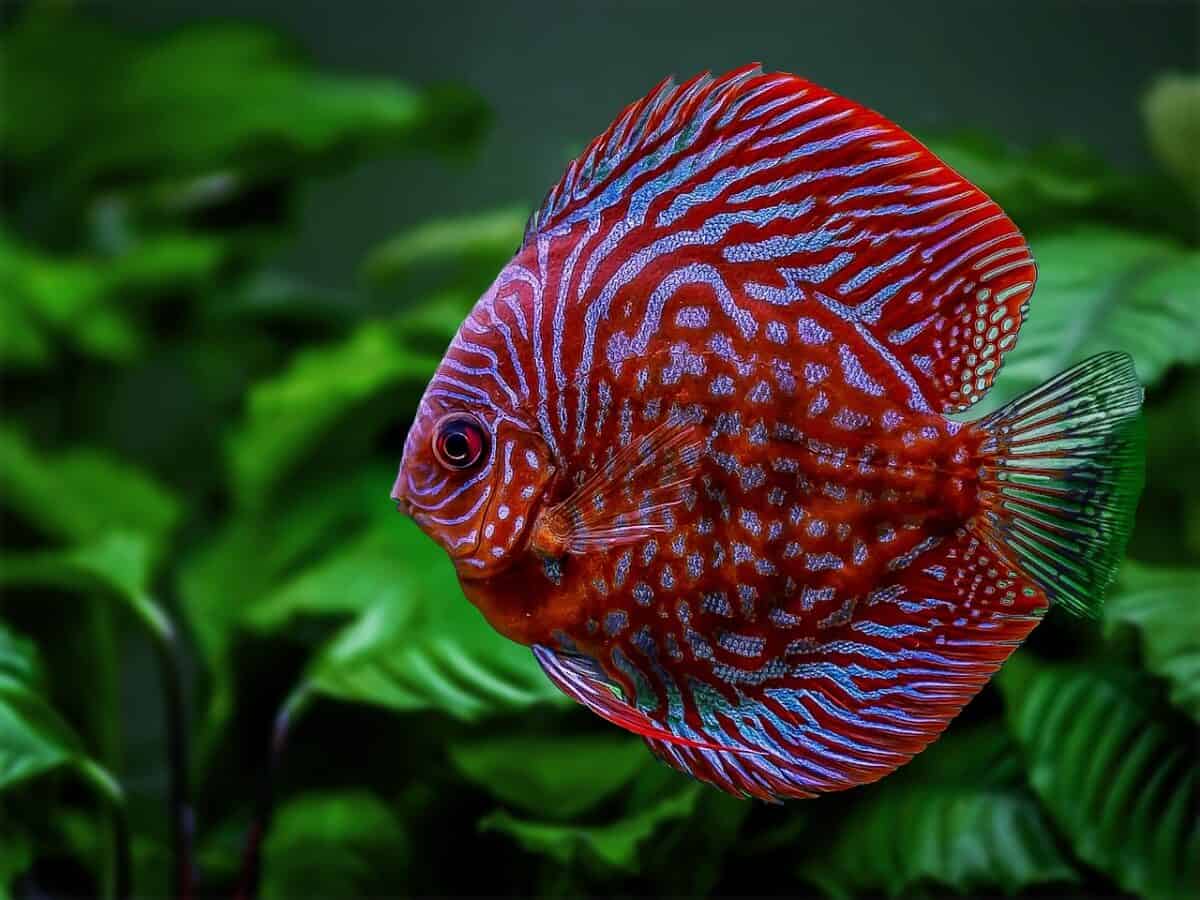
Discus (Symphysodon spp.) stand out as exceptional examples of social behavior among cichlids, a family often known for territorial aggression. These laterally compressed, disc-shaped fish are native to the Amazon River basin and have earned the nickname “king of the aquarium” for their striking colors and complex care requirements. In their natural habitat, discus form social groups that provide protection and facilitate breeding in the complex Amazonian ecosystem.
Unlike many cichlids, discus demonstrate strong social bonds and should be kept in groups of five or more individuals in home aquariums. They establish hierarchies without excessive aggression and show remarkable parental care—not only do they guard their eggs, but young discus feed on special mucus secreted from their parents’ bodies. This intricate social structure and cooperative parenting behavior sets them apart from many fish species. Keeping discus in proper social groups reduces stress, prevents bullying of isolated individuals, and often results in more vibrant coloration. Their peaceful yet interactive nature makes them centerpiece fish in specialized community tanks with compatible, warm-water species.
2. Mollies The Social Livebearers

Mollies (Poecilia sphenops and related species) are adaptable livebearers native to freshwater and brackish environments from Mexico to Colombia. Available in various colors and fin types—from the common Black Molly to the impressive Sailfin varieties—these fish have been aquarium favorites for generations. In nature, mollies form loose social aggregations, particularly in protected areas with abundant vegetation and food sources.
In aquariums, mollies demonstrate clear social preferences, with females forming cohesive groups and males establishing loose hierarchies. Like other livebearers, they should be kept with a higher ratio of females to males (at least 2-3 females per male) to prevent harassment. Mollies interact through a variety of behaviors, including parallel swimming, fin displays, and what appears to be social feeding where fish are more likely to investigate food when they observe others eating. Their sociability extends to other peaceful species, making them versatile community tank residents. Unlike some community fish that merely tolerate each other’s presence, mollies actively engage with conspecifics and sometimes even with other compatible species.
1. Kuhli Loaches Nocturnal Social Serpents

Kuhli Loaches (Pangio kuhlii) offer a fascinating example of how social behavior can manifest even in shy, primarily nocturnal species. These eel-like fish, featuring distinctive orange and black banded patterns, are native to Southeast Asian streams and rivers. Despite their reputation for being elusive and spending much time hidden, Kuhli Loaches are surprisingly social when provided with appropriate conditions and companionship.
These loaches should be kept in groups of at least three, though groups of six or more bring out their most interesting behaviors. When properly established in groups, Kuhli Loaches often twist around each other in knot-like formations during rest periods, seeking both security and social contact. Aquarists with established Kuhli Loach groups report increased activity levels, including daytime appearances, compared to those kept in insufficient numbers. Their social nature becomes particularly evident during feeding times when they emerge together, wiggling excitedly through the substrate. Though their social interactions may be less immediately obvious than those of more active, diurnal species, Kuhli Loaches demonstrate that even cryptic fish can form meaningful social bonds.
3. Tiger Barbs Beautiful but Bullies

Tiger Barbs (Puntigrus tetrazona) present a paradox in the aquarium hobby—their striking appearance, with bold black stripes against a golden-orange background, makes them highly desirable, yet their behavior often creates challenges in community settings. Native to Borneo and Sumatra, these active cyprinids grow to about 3 inches and possess a temperament that doesn’t always match their good looks. While they are social with their own kind, forming tight schools in nature, Tiger Barbs have earned notoriety for their fin-nipping tendencies toward other species.
The aggression displayed by Tiger Barbs isn’t territorial in the traditional sense but rather expresses as persistent harassment, particularly directed at slow-moving species with flowing fins. Bettas, angelfish, and fancy guppies often bear the brunt of their attention, suffering damaged fins and increased stress. This behavior can be somewhat mitigated by keeping Tiger Barbs in larger groups of eight or more, which helps distribute their natural boisterous energy within their own social hierarchy rather than directing it toward other species. However, even with this strategy, they remain poor choices for peaceful community tanks and are best kept in species-specific setups or with equally robust, fast-moving tankmates.
2. Oscar Cichlids Intelligent Terrors
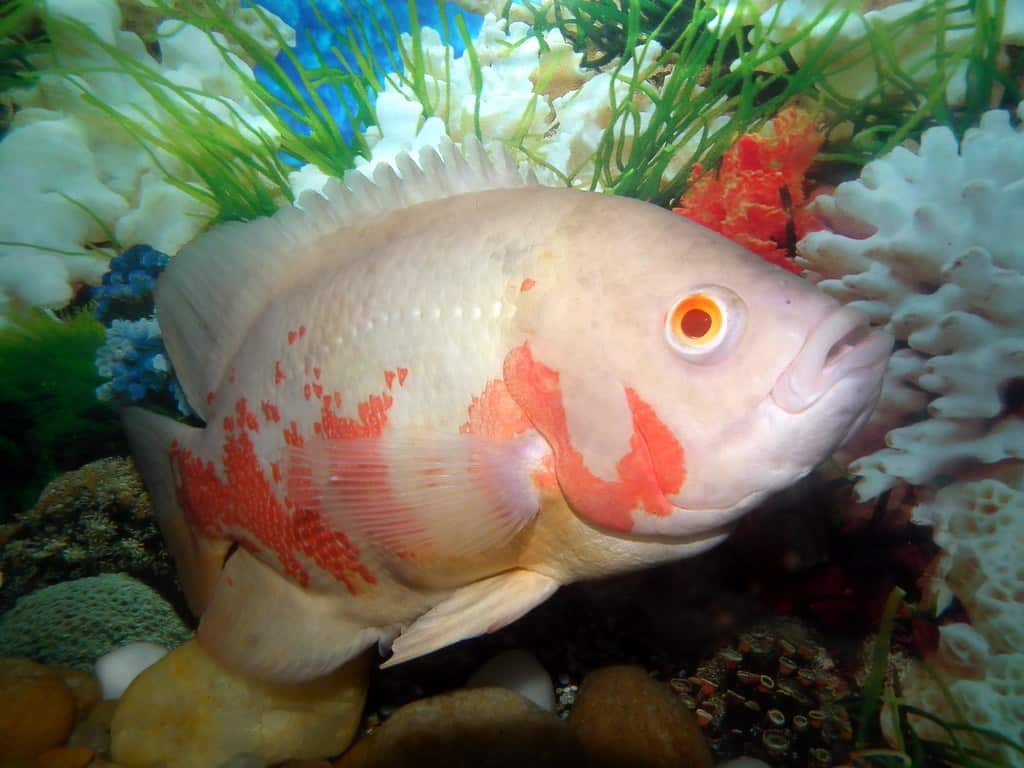
Oscar Cichlids (Astronotus ocellatus) combine remarkable intelligence with territorial aggression that makes them challenging community residents. These South American cichlids can reach sizes of 12-14 inches in captivity and possess cognitive abilities that seem almost mammalian—they recognize their owners, can be trained to perform simple tasks, and manipulate objects in their environment. Their intelligence and personality make them engaging pets but also contribute to their problematic behavior in mixed-species tanks.
The aggression displayed by Oscars intensifies as they mature, evolving from the relatively peaceful juveniles often purchased by unprepared aquarists into territorial adults that view most tank mates as either competitors or potential meals. Their large size allows them to intimidate or consume smaller fish, while their territorial nature leads to relentless persecution of even similarly sized species. Oscars are known to rearrange tank decorations to suit their preferences, sometimes creating territories that leave little space for other fish. Their aggressive tendencies, combined with their messy eating habits and substantial bioload, make them unsuitable for most community setups. Oscars are best kept either alone or in very large aquariums with carefully selected, equally robust companions like larger catfish or silver dollars.
1. Red Devil Cichlids The Name Says It All

Red Devil Cichlids (Amphilophus labiatus) have earned their diabolical name through their extreme territorial aggression and formidable physical attributes. Native to Lake Nicaragua and Lake Managua in Central America, these large cichlids can grow to over 15 inches in length and possess powerful jaws capable of rearranging substrate, damaging aquarium equipment, and inflicting serious injuries on tank mates. Their striking appearance—vibrant orange-red coloration and distinctive nuchal hump in mature males—makes them visually appealing despite their challenging temperament.
The aggression displayed by Red Devils is primarily territorial and becomes particularly pronounced during breeding periods. These cichlids claim large territories in the wild and attempt to do the same in captivity, regardless of tank size. Even in aquariums exceeding 125 gallons, Red Devils often dominate the entire space, relentlessly pursuing and attacking any fish they perceive as intruders. Their aggression isn’t limited to other fish—aquarists frequently report these cichlids attacking cleaning equipment, thermometers, and even the aquarist’s hands during tank maintenance.
Conclusion:

In the world of freshwater aquariums, choosing the right mix of fish can make all the difference between a peaceful tank and a stressful one. Schooling fish like neon tetras, guppies, cory catfish, and rasboras thrive in groups, where they feel safer, more active, and display their best colors. These social species often do better when surrounded by their own kind or other peaceful tankmates, making them ideal for community setups that aim to mimic natural harmony.
On the flip side, some fish have territorial or aggressive tendencies that can disrupt the balance. Species like the betta, red-tailed shark, or certain cichlids may become hostile when overcrowded or when their space is invaded. Understanding each fish’s behavior, compatibility, and social needs is crucial to maintaining a thriving aquarium. With a little research and thoughtful planning, you can create a tank environment where all your aquatic residents swim peacefully—together or apart.

As a little kid, I fell in love with nature, wildlife, and animals. Living in the USA, South Africa, Italy, China and Germany gave me the opportunity to discover the world's Wildlife. My favorite animals are Mountain Gorillas, Siberian Tigers, and Great White Sharks.
I'm a certified PADI Open Water Diver, went to Everest Base Camp and Trekked Gorillas in Uganda. I hold a Master of Science in Economics and Finance.
Please send any feedback to feedback@animalsaroundtheglobe.com
- 15 Creepiest Spider Species Living Right in Your U.S. Backyard - July 22, 2026
- 10 Fish Breeds That Love Company And 3 That Turn Aggressive - July 22, 2026
- 13 Animals That Call the Great Lakes Home - July 22, 2026
Leave a comment
You must be logged in to post a comment.