
We tend to think of human society as this uniquely sophisticated web of relationships, drama, loyalty, and hierarchy. Sunday dinners. Political alliances. Grief. Grandparents passing wisdom to grandchildren. Yet step into the wild, and you will find that nature got there first. Long before boardrooms and courtrooms, long before family reunions, countless animal species were already living in intricate social worlds that mirror our own in ways that are genuinely startling.
Animal social structures are essentially the patterns of relationships and interactions that shape animal groups, influencing everything from resource access to survival strategies. Understanding animal societies offers a lens through which to view our own social behaviors and the very nature of community. Honestly, once you dig into some of these species, it is hard not to feel a little humbled. Let’s dive in.
1. African Elephants: The Grandmothers Who Run Everything
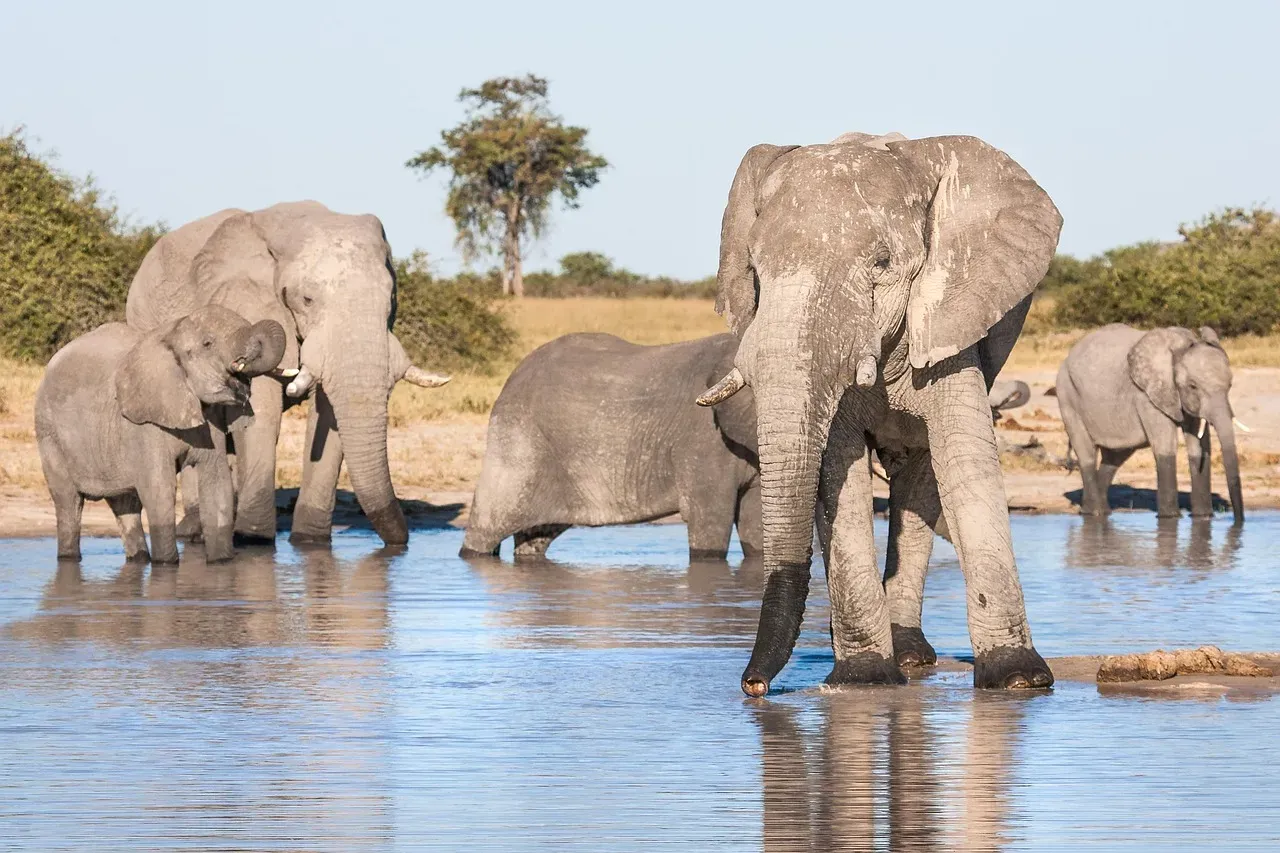
Think of the wisest elder in your family. The one who remembers where everything is, who knows the history, who keeps the peace. In elephant society, that figure exists too. Known as one of the world’s most social animals, elephants are revered for their complex societal structures. Their societies are woven together with intricate family bonds, where members mourn the loss of a loved one and celebrate births joyously. This deep social connection underscores the importance of elephant herds for emotional support and survival in the wild.
Elephants live in a complex matriarchal society, in which the oldest and often largest female is the matriarch of the entire herd, and she may lead anywhere from eight to 100 elephants. She is, in every sense of the word, irreplaceable.
Elephant calves spend up to 16 years learning from their mothers and aunts, mastering complex social protocols, memorizing migration routes spanning thousands of miles, and developing foraging techniques for hundreds of plant species. That is not instinct. That is teaching. Their emotional intelligence is so developed that they recognize relatives they haven’t seen for years and hold mourning rituals for deceased family members, returning to their bones long after death.
A 2020 study published in Proceedings of the Royal Society B found that orphaned elephant calves with access to extended family members had survival rates nearly three times higher than isolated orphans. The family, quite literally, keeps them alive.
2. Orcas: Dynasty Beneath the Waves
I think orcas might be the most misunderstood animal on the planet. We remember them from theme parks, from horror stories about “killer whales.” What we rarely hear about is the extraordinary family life happening beneath the surface. Orcas have complex societies. Only elephants and higher primates live in comparably complex social structures.
Unlike any other known mammal social structure, resident whales live with their mothers for their entire lives. These family groups are based on matrilines consisting of the eldest female, known as the matriarch, and her sons and daughters, and the descendants of her daughters.
Because females can reach age 90, as many as four generations travel together. Think about that for a moment. Great-great-grandchildren swimming alongside their matriarch ancestor. Each orca family develops a distinct vocal dialect that acts as a family identifier, with pod members recognizing relatives by their unique calls, and the knowledge passed down through generations includes sophisticated hunting techniques, awareness of feeding grounds, and cultural behaviors unique to their specific family.
Orca pods show even more specialized task distribution during cooperative hunts, with some individuals herding prey, others creating waves to wash seals off ice floes, while some specialize in dispatching large prey. That is not random. That is coordinated teamwork born from years of learning.
3. Gray Wolves: The Original Pack Mentality
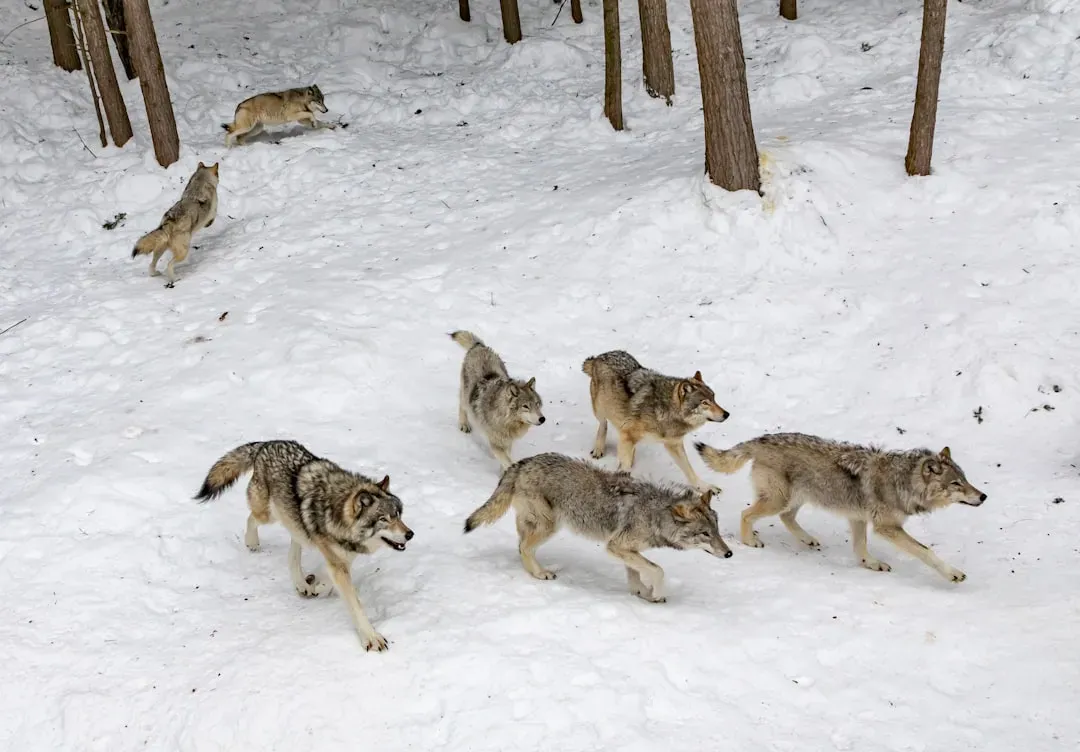
Here’s the thing about wolves. Their reputation as ruthless killing machines completely overshadows what is actually one of the most emotionally bonded family systems in the animal kingdom. Wolves live in packs made up of a breeding pair, known as the alpha pair, and their offspring. The alpha pair is typically the only breeding pair in the pack, and they are responsible for leading the pack and making decisions for the group. Wolves are highly social animals, and they have strong bonds with their pack members.
A wolf’s bond with its mate is for life, and together they raise pups, hunt as a team, and reinforce their connection through playful interactions, but their devotion goes beyond just romance, as every pack member has a role and wolves will defend their own at all costs.
Leadership in wolf packs isn’t just about being strong. It’s about experience, communication, and teamwork. Wolf pups progressively join hunts around six months of age, first observing from a distance, then participating in chases, and finally helping with the takedown of prey under the guidance of experienced adults. That apprenticeship model is remarkably human.
Wolf packs maintain strong emotional bonds, with members expressing affection through play, grooming, and various vocalizations, engaging in enthusiastic greeting ceremonies when they reunite after brief separations.
4. Chimpanzees: Politics, Alliances, and Family Drama
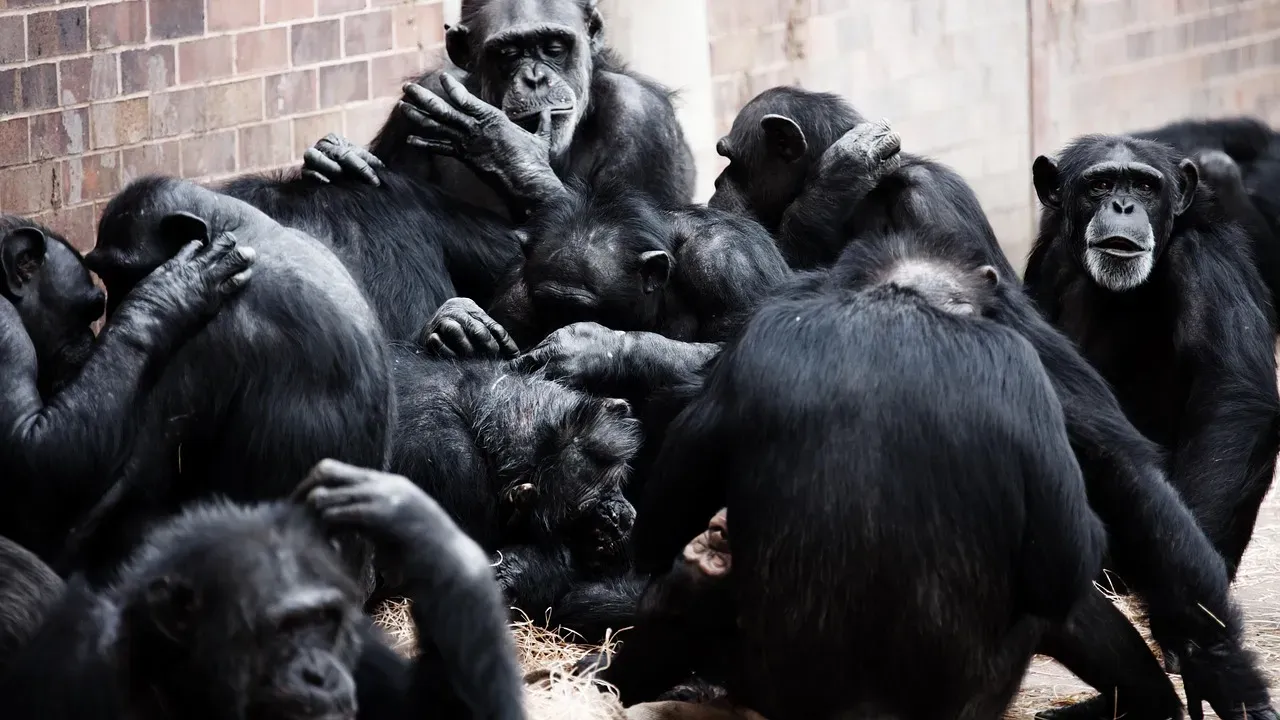
Let’s be real. If chimpanzees had smartphones, they would be posting about their social drama daily. Chimpanzees possess some of the most complex networks among social animals, rivaling human societies in their depth and intricacy. Their use of tools, sophisticated communication, and methods for resolving conflicts demonstrate a highly evolved cooperation structure.
Chimpanzee troops have a pecking order that’s constantly shifting. Top chimps fight to stay on top, while those at the bottom try to climb up. Male chimps spend a lot of time playing politics. They form alliances, betray friends, and stage coups. Sound familiar?
Infant chimpanzees are reared by their mothers and have close relationships with related females and older siblings, who often share their care. Mothers and sons typically have lifelong bonds, as do other individuals within an extended social group.
Studies of wild chimpanzees have revealed intricate social hierarchies, political alliances, and even cultural traditions passed down through generations. The cultural dimension is what truly sets them apart. Different chimp communities have entirely different tool-use habits, like regional dialects of behavior.
5. Gorillas: The Hidden Complexity of the Gentle Giant
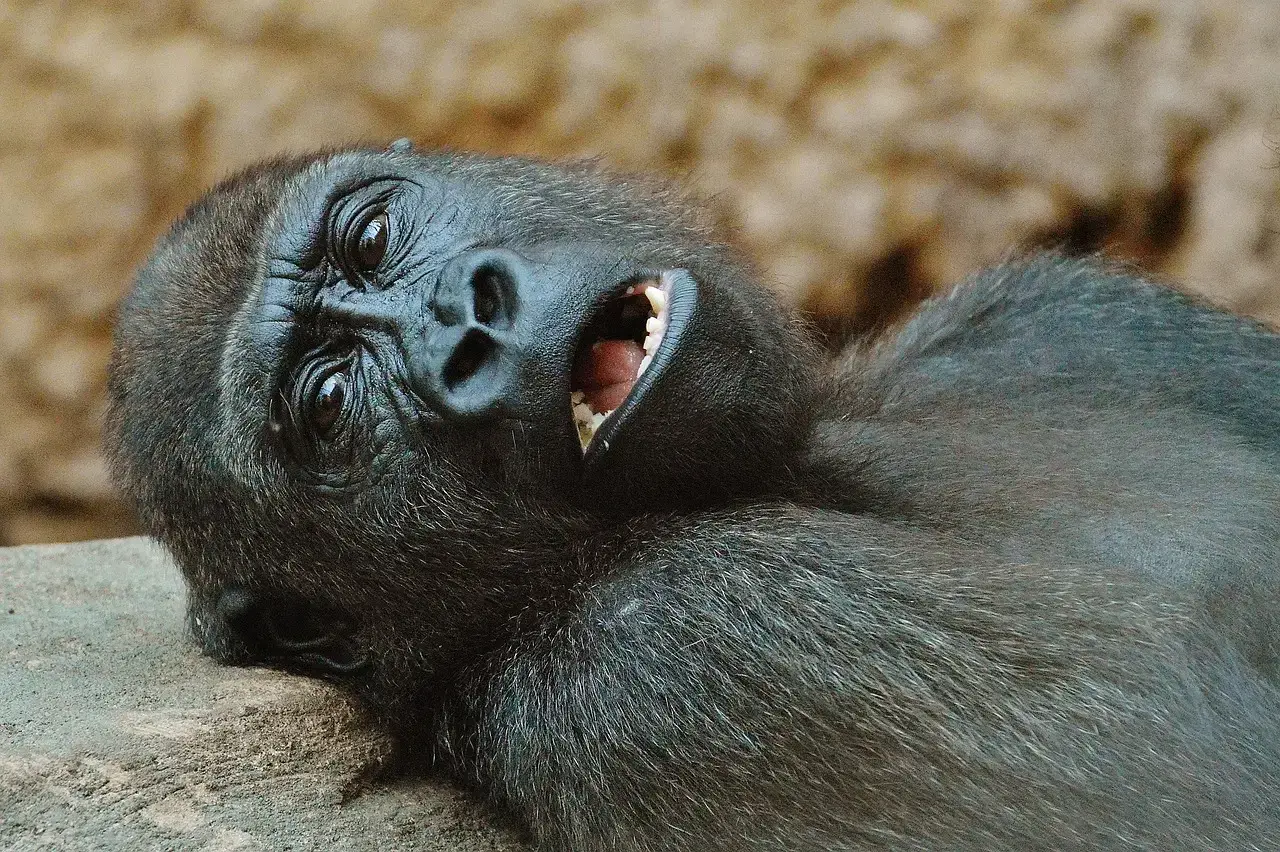
Most people picture gorillas as solitary, brooding creatures. The reality is far richer and far more surprising. Gorillas have more complex social structures than previously thought, from lifetime bonds forged between distant relations, to social tiers with striking parallels to traditional human societies, according to a new study.
Family units were nested inside larger social units in a pattern strikingly similar to modern human societies. At both study sites, individual gorillas spent time not only with their immediate families, but also with an average of 13 extended family members, such as cousins, aunts, and grandparents. Even more surprising, each ape interacted with some 39 other gorillas to whom they weren’t related.
Beyond immediate family, there was a tier of regular interaction involving an average of 13 gorillas, which maps closely to the dispersed extended family in traditional human societies, including aunts, grandparents, and cousins. Researchers suggest that some social bonds may be analogous to “old friendships” and “tribes” in humans.
The findings suggest that the origins of our own social systems stretch back to the common ancestor of humans and gorillas, rather than arising from the social brain of hominins after diverging from other primates. In other words, we did not invent complex social living. We inherited it.
6. Lions: The Pride as a Living Family Unit
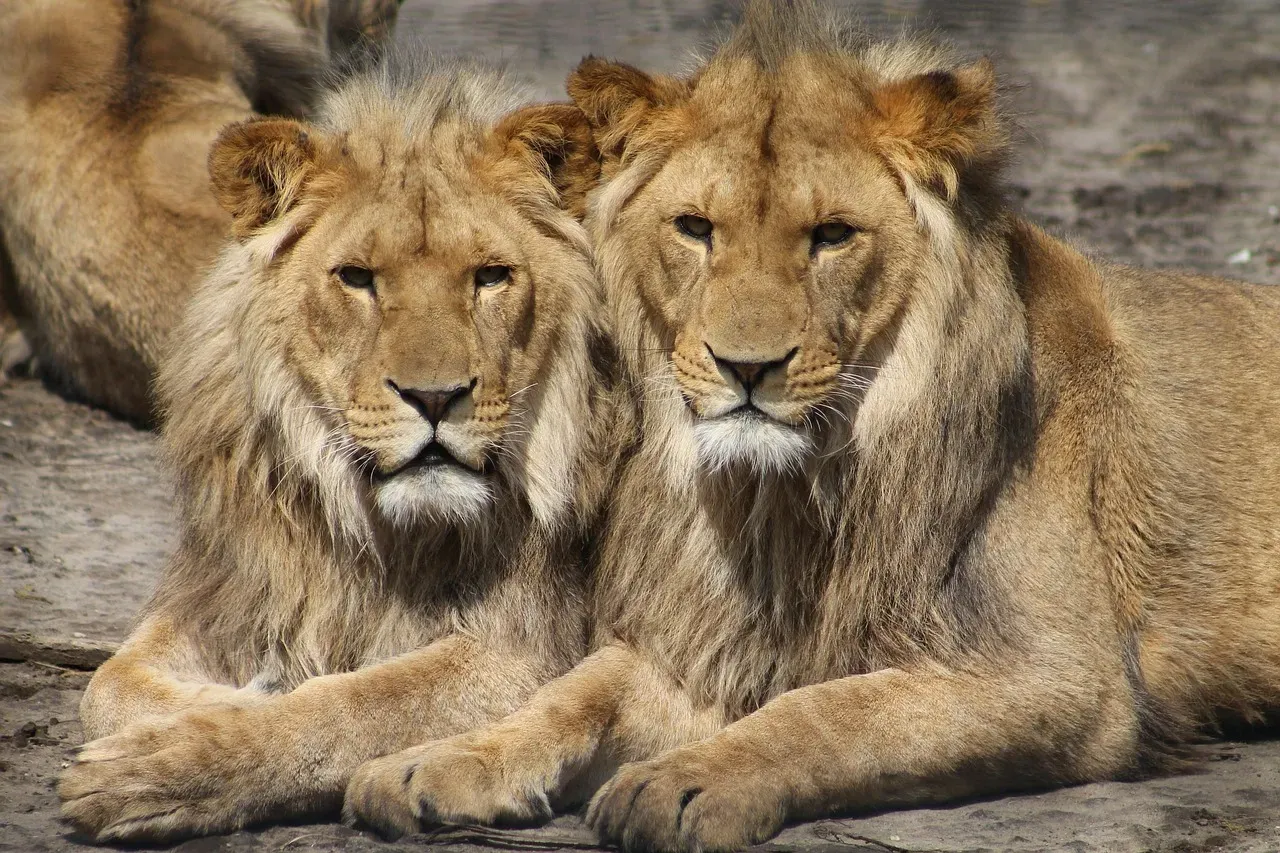
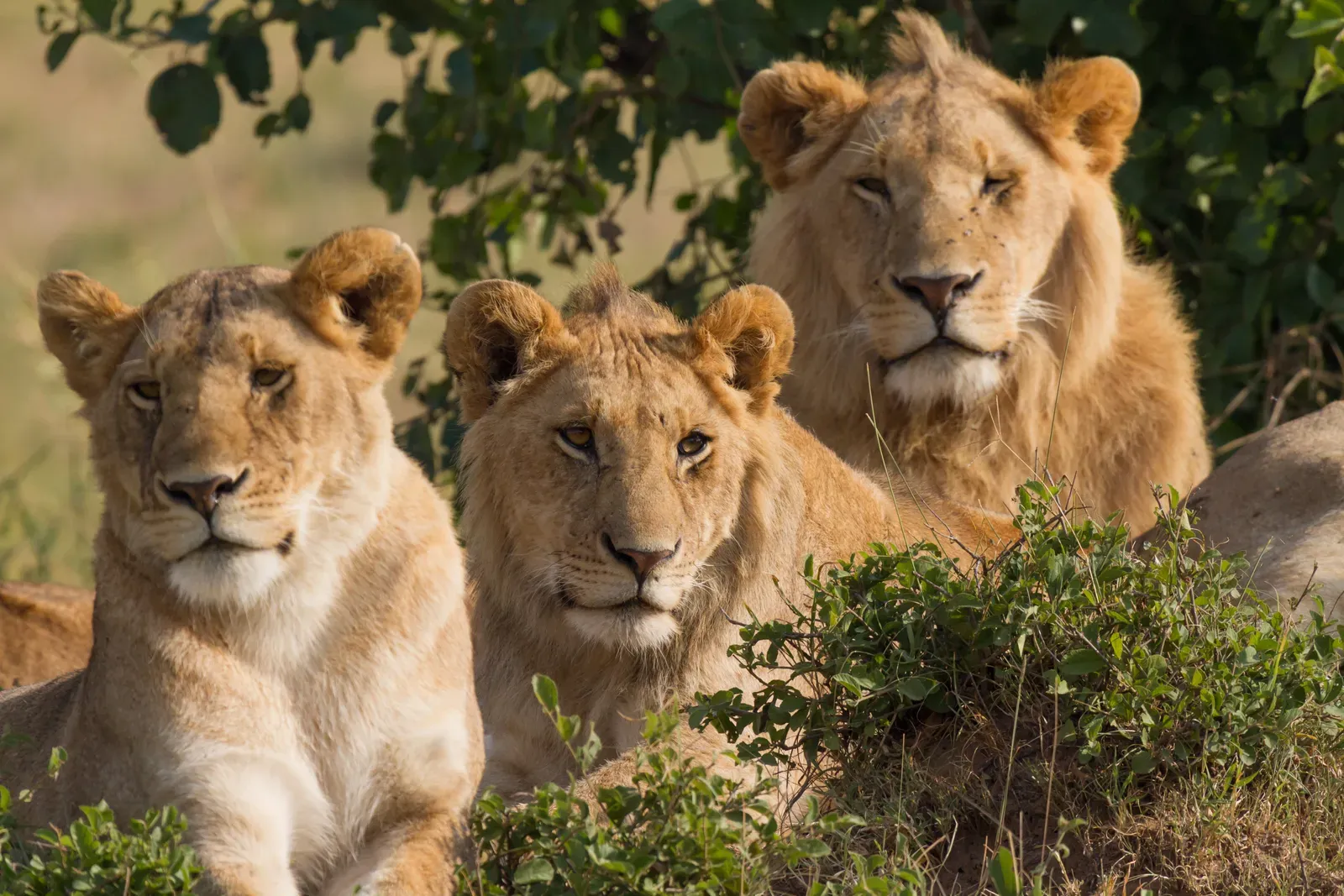
Lions are the only big cats in the world that live in proper social groups. That alone sets them apart. A lion pride is a family, a system built around cooperation, lineage, and defense. The average pride consists of 10 to 15 members, though some may grow larger when conditions allow.
These groups are not temporary arrangements. Many female lions stay in the pride they were born into for life, creating deep-rooted social bonds. Males, on the other hand, often leave their birth pride as they mature. They either live nomadically or eventually take over another pride by challenging and replacing the resident males.
Lionesses often synchronize their breeding, which is a unique behavior that means all the mothers in the pride can support each other in raising multiple offspring at the same time, improving chances of survival. Crèche-mates often nurse each other’s cubs, though they give priority to their own offspring followed by the offspring of their closest relatives.
One of the most common displays of unity is allogrooming, the act of lions licking and cleaning one another. Beyond hygiene, it serves a deeper purpose: strengthening social ties, reducing tension, and affirming rank. The pride is, in every meaningful sense, a family with all the complexity that entails.
7. Dolphins: Friendships, Alliances, and Underwater Politics
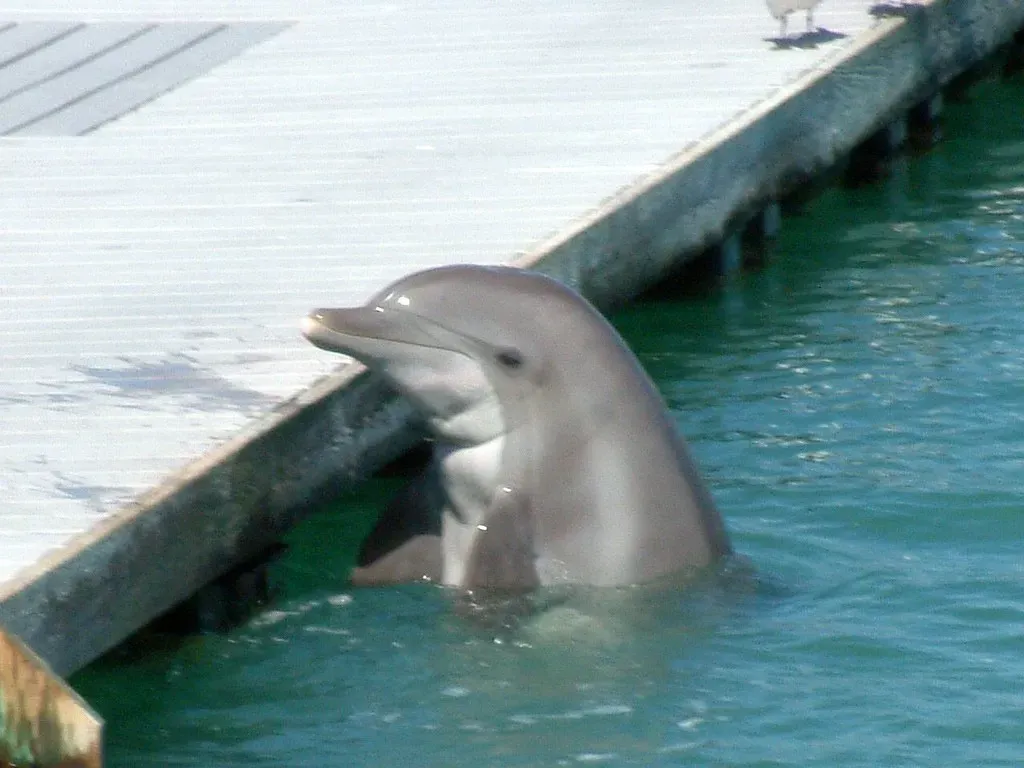
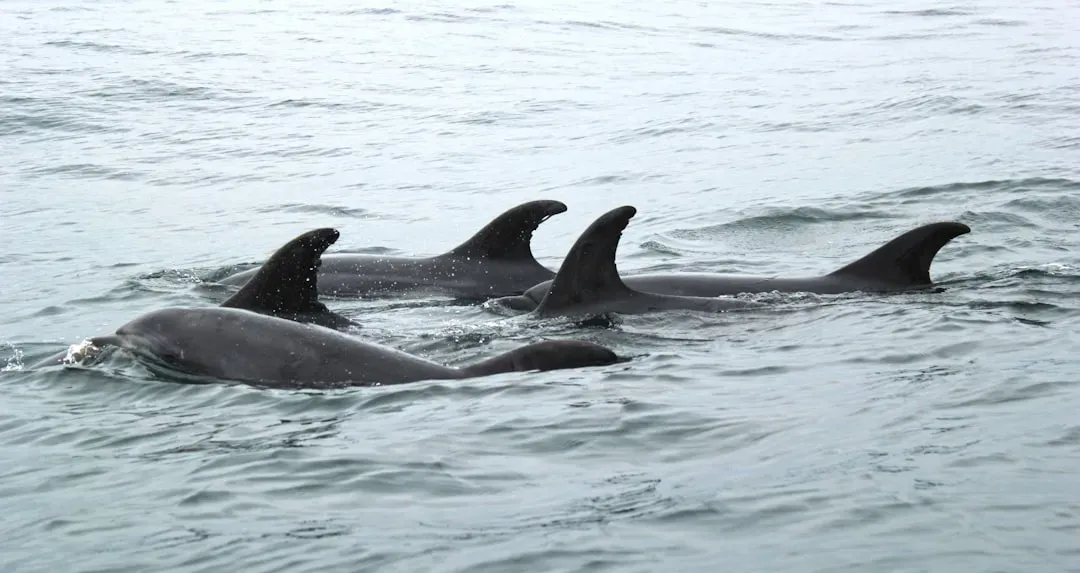
Dolphins are often described as smart and playful, which undersells them enormously. Dolphins are celebrated for their advanced communication skills. They live in pods that can number in the hundreds, engaging in cooperative hunting and social play that demonstrates their highly developed societal behaviors. Their echolocation abilities and vocalizations facilitate complex interactions, solidifying their place as social marvels of the marine world.
Dolphins use unique whistles as names and form intricate social networks. Each individual has a signature whistle, functioning almost like a name. They call each other by these identifiers across distances, like shouting across a crowded room for a specific friend.
Dolphins are highly social creatures that form deep, lasting friendships within their pods, working together to protect the vulnerable, coordinate hunts, and even comfort one another when injured or grieving, with some dolphins forming lifelong pairs. On occasion, dolphins may even collaborate with other dolphin species to form superpods. In large groups, dolphins can defend each other more easily and intimidate predators that might otherwise try to catch a lone dolphin.
8. Bonobos: The Matriarchy That Prioritizes Peace
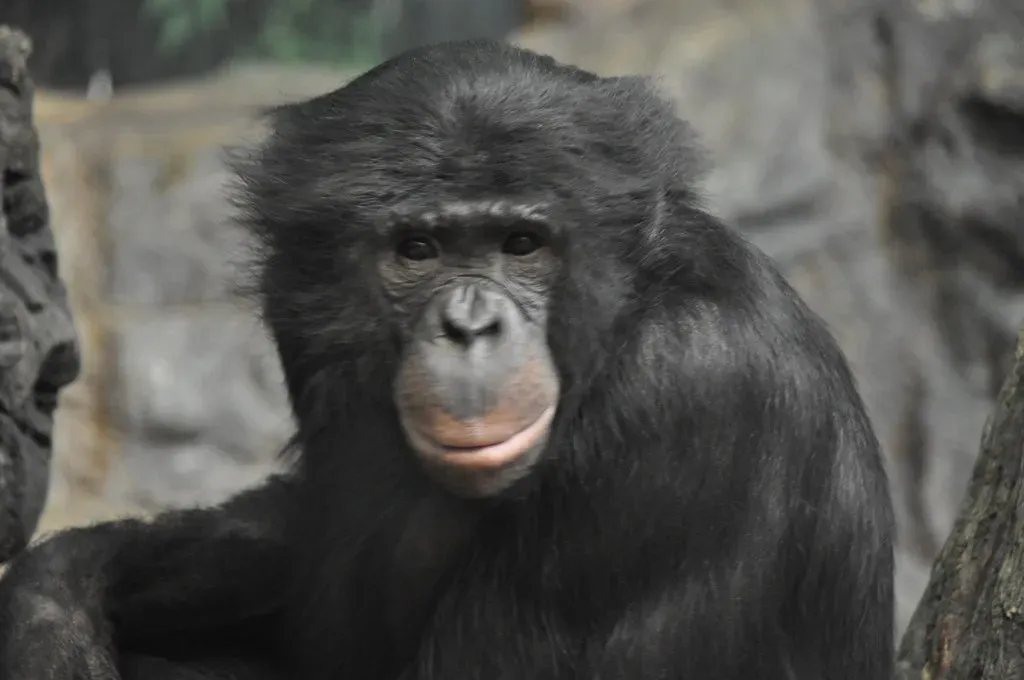
If chimpanzees are the dramatic political thriller of the ape world, bonobos are the surprisingly peaceful counterpart. Bonobos and chimpanzees look similar and both share nearly all of their DNA with humans, making these two ape species our closest living relatives. Bonobos are usually a bit smaller, leaner, and darker than chimpanzees. Their society is also different: bonobo groups tend to be more peaceful and are led by females.
Female bonobos are at the top of their social hierarchy, whereas males are dominant among chimpanzees and all other great apes. They live in fission-fusion societies, which means larger groups split up to forage before rejoining later that day. These groups are led by older females who typically get the first helpings of food and decide when and where the group travels.
One fascinating and unique behavior recorded in bonobos happens during birth: other females have been known to gather around the pregnant bonobo and assist in the birth, similar to human midwives. It’s hard to say for sure just how conscious that behavior is, but it is extraordinary regardless.
Males may stay with their mothers their entire lives, while females find a troop of their own when they reach maturity. The mother-son bond in bonobo society is among the strongest known in any non-human species.
9. Meerkats: Village Life in the Desert
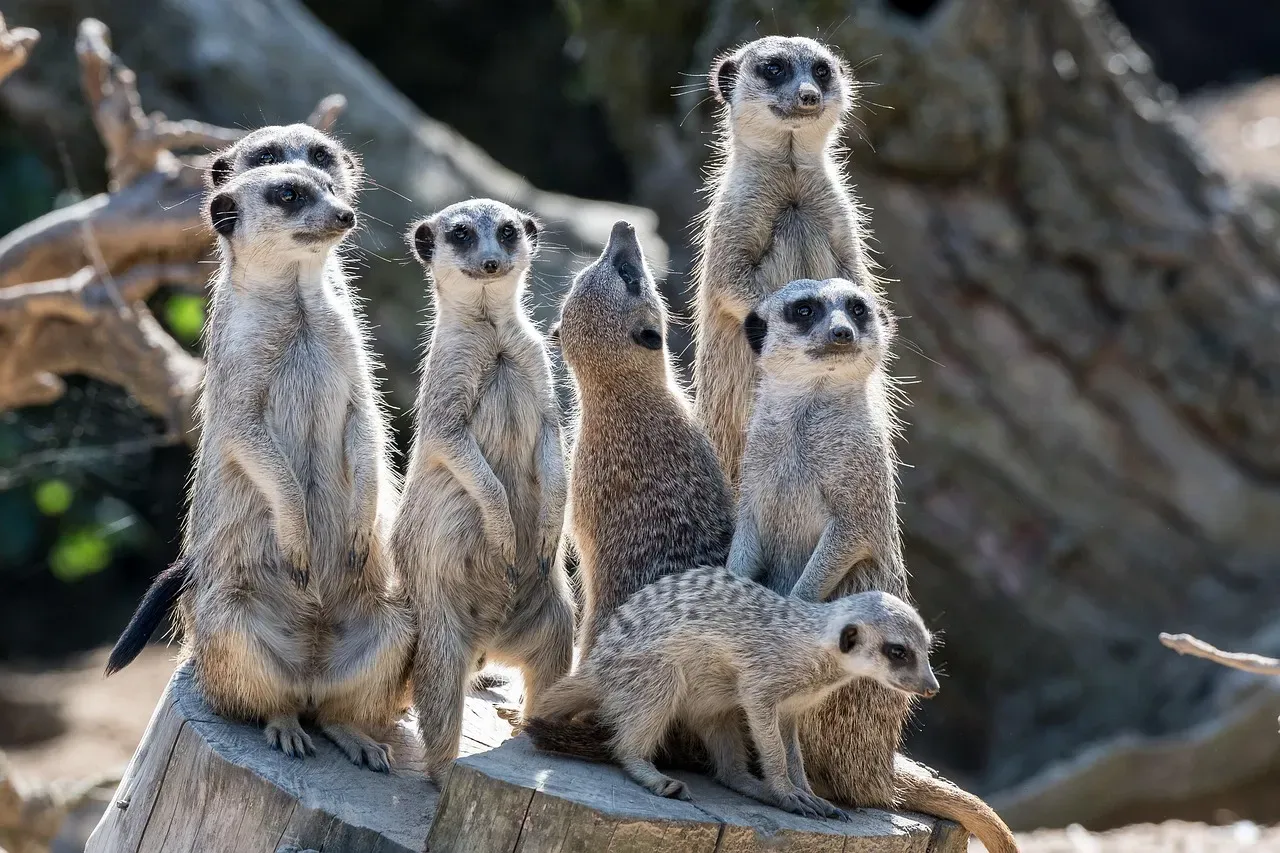
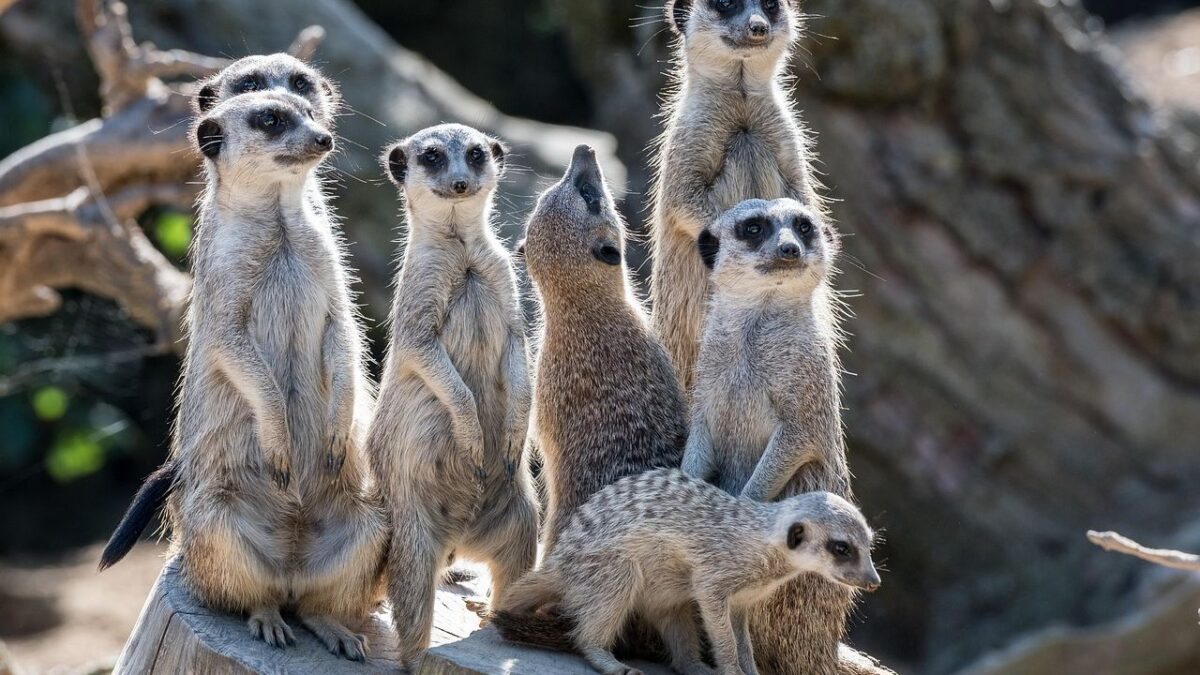
Meerkats are perhaps the most underestimated social animals on this list. Small, scrappy, and living in some of the harshest environments on Earth, they have built a cooperative society that genuinely resembles a close-knit village community. As quintessential social animals, meerkats exhibit extraordinary cooperative living. Within their communities, responsibilities such as watching for predators and raising young are shared among all members. This collaborative approach to life in the harsh desert environment showcases meerkats as one of the most social animals on earth.
Meerkats live in cooperative groups called mobs, which usually consist of a dominant breeding pair and several related subordinates. Although both dominant individuals influence group behavior, the dominant female holds the highest status in the hierarchy. She is typically the only female that breeds, and she often prevents subordinate females from reproducing or forces them out of the group. Meerkats share responsibilities such as foraging, digging burrows, and guarding the mob, but the dominant female plays a key role in shaping group dynamics and enforcing social rules.
Meerkats take turns watching for predators, and the young are raised collectively by the entire group, not just the biological parents. This collective care system demonstrates the importance of community within the family. Meerkats rely on each other for safety, food, and companionship, making them an excellent symbol of how family members support one another in times of need.
10. African Wild Dogs: Altruism as a Way of Life
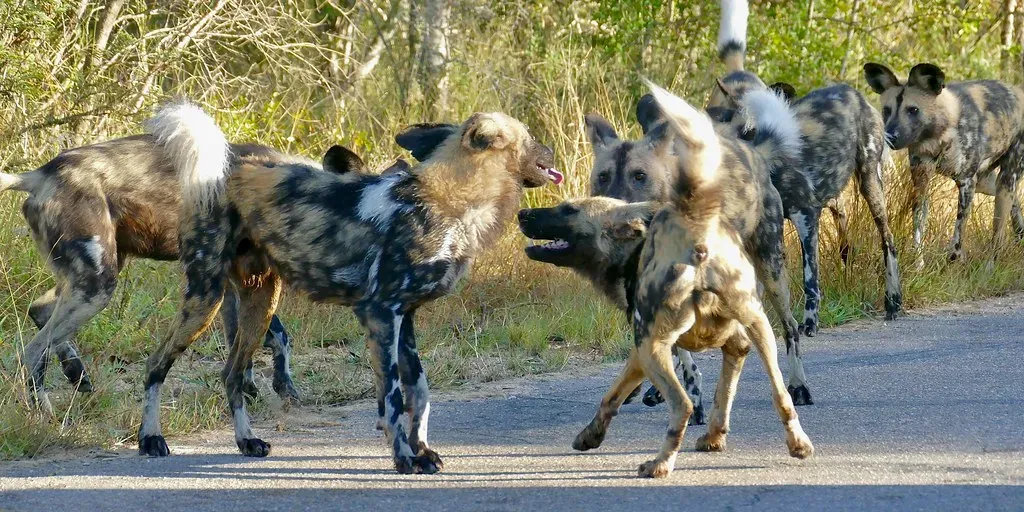
African wild dogs might just be the most selfless animals on this entire list. They look like chaos in canine form, splashed in wild paint-like patches of brown, black, and white. Yet beneath that unpredictable exterior runs one of the most remarkably cooperative social systems in the animal kingdom. The African wild dog is a highly social, pack-living predator of the African woodland and savannah. The archetypal wild dog pack consists of a single dominant breeding pair, their offspring, and non-breeding adults who are either offspring or siblings of one of the breeding pair. Non-breeding adults cooperate in hunting, provisioning, and the protection of young.
Cooperative hunting, as seen in African wild dogs, allows animals to take down prey much larger than themselves. Their hunting success rate is among the highest of any land predator, precisely because everyone plays their role. Their egalitarian pack system truly embodies the essence of teamwork.
The genetic structure of wild dog packs resembles that of a multigenerational family, with all same-sexed adults and offspring within a pack related as siblings or half-siblings. The pack is not just a hunting unit. It is a genuine family, bound by blood, loyalty, and shared survival across generations.
Conclusion: Nature’s Mirror
Spend enough time reading about these animals, and something quietly shifts in how you see the world. The complexity we pride ourselves on as humans, the layered relationships, the intergenerational knowledge, the grief, the alliance-building, the shared childcare, it is not uniquely ours.
Looking deeper into animal social structures, we start to see echoes of our own social complexities. The challenges of group living, communication, and social hierarchies are not unique to humans. By studying animal societies, we gain valuable perspectives on the fundamental principles governing social interactions and the evolutionary roots of our own social behaviors.
Most complex animal societies are actually families in which group members are related and therefore share a high proportion of their genes. Family, it turns out, is not a human invention. It is a survival strategy woven into the fabric of life itself, tested and refined over millions of years across oceans, savannahs, forests, and deserts.
The next time you watch a nature documentary and spot a wolf nuzzling its pup, or an elderly elephant matriarch leading her herd to water she alone remembers, pause for a moment. You might just be looking at the oldest version of something you recognize. What wild animal’s family life surprised you the most? Tell us in the comments.
