
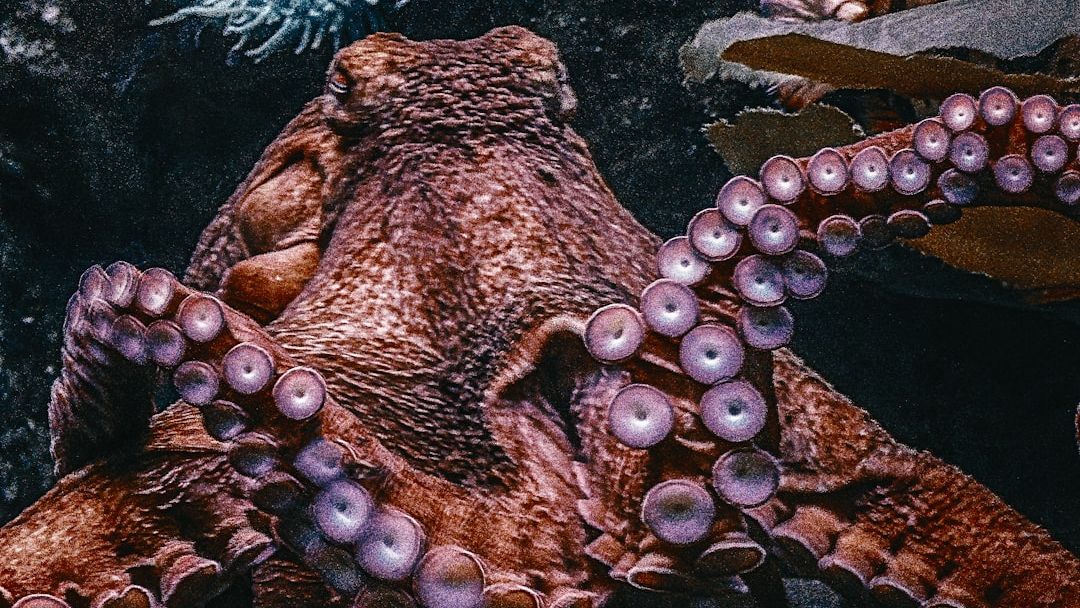
You’ve probably heard that octopuses are clever. Maybe you know they can change color faster than you can blink. Still, chances are you don’t really know how bizarre these creatures actually are.
Their abilities go far beyond simple party tricks. We’re talking about animals with biological features so unusual, so counterintuitive, that they almost sound made up. Let’s be real, if someone described an octopus to you from scratch without showing you one, you’d think they were pulling your leg.
So buckle up. These facts are going to make you question everything you thought you knew about intelligence, biology, and what’s possible in the animal kingdom.
Their Blood Is Actually Blue Because of Copper
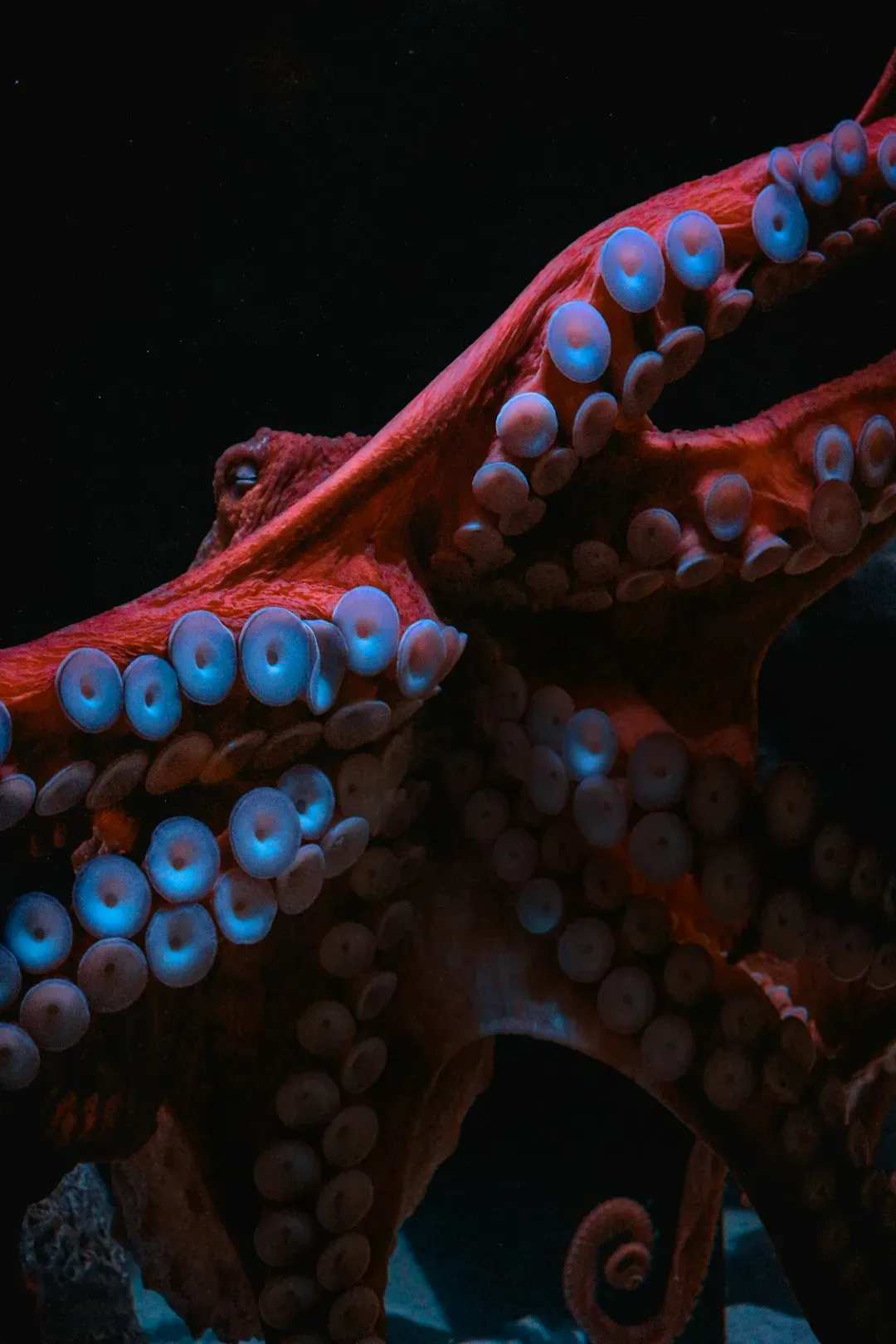
Octopuses have blue blood, and it’s not from royal genes, but from copper. Most of us have red blood because of iron-based hemoglobin. These underwater marvels took a completely different evolutionary route.
Copper-based hemocyanin is more efficient for transporting oxygen at low temperatures and low oxygen concentrations than is the iron-based hemoglobin that makes our blood red. Think about it. They’re living in cold, oxygen-poor water. Their bodies needed a solution that works where ours would fail.
Octopuses and horseshoe crabs have blue blood because the protein transporting oxygen in their blood, hemocyanin, contains copper, instead of iron, making their blood appear blue rather than red. When copper binds with oxygen, the resulting color is blue rather than red. It’s honestly wild how chemistry can create such visually different outcomes.
Antarctic octopus species Pareledone charcoti has solved this by actually making its hemocyanin less attractive to oxygen than that of its warmer weather cousins. With these changes, with mercury below freezing, it can still effectively deliver oxygen even down to the tips of its eight arms. Evolution really went the extra mile here.
They Have Three Hearts Pumping Constantly
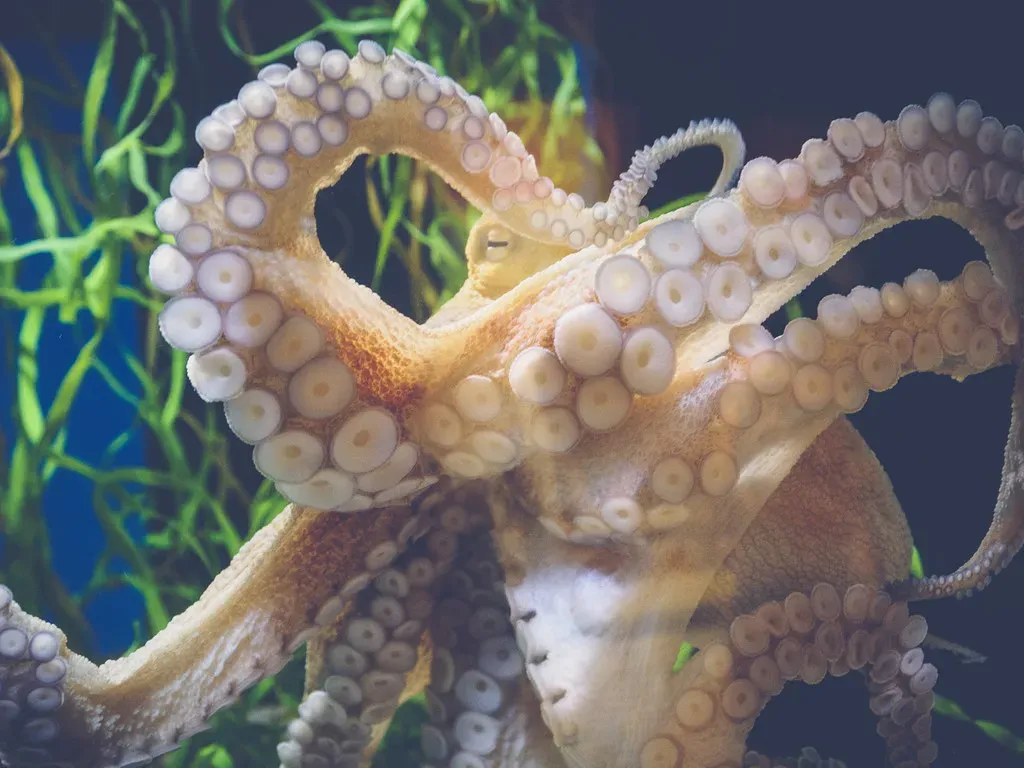
Octopuses also have three hearts: two just to pump blood through the gills and one more to circulate it to the organs. Most of us struggle with maintaining one heart. Imagine coordinating three of them simultaneously.
Two of the hearts work exclusively to move blood past the animal’s gills, where it releases carbon dioxide and gains oxygen. Then, the third heart circulates that oxygen-rich blood to the organs and muscles, giving them energy. It’s basically like having specialized workers for different tasks. One heart would be overwhelmed trying to do everything.
Here’s where things get really interesting. The latter heart actually stops beating when the octopus swims, explaining the species’ penchant for crawling rather than swimming, which exhausts them. Swimming is literally tiring them out at the organ level. That’s why you often see them creeping along the ocean floor instead of zooming through open water like fish.
An octopus’s three hearts have slightly different roles. One heart circulates blood around the body, while the other two pump it past the gills, to pick up oxygen. The coordination required between all three is mind-boggling when you really stop to consider it.
Two-Thirds of Their Neurons Are in Their Arms, Not Their Brain
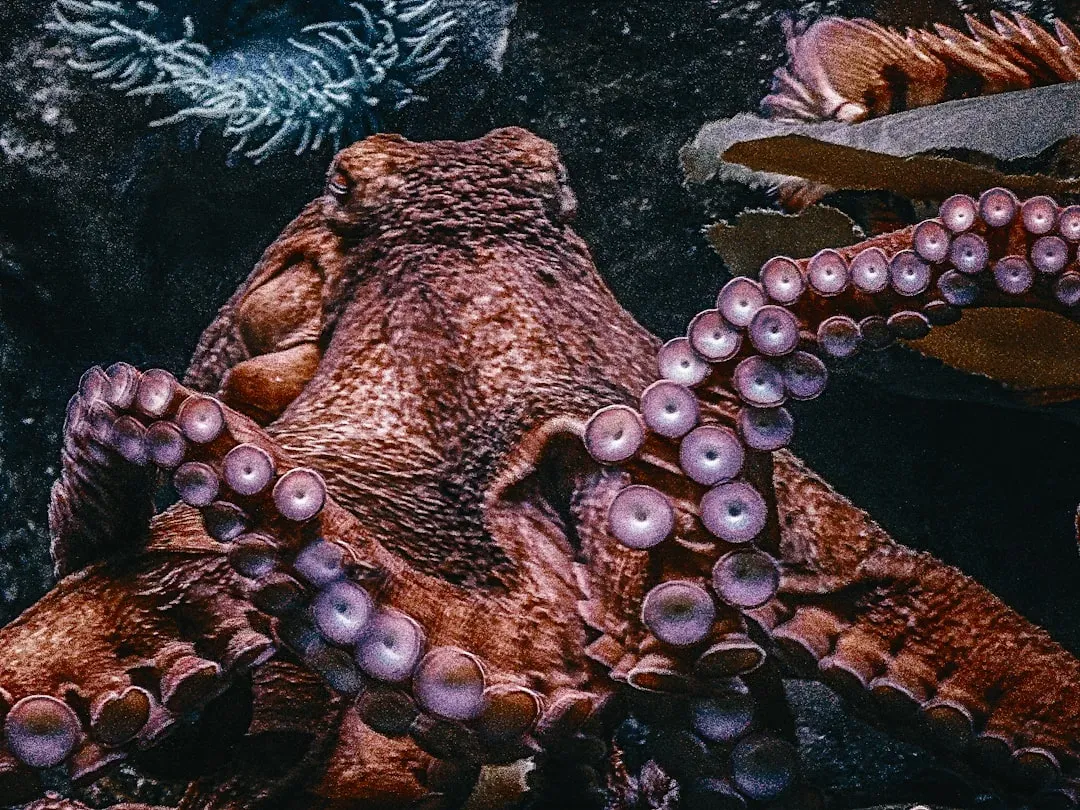
The curling and unfurling arms, dotted with more than 2,000 individually moving suction cups, contain two-thirds of the animal’s neurons. Let that sink in. The majority of their thinking power isn’t in their head. It’s distributed throughout their limbs.
About two-thirds of an octopus’s neurons are actually located in its arms. This means the arms can taste, touch, and even act on their own accord, without input from the brain. Each arm is basically its own mini command center. They don’t need permission from headquarters to make decisions.
Some research has even found that after an arm is severed from the body it will continue to snatch up food and try to move it in the direction of where the creature’s mouth used to be. The arm literally remembers what it’s supposed to do and keeps doing it. Even when disconnected. That’s simultaneously fascinating and a little unsettling, honestly.
The suckers are equipped with chemical sensors that not only feel, but taste and smell as well. Imagine being able to taste with your fingers. Every handshake would be an entirely different experience.
They Can Change Color in Less Than a Second
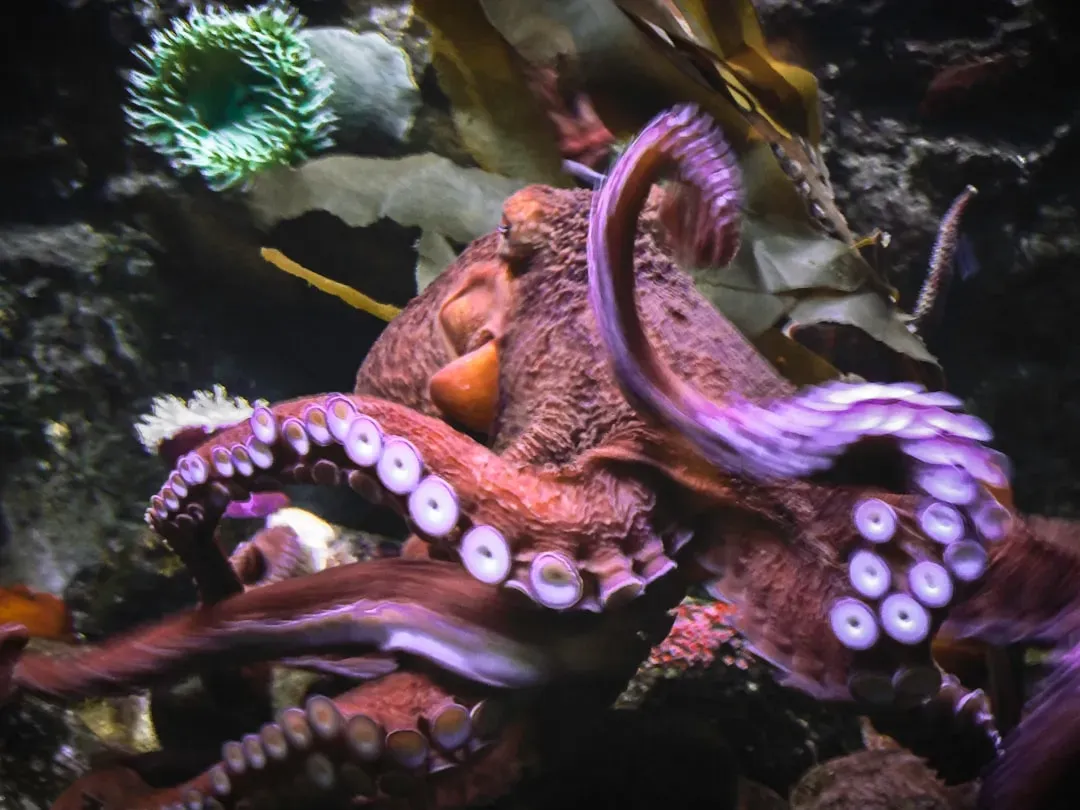
Luckily for octopuses, they can completely change their skin color and texture in under a second. Contrast that to the famed chameleon, which can take several minutes to transform. Chameleons get all the credit for color changing, yet octopuses blow them out of the water.
Many thousands of color-changing cells called chromatophores just below the surface of the skin are responsible for these remarkable transformations. The center of each chromatophore contains an elastic sac full of pigment, rather like a tiny balloon, which may be colored black, brown, orange, red or yellow. Think of each chromatophore as a pixel on a biological screen.
The chromatophores can be opened quickly because they are controlled neurally: squid, cuttlefish and octopuses can change colors within milliseconds. It happens faster than your brain can consciously register the change. One moment they’re brown, the next they’re striped and bumpy.
Octopuses can shift hues because they have chromatophores – tiny, color-changing organs that are dotted throughout an octopus’s skin. At the heart of each chromatophore are tiny sacs filled with nanoparticles of a pigment called xanthommatin. As these muscle cells contract, the pigment sac stretches, which enables more light to enter the cell and reflect off the xanthommatin particles. The whole system works through muscle contractions happening at lightning speed.
They’re Shockingly Smart for Invertebrates
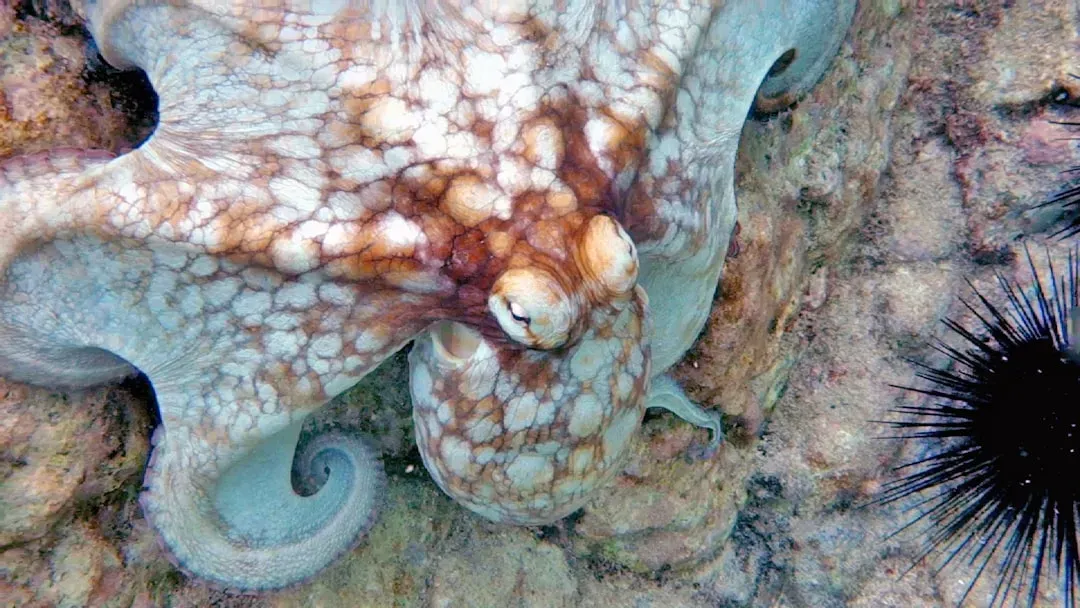
Octopuses are standouts among cephalopods, and among all invertebrates, for their large brains. They can navigate mazes, solve problems, remember, predict, use tools and take apart just about anything from a crab to a lock – all but that last one sophisticated hunting behaviors. These are not simple reflex-driven animals. They’re genuinely thinking things through.
Not so: some octopuses have been observed hoarding two halves of a coconut shell, which they carry around like a mobile home and assemble together when needed. Tool use was once thought to be exclusively a vertebrate trait. Octopuses completely shattered that assumption.
Octopuses in captivity regularly solve puzzles, open jars, navigate obstacle courses, and even find cheeky ways to escape their tanks. Aquarium staff have countless stories of octopuses causing mischief. One particularly famous case involved an octopus that kept short-circuiting the lights by squirting water at them.
Octopuses have big brains for their size, and they’re able to figure things out, like how to open a clamshell that’s been wired shut. They can navigate mazes, solve problems, remember solutions and take things apart for fun. For fun. They literally play with objects just to see how they work. That’s a level of curiosity we usually only associate with much more complex animals.
All Octopuses Are Venomous
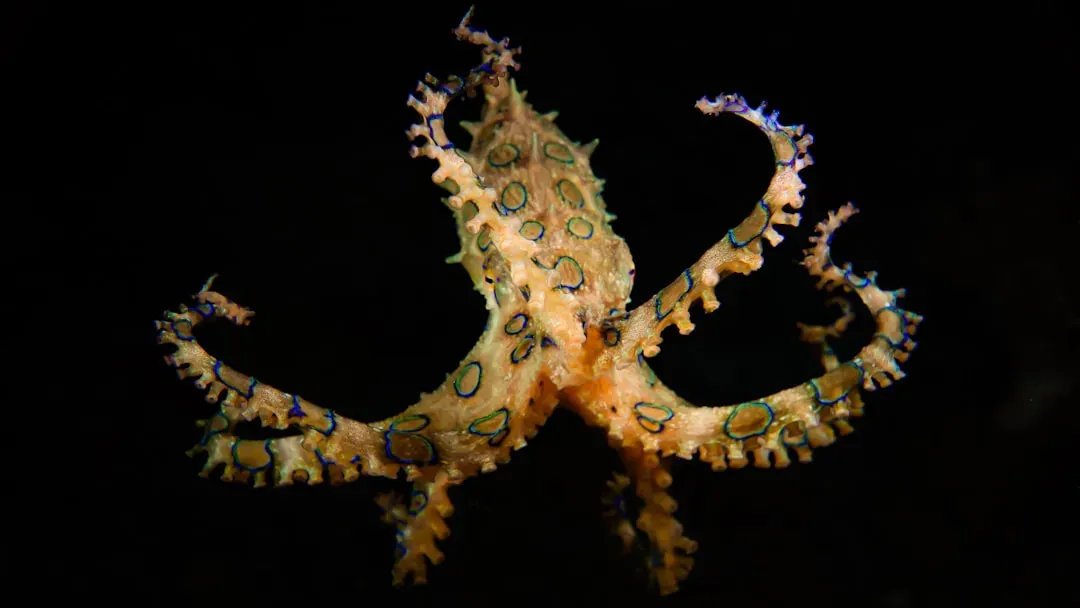
On the other hand, all octopuses (plus all cuttlefishes and some squids) are venomous, although only the blue-ringed octopus of Australia is dangerous to humans. Injected as an octopus drills into its prey with its beak, the venom fatally paralyzes an animal that could otherwise injure the squishy invertebrate in a struggle. Every single one produces venom. Every. Single. One.
Australia’s blue-ringed octopus is considered to be one of the world’s most venomous marine animals. Though only 5-8 inches in size, one octopus can carry enough venom to kill 26 adult humans and all within a matter of minutes. Their potent venom contains tetrodotoxin, which is 1,200 times more toxic than cyanide. Something that small packing that much lethal punch is genuinely terrifying.
Most octopuses use their venom purely for hunting. It also begins the digestive process. So not only does it paralyze prey, it starts breaking down their tissues before the octopus even begins eating. Efficient and brutal.
TTX is 1,000 times more powerful than cyanide! The blue-ringed octopus carries a neurotoxin so potent that a single milligram can kill a person. One milligram. That’s smaller than the period at the end of this sentence.
They Can Regrow Lost Arms – Perfectly
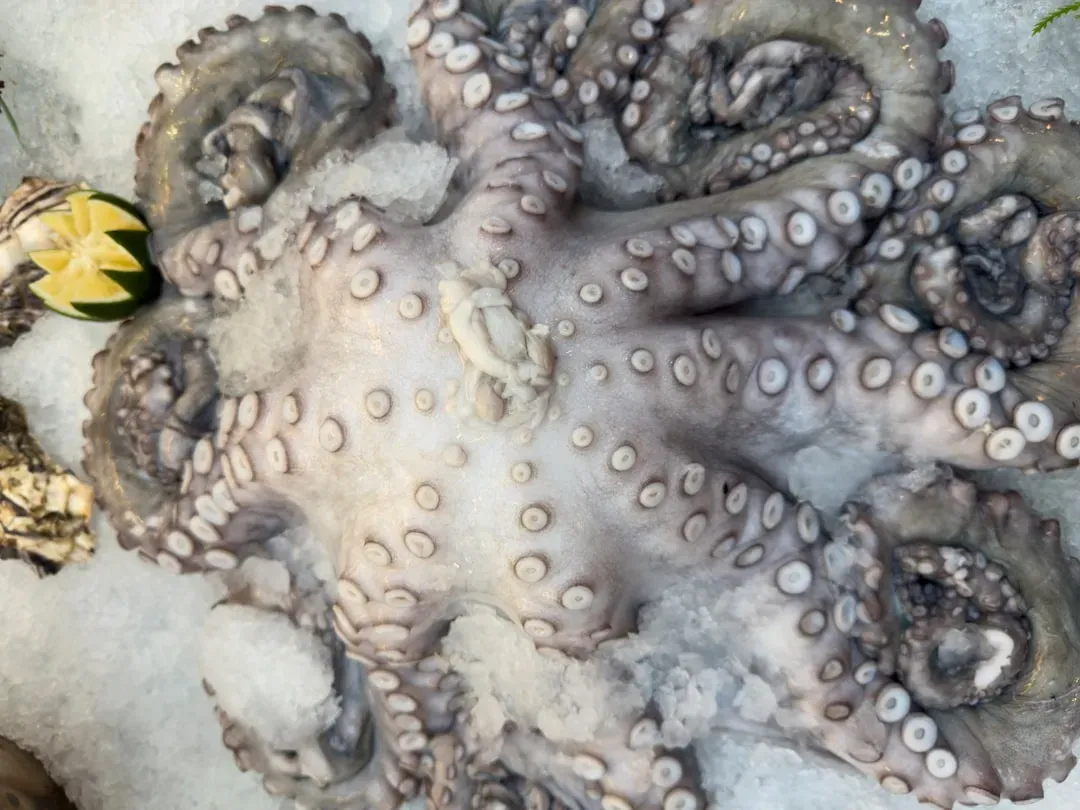
Octopuses can actually do this and, as you know, grow the arm back later. Losing a limb isn’t a permanent disability for these animals. It’s more like a temporary inconvenience.
When lizards regrow their tails, for example, the new one is often inferior. With octopuses, a regrown limb is basically as good as new. This isn’t some shoddy patch job. The regenerated arm functions exactly like the original.
Within three days, some cascade of chemical signals cued the formation of a “knob,” covered with undifferentiated cells, where the cut had been made. And further molecular signals were responsible for the “hook-like structure” that was visible at the end of the arm in the second week. And for the next hundred days or so, the arm tip grew back in to resemble the original one. The entire regeneration process is orchestrated by complex molecular signals.
Because as soon as an arm is lost or damaged, a regrowth process kicks off to make the limb whole again – from the inner nerve bundles to the outer, flexible suckers. Not so with octopuses; once an arm is regrown, it is basically as good as new. They rebuild everything: nerves, muscles, suckers, all the intricate sensory equipment. Complete restoration.
They Can Taste and Sense Light With Their Skin
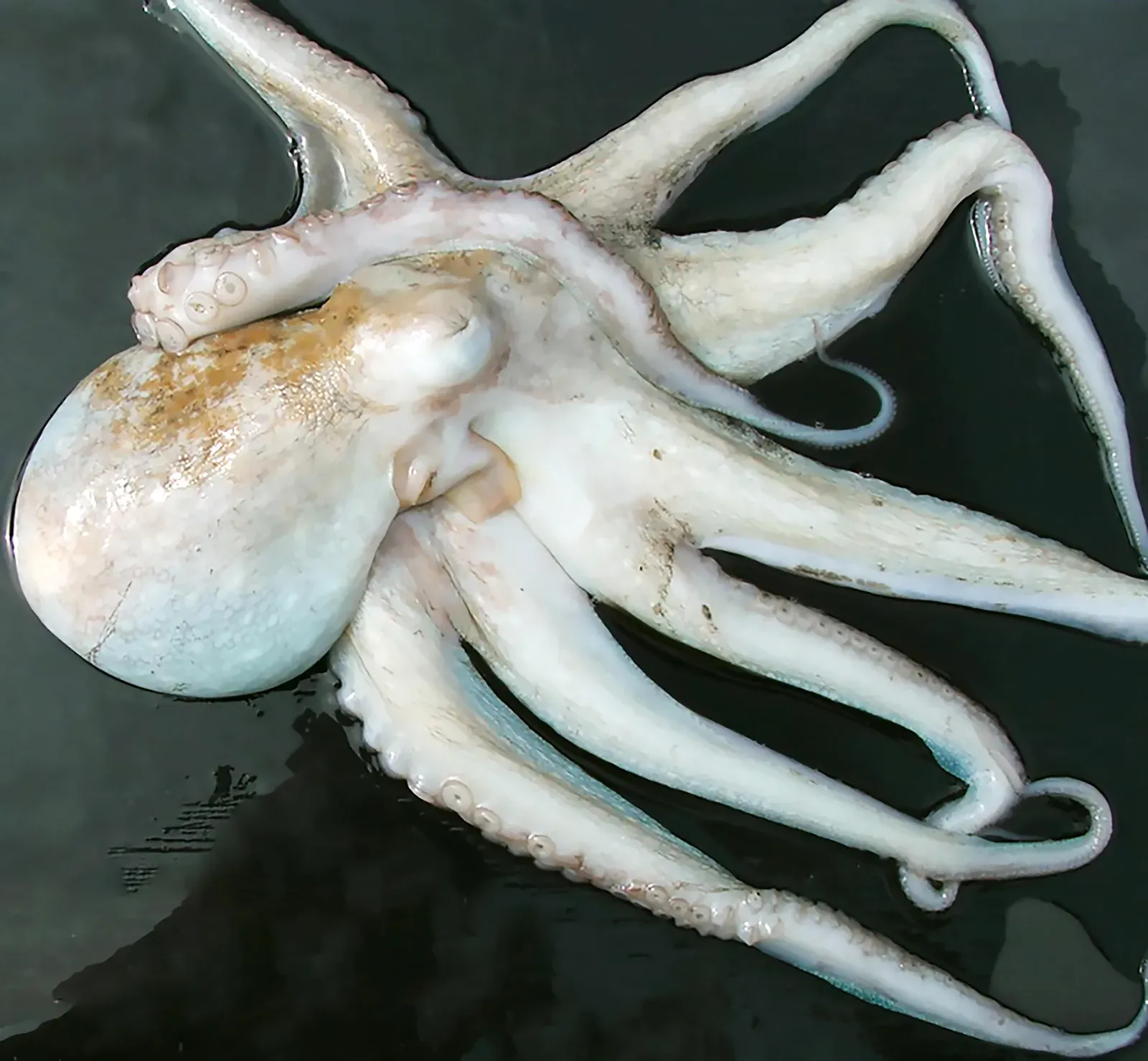
Octopus skin contains the same light-sensitive proteins present in their eyes, so they can sense and respond to light, for example camouflaging themselves, without information from the eyes or brain! Their skin is seeing for them. Not in the way eyes see, but detecting light independently.
ON TOP of that, octopuses can see with their skin!! Light-sensitive proteins called opsins enable octopuses to sense changes in light. Their skin can’t see clear images as their eyes can but it’s pretty cool to think an octopus could stick an arm out of its den and be able to tell if it’s day or night. An arm functioning as a light meter. Nature really went creative with these creatures.
He learned their skin is sensitive to light, and they can taste and “smell” with their eight arms, which can have hundreds of suckers each. Every sucker is a multifunctional sensory organ. Touch, taste, smell – all rolled into one.
This means an octopus exploring its environment is simultaneously touching, tasting, and sensing light with every movement. “Can you imagine what that might be like,” he asks, “to have skin that can see and 1,600 tongues and noses?” Our sensory experience is so limited by comparison.
They’re Color Blind Despite Being Masters of Camouflage
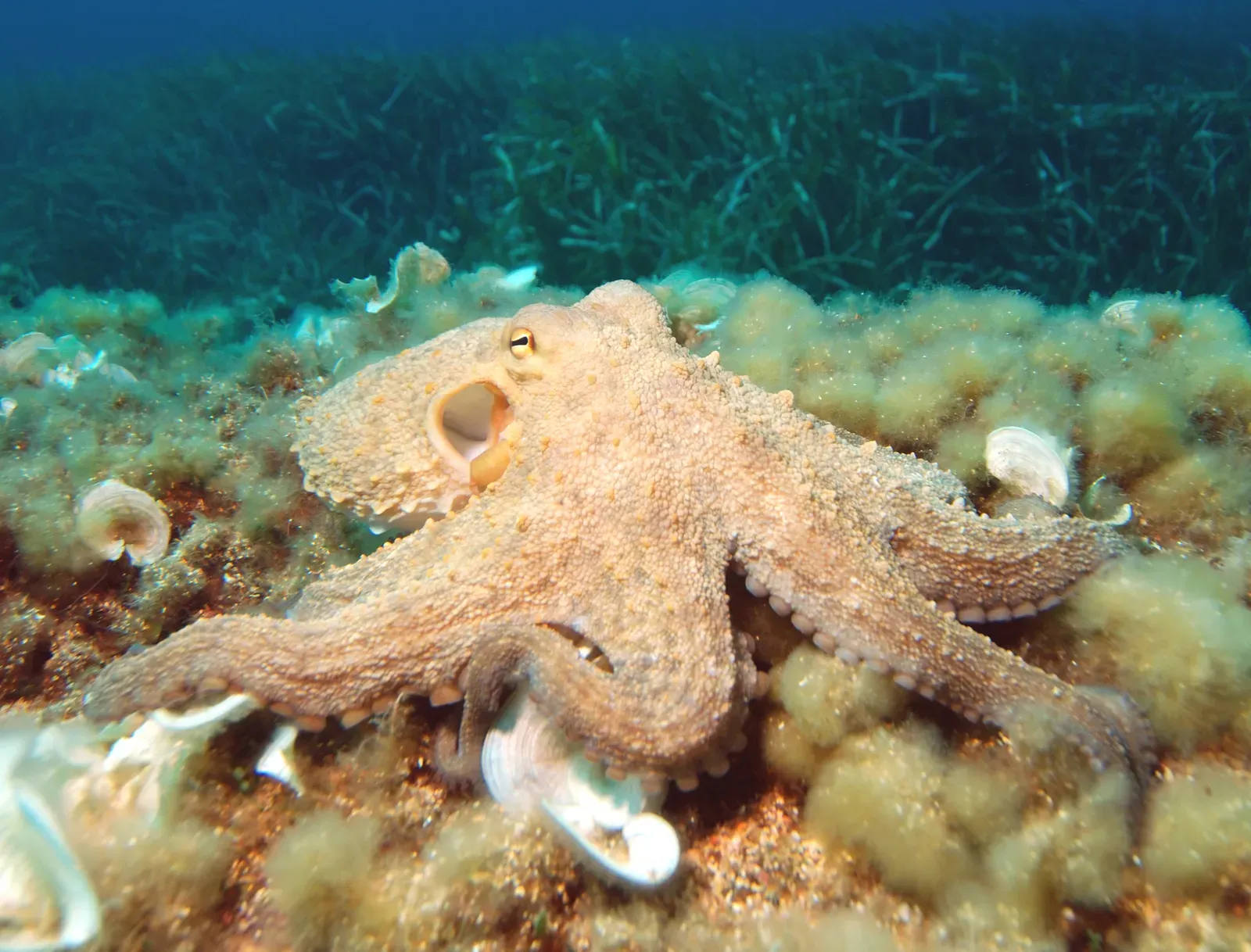
This chromatic virtuosity puzzled scientists because, comparing cephalopods’ eyes to ours, they should be color blind. Unlike humans, who have three types of color receptors to see combinations of red, blue and green, cephalopods have only one kind. They’ve mastered color matching without actually seeing color. Let that paradox marinate for a moment.
Despite their ability to create a wide variety of different colors, a majority of octopuses and other cephalopods are actually color blind: Octopus eyes only have one type of photoreceptor, the cells convert light into neural signals, which means they can only detect differences in light intensity. They see the world in shades of gray. Yet somehow they recreate complex color patterns on their skin.
Looking more closely into octopuses’ dumbbell-shaped pupils, however, researchers hypothesized that the pupils are like prisms that break white light into the separate colors of the rainbow. By changing the shape of its eyeballs, an octopus can bring different wavelengths, or colors, into focus. Their pupils function as biological prisms. Evolution found a workaround.
Scientists are still piecing together exactly how they pull this off. It’s hard to say for sure, but the combination of light-sensitive skin proteins and uniquely shaped pupils seems to compensate for their lack of traditional color vision. Nature finds a way, even when the conventional solution isn’t available.
Female Octopuses Die After Their Eggs Hatch
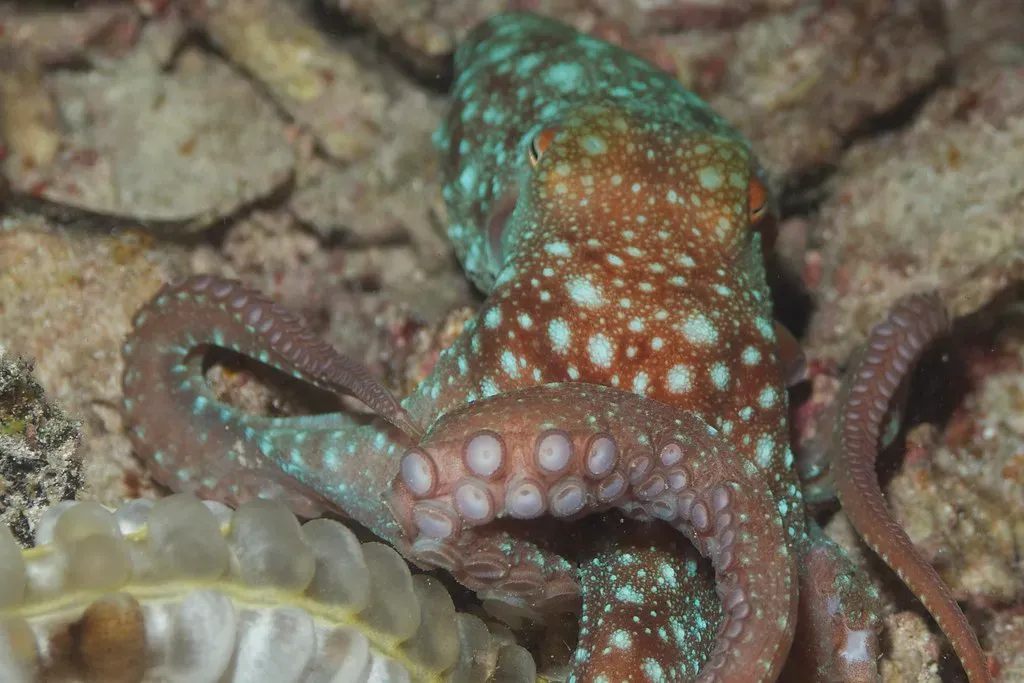
A female octopus can lay up to 400,000 eggs. From the moment they’re laid she spends her life protecting them, night and day – even giving up eating while she focuses on her egg-guarding duty. Typically, the eggs take at least five months to hatch, though one deep-sea octopus was observed to guard her eggs for almost 4.5 years! Roughly four and a half years without eating. The dedication is staggering.
Job done, the female octopus will die shortly after her eggs are hatched. She literally gives everything for the next generation. Her own survival becomes irrelevant once the babies emerge.
This means octopuses never know their parents. Unlike many animals, an octopus grows up and learns on its own, without any instruction from its parents. They’re born already equipped with the instincts and neural architecture to survive. No teaching, no learning from example. Just pure genetic programming.
The babies hatch, the mother dies, and a new generation of solitary hunters begins their short lives in the ocean. It’s both beautiful and heartbreaking when you really think about it.
Conclusion
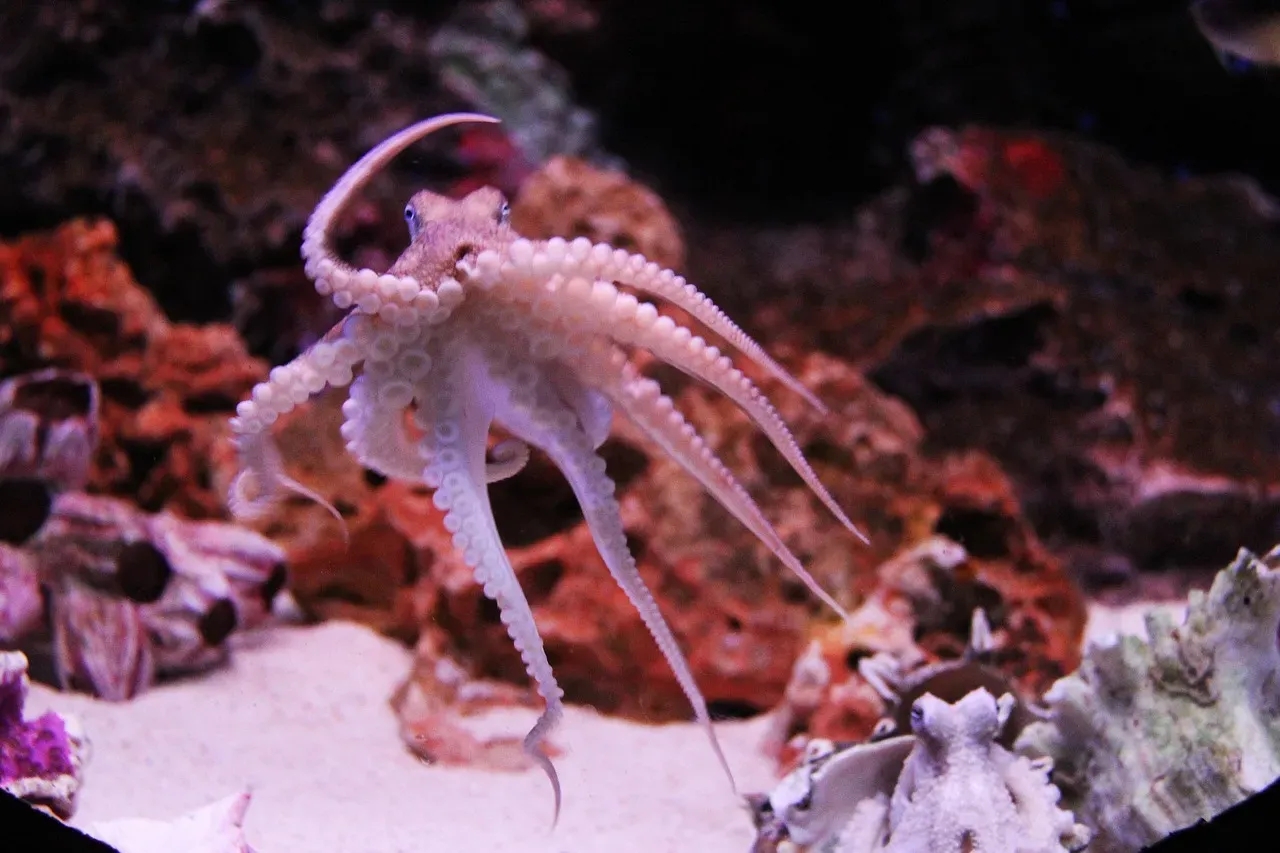
Octopuses truly are some of the strangest creatures swimming through our oceans. Blue blood, three hearts, arms that think independently, perfect regeneration, and color-blind camouflage experts. Each fact seems more unbelievable than the last.
These animals challenge our assumptions about intelligence, biology, and what’s possible in nature. They evolved along a completely different path than vertebrates, yet arrived at complex problem-solving abilities that rival many mammals. Honestly, if aliens exist, studying octopuses might be our best practice for understanding truly different forms of intelligence.
Next time you see footage of an octopus, remember you’re watching an animal that can taste with its arms, see with its skin, and whose limbs possess minds of their own. Pretty wild stuff, isn’t it? What’s the strangest octopus fact you’ve heard? Did any of these surprise you?

- What Large Dog Breed Are You According to Your Zodiac Sign - August 8, 2026
- 8 Plants That Help Keep Mosquitoes Away From Texas Patios - August 8, 2026
- 10 Facts About the Grand Canyon Hidden in Its Rock Layers - August 8, 2026