
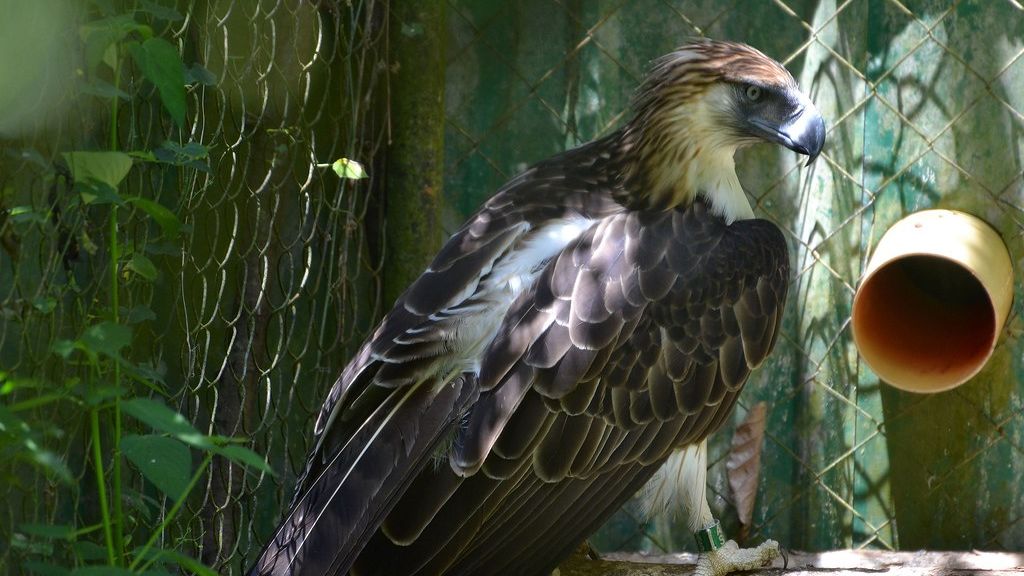
Picture this. Deep in the misty mountains of the Philippines, a shadow glides silently through ancient trees, wings spanning wider than a grown human is tall. It’s hard to believe such a creature exists, let alone that it’s teetering on the brink of disappearing forever. Yet here we are in 2026, and these majestic hunters are still clinging to survival in just a handful of forest fragments.
I think most people have never heard of the Philippine eagle, which is a shame. This isn’t just any bird. It’s among the most formidable raptors on Earth, with blue eyes that pierce through rainforest shadows and talons that could rival a big cat’s claws. The locals have known about them for generations, calling them everything from “Haring Ibon” to the slightly misleading “monkey-eating eagle.”
So what makes this bird so exceptional? Let’s dive in.
It’s One of the Largest Eagles in the World
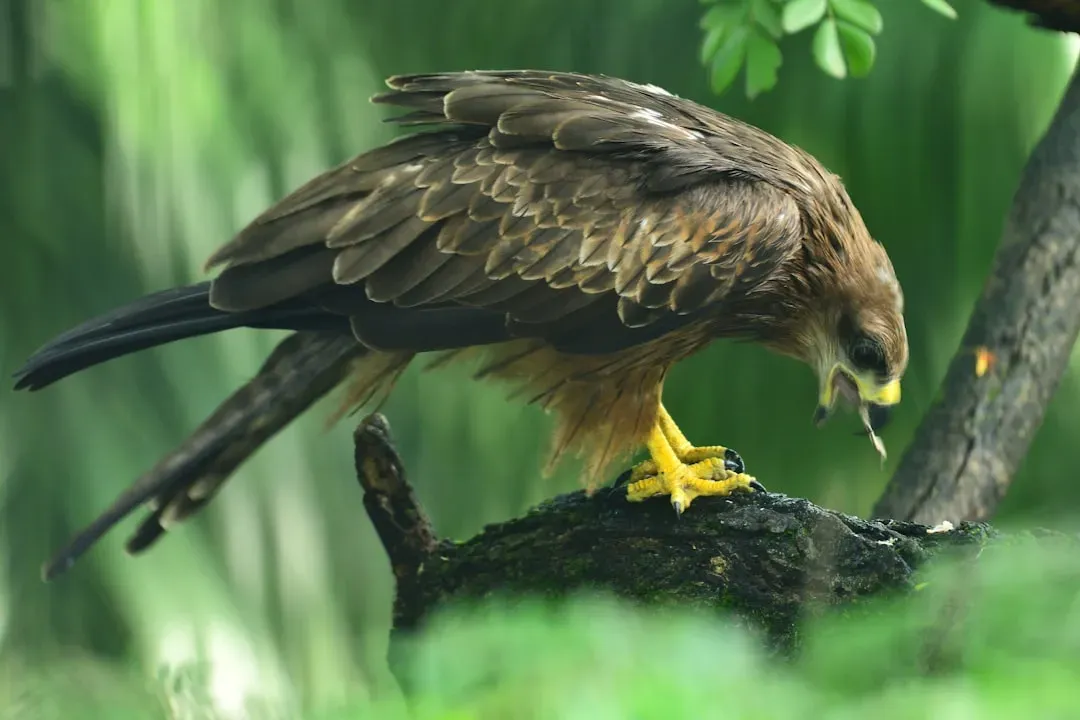
The Philippine eagle stands roughly one meter tall and is considered the largest of the extant eagles in the world in terms of length and wing surface area. While other eagles like the harpy eagle and Steller’s sea eagle might outweigh it in pure bulk, the Philippine eagle takes the crown for sheer length.
With a wingspan of about two meters (6.6 feet) and weighing up to 8.2 kilograms (18 pounds), this eagle casts an imposing shadow as it soars. At over one meter in length from tail to head, the Philippine eagle is larger than a human toddler. Female eagles tend to be larger than males, which is typical for raptors. Honestly, standing face to face with one of these birds must be an unforgettable experience.
They Sport the Only Blue Eyes Among Birds of Prey
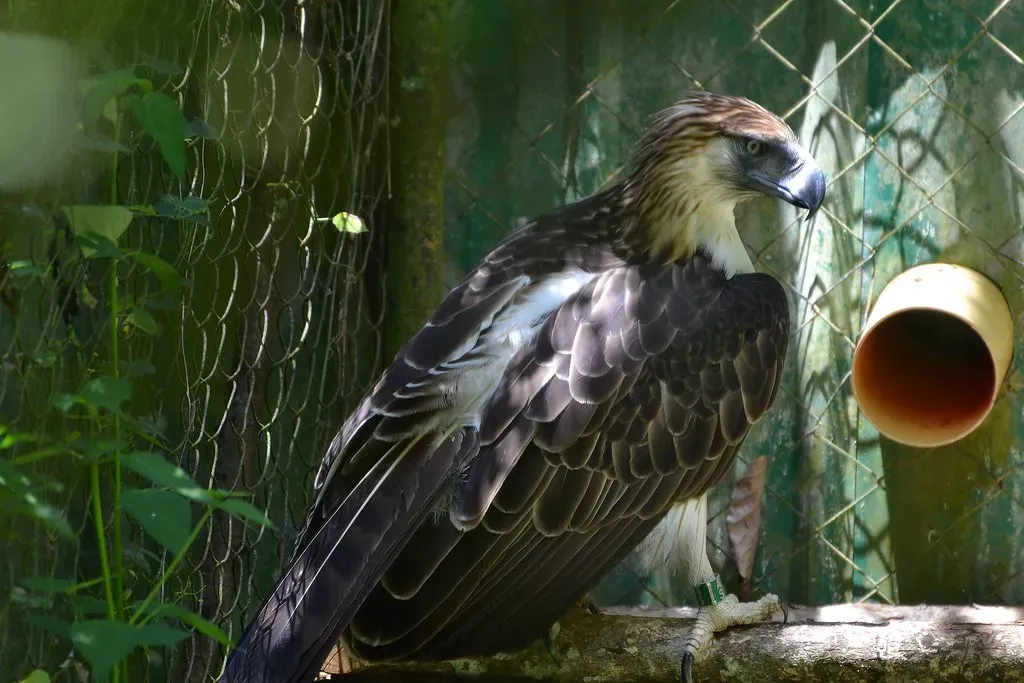
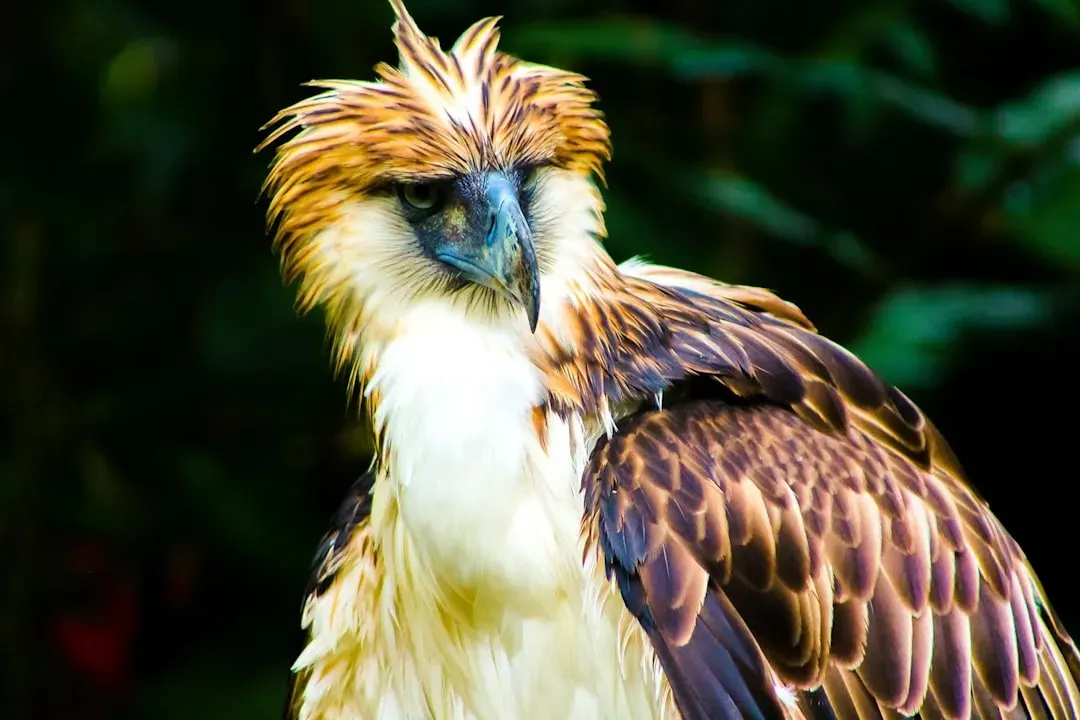
Here’s something that sets them apart from virtually every other raptor on the planet. The Philippine eagle is the only blue-eyed bird of prey in the world, with vision that is eight times better than that of humans. Those piercing blue-grey eyes aren’t just for show.
Their eyes see eight times more clearly than humans paired with a high-arching, bluish beak and sharp, powerful talons. Think about that for a moment. While we struggle to spot details from across a room, these eagles can detect the slightest movement of a flying lemur hidden in dense foliage from astonishing distances. It’s like having built-in binoculars, except way more advanced.
Their Breeding Cycle Takes Two Full Years
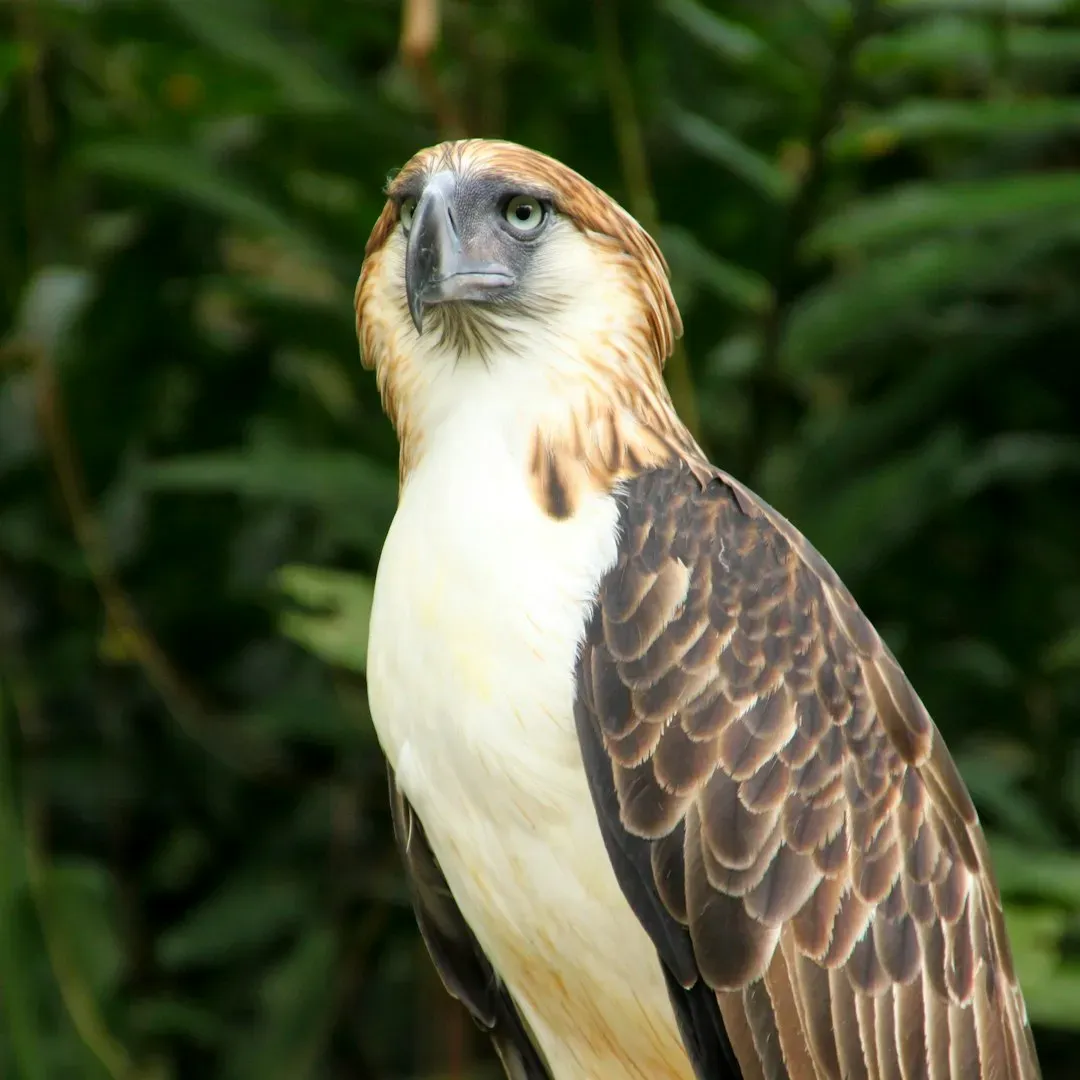
The complete breeding cycle of the Philippine eagle lasts two years, with both parents caring for the eaglet for 20 months, meaning they can breed only in alternate years unless the previous nesting attempt failed. This is remarkably slow compared to most birds. The Philippine eagle rivals the crowned eagle and harpy eagle for having the longest breeding cycle of any bird of prey.
They lay a single egg every two years, waiting for their offspring to make it on their own before producing another offspring. The parents are incredibly devoted, taking turns to hunt and protect the nest. They shield the eaglet from sun and rain until it’s seven weeks old, and the young bird fledges after four or five months. This extended parental care is touching but also makes population recovery painfully difficult.
They’re Monogamous and Mate for Life
Let’s be real, the Philippine eagle’s commitment to partnership puts most of us to shame. These eagles are monogamous and once paired, a couple remains together for the rest of their lives. They bond for life, and contrary to claims that they remain unpaired after the death of their mate, evidence indicates they take in new mates as replacement.
Female eagles mature at five years of age and males at seven. Their courtship displays are spectacular. Aerial displays include mutual soaring, dive chase where the female drops diagonally with the male trailing in pursuit, and mutual talon presentation where the male extends talons to the female’s back with the female flipping over to present her talons. It’s an aerial ballet that would make any romantic jealous.
Each Pair Needs a Massive Territory to Survive
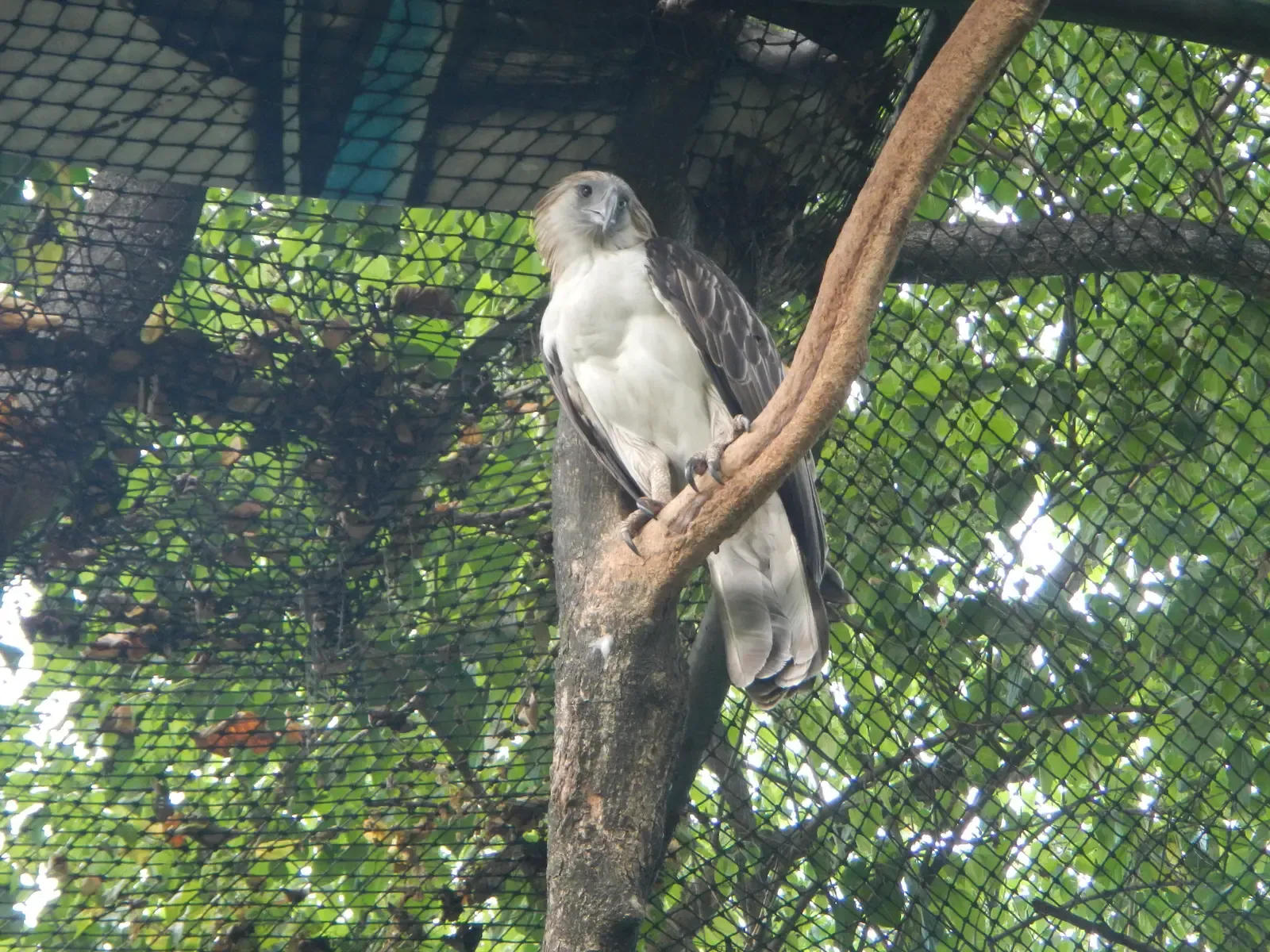
The Philippine eagle pair needs about 4,000 to 11,000 hectares of forest land to thrive in the wild, depending on the number of prey items in the area. That’s roughly 40 to 110 square kilometers. To put it in perspective, that’s bigger than some small cities.
The species is highly territorial, with studies showing each breeding pair occupies an average range of 110 square kilometers (42 square miles), with at least 68 square kilometers (26 square miles) of continuous forest cover required to sustain them. This massive space requirement makes conservation especially challenging. When forests are fragmented or destroyed, eagles simply can’t find enough territory to establish themselves. The math is brutal: less forest equals fewer eagles.
They’re Not Really Monkey-Eating Eagles
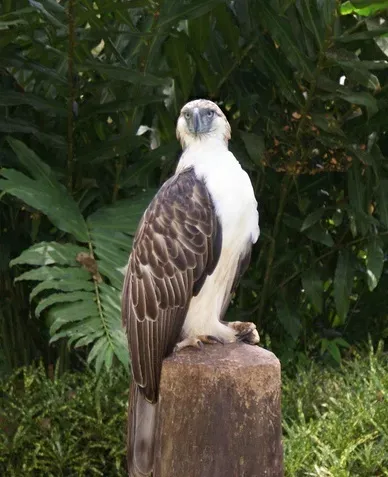
Upon its scientific discovery, the Philippine eagle was first called the monkey-eating eagle because of reports from natives of Bonga, Samar, where the species was first discovered, that it preyed exclusively on monkeys. The name stuck for decades, giving the bird a fearsome reputation.
Later studies revealed that the alleged monkey-eating eagle also ate other animals, such as colugos, large snakes, monitor lizards, and even large birds such as hornbills. Studies revealed that 15 species of vertebrate prey were used including flying lemurs, squirrels, snakes, civets, hornbill, bats and monkeys, with eagles seeming to prefer flying lemurs and civets. The “monkey-eating” label was misleading all along. They’re opportunistic hunters, adapting their diet based on what’s available in their territory.
Fewer Than 400 Pairs Remain in the Wild
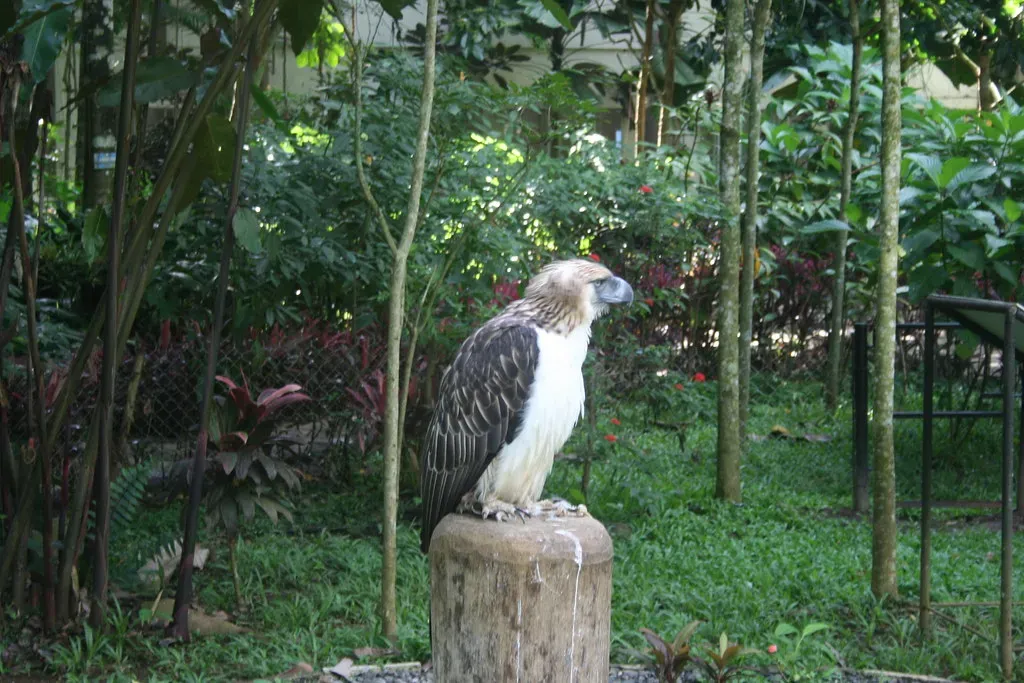
The International Union for Conservation of Nature and Natural Resources has listed the Philippine eagle as critically endangered since 1994, with an assessment conducted in 2018 reporting that the adult population is estimated to number 180-500 birds. They are listed as critically endangered with an estimated number of only 400 pairs left in the wild.
Scientists from nonprofits identified 2.86 million hectares of forest habitat suitable for the Philippine eagle, which they estimate host around 392 breeding pairs – higher than previous estimates of 340 pairs in 2018 and 88-221 pairs in 1989. Still, the numbers are shockingly low. Most of the birds are supported by Mindanao, with only scattered pairs remaining on Luzon, Samar, and Leyte. It’s hard to say for sure, but the species could vanish within our lifetimes without serious intervention.
Killing One Can Land You 12 Years in Prison
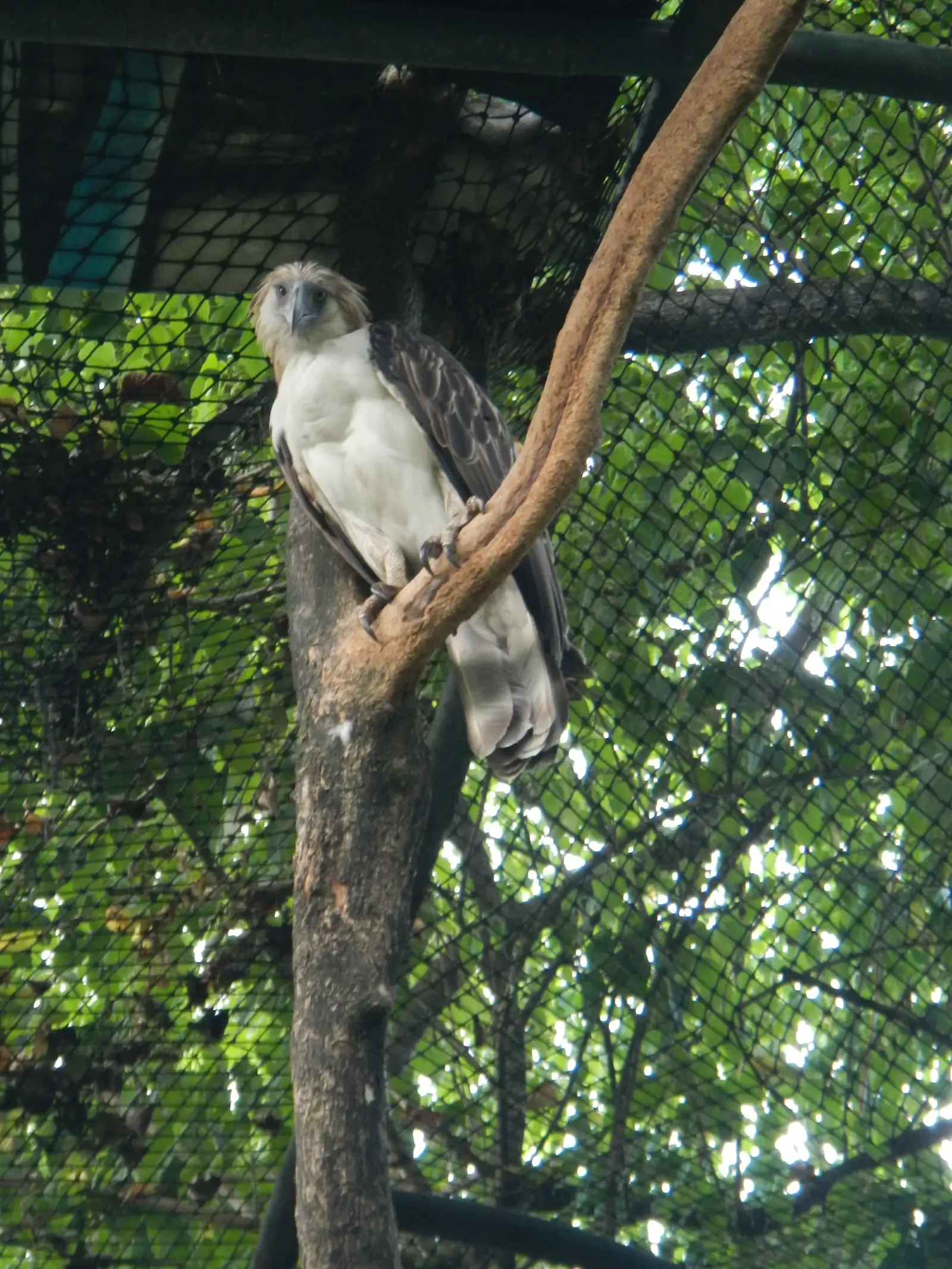
Killing a Philippine eagle is a criminal offence, punishable by law with up to 12 years’ imprisonment and heavy fines. The Philippines takes protection of its national bird seriously, at least on paper. It has been declared the national bird of the Philippines, giving it official status and cultural significance.
Yet at least one Philippine eagle is killed every year because of shooting. Since 2019, more than 20 eagles have been rescued mostly due to injuries from gunshot wounds. Despite the severe penalties, human persecution continues. Some eagles are shot accidentally, others deliberately. The law exists, but enforcement in remote forest areas remains a constant challenge.
Deforestation Is Their Biggest Threat
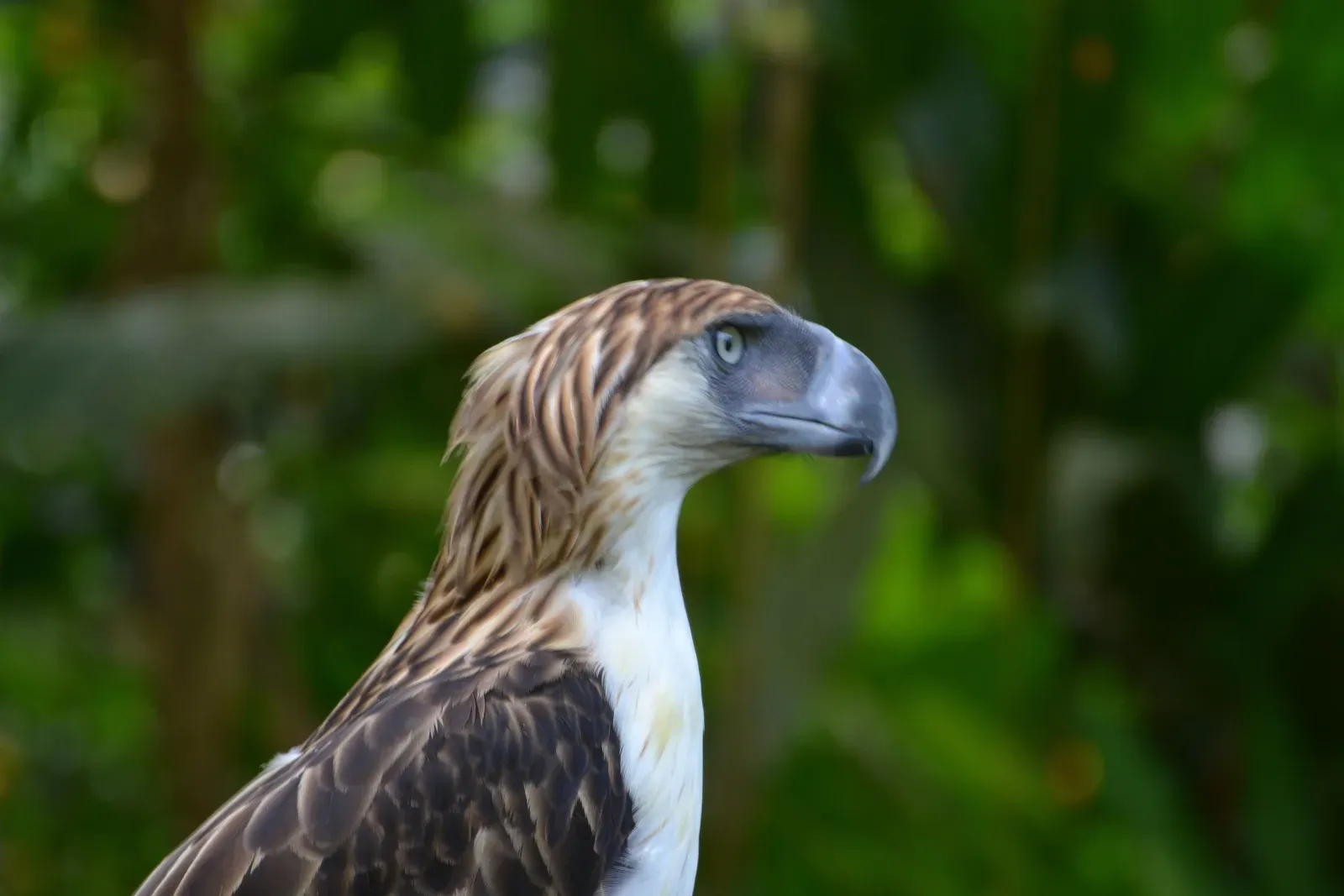
Habitat loss due to deforestation since the 1980s and declining populations of the mammals it preys upon are considered to be the primary threats to this species. Nearly 80% of the Philippines’ tropical rain forest has been deforested since the 1970s in order to make way for urban and agricultural development.
The current Philippine protected area network covers only 32% of the suitable eagle habitats, with areas falling outside the network more vulnerable to deforestation. Environmental degradation from mining and pollution also threaten the species, and wildlife officials suspect that the buildup of pesticides in the birds’ tissues through bioaccumulation may be slowing their reproductive rate. The forests disappear, the prey animals vanish, and the eagles have nowhere to go. It’s a cascading disaster.
They Have Talons as Sharp as a Tiger’s Claws
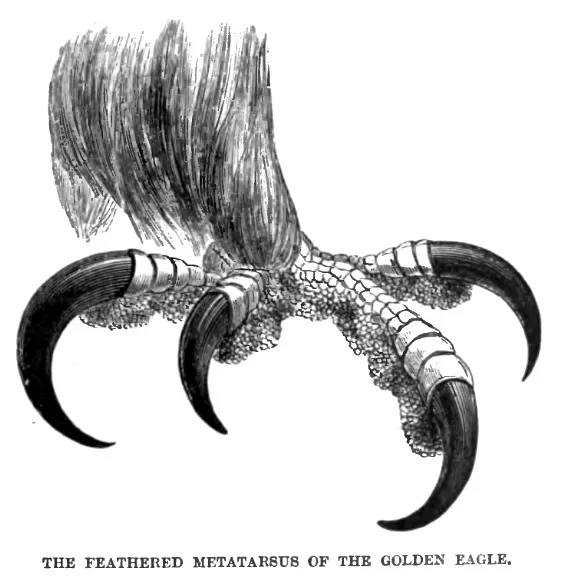
Harpy eagles claim the crown for the eagle species with the largest talons, but those of Philippine eagles are only marginally shorter, with a full grown adult Philippine eagle having powerful talons measuring up to 10 centimeters (4 inches). These curved claws enable them to grip and carry prey up to four times their own size.
Imagine talons longer than your fingers, razor-sharp and capable of crushing bone. Eagle pairs sometimes hunt troops of monkeys cooperatively, with one bird perching nearby to distract the primates, allowing the other to swoop in from behind for the kill – though the native macaque is aggressive and often around the same size as the eagle itself. One eagle reportedly suffered a broken leg after struggling with a large male monkey. These birds are apex predators, but even they face risks when hunting.
Conclusion: A Race Against Time
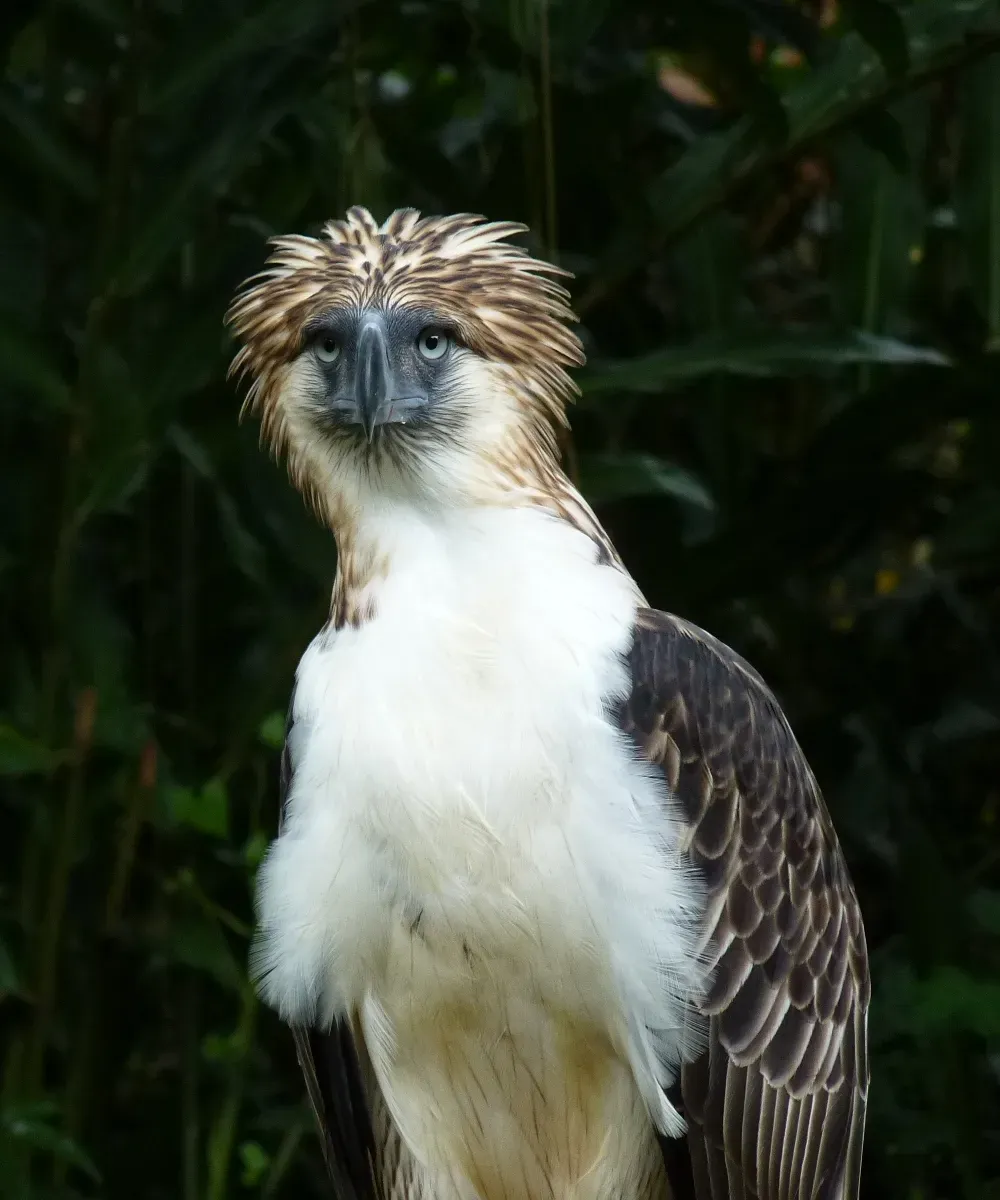
The Philippine eagle stands as a symbol of both natural wonder and conservation urgency. These magnificent birds, with their striking blue eyes, massive wingspans, and lifelong partnerships, represent something irreplaceable. Yet they’re slipping away as forests vanish and human pressures mount.
Sadly, the Philippine Eagle holds the title for being one of the most endangered raptors in the world, pushed to the brink of extinction by deforestation, shooting and other human activity. The Philippine Eagle Foundation and other organizations are working tirelessly through captive breeding, habitat protection, and community education, but the clock is ticking.
What’s at stake isn’t just a bird. It’s an entire ecosystem, a piece of Philippine heritage, and a reminder of what we stand to lose. Did you expect that such an incredible creature was so close to extinction? What would you do to help save them?
