

Imagine standing in a misty mountaintop forest, surrounded by the calls of birds found nowhere else on the entire planet. No other country. No other island. Just here. Hawaii is breathtaking for many reasons, but few people realize that beneath the postcard beauty lies one of the most dramatic biodiversity crises on Earth.
Hawaii has the dubious distinction of being known as the “Endangered Species Capital of the World,” home to a staggering 25 percent of threatened wildlife in the entire United States, despite making up just 0.25 percent of its total landmass. That number should stop you in your tracks. These ten birds are living proof of how fragile, extraordinary, and urgently precious island life can be. Let’s dive in.
1. ‘Alalā – The Hawaiian Crow
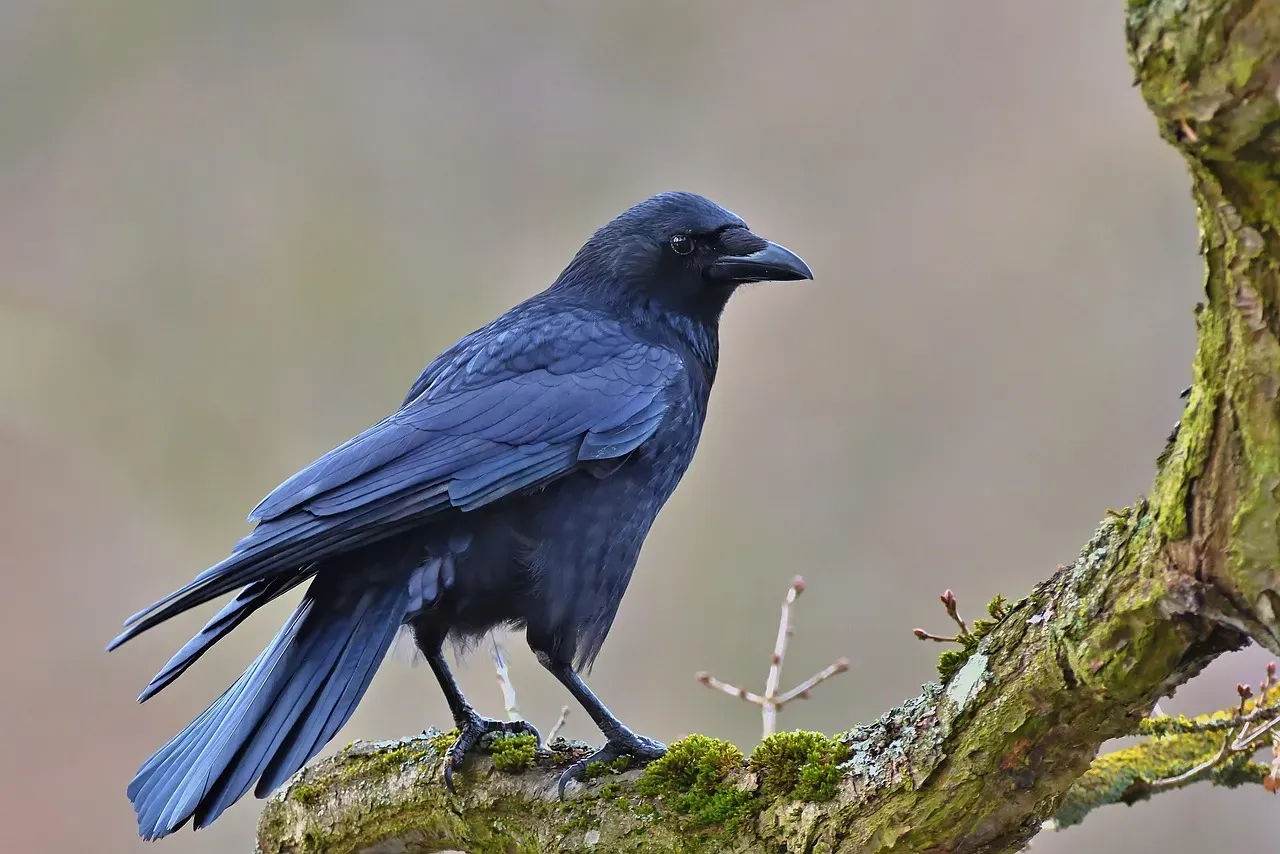
Here’s a bird story that honestly feels like something out of a survival thriller. The Hawaiian crow, known as the ‘alalā, is extinct in the wild and is found nowhere else on Earth. That’s not a warning sign for the future. That already happened.
A small group, safeguarded in captivity, has recently been released in the forests of Maui, with the birds being about a year old, making them more adaptable to new environments. Like much of Hawaii’s wildlife, Hawaiian crows began to dwindle after the arrival of Western settlers, when their native forest habitat was converted to agriculture and grazing, mosquitoes brought in on ships carried avian malaria, and introduced species like rats and mongoose preyed on native birds and their eggs.
2. Kiwikiu – The Maui Parrotbill
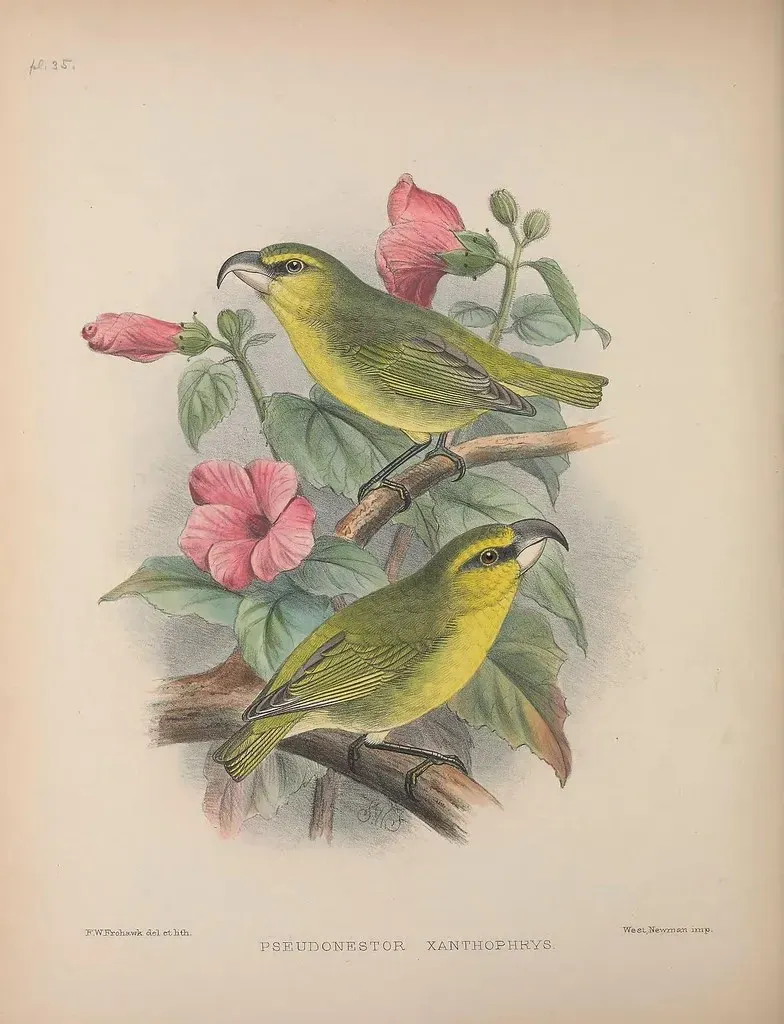
The Kiwikiu, or Maui Parrotbill, is an endangered Maui endemic with fewer than 200 birds remaining. Think about that. Fewer than 200 individuals left for an entire species. You are more likely to know 200 people personally than there are Kiwikiu alive on the planet right now.
The stocky kiwikiu, olive green above and yellow below, gets its English name from its large, hooked bill, which it uses to split branches in search of insects in high-elevation wet forests. The kiwikiu’s original Hawaiian name was actually lost to history, and in 2010 the Hawaiian Lexicon Committee renamed it “kiwikiu,” with “kiwi” referencing its curved beak and “kiu” nodding to its secretive behavior. That detail alone is both poetic and quietly heartbreaking.
3. ‘Akikiki – The Kauaʻi Honeycreeper
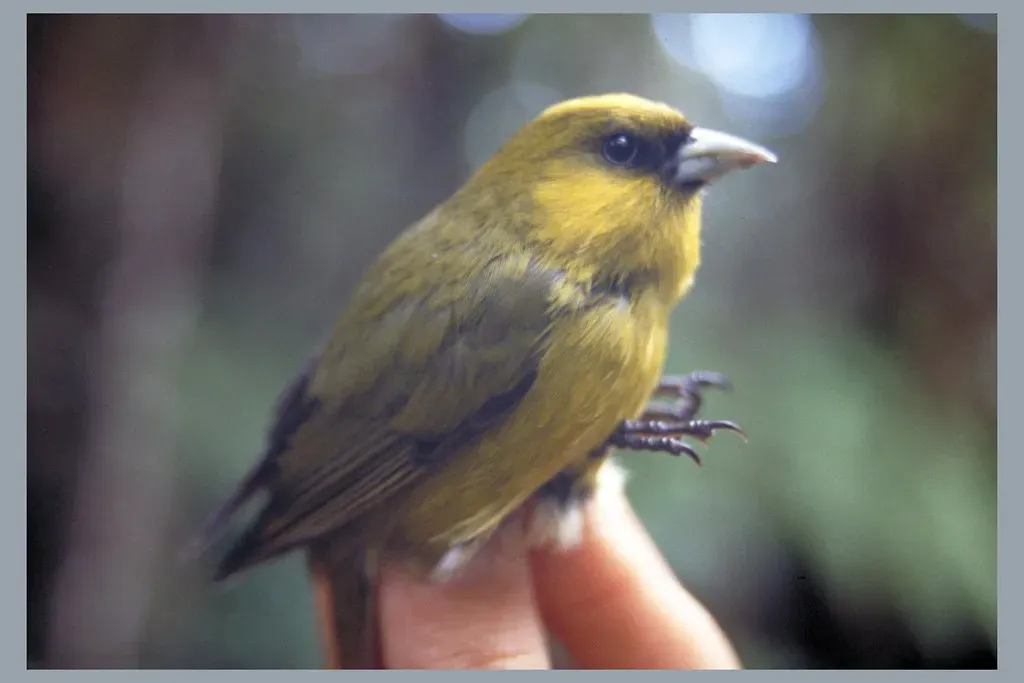
The ‘akikiki, a native Hawaiian honeycreeper and one of the world’s rarest birds, could go extinct in the wild, with scientists announcing that only a handful of birds remain on Kauai, where they are native to the island’s cloud forests. I know it sounds dramatic, but this is one of the most severe conservation emergencies unfolding right now.
For the ‘akikiki, it was the arrival of non-native mosquitoes, brought by whalers to Hawaii in 1826, that first sounded their death knell. By then, most of the honeycreepers had lost their resistance to mosquito-borne diseases such as avian malaria, so their populations quickly declined. This strategy of retreating to higher, cooler ground temporarily worked, until climate change crept in and warming temperatures allowed mosquitoes to invade the birds’ last mountain refuge.
4. ‘Ākohekohe – The Crested Honeycreeper
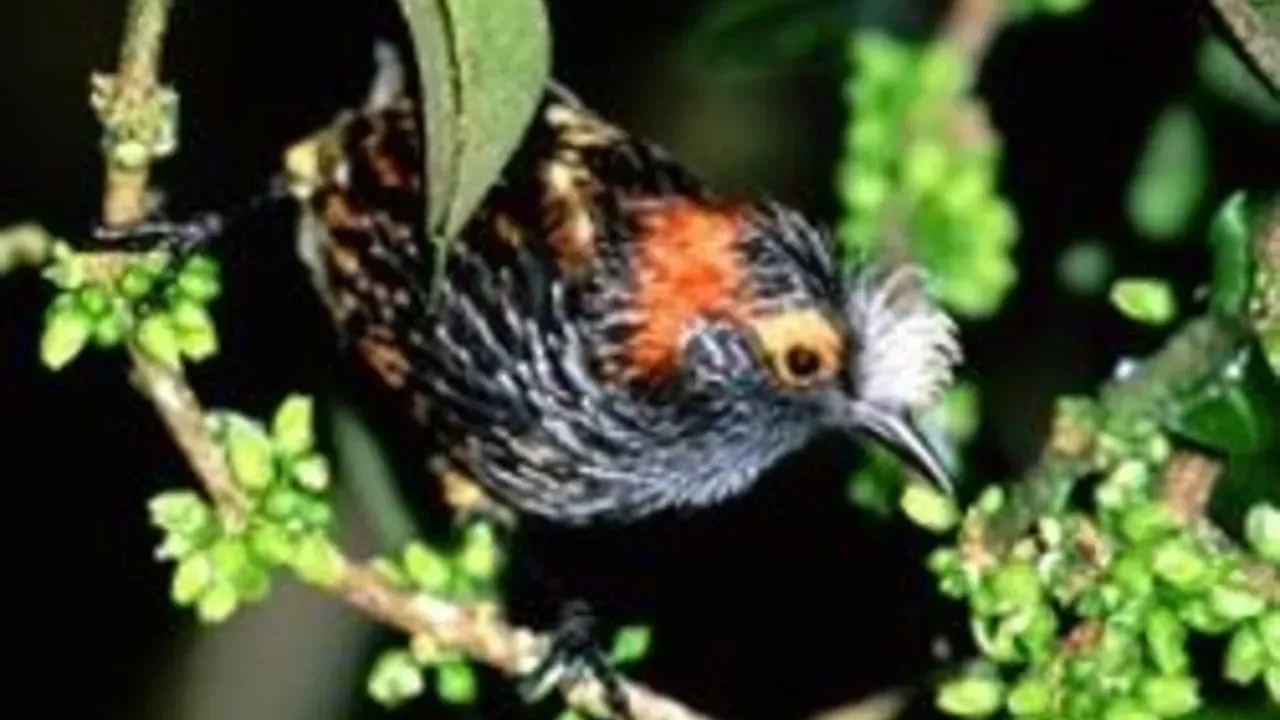
Critically endangered and found only on Maui, the ‘Ākohekohe uses its striking white crest to help pollinate native plants. It is essentially a flying pollinator, a living piece of the island’s ecological machinery. Remove it, and the forest itself begins to unravel.
The ‘Ākohekohe is one of the most visually spectacular Hawaiian birds, with its dramatic black plumage contrasted by that unmistakable white-feathered crest. Hawaii’s forest birds are found nowhere else on Earth and are woven into Hawaiian culture, playing a vital role in keeping forests thriving through pollination and seed dispersal. Losing this bird would be losing a piece of the island’s identity, not just its ecology.
5. Palila – The Finch-Billed Honeycreeper
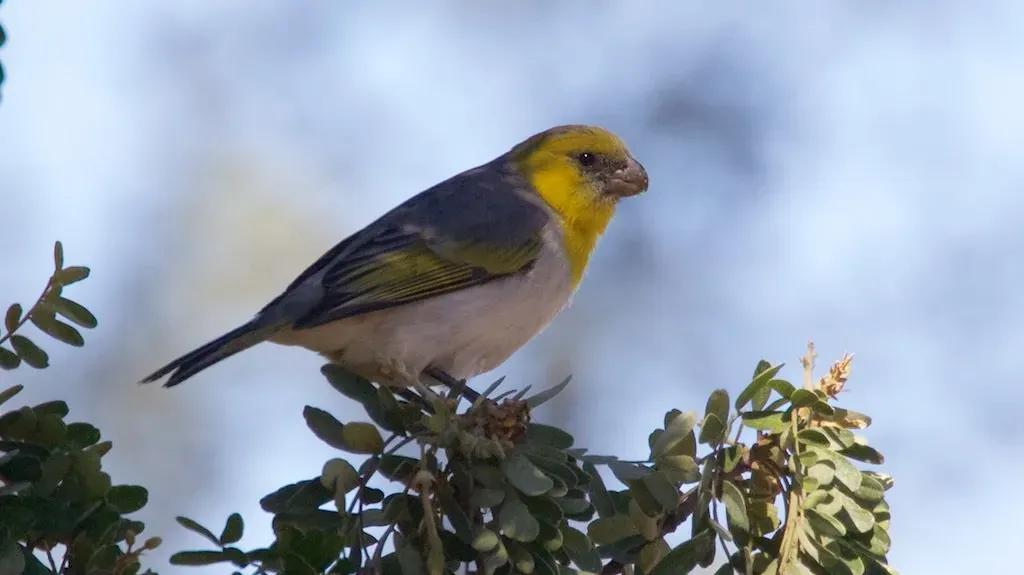
The Palila is a chunky, yellow-headed honeycreeper that lives almost exclusively in the subalpine forests of Mauna Kea on Hawaii’s Big Island. It has a specialized diet almost entirely dependent on the māmane tree’s seeds, making it one of the most ecologically specific birds on this list. Take away the tree, and you take away the bird. It really is that simple.
From what is believed to have been a single successful colonization of the Hawaiian Archipelago by an ancestral species from North America, honeycreepers like the Palila evolved into a diverse array of species with bills ranging from thick, seed-eating beaks to woodpecker-like adaptations. Over the centuries, habitat in Hawaii has been lost to agriculture, housing, and commercial development, and introduced pigs, sheep, and other mammals have ravaged native habitats further. For the Palila, feral sheep and goats destroying the māmane forest remain among its most immediate threats.
6. Puaiohi – The Small Kauaʻi Thrush
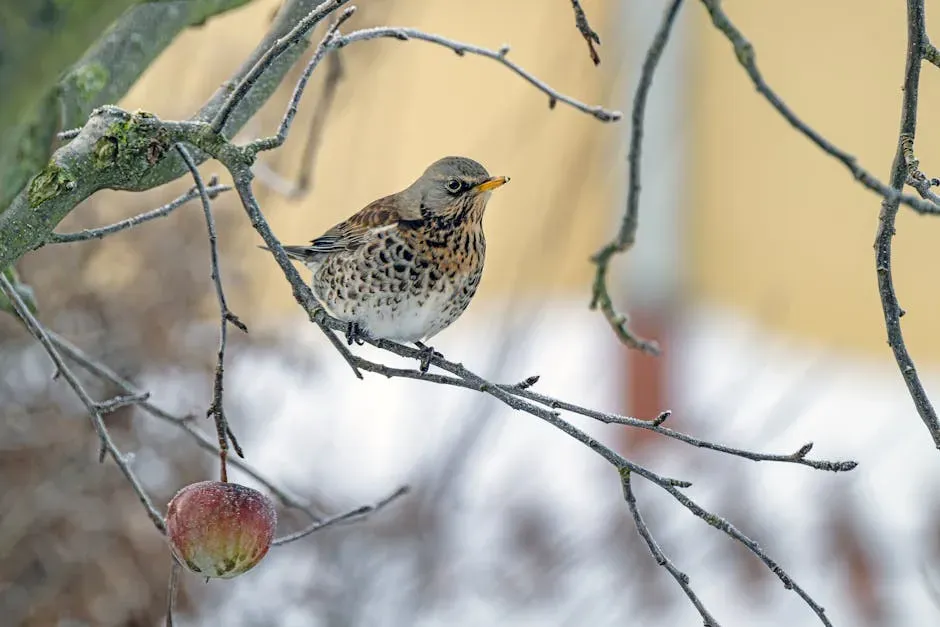
The Puaiohi is a rare thrush found only on the island of Kauai. With its dark plumage and bright yellow eyes, this bird is a symbol of the island’s unique biodiversity, residing in the dense forests of Kauai and threatened by habitat loss and introduced predators.
The Puaiohi is endemic to Kauai, essentially confined to the upper elevation ohia forests of the Alakai Plateau, spending most of its time in ravines with dense undergrowth. It has been rare since it was originally described in the 1890s but has benefited from conservation efforts. In 1999, the first successful reintroduction of the endangered Puaiohi saw birds not only survive but also go on to successfully breed and fledge their own offspring within sixty days of release, which was a genuinely hopeful moment in an otherwise sobering chapter.
7. ‘I’iwi – The Scarlet Honeycreeper
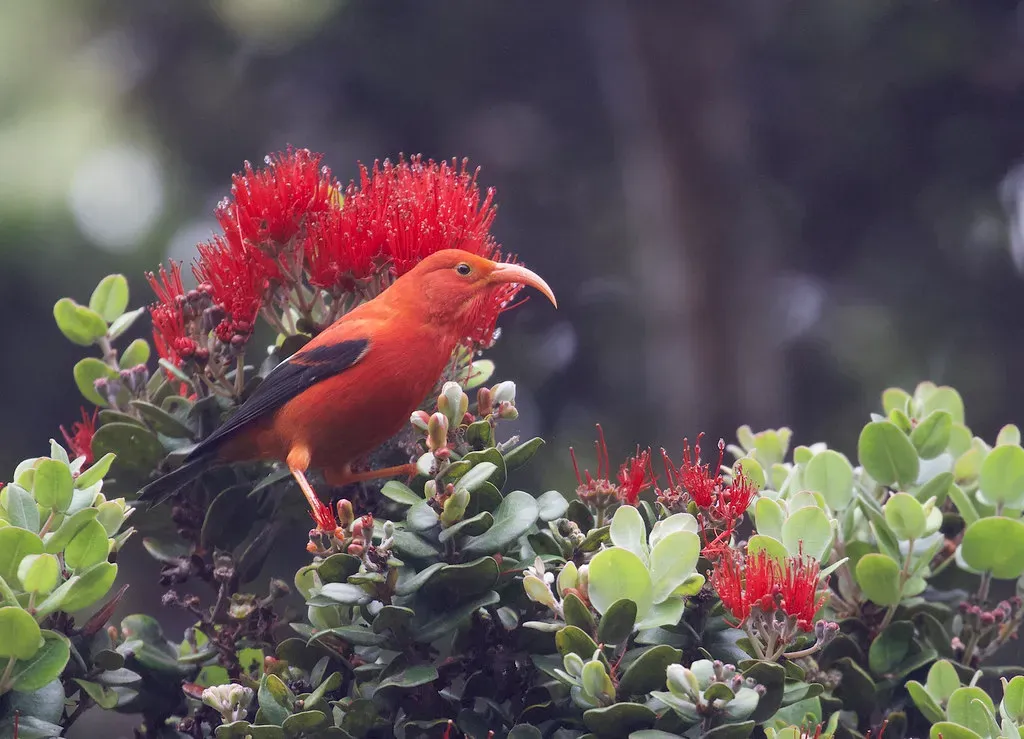
The ‘I’iwi might just be the most visually iconic bird in all of Hawaii. Blazing scarlet red with a dramatically curved salmon-colored bill, it looks like something painted by an artist who refused to be subtle. The eye-catching ‘I’iwi was once one of the Hawaiian Islands’ most common forest birds. That “once” carries enormous weight.
In the past, ‘i’iwi could be found from the coastal lowlands where they foraged for food to the high mountain forests where they nested. Today, they are steadily retreating upslope as mosquito populations expand with warming temperatures. For many honeycreepers like the ‘I’iwi, a single mosquito bite can prove lethal. That vulnerability is almost impossible to comprehend, yet it is the stark daily reality for this magnificent bird.
8. Nēnē – The Hawaiian Goose
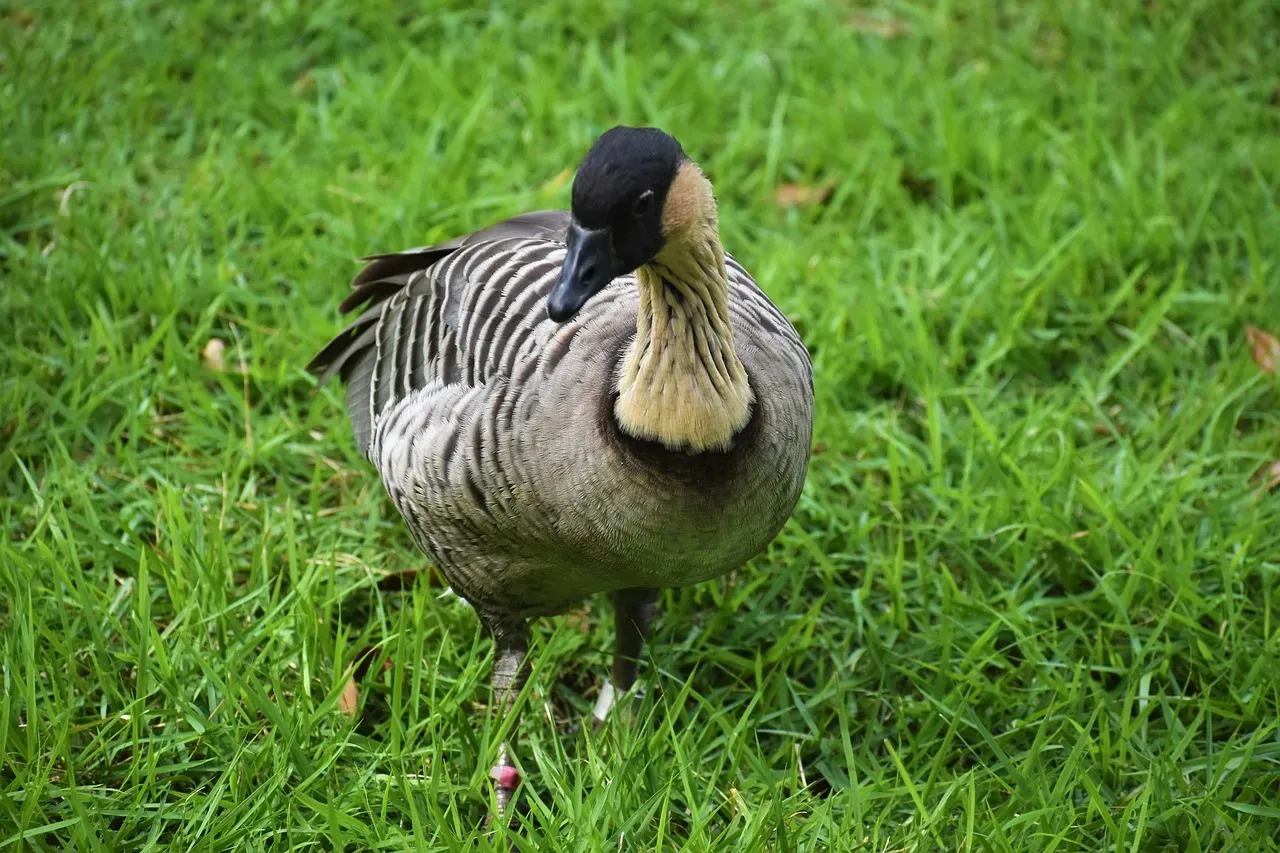
The Nēnē is the official state bird of Hawaii and an endangered species of goose belonging to the family Anatidae. It is closely related to the Canada goose but evolved in complete isolation on the Hawaiian Islands, developing reduced webbing on its feet to navigate volcanic terrain rather than open water. That is evolution doing something genuinely fascinating.
Listed as endangered under the Endangered Species Act in 1967, the Nēnē was able to rebound from the brink of extinction and in 2019 was downlisted to threatened, making it one of Hawaii’s rare conservation success stories. Considered to be the rarest goose in the world, reintroduction efforts coupled with good management practices have been helping to increase the population steadily. Honestly, the Nēnē gives conservationists something they desperately need: proof that it can work.
9. ʻUaʻu – The Hawaiian Petrel
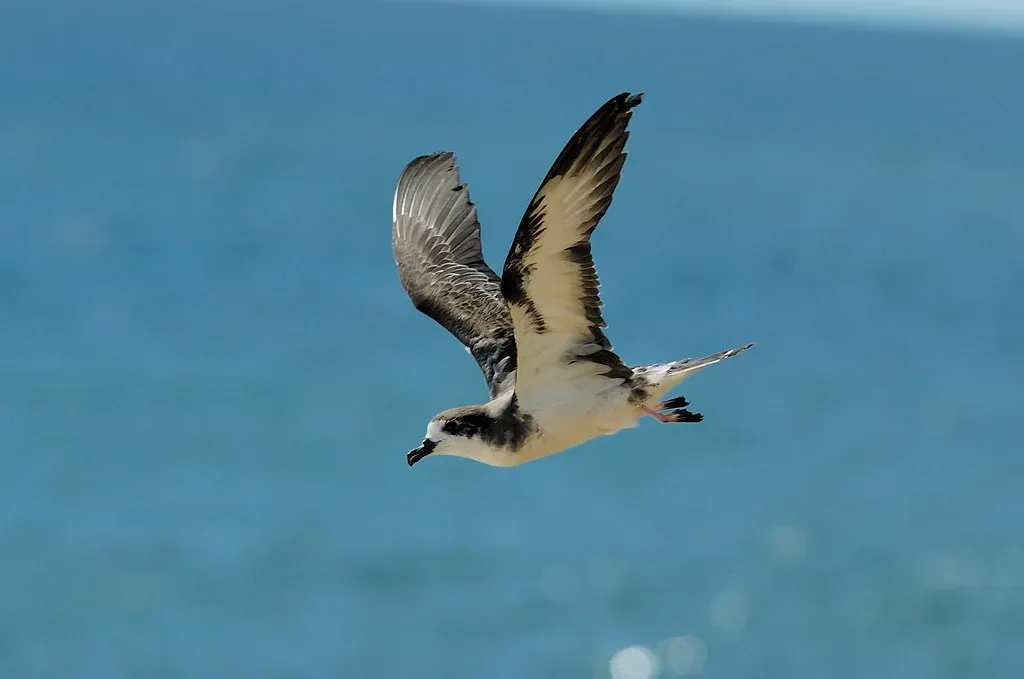
The ‘Ua’u, or Hawaiian Petrel, is a rare seabird that breeds in the mountains of Hawaii and nests in burrows, featuring a black body, white underparts, and a distinct yellow bill. Threatened by invasive predators and light pollution, this bird’s survival is dependent on conservation efforts.
What makes the Hawaiian Petrel so remarkable is the sheer distance it travels. It nests in Hawaii’s high volcanic mountains but spends most of its life far out over the open Pacific Ocean, covering enormous stretches of water before returning to the same burrow year after year. Think of it as a frequent flyer with a very specific home address. Non-native mosquitoes have spread deadly avian malaria and pox among bird populations with no immunity, and cats and rats brought to the islands have decimated bird populations, consuming eggs, young birds, and even adult birds, taking an especially hard toll on seabirds.
10. ʻAlae ʻUla – The Hawaiian Common Moorhen
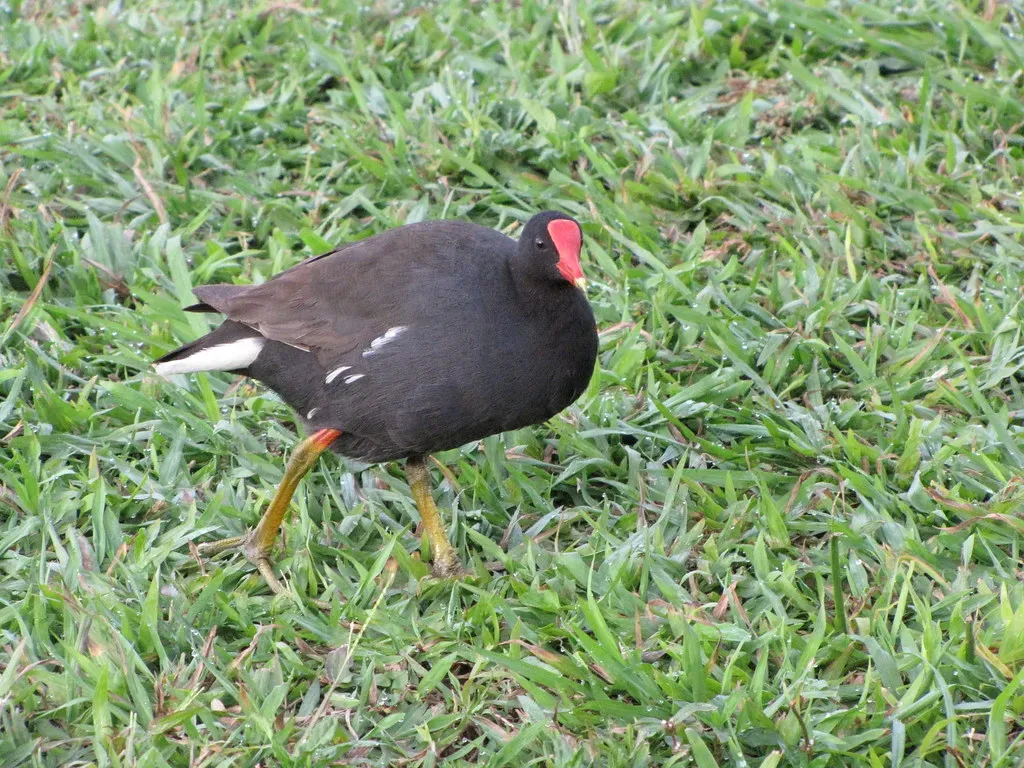
The Hawaiian Common Moorhen, also called ‘alae ‘ula in Hawaiian, is really not so common at all. This endangered waterbird is endemic to Hawaii and, though considered common in the 1800s, is now only found on Kauaʻi and Oahu. In Hawaiian mythology, the ‘alae ‘ula is attributed with bringing fire from the realm of the gods to the Hawaiian people, and it was said to have been scorched on the forehead in doing so, explaining its bright red bill and forehead. That mythological detail gives this bird a cultural weight far beyond its small size.
With threats of habitat loss, introduced predators, and human disturbance, the ‘alae ‘ula population has significantly declined over the years, and efforts are underway to conserve and restore wetland habitats to provide a safe haven for the species. It is a bird that once carried the fire of the gods, now quietly fighting for its own survival in what remains of Hawaii’s wetlands.
The Bigger Picture: Why Hawaii Is a Warning to the World
Prior to the arrival of humans, the Hawaiian Islands supported at least 113 endemic bird species, and Hawaii has the unfortunate distinction of being one of the epicenters of extinction, with 71 birds confirmed lost since human arrival. That figure is not ancient history. Some of those losses happened within living memory.
Today, roughly 70 percent of Hawaiian bird species are listed as endangered, and one third of all the endangered bird species in the entire United States are Hawaiian. Scientists are fighting back with new biological technologies, using the naturally occurring Wolbachia bacteria to suppress mosquitoes in Hawaiian forests by breeding male mosquitoes in a lab that then cannot successfully reproduce with wild females. It is creative, it is urgent, and whether it will be enough remains one of the most important conservation questions of our time.
Hawaii’s birds are not just a local concern. They are a mirror held up to the world, reflecting what happens when ecosystems are pushed past their limits. The question is not just whether these ten species can be saved. The real question is whether we are paying close enough attention to act in time. What do you think? Have you ever seen one of these birds in the wild? Share your thoughts in the comments below.
