
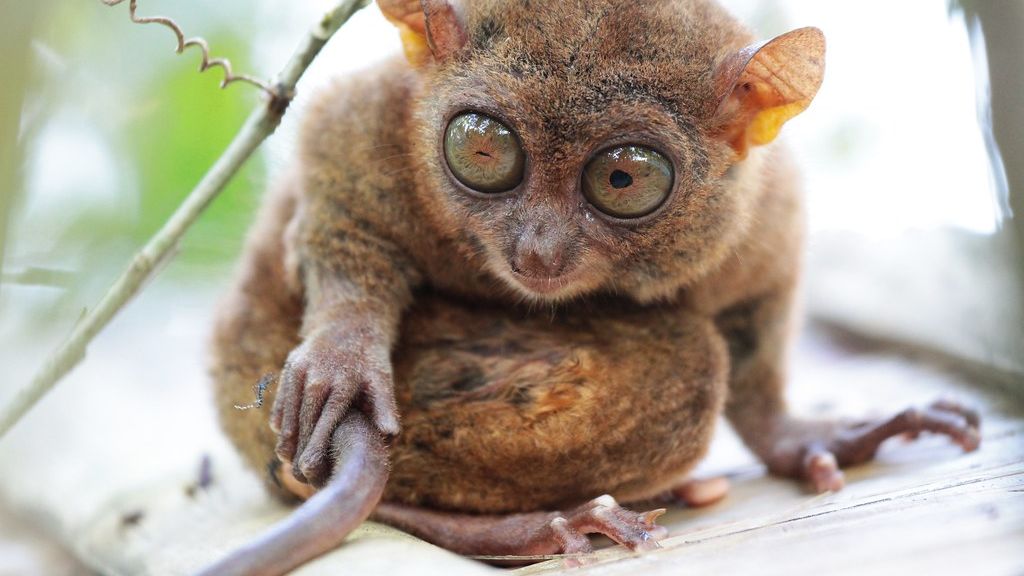
Somewhere deep in the rainforests of Southeast Asia, clinging to a vine in the dark with enormous alien eyes, is one of the most extraordinary creatures on the planet. Small enough to fit in the palm of your hand, yet ancient enough to predate most of human history, the tarsier is a living paradox wrapped in velvety fur.
Most people have never seen one in real life. Many have only caught a glimpse in a nature documentary or an internet photo that made them wonder, “Wait, is that thing real?” It absolutely is. are among the most fascinating yet lesser-known primates in the world, famous for their enormous eyes, incredible jumping abilities, and nocturnal lifestyle. Let’s dive in.
1. Their Eyes Are Literally Bigger Than Their Brains
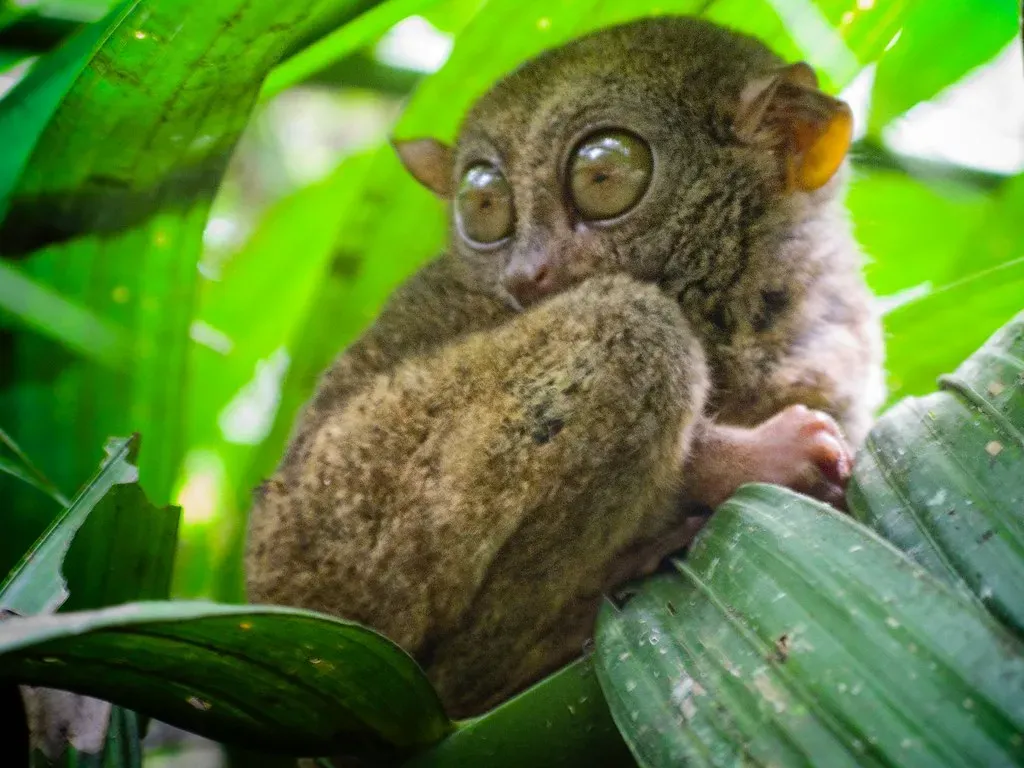
Here is a fact that genuinely stops people mid-conversation: have eyes that are larger than their own brains. Not slightly larger. Actually, measurably, scientifically bigger. Each eyeball is approximately 16 millimetres in diameter and is as large as, or in some cases larger than, the tarsier’s entire brain.
have the largest eyes of any mammal in relation to their body size. Think about that for a second. These little animals are essentially built around their eyes. Everything else, the skull shape, the neck muscles, even the way the brain is wired, exists partly to support those extraordinary orbs.
actually lack a tapetum lucidum, the light-reflecting layer behind the retina found in most nocturnal mammals. Instead, they have extremely large eyes and a well-developed fovea to maximize light-gathering capacity, and this gives them the most acute night vision of all primates. Honestly, it’s one of the most mind-bending biological trade-offs in the animal kingdom.
2. They Cannot Move Their Eyes, So They Rotate Their Heads Instead
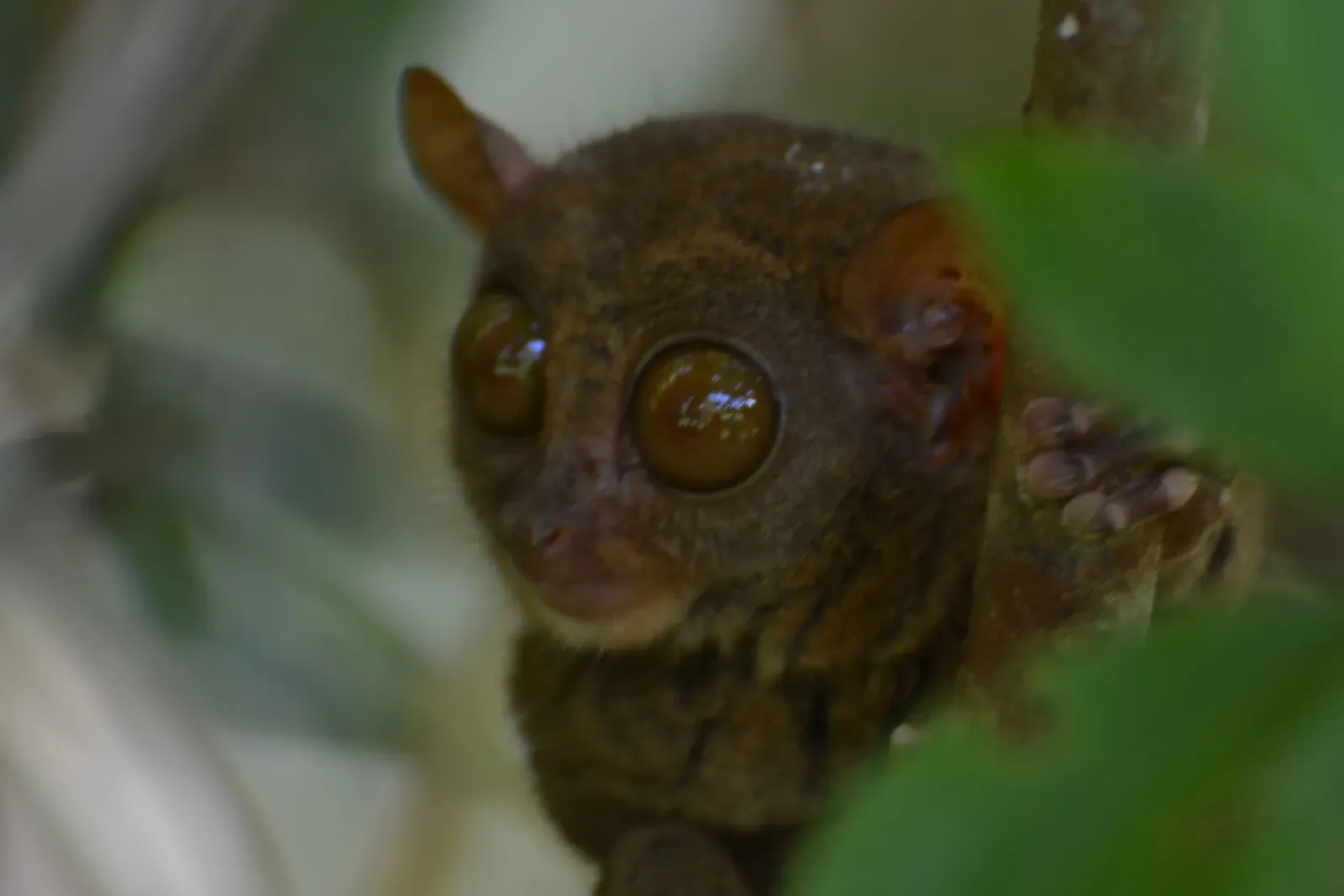
Here is the catch with those spectacular eyes: they are completely frozen in place. Tarsier eyes are fixed in their skulls, meaning they cannot move within their sockets. Instead, have evolved the ability to rotate their heads almost 180 degrees in both directions, similar to an owl.
Tarsier morphology allows for them to move their heads 180 degrees in either direction, allowing for them to see 360 degrees around them. That’s a full circle of vision. No sneaking up on a tarsier. None.
It is one of those details that sounds made up, but is completely real. The trade-off between fixed, giant eyes and an almost owl-like swiveling neck is a genuine evolutionary marvel. It’s like nature said, “Fine, you can’t move your eyes, but here, have this neck instead.”
3. Are the Only Fully Carnivorous Primate on Earth
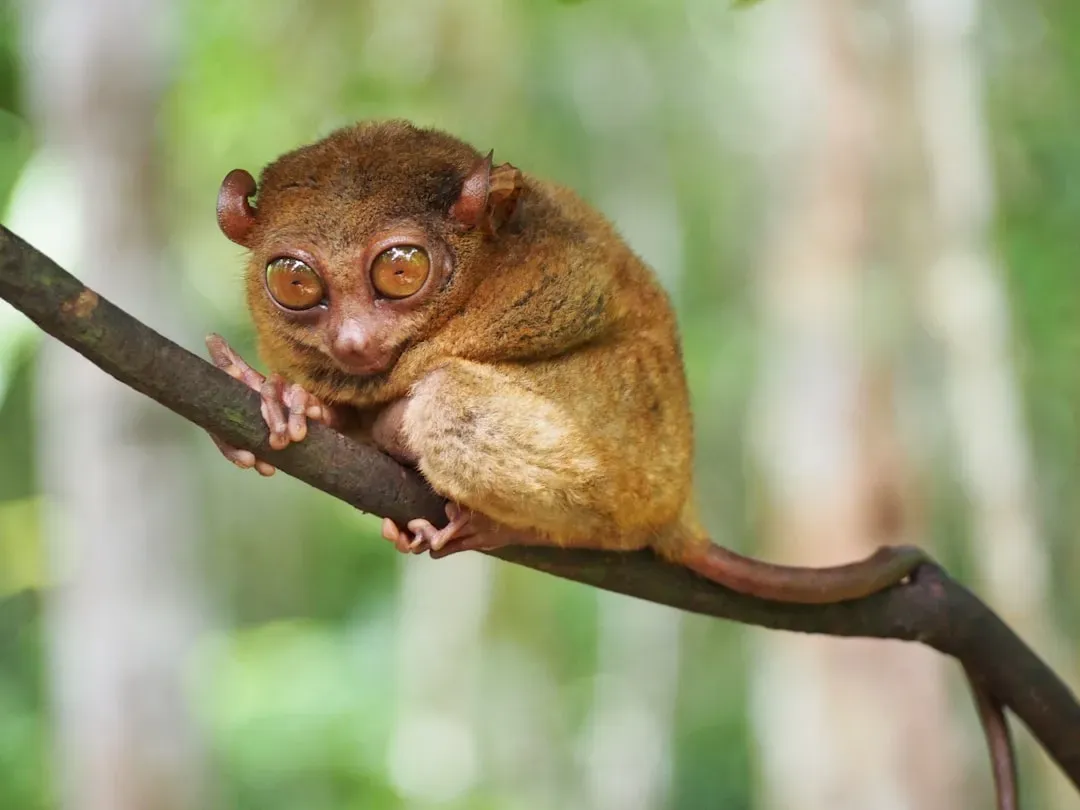
Every other primate, including you and me, eats some form of plant matter. Monkeys eat fruit. Apes eat leaves and vegetation. Even the most meat-inclined primates still sneak in some plant food. are the only entirely carnivorous primate, eating mostly insects, but also preying on birds, snakes, and lizards. They have strong jaws and teeth and a wide mouth for their small size, which enables them to consume larger prey.
Spectral listen with their independently moving ears to locate potential prey. Once a prey item is targeted, a tarsier ambushes its prey with a sudden lunge, grasps it with its long, slender fingers, and bites to kill it, returning to its perch to consume its meal. This form of ambush hunting requires excellent hand-eye coordination.
help regulate insect and small vertebrate populations since they can eat nearly 10 percent of their own weight each day. For context, that is like a 75-kilogram human eating roughly 7.5 kilograms of food every single day. Every day. These tiny things eat ravenously.
4. They Are Phenomenal Jumpers With Legs Built for It
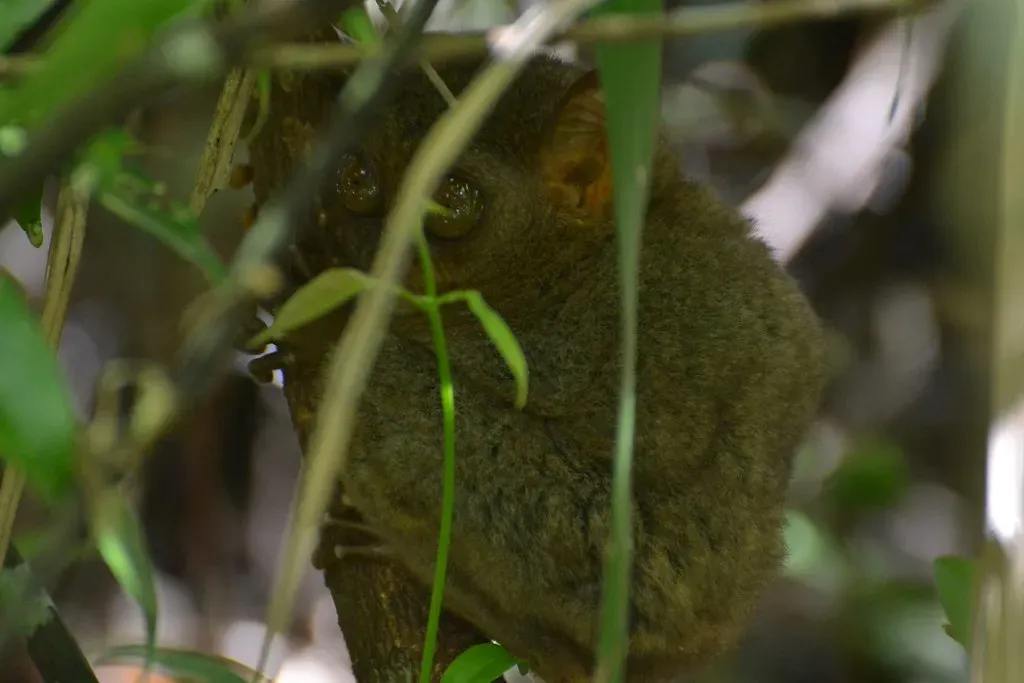
Let’s be real: watching a tarsier leap between trees is one of nature’s most quietly impressive spectacles. They look fragile and delicate, but those long hind legs are spring-loaded biological machines. Philippine can leap 20 feet, or 6 meters, at a time, which is pretty amazing for such a small animal.
have long hind limbs owing mostly to the elongated tarsus bones of the feet, from which the animals get their name. The combination of their elongated tarsi and fused tibiofibulae makes them morphologically specialized for vertical clinging and leaping.
Their feet contain two very elongated tarsal bones that give them amazing leaping abilities. In fact, the word “tarsier” is a direct reference to these elongated tarsal bones. Due to these elongated leg bones and the powerful muscles wrapped around them, their legs alone comprise about a quarter of the weight of their entire body. A quarter. Of their entire body weight. Dedicated entirely to jumping.
5. They Communicate in Sounds Humans Cannot Hear
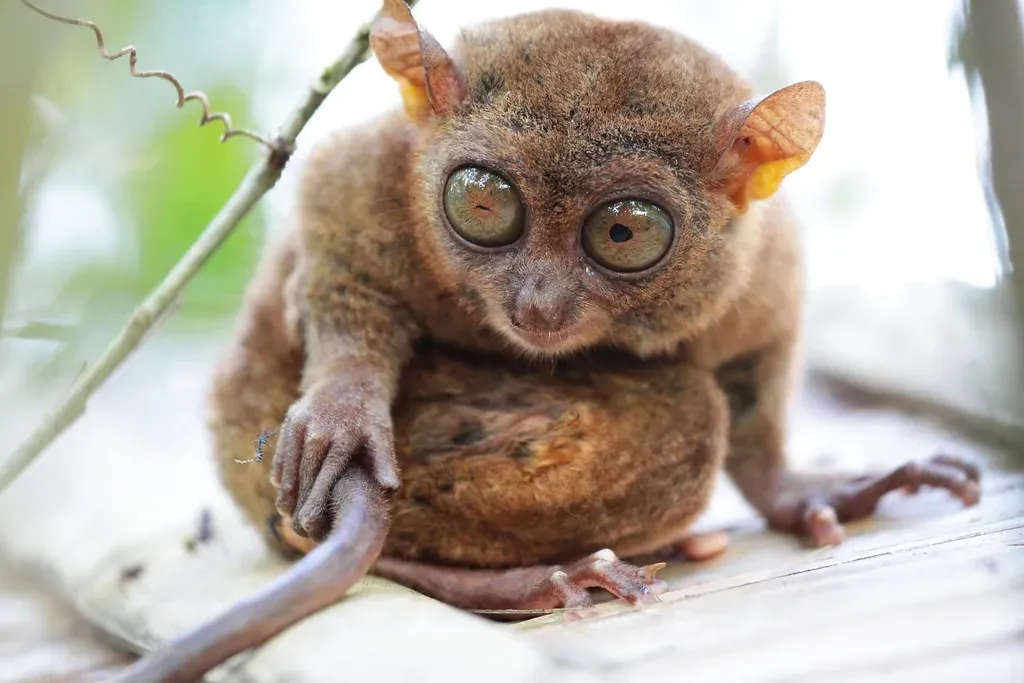
For years, scientists were genuinely puzzled by . The animals would open their mouths wide, looking like they were screaming, yet no sound came out. Researchers wrote it off as yawning. It’s only been recently discovered that make ultrasonic noises, sounds so high in frequency that the human ear cannot hear them. This discovery was a bit embarrassing for researchers, because often open their mouths in large gapes that looked like silent screams, long explained away as yawns by scientists, but they actually are warning calls that humans simply cannot hear.
produce high-pitched calls beyond human hearing to communicate with each other. These ultrasonic vocalisations help them detect rivals and alert mates while avoiding predators.
Due to the research of the world’s leading tarsier researcher Dr. Sharon Gursky, we now know that ultrasonic vocalization is common for these small tree-hoppers. Ultrasonic vocalizations can only be heard at short distances, and Gursky identifies this as a type of echolocation, which is another aid for their nocturnal navigation. So the next time you see a tarsier with its mouth wide open and hear nothing, know that it is saying quite a lot.
6. Tarsier Babies Are Among the Largest Newborns, Relative to Their Mothers, of Any Mammal
Imagine giving birth to a baby that weighs roughly a quarter of your own body weight. That’s the reality for tarsier mothers, and it is an astonishing biological fact. Tarsier babies are the largest relative to the size of the mother of any mammal. Female give birth to a single baby that weighs 25 to 30 percent of the mother’s body weight.
Young are born furred and with open eyes, and are able to climb within a day of birth. This is called being precocial, where newborns arrive in a highly developed state. No helpless pink blobs here. A tarsier baby comes out fully furred, eyes wide open, ready to cling to a branch within 24 hours of entering the world.
Mothers carry their young in their mouths or on their backs. It’s a tender, almost endearing image for such an ancient and alien-looking creature. There is something genuinely moving about a tiny tarsier mother navigating the dark forest with her baby clinging to her back.
7. They Are Ancient, With a Fossil Record Stretching Back Tens of Millions of Years
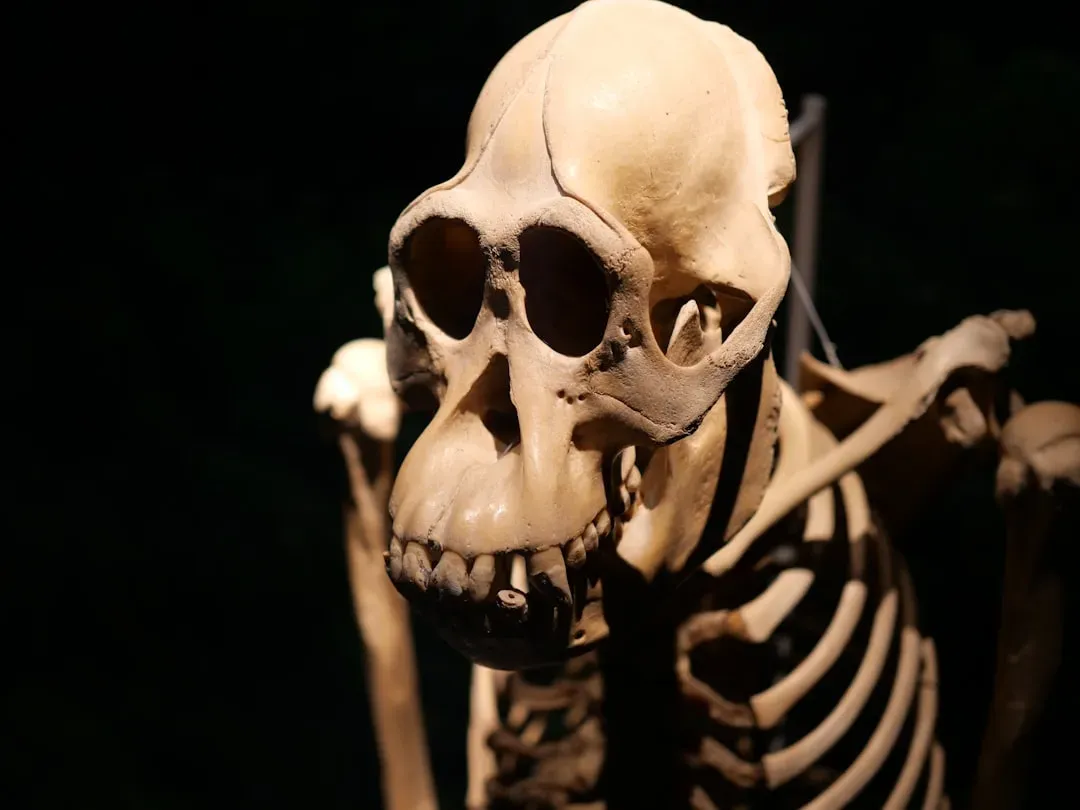
Despite its diminutive size, the tarsier boasts a rich evolutionary history dating back over 55 million years, making it one of the most primitive primates still in existence today. To put that into perspective, that is before many major mountain ranges had fully formed. were already doing their thing while the continents were still rearranging themselves.
The fossil record indicates that their dentition has not changed much, except in size, over the past 45 million years. Their teeth have barely evolved in tens of millions of years. Nature apparently decided the tarsier’s bite was fine and left it alone.
were once more widespread, with fossils found in Asia, Europe, and North America. All the species living today are restricted to the islands of Southeast Asia, including the Philippines, Sulawesi, Borneo, and Sumatra. What was once a global creature is now confined to a small cluster of tropical islands. I think that’s both humbling and a little heartbreaking.
8. Their Ears Are Independently Mobile, Like Two Tiny Biological Radars
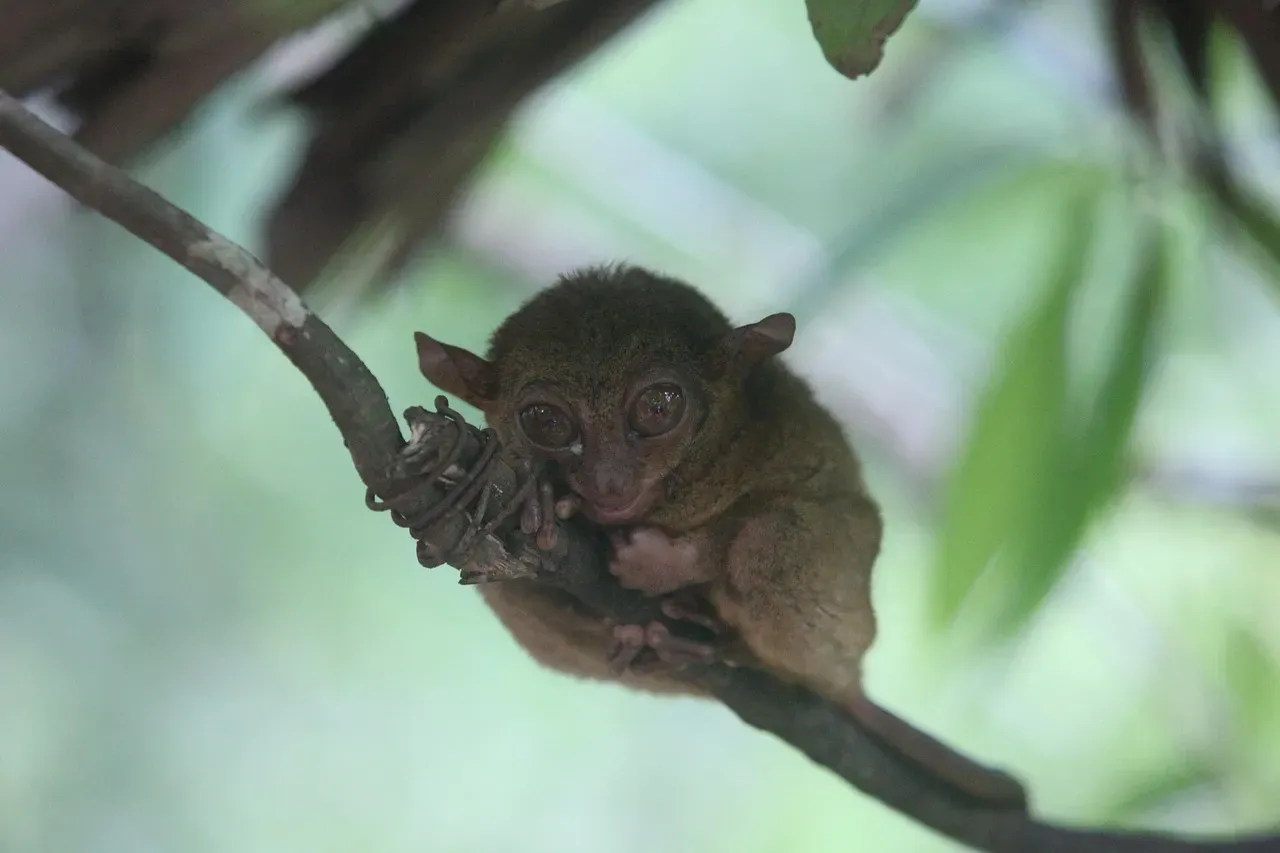
The eyes get all the attention, which is understandable. However, tarsier ears deserve far more credit than they typically receive. The ears of spectral are thin and membranous and are able to move independently. Each ear can track a different sound simultaneously.
Their large ears can swivel independently, allowing them to pinpoint sounds, which is essential for hunting insects and avoiding predators. Think of it as having two separate satellite dishes on your head, each pointing in a different direction, each feeding real-time audio information to your brain. It is an extraordinary sensory system.
The ears are constantly twitching and rotating to catch sounds of possible prey, and the head swivels to locate it. The tarsier will open its eyes as wide as possible to focus on a target up in the trees or on the jungle floor. Combined with those oversized eyes, you get a nocturnal hunting machine that is genuinely hard to sneak up on from any direction.
9. Their Social Lives Are Surprisingly Complex and Varied
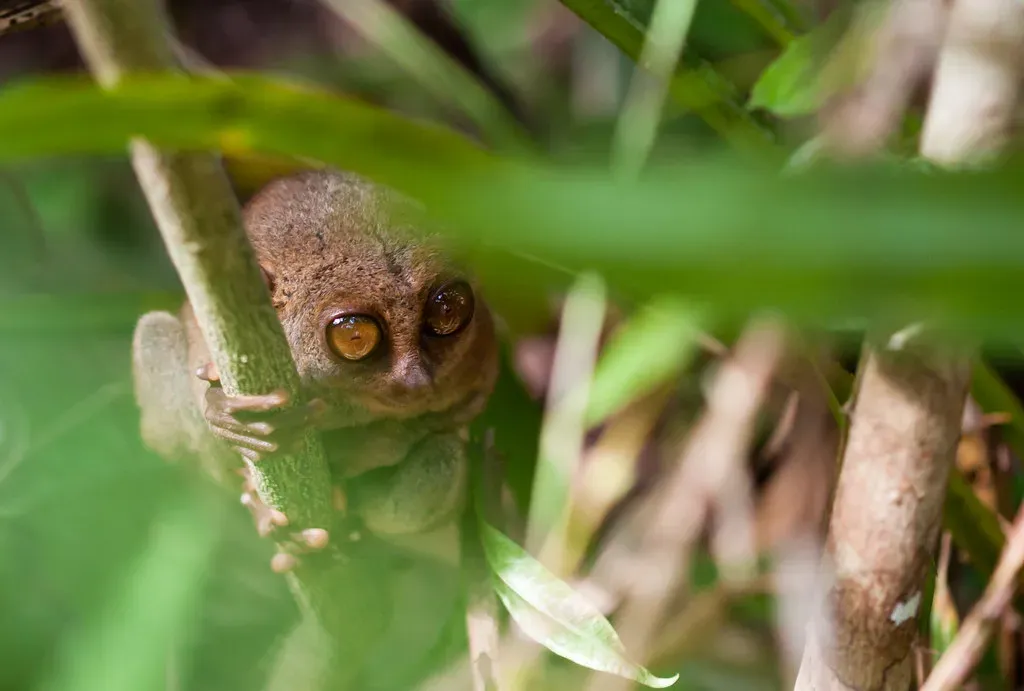
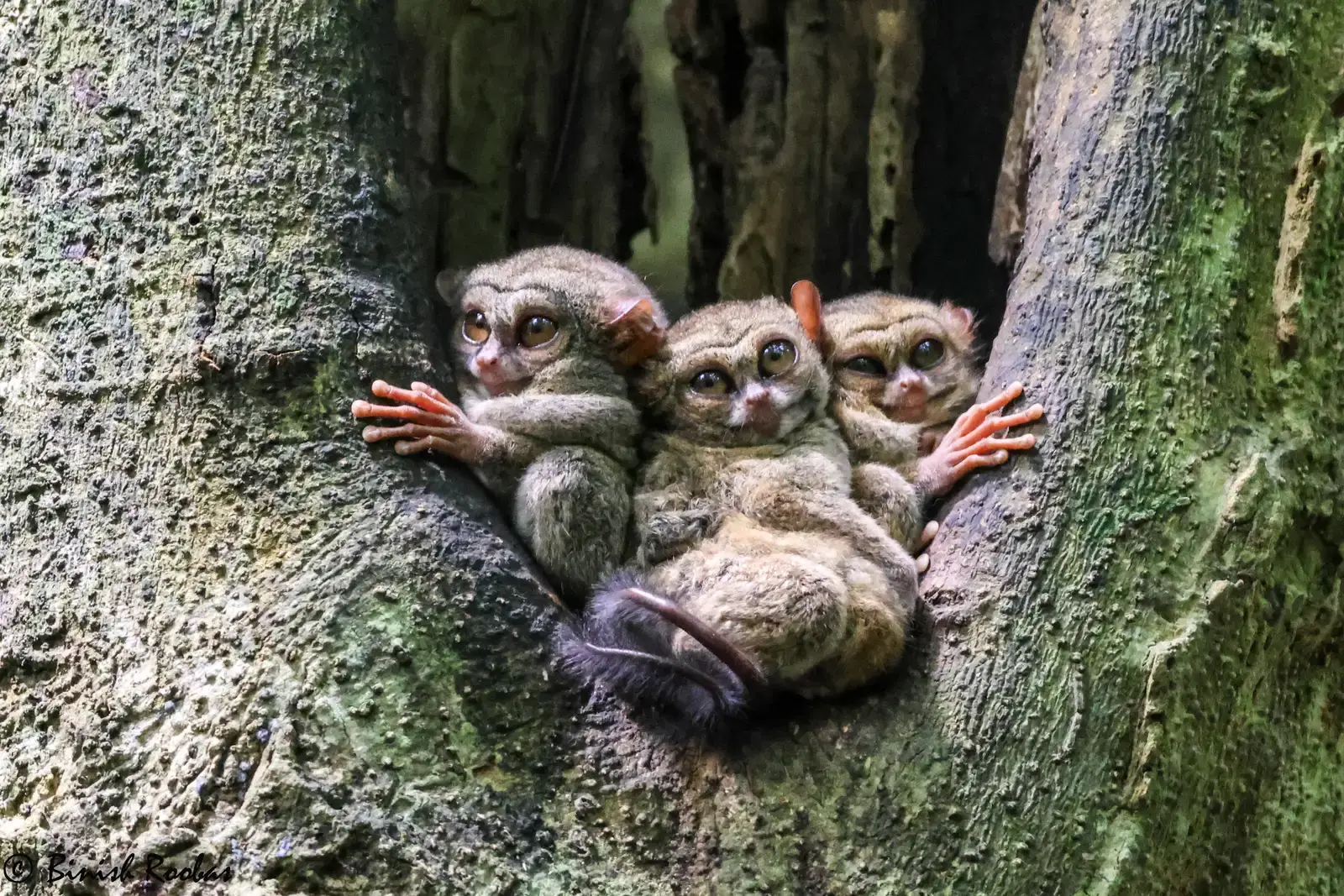
People tend to imagine as solitary, silent little creatures perched alone in the dark. The reality is considerably more social and interesting. Some live in families while others are loners. Social behavior varies between the tarsier species, with eastern being the most sociable and living in small family groups, while western appear to be more solitary.
Spectral engage in play behavior, snuggling, allogrooming, and food sharing. They snuggle. snuggle. I find that unexpectedly delightful for an animal that also hunts snakes.
If a predator, particularly a snake, is identified, emit an alarm call that initiates mobbing behavior, in which numerous gather and approach the predator as a group, screaming, lunging, and even biting. Mob groups usually consist of adult males from neighboring groups, suggesting some form of cooperation among males during predator mobbing. Cooperative defense, social bonding, and communal childcare: these are not the behaviors of a simple, primitive creature.
10. Are Fragile in Captivity and Deeply Threatened in the Wild
Here is the part of the story that needs to be told plainly, without softening it. are struggling. The principal threat to is habitat loss due to forest conversion, especially from expanding oil palm plantations, fires, and logging. Over the last 20 years, at least 30 percent of their habitat has been lost.
tend to be extremely shy animals and are sensitive to bright lights, loud noises, and physical contact. They have been reported to behave suicidally when stressed or kept in captivity. This is not an exaggeration. In captivity, a stressed tarsier may intentionally injure itself. They are simply not built for confinement or constant human contact.
are often captured as part of the pet trade. However, due to their special dietary and habitat requirements, these often die within 2 years of their capture. The only responsible way to see a tarsier up close is through ethical sanctuaries that prioritize the animal’s wellbeing over tourist entertainment. Several organizations and governments are working to preserve tarsier habitats through the establishment of protected areas and sustainable land-use practices. Educating local communities about the importance of and promoting ecotourism can also contribute to their conservation.
Conclusion: A Creature That Deserves Far More Wonder
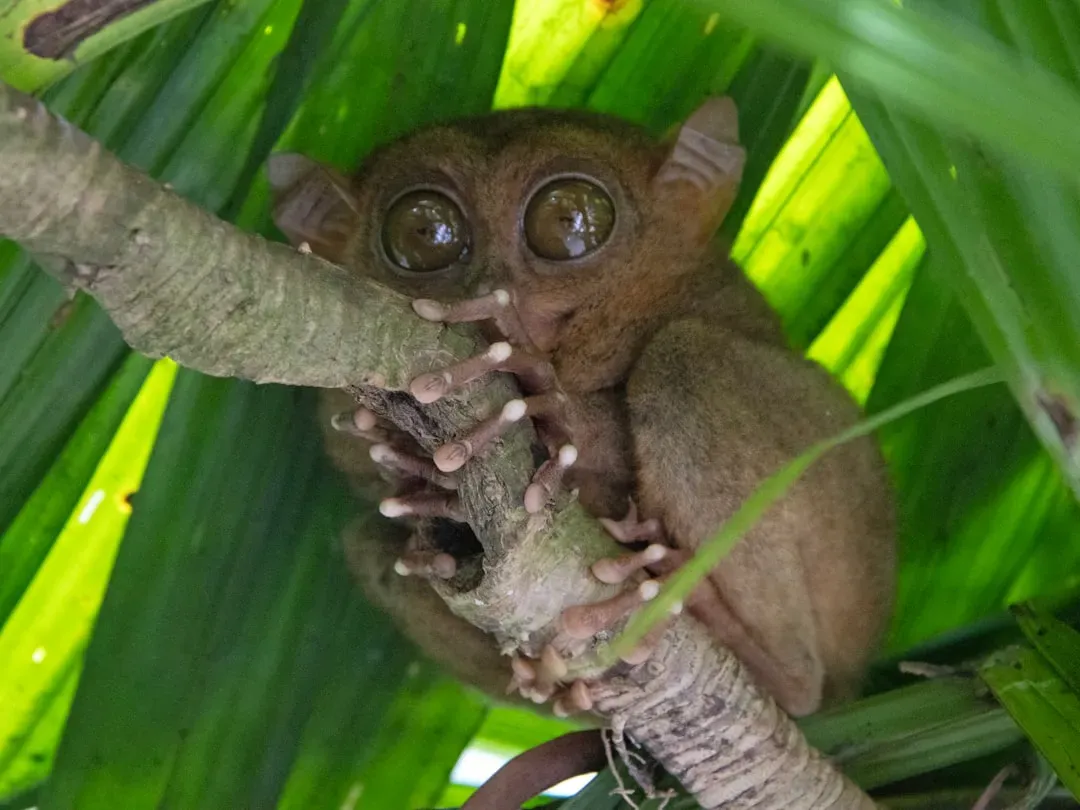
The tarsier is genuinely one of the most extraordinary animals on Earth. Ancient beyond imagination, built with biological engineering that still baffles scientists, and armed with senses that operate beyond human perception. These are not primitive little forest oddities. They are highly adapted, socially nuanced, evolutionary survivors that have outlasted creatures far larger and seemingly more impressive.
Yet they remain largely unknown to most of the world, tucked away in disappearing forests, silently screaming in frequencies we cannot hear. Maybe that is the most terrifying and humbling tarsier fact of all: that something this remarkable could vanish before the majority of humanity ever truly notices it.
The next time you see that wide-eyed face staring out from a photo, take a moment. That creature has been looking back at the world for over 55 million years. What would you have guessed it was hiding?
