

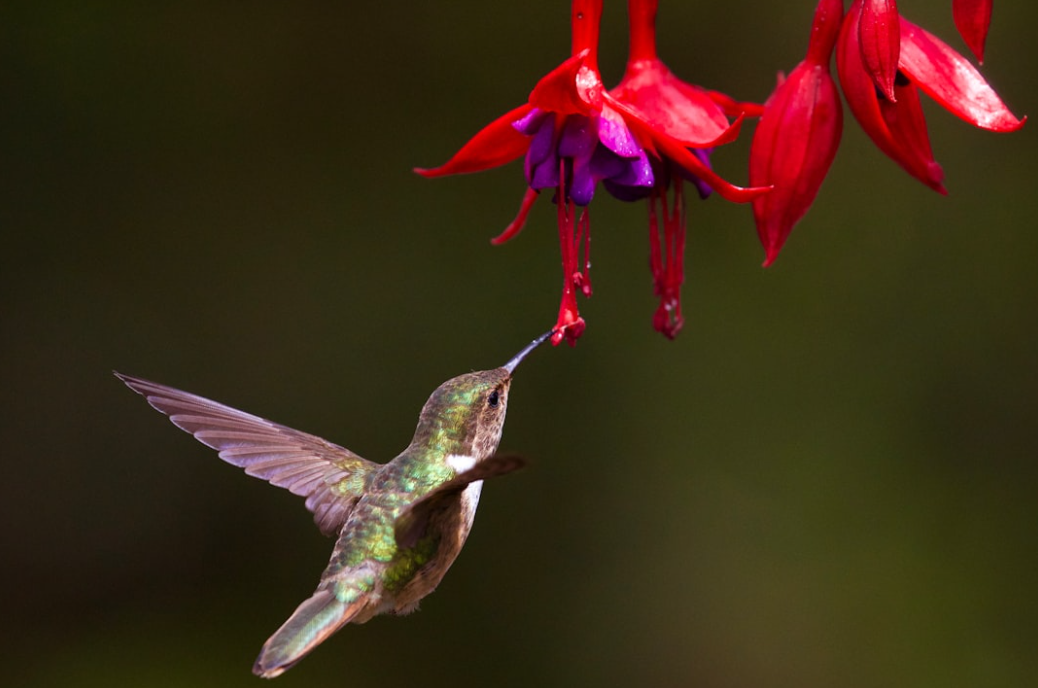
Picture this: you’re sipping your morning coffee when suddenly, a flash of emerald green zips past your window. The unmistakable whir of tiny wings fills the air as these aerial acrobats dance among your flowers, their iridescent feathers catching the sunlight like flying jewels. Creating a hummingbird paradise isn’t just about adding beauty to your garden – it’s about crafting a sanctuary where these remarkable creatures can thrive while you enjoy front-row seats to nature’s most captivating show.
#20 Plant Bright Red Flowers First

Hummingbirds do not have a keen sense of smell and rely on bright colors to find their food. They are particularly fond of red and are often observed investigating feeders with red parts, red plant labels, red thermometers, and even red clothes on a gardener. Starting with vibrant red blooms acts like a beacon, drawing these tiny visitors from miles away to discover your garden oasis.
While red may be their favorite, don’t limit yourself to just one color palette. These birds are surprisingly open-minded when it comes to their dining choices, and they don’t discriminate when it comes to colors. They are often seen frequenting purple, white, orange, pink and blue blooms too!
#19 Choose Tubular-Shaped Flowers

The shape of flowers matters just as much as their color. Hummingbird flowers have three things in common. Their blooms are tube-shaped, brightly colored, and they grow where it’s easy for hummingbirds to hover and sip. These elongated blossoms have evolved alongside hummingbirds over thousands of years, creating a perfect partnership.
Hummingbirds are primarily attracted to long tubular flowers that are red, but are frequently seen visiting other flowers with bright colors that are orange, yellow, purple, or even blue, giving you plenty to choose from. Think of it like choosing the right straw for your favorite drink – the tube shape allows these birds to access nectar deep inside the bloom with their specialized beaks.
#18 Space Plants Strategically for Territorial Birds

Here’s something that might surprise you: hummingbirds can be surprisingly feisty! Plant a variety of different flowers from this list, and space them well apart throughout your garden or yard. Hummingbirds tend to be territorial, and you’ll attract more birds – and reduce the fighting – if there are lots of places for them to feed. Creating multiple feeding stations prevents one dominant bird from monopolizing your entire garden.
This territorial behavior isn’t mean-spirited – it’s actually a survival mechanism. By spreading your plantings across different areas, you’re essentially creating separate dining rooms where multiple hummingbirds can feast without stepping on each other’s toes, or rather, talons.
#17 Provide Fresh Water Sources

Hummingbirds love water, especially if it’s moving. A gentle, continuous spray from a nozzle or a sprinkler hose is perfect for a bath on the fly. Unlike larger birds that wade into birdbaths, hummingbirds prefer to fly through water droplets or shower under a light mist.
Water is another great way to attract hummingbirds to your yard, especially during years of drought. Standing water is okay for hummingbirds, but they actually prefer moving water – adding a mister, dripper, or bubbling water fountain is a great option for hummingbirds. The biggest thing is to make sure that the water is shallow, because hummingbirds are not strong swimmers. Think of it as creating a spa experience for these tiny athletes who burn enormous amounts of energy every day.
#16 Create Staggered Bloom Times

Aim for a variety of plants with staggered bloom times. This will ensure a consistent and diverse nectar supply throughout the hummingbird season. Planning your garden like a year-round buffet keeps these high-energy birds coming back from early spring through late fall migration.
Some flowers peak in spring, others in summer, and many bloom well into autumn. By carefully selecting varieties that flower at different times, you’re essentially setting up a seasonal smorgasbord that meets hummingbirds’ needs as they arrive in spring, raise their young in summer, and prepare for migration in fall.
#15 Place Feeders Near Shelter

You’ll want to place your new feeder near some sheltering plants, but also in a spot that provides a wide, unobstructed view from another angle. This allows any new hummingbirds a chance to see the feeder when they zip through your neighborhood. Remember, aside from getting a satisfying meal, it’s all about safety for a hummingbird.
It’s best to place a feeder 10 to 15 feet from a tree, shrub or other appropriate hiding place. Doing so gives them a place to rest and stay out of the sun. This distance provides the perfect balance between safety and accessibility – close enough for a quick escape route, but far enough away to spot potential threats approaching.
#14 Hang Feeders at the Right Height

Ideally, hummingbird feeders should be hung 20 feet from any house structure and a minimum of 4 feet off the ground. This will decrease the number of window collisions and give the hummingbirds plenty of room to safely maneuver. Getting the height just right protects these delicate birds from both ground-based predators and aerial mishaps.
These little creatures like them to hang at around 6 feet in the air. To tap into their natural instincts, don’t go much higher than six feet, because that’s not where hummingbirds would typically find food in nature. This height mimics their natural feeding environment while keeping them safe from cats and other climbing predators.
#13 Keep Feeders in Partial Shade

To further protect your hummingbird food from going bad, you’ll want to put your feeder in a place that gets a mix of sun and shade throughout the day. If the sun is too intense, the nectar can heat up and spoil or ferment in just a few hours. Hot, fermented nectar isn’t just unappetizing – it can actually make hummingbirds sick.
Tammy recommends placing your feeder somewhere that is shaded for half of the day or more to slow down the effects. This will keep the nectar fresher for longer, and will attract more hummingbirds overall. Think of it like keeping your picnic food in a cooler on a hot summer day – proper shade extends the freshness and safety of their liquid meals.
#12 Change Nectar Regularly

Hummingbird nectar can spoil or ferment, meaning hummingbirds will try it once or twice, but then it goes bad and they may never come back. You must change your feeder’s nectar, even if it looks like it hasn’t lost a drop, on a regular basis. During hot weather, change it every two days. In milder weather, once a week is fine.
This might seem like a lot of work, but remember that a single hummingbird can drink its entire body weight in nectar every day – fuel it augments with up to 2,000 tiny insects for protein. Fresh nectar is absolutely critical to their health and survival, making this maintenance task one of the most important aspects of hummingbird hospitality.
The 7 Best Hummingbird Feeders available in the US
- Sewanta Hummingbird Feeder: Widely considered one of the best all-around feeders for its anti-ant moat, built-in perch, and easy-clean design.
- First Nature Hummingbird Feeder: A budget-friendly favorite with a large 32-oz reservoir and 10 feeding ports.
- Bolite Hummingbird Feeder: Known for its simple construction and quick, hassle-free refilling and cleaning.
- Perky-Pet Elegant Copper Glass Hummingbird Feeder: An upscale-looking glass feeder with a wide mouth for refilling, bee guards, and central perch.
- Aspects HummZinger (Saucer-Style): Popular saucer-style feeder that offers great bird visibility and extremely easy cleaning.
- Feed Garden Glass Feeder: A glass feeder with red flower ports and an integrated ant moat; attractively priced and effective at attracting hummingbirds.
- Perky-Pet Antique Glass Bottle Feeder: A vintage-style glass bottle feeder with copper accents; durable and dishwasher-safe.
Product Highlights
- Perky‑Pet Pinch‑Waist Glass Hummingbird Feeder – Elegant glass construction reminiscent of Perky-Pet’s aesthetic picks; matches the editorial praise for ease of cleaning and vintage charm.
- First Nature 3090 Hummingbird Nectar Flower Feeder – A trusted, budget-conscious workhorse with plenty of capacity and feeding ports — aligns with both expert picks for performance and value.
Quick Comparison Table
| Feeder | Standout Feature |
|---|---|
| Sewanta | Best overall: anti-ant moat, perch, easy cleaning |
| First Nature | Affordable, large reservoir, 10 ports |
| Bolite | Simple design, super easy to fill and clean |
| Perky-Pet Copper Glass | Stylish, wide-mouth fill, bee guards |
| Aspects HummZinger Saucer | Great bird visibility, simple cleanup |
| Feed Garden (Amazon pick) | Glass, ant-moat, attractively priced (~$15) |
| Perky-Pet Antique Glass Bottle | Vintage look, durable, dishwasher safe |
| Aspects HummZinger Excel (16 oz) | Popular mid-size, reliable performer |
| Best-1 Glass (32 oz) | Large U.S.-made glass capacity feeding |
#11 Avoid Pesticides Completely

Nectar is only a part of a hummingbird’s diet. They also eat lots of small insects and spiders, which provide them with protein and other nutrition. So by using pesticides, you are killing and eliminating a significant source of potential food. Going pesticide-free isn’t just better for the environment – it’s essential for hummingbird survival.
Interestingly, hummingbirds use spider webs to help construct their nest and hold it together. You may hate spiders, but they are beneficial for attracting hummers. Your garden’s ecosystem is more interconnected than you might imagine, and every tiny creature plays a role in supporting these magnificent birds.
#10 Choose Native Plants-Bee Balm

The safest and natural way to attract hummingbirds to your yard is by using native plants. While ornamental, non-native plants will work just fine, hummingbirds’ beaks are specifically adapted to feeding on our native plants. Native plants also require less water and maintenance, making your hummingbird garden both beautiful and sustainable.
Hummingbirds, butterflies, and – of course – bees are all attracted to bee balm, also known as wild bergamot. Native to North America, scarlet bee balm is a special favorite of hummingbirds. This perennial powerhouse blooms from midsummer through fall, providing a reliable food source when many other flowers are fading.
Bee balm is an easy-to-grow perennial that comes in shades of pink and red. As its name indicates, it is loved by all pollinators, including bees, butterflies and hummingbirds. Its spiky, crown-like flowers create an impressive display that’s as beautiful for gardeners as it is irresistible to hummingbirds.
#9 Salvia: The Reliable Bloomer

With its tubular shaped flowers, the salvia is a favorite annual that attracts hummingbirds. While they are attracted to the color red, they will enjoy all colors of salvia–even the black and blue varieties. Salvia will bloom throughout the summer, and deadheading will occasionally encourage even more flowers.
What makes salvia particularly special is its generous blooming habit. Unlike some flowers that put on a brief show, salvias keep producing new blooms all season long. The variety of colors available means you can create a stunning display while still catering to hummingbird preferences for different hues and shapes.
#8 Cardinal Flower: The Showstopper

Hummingbirds will fight over the tubular scarlet flowers which look especially dramatic on selections that have dark foliage. Varieties are available with flowers in shades of red, pink, and also white, all of which also attract butterflies. The intense red blooms are so attractive to hummingbirds that they’ll actually compete for access to these nectar-rich prizes.
Cardinal flower, named for the red robes worn by Roman Catholic cardinals, needs mulch to retain moisture during summer and protect its root system during cold northern winters. It’s one of the top hummingbirds flowers you should grow. This deer-resistant, reseeding and self-rooting perennial lights up partial shade or full sun areas that boast consistently moist soil.
#7 Trumpet Vine: The Climbing Champion

As you can see from the photo, Trumpet Vine’s long, tubular flowers are deeply attractive to hummingbirds, and ruby-throated hummingbirds in particular. This vigorous climber produces clusters of orange-red trumpet-shaped blooms that are perfectly sized for hummingbird beaks and packed with nectar.
Trumpet vines are particularly valuable because they bloom later in the season when many other flowers are finished. Their climbing habit also makes them perfect for vertical spaces, allowing you to create hummingbird feeding stations at different heights throughout your garden for maximum territorial harmony.
#6 Penstemon: The Native Beauty

Thriving in sunny conditions, penstemons have tube-shaped flowers that are jam-packed with nectar, making them attractive to hummingbirds and other pollinators. You’ll find native penstemons across Colorado, Utah, and Wyoming, from desert to mountain habitats. Typically, penstemons offer an early-season source of nectar, but some will bloom (or rebloom) in late summer.
Penstemons are North American natives that come in many forms. It’s best to plant those that are native to your area. These hummingbird flowers are low-maintenance if you place them in full sun and soil with excellent drainage; they hate wet feet, especially in the winter. Their drought tolerance makes them perfect for water-wise gardens that still want to attract hummingbirds.
#5 Cuphea: The Heat Lover

If you plant only one flower for your hummingbirds, make it cuphea! This pretty flower loves, loves, loves the heat. It will keep blooming well into fall, as long as you keep it fertilized and watered. It’s one of the absolute best for attracting hummingbirds.
Cuphea’s small, tubular flowers are produced in incredible abundance, creating a buffet that can satisfy multiple hummingbirds without territorial disputes. The plant’s compact size makes it perfect for containers or front-of-border plantings where you can enjoy close-up views of visiting hummingbirds.
#4 Butterfly Bush: The Summer Magnet

This easy-to-grow flowering shrub is attractive to butterflies, but hummingbirds love the elongated clusters of nectar-rich blooms, too. “I have noticed at my property, the butterfly bushes get the most hummingbird visitors of all of my plants and they bloom until first frost,” says Melissa Lallo Johnson, a Midwest-based master gardener.
The long, cone-shaped flower clusters provide multiple feeding spots on a single plant, making butterfly bush incredibly efficient at attracting and feeding hummingbirds. Its long blooming period means consistent nectar availability from early summer right through the migration season.
#3 Lantana: The Drought Fighter

Lantana is a sturdy plant that doesn’t mind heat and drought once it’s established. In most of the country, it is an annual, though it can become a perennial shrub in warm climates. Look for new varieties which are not invasive.
What makes lantana particularly valuable is its ability to thrive in challenging conditions while still producing abundant nectar. The small, clustered flowers come in vibrant color combinations that catch hummingbird attention from a distance, while the plant’s heat tolerance ensures blooms even during the hottest summer days when other flowers might fade.
#2 Columbine: The Spring Herald

Columbine is a spring-blooming perennial that will provide nectar when other plants have not yet flowered. Their tubular shaped flowers provide nectar for the hummingbirds, and they come in multiple colors that will fit in any garden. These distinctive spurred flowers are perfectly designed for hummingbird access, with their nectar stored in the decorative “tails” that extend behind each bloom.
Columbines usually prefer moist, well-drained conditions – ideal for many higher-elevation gardens. For a tough, drought-tolerant columbine for lower elevations, look for native golden columbine. Their early blooming time makes them particularly valuable for supporting hummingbirds as they return from winter migration and need immediate fuel sources.
#1 Petunias: The Versatile Favorite

Petunias are old favorites in the garden because they work everywhere: In planters, window boxes, baskets, and landscape beds. And their tubular-shaped flowers in every color you can imagine are appealing to hummingbirds. Their versatility means you can place hummingbird food sources wherever it’s most convenient for both the birds and your viewing pleasure.
Petunias are one of the easiest annual flowers to grow in containers or garden beds. The tubular flowers of almost every color are attractive to both butterflies and hummingbirds. The continuous blooming habit of modern petunias ensures fresh nectar is available throughout the growing season, while their low-maintenance nature makes them perfect for busy gardeners who still want to attract hummingbirds.
Conclusion

Transforming your garden into a hummingbird paradise isn’t just about adding pretty flowers – it’s about creating a complete ecosystem that supports these remarkable creatures through every stage of their incredible journey. From the moment they arrive in spring, exhausted from migration, to their departure in fall, your garden can serve as a vital refueling station that makes the difference between survival and struggle.
The magic happens when all these elements work together: Final Takeaways
- Plant variety matters – Choose nectar-rich flowers with bright colors (especially red, pink, and orange) to naturally lure hummingbirds.
- Go native when possible – Native plants adapt better to local soil and climate, and hummingbirds recognize them as natural food sources.
- Consistency is key – Aim for blooms across seasons so hummingbirds have a steady food supply spring through fall.
- Feeders are a bonus – Provide hummingbird feeders with a sugar-water mix (4:1 ratio), but always clean them regularly to prevent mold.
- Keep it chemical-free – Avoid pesticides and herbicides, as hummingbirds are highly sensitive and rely on insects as part of their diet.
- Water sources help – Add a mister or shallow birdbath for hummingbirds to drink and bathe.
- Layer your garden – Create vertical spaces with trees, shrubs, and vines to offer shelter, nesting sites, and varied feeding spots.
- Color signals attraction – Use red garden accents (feeders, planters, ribbons) to catch their attention.
- Patience pays off – It may take weeks before hummingbirds notice your new flowers or feeders — but once they do, they often return year after year.
- Think long-term – A hummingbird-friendly garden not only beautifies your yard but also supports pollinators, biodiversity, and a healthy ecosystem.
- Pesticide-free insects for protein
As you implement these strategies and watch your first hummingbird hover delicately at a flower you planted just for them, you’ll realize that you haven’t just created a garden – you’ve become part of an ancient partnership between plants, pollinators, and people that spans continents and seasons. What started as simple curiosity about attracting pretty birds has blossomed into something much more profound: active participation in conservation that makes a real difference, one flower at a time.

- 20 Small Dog Breeds That Stay Puppy-Sized (Mostly) - June 19, 2026
- 12 Zodiac Spirit Animals and Their Meanings - June 18, 2026
- 20 Small Breeds That Stay Puppy-Sized (Mostly) - June 18, 2026