


Worried about unexpected vet bills?
Pet insurance can cover thousands in unexpected vet costs. Get a free quote from Lemonade in under 2 minutes.
Get My Free Quote →Sponsored · Opens Lemonade.com
The deep sea remains one of Earth’s final frontiers, where darkness, crushing pressure, and extreme cold have forced creatures to evolve in ways that seem straight out of science fiction. Below the ocean’s sunlit surface, in the perpetual darkness of the deep, animals have developed adaptations so bizarre and terrifying that they challenge our understanding of life itself. From bioluminescent lures and expandable stomachs to transparent bodies and deadly venom, these evolutionary marvels showcase nature’s ingenious solutions to surviving in one of the planet’s most hostile environments. Let’s descend into the abyss and meet 15 deep-sea creatures with adaptations that are as fascinating as they are frightening.
12. The Black Swallower Nature’s Ultimate Expandable Stomach
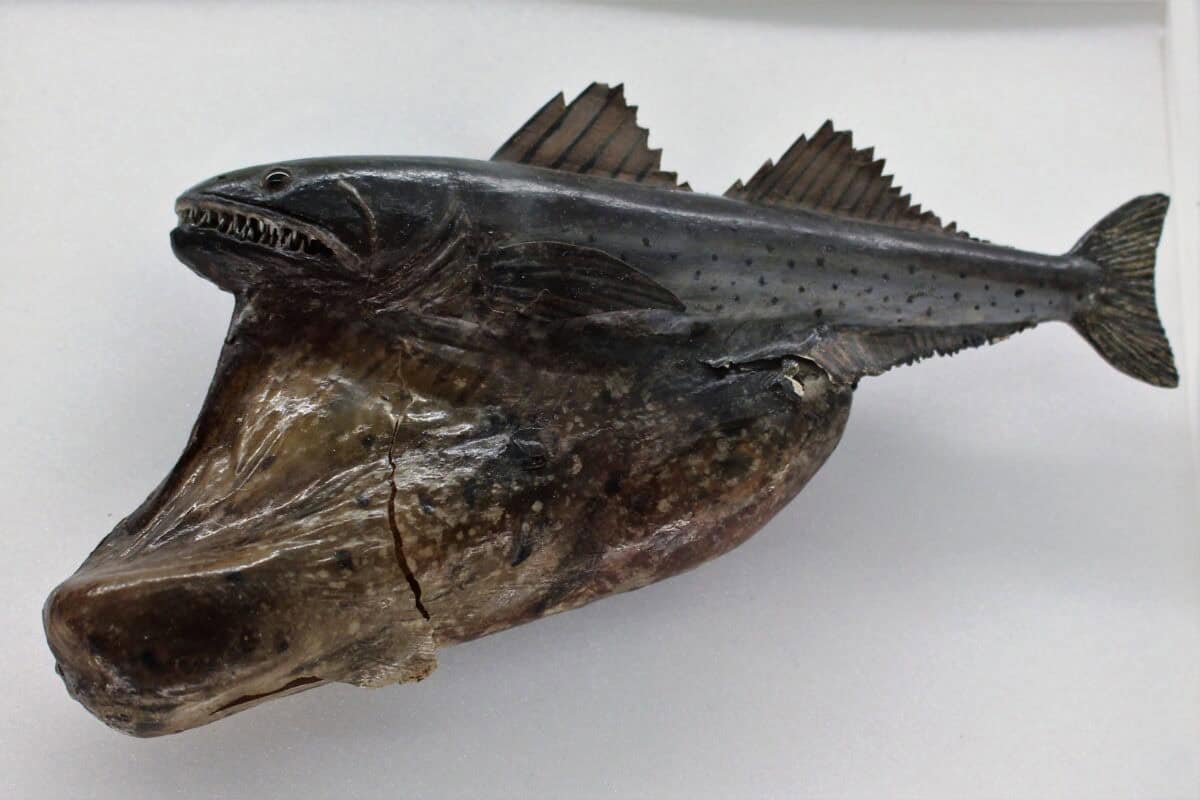
The Black Swallower (Chiasmodon niger) possesses perhaps one of the most terrifying feeding adaptations in the deep sea. This relatively small fish, typically measuring just 10 inches in length, can consume prey more than twice its size thanks to its incredibly distensible stomach. When a potential meal swims by, the Black Swallower’s jaws unhinge, and its stomach expands to an almost impossible degree. Scientists have discovered specimens with prey in their bellies that were up to 10 times their own mass! This remarkable adaptation allows them to take advantage of rare feeding opportunities in the food-scarce deep sea. However, this ability sometimes proves fatal – researchers have found dead Black Swallowers floating on the surface, their stomachs burst open from decomposing gases produced by prey too large even for their remarkable stretching abilities.
11. The Anglerfish Parasitic Males and Bioluminescent Lures

The deep-sea anglerfish exemplifies evolutionary extremes with not one but two terrifying adaptations. The first is the female’s famous bioluminescent lure – a modified dorsal spine containing light-producing bacteria that dangles above her gaping mouth. This biological fishing rod glows in the pitch-black depths, attracting curious prey that are then engulfed by the anglerfish’s massive jaws lined with needle-like teeth. However, equally unsettling is the anglerfish’s reproductive strategy. Male anglerfish are tiny compared to females and live as sexual parasites. When a male finds a female, he bites into her body and releases an enzyme that dissolves his mouth and her skin, fusing them together. Over time, the male degenerates until he’s nothing more than a pair of gonads attached to the female, receiving nutrients from her bloodstream while providing sperm when needed. Some female anglerfish have been found with multiple males attached, creating a grotesque but effective mating system perfectly adapted to the challenges of finding a mate in the vast, dark ocean.
10. The Barreleye Fish Transparent Head and Tubular Eyes
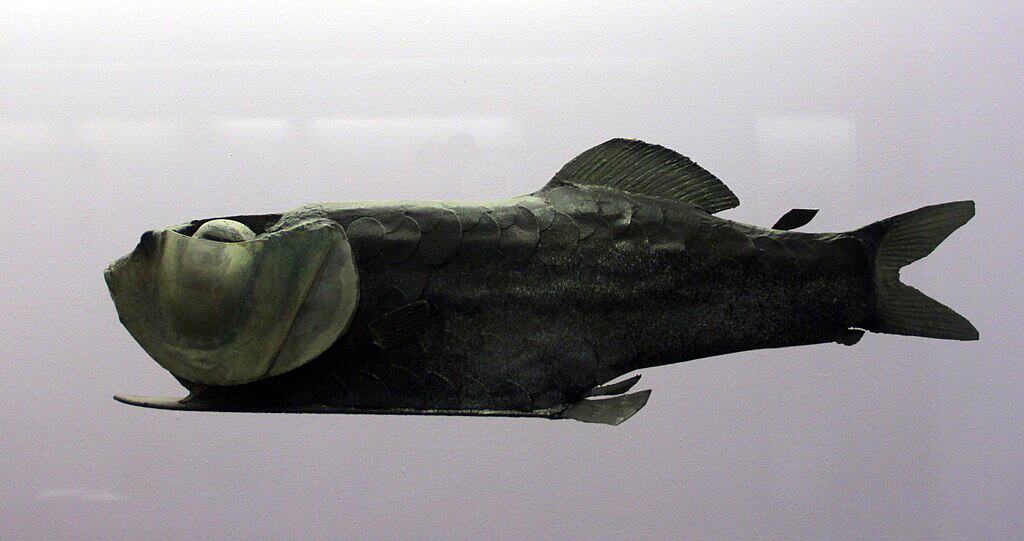
The Barreleye fish (Macropinna microstoma) looks like something designed by a science fiction artist, sporting one of the most bizarre visual adaptations in the animal kingdom. Its most striking feature is a completely transparent, fluid-filled dome that covers its head, through which its tubular, highly sensitive eyes are visible. These specialized eyes point upward by default, allowing the fish to detect the silhouettes of potential prey against the faint light filtering down from above. What makes this adaptation truly remarkable is that these eyes can also rotate forward when needed, giving the Barreleye exceptional directional vision. The transparent head evolved as a solution to maximize light collection in the dimly lit mesopelagic zone (about 200-1000 meters deep) while protecting its delicate visual organs from the stinging cells of the siphonophores it swims among and often steals food from. First discovered in 1939, it wasn’t until 2004 that scientists observed a live specimen and realized its head was transparent, as this delicate structure collapses when the fish is brought to the surface.
9. The Goblin Shark Projectile Jaws and Ancient Design

Often called a “living fossil,” the Goblin Shark (Mitsukurina owstoni) has remained largely unchanged for about 125 million years and possesses one of the most alarming feeding mechanisms in the ocean. Its most distinctive feature is its protrusible jaws, which can extend outward from its face with lightning speed when prey is detected. When a potential meal comes within range, specialized ligaments and muscles catapult the jaw forward—almost like an extra joint has suddenly appeared—shooting out to capture prey before retracting back into its regular position. This adaptation allows the Goblin Shark to conserve energy by maintaining a relaxed swimming pattern until the precise moment of attack. Adding to its nightmarish appearance is its flattened, blade-like snout covered with ampullae of Lorenzini—electroreceptive organs that can detect the minute electrical fields produced by other animals. This combination of sensory adaptation and projectile jaws makes the Goblin Shark a remarkably efficient predator despite its sluggish swimming style, allowing it to ambush prey with minimal energy expenditure in the resource-limited deep sea.
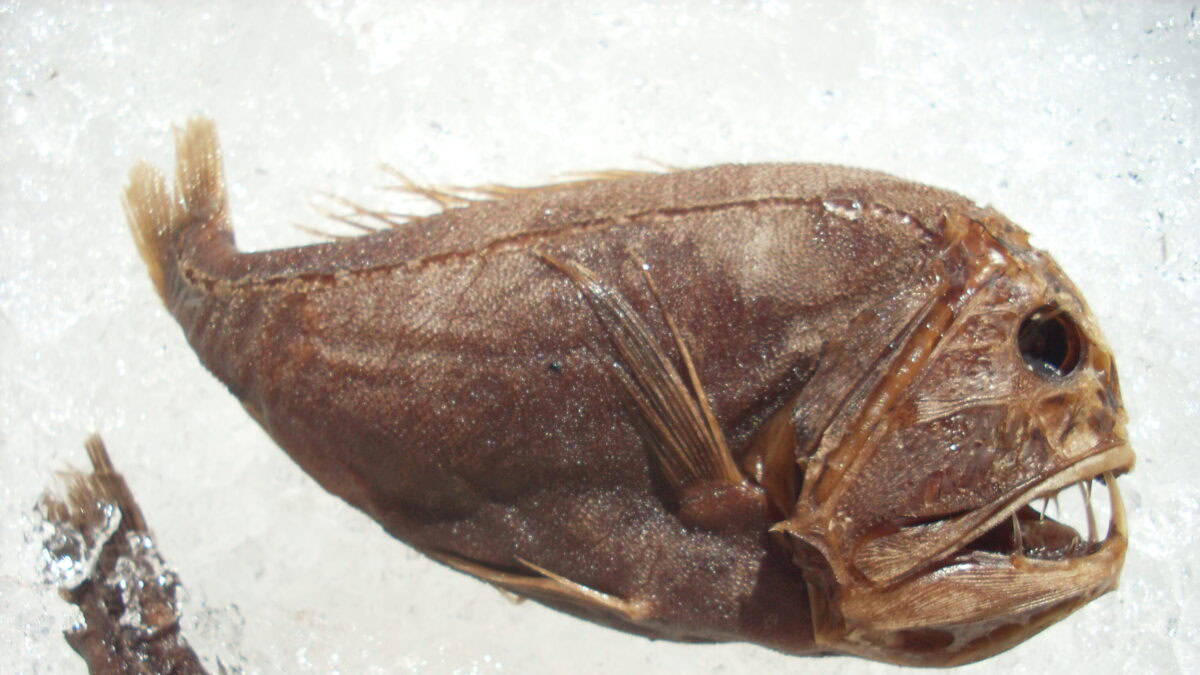
8. The Fangtooth Proportionally Largest Teeth in the Ocean

The Fangtooth fish (Anoplogaster cornuta) boasts teeth so disproportionately large that it cannot fully close its mouth. Despite its small size—typically reaching only about 6 inches in length—this deep-sea predator has evolved the largest teeth relative to body size of any fish in the ocean. These fangs are so long that the lower jaw has evolved special sheaths or pockets in the roof of the mouth to accommodate them when the fish closes its jaw, preventing it from impaling itself. The Fangtooth’s intimidating dental equipment serves a critical purpose in the deep sea, where food is scarce and must be secured at all costs. These massive teeth allow the Fangtooth to grip and hold onto almost any prey it encounters, including creatures that might be larger than itself. Adding to its fearsome appearance is a body covered in rough, spiny scales and small eyes adapted for detecting movement rather than forming detailed images. Despite its terrifying appearance, the Fangtooth is relatively small and poses no danger to humans—though its extreme adaptation stands as testament to the evolutionary pressures of deep-sea living.
7. The Viperfish Light-Up Spine and Hinged Skull

The Viperfish (Chauliodus sloani) combines multiple terrifying adaptations into one nightmarish package. Its most visible features are its enormous fang-like teeth, so large they won’t fit inside its mouth. Instead, these curved teeth extend outside the jaw, some nearly reaching the fish’s eyes. But what truly sets the Viperfish apart is its specialized first dorsal fin ray, which extends forward over its head and contains bioluminescent photophores. This modified spine acts as a fishing lure, producing light through chemical reactions to attract prey in the darkness. When a curious creature approaches the light, the Viperfish strikes with astonishing speed—its skull actually hinges back to open its mouth to an incredible 90-degree angle, allowing it to swing its head upward and impale prey on those massive fangs. The Viperfish also possesses rows of photophores along its sides, which may help attract prey, confuse predators, or communicate with potential mates. These combined adaptations—elaborate lures, expandable jaws, and bioluminescent signaling—showcase the extremes to which evolution has gone to ensure survival in the deep-sea environment where food encounters are rare and must be capitalized upon with deadly efficiency.
6. The Dragonfish Infrared Vision and Invisible Red Light
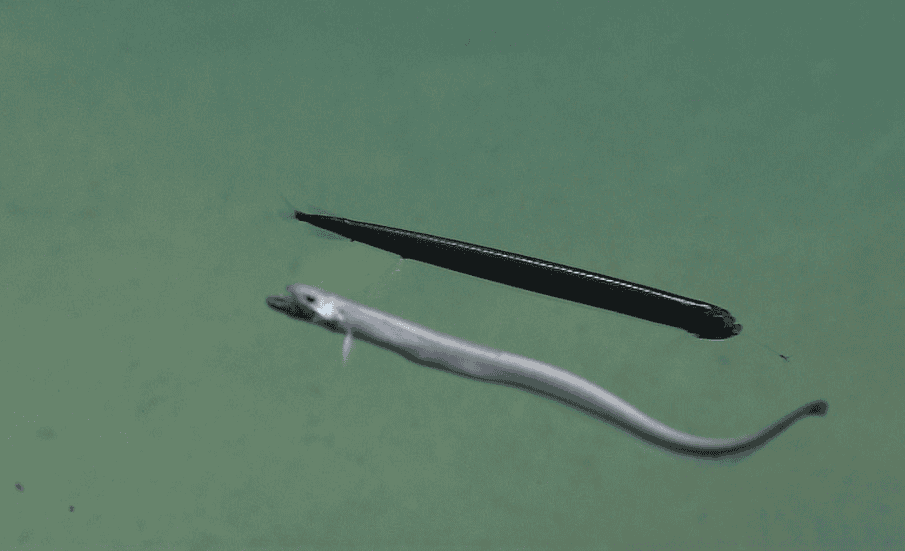
The Dragonfish (family Stomiidae) possesses one of the most sophisticated hunting adaptations in the deep sea: the ability to produce and see red light—a true superpower in an environment where most creatures have evolved to detect only blue wavelengths. While many deep-sea animals produce blue bioluminescence, the Dragonfish has special photophores that emit red light from under its eyes. What makes this adaptation particularly insidious is that red light doesn’t travel far in water, and most deep-sea creatures lack the visual receptors to perceive it. This essentially gives the Dragonfish an “invisible” spotlight to illuminate prey without being detected. Meanwhile, the Dragonfish itself has evolved specialized visual pigments that allow it to see this red light, giving it a significant hunting advantage. It’s the underwater equivalent of wearing night-vision goggles in complete darkness. This red light adaptation, combined with rows of needle-like teeth and an expandable stomach, makes the Dragonfish a particularly effective ambush predator. Some species like the Stoplight Loosejaw (Malacosteus niger) take this adaptation even further by producing a chemical called chlorophyll-derived compound that enhances their ability to see red wavelengths, giving them extraordinary vision capabilities that far surpass those of their potential prey or predators.
5. The Giant Isopod Pressure-Resistant Exoskeleton and Opportunistic Feeding
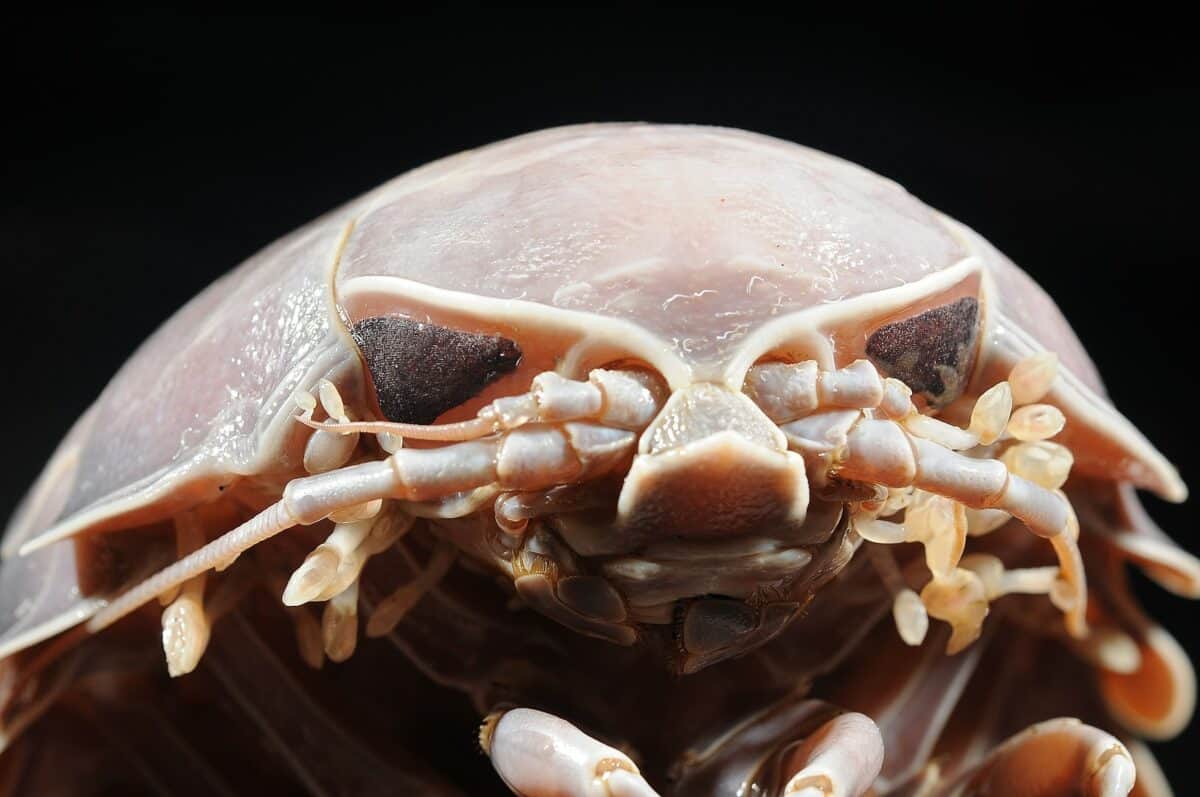
The Giant Isopod (Bathynomus giganteus) represents a fascinating case of deep-sea gigantism—where animals grow to sizes much larger than their shallow-water relatives. These crustaceans, related to common pill bugs or roly-polies, can reach lengths of over 16 inches and weights of 3.7 pounds. Their most visible adaptation is their rigid exoskeleton, which has evolved to withstand the crushing pressures of the deep sea while providing protection from predators. This armored exterior is composed of seven overlapping plates that allow for limited flexibility while maintaining structural integrity at depths where the pressure exceeds 600 pounds per square inch. Perhaps more terrifying is the Giant Isopod’s feeding adaptation. These creatures are opportunistic scavengers with specialized mouthparts designed to tear through even the toughest tissues. When food is abundant—such as when a whale carcass falls to the ocean floor—Giant Isopods can gorge themselves to the point where they can’t move, consuming up to 100% of their body weight in a single meal. This feast-or-famine adaptation allows them to survive for years between meals, with documented cases of specimens living over five years without food in captivity. Their compound eyes, while reduced compared to surface-dwelling relatives, are still sensitive enough to detect movement and bioluminescence in the darkness of the deep, helping them locate food sources that might appear only rarely in their habitat.
4. The Frilled Shark Living Fossil with 300 Trident-Shaped Teeth

Looking like it swam straight out of prehistoric times, the Frilled Shark (Chlamydoselachus anguineus) is often described as a “living fossil” due to its primitive features that have remained largely unchanged for 80 million years. This deep-sea predator possesses a truly nightmarish dental adaptation: 25 rows of backwards-facing, trident-shaped teeth, totaling around 300 individual teeth arranged in a saw-like pattern. Once prey enters this terrifying mouth, escape becomes virtually impossible as the recurved points of each tooth are designed to prevent slippery targets from wriggling free. The Frilled Shark’s elongated, eel-like body (reaching up to 6.5 feet in length) enables a unique hunting strategy—it can bend its body and strike like a snake, using its extreme flexibility to ambush prey with sudden bursts of speed. Perhaps its most distinctive feature is the arrangement of six gill slits that appear frilled due to the first gill slit extending across its throat, creating a collar-like appearance that gives the shark its name. This expanded gill surface area may help the shark extract oxygen more efficiently from the oxygen-poor deep waters. Adding to its primitive appearance, the Frilled Shark’s mouth is positioned at the end of its snout rather than underneath like modern sharks, and it possesses a single dorsal fin set far back on its body—all features reminiscent of ancient shark species that dominated the oceans millions of years ago.
3. The Vampire Squid Inside-Out Defensive Cloak
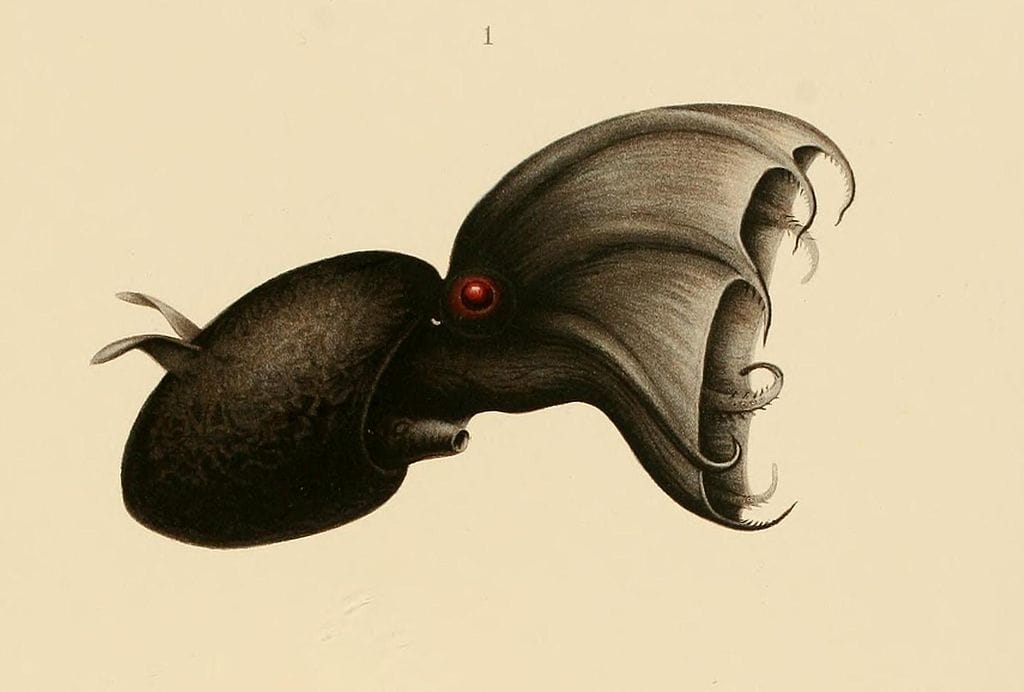
Despite its ominous name, the Vampire Squid (Vampyroteuthis infernalis, which literally translates to “vampire squid from hell”) is not actually a squid at all, but the sole surviving member of its own order, representing a unique evolutionary branch between octopuses and squids. Its most remarkable adaptation is its defense mechanism: when threatened, it can turn its body inside out, transforming itself into what researchers call a “pumpkin” or “pineapple” posture. This defensive maneuver exposes rows of spiny cirri (modified arm appendages) and large photophores (light-producing organs), creating a dazzling display of bioluminescence that confuses predators. Unlike its relatives that use ink to escape danger, the Vampire Squid has evolved an alternative strategy for the oxygen-depleted waters where ink would be ineffective—it secretes a cloud of bioluminescent mucus from the tips of its arms, creating a disorienting cloud of glowing particles that diverts predators while it escapes. Another terrifying adaptation is its ability to thrive in the ocean’s “oxygen minimum zone,” where oxygen levels can drop to just 3% of surface concentrations. Most predators avoid these suffocating waters, giving the Vampire Squid a refuge from potential threats. Its large, proportionally enormous blue eyes—the largest eye-to-body ratio of any animal—have evolved extreme sensitivity, allowing it to detect even the faintest light signals in its dark habitat, whether from potential predators, prey, or mates.
2. The Coffinfish Pressurized Water Jet Propulsion
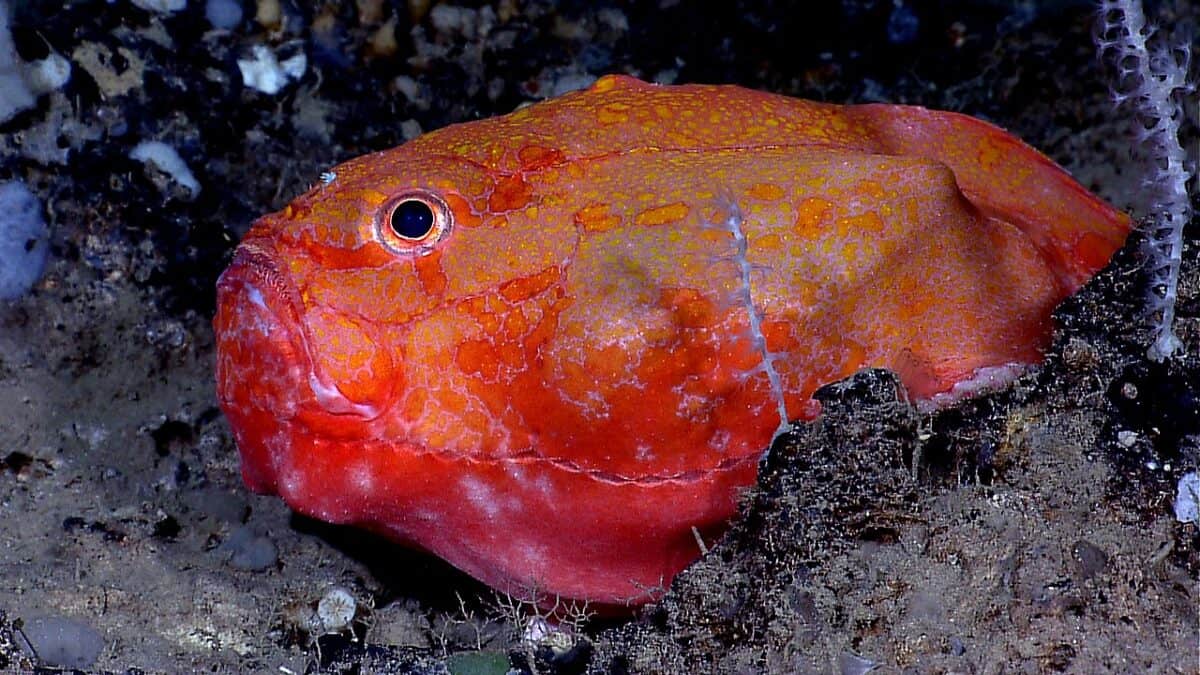
The Coffinfish (Chaunax endeavouri), a member of the anglerfish family, has developed one of the most unusual locomotion adaptations in the deep sea. Unlike most fish that swim continuously, the Coffinfish conserves energy by “walking” along the seafloor using its modified pectoral and pelvic fins as limb-like appendages. However, its most startling adaptation is its rapid escape mechanism. When threatened, the Coffinfish can quickly take in water through its mouth and force it out through small openings called gill openings or opercular openings behind its pectoral fins. This creates a powerful jet-propulsion effect, shooting the fish forward in a sudden burst of speed—an aquatic equivalent of a rocket launch. What makes this adaptation particularly effective is the Coffinfish’s expandable stomach and skin, which allow it to inflate itself with water like a balloon. This inflation not only powers its jet propulsion but also makes the fish appear much larger to potential predators. The Coffinfish also possesses a modified dorsal fin spine that acts as a fishing lure, similar to other anglerfish. However, instead of dangling the lure above its head, the Coffinfish’s lure is located in a depression on its snout, where it can be wiggled to mimic a small invertebrate and attract prey close to its mouth. These combined adaptations—walking fins, jet propulsion, inflation capability, and specialized lure—make the Coffinfish a highly specialized deep-sea predator despite its seemingly awkward appearance.
1. The Hatchetfish Mirrored Camouflage and Tubular Eyes
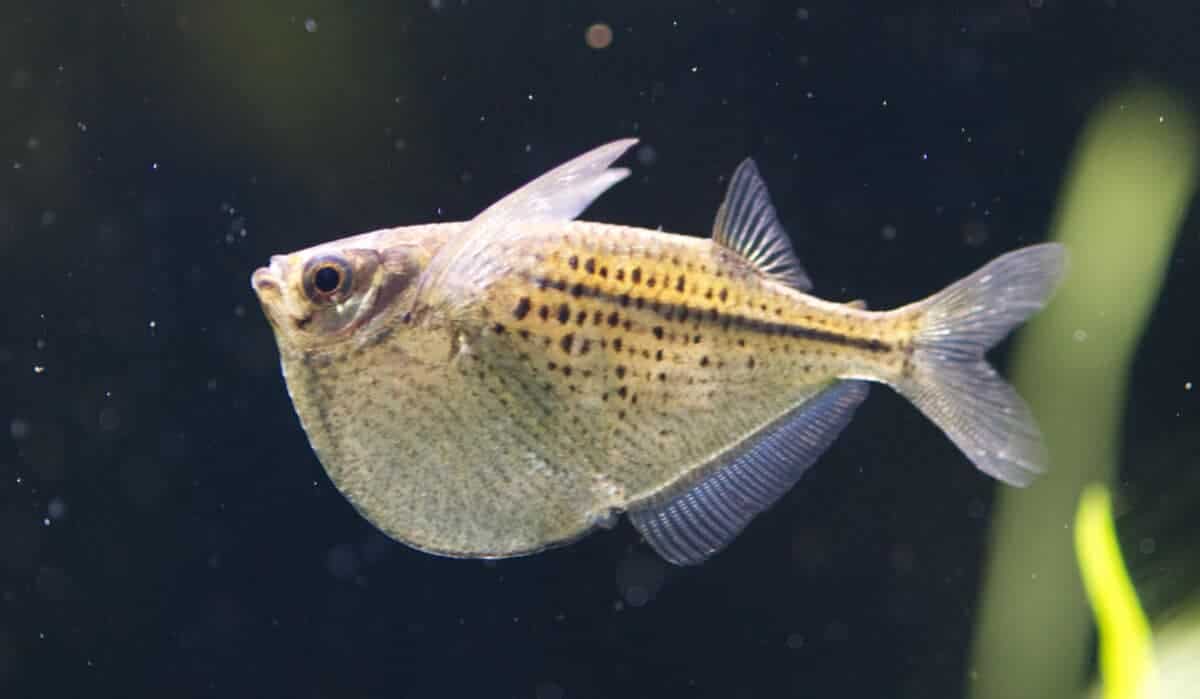
The Deep-sea Hatchetfish (family Sternoptychidae) has evolved one of the most sophisticated camouflage systems in the animal kingdom to survive in the mesopelagic twilight zone. Its most distinctive adaptation is its extremely compressed, silvery body that resembles the blade of a hatchet—hence its name. This flattened form serves a critical purpose: when viewed from below by potential predators, the fish presents an incredibly thin profile that’s difficult to spot. Adding to this stealth is the Hatchetfish’s bioluminescent countershading. Its ventral surface (belly) is lined with photophores that produce light matching the faint sunlight filtering down from above. This ventral bioluminescence—called counter-illumination—effectively erases the fish’s silhouette when viewed from below, rendering it nearly invisible against the dim background light. The Hatchetfish’s large, tubular eyes point upward and have evolved extreme sensitivity to detect the faintest shadows of potential prey moving above them. These specialized eyes contain high concentrations of rhodopsin, a light-sensitive pigment, allowing the fish to see in conditions hundreds of times darker than what the human eye can perceive. The combination of these adaptations—body compression, mirror-like sides, counter-illumination, and specialized vision.
Conclusion:
The deep sea is a realm of extremes, where life has been forged under immense pressure, perpetual darkness, and scarcity of food. The creatures that dwell in these depths represent some of the most astonishing evolutionary adaptations on Earth—each one a testament to nature’s boundless creativity and resilience. From the Fangtooth’s monstrous teeth to the Vampire Squid’s dazzling bioluminescence, these organisms have evolved traits that not only ensure survival but also challenge our very understanding of biology. Whether it’s infrared vision, extendable jaws, or pressure-resistant bodies, these adaptations paint a picture of a world where the rules of life are rewritten in the dark. As we continue to explore the abyss, each new discovery reminds us that the ocean’s deepest layers remain one of the planet’s greatest mysteries—and perhaps its most alien frontier.
Worried about unexpected vet bills?
Pet insurance can cover thousands in unexpected vet costs. Get a free quote from Lemonade in under 2 minutes.
Get My Free Quote →Sponsored · Opens Lemonade.com

From exploring the marine wonders in the Azores and witnessing the vast savannas of Kenya, to delving deep into the rich biodiversity of South Africa and traversing iconic landscapes in Australia and the US like Yellowstone, Chris's experiences are vast.
With a penchant for diving alongside sharks, the ocean holds a special place in his heart.
Through his academic insights, he champions wildlife conservation, striving with 'Animals Around The Globe' to cultivate a profound connection between humans and animals, enhancing our mutual appreciation.
Connect with him at Feedback@animalsaroundtheglobe.com.
- The Most Common Backyard Wildlife in Pennsylvania - June 9, 2026
- The Surprising Way Sea Otters Use Rocks as Tools - June 9, 2026
- Squirrels Adopt Orphaned Babies Like Their Own - June 9, 2026