

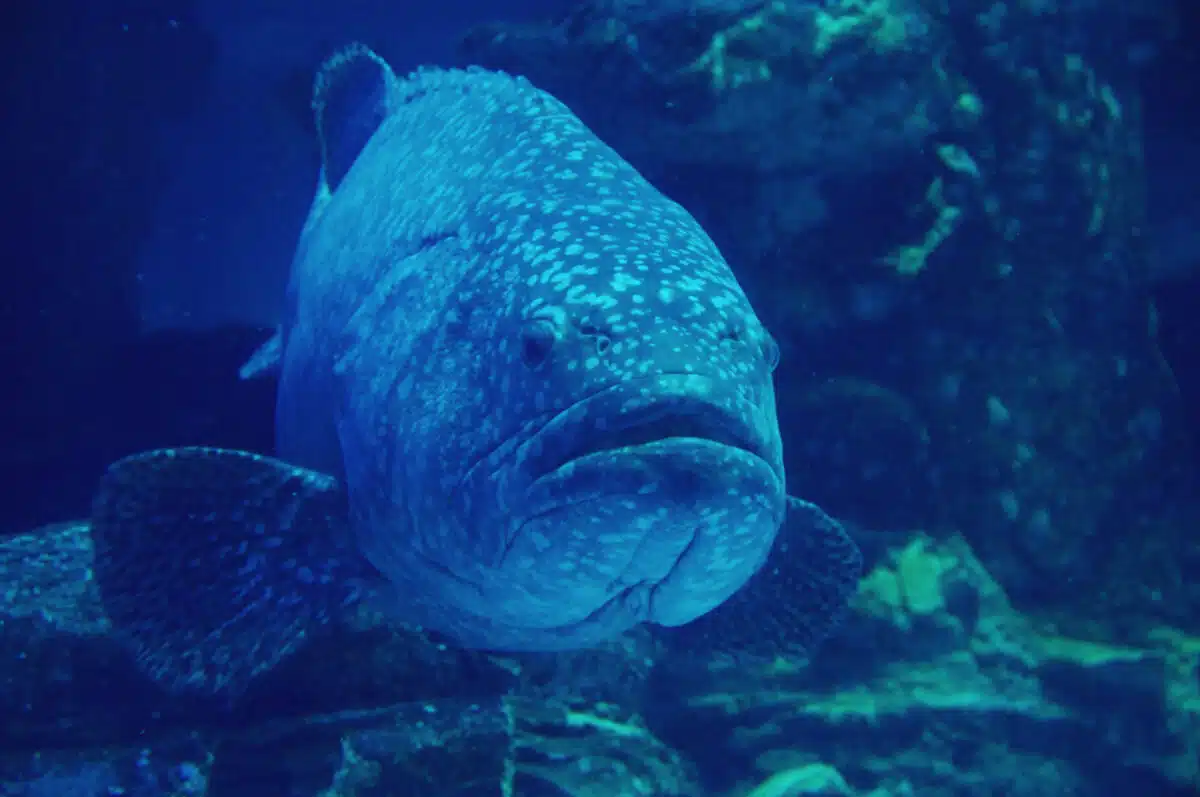
When we think of pack hunters, wolves, lions, and other land predators typically come to mind. However, beneath the water’s surface, numerous fish species have evolved sophisticated cooperative hunting strategies that rival their terrestrial counterparts. These underwater tacticians coordinate their movements, communicate effectively, and share the spoils of their collective efforts. From the open ocean to coral reefs and freshwater systems, pack-hunting fish demonstrate remarkable social intelligence and evolutionary adaptations that challenge our understanding of fish behavior. This article explores twelve fascinating fish species that have mastered the art of group hunting, showcasing nature’s incredible diversity in predatory strategies across different environments.
Yellow Saddle Goatfish (Parupeneus cyclostomus)
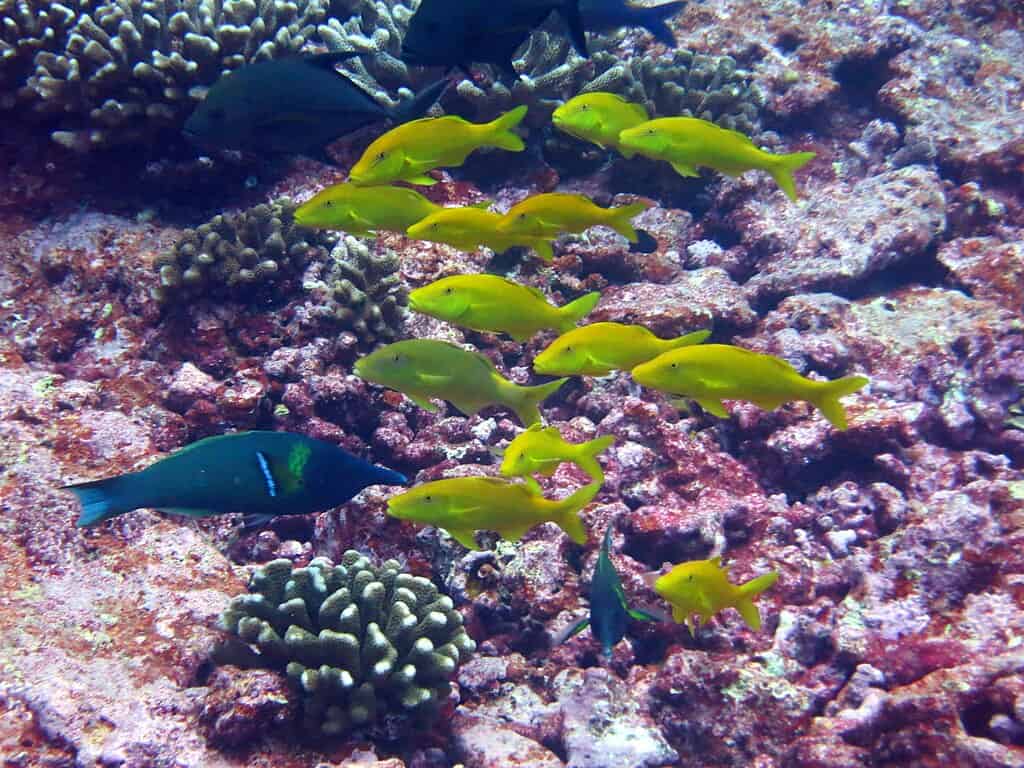
The Yellow Saddle Goatfish, native to the Indo-Pacific region, showcases remarkable cooperative hunting behavior that researchers have compared to wolf pack tactics. These colorful reef dwellers typically form small hunting parties of 5-8 individuals that work systematically to corner prey. What makes their hunting strategy particularly effective is their division of labor—some goatfish serve as blockers, positioning themselves strategically to prevent prey escape, while others use their specialized barbels (sensory organs near their mouths) to flush small fish and invertebrates from hiding places in the sand or coral rubble. Studies have documented these fish communicating through body postures and color changes during hunts, coordinating their movements with impressive precision. Their success rate increases significantly when hunting cooperatively compared to solitary efforts, demonstrating the evolutionary advantage of this social behavior.
Giant Trevally (Caranx ignobilis)
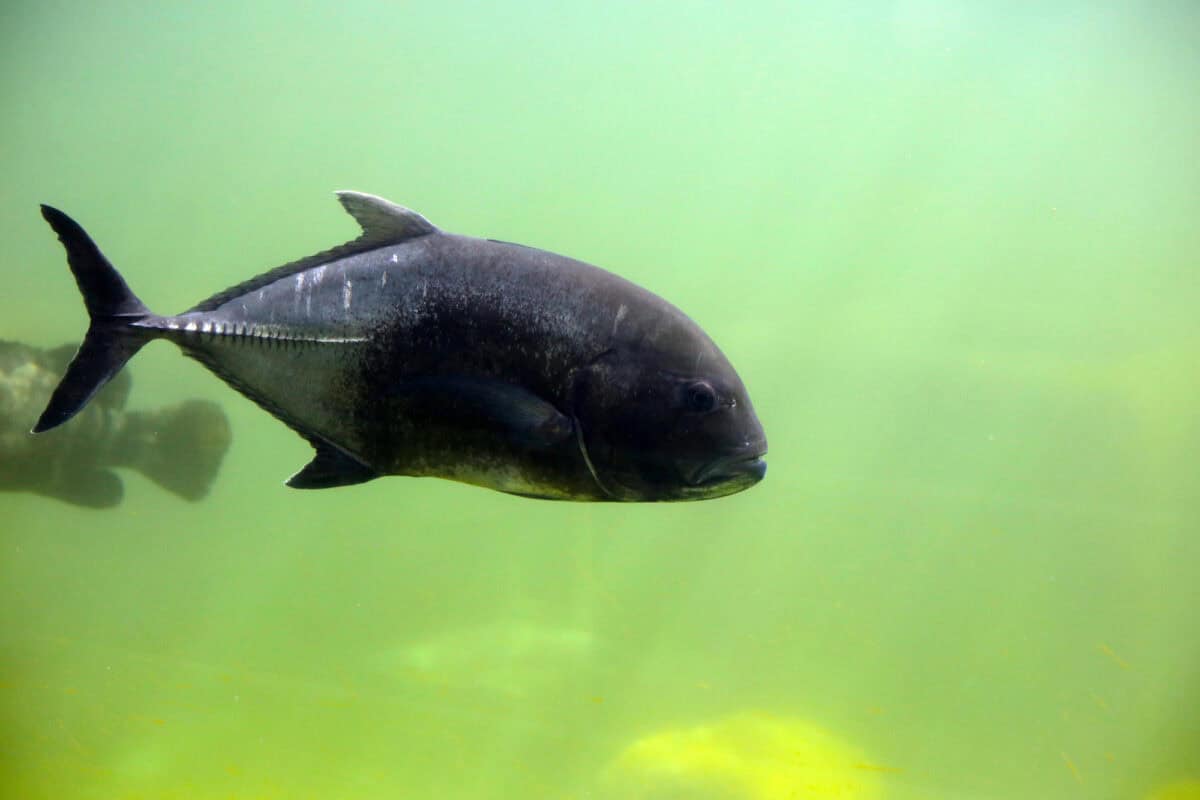
The Giant Trevally, sometimes called the GT, is an apex predator throughout the Indo-Pacific that employs sophisticated group hunting tactics. These powerful fish, which can grow to over 5 feet in length and weigh more than 170 pounds, form hunting parties that use multiple strategies depending on their prey and environment. In shallow reef areas, GTs have been observed forming a hunting line to herd smaller fish against coral structures, significantly reducing escape routes. When hunting in open water, they coordinate to create bait balls—densely packed schools of prey fish—which they then take turns striking from different angles. Marine biologists have noted that these hunting groups appear to have established hierarchies, with larger individuals often initiating attacks while smaller ones maintain the formation. Their remarkable coordination allows them to tackle prey that would be difficult to capture individually, including fast-swimming fish and even seabirds snatching prey from the water’s surface.
Blacktip Reef Shark (Carcharhinus melanopterus)

While sharks are often portrayed as solitary hunters, the Blacktip Reef Shark regularly engages in coordinated group hunting behavior. These sharks, recognizable by the distinctive black tips on their fins, form hunting parties of 3-20 individuals in shallow lagoons and coral reef environments. During coordinated hunts, they encircle schools of fish, gradually tightening their formation until the prey is concentrated in a dense ball. The sharks then take turns darting through the compressed school, maximizing feeding efficiency while minimizing energy expenditure. Research from the Palmyra Atoll has documented these sharks using their bodies to physically herd fish against shorelines or reef edges, creating natural barriers that prevent escape. What’s particularly interesting about Blacktip Reef Sharks is that these hunting groups aren’t random assemblages—they often consist of related individuals or sharks that regularly associate with each other, suggesting a level of social complexity previously unrecognized in shark species.
Goliath Grouper (Epinephelus itajara)
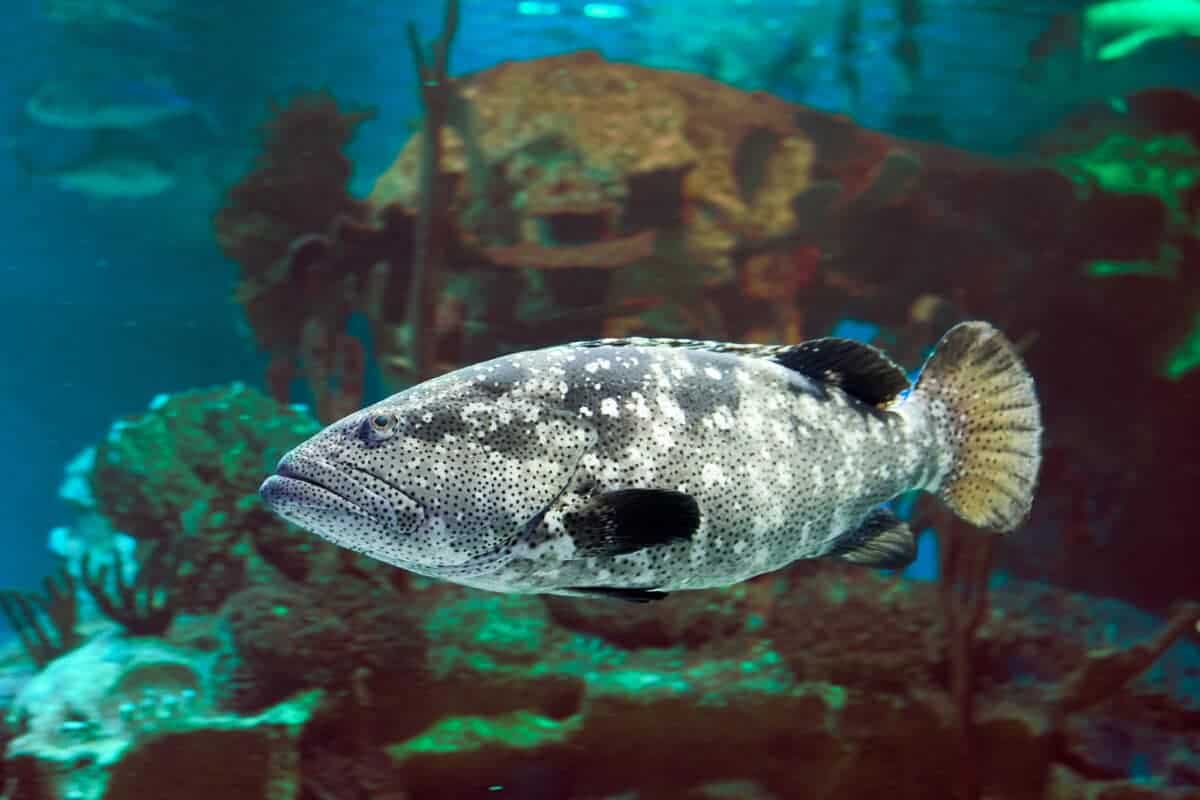
The massive Goliath Grouper, which can reach lengths of 8 feet and weights exceeding 800 pounds, exhibits fascinating cooperative hunting behavior despite its intimidating size. These endangered fish, found in tropical and subtropical waters of the Atlantic Ocean, have been observed forming hunting alliances with other predatory species, particularly in the Caribbean and Florida reef systems. During these multi-species hunts, Goliath Groupers position themselves at strategic locations around coral formations while other predators like snappers or jacks flush prey from hiding places. The groupers’ massive mouths create powerful suction that can inhale prey whole from several feet away. This interspecies cooperation represents a sophisticated form of hunting alliance rarely seen in marine ecosystems. Recent research using underwater cameras has revealed that Goliath Groupers may also communicate through low-frequency sounds and body movements to coordinate their positioning during these collaborative hunts, demonstrating previously unknown complexity in their social behavior.
False Killer Whale (Pseudorca crassidens)
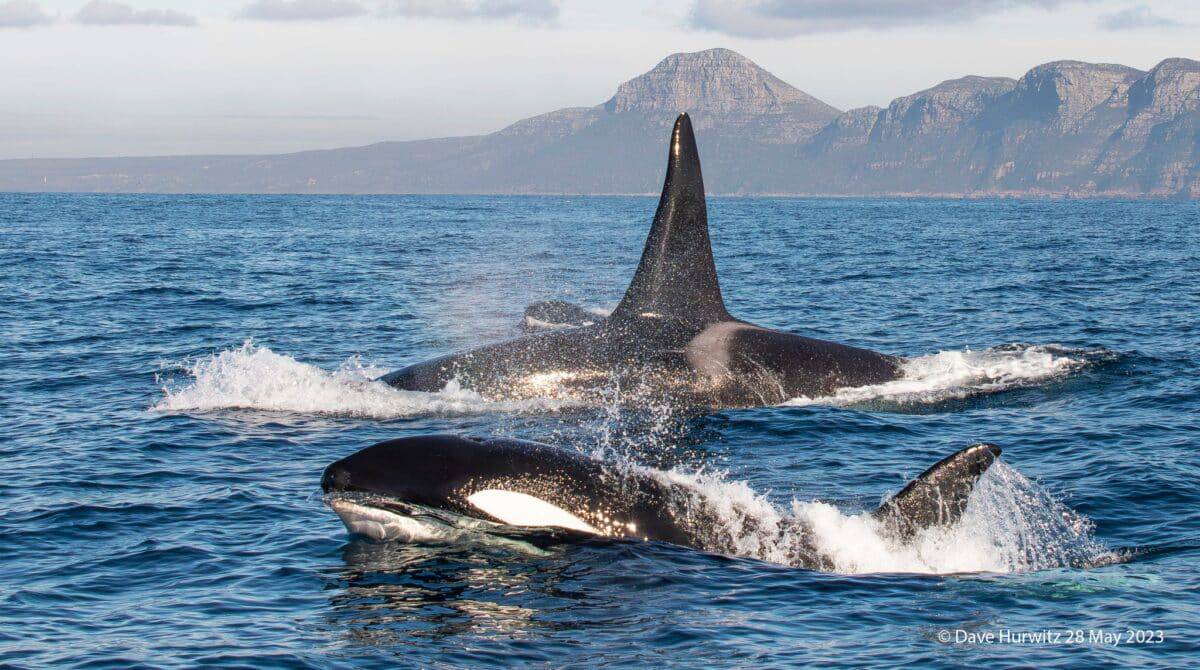
Though technically cetaceans rather than fish, False Killer Whales merit inclusion because they regularly hunt alongside large pelagic fish species in remarkable interspecies hunting parties, these oceanic dolphins form cooperative hunting groups with tuna species, particularly Yellowfin Tuna (Thunnus albacares), when pursuing prey in deep offshore waters. This unusual partnership benefits both species—the dolphins’ echolocation helps locate prey schools, while the tuna’s speed helps to herd and contain them. Marine biologists studying these interactions in the eastern tropical Pacific have documented False Killer Whales and tuna coordinating their movements when surrounding prey balls of smaller fish. After successful hunts, the prey is often shared between species, with minimal competition observed. This relationship represents one of the most sophisticated interspecies hunting collaborations known in marine environments. It showcases how evolutionary pressures can drive cooperation even between taxonomically distant species occupying similar ecological niches.
Bluefin Trevally (Caranx melampygus)
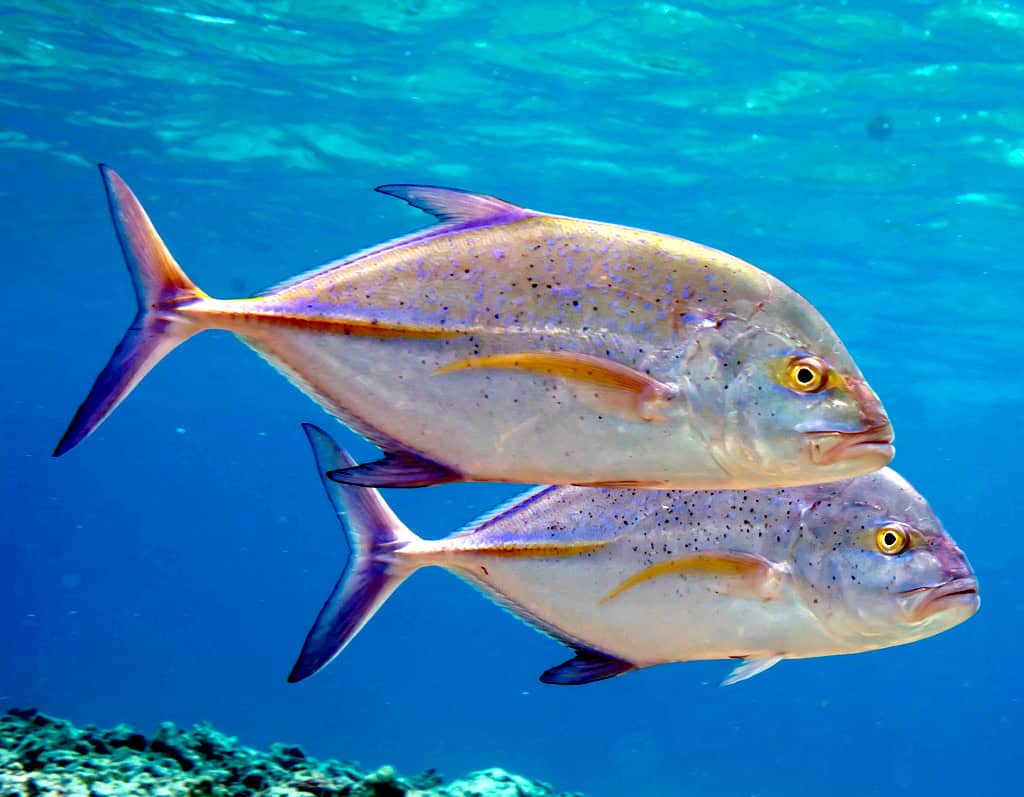
The Bluefin Trevally, with its electric blue coloration and athletic hunting style, employs multiple pack hunting tactics across Indo-Pacific coral reef systems. These powerful predators form hunting groups of 5-20 individuals that coordinate through visual cues and body positioning. Their most impressive hunting behavior involves collaboration with other predatory species, including snappers, groupers, and even eels. In a strategy documented by marine biologists in the Red Sea, Bluefin Trevally form a mobile hunting wall that drives prey fish toward coral heads where moray eels and groupers wait in ambush positions. As smaller fish attempt to hide in reef crevices, the partners flush them out while the trevally patrol the perimeter, intercepting escaping prey. The Bluefin Trevally’s intelligence is evident in their ability to adapt their formation based on reef topography and prey behavior. Research has shown that experienced individuals appear to lead these hunting groups, suggesting a social learning component to this sophisticated behavior that gets passed through generations.
Red-Bellied Piranha (Pygocentrus nattereri)

Perhaps no fish has a more fearsome reputation for pack hunting than the Red-Bellied Piranha of South America’s Amazon Basin. While their danger to humans has been greatly exaggerated in popular culture, these freshwater fish genuinely do employ coordinated group hunting strategies. Piranha schools, which can number from dozens to hundreds of individuals, work collectively to overwhelm larger prey that no single piranha could tackle alone. Contrary to the common misconception of frenzied feeding, research has revealed that piranha hunting is highly organized, with distinct phases of assessment, approach, and attack. During hunts, some piranhas will bite and hold prey while others tear off manageable pieces—a division of labor that increases feeding efficiency. Researchers studying piranha behavior have identified specialized sound production that may serve as communication during hunts, with different acoustic signals potentially conveying specific information about prey location or feeding opportunity. These coordinated attacks allow piranhas to consume animals many times their size, including injured fish, birds, and mammals that enter their waters.
Great Barracuda (Sphyraena barracuda)

While adult Great Barracudas are often solitary ambush predators, juvenile barracudas display remarkable pack hunting behavior as they develop. In tropical and subtropical waters worldwide, young barracudas form hunting schools of 10-30 individuals that coordinate their movements with military precision. These hunting parties employ a strategy where the group surrounds a school of smaller fish, gradually tightening their formation into a ring that compresses prey into a dense ball. Individual barracudas then take turns darting through the center of the formation to feed. Marine biologists studying these hunting groups in the Caribbean have observed specialized roles within the pack, with some barracudas maintaining the perimeter while others herd prey toward the center. What makes this behavior particularly interesting is its developmental nature—as barracudas mature and grow larger, they gradually transition from pack hunting to solitary ambush tactics, suggesting that the cooperative strategy may serve as both a feeding mechanism and a form of social learning during their juvenile stage.
Mahi-Mahi (Coryphaena hippurus)

The strikingly colorful Mahi-Mahi, also known as dolphinfish, exhibits sophisticated cooperative hunting behavior in the open ocean environment. These fast-swimming pelagic predators, which can reach speeds of nearly 60 mph, form hunting parties of 5-15 individuals when pursuing flying fish and other prey along the surface waters of tropical and subtropical oceans worldwide. Their hunting strategy leverages their remarkable speed and coordination—mahi-mahi position themselves beneath schools of flying fish, moving in synchrony to force their prey to break the water’s surface. When flying fish take to the air to escape, other members of the mahi-mahi hunting group position themselves to intercept the prey upon re-entry into the water. Research tracking these hunting groups has shown that they maintain precise spacing between individuals, maximizing coverage area while minimizing interference with each other. This coordinated approach allows mahi-mahi to capture one of the ocean’s most elusive prey species with remarkable efficiency, demonstrating how evolutionary pressure has shaped their social hunting behavior in the challenging open ocean environment.
Peacock Bass (Cichla ocellaris)
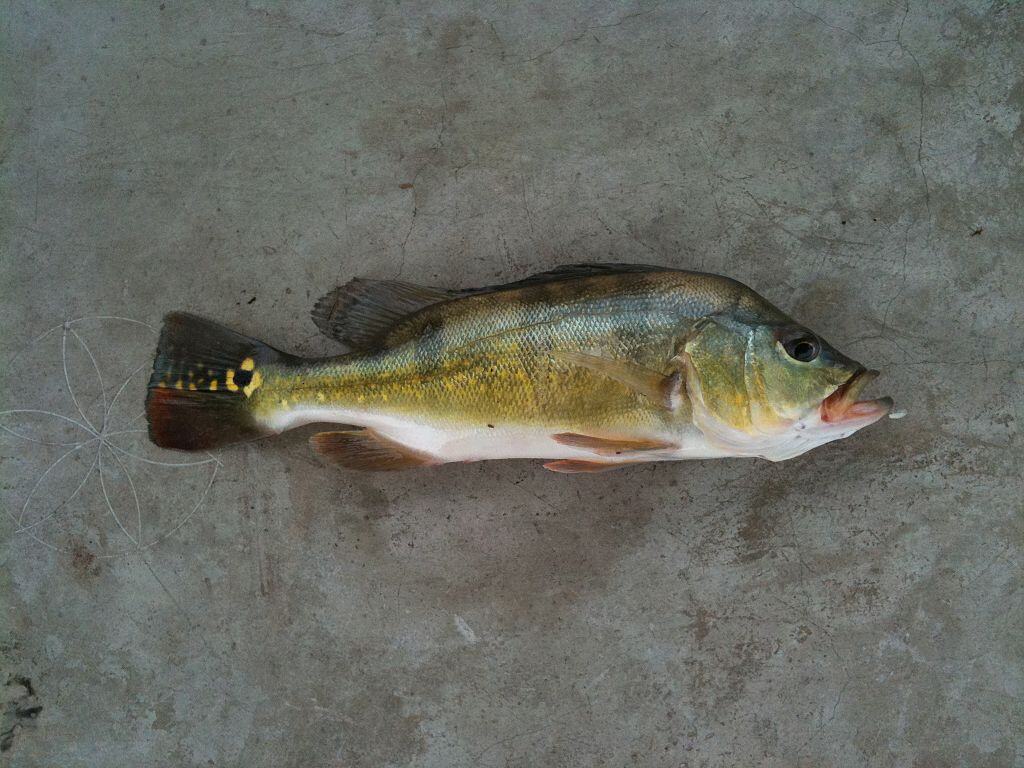
Native to the Amazon and Orinoco basins and introduced to Florida’s waterways, the Peacock Bass has developed one of the most sophisticated hunting strategies among freshwater fish. These colorful cichlids form hunting groups of 3-12 individuals that employ a strategy known as “herding and cornering.” Underwater observations have revealed that Peacock Bass work systematically to drive smaller fish toward shallow areas or structural features like fallen trees or rock formations. The hunting party positions members strategically to block escape routes while others aggressively pursue the prey, using their powerful bodies to create pressure waves that disorient victims. Research conducted in both their native South American habitats and introduced ranges has documented these bass using complex coordination, including what appears to be leader-follower relationships within hunting groups. Most remarkably, Peacock Bass demonstrate the ability to adapt their tactics based on prey behavior and environmental conditions, showcasing cognitive flexibility not commonly associated with fish species. Their hunting success rate increases dramatically when working cooperatively compared to individual efforts.
African Tigerfish (Hydrocynus vittatus)

The fearsome African Tigerfish, with its prominent teeth and powerful build, is a formidable predator in the freshwater systems of central and southern Africa. These fish, which can grow to over three feet in length, employ coordinated pack hunting when pursuing large prey or schools of smaller fish in rivers and lakes, particularly in the Zambezi River system. Hunting groups of 6-20 tigerfish coordinate their movements to isolate portions of prey schools, driving them toward shorelines or underwater structures. What makes their hunting behavior particularly remarkable is their ability to execute synchronized aerial attacks—tigerfish are among the few freshwater fish capable of leaping from the water to capture birds in flight, a behavior documented by researchers studying populations in South Africa’s Schroda Dam. During these extraordinary hunting events, multiple tigerfish time their attacks to coincide, increasing the probability of successful captures while confusing the targeted birds. Their pack hunting coordination extends underwater as well, with individuals taking specific positions when pursuing large prey fish, demonstrating tactical positioning similar to that observed in mammalian predators.
Jack Crevalle (Caranx hippos)
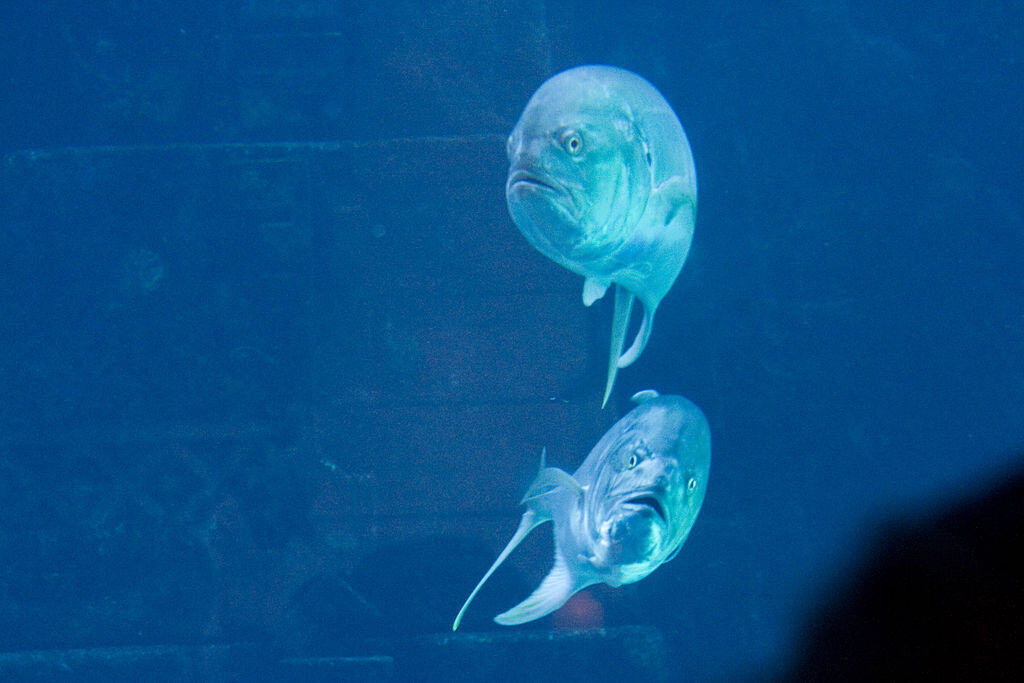
The Jack Crevalle, a powerful pelagic predator found in the Atlantic Ocean from New England to Brazil, demonstrates classic pack hunting behavior that marine biologists have frequently compared to wolf tactics. These silver-bodied powerhouses form hunting groups of 10-50 individuals that work with remarkable coordination when pursuing prey in coastal waters and estuaries. Their most impressive hunting strategy involves surrounding schools of baitfish like mullet or menhaden, systematically herding them toward shallow water where escape options become limited. The jacks maintain a tight formation, with some individuals patrolling the perimeter while others dart through the concentrated prey ball. Research conducted in the Gulf of Mexico has documented these hunting parties using the water’s surface and shorelines as natural barriers, effectively creating a “wall of death” that prey cannot penetrate. What makes Jack Crevalle particularly interesting is their ability to adapt their tactics based on local conditions—they’ve been observed modifying their formation when hunting in channels versus open bays, suggesting a level of environmental awareness and tactical flexibility that challenges conventional understanding of fish cognition.
Conclusion: The Evolutionary Significance of Pack Hunting in Fish

The emergence of cooperative hunting behaviors across diverse fish species represents a fascinating example of convergent evolution, where similar traits develop independently in different lineages facing similar selective pressures. For fish, pack hunting offers numerous advantages that have made it a successful strategy across various aquatic environments. The coordinated pursuit allows these species to capture prey larger or faster than any individual could manage alone, expanding their potential food sources and ecological niches. Research indicates that pack hunting fish typically experience higher caloric intake per energy expended compared to solitary hunters of the same species. Beyond the immediate feeding benefits, these social hunting behaviors create selection pressures for enhanced communication systems, spatial awareness, and cognitive processes related to cooperation. Many scientists now believe that the complex social behaviors observed in these fish species have driven the evolution of larger brain-to-body ratios and more developed neural structures associated with social cognition. These findings challenge traditional views of fish intelligence and social complexity, suggesting that the evolutionary path toward cooperative strategies has independently shaped cognitive development across multiple fish lineages throughout Earth’s oceans, lakes, and rivers.

As a little kid, I fell in love with nature, wildlife, and animals. Living in the USA, South Africa, Italy, China and Germany gave me the opportunity to discover the world's Wildlife. My favorite animals are Mountain Gorillas, Siberian Tigers, and Great White Sharks.
I'm a certified PADI Open Water Diver, went to Everest Base Camp and Trekked Gorillas in Uganda. I hold a Master of Science in Economics and Finance.
Please send any feedback to feedback@animalsaroundtheglobe.com
- Why the Great Barrier Reef Is the Best Place to Spot Sea Turtles - June 3, 2026
- 2 Animals With Super Sized Body Parts and What They are For - June 3, 2026
- Explore The Azores - June 3, 2026