
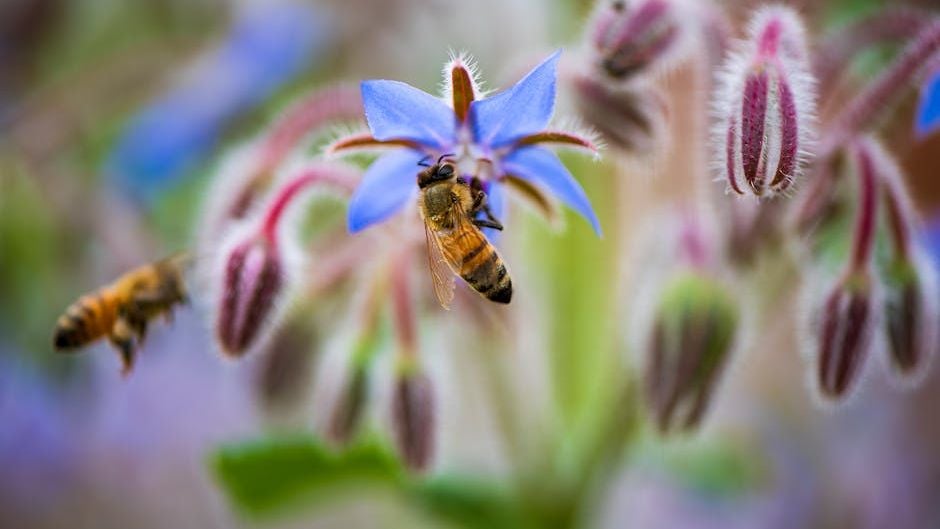
Most gardeners spend a fortune on showy annual bedding plants, only to wonder why their garden feels strangely quiet. The truth is, honeybees aren’t drawn to what looks good to us. They’re foraging for something far more practical: reliable, high-quality nectar and pollen.
In general, herbs and garden perennials are far better for bees, while most annual bedding plants are less attractive to them. Many of those popular annual flowers have been bred for showy appearance or vigorous growth and simply don’t produce enough pollen and nectar to serve as good food plants for bees. The fragrant herbs listed here change that equation entirely. Each one brings something the traditional flower bed rarely can: sustained, generous, accessible nourishment for one of the most important insects on earth.
Lavender: The Undisputed Bee Magnet
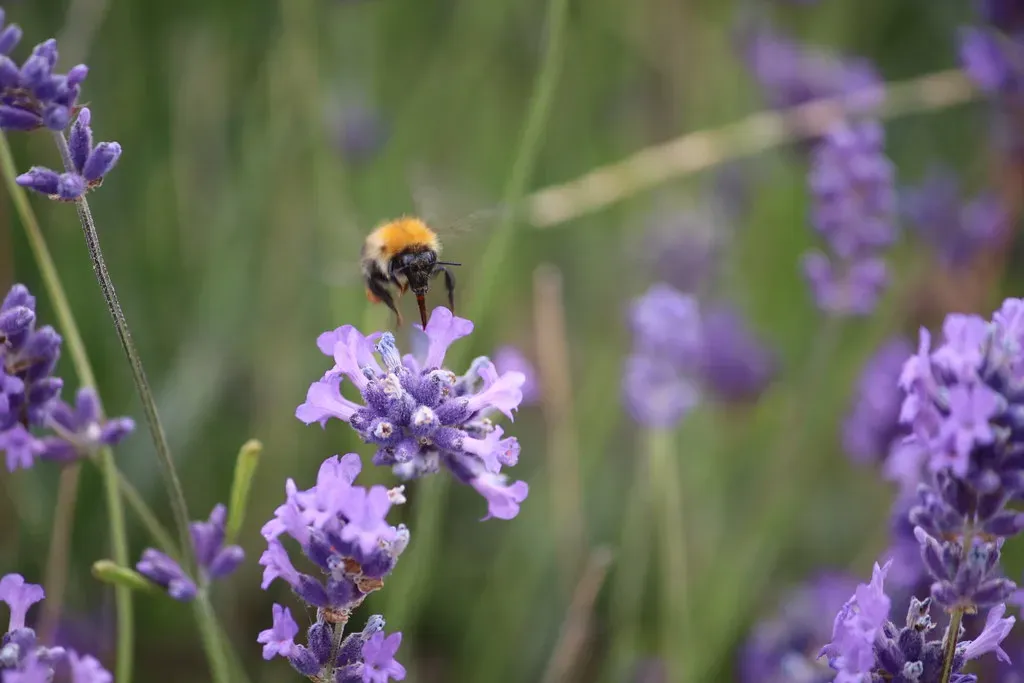
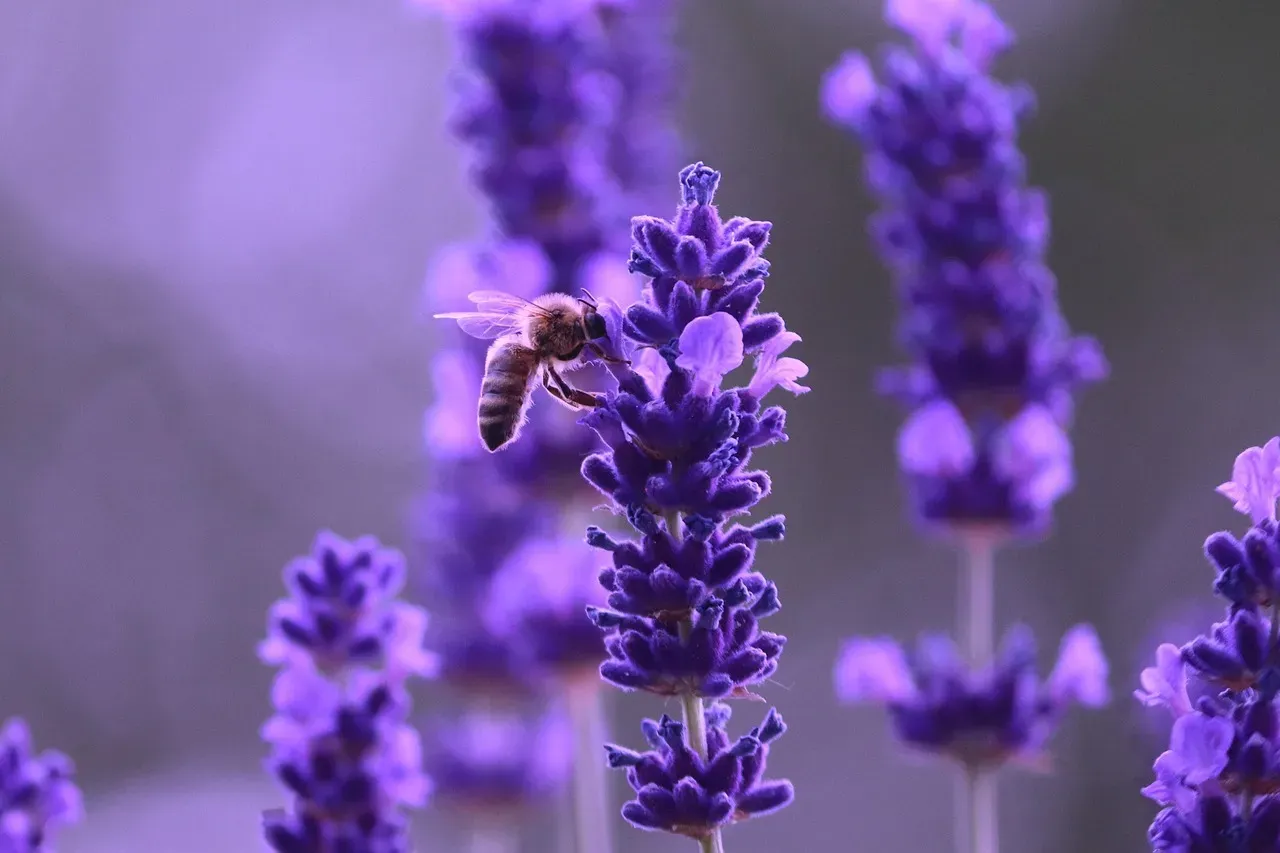
There’s a reason lavender shows up in virtually every pollinator garden guide ever written. Its fragrant purple flowers are a source of high-energy nectar, and lavender blooms for an extended period, providing a consistent food supply for pollinators, including honey bees.
The fragrance of lavender is a major draw for pollinators. Bees are particularly attracted to its strong, sweet scent, which guides them to the plant’s nectar-rich flowers. To attract more bees and butterflies to your garden, consider planting English or Spanish lavender, both of which have a high nectar content and produce an abundance of flowers. Few herbs deliver as reliably, season after season, without much fuss from the gardener.
Lemon Balm: The Ancient Bee Herb
As an early bloomer, lemon balm kicks off the pollinator season in early spring, making it one of the first reliable food sources available to bees emerging from winter. That early timing alone earns it a place in any serious pollinator garden.
The smell of the leaves crushed between your fingers is delicious. Easy to grow, and like mint, it benefits from being in its own pot because it will spring up everywhere. Honeybees and bumblebees, particularly common carder bees, flock to the tiny creamy-white flowers. The very name of the plant carries its heritage: lemon balm’s Latin name, Melissa officinalis, is named in honour of honey bees, and “melissa” means bee in Greek, which in turn comes from “meli,” meaning honey.
Borage: The Rapid-Refueling Station
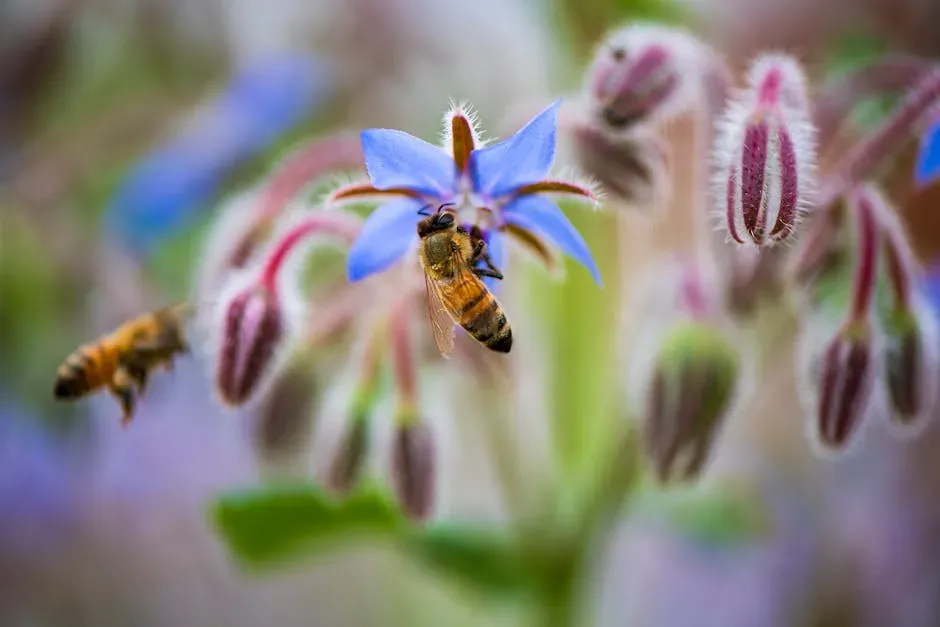
Borage is a pollinator’s dream, thanks to its bright blue, star-shaped flowers. Loved especially by honey bees, borage begins flowering in early summer and will self-seed, ensuring it comes back year after year. That self-seeding habit is one of its greatest gifts to the low-effort gardener.
There is plenty of scientific evidence confirming that borage flowers provide lots of nectar and pollen for bees and pollinators. Borage is popular with bees, and it’s not uncommon for beekeepers to seek out borage fields with the aim of producing borage honey. Flowers with deep tubes exclude short-tongued bee species entirely, but borage’s open, shallow blooms welcome them all. Look for the annual Borago officinalis, which self-seeds so you shouldn’t need to buy plants every year. Once established, borage essentially tends to itself, reappearing each season without any effort on your part.
Rosemary: Year-Round Evergreen Value
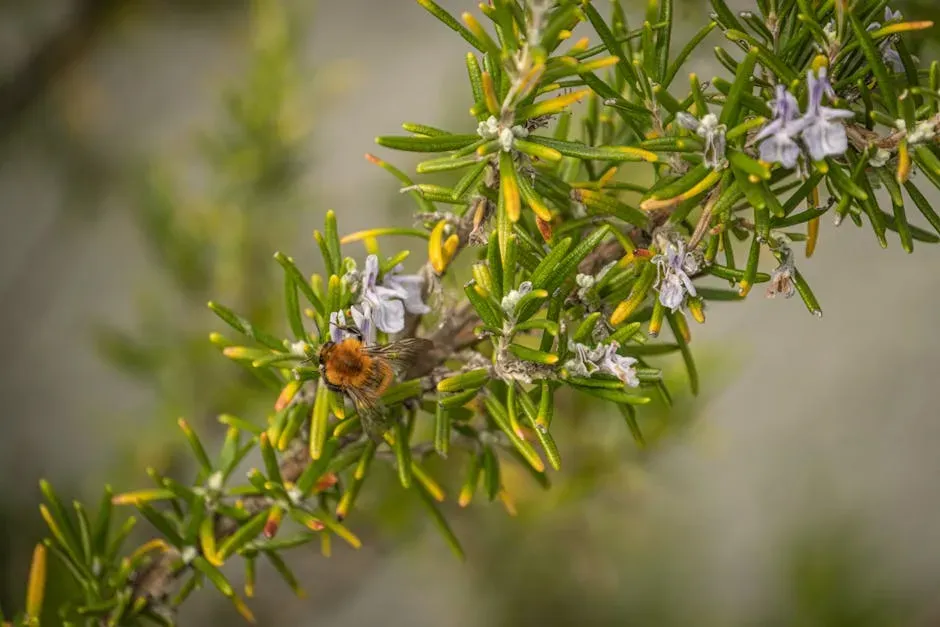
Rosemary is a fragrant herb that produces small, blue flowers that are loved by bees. It’s evergreen in many climates, providing year-round interest and nectar. Bloom time ranges from spring, with some varieties even blooming in winter.
You can pluck fresh needles from this drought-tolerant herb all year round. Its flared blue-purple flowers attract mason bees, flower bees, bumblebees, and honeybees. Rosemary is one of those rare herbs that earns its place in the garden twice over: once in the kitchen, and again every time a bee comes buzzing through the border in early spring when little else is blooming.
Thyme: The Low-Growing Pollinator Carpet
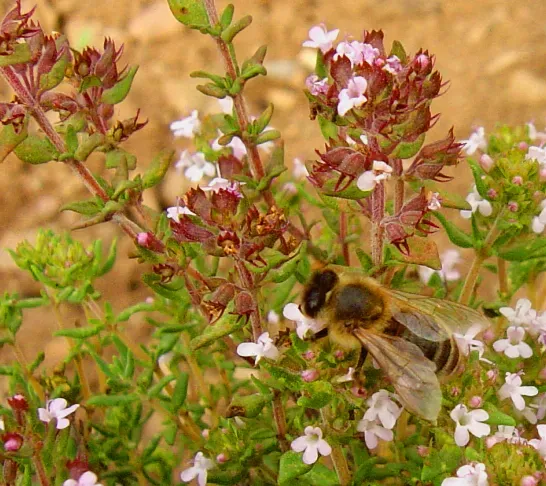
Thyme is a low-growing herb that produces clusters of tiny, nectar-rich flowers. It’s particularly attractive to honeybees and mason bees, with a bloom time stretching from late spring to summer.
Grow a herb “carpet” by planting thyme in paving cracks and enjoy the aroma when you walk on it. It works just as well in a pot. Thyme is fantastic for honeybees, bumblebees, mason bees, and leafcutter bees. Few plants offer such a high return for such a small footprint. A single square foot of flowering thyme can host a genuinely busy crowd on a warm afternoon.
Sage: Drought-Tough and Deeply Rewarding
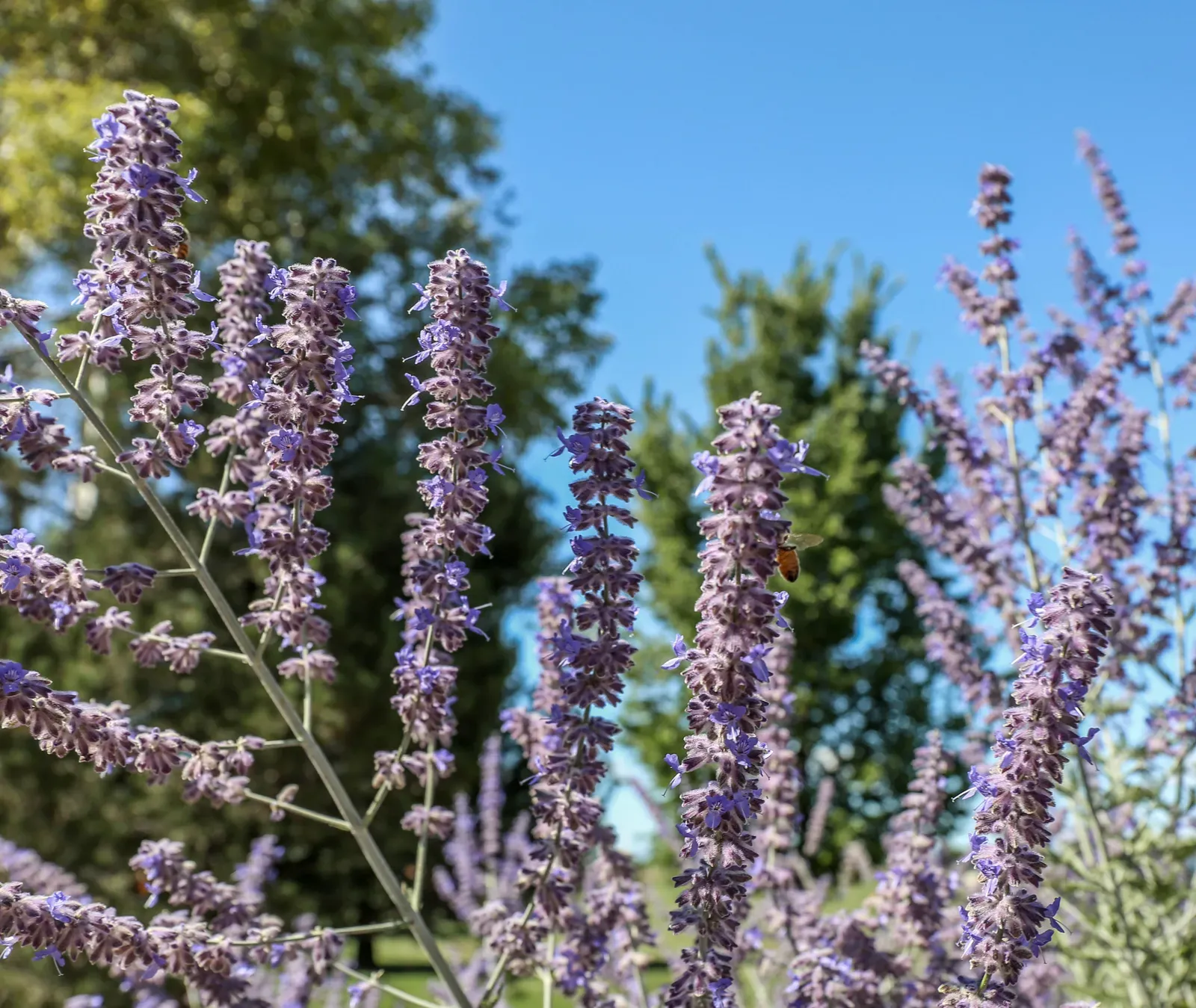
Sage produces spikes of purple or blue flowers that attract bees, butterflies, and hummingbirds. It’s a drought-tolerant herb that thrives in full sun, with a bloom time from late spring to early summer.
Letting the stems flower provides valuable pollinator food, and then cutting off the spent flower heads tidies the plant while encouraging new shoots and leaves. Many types of sage will perform very well in containers, making them a good choice for a backyard patio. The lovely purple flowers attract many types of bees and butterflies. For gardeners in drier climates, sage is particularly valuable because it thrives precisely in conditions where many other nectar plants give up.
Mint: The Vigorous, Bee-Busy Spreader
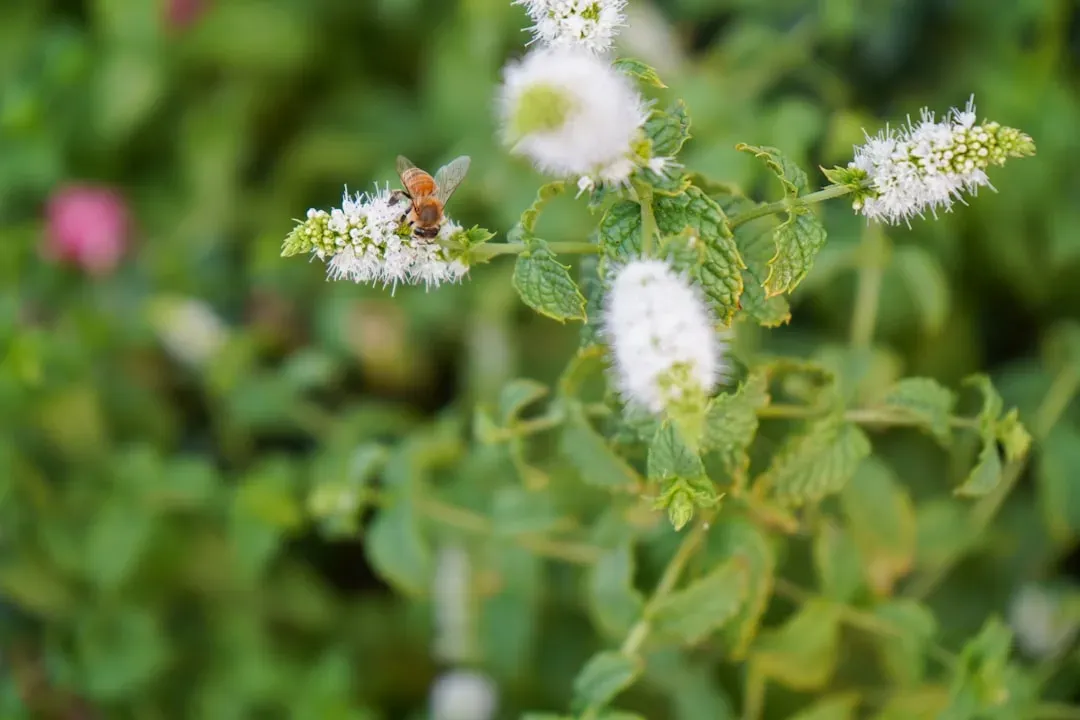
Mint is one of the most popular herbs that attract pollinators, and for good reason. With its fragrant leaves and vibrant growth habit, it has become a favourite among gardeners and wildlife enthusiasts alike. There are numerous varieties to choose from, including peppermint, spearmint, chocolate mint, and pineapple mint.
Spearmint is the favourite of honeybees, as is the native wild mint. Mint even helps honey bees repel their enemy, the varroa mite. One practical note worth heeding: mint spreads aggressively. Mint plants are flavorful and easy to grow, but they can take over your garden beds in no time. Consider growing mint in pots or containers instead, or you may have a mint garden with few other plants within a few years.
Oregano and Marjoram: The Summer Pollinator Hotspot
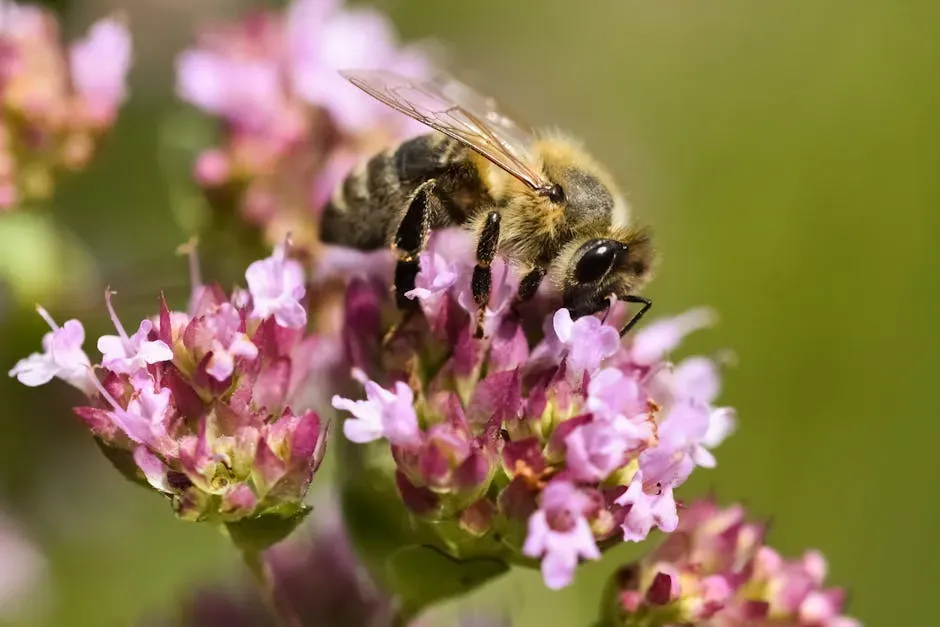
Origanum vulgare, or marjoram, is a pollinator hotspot loved by butterflies, bees, and lone bees, with a flowering period running from July through September. Marjoram is popular with a number of pollinating bee species, including honeybees, bumblebees, furrow bees, and leafcutter bees. They produce pinkish-white flowers during the summer and early fall which contain sweet nectar that bees love.
Sweet marjoram is a member of the oregano family, very strongly scented and beautiful in the sunny garden, with fuzzy gray-green foliage and small flowers that honeybees visit on a daily basis. That daily return visit pattern speaks to just how consistently rewarding it is as a nectar source. Planting a generous patch of either herb near a vegetable bed is one of the simplest things you can do for both pollinators and kitchen productivity at the same time.
Chives: Small Space, Big Bee Appeal
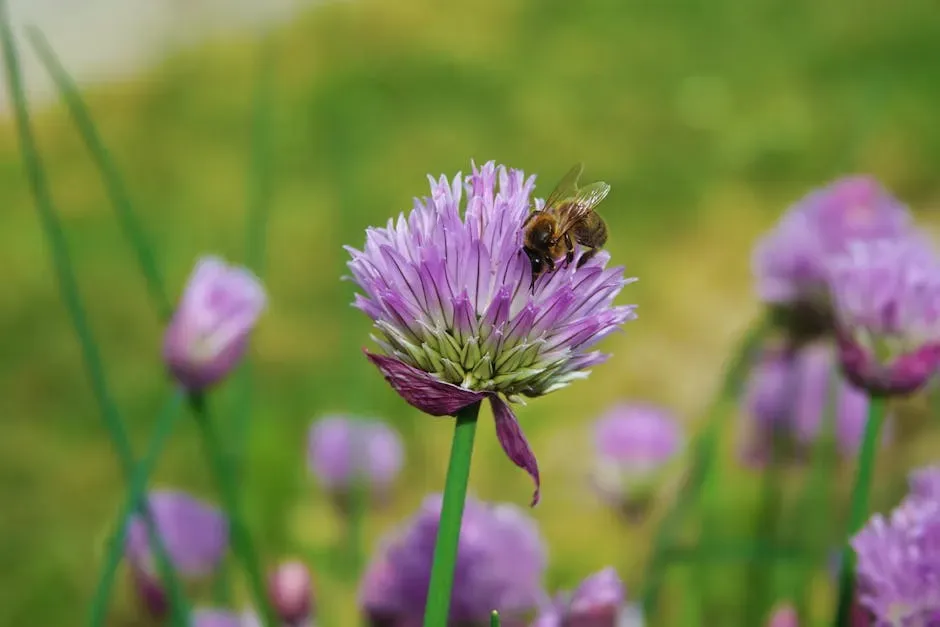
The edible purple flowers feed bumblebees, honeybees, mason bees, and leafcutter bees. Even if you’ve just got a small pot to plant up, chives are easy to grow, come back year after year, and flower with attractive mauve clusters in early summer.
These wonderful plants flower early in almost all regions, conditions, and climates, so when the weather is warm enough for bees to fly, the chives are already producing nectar for them. They are also perennials, so they will produce for many years to come. Chives also have a lesser-known cousin worth considering: garlic chives, which flower white late in the season, are actually a great plant for honey bees and bumblebees. The best part is that these perennial flowers are frost resistant, which is great for after the first frost of the season when many blooms die.
Anise Hyssop: The Crowd-Pleasing Late Bloomer
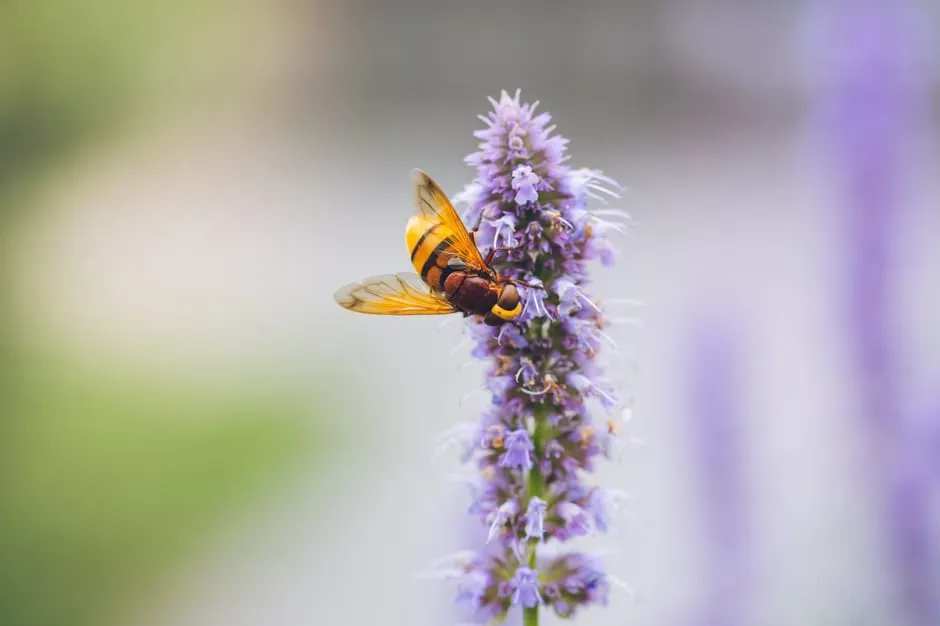
Anise Hyssop is a hardy perennial herb that can grow up to three feet tall, with tall spikes of purple or blue flowers that are a magnet for bees, butterflies, and hummingbirds. It thrives in a wide range of soil types. Best grown in full sun, it is also adaptable and can tolerate partial shade, making it suitable for many garden settings.
Historically, mass plantings of anise hyssop were established in parts of the Midwest specifically as a honey plant. Nineteenth century beekeeper accounts claimed that a single acre could provide ample forage for 100 colonies of honeybees. As a late bloomer, anise hyssop ensures that pollinators have sustenance well into early fall, bridging a gap that many gardens leave open. That late-season reliability is harder to come by than most people expect.
Fennel: The Towering Nectar Source
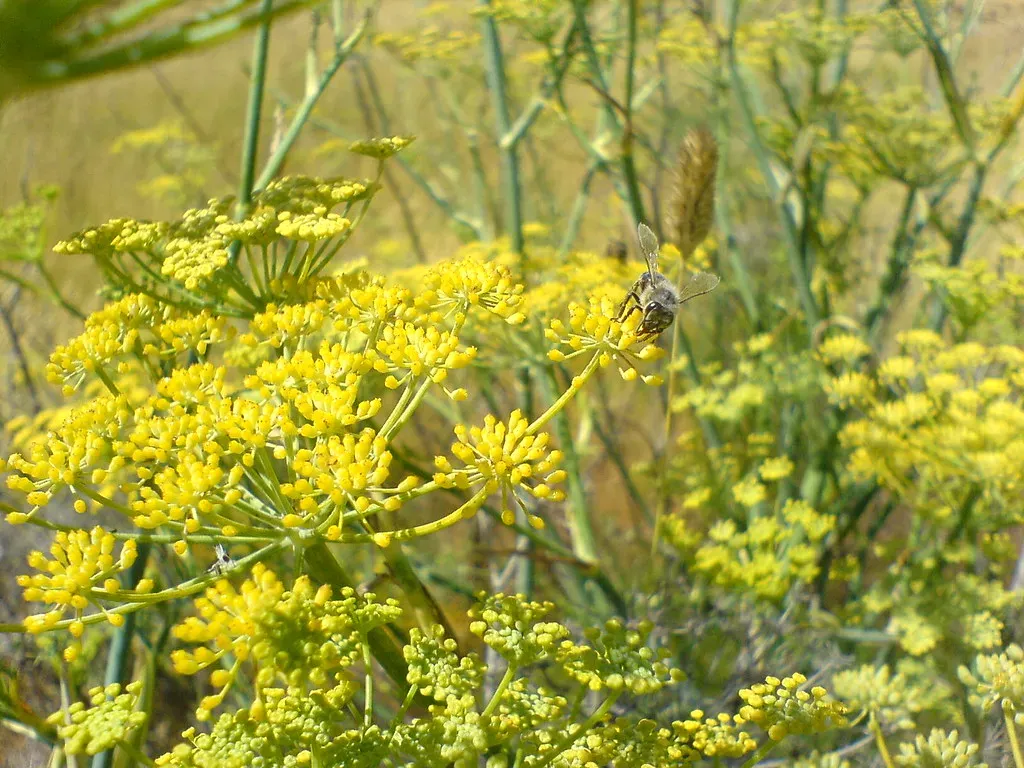
Fennel’s bright yellow flowerheads are rich in nectar and pollen, providing food for mining bees, yellow-faced bees, bumblebees, and honeybees. The herb tastes of aniseed and also produces aromatic seeds.
Fennel produces large, umbrella-shaped clusters of yellow flowers that attract a variety of pollinators, including bees, butterflies, and beneficial wasps, with a bloom time stretching from summer to early fall. Its height makes it a natural choice for the back of a border, where it catches the sun and provides a broad, open landing surface that honeybees find particularly accessible. The feathery foliage is a bonus in the kitchen, too.
Bee Balm: The Herb That Lives Up to Its Name
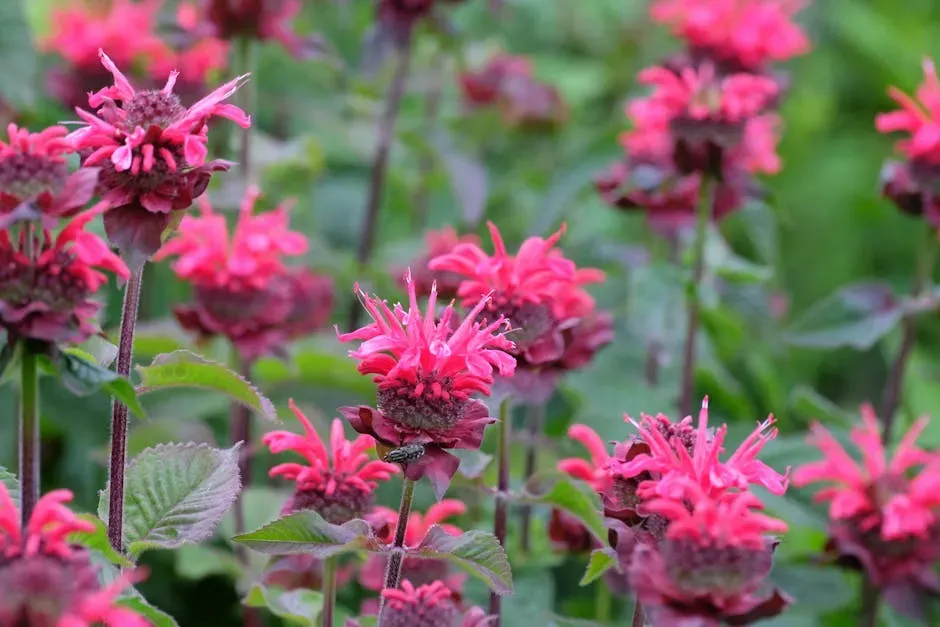
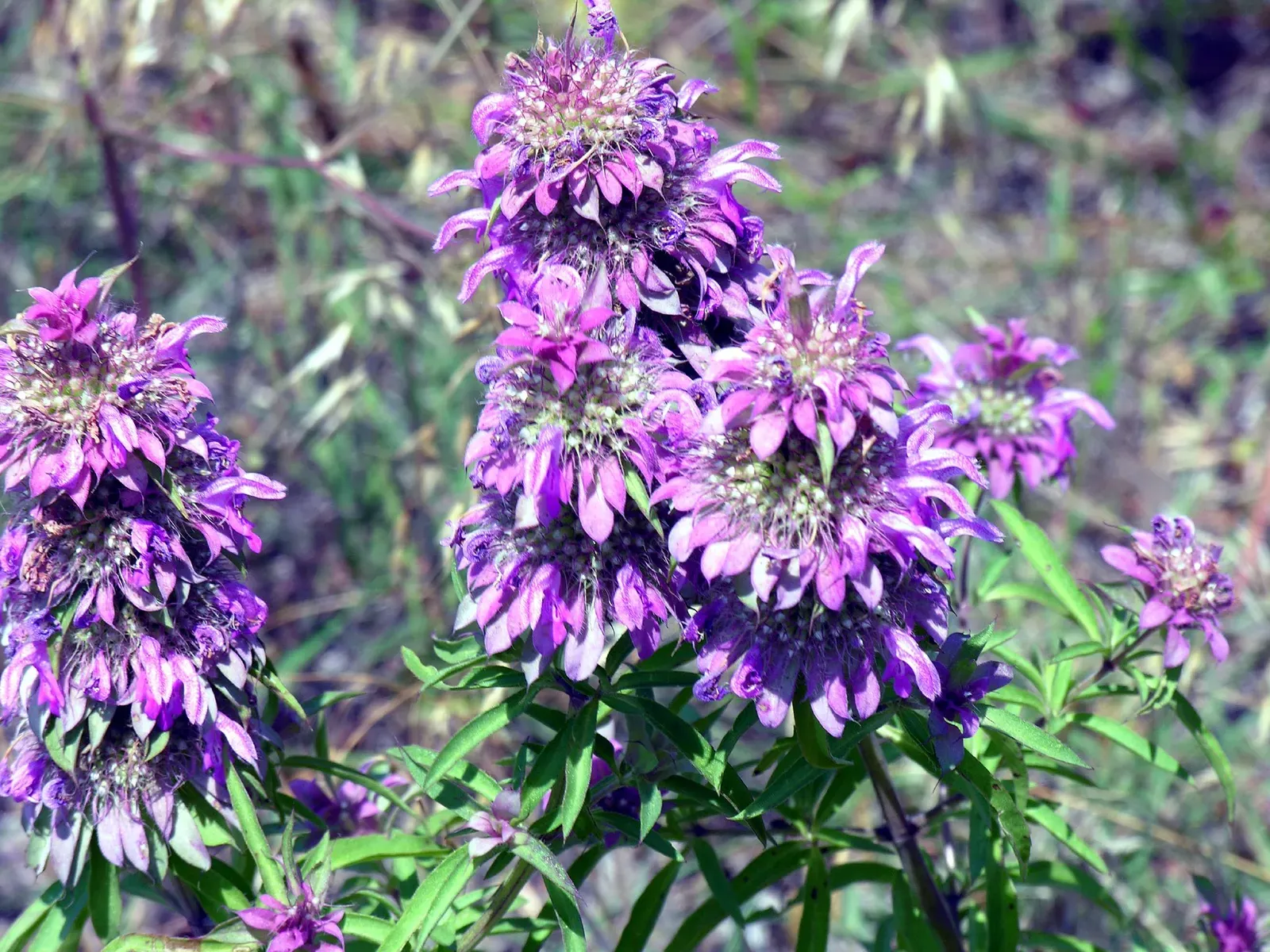
Bee balm is vibrantly beautiful and lives up to its name, attracting bees, butterflies, and even hummingbirds with its tubular flowers. Its strong scent and fuzzy foliage, along with varied colors, make it a lovely addition to any herb garden.
Deadheading flower heads encourages a second bloom, prolonging the flowering season into late summer. Bee balm isn’t just for pollinators but is also a great choice for gardeners looking to grow herbs, as its leaves can be used in teas, salads, and even homemade remedies. The leaves and flowers contain essential oils like thymol, which have antifungal and antibacterial properties. Bee balm is commonly used in teas, tinctures, and poultices to treat colds, coughs, and digestive issues. The plant is also known for its strong, minty aroma, which helps to repel unwanted pests while drawing in the beneficial insects that support pollination.
Conclusion: A Garden That Works Both Ways
Growing your own herbs alongside and in with your vegetables is a “no brainer.” Culinary herbs have fantastic bee-attracting flowers and provide antioxidant-rich seasonings to cook with your vegetable harvest. The payoff runs in both directions: better pollination for the food you’re growing, and a meaningful contribution to honeybee populations that are under real pressure globally.
To benefit honeybees, plant in groups with a variety of herb species so the bees don’t have to fly so far and use precious energy. Pollinators need food throughout the year. Incorporate herbs that bloom at different times to create ongoing support: early bloomers like lemon balm kick off the season in early spring, mid-season bloomers like lavender and bee balm provide support in summer, and late bloomers such as anise hyssop ensure pollinators have sustenance into early fall.
A herb garden in full bloom is one of the most productive things a domestic garden can be. The bees have been telling us this for centuries. We’re only just starting to listen again.
