

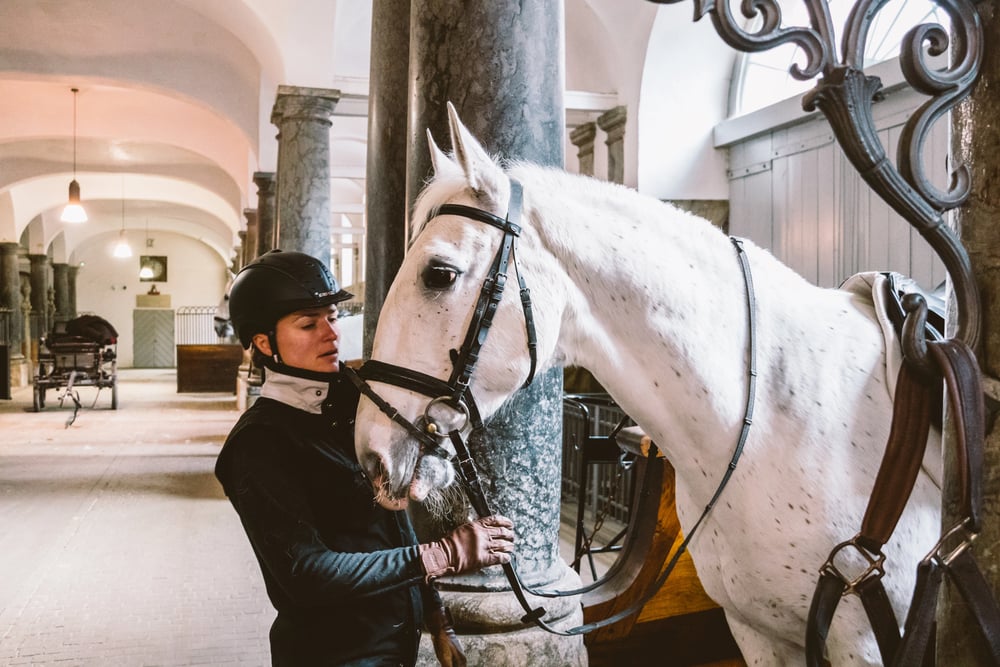
Throughout history, horses have played a pivotal role in shaping human civilization. From battlefield companions to transportation revolutionaries, these magnificent animals have influenced warfare, exploration, sports, and culture in profound ways. While countless horses have made contributions to history, some stand out for their exceptional impact, heroism, or symbolic importance. This article explores fourteen historic horses whose legacies continue to resonate through time, forever changing the world and our relationship with these noble creatures.
Bucephalus Alexander the Great’s Legendary Warhorse
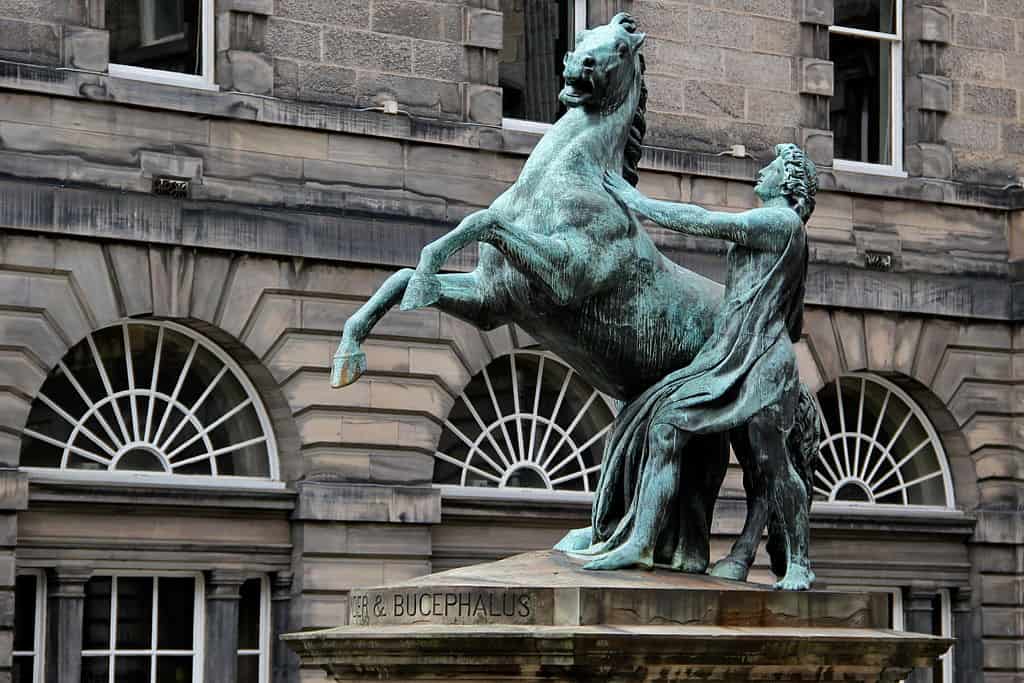
Perhaps the most famous horse in ancient history, Bucephalus was the trusted mount of Alexander the Great. According to historical accounts, the young Alexander tamed this supposedly untamable black stallion when he was just 12 years old by noticing that the horse was afraid of its own shadow. This demonstration of insight and horsemanship impressed Alexander’s father, King Philip II of Macedonia, who reportedly said, “My son, seek out a kingdom worthy of yourself, for Macedonia is too small for you.”
Bucephalus carried Alexander through numerous battles during his conquest of the known world, from Greece to India. Their partnership lasted for nearly 20 years until the horse died in 326 BCE after the Battle of the Hydaspes. Alexander named the city of Bucephala (in modern-day Pakistan) in honor of his beloved horse, demonstrating the profound bond between them. This legendary partnership has come to symbolize the special relationship between humans and horses that would help shape civilizations for millennia to come.
Marengo Napoleon Bonaparte’s Iconic White Arabian
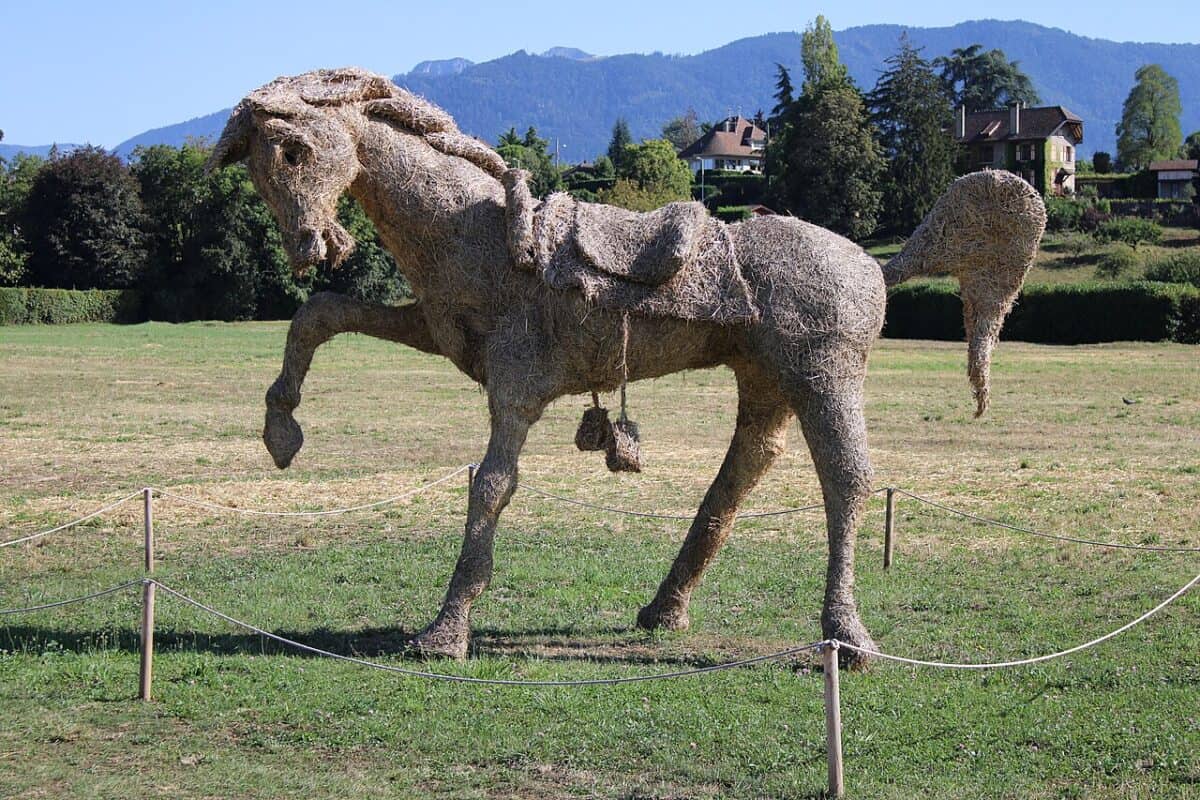
Marengo, a small gray Arabian stallion, carried Napoleon Bonaparte through numerous European battlefields including the famous Battle of Waterloo in 1815. Standing at just 14.1 hands (about 57 inches), this remarkably resilient horse was reportedly wounded eight times during his service yet continued to carry the French emperor with unwavering loyalty. Named after Napoleon’s victory at the Battle of Marengo in 1800, this horse became an enduring symbol of Napoleon’s military campaigns.
After Napoleon’s defeat at Waterloo, British forces captured Marengo and brought him to England. The horse lived to the impressive age of 38, spending his final years as a celebrity of sorts. Today, Marengo’s skeleton (minus one hoof that was made into a snuff box) is displayed at the National Army Museum in London, while paintings and statues of Napoleon frequently depict him astride this faithful steed. Marengo’s legacy lives on as a testament to the crucial role horses played in warfare before the age of mechanization.
Traveller Robert E. Lee’s Faithful Confederate Mount

Traveller, a gray American Saddlebred, became almost as famous as his owner, Confederate General Robert E. Lee, during the American Civil War. Originally named “Jeff Davis,” Lee renamed him Traveller (with two ‘l’s) after acquiring him in 1861. Standing 16 hands high and known for his strength and stamina, Traveller carried Lee throughout the entirety of the Civil War, becoming an inseparable companion to the general. In his own words, Lee described Traveller as “a confederate gray… iron gray, with black points, mane and tail very dark… a fair rider, easy in his movements, and never seemed to tire.”
The bond between Lee and Traveller extended beyond the war. When Lee became president of Washington College (now Washington and Lee University), Traveller accompanied him and became a beloved campus fixture. Following Lee’s death in 1870, Traveller walked in his funeral procession. When the horse died about a year later from tetanus, he was initially buried on the college grounds, and later, his skeleton was displayed until 1971, when he was finally laid to rest near Lee’s chapel. Today, Traveller symbolizes not just the Civil War era but also the profound connection between a soldier and his horse during a pivotal moment in American history.
Comanche The Sole Survivor of Custer’s Last Stand
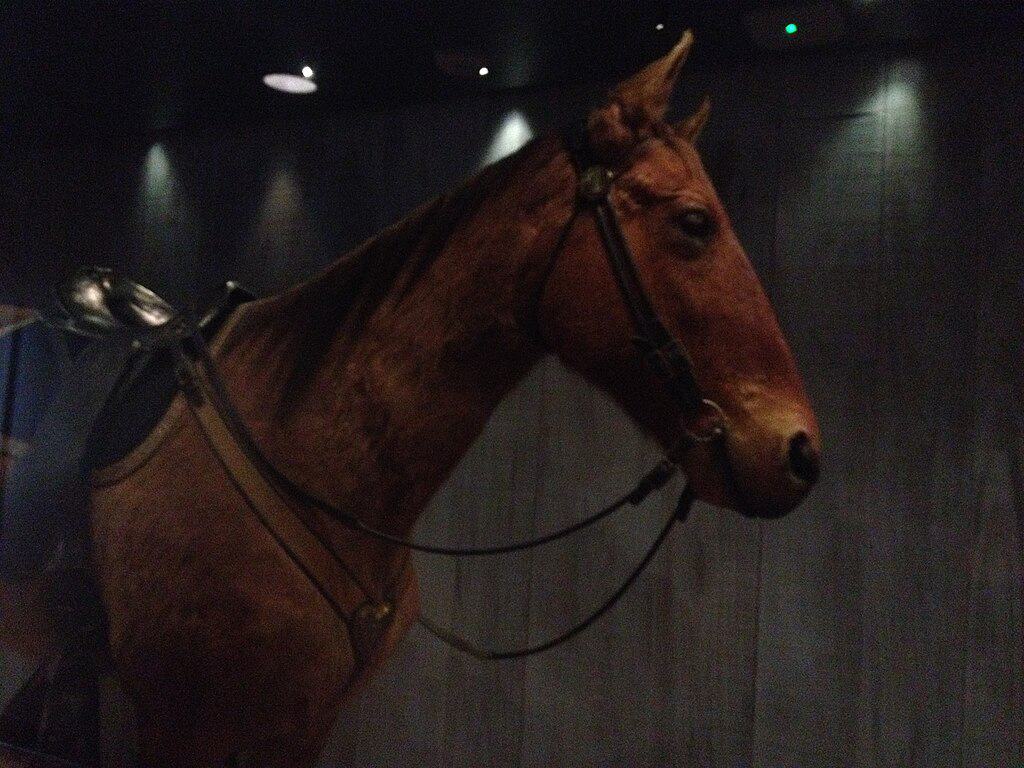
Comanche, a mustang gelding with a distinctive dun coloration, earned his place in American history as the only survivor of the U.S. 7th Cavalry at the Battle of Little Bighorn in 1876, also known as “Custer’s Last Stand.” Purchased by the U.S. Army in 1868 for $90, Comanche became the mount of Captain Myles Keogh. The horse received his name after being wounded by a Comanche arrow in an earlier battle but continuing to carry his rider despite the injury, demonstrating remarkable resilience.
When recovery teams arrived at Little Bighorn days after the battle, they discovered Comanche badly wounded but still alive among the bodies of fallen soldiers. The horse was transported to Fort Lincoln and gradually nursed back to health. In recognition of his symbolic importance, the 7th Cavalry issued an order that Comanche would never be ridden again and would be treated as an honored retiree. He became the regiment’s mascot, often appearing in parades where he would be draped with a black mourning cloth. After his death in 1891 at age 29, Comanche was preserved through taxidermy and is now displayed at the University of Kansas Natural History Museum, standing as a poignant reminder of one of the most famous battles in American history.
Sergeant Reckless The Korean War’s Equine Marine Hero
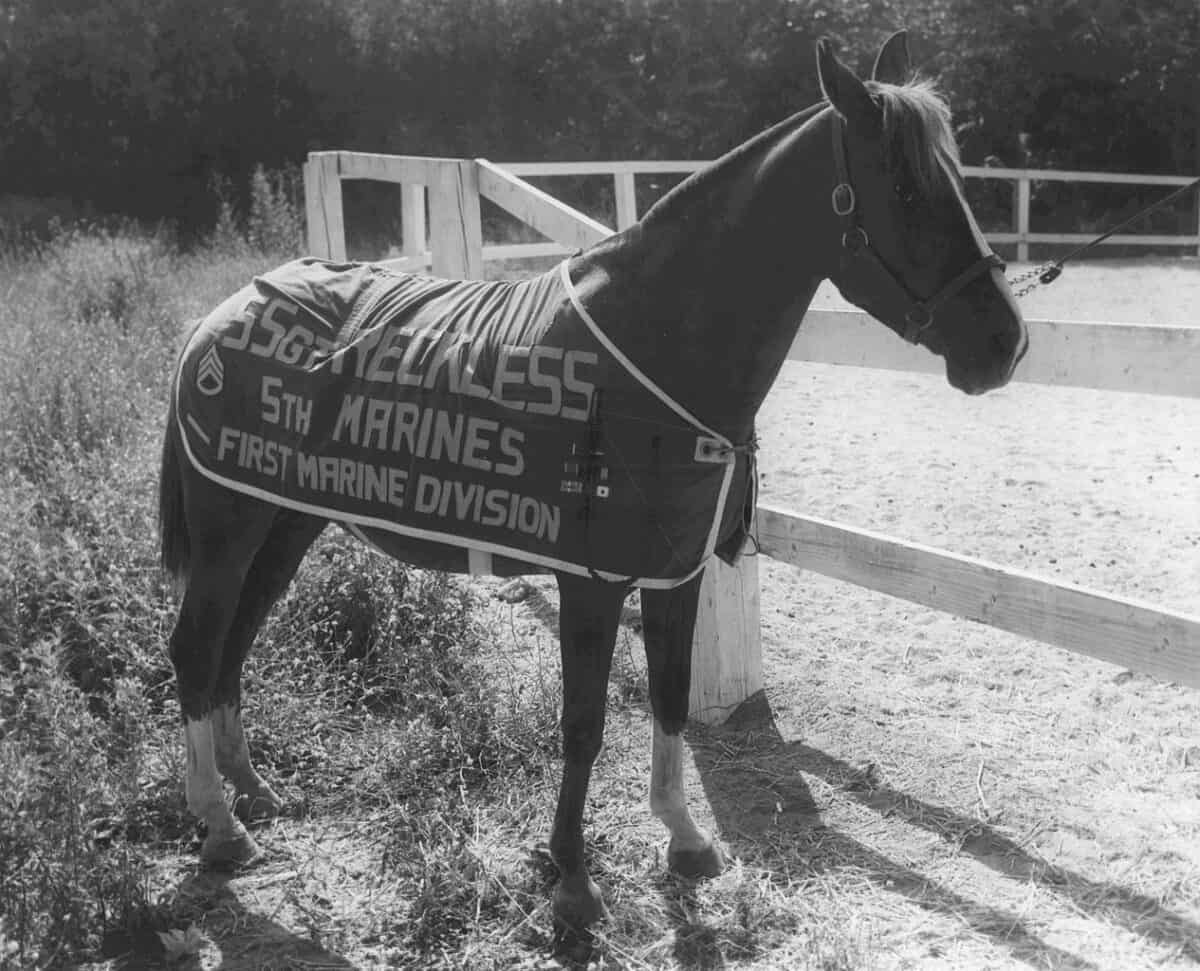
Sergeant Reckless, a small Mongolian mare, served with the United States Marine Corps during the Korean War, becoming one of the most decorated war horses in American history. Purchased in 1952 from a Korean boy who needed money for his sister’s medical care, Reckless was trained to carry ammunition to the front lines and evacuate wounded soldiers. What made her extraordinary was her ability to make these trips without human guidance, navigating through rice paddies and up steep hills while under enemy fire.
During the Battle for Outpost Vegas in March 1953, Reckless made 51 solo trips in a single day, carrying over 9,000 pounds of ammunition and walking more than 35 miles through open rice paddies and up steep mountains. She was wounded twice but continued her mission. For her bravery, she was officially promoted to the rank of Sergeant and awarded two Purple Hearts, a Marine Corps Good Conduct Medal, and several other military honors. After the war, Reckless was brought to the United States, where she lived at Camp Pendleton until her death in 1968. Several statues have been erected in her honor, including one at the National Museum of the Marine Corps in Virginia, commemorating this remarkable equine soldier whose courage saved countless human lives.
Secretariat The Record-Breaking Triple Crown Legend
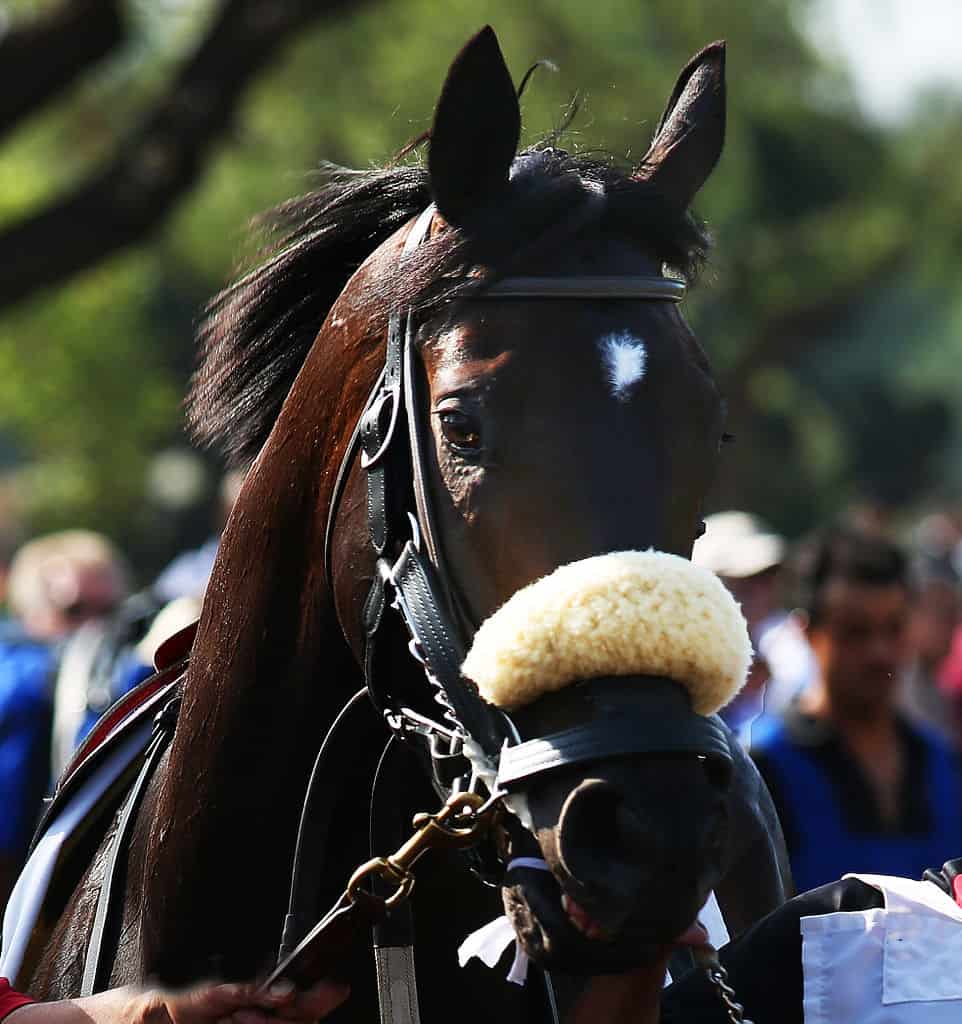
Secretariat, affectionately known as “Big Red,” revolutionized horse racing and captured America’s heart when he won the Triple Crown in 1973, breaking track records that still stand today. Born on March 30, 1970, this chestnut Thoroughbred with three white “socks” and a star on his forehead possessed extraordinary physical attributes, including an unusually large heart (discovered during his autopsy) that gave him exceptional stamina and power. His Triple Crown victory came after a 25-year drought, making his achievement all the more significant.
What truly set Secretariat apart was his performance in the Belmont Stakes, the final leg of the Triple Crown. He won by an astounding 31 lengths, setting a world record time of 2:24 flat for 1½ miles that remains unbroken. The race was so dominant that CBS commentator Chic Anderson famously exclaimed, “Secretariat is widening now! He is moving like a tremendous machine!” Beyond his athletic achievements, Secretariat became a cultural icon, appearing on the covers of Time, Newsweek, and Sports Illustrated in the same week. After his racing career, he sired over 600 foals, many of whom became successful racehorses. When he died in 1989 due to laminitis, he was one of the few non-human athletes to receive widespread obituaries in major newspapers, solidifying his legacy as perhaps the greatest racehorse of all time.
Incitatus Caligula’s Consul Horse and Political Statement
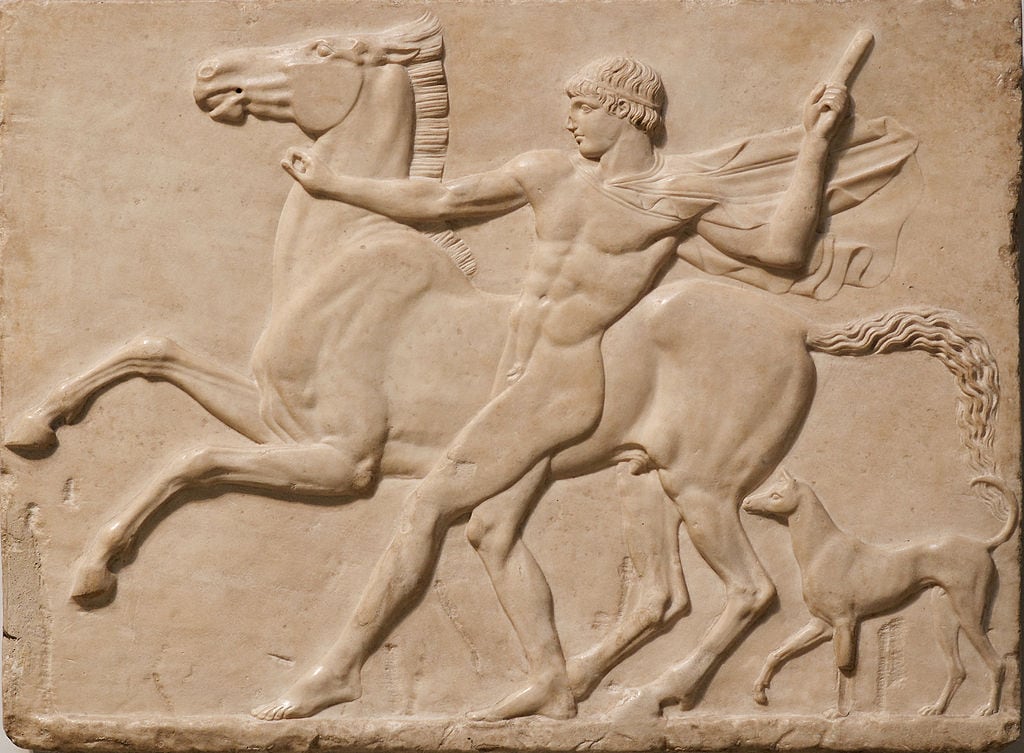
Incitatus, the favorite horse of Roman Emperor Caligula (ruled 37-41 CE), represents one of history’s most notorious examples of imperial excess and possibly political satire. According to ancient historians Suetonius and Cassius Dio, Caligula lavished extraordinary luxuries upon this horse, including a marble stable, ivory manger, purple blankets, and a collar of precious stones. The emperor allegedly assigned Incitatus a house with servants, furniture, and invited guests to dine with the horse at a table where the animal was offered oats mixed with gold flakes.
The most famous claim about Incitatus is that Caligula planned to make him a consul—the highest elected political office in Rome. While this appointment never actually occurred before Caligula’s assassination, the story has endured as evidence of the emperor’s madness or, as modern historians suggest, his contempt for the Roman Senate. Rather than indicating insanity, Caligula’s treatment of Incitatus may have been a calculated political statement, deliberately humiliating senators by suggesting a horse could perform their duties equally well. Whether Incitatus was a symptom of imperial madness or a tool of political theater, this horse’s story provides a fascinating glimpse into Roman politics and has secured his place in historical accounts of excess and power for nearly two millennia.
Copenhagen The Duke of Wellington’s Tireless Waterloo Charger
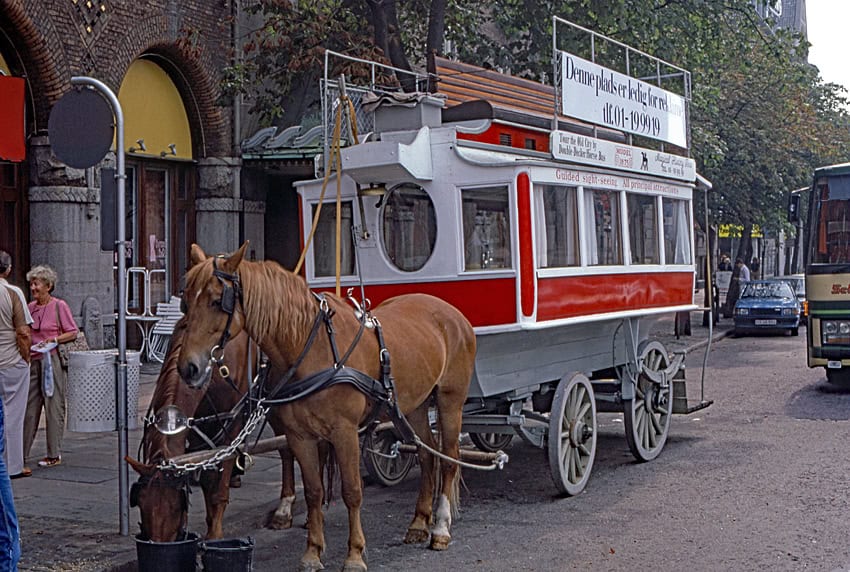
Copenhagen, a bay thoroughbred with Arabian blood, carried the Duke of Wellington through the entire Battle of Waterloo in 1815, one of history’s most decisive military engagements. Named after the British victory at the Battle of Copenhagen, this horse demonstrated extraordinary stamina, carrying Wellington for more than 17 continuous hours during the battle that ended Napoleon’s rule. Despite the exhausting day and the chaos of battle, Copenhagen reportedly still had enough energy to kick at Wellington when the Duke patted his flank after dismounting, prompting Wellington to remark, “Ah, you brute!”
After Waterloo, Copenhagen became a celebrity in England, living out his retirement at Wellington’s estate, Stratfield Saye. He was so beloved that when he died in 1836 at the age of 28, he was given a funeral with full military honors—an extraordinary tribute for a horse. Wellington had him buried with a proper headstone in the estate’s grounds, saying, “There may have been many faster horses, no doubt many handsomer, but for bottom and endurance I never saw his fellow.” Copenhagen’s grave can still be visited today, marked by a memorial that honors his crucial role in one of Europe’s most significant battles. His legacy underscores how a single horse’s performance could influence the outcome of events that reshaped continental power structures.
Man o’ War America’s Greatest Racehorse of the 20th Century
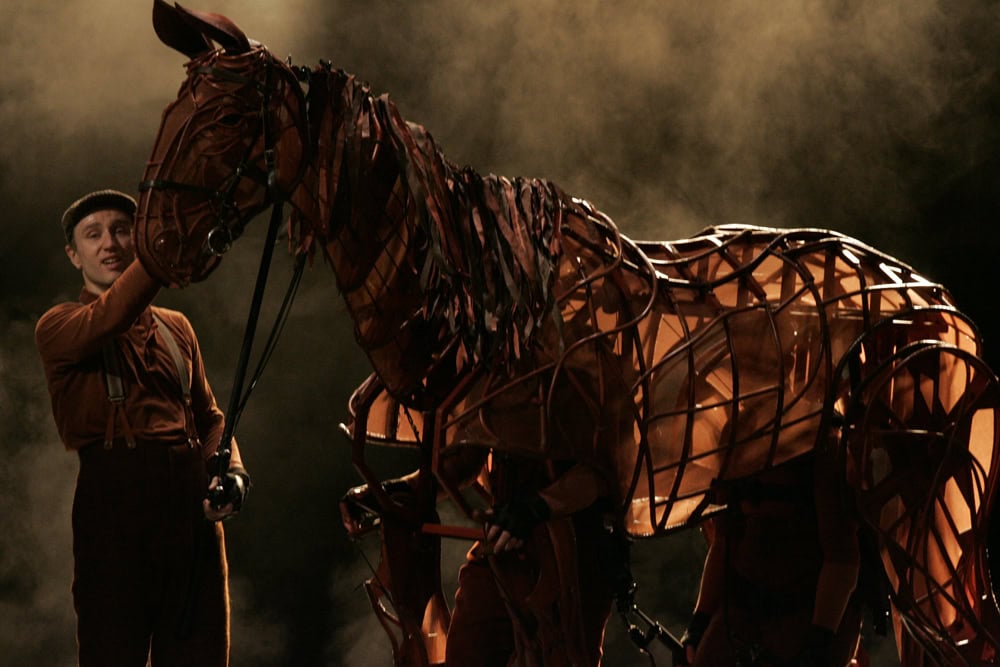
Man o’ War, a striking chestnut stallion with a white star, dominated American horse racing in the early 20th century, becoming the standard by which all racehorses would be measured for generations. Foaled in 1917, he won 20 of his 21 races, with his only loss coming in a controversial race where he had a poor start. Nicknamed “Big Red” (a moniker later shared by Secretariat), Man o’ War routinely carried weights significantly heavier than his competitors yet still set multiple track records and world records, often winning races by enormous margins.
What makes Man o’ War’s legacy particularly remarkable is that he never raced in the Kentucky Derby—the owner didn’t want to run him in early May—yet he is still considered by many experts to be superior to any Triple Crown winner. After retiring to stud in 1921, he sired 64 stakes winners, including War Admiral (1937 Triple Crown winner) and established one of the most influential bloodlines in Thoroughbred history. When Man o’ War died in 1947 at the age of 30, thousands of people attended his funeral, which was broadcast nationally on radio. His remains were initially buried at Faraway Farm in Kentucky before being moved to the Kentucky Horse Park, where a larger-than-life bronze statue marks his grave. The annual Man o’ War Stakes race continues to honor his legacy as what the Blood-Horse magazine ranked as the number one racehorse of the 20th century.
Clever Hans The Horse That Changed Animal Psychology
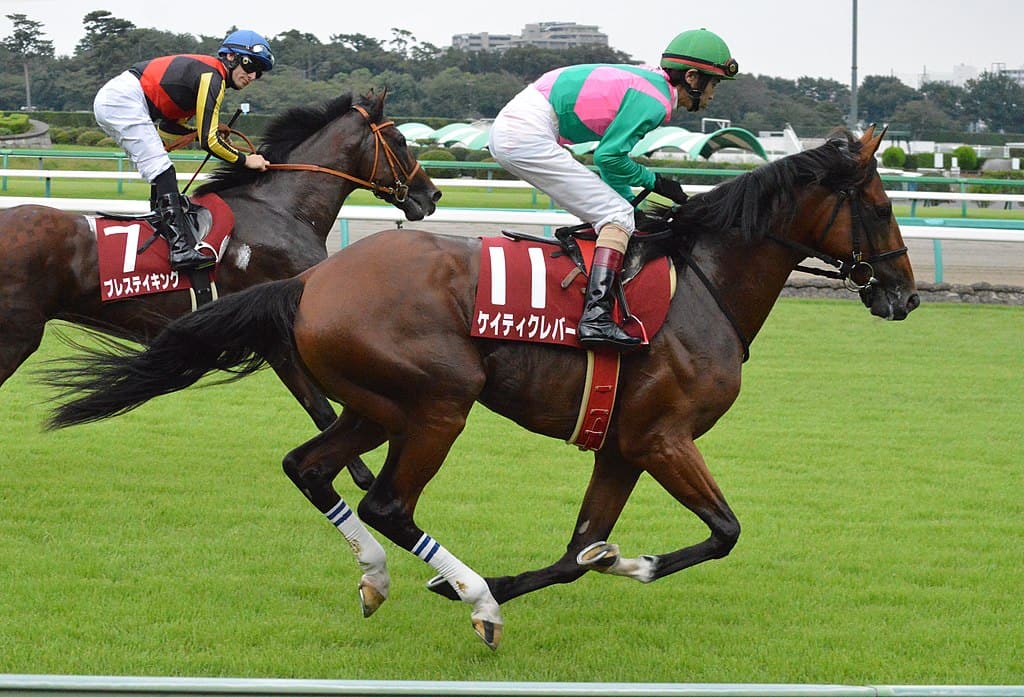
Clever Hans, an Orlov Trotter horse in Germany in the early 1900s, became world-famous for apparently being able to perform complex mathematical calculations, tell time, identify musical notes, and even spell words by tapping his hoof. His owner, Wilhelm von Osten, a mathematics teacher, believed he had successfully educated Hans like a human student. The horse would correctly answer questions by tapping his hoof the appropriate number of times, astounding audiences and challenging assumptions about animal intelligence.
In 1907, psychologist Oskar Pfungst conducted a systematic investigation that revealed the truth: Hans wasn’t actually calculating or reading. Instead, he was responding to subtle, unconscious cues from his questioners, such as slight changes in posture, breathing, or facial expressions that occurred when Hans reached the correct number of taps. This phenomenon, now known as the “Clever Hans Effect,” revolutionized animal cognition research by demonstrating how experimenter bias and unconscious cueing can influence results. Rather than diminishing Hans’s significance, this discovery actually highlighted the horse’s remarkable sensitivity to human body language and established fundamental principles for scientific methodology in animal behavior studies. The legacy of Clever Hans continues in modern psychological research protocols that carefully control for unintentional experimenter cueing, making him one of the most influential animals in the history of psychology.
Barbaro The Tragic Hero Who Transformed Equine Medicine
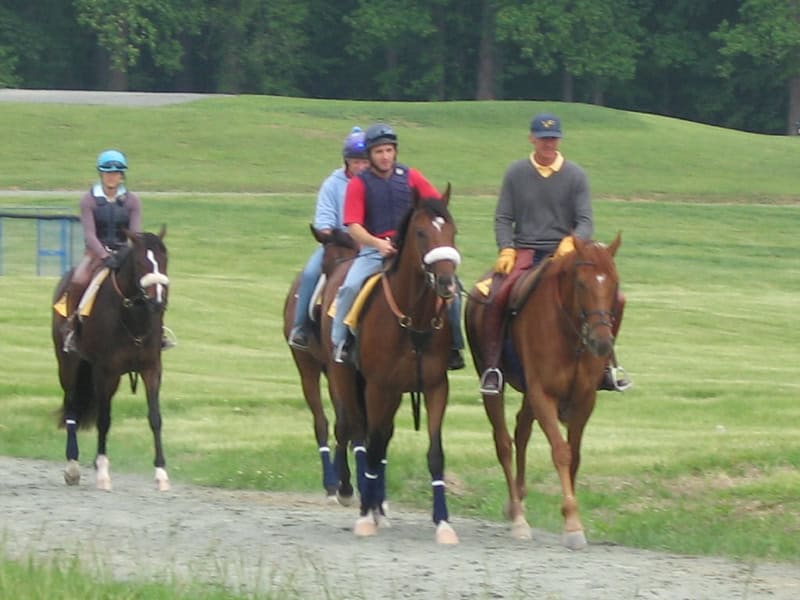
Barbaro, a Kentucky Derby winner whose tragic story captivated America, made perhaps his greatest contribution to the world after his racing career ended. In 2006, this magnificent bay Thoroughbred won the Kentucky Derby by 6½ lengths, the largest margin of victory in over 60 years, and entered the Preakness Stakes as an overwhelming favorite. However, shortly after the start of that race, Barbaro suffered catastrophic fractures to his right hind leg. The nation watched in horror as the previously undefeated champion fought for his life, with his struggle becoming a media sensation that transcended the world of horse racing.
Despite receiving the best veterinary care available at the University of Pennsylvania’s New Bolton Center, including innovative surgical techniques and a supportive leg cast, complications from laminitis forced the difficult decision to euthanize Barbaro in January 2007. His eight-month battle for survival wasn’t in vain, however. The public attention and financial support that flowed from his story led to significant advancements in equine medicine, particularly in the treatment of laminitis and severe fractures. The Barbaro Fund, established during his treatment, has funded numerous research initiatives in equine health. Additionally, his case raised awareness about thoroughbred racing injuries and led to improvements in track surfaces and safety protocols throughout the industry. Though his life ended tragically, Barbaro’s legacy lives on in the countless horses who have benefited from the medical advances inspired by his fight for survival.
Seabiscuit The Underdog Who Inspired Depression-Era America
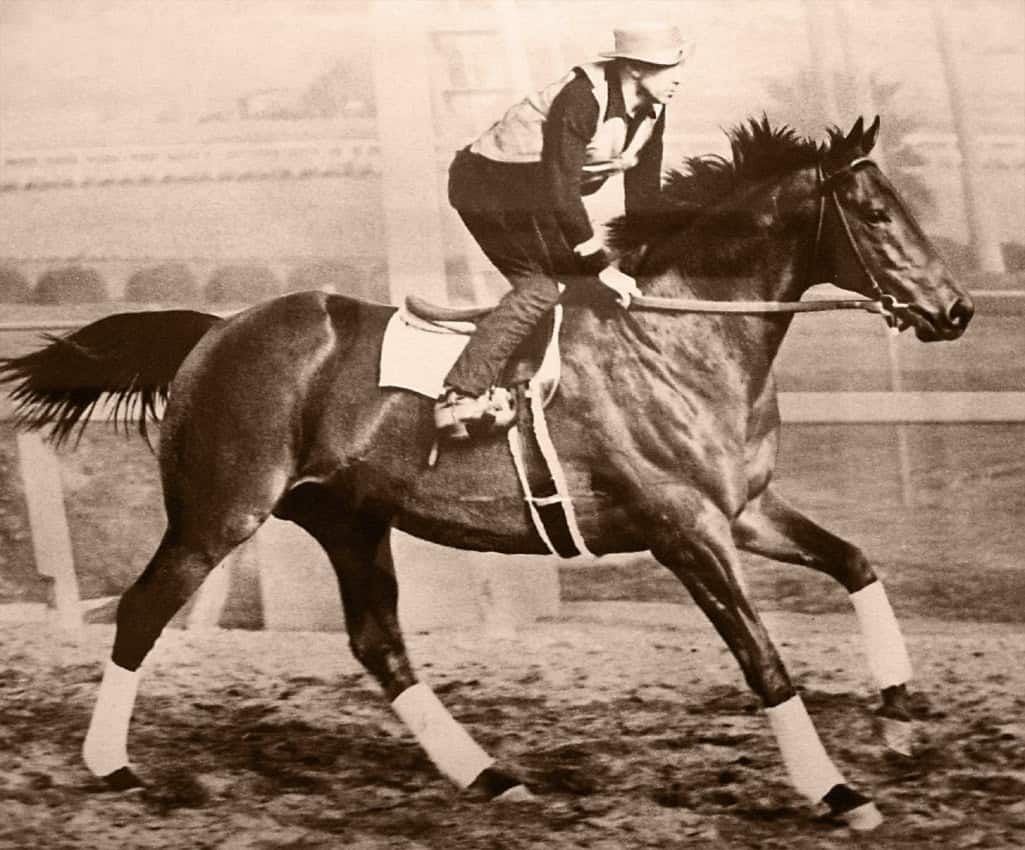
Seabiscuit, a small, knobby-kneed horse with an awkward gait, became an unlikely national hero during the Great Depression, embodying the American spirit of perseverance against overwhelming odds. Initially considered too small and lazy to succeed, Seabiscuit was sold for just $500 and lost his first 17 races. His fortunes changed when he was purchased by Charles Howard and paired with trainer Tom Smith and jockey Red Pollard—all three men who, like the horse, had experienced significant setbacks in their lives. Under their care, Seabiscuit transformed into one of the most successful racehorses of his era.
Seabiscuit’s defining moment came in 1938 when he faced War Admiral, the Triple Crown winner and overwhelming favorite, in a highly publicized match race dubbed “The Match of the Century.” Against all expectations, Seabiscuit defeated War Admiral by four lengths, capturing the nation’s imagination and becoming a symbol of hope for millions of Americans struggling through economic hardship. His story was particularly resonant because he wasn’t an aristocratic champion.
Conclusion:
Across centuries and continents, the horses featured in this article have done far more than gallop across battlefields or racetracks—they’ve carried the weight of empires, the hopes of nations, and the hearts of millions. From the war-tested loyalty of Bucephalus and Marengo to the groundbreaking legacy of Secretariat and Seabiscuit, these fourteen historic horses exemplify courage, endurance, and the profound bond between human and horse.
Whether they led charges into battle, challenged the limits of speed and strength, or unintentionally rewrote the rules of science, each horse left an indelible mark on history. Their stories remind us that history is not shaped by humans alone but often by the animals who stood beside them—steadfast, spirited, and unforgettable. As we honor their legacies, we also recognize the enduring partnership between horse and rider, a relationship that has helped shape civilizations and continues to inspire us today.

As a little kid, I fell in love with nature, wildlife, and animals. Living in the USA, South Africa, Italy, China and Germany gave me the opportunity to discover the world's Wildlife. My favorite animals are Mountain Gorillas, Siberian Tigers, and Great White Sharks.
I'm a certified PADI Open Water Diver, went to Everest Base Camp and Trekked Gorillas in Uganda. I hold a Master of Science in Economics and Finance.
Please send any feedback to feedback@animalsaroundtheglobe.com
- Why the Great Barrier Reef Is the Best Place to Spot Sea Turtles - June 3, 2026
- 2 Animals With Super Sized Body Parts and What They are For - June 3, 2026
- Explore The Azores - June 3, 2026