

While dinosaurs often dominate our collective imagination of prehistoric terrors, Earth’s ancient history harbored creatures far more nightmarish than even the fiercest Tyrannosaurus rex. From oceans teeming with colossal predators to skies ruled by massive flying monsters, these non-dinosaurian beasts would make even the most intimidating dinosaur seem tame by comparison. The prehistoric world was a dangerous place filled with evolutionary experiments that produced some truly terrifying results. Let’s explore fifteen prehistoric creatures that would give any dinosaur a run for its money in the nightmare department.
12. Megalodon The Ocean’s Ultimate Predator

Roaming the ancient oceans between 23 and 3.6 million years ago, Carcharocles megalodon represents the largest shark species to ever exist. With estimated lengths reaching up to 60 feet and weighing as much as 50 tons, this massive predator dwarfed even the great white shark. Its most terrifying feature was its jaw, which could open over 7 feet wide and was lined with serrated teeth measuring up to 7 inches long – each one designed to slice through the toughest whale bone and blubber.
Megalodon’s bite force has been calculated at an astounding 40,000 pounds per square inch, easily the most powerful bite of any animal in Earth’s history. This immense power allowed it to hunt prehistoric whales, seals, and other large marine mammals. Evidence from fossil records shows bite marks on whale vertebrae, suggesting Megalodon would strategically attack the vital organs and flippers of its prey, demonstrating not just brute force but a calculated hunting intelligence that makes it far more terrifying than any dinosaur.
11. Dunkleosteus The Armored Sea Monster

Existing approximately 380-360 million years ago during the Late Devonian period, Dunkleosteus was a genuinely nightmarish creation of evolution. This massive armored fish reached lengths of up to 20 feet and weighed around 1 ton. Unlike modern fish with teeth, Dunkleosteus had a skull and jaws composed of thick bony plates that evolved into razor-sharp edges functioning as self-sharpening blades. These bony “teeth” could exert an estimated bite force of 8,000 pounds per square inch, enough to slice through the armored bodies of other placoderms with ease.
What makes Dunkleosteus particularly terrifying was its feeding mechanism. Scientists believe it could open its jaw in just 1/50th of a second, creating a powerful suction force that would pull prey into its deadly mouth. This combination of speed, power, and armor made it the apex predator of its time. The creature’s face was covered in heavy armored plates that gave it a monstrous appearance, while the rest of its body remained more flexible and unarmored, allowing for the quick movements needed to ambush prey. No dinosaur could match this combination of armored protection and lethal feeding apparatus.
10. Titanoboa The Serpent of Nightmare Proportions
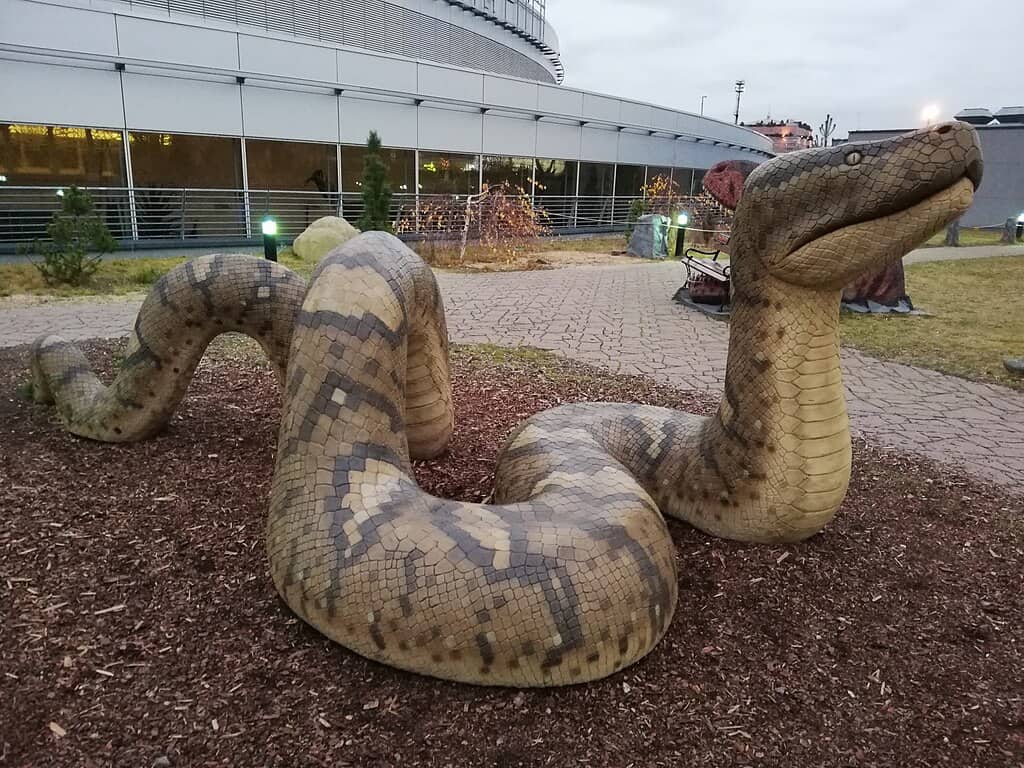
Slithering through the tropical rainforests of what is now Colombia approximately 60-58 million years ago, Titanoboa cerrejonensis holds the title of the largest snake ever discovered. This monstrous serpent reached lengths of up to 50 feet and weighed approximately 2,500 pounds. To put this into perspective, Titanoboa was longer than a school bus and weighed more than many automobiles. Its massive size was likely an adaptation to the extremely warm climate following the extinction of the dinosaurs.
Unlike dinosaurs that relied on legs for movement and attack, Titanoboa utilized constriction to subdue its prey, with a crushing force estimated to exceed 400 pounds per square inch. This would be equivalent to having three full-grown men standing on your chest. Paleontologists believe Titanoboa primarily hunted crocodilians and large fish, swallowing them whole after suffocation. The sheer psychological terror of encountering a snake of this magnitude, moving silently through murky water before striking with lightning speed, arguably makes it more frightening than even the largest theropod dinosaurs.
9. Quetzalcoatlus The Terror from Above
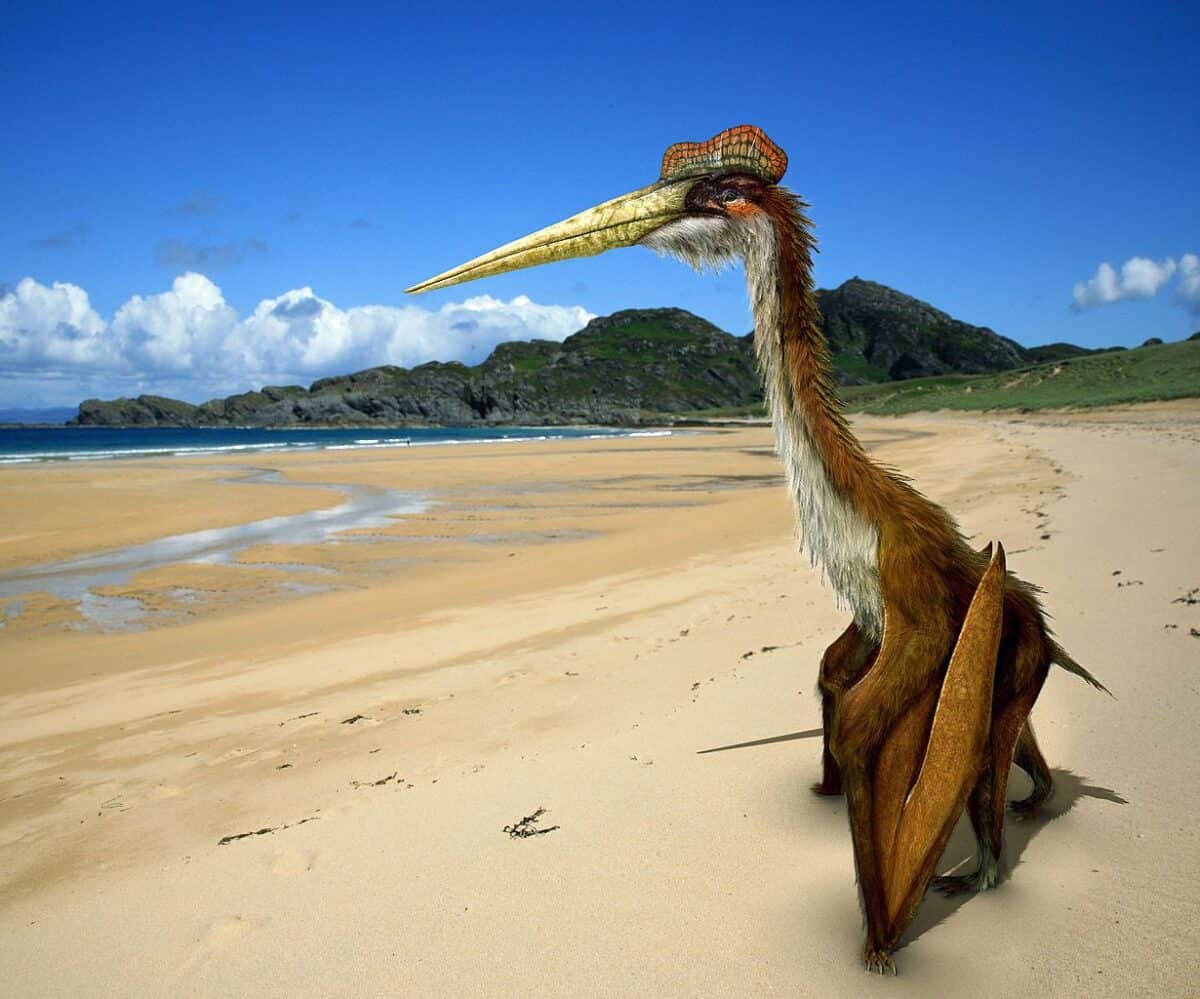
While technically existing alongside dinosaurs during the Late Cretaceous period about 68-66 million years ago, Quetzalcoatlus was not a dinosaur but a pterosaur – a flying reptile. With a wingspan reaching up to 36 feet (nearly the length of a school bus) and standing as tall as a giraffe when on the ground at about 18 feet, it represents the largest known flying animal of all time. Despite its enormous size, its hollow bones kept its weight manageable for flight at around 550 pounds.
What makes Quetzalcoatlus particularly terrifying was its hunting strategy. Unlike many other pterosaurs that primarily caught fish, evidence suggests Quetzalcoatlus was a ground-based predator that used its long, spear-like beak to impale and consume smaller animals, much like modern storks. Imagine a creature the size of a small airplane stalking across the landscape, capable of snatching up prey with startling speed before taking to the skies. Its immense size, combined with the ability to attack from above with almost no warning, makes it far more unpredictable and terrifying than ground-dwelling dinosaurs that could at least be spotted from a distance.
8. Livyatan Melvillei The Whale That Hunted Whales
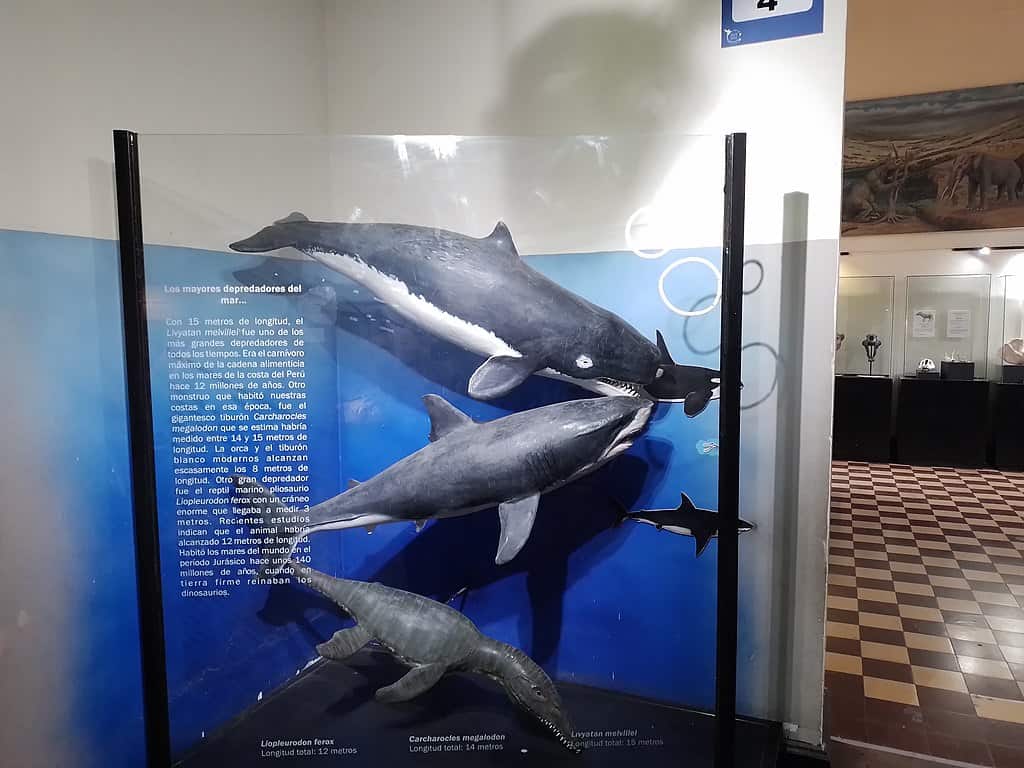
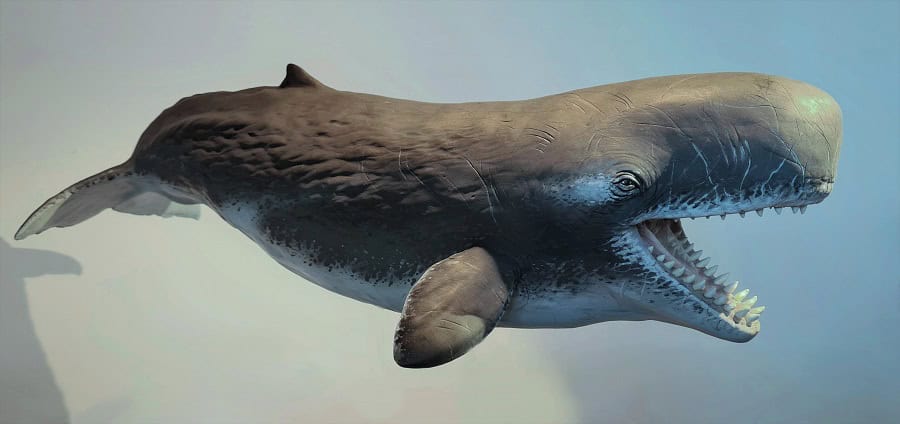
Named after the biblical sea monster Leviathan and Herman Melville, author of “Moby Dick,” Livyatan melvillei was a prehistoric sperm whale that lived approximately 12-13 million years ago during the Miocene epoch. This massive marine predator reached lengths of up to 57 feet and likely weighed around 50 tons. Unlike modern sperm whales that primarily feed on squid, Livyatan was equipped with massive teeth in both its upper and lower jaws, with some measuring over 14 inches in length—the largest teeth of any animal ever known.
What makes Livyatan particularly frightening was its ecological role as an apex predator that hunted other whales. Fossil evidence suggests it preyed upon medium-sized baleen whales, using its massive teeth to tear chunks from its victims. Modern sperm whales have the largest brain of any animal, and Livyatan likely possessed similar intelligence combined with predatory aggression. The combination of enormous size, deadly teeth, high intelligence, and active predatory behavior makes Livyatan far more terrifying than any dinosaur, which generally lacked the cognitive complexity of mammals. Imagine an intelligent killer whale scaled up several times in size, and you begin to grasp how frightening this creature truly was.
7. Sarcosuchus The SuperCroc

Living during the Early Cretaceous period approximately 112 million years ago, Sarcosuchus imperator (“flesh crocodile emperor”) was a distant relative of modern crocodiles that reached truly monstrous proportions. Growing up to 40 feet in length and weighing around 8 tons, it was roughly twice the size of the largest modern saltwater crocodiles. Its massive skull alone measured over 6 feet long and was equipped with more than 100 teeth designed for gripping and holding struggling prey underwater.
What made Sarcosuchus particularly terrifying was its hunting behavior, which likely resembled that of modern crocodilians but on a much larger scale. It would have been an ambush predator, lying motionless in water bodies with only its eyes and nostrils exposed, waiting for dinosaurs and other animals to approach for a drink. Once within range, it would explode from the water with tremendous force, dragging even large dinosaurs into the water to drown them. Unlike many dinosaurs that were restricted to land, Sarcosuchus could hunt effectively in multiple environments, making it nearly impossible to avoid. Its armored hide would have made it virtually invulnerable to attacks from other predators, including large theropod dinosaurs, making it a truly apex predator.
6. Arthropleura The Giant Millipede
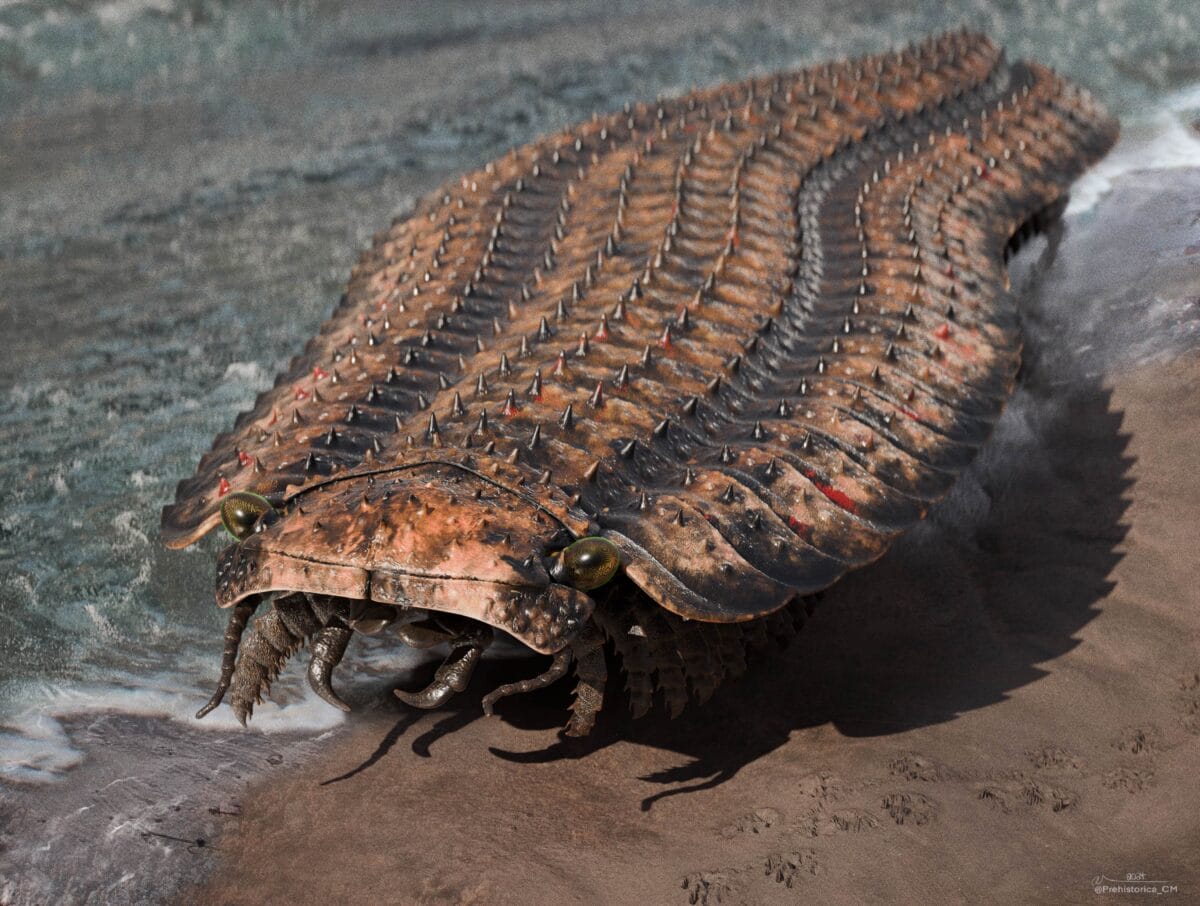
Crawling through the swampy forests of the late Carboniferous period approximately 300 million years ago, Arthropleura represents the largest known land-dwelling invertebrate of all time. This massive arthropod resembled a modern millipede but reached lengths of up to 8.5 feet and widths of nearly 2 feet. While not a predator (fossil evidence suggests it was herbivorous), the sheer size of this creature and its alien appearance would inspire terror in any modern human encountering it.
Arthropleura’s body consisted of around 30 armored segments, each protected by hard plates that would have made it nearly impervious to attacks from contemporary predators. It possessed numerous legs—potentially hundreds—that moved in coordinated waves to propel its massive body through the primeval forests. Its existence was made possible by the oxygen-rich atmosphere of the Carboniferous period, which contained up to 35% oxygen compared to today’s 21%. The psychological horror of encountering a giant, armored millipede larger than a human arguably inspires a more visceral fear reaction than dinosaurs, which at least conform somewhat to familiar body plans of modern reptiles and birds.
5. Jaekelopterus The Sea Scorpion

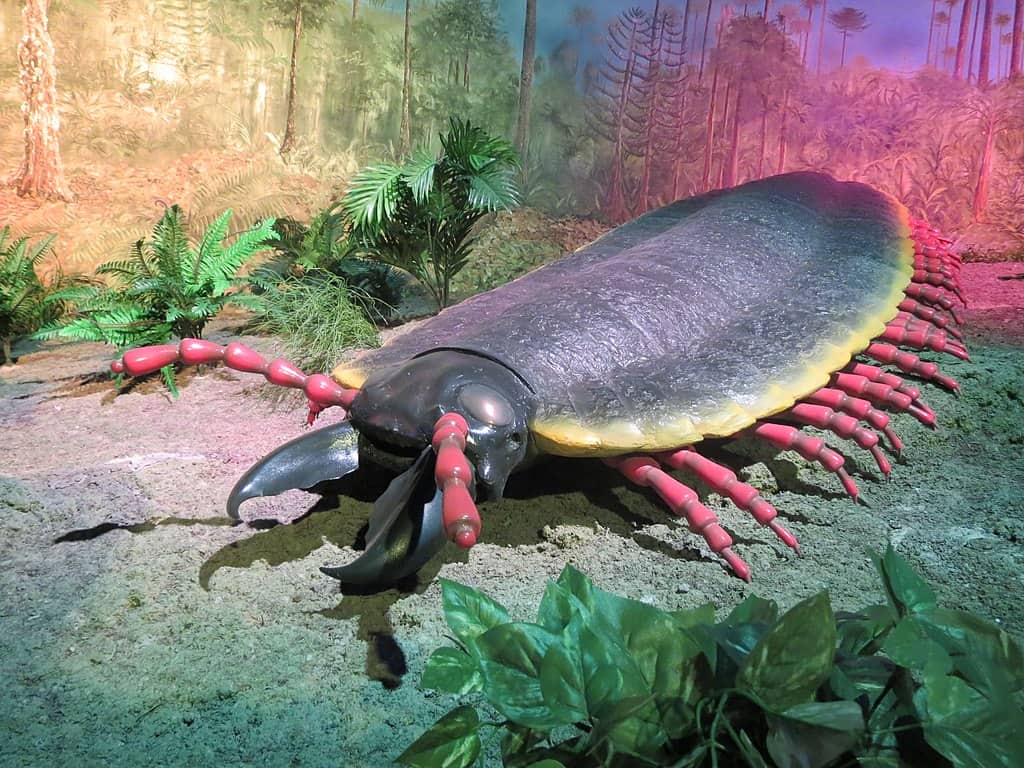
Prowling the shallow seas and freshwater environments of the Devonian period approximately 390 million years ago, Jaekelopterus rhenaniae was the largest arthropod ever to exist. This massive eurypterid, commonly known as a sea scorpion, reached lengths of up to 8.2 feet—larger than many humans. Despite its name, it was not a true scorpion but rather resembled a cross between a scorpion and a lobster, with a segmented body, multiple legs, and most terrifyingly, a pair of massive spiked claws (chelicerae) that extended from the front of its head.
What makes Jaekelopterus particularly nightmarish was its predatory nature. It used its powerful forward claws to grab prey, which likely included primitive fish, other arthropods, and possibly small amphibians. Its exoskeleton was reinforced with a thick cuticle that would have made it virtually impervious to attacks from contemporary predators. While dinosaurs at least resemble animals familiar to us today, Jaekelopterus represents something truly alien—a giant aquatic scorpion-like creature that would inspire primal terror in any human unfortunate enough to encounter one. The combination of its armored body, massive size, and predatory adaptations makes it far more nightmare-inducing than many dinosaurs.
4. Basilosaurus The Ancient Sea Serpent

Gliding through the oceans of the late Eocene epoch approximately 40-34 million years ago, Basilosaurus (“king lizard”) was originally mistaken for a reptile when first discovered, though scientists later identified it as one of the earliest fully aquatic whales. This massive marine predator reached lengths of up to 60 feet and possessed a serpentine body unlike modern whales, with a small head equipped with both sharp, pointed incisors for grasping prey and serrated cheek teeth for slicing through flesh.
What makes Basilosaurus particularly frightening was its hunting style and appearance. Unlike modern whales that have lost their hind limbs entirely, Basilosaurus retained small vestigial hind legs, giving it an even more serpentine appearance. It was a solitary, active predator that hunted sharks, large fish, and even other marine mammals. Its elongated body would have moved in sinuous, snake-like motions through the water, and fossil evidence suggests it may have been capable of attacking prey much larger than itself. The combination of its serpentine appearance, massive size, and active predatory nature makes Basilosaurus resemble the sea serpents of maritime legend, potentially explaining some ancient sailor tales and evoking a primal fear that few dinosaurs could match.
3. Andrewsarchus The Largest Land Carnivore Mammal
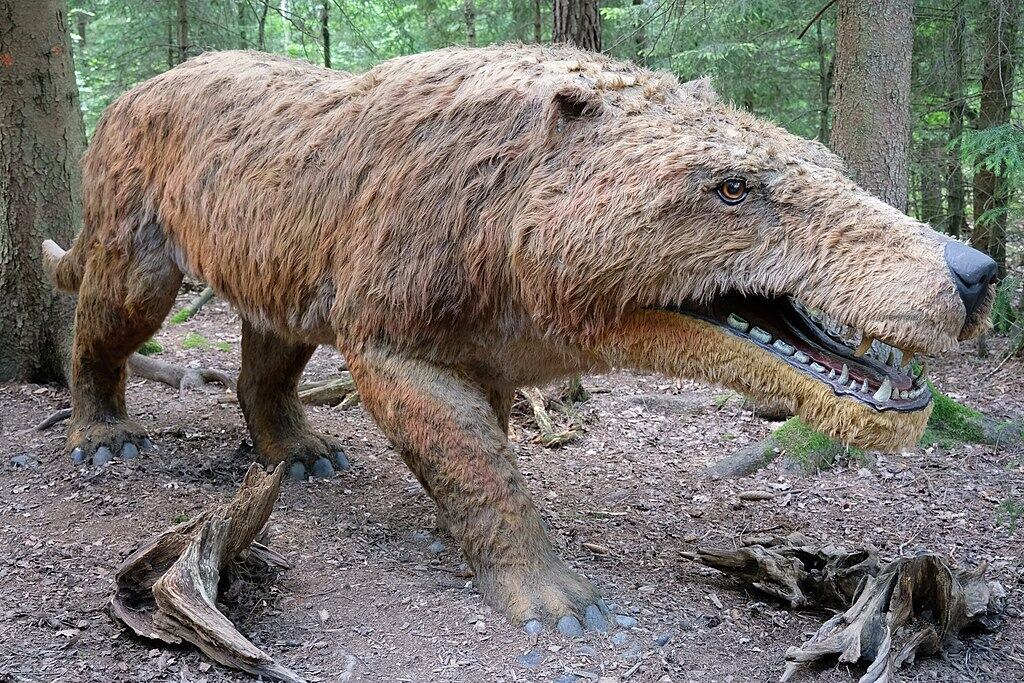
Stalking the plains of Central Asia during the middle Eocene epoch approximately 45-36 million years ago, Andrewsarchus mongoliensis may have been the largest terrestrial carnivorous mammal ever to walk the Earth. Though known from only a single massive skull measuring nearly 3 feet long, scientists estimate this beast could have reached lengths of up to 12 feet and stood 6 feet tall at the shoulder. Its skull structure resembles that of modern wolves and bears but on a much larger scale, with powerful jaw muscles that could deliver a crushing bite.
What makes Andrewsarchus particularly terrifying was its combination of size, power, and intelligence. As a mammal, it likely possessed greater intelligence than any dinosaur predator, with problem-solving abilities and sensory perception more similar to modern carnivores like wolves and big cats. Its teeth indicate it was an omnivore capable of cracking bones, shells, and consuming a wide variety of food sources. This dietary flexibility, combined with its massive size and mammalian intelligence, would have made it an extremely adaptable and efficient predator. The thought of encountering a carnivorous mammal with the size of a rhinoceros but the predatory instincts and intelligence of a wolf creates a unique kind of terror that dinosaurs, with their relatively smaller brains, cannot match.
2. Helicoprion The Buzzsaw Shark

Swimming through the oceans of the Permian period approximately 290-270 million years ago, Helicoprion represents one of the most bizarre predatory fish in Earth’s history. This cartilaginous fish, related to modern sharks and rays, possessed perhaps the strangest dental arrangement ever evolved: a spiral-shaped whorl of teeth resembling a circular saw blade. For decades, scientists debated where exactly this tooth whorl was positioned, with recent research suggesting it was located in the lower jaw, with the teeth rotating upward and inward during feeding.
What makes Helicoprion particularly nightmarish is the mechanized, almost industrial nature of its feeding apparatus. As it opened its mouth to feed, new teeth would rotate upward from the back of the whorl, while older teeth would rotate inward, effectively creating a conveyor belt of slicing teeth. This mechanism would have allowed it to efficiently slice through the soft-bodied prey like squid, pulling them deeper into its mouth with each bite. Reaching lengths of up to 25 feet, Helicoprion represents a truly alien evolutionary experiment unlike anything alive today. While dinosaurs might be frightening, they at least have analogues in modern reptiles and birds; nothing in our modern experience prepares us for the horror of a massive fish with a circular saw in its mouth, making it uniquely terrifying.
1. Anomalocaris The Cambrian Terror

Patrolling the ancient oceans of the Cambrian period approximately 520-490 million years ago, Anomalocaris (“abnormal shrimp”) was the first super-predator in Earth’s history. Though measuring only up to 3 feet in length—modest compared to other creatures on this list—Anomalocaris was a giant in its time, dwarfing most other Cambrian organisms. Its bizarre anatomy included two large, flexible appendages at the front of its head used for grasping prey, a circular mouth lined with serrated plates arranged like a pineapple ring, and a flattened body with swimming flaps along the sides.
What makes Anomalocaris particularly frightening was its dominance in an alien ecosystem and its truly foreign appearance. Its compound eyes contained up to 16,000 lenses each, providing it with excellent vision to spot prey in the ancient seas. The circular mouth could contract like a camera shutter to crush the shells of trilobites and other early armored creatures. Nothing in our modern experience resembles this creature, making it more disturbing in many ways than dinosaurs, which at least conform to familiar vertebrate body plans. Anomalocaris represents an evolutionary path so alien that it creates a unique form of horror—a reminder that life on Earth once took forms completely unlike anything familiar to us today.
Conclusion:
While dinosaurs often steal the spotlight, many lesser-known prehistoric creatures were just as—if not more—terrifying. From enormous sea scorpions and armor-plated fish to flying reptiles with wingspans rivaling small planes, these ancient animals pushed the limits of evolution in ways that still boggle the mind. With bizarre anatomies, crushing jaws, and survival adaptations straight out of a nightmare, these species ruled land, sea, and sky long before—or even after—the age of dinosaurs.
Exploring these prehistoric terrors reminds us that Earth’s history is filled with creatures more fearsome and fascinating than fiction. They may be gone, but their fossilized remains tell stories of a planet shaped by survival, dominance, and dramatic change. As we uncover more about these forgotten giants, we not only learn about the past—we gain insight into the resilience and adaptability of life itself.

As a little kid, I fell in love with nature, wildlife, and animals. Living in the USA, South Africa, Italy, China and Germany gave me the opportunity to discover the world's Wildlife. My favorite animals are Mountain Gorillas, Siberian Tigers, and Great White Sharks.
I'm a certified PADI Open Water Diver, went to Everest Base Camp and Trekked Gorillas in Uganda. I hold a Master of Science in Economics and Finance.
Please send any feedback to feedback@animalsaroundtheglobe.com
- Why the Great Barrier Reef Is the Best Place to Spot Sea Turtles - June 3, 2026
- 2 Animals With Super Sized Body Parts and What They are For - June 3, 2026
- Explore The Azores - June 3, 2026