


Have you ever stumbled across a spider skimming fearlessly over a pond, and felt your jaw drop in disbelief? The world of arachnids is packed with surprises, and perhaps nothing is more astonishing than spiders that seem to defy the rules—dancing over water like tiny, eight-legged magicians. For animal lovers and curious minds alike, the idea of a spider “swimming” or gliding across water is equal parts fascinating and eerie. Get ready to meet a dozen of these remarkable spiders, each with its own unique way of moving on water. Whether you find them creepy or captivating, these spiders showcase nature’s creativity in the most unexpected places.
12. Raft Spider

The raft spider, also called Dolomedes fimbriatus, is a European marvel that can be found near ponds and marshes. It has a knack for skating across the water’s surface, thanks to its long, hydrophobic legs that repel water. When threatened, the raft spider doesn’t just run—it can actually dive underwater and hide among submerged plants, holding a bubble of air. Its ability to hunt water-dwelling insects and even small fish is a testament to how perfectly it’s adapted to its watery home.
11. Six-spotted Fishing Spider

The six-spotted fishing spider, or Dolomedes triton, is a North American native often seen resting on lily pads or reeds by the water’s edge. This spider is famous for its hunting skills, capturing tadpoles, insects, and sometimes even small fish. What’s truly impressive is how it can “row” itself across ponds using its legs, much like a miniature boatman. Its grayish color and subtle green markings help it blend in, making it a stealthy swimmer and an efficient predator.
10. Giant Fishing Spider

If you ever spot a really big spider gliding across a lake in the Americas, it might be the giant fishing spider, Dolomedes okefinokensis. This species can reach up to three inches across and isn’t shy about its size. With its broad, strong legs, it easily distributes its weight and avoids sinking, even when chasing after prey. It’s bold, fast, and surprisingly graceful, showing just how athletic spiders can be when water is involved.
9. Striped Fishing Spider

The striped fishing spider, Dolomedes scriptus, is a standout thanks to its beautiful light and dark stripes. Living mostly near streams and ponds, this spider uses its stripes as camouflage while it patrols the water’s edge. It can run quickly on the water to escape predators or to ambush prey. Its movements are so smooth that it almost appears to glide, making it one of the more elegant spiders on this list.
8. White-banded Fishing Spider

Dolomedes albineus, known as the white-banded fishing spider, sports a stunning white band across its cephalothorax. Found in the southeastern United States, this spider spends its time near slow-moving waters. It’s a patient hunter, waiting for vibrations on the water’s surface before darting out to snatch its meal. Its ability to walk on water comes from special hairs on its legs that trap air, creating buoyancy and keeping it perfectly balanced.
7. Nursery Web Spider

The nursery web spider, Pisaura mirabilis, is best known for its intricate parenting, but its water-walking skills are just as mesmerizing. Found in Europe and Asia, this spider can quickly cross streams and puddles when searching for food or mates. Its slender legs and light body help it stay afloat, and it often uses its agility to escape danger. Watching a nursery web spider dart across a pond is like seeing a tightrope walker in action—graceful and fearless.
6. Brownish Fishing Spider

Dolomedes tenebrosus, or the brownish fishing spider, is a master of disguise. Its brown, mottled coloring lets it hide among wet leaves and reeds. This spider is common in North America and is especially active at dusk. It can run across the water to chase down insects, sometimes even leaping from plant to plant. The brownish fishing spider’s quick, jerky movements are both captivating and a little spooky if you’re not expecting them.
5. Dark Fishing Spider

The dark fishing spider, Dolomedes tenebrosus, is often mistaken for a wolf spider due to its similar coloring. However, this spider prefers to hang out near water, where it uses its legs to sense the slightest ripple. When it spots prey, it races across the water’s surface with lightning speed. It can also submerge itself to avoid predators, using its hydrophobic hairs to trap air and stay underwater for minutes at a time.
4. Water Spider

The water spider, Argyroneta aquatica, is truly one of a kind. It builds its own underwater “diving bell” from silk and air bubbles, living almost its entire life beneath the surface of ponds and streams in Europe and Asia. When it needs to travel, it can swim with powerful strokes or scuttle across the water like a ghost. Watching a water spider swim is like seeing a miniature submarine in action—resourceful and ingenious.
3. Green Lynx Spider

While the green lynx spider, Peucetia viridans, is more famous for its vibrant color and garden-dwelling habits, it’s also a surprising water-walker. When threatened, it can leap onto the water’s surface and use its long legs to skim away from danger. Its agility allows it to escape predators and move between plants near water. The green lynx spider’s ability to “swim” is another reminder that nature loves to break its own rules.
2. White-tailed Spider

The white-tailed spider, Lampona cylindrata, is most often found in Australia. It isn’t strictly aquatic, but when faced with flooded habitats or when in need of escape, it can dart across the surface of water. Its slim build and long legs help keep it afloat, and it’s surprisingly quick for such a small creature. This spider’s willingness to take to the water in a pinch makes it a fascinating example of adaptability.
1. Wolf Spider
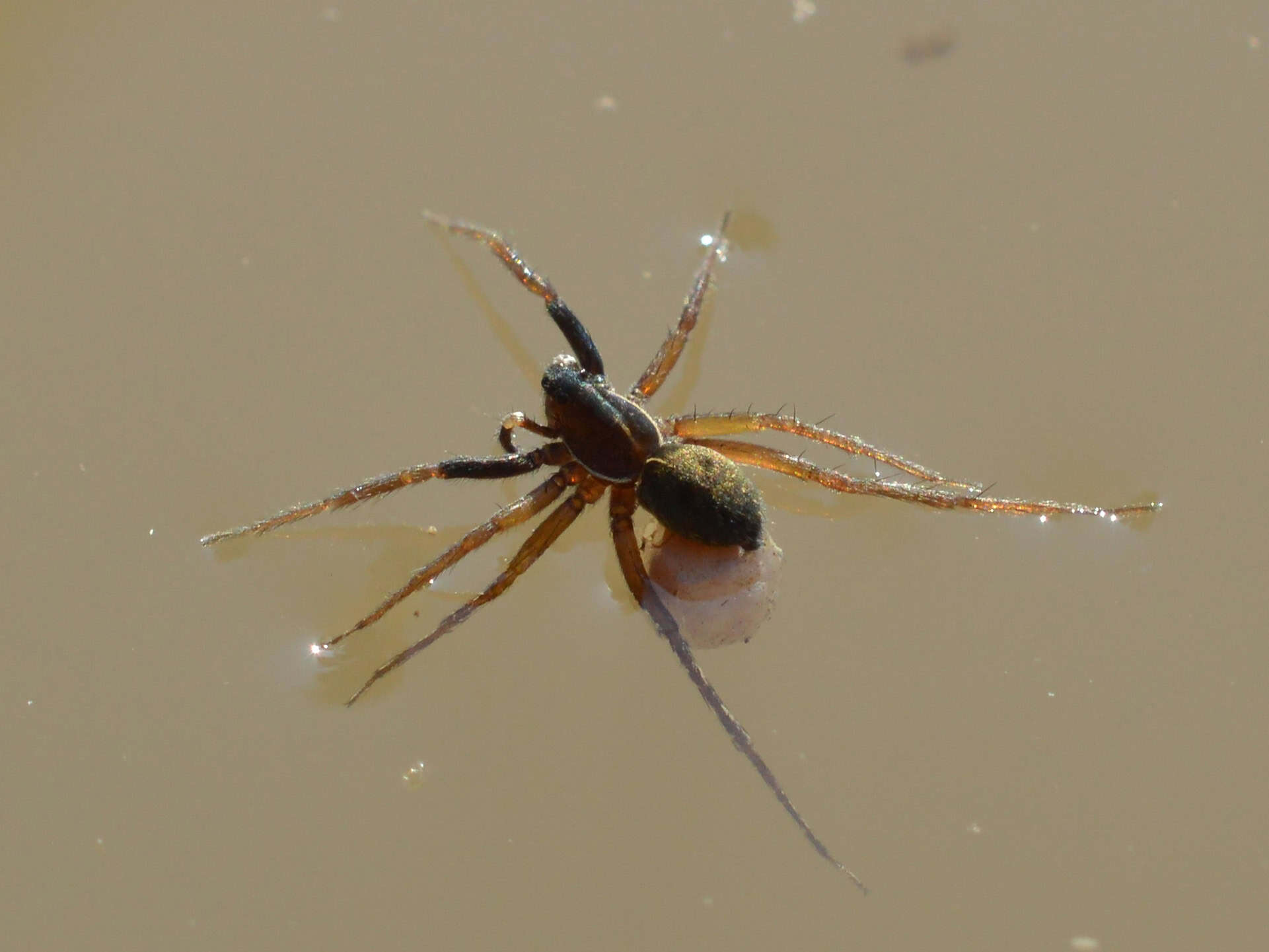
Wolf spiders, members of the family Lycosidae, might not seem like obvious water-walkers at first glance. However, these spiders are famous for their ability to survive in a variety of environments—including the edges of lakes, rivers, and marshes. When necessary, wolf spiders can “swim” across short stretches of water, using a combination of paddling and floating. Their resilience and versatility are legendary, making them one of the most widespread spiders on the planet.
Conclusion

Spiders that can “swim” or walk on water reveal just how adaptable and extraordinary these creatures are. Their unique abilities not only help them survive in challenging habitats but also add a splash of wonder to the natural world. Next time you spot a ripple on a quiet pond, remember: it might just be one of these remarkable spiders showing off its aquatic skills. Did you expect spiders to be such talented swimmers?

As a little kid, I fell in love with nature, wildlife, and animals. Living in the USA, South Africa, Italy, China and Germany gave me the opportunity to discover the world's Wildlife. My favorite animals are Mountain Gorillas, Siberian Tigers, and Great White Sharks.
I'm a certified PADI Open Water Diver, went to Everest Base Camp and Trekked Gorillas in Uganda. I hold a Master of Science in Economics and Finance.
Please send any feedback to feedback@animalsaroundtheglobe.com
- 12 Weird and Wonderful Panda Behaviors - June 15, 2026
- The Mute Swan A Graceful and Silent Beauty - June 15, 2026
- Top 10 Animals With the Most Surprising Parenting Roles - June 15, 2026