


Self-recognition in a mirror is considered a hallmark of advanced cognitive abilities and self-awareness. Known as the “mirror self-recognition test” (MSR), this experiment was pioneered by psychologist Gordon Gallup Jr. in 1970 and has since become a standard way to assess whether animals possess some form of self-awareness. In this test, researchers place a mark on an animal where it can only be seen through a mirror. If the animal uses the mirror to investigate the mark on itself rather than treating the reflection as another animal, it passes the test. Surprisingly few species have demonstrated this ability, which was once thought to be exclusively human. Let’s explore the fascinating world of animals that can recognize themselves in mirrors and what this tells us about animal cognition and consciousness.
What Is Mirror Self-Recognition?
Mirror self-recognition (MSR) is the ability to recognize oneself in a mirror reflection. This cognitive skill is considered evidence of self-awareness and has long fascinated scientists studying animal cognition. During the standard MSR test, researchers place a colored mark on an animal in a location it cannot see directly, such as its forehead. When presented with a mirror, if the animal uses the reflection to investigate the mark on its own body rather than treating the mirror image as another animal, it demonstrates self-recognition. The test goes beyond mere response to reflections—many animals react to mirrors but treat the reflection as another individual, often displaying social or aggressive behaviors. True self-recognition involves understanding that the mirror shows oneself, not another animal, which requires a sophisticated level of cognitive processing and some concept of self.
13. Humans

Humans typically develop mirror self-recognition between 18 and 24 months of age, making this ability one of the earliest indicators of self-awareness in our development. When toddlers reach this stage, they begin to understand that the image in the mirror represents themselves rather than another child. Before this age, babies often treat their reflection as a playmate. Interestingly, this developmental milestone appears across cultures, suggesting it’s a fundamental aspect of human cognitive development. The emergence of self-recognition coincides with other developments in self-awareness, such as using personal pronouns and showing signs of embarrassment. While self-recognition is nearly universal among neurotypical humans past toddlerhood, some individuals with certain cognitive conditions may not develop this ability in the same way or timeline.
12. Great Apes

Great apes—including chimpanzees, bonobos, orangutans, and gorillas—were the first non-human animals shown to pass the mirror self-recognition test. Chimpanzees, our closest living relatives, demonstrate the most robust self-recognition abilities among non-human primates. When marked with odorless dye on their faces, they often use mirrors to examine and touch the marks, clearly displaying self-recognition. Bonobos show similar capabilities, while orangutans also consistently pass mirror tests. Gorilla results have been more variable, with some individuals like Koko (the famous gorilla known for sign language) showing clear signs of self-recognition while others do not. This variability has led researchers to consider whether testing conditions, individual differences, or social factors might affect performance. The self-recognition abilities in great apes align with their complex social structures and problem-solving skills, suggesting a connection between social intelligence and self-awareness.
11. Dolphins

Bottlenose dolphins were the first non-primate species to demonstrate mirror self-recognition, a breakthrough discovery that expanded our understanding of self-awareness beyond mammals with hands. In experiments conducted by Diana Reiss and Lori Marino, dolphins were marked with temporary ink on parts of their bodies they couldn’t see directly. When given access to mirrors, the dolphins positioned themselves to view the marked areas and spent significantly more time examining those regions compared to unmarked areas. What makes this finding particularly remarkable is that dolphins must translate their primarily acoustic way of perceiving the world into a visual understanding of their reflection. Their ability to pass the mirror test despite this sensory translation challenge highlights their exceptional cognitive flexibility. Dolphins’ self-recognition abilities correlate with their complex social structures, advanced communication systems, and problem-solving capabilities.
10. Elephants

Elephants joined the self-recognition club in 2006 when researchers at the Bronx Zoo demonstrated that Asian elephants could recognize themselves in mirrors. In the study, an elephant named Happy repeatedly used her trunk to touch a white X painted on her forehead while looking in a mirror—behavior specifically directed at investigating the mark rather than the mirror itself. This finding is particularly significant given elephants’ massive brains (the largest of any land animal) and their complex social structures. Elephants’ self-recognition abilities align with their other remarkable cognitive traits, including tool use, problem-solving skills, empathy, and apparent understanding of death. Their ability to pass the mirror test despite having very different body structures and sensory systems from primates suggests that self-awareness may have evolved independently in different lineages with advanced cognition, rather than being inherited from a common ancestor.
9. Magpies

The discovery that magpies can recognize themselves in mirrors was groundbreaking, as they became the first non-mammalian species to pass the MSR test. In a 2008 study by Helmut Prior and colleagues, black-billed magpies received a colored mark on their necks (visible only in a mirror). When presented with mirrors, the birds used their reflections to guide attempts to remove the marks with their beaks. This finding is particularly remarkable considering that birds’ brains are structured very differently from mammalian brains and that the last common ancestor between birds and mammals lived over 300 million years ago. Magpies are known for their intelligence among birds—they can recognize individual human faces, create and use tools, and possess exceptional spatial memory. Their self-recognition abilities suggest that complex cognitive functions like self-awareness can evolve independently in different evolutionary lineages when similar ecological and social pressures are present.
8. Cleaner Wrasse Fish

In a surprising 2018 study published in PLOS Biology, researchers reported that cleaner wrasse fish (Labroides dimidiatus) appeared to pass a modified version of the mirror self-recognition test. When marked with a colored gel on their throats and presented with mirrors, the fish attempted to scrape the marks off by rubbing against surfaces—behavior they didn’t display when unmarked or when presented with transparent gel. This finding sparked significant debate in the scientific community because fish were previously considered to lack the neural complexity needed for self-awareness. Some scientists suggest that the fish might be displaying a sophisticated form of learning rather than true self-recognition, while others argue the results meet the objective criteria for passing the mirror test. If validated through further research, this discovery would force a radical rethinking of fish cognition and the neural requirements for self-awareness, as fish brains are structured very differently from the mammalian brain regions typically associated with self-recognition.
7. Manta Rays

Emerging research suggests that manta rays may join the exclusive club of animals capable of self-recognition. While definitive mirror tests with standardized marking procedures have not been conclusively documented in scientific literature, preliminary observations show that mantas display unusual behaviors when encountering mirrors. Unlike most fish that treat reflections as other individuals, mantas appear to perform repetitive movements while observing their reflections, suggesting possible self-inspection. With brain-to-body mass ratios similar to some birds and the largest brains of any fish, mantas possess the neural equipment potentially necessary for complex cognition. They also demonstrate other sophisticated behaviors, including remarkable spatial memory, individual recognition of conspecifics, and cooperative feeding strategies. Researchers are continuing to develop appropriate testing protocols that account for the unique biology and behavior of these ocean giants to determine whether they truly possess self-recognition abilities.
6. Orcas (Killer Whales)

Orcas, or killer whales, have demonstrated behaviors consistent with mirror self-recognition in captive settings. These highly intelligent marine mammals, which belong to the dolphin family, have been observed closely examining marks placed on their bodies when viewing themselves in mirrors. During informal observations at marine parks, orcas have been seen inspecting marked areas on their bodies that would only be visible through reflection, though these observations haven’t always followed standardized research protocols. Given their extraordinarily complex brains, elaborate social structures, and sophisticated hunting strategies requiring coordination and planning, their potential for self-awareness aligns with their other advanced cognitive abilities. Orcas possess the largest brain of any dolphin species and maintain complex cultural traditions that vary between pods, further supporting the likelihood of their self-awareness. Formal, peer-reviewed studies specifically focused on orca mirror self-recognition would help confirm these preliminary observations.
5. Pigs

Domestic pigs have shown promising responses to mirrors that suggest potential self-recognition abilities, though research findings remain somewhat ambiguous. In studies conducted at the University of Cambridge, pigs used mirrors to find hidden food and showed signs of understanding the reflective properties of mirrors. When marked and presented with mirrors, some pigs demonstrated increased touching of the marked areas, though not consistently enough to unequivocally confirm self-recognition by traditional standards. Pigs possess cognitive abilities comparable to dogs and even some primates—they can use mirrors functionally, understand symbolic language, play video games with joysticks, and solve complex problems. Their neural architecture includes relatively well-developed frontal lobes, brain structures associated with self-awareness in other species. Some researchers suggest that the traditional mirror mark test might need modification to account for pigs’ unique sensory prioritization (smell over sight) and natural behaviors, as the current test methodology was developed primarily with visual-dominant primate behaviors in mind.
4. Corvids (Ravens and Crows)

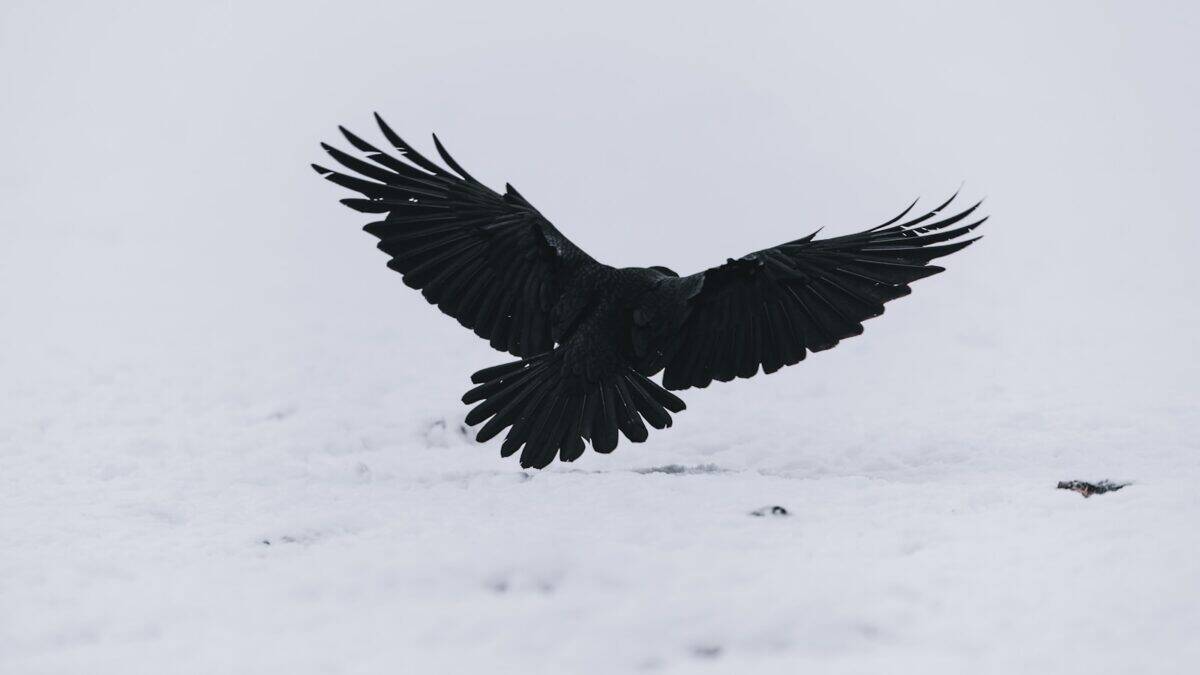
Following the discovery of self-recognition in magpies (which belong to the corvid family), other corvids including ravens and New Caledonian crows have shown behaviors suggesting possible mirror self-recognition, though results vary between species and individuals. Ravens have demonstrated understanding of mirror properties by using reflections to locate objects, and some studies suggest they may have rudimentary self-recognition abilities. New Caledonian crows, famous for their sophisticated tool use, show advanced understanding of causal relationships that might support self-recognition capabilities. Corvids possess remarkably complex brains for their size, with neural densities comparable to some primates despite their much smaller overall brain volume. Their neural architecture includes an expanded nidopallium caudolaterale, which serves functions similar to the mammalian prefrontal cortex associated with self-awareness. The potential for self-recognition across multiple corvid species reinforces the theory that intelligence and self-awareness can evolve independently in diverse lineages facing similar cognitive challenges, regardless of brain structure.
3. Rhesus Macaques

While rhesus macaques initially appeared to fail the classic mirror self-recognition test, more recent research suggests they may possess a form of self-recognition under specific conditions. In standard tests, these monkeys typically treat their reflections as other individuals. However, when researchers at the Shanghai Institutes for Biological Sciences trained macaques with mirrors and provided them with painful laser stimuli (that could only be seen in mirrors), the monkeys learned to use mirrors to locate and examine these spots on their bodies. This suggests that while they may not spontaneously demonstrate self-recognition like great apes, they possess the neural capacity for it when provided with specific experiences. Some scientists debate whether this represents true self-recognition or a sophisticated form of conditioning. The findings raise important questions about whether self-awareness exists on a spectrum rather than as a binary trait and whether traditional testing methods may underestimate cognitive abilities in species with different sensory priorities or social behaviors.
2. Clark’s Nutcrackers
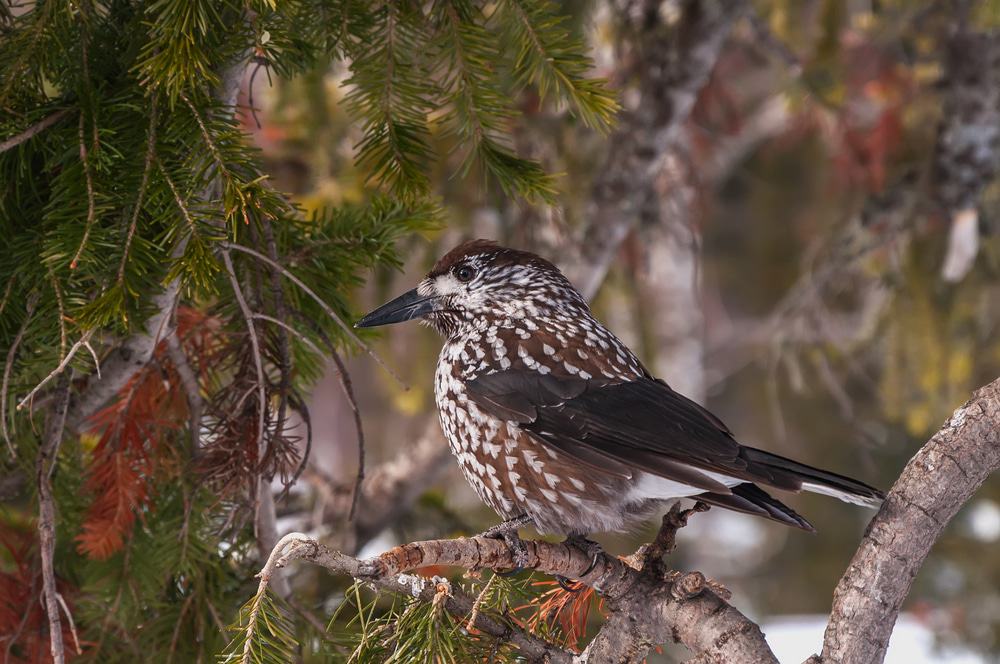
Clark’s nutcrackers, relatives of crows and jays in the corvid family, have shown promising signs of self-recognition in experimental settings. In studies conducted at the University of Wisconsin-Madison, these birds demonstrated behaviors suggesting they could distinguish their reflections from other birds. When presented with mirrors, some nutcrackers performed self-directed behaviors rather than social responses typically directed at other birds. While research on this species is not as extensive as with some other corvids, their remarkable spatial memory—they can remember the locations of thousands of seed caches over many months—suggests sophisticated cognitive abilities that could support self-awareness. Like other corvids, nutcrackers have relatively large brains for their body size with neural densities that support complex cognition. Their potential self-recognition abilities would further support the growing evidence that advanced cognition has evolved independently in the corvid lineage, representing a fascinating case of convergent evolution with primates.
1. Horses

Recent research suggests that horses may possess some level of self-recognition capabilities. In a 2021 study published in the journal Animal Cognition, researchers applied marks to horses’ faces and observed their responses to mirrors. While not all horses in the study displayed clear self-directed behavior, several individuals showed significantly increased touching of the marked areas when they could see themselves in mirrors compared to control conditions. This suggests that at least some horses may understand that their reflection represents themselves. Horses have sophisticated social structures and demonstrate other complex cognitive abilities including recognizing human facial expressions, understanding pointing gestures, and remembering solutions to problems for extended periods. Their large brains and long history of co-evolution with humans may have selected for enhanced cognitive abilities including potential self-awareness. While horse self-recognition remains a developing area of research, these preliminary findings suggest another potential addition to the list of self-aware species.
The Significance and Limitations of Mirror Self-Recognition

Mirror self-recognition represents just one facet of the complex spectrum of self-awareness in animals, and the scientific community continues to debate its precise meaning and limitations. While MSR has traditionally been viewed as a key indicator of self-awareness, some researchers argue that it primarily tests visual self-recognition, potentially underestimating species that rely more heavily on other senses like smell or hearing. Many animals that fail the traditional mirror test may possess other forms of self-awareness better suited to their evolutionary history and ecological niche. Moreover, the growing list of species that can recognize themselves in mirrors challenges our understanding of consciousness evolution, suggesting that self-awareness may have evolved independently multiple times rather than appearing in a single evolutionary lineage. As research continues to refine testing methods and expand to more species, our understanding of animal consciousness grows increasingly nuanced, reminding us that cognition exists on a continuum rather than in discrete categories. This expanding body of research not only illuminates animal minds but also raises profound ethical questions about how we treat species that may experience the world with awareness similar to our own.

As a little kid, I fell in love with nature, wildlife, and animals. Living in the USA, South Africa, Italy, China and Germany gave me the opportunity to discover the world's Wildlife. My favorite animals are Mountain Gorillas, Siberian Tigers, and Great White Sharks.
I'm a certified PADI Open Water Diver, went to Everest Base Camp and Trekked Gorillas in Uganda. I hold a Master of Science in Economics and Finance.
Please send any feedback to feedback@animalsaroundtheglobe.com
- Why the Great Barrier Reef Is the Best Place to Spot Sea Turtles - June 3, 2026
- 2 Animals With Super Sized Body Parts and What They are For - June 3, 2026
- Explore The Azores - June 3, 2026