
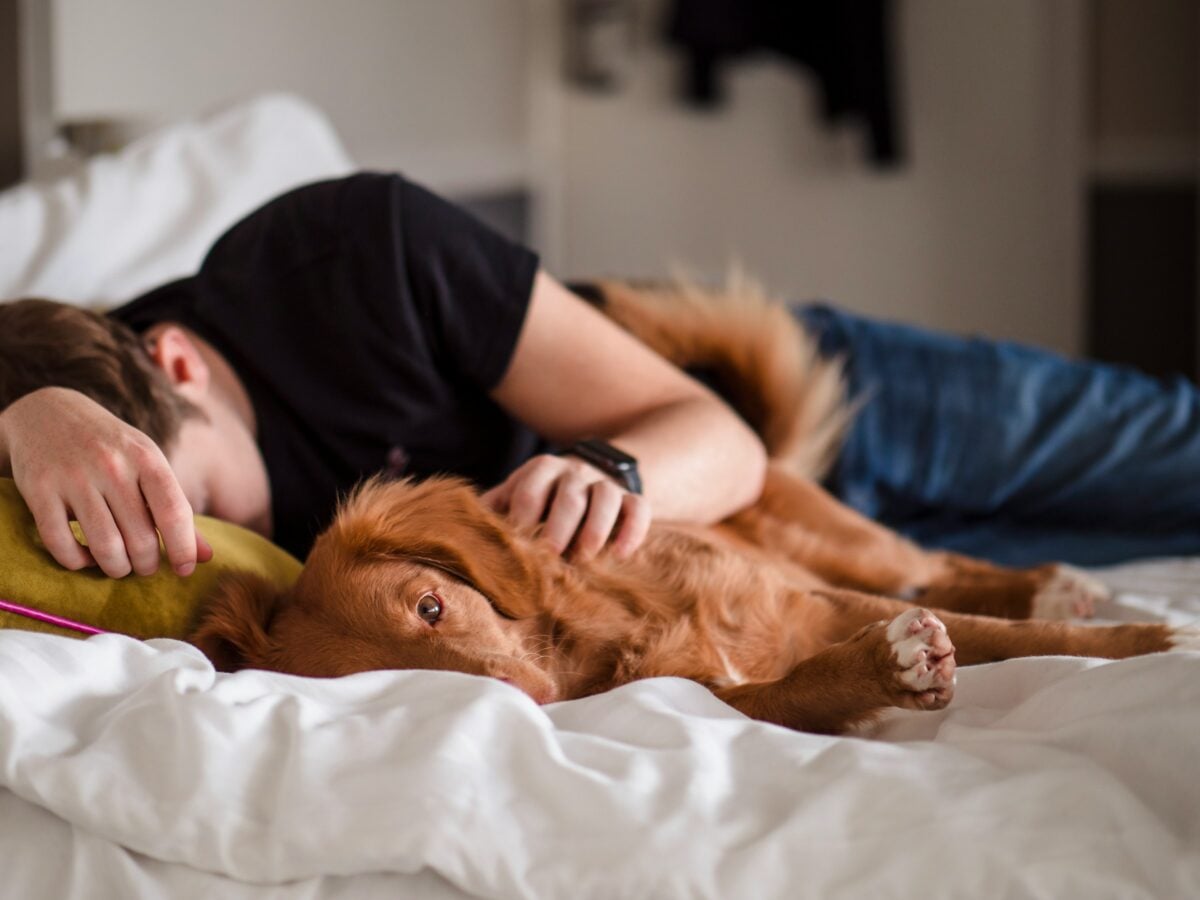
You turn off the lights, your dog flops down with a sigh, and you assume the night is basically over for both of you. That’s the story almost every owner believes. It’s also almost completely wrong.
While you’re dead asleep, your dog is quietly patrolling the house, timing your breathing, replaying their whole day in twitchy little dreams, and sometimes hiding pain they’d never show you in daylight. Some of it is sweet. Some of it is a little unsettling once you actually know what you’re looking at. And a few of these habits are exactly the kind of early warning signs vets wish more owners had caught before it turned into a real problem.
#1 – The Silent House Patrols You Never Actually See
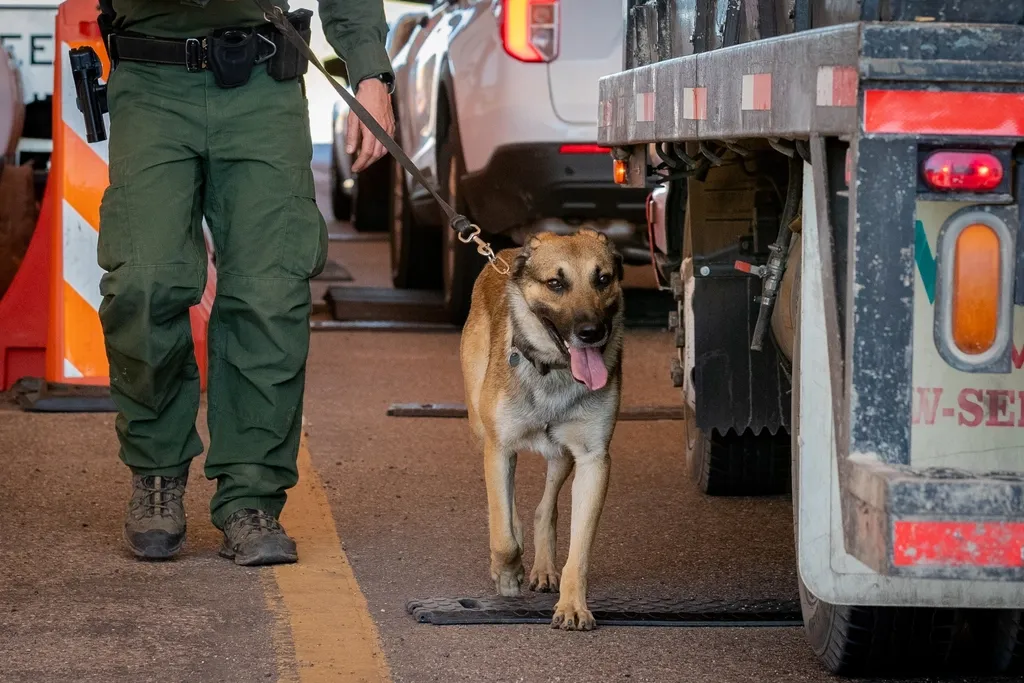
Your dog probably isn’t just passed out until morning. Many dogs quietly run the same slow, silent route through the house several times a night: down the hallway, past the windows, a quick sniff at the front door, a loop through the kitchen.
It looks aimless, but it isn’t. They’re checking scent changes, faint noises, and anything “new” that showed up that day, logging what safe smells like so danger stands out later. In herding, guardian, and working breeds especially, this isn’t anxiety at all – it’s your dog quietly deciding they’re the one on duty tonight.
#2 – Listening to Every Tiny Sound While Looking Fully Asleep
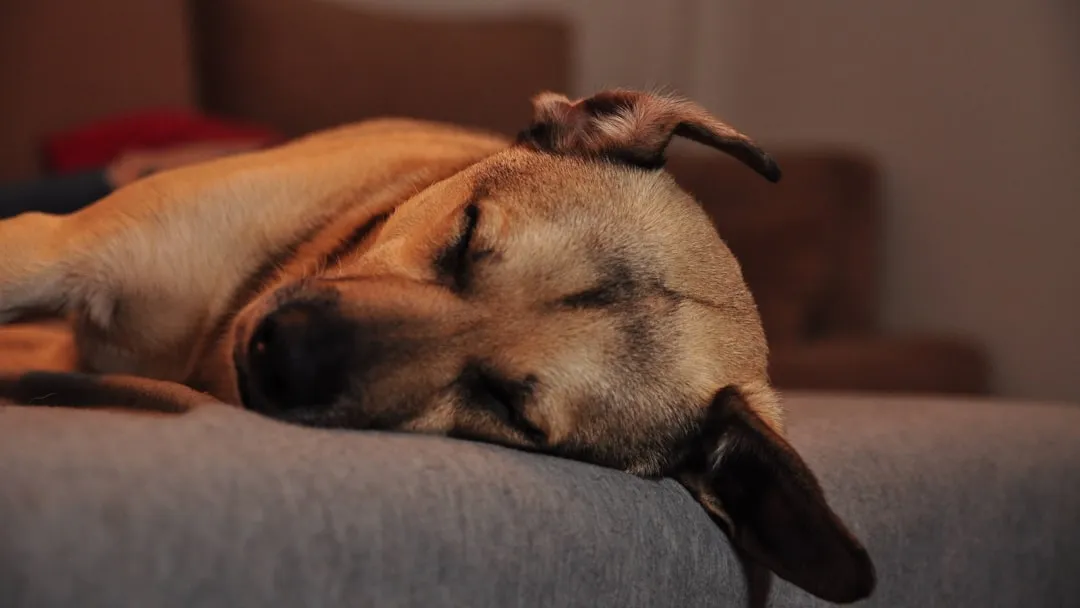
“Sleeping dog” does not mean “switched off.” Your dog’s hearing stays shockingly active even in light sleep, especially after dark. Their ears can move independently to catch a car door down the street, pipes creaking in the walls, or a neighbor’s late-night TV.
That’s the one ear flick, the head pop-up for a second, then back down. They’re sorting normal house noise from something new, which is exactly why some dogs bark at 3 a.m. at “nothing.” To them, it was never nothing. If your dog seems wired at night, your home might genuinely be loud in ways only their ears can pick up – white noise, rugs, and heavier curtains can quiet the noise they feel obligated to track.
Fast Facts
- Dogs can hear frequencies up to roughly 45,000 Hz, while the average human tops out around 20,000 Hz
- Some dogs can pick up certain sounds from up to four times farther away than people can
- Each ear has close to 18 separate muscles, letting them swivel toward a noise without waking their whole body
- Even during light sleep, a dog’s auditory system stays partially “on watch” for anything unfamiliar
#3 – Replaying Their Whole Day in Dog Dreams

Twitching paws, soft whines, little tail flicks – none of that is random. Dogs enter dream sleep and replay pieces of their day, the same way we do. Their brain activity during REM suggests real memory processing: the walk, the dog they barked at, the doorbell that startled them.
When they “run” in their sleep, they’re not chasing imaginary monsters. They’re rehearsing motor patterns and emotions from the last 24 hours. Here’s the part most owners miss: frequent, intense yelping or panicked movement can mean stress or unresolved anxiety, not cute dreaming – especially after big triggers like fireworks, visitors, or a vet trip.
#4 – Quietly Checking That You’re Still Breathing
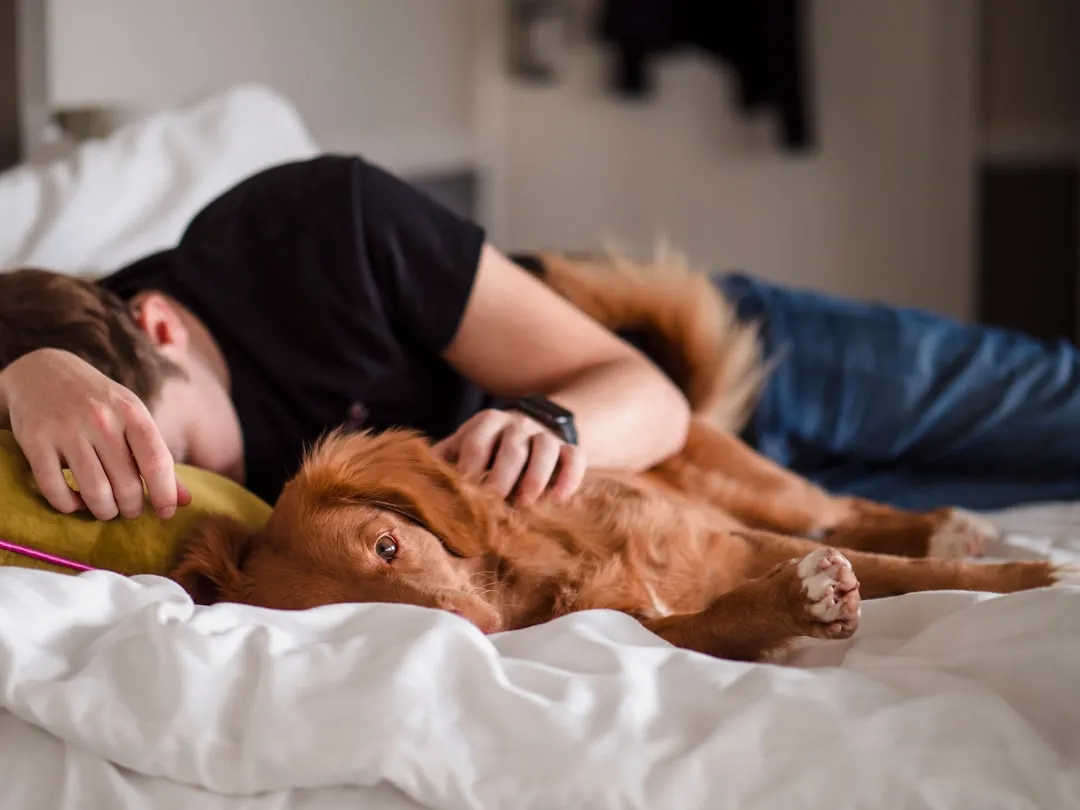
Many dogs do something almost eerie at night: they come over just to listen to you breathe. A cold nose near your face, a weight settling on the bed edge, waking up to them simply staring – it’s not creepy, it’s a check-in. “Is my person okay?”
In multi-person homes, some dogs even rotate between family members like they’re doing rounds. It’s part attachment, part protective instinct, part pure pack logic. If your dog suddenly stops sleeping near you and drifts away instead, pay attention – that shift can signal discomfort, pain, overheating, or emotional withdrawal, and it’s often more telling than the clingy version ever is.
#5 – The Secret Licking and Chewing Rituals You Never Notice

Once the house goes quiet, a lot of dogs start their own private rituals – some self-care, some closer to self-harm. Licking a paw or leg for minutes at a stretch, chewing one specific spot, gnawing a toy like it owes them money.
A little nighttime grooming is normal. Constant, targeted licking is often a hidden sign of anxiety, boredom, allergies, or pain, and owners usually only notice once the fur is stained or the skin is raw. Night removes every daytime distraction, so physical discomfort hits hardest exactly when everyone assumes the dog is peacefully asleep.
Quick Compare
- Normal: Brief grooming, a few licks, then settling back down
- Worth watching: Repeated licking of the same spot night after night
- Time to check in: Raw skin, hair loss, or licking that escalates when the house is quiet
#6 – Claiming One Door or Window as Their Personal Post

Not all nighttime guarding looks the same. Some dogs pick one specific spot – front door, top of the stairs, under a particular window – and quietly claim it every single night, not because it’s comfy, but because it’s a choke point where they can hear, smell, and block the most ground.
- Hear and smell the most from that exact spot
- Sit between “outside” and “their people”
This is common in breeds with protective instincts, and it can look sweet from the couch. But a stiff body, low growls at any nighttime movement, and an inability to relax unless they’re “on duty” isn’t calm – it’s stress wearing a cute disguise, and it usually needs better daytime outlets, not more security work.
#7 – Quietly Rearranging Their Sleep Around Your Chaos
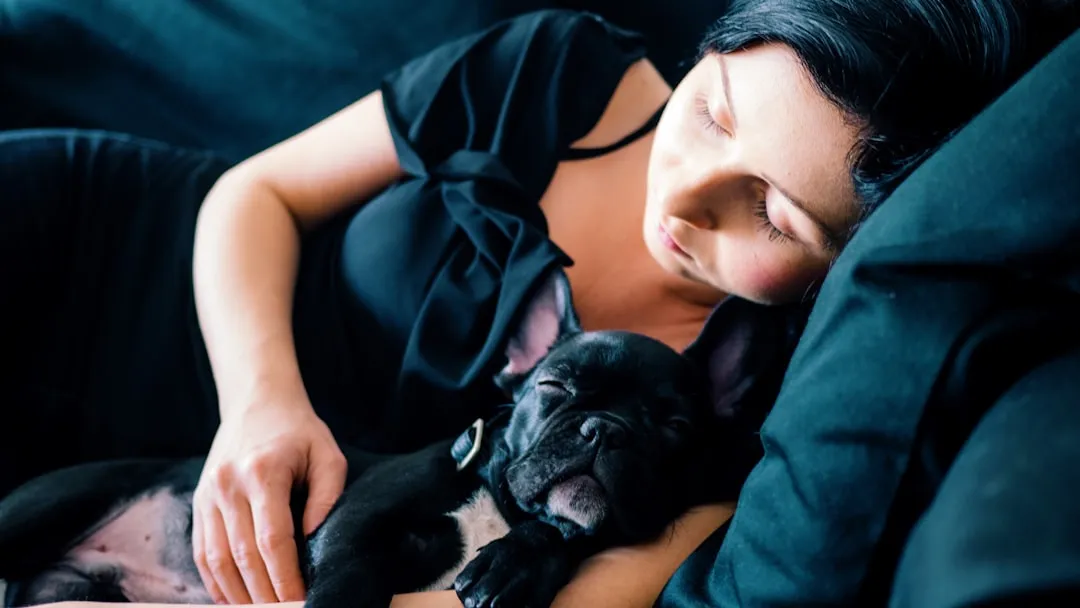
Most owners don’t realize their dog’s sleep pattern is far more flexible than ours – and dogs secretly bend theirs around your messy schedule. Stay up late scrolling, wake early for work some days, sleep in on others? Your dog usually mirrors it, napping when you sit still and waking the second you move.
Over time that adds up to a tired, clingy, or irritable dog – not a lazy one. The dog trailing you from room to room at 1 a.m. isn’t just devoted; they may be quietly sacrificing their own deep sleep because they’re that tuned in to you. A boring, consistent lights-out routine does more for them than most people ever give it credit for.
Worth Knowing
- Dogs are naturally polyphasic sleepers, dozing in multiple short stretches rather than one long block like humans
- Most adult dogs need roughly 12 to 14 hours of sleep across a full day and night
- A predictable bedtime routine helps dogs settle into deeper sleep instead of staying half-alert to your movements
#8 – Staring Into the Dark at Things You Genuinely Cannot Sense

That unnerving moment when your dog locks eyes on the hallway or a dark corner at 2 a.m.? It’s rarely ghosts. Dogs hear frequencies humans can’t, see motion far better in low light, and track scent shifts as air currents move through the house overnight.
So the “random” stare is often a distant car door, a mouse in the wall, or shadows shifting outside. That said, persistent frantic staring paired with pacing or whining – especially in older dogs – can point to cognitive decline, vision loss, or anxiety. What looks like spooky behavior is sometimes the earliest medical red flag you’ll get.
#9 – Running a Quiet Nighttime Heist on Your Belongings

Some dogs wait until the house goes still to run their own little burglary. Socks, shoes, remote controls, a kid’s stuffed animal – anything that smells like you or gets a reaction becomes fair game.
- Building a small “nest” of stolen items in their bed or crate
- Hiding treasures under couches or blankets
- Carrying objects back and forth like tiny puppies
A dog that only steals when nobody’s watching is usually filling a connection gap, wanting your scent close when you’re unavailable. But when it turns compulsive, especially in under-stimulated dogs, waking up to a crime scene every morning is really your dog asking for more structured engagement during the day.
#10 – The “Panic Hour” Nobody Warns You About

Many dogs have a specific window – late evening or the dead of night – when their anxiety quietly spikes. Owners chalk it up to “restless” or “needy,” but it’s often a genuine panic hour hiding in plain sight.
- Pacing from room to room
- Clinginess, panting, or following you to the bathroom
- A sudden urge to go outside, then doing nothing once out there
Nighttime strips away distractions: pain feels worse, lonely feels lonelier, sound feels sharper. Dogs with separation anxiety, noise sensitivity, or past trauma often show their worst symptoms after dark, and they usually need a consistent pre-bed routine and calming activities – not punishment, and not being ignored.
#11 – Managing Real Pain in Total Silence

One of the most heartbreaking hidden behaviors shows up in older or injured dogs: they quietly manage pain at night while you assume they’re just snoring. Subtle repositioning every few minutes, slow careful standing before lying back down, choosing a hard floor over a soft bed because the cushion is too warm or too squishy for sore joints.
Dogs are experts at suffering in silence. If you ever notice your dog standing and staring for long stretches, struggling to lie down smoothly, or suddenly picking a brand-new sleep spot, that’s not a quirk – it’s often a quiet pain signal showing up at 1 a.m. months before a limp becomes obvious in daylight.
Fast Facts
- Nighttime restlessness is often one of the earliest signs of arthritis or joint pain in senior dogs
- A sudden switch from a soft bed to a hard, cool floor can signal that a joint or muscle is sore
- Stiffness that eases after a dog “warms up” in the morning frequently shows up at night first
- Repeated repositioning without ever fully settling is a subtle but common pain cue vets watch for
#12 – Tracking Your Entire Household Like a Tiny Data Analyst

Your dog isn’t sleeping through your life; they’re collecting data on it around the clock, and nighttime is when they seem to compile the report. Over time they learn who comes home latest, what time the first alarm usually goes off, how long bathroom trips take, and which nights mean early mornings versus lazy starts.
That’s why they’re often standing by your bed right before the alarm even goes off – they’ve learned the pattern. Dogs use routine to predict safety: food, walks, alone time, noise levels. When your schedule turns unpredictable, many dogs get clingier at night or more destructive during the day, which makes their nighttime behavior a surprisingly honest review of how stable their world actually feels.
#13 – Finally Getting You Still Enough to Bond
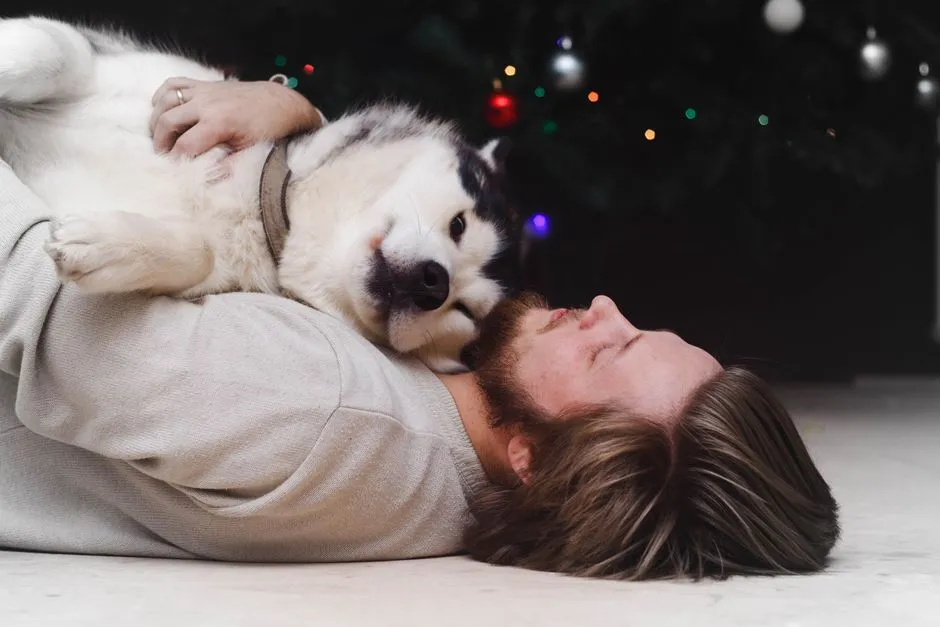
Here’s the one most people underestimate: for a lot of dogs, night is the only time you’re finally still enough for real, quiet bonding. All day you’re rushing – work, errands, screens, kids. The second you lie down, your dog gets a rare window where you’re in one place, your energy is low, and they can just be near you without getting shooed, leashed, or redirected somewhere else.
So they curl against your legs, press their back into yours, or fall asleep with one paw touching you. That’s not random positioning. The dog who picks your cramped feet over an open couch is making a quiet statement, and for them, those few minutes after lights-out might be the most important emotional check-in of their entire day.
The Bottom Line

Most owners assume their dog’s nights are boring: sleep, snore, repeat. The truth is messier and far more intimate than that. Your dog spends those dark hours guarding, worrying, adjusting to your chaos, quietly managing their own discomfort, and grabbing tiny windows of connection you probably never realized you were offering.
Here’s the uncomfortable part I’ll say plainly: a lot of the “cute” or “weird” nighttime habits people laugh about are actually a running review of how safe, predictable, and pain-free your dog’s world really is. Ignore them long enough and the cute quirks turn into real problems you should’ve caught months earlier. Pay attention, and your dog is telling you almost everything you need to know – you just have to be awake enough after midnight to listen.
