
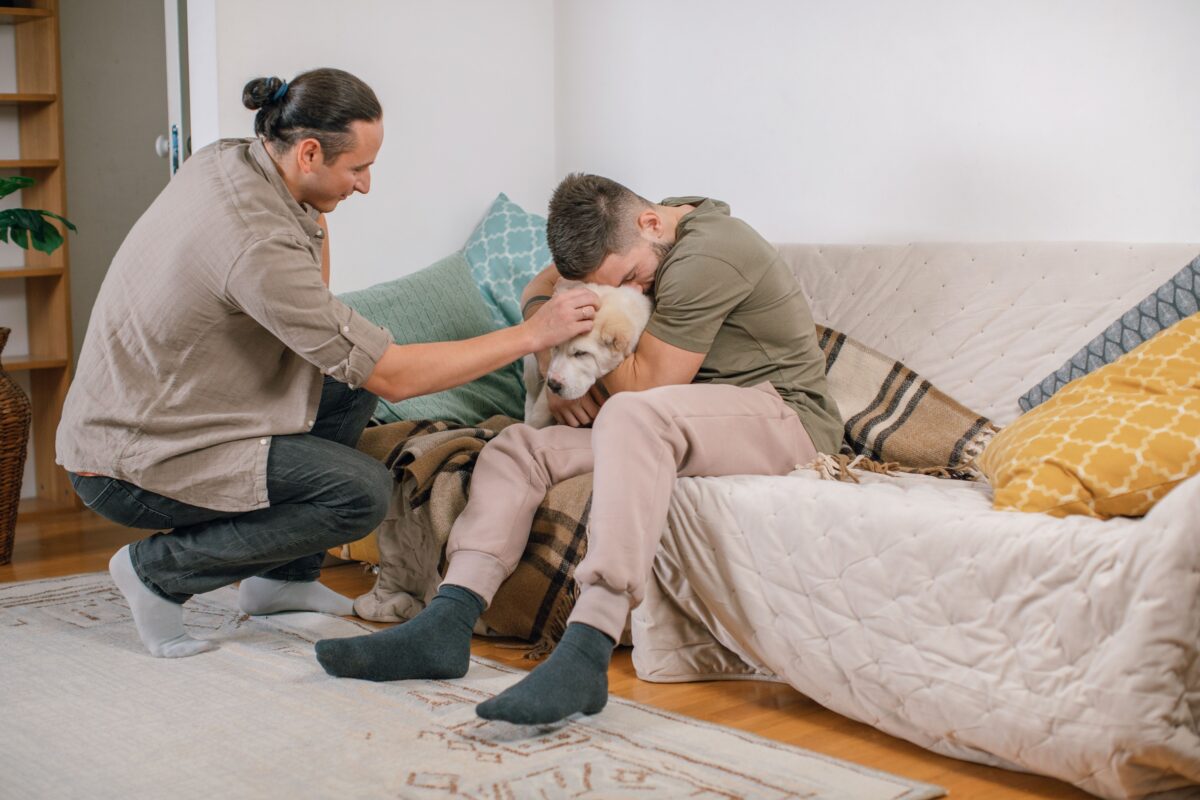
Everyone assumes an old dog just fades – slower walks, more naps, a little more gray around the muzzle. But hospice vets and longtime dog owners will tell you something stranger happens first. The dog starts choosing. Not a toy. Not a walk. A person. And once that choice is made, almost everything about how they move through their last months changes.
The signs are subtle at first, easy to wave off as “just getting older.” But watch closely and a pattern shows up that feels far too deliberate to be accidental. Here are the fourteen moments that reveal when an aging dog has quietly decided exactly who they want beside them at the very end.
#1 – They Start Following You… But Not for Fun Anymore
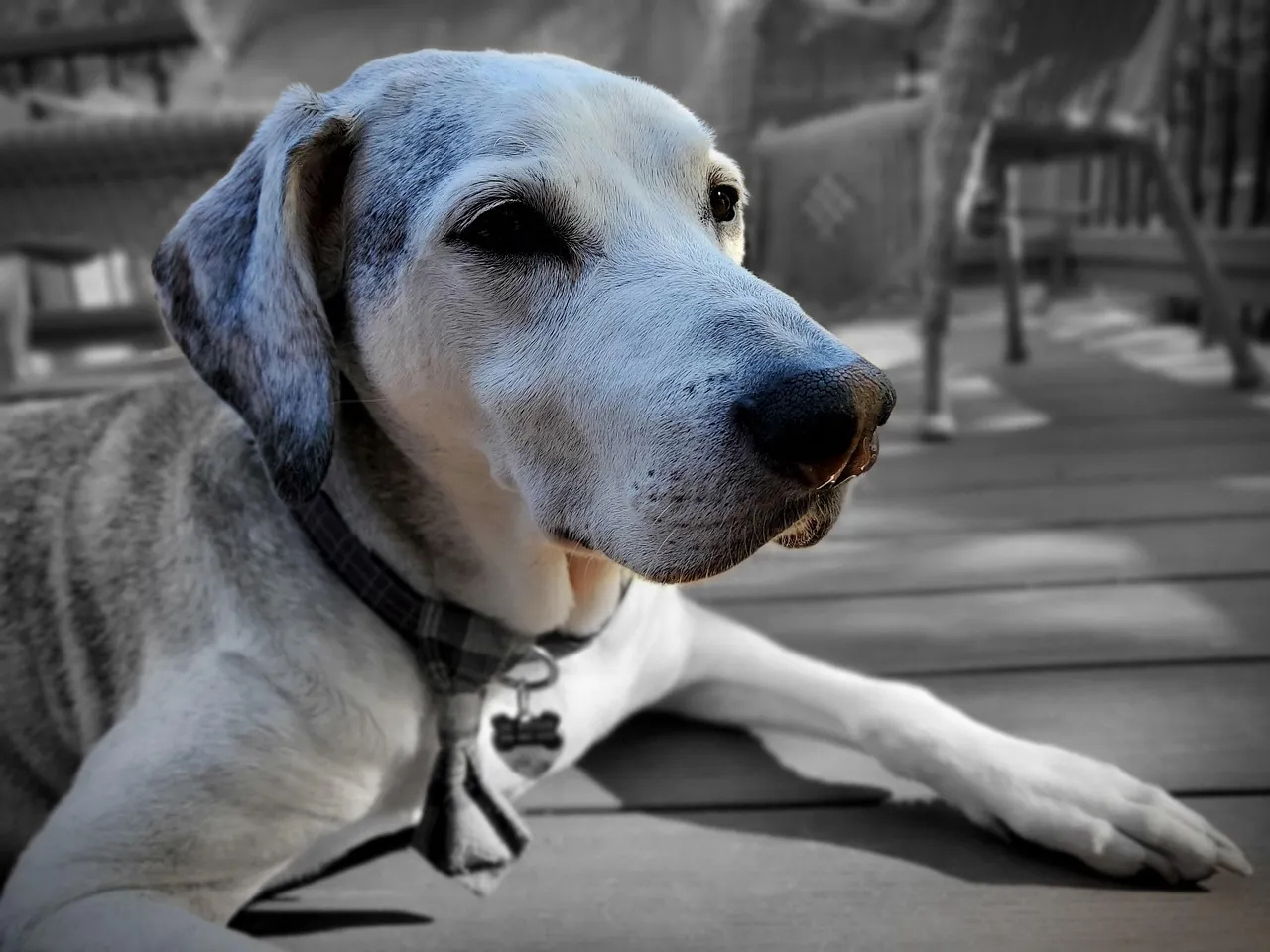
That little shadow behind you used to mean “playtime” or “snacks.” In old age, it often changes completely. When a senior dog trails you from room to room just to lie down and watch you breathe, it’s less about entertainment and more about emotional safety. They’re no longer checking what you’re doing; they’re checking that you’re there.
You’ll notice it in the energy. They don’t bounce, they shuffle. They don’t beg, they settle, usually somewhere they can see your face and not just your feet. If you get up, they get up, even when their joints clearly protest. It’s not the walk they want. It’s you. But nothing prepares you for the cuddle shift that shows up next.
#2 – They Suddenly Crave a Type of Cuddling They Never Wanted Before
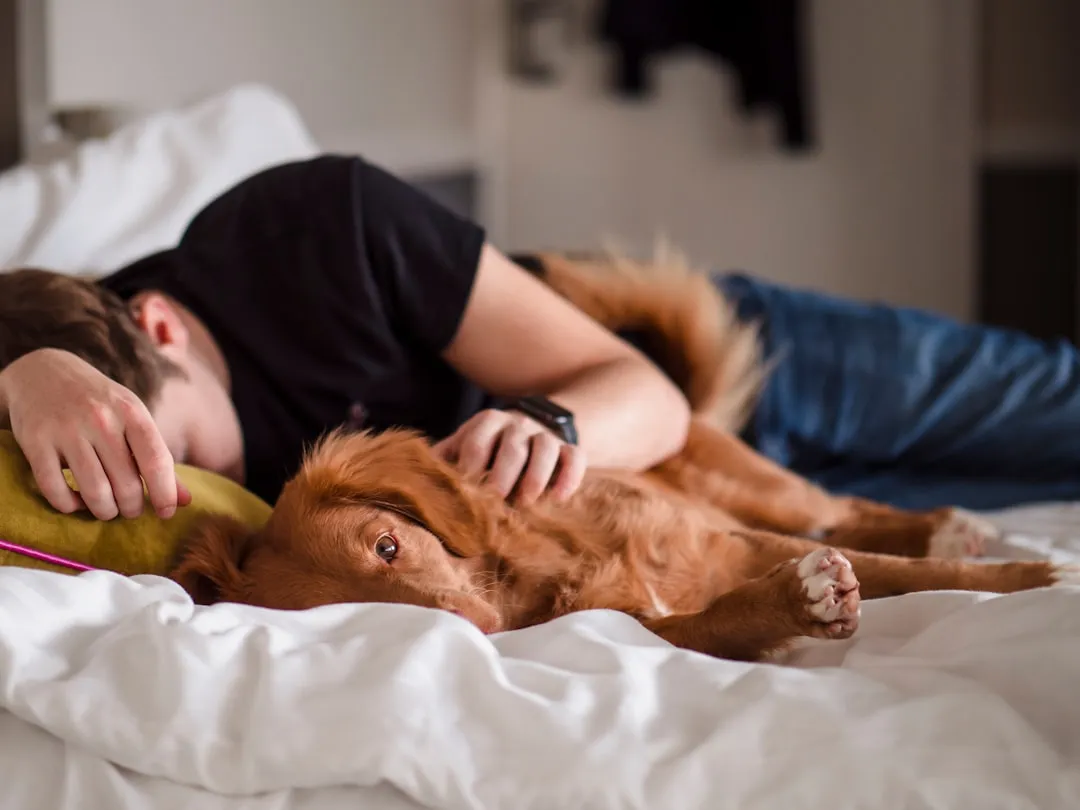
Some dogs spend a lifetime being fiercely independent. Not cuddly, not touchy, perfectly happy on the cold floor across the room. Then, in their final months, they flip the script entirely. Owners are stunned when a dog who always chose the floor suddenly insists on full-body contact, pressing into your chest or sleeping with their head over your heart.
Watch for the specifics: they pick you even when other family members are sitting right there on the couch, and they’ll wiggle or whine until you make room. “Ugh, move over” becomes “don’t you dare move.” It can sting to realize this surge of affection often tracks with declining health, but many owners later describe it simply as their dog’s way of saying, “I need to feel you while I still can.” Still, nothing reveals the bond quite like what happens when fear or pain hits.
#3 – During Pain or Confusion, They Go Straight to You First
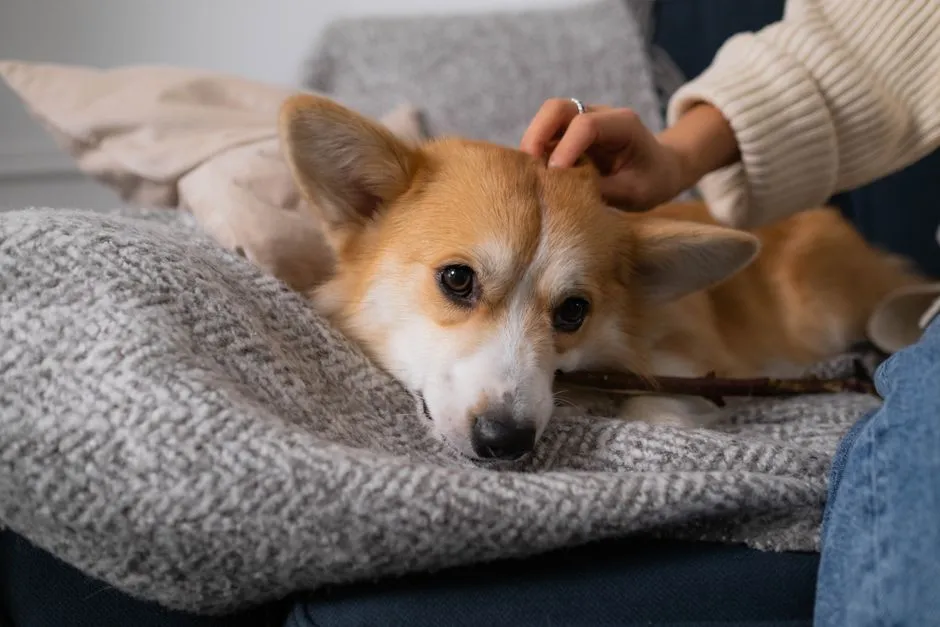
Healthy dogs spread their love around the whole household. Sick, aging dogs get strangely selective. One of the clearest signs they’ve chosen you shows up in their worst moments – disoriented at night, trembling with arthritis, startled by a sudden noise. They don’t search for “any human.” They search for you.
You’ll see it in the small emergencies: a slip on the stairs, a clap of thunder, a nighttime accident. They may push their head into your legs, crawl into your lap even if they never did before, or stare at you with that raw, almost human plea. To them, you’re not just the owner. You’re the designated safe person for the scary part of life. Even stranger is what happens when the lights go out and it’s time to sleep.
#4 – They Can’t Settle to Sleep Until They Know Exactly Where You Are
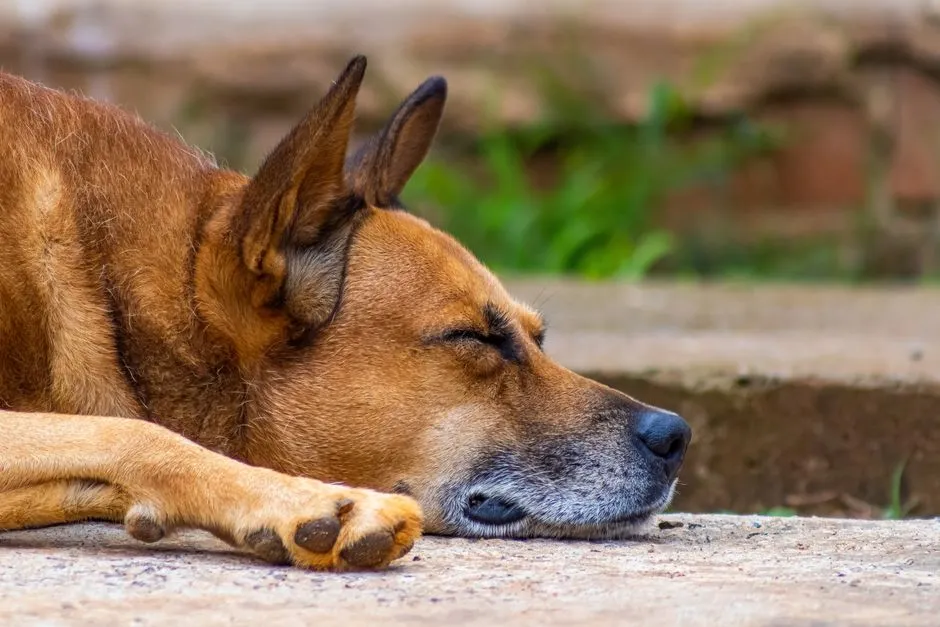
In younger years, your dog would crash anywhere – hallway, couch, random sunny patch of carpet. With age, a lot of dogs start refusing to fully sleep unless they’ve checked on you first, or positioned themselves exactly where they can sense you. This isn’t just cute. It can be a sign of cognitive decline and anxiety, layered on top of deep attachment to one specific person.
Some dogs pace or whine until they see you lie down. Others will only settle once your bedroom door is open, or they’ll sleep facing away from you in a guard stance, even when frail. Some drag their bed closer and closer to yours, night after night, as if to say, “If this is my last night, I want it near you.” And then there’s the ritual they refuse to give up, no matter what it costs them.
Fast Facts
- Cognitive decline shows up in an estimated 14% to 35% of dogs over age 8, with rates climbing sharply after age 11.
- By 15 to 16 years old, research suggests up to two-thirds of dogs show some sign of canine dementia.
- Disrupted sleep-wake cycles are one of the earliest and most common symptoms, often dismissed as simple restlessness.
- Vets sometimes call this nighttime pacing and confusion “sundowning,” echoing the same pattern seen in human dementia.
#5 – They Push Through Pain to Keep Your Shared Routines Alive
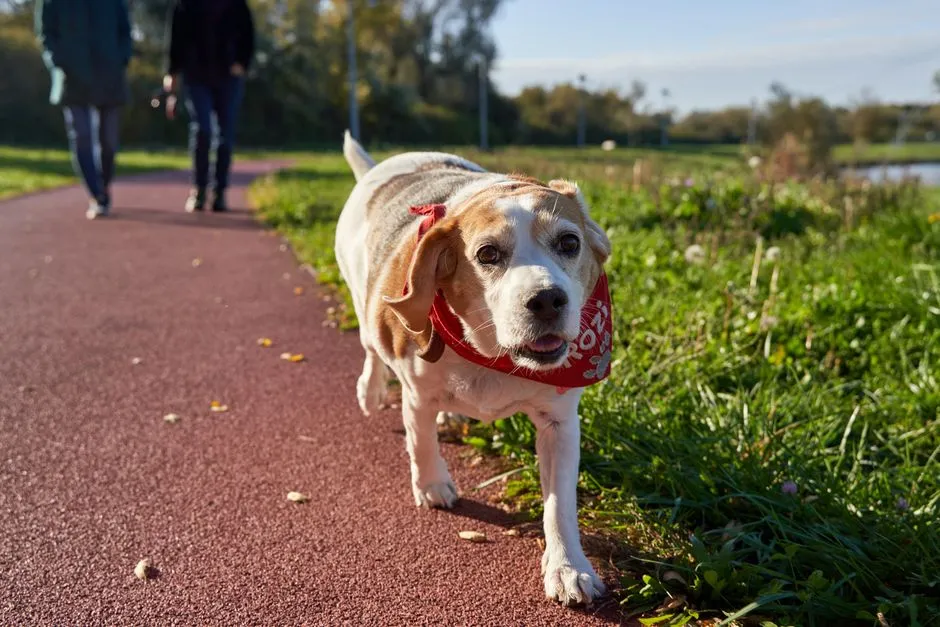
There’s a brutal honesty in old dogs: they know walks hurt, stairs are risky, and car rides are exhausting. Yet the dog who can barely stand might still drag themselves over the second you pick up the leash or jingle your keys. They’re not chasing the activity. They’re chasing the shared ritual with you, and that’s a choice animals don’t make lightly.
Watch what they still insist on: slowly hobbling to the door when you say “let’s go,” forcing themselves onto the couch for movie night, struggling up one stair just to sit where you’re sitting. When they spend their very limited energy budget on your habits instead of their own comfort, they’re telling you exactly who they want with them for whatever good minutes are left. Just as telling is the way their eyes start doing something they never did before.
#6 – Their Eye Contact Changes: Longer, Softer, and Almost Uncomfortable
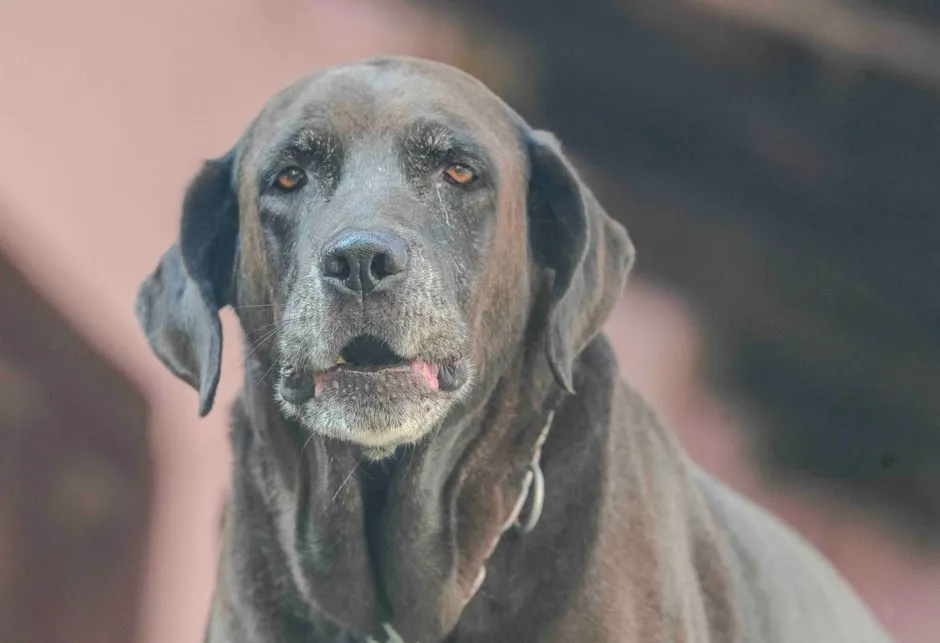
People romanticize “puppy eyes,” but end-of-life eye contact is different. Owners often describe their senior dog simply staring at them, quietly, for long stretches. It’s an unblinking, heavy gaze that feels less like begging for treats and more like memorizing your face.
It shows up during the calm moments: on the couch, before bed, after a rough day of symptoms. They hold your gaze even when you’re not speaking, seem to “check in” before lying down, and keep glancing back at you on short walks like they’re asking a question you can’t quite hear. Vets and behaviorists agree dogs use eye contact to strengthen social bonds, especially with one person. At the end, that bonding can feel like a goodbye playing out in slow motion. Harder still to watch is what they’ll suddenly let only you do.
#7 – They Let *You* Do Things They Wouldn’t Accept From Anyone Else
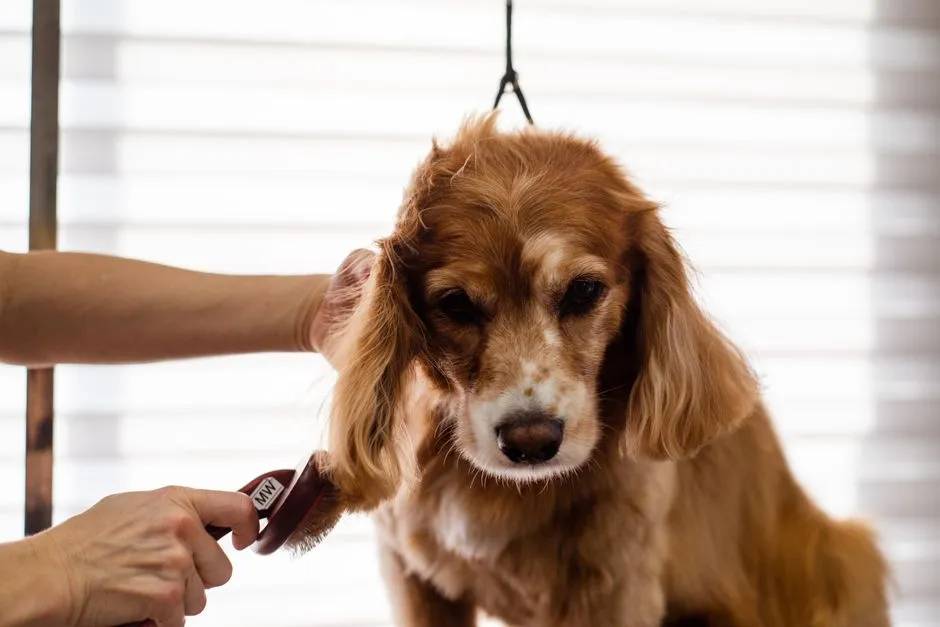
Old dogs can get cranky. Pain, confusion, and sensory loss make many seniors less tolerant of touch and handling. That’s exactly why it stands out when a dog who hates being fussed with suddenly allows you, and only you, to do deeply intimate, uncomfortable care: cleaning up accidents, lifting them, giving meds, checking sore spots.
They may growl or pull away from others but go completely soft under your hands. They’ll let you wipe their eyes or change their bedding without a fight, then stiffen the moment someone else tries. This isn’t obedience – it’s targeted trust. They’re saying, “If someone’s going to move my hurting body, it better be you.” It’s messy, hard, and strangely sacred. Then there’s the instinct they break completely once they’re truly sick.
#8 – When They Feel Sick, They Gravitate to Your Space
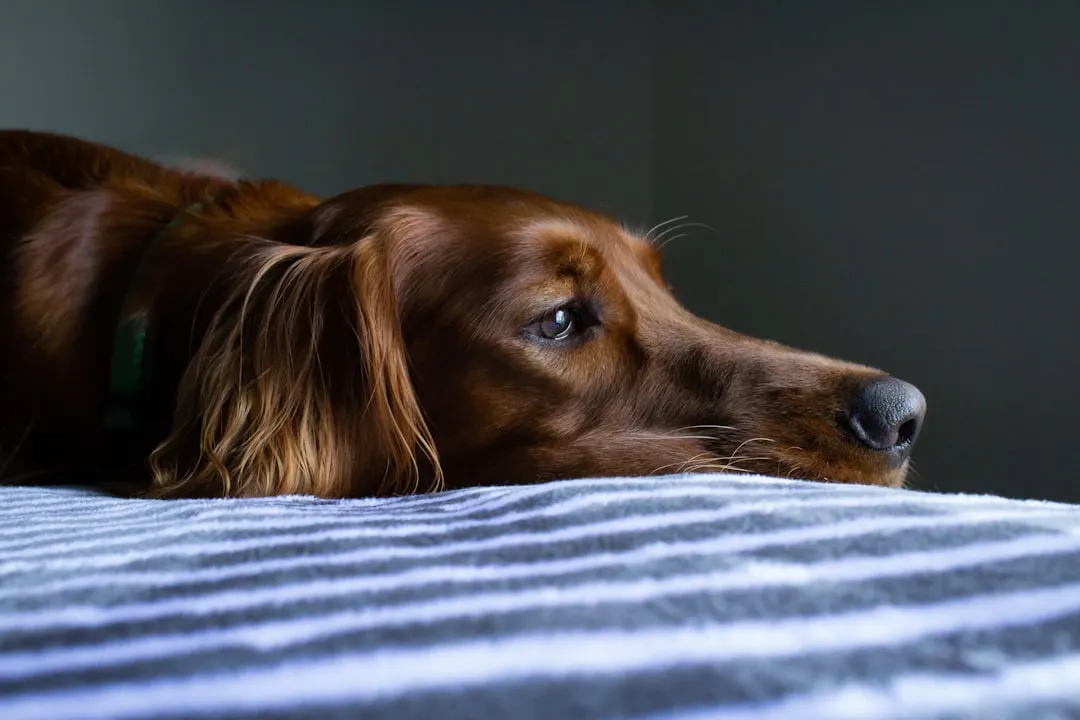
A lot of dogs, when seriously ill, will hide – under tables, in corners, outside in the yard. But one of the strongest signs they’ve chosen you is when they break that ancient instinct and drag their unwell body into your room, your chair, your side of the bed instead. They aren’t hiding the sickness anymore. They’re handing it to you.
Owners describe vomiting or accidents happening near them instead of away from them, dogs abandoning their usual resting spot to curl up on a pillow that smells like their person, limping the full length of the house just to collapse at their feet. Behaviorally, it’s a social animal seeking its primary attachment figure for protection. Emotionally, it feels like, “If my body’s failing, I want you there to see it.” Almost nobody expects the strange little offerings that come next.
Worth Knowing
- Wild canine ancestry wires dogs to mask sickness, since looking vulnerable once made them a target for predators or rivals.
- Seeking out one trusted person instead of retreating alone is a documented attachment behavior, not just coincidence.
- Vets often flag this shift as one of the clearest signals a dog feels safest, and most exposed, with one specific person.
#9 – They Bring You Their Last “Treasures,” Even When They Can Barely Move
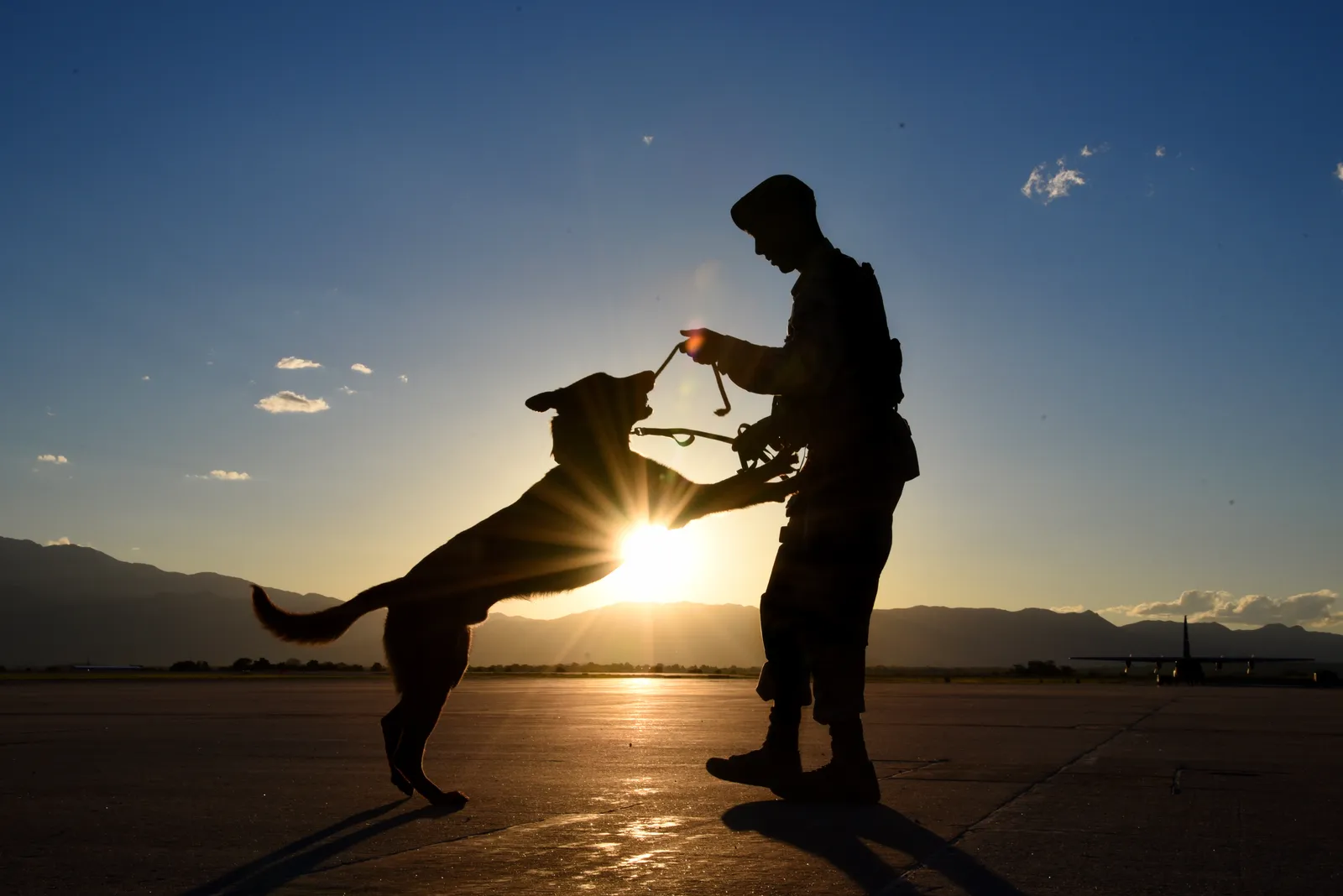
Bringing toys to a person is classic dog behavior. But in old age, the context shifts. Owners sometimes notice their senior dog will drag a favorite toy, blanket, or chewed-up old ball to their feet and then simply lie beside it, without a hint of play.
The object is often something they’ve had for years. They’ll rest their head on it and just look at you – no play bow, no excitement, only quiet presence. There’s no hard science calling this a goodbye gift, but plenty of owners feel it that way, especially in the final weeks. At the very least, it’s a dog deliberately pairing their most comforting object with their most comforting person. But maybe the strangest shift of all happens with something they can barely even hear anymore.
#10 – Your Voice Becomes a Painkiller, Anchor, and GPS All in One
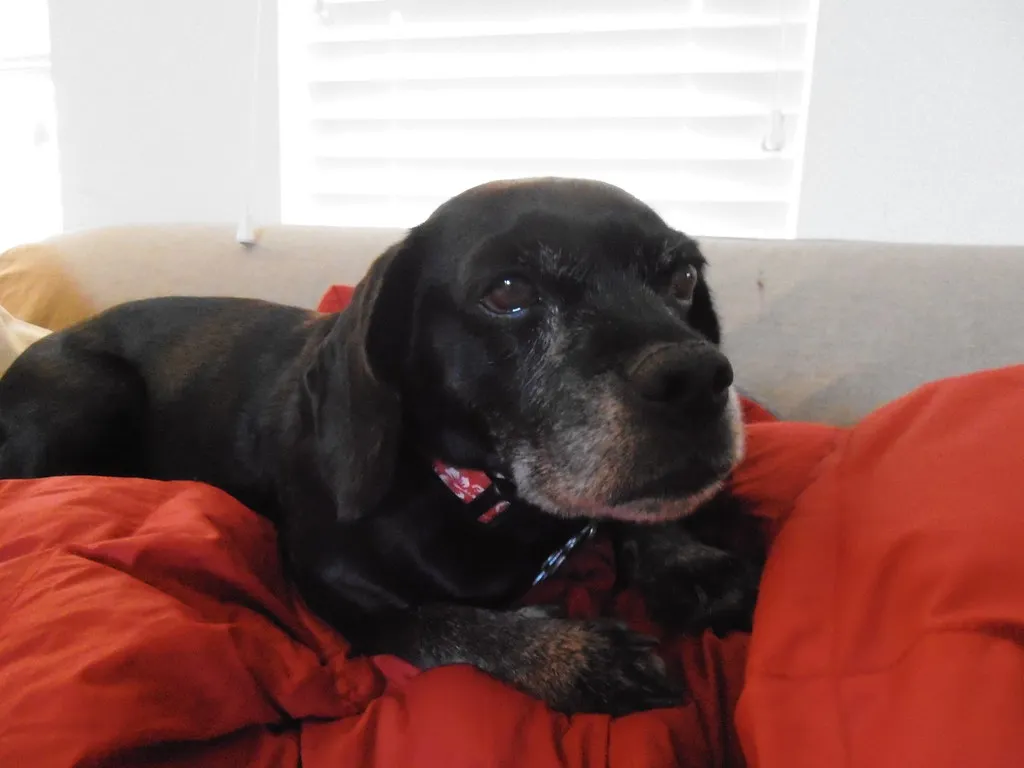
Hearing often fades badly in older dogs, but here’s the twist: they’ll strain to locate and respond to your voice long after they’ve stopped reacting to everything else. They may ignore the TV, the doorbell, even other family members talking, then perk up with their whole body the second you say their name.
Restless pacing stops when you talk to them calmly. Anxious nighttime whimpering eases the instant you speak from the doorway. On bad days, your voice might be the only thing that pulls them out of a confused spiral or soothes them through a pain flare.
Dogs do speak, but only to those who know how to listen.
Orhan Pamuk
That level of reliance isn’t random. They’ve decided your sound means safe, even when nothing else makes sense anymore. From there, something quietly shifts in how they treat everyone else in the house.
#11 – They Draw a Subtle Line Between You and Everyone Else
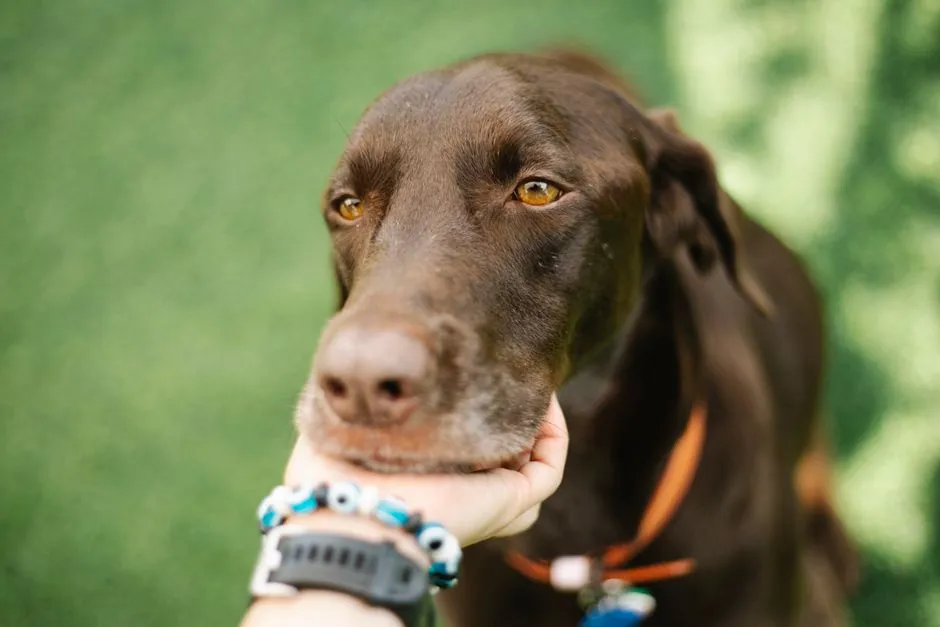
In multi-person households, the end of a dog’s life can quietly redraw the social map. Suddenly they stop splitting their attention evenly. They greet others politely enough but reserve their deepest affection, calmest moments, and worst struggles for one person: you. It’s not always fair, and it can genuinely sting for other family members.
They’ll seek you out right after greeting everyone else, refuse to budge from your side when visitors arrive, sleep by your chair instead of the general family spot. It’s not about who loved them more. It’s about who they’ve imprinted on as their emotional nurse. In their final chapter, they don’t have the bandwidth to spread themselves thin, so they compress their whole world into one face, one scent, one touch they truly need. And then comes the moment even skeptics struggle to explain.
#12 – They Seem to Look for Your Permission Before Letting Go
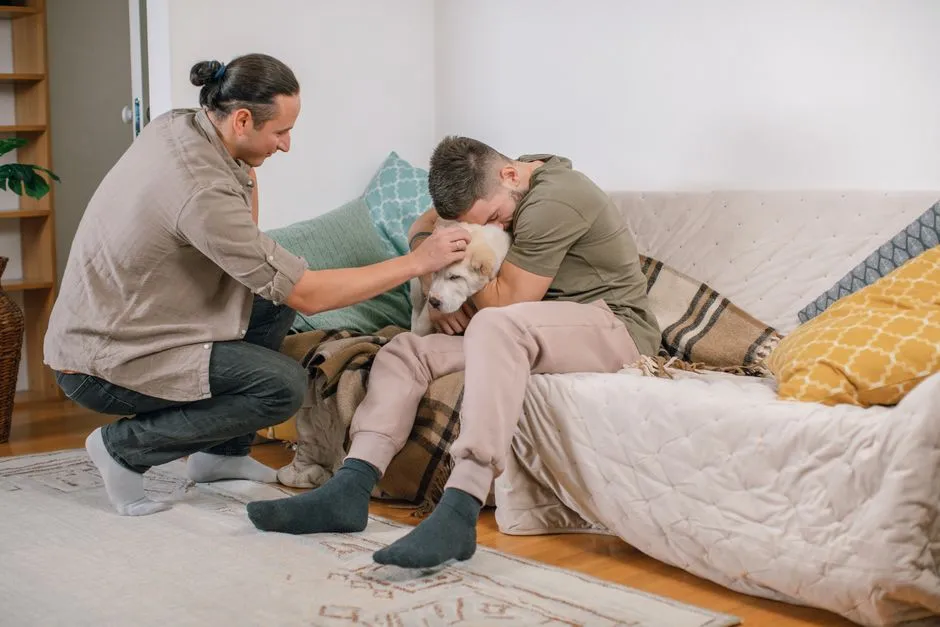
This is where science gets fuzzier and the stories get louder. Many owners describe a moment, hours or days before death, when their old dog gives them one long, searching look, relaxes deeply, and seems to stop fighting once they’ve been told it’s okay to rest. Projection, maybe. But it happens often enough that even some vets quietly admit they’ve seen it too.
The dog stays agitated or restless until their person arrives. Once you speak softly, touch them, and say your goodbyes, they finally settle. Sometimes they pass soon after, at home or in the vet’s office, almost as if your words were the last piece they needed. When a dog waits for you, specifically, before fully letting go, it’s hard not to feel chosen. Just as deliberate is the spot they pick to spend their very last days.
Quick Compare
- Before you arrive: restless, agitated, unable to settle, breathing labored
- Once you speak or touch them: body relaxes, breathing slows, eyes soften
- Hours or days later: many dogs pass peacefully, often shortly after that final exchange
#13 – They Choose Their Final Place… And Make Sure It’s Near You
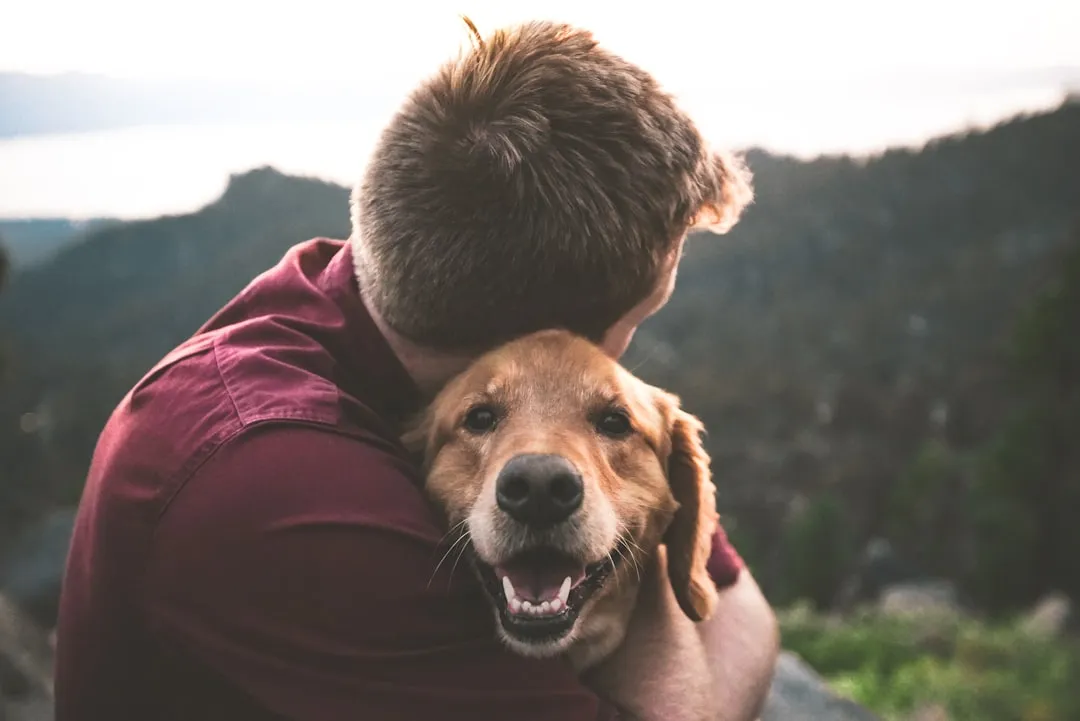
Not every dog gets to choose how they go. Accidents and sudden illness steal that from many of them. But when the decline is gradual, some dogs very clearly pick a final spot in the house, and it’s almost always tied to you: beside your bed, at your bedroom door, by your side of the couch, in the doorway where they always used to watch you move around.
They’ll ignore a perfectly comfy bed to lie on hard floor where they can still see your room. They’ll crawl one last time into your shared space even when it’s clearly hard for them. They’ll refuse to be moved from a certain spot, like they’ve already decided where they’re staying. Whether it’s instinct, comfort, or something closer to symbolism, the message is the same: if this is it, they want it here, near you. Which brings us to the hardest, clearest sign of them all.
#14 – In the Very End, They Reach for You (Even If Others Are There)

Ask any vet tech and they’ll tell you the same thing: when a dog is euthanized or passes naturally with several people in the room, there’s almost always one person they lean on, stare at, or physically push their body toward. That’s the person they’ve chosen. They may bury their nose in your arm, press their head into your chest, or keep their eyes locked on yours as everything else fades away.
They might ignore outstretched hands from everyone else just to stay in your lap. Their breathing slows the moment your hand rests on their chest or head. They try, even weakly, to close whatever tiny space is still left between you. Biologically, they’re chasing the scent and touch that calms their nervous system. Emotionally, it feels like one final, fierce act of trust – and when a dog spends the last of their strength trying to get closer to you, there’s no real question left about who they chose.
The Bottom Line
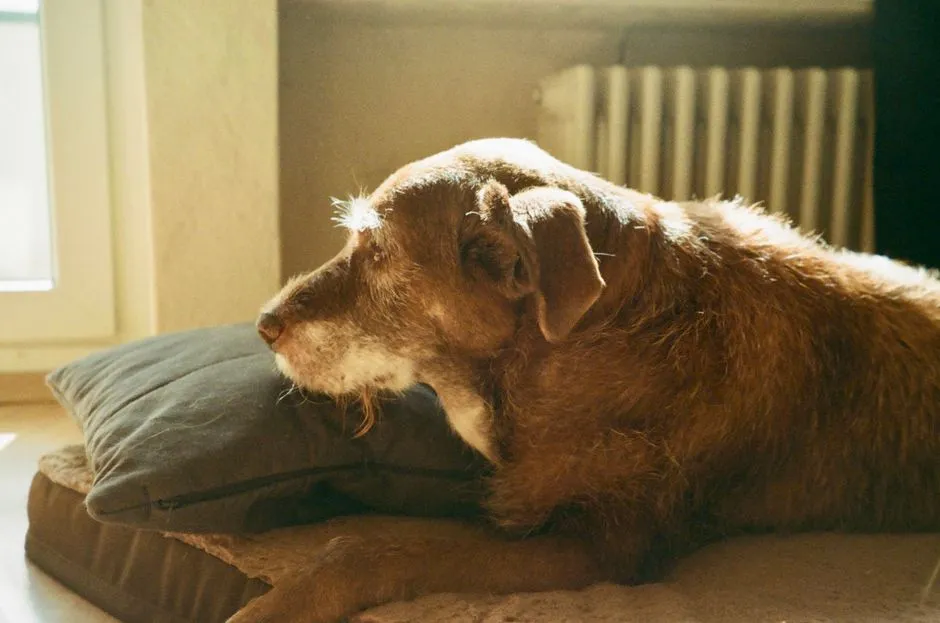
None of this is magical or mystical. It’s the brutally honest behavior of a social animal whose world is shrinking down to what actually matters. When an aging dog spends their last bits of energy following you, tolerating care only from you, chasing your voice, and choosing your side for their final breath, they’re not just being clingy. They’re appointing you as their safe person for death itself.
That’s heavy. It’s also one of the deepest, rawest honors a human being can be given, and I’d argue most people never fully earn it – they just show up enough times that the dog decides for them. Some people will insist dogs don’t think like that. Maybe not in words. But if you’ve lived through it, you already know better than to argue the theory. Your only job was ever to show up. Which of these signs have you seen, and do you believe your dog chose you at the end?
At a Glance: What “Being Chosen” Usually Looks Like
- Constant physical closeness, even when it costs them comfort or energy
- Trust extended only to you for the hardest, most painful kinds of care
- A calm response to your voice and touch that nothing else can replicate
- A final resting place, and often a final moment, spent as close to you as possible
