

You gave your rescue a soft bed, good food, and endless patience. So why are they still pacing at midnight, flinching at the dishwasher, or following you into the bathroom? This list explains what’s going on, and the answer isn’t more love. It’s knowing what happens next.
Most adopters blame “baggage.” But an animal who can’t predict meals, walks, or footsteps spends huge amounts of energy staying ready for the worst. Give that animal a dependable rhythm, and a surprising number of behaviors start to fade. Some changes are obvious. Others are so quiet you may be missing them in your living room right now. The one at #1 isn’t a behavior at all.
#13 – Scanning Every Doorway Like a Security Guard

🔥 Would you like to save this?
We'll email this post to you, so you can come back to it later!
Hypervigilance is usually the first thing to ease, and it’s the easiest change to miss.
A newly adopted dog or cat often tracks every door, window, and shadow. That isn’t curiosity. It’s a nervous system treating the whole house as unverified territory.
When the same events happen at the same times, the animal starts sorting what matters from what doesn’t. Breakfast, the evening walk, and footsteps on the stairs fade into the background. Once they do, the scanning drops.
The shift is sneaky because it looks like nothing. You don’t see a new trick. You just realize your rescue has stopped watching the door.
Signs it’s easing:
- Resting with the head down instead of hovering
- Ignoring sounds that used to cause a head snap
- Staying settled in one spot for longer stretches
Most people don’t realize progress is rarely a straight line. A rough week doesn’t erase a good month.
But that’s nothing compared to what changes around hiding spots in #12…
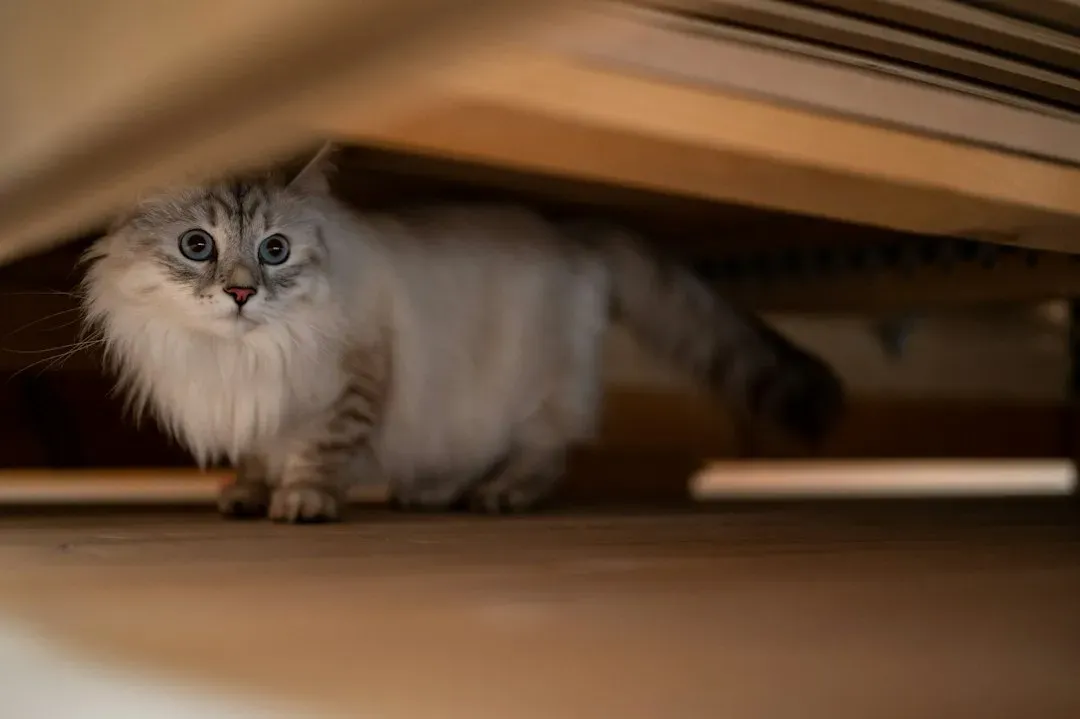
#12 – Disappearing Under the Bed
🔥 Would you like to save this?
We'll email this post to you, so you can come back to it later!
Hiding isn’t a flaw, but the amount of time spent hiding is a surprisingly honest progress report.
Cats go under beds. Dogs wedge behind sofas. Both are coping strategies, and they work, which is exactly why the animal keeps using them.
Here’s what happens with a predictable routine. The animal begins to come out for the things it can count on, usually meals first. Then it stays out a little longer each time. The hiding spot slowly becomes a place to rest, not a place to escape.
Many experts argue that the “bonding time” most adopters force in week one is a mistake. Pulling a frightened animal out to cuddle teaches it that hiding doesn’t protect it, and that makes the hiding spot feel less safe.
What helps instead:
- Keep a safe retreat available at all times
- Let the animal choose when to come out
- Put meals near the hiding spot, then move them gradually toward open space
Wait until you see what a dependable food schedule does to #11…
#11 – Guarding the Food Bowl

🔥 Would you like to save this?
We'll email this post to you, so you can come back to it later!
An animal that once treated every meal like its last often starts relaxing once meals arrive on time, every time.
Resource guarding is common in rescues. It makes sense when you think about it: an animal who has gone hungry has a very good reason to protect food.
When meals show up at the same times and in the same quiet spot, the idea that food is scarce starts to weaken. The animal has less to defend. Many guarding behaviors soften simply because the threat of losing the meal has quietly disappeared.
Quick Compare: Eager vs. Guarding
- Normal excitement: loose, wiggly body, bouncy waiting, and a relaxed face
- Warning signs: freezing, stiff posture, a hard stare, or eating faster as you approach
- Red flags: growling, lip curling, snapping, or lunging near the bowl
Routine has limits, though. If your dog stiffens, growls, or snaps near food, a schedule alone won’t fix it. That’s the point to bring in a qualified trainer or behaviorist.
Do this, not that:
- Feed pets in separate spaces
- Give the animal privacy while it eats
- Don’t take the bowl away to “prove who’s boss”
That last one is the outdated advice experts most want to retire. It tends to teach the animal that people near its food mean trouble.
Next up is a nighttime habit that wrecks adopters’ sleep in #10…
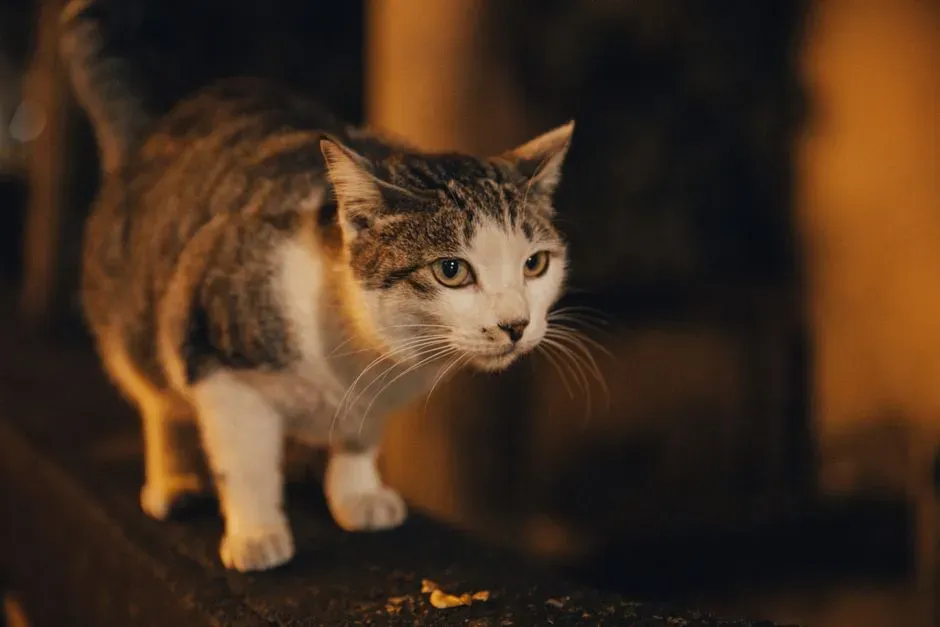
#10 – Pacing the House at Night
🔥 Would you like to save this?
We'll email this post to you, so you can come back to it later!
Midnight pacing often isn’t a sleep problem. It’s a “what happens now?” problem.
Many rescues come from places where nights meant noise, cold floors, or no comfort at all. In a new home, the dark hours can feel long and uncertain, so the animal patrols.
A predictable evening sequence helps. The same last meal, the same final potty trip, and the same dimmed lights teach the animal that the day is ending. Animals can pick up on these sequences remarkably fast.
Cats add a twist. They’re naturally most active around dawn and dusk, so some evening restlessness is normal. A play session followed by a meal before bed can help them settle.
Still, new sleep trouble that doesn’t ease can be a medical red flag. Pain, thyroid trouble in older cats, and cognitive changes in senior dogs are all worth ruling out with a vet.
And the sounds that used to send your rescue flying are next in #9…
#9 – Jumping at Every Ordinary Noise

🔥 Would you like to save this?
We'll email this post to you, so you can come back to it later!
The dishwasher, the doorbell, and the garbage truck stop being emergencies once the household gets predictable.
Everyday noises can sound alarming to an animal with a rough history. Most people don’t realize the problem isn’t always volume. It’s surprise.
When sounds happen in a steady pattern, the brain learns to file them under “safe.” That process is called habituation, and it’s one of the most basic forms of learning there is.
You can speed it along gently:
- Keep household noise at a steady, moderate level
- Pair the doorbell or vacuum with a small treat
- Avoid flooding the animal with loud sounds all at once
Flooding is a common mistake. Dragging a terrified dog toward the vacuum “to get over it” often makes the fear worse.
But the next behavior has a sneaky cause that surprises most adopters in #8…
#8 – Nonstop Begging and Demanding

🔥 Would you like to save this?
We'll email this post to you, so you can come back to it later!
Constant begging is often learned, and the way it’s learned is the real twist.
Some rescues ask for everything, all the time. They whine, nudge, stare, and paw. It looks like neediness, but there’s often a pattern behind it.
If asking worked once in a while in the animal’s past, it learned to keep asking. Rewards that arrive unpredictably tend to produce the most stubborn behavior. That’s why giving in “just this once” is such a trap.
A consistent routine takes the pressure off. When the animal knows meals, walks, and attention come at set times, it has less reason to ask constantly.
Expect a short bump first. Many animals bark or pace as feeding time nears, because they’ve learned what’s coming. That’s anticipation, not a relapse.
The fix is simple, though not always easy: reward calm behavior, ignore the nagging, and keep the schedule steady for everyone in the house.
At a Glance: Why Begging Sticks
- The engine: occasional, unpredictable payoffs keep a behavior going the longest
- The same logic: it’s the pull of a slot machine, where the next pull might pay
- The trap: one surrender after a long stretch of ignoring can restart the whole habit
- The cure: the same rules from every person, every day
Speaking of boundaries, the most dangerous habit on this list is in #7…

Halloween Cat Costume Cloak Witch Hat Pet Accessories
Check Price on AmazonAs an Amazon Associate, we earn from qualifying purchases.
10/9/2026 2:44 pm GMTi

Smart Bird Feeder with Camera Solar Powered, 2K HD Live Video, 10,000+ Bird Species AI Identification
Check Price on AmazonAs an Amazon Associate, we earn from qualifying purchases.
10/7/2026 1:22 pm GMTi

PetSafe Oasys Pet Fountain, 1/2 Gallon (64 oz), Small Dogs & Cats
Check Price on AmazonAs an Amazon Associate, we earn from qualifying purchases.
10/8/2026 8:14 am GMTi

Halloween Dog Collar with Bow, Orange Cute Ghost Collar,
Check Price on AmazonAs an Amazon Associate, we earn from qualifying purchases.
10/9/2026 2:43 pm GMTi

2 Pcs Halloween Pet Hat Bandana Set, Witch Pumpkin Costumes for Dogs
Check Price on AmazonAs an Amazon Associate, we earn from qualifying purchases.
10/9/2026 2:45 pm GMTi
#7 – Bolting for the Door

🔥 Would you like to save this?
We'll email this post to you, so you can come back to it later!
The urge to bolt doesn’t vanish overnight, and treating it like it has is the riskiest mistake adopters make.
Many rescues are flight-prone in the first weeks. Open doors, gates, and car doors all look like escape routes to a frightened animal.
As the home becomes predictable, the frantic energy usually fades. Comings and goings stop feeling like emergencies, and the animal learns that the house is where the good things happen.
Until then, keep the safety net up:
- Use a secure harness or leash, even in a fenced yard
- Add a second barrier, like a baby gate, at exits
- Make sure the microchip and ID tags are current
Now for the problem that makes adopters want to rip up their carpets in #6…
#6 – Having Accidents Indoors

🔥 Would you like to save this?
We'll email this post to you, so you can come back to it later!
Indoor accidents are rarely about stubbornness, and a predictable schedule fixes more of them than most people expect.
A rescue may never have had a reliable bathroom routine. In a new home, it simply doesn’t know the rules yet.
Stress adds to the problem. An anxious animal has less control over its body, and an unfamiliar environment makes every corner a possible bathroom. Cats often start avoiding the litter box when stressed, even though they were perfectly trained before.
Give the schedule a backbone:
- Take dogs out after waking, eating, and play
- Praise outdoor success right away
- Clean accidents with an enzyme cleaner so the smell doesn’t invite a repeat
Don’t skip the vet. Urinary infections and other medical issues can look like behavior problems, especially in cats.
Yet the biggest shift of all may come when you head out the door in #5…
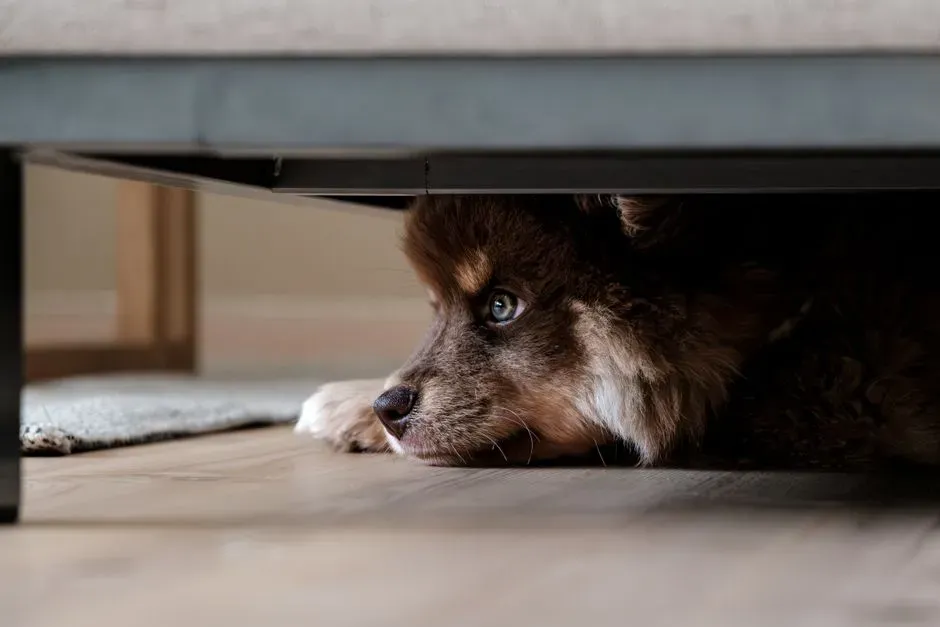
#5 – Panicking When You Leave
🔥 Would you like to save this?
We'll email this post to you, so you can come back to it later!
Predictable departures can calm an animal that used to fall apart the moment you reached for your keys.
Rescues may have been left, lost, or surrendered. So watching their person walk out can feel like history repeating.
Experts often suggest teaching that leaving always ends in returning. Short, repeated practice absences help, and so does doing it the same way each time. When the animal can predict the pattern, the departure stops being the scariest part of the day.
Keep it low-key:
- Skip the dramatic goodbyes and hellos
- Start with minutes, not hours
- Leave a chew or puzzle toy as a consistent “you’re leaving” cue
Be honest about the limits. True separation anxiety involves panic, drooling, destruction, or nonstop vocalizing, and routine alone often isn’t enough. A veterinary behaviorist or certified trainer can build a proper plan.
Worth Knowing: Fussing or Real Distress?
- Likely mild: a short whine or sigh that settles within minutes of your exit
- Likely mild: napping or chewing the toy once the door closes
- Likely true anxiety: drooling, frantic pacing, or nonstop howling or barking
- Likely true anxiety: scratching at doors, destroying items near exits, or accidents only when alone
Moving on, the next change shows up at your dinner table in #4…
#4 – Inhaling Meals in Seconds

🔥 Would you like to save this?
We'll email this post to you, so you can come back to it later!
A rescue that swallows food whole is usually acting on a very old fear.
Fast eating is a classic sign of an animal that learned to grab food before someone else does. The bowl is empty in seconds, and the animal often looks around for more.
Once meals become dependable, many animals slow down on their own. The urgency fades because the food keeps coming.
Eating speed matters for health, too. Vets often recommend slowing fast eaters, especially large, deep-chested dogs, because gulping food and air can contribute to digestive trouble.
Easy ways to slow things down:
- Use a slow-feeder bowl or puzzle feeder
- Spread the food on a flat tray
- Split the daily portion into smaller meals
The next behavior is often mistaken for a quirk, and that’s the problem in #3…

Orthopedic Extra Large Dog Bed, Waterproof Washable XL Pet Bed 44"
Check Price on AmazonAs an Amazon Associate, we earn from qualifying purchases.
10/7/2026 1:32 pm GMTi

Professional 7 in 1 Dog Paw Cleaner for Dogs & Cats - Includes 1 Portable Paw Washer, 1 Bath Brush
Check Price on AmazonAs an Amazon Associate, we earn from qualifying purchases.
10/7/2026 1:26 pm GMTi

Earth Rated XL Dog & Puppy Pee Pads, Discreet Top, Max Absorbency
Check Price on AmazonAs an Amazon Associate, we earn from qualifying purchases.
10/7/2026 1:28 pm GMTi

Glass Hummingbird Feeder for Outdoors Hanging
Check Price on AmazonAs an Amazon Associate, we earn from qualifying purchases.
10/7/2026 1:21 pm GMTi

Glass Hummingbird Feeder for Outdoors Hanging, 16 oz Leak-Proof Nectar Feeder with Bee Guards & Ant Moat
Check Price on AmazonAs an Amazon Associate, we earn from qualifying purchases.
10/7/2026 1:22 pm GMTi
#3 – Compulsive Licking, Chewing, and Chasing

🔥 Would you like to save this?
We'll email this post to you, so you can come back to it later!
Repetitive self-soothing is not “just a quirk,” and calling it that is a mistake.
Over-licking paws, chasing tails, and overgrooming fur can all be signs of stress. They give the animal something predictable to do when the world isn’t.
A steady routine gives the animal back some sense of control. When life has fewer surprises, the need for the self-soothing habit often drops.
Don’t assume it’s only emotional, though. Skin allergies, pain, and parasites can all produce the same behaviors. A vet visit should always come first.
If the habit doesn’t ease:
- Keep a log of when it happens
- Add structured exercise and mental work
- Ask a veterinary behaviorist about a plan
Many experts argue that tolerating compulsive behavior “until they settle in” is a mistake. The longer a habit runs, the harder it can be to unwind.
Now, the sweetest-looking behavior on this list may not be what it seems in #2…
#2 – Following You Into Every Room

🔥 Would you like to save this?
We'll email this post to you, so you can come back to it later!
Shadowing isn’t always devotion. Sometimes it’s an animal keeping tabs on the only safe thing it knows.
New rescues often trail their person from room to room, even to the bathroom. It looks like love, and sometimes it is.
But for some animals, it’s a security measure. If you’re the one constant in a strange place, losing sight of you feels risky. As routines settle, many animals learn when you’ll come and go, and they relax enough to nap in another room.
Not every follower is anxious. Some dogs are simply “velcro” by breed and temperament, and that’s fine. The warning signs are panic, pacing, or whining the moment you’re out of view.
And the number one change is the one most adopters never see coming in #1…

Portable Dog Water Bottle Foldable Dog Travel Water Bottle
Check Price on AmazonAs an Amazon Associate, we earn from qualifying purchases.
10/7/2026 1:29 pm GMTi

Dog Stairs for Bed 18" H, 4-Step Dog Steps for High Bed
Check Price on AmazonAs an Amazon Associate, we earn from qualifying purchases.
10/9/2026 2:42 pm GMTi

Air Purifiers for Home Pets Large Room Up to 3000 Ft²,HEPA Air Cleaner with Washable Double-Side Filter, PM2.5 Air Quality Monitor,15dB Sleep Mode for Bedroom Odor Dust Pollen,White
Check Price on AmazonAs an Amazon Associate, we earn from qualifying purchases.
10/8/2026 8:23 am GMTi

Hand Blown Glass Hummingbird Feeders for Outdoors Hanging, 24oz Wild Bird Nectar Feeder
Check Price on AmazonAs an Amazon Associate, we earn from qualifying purchases.
10/7/2026 1:23 pm GMTi
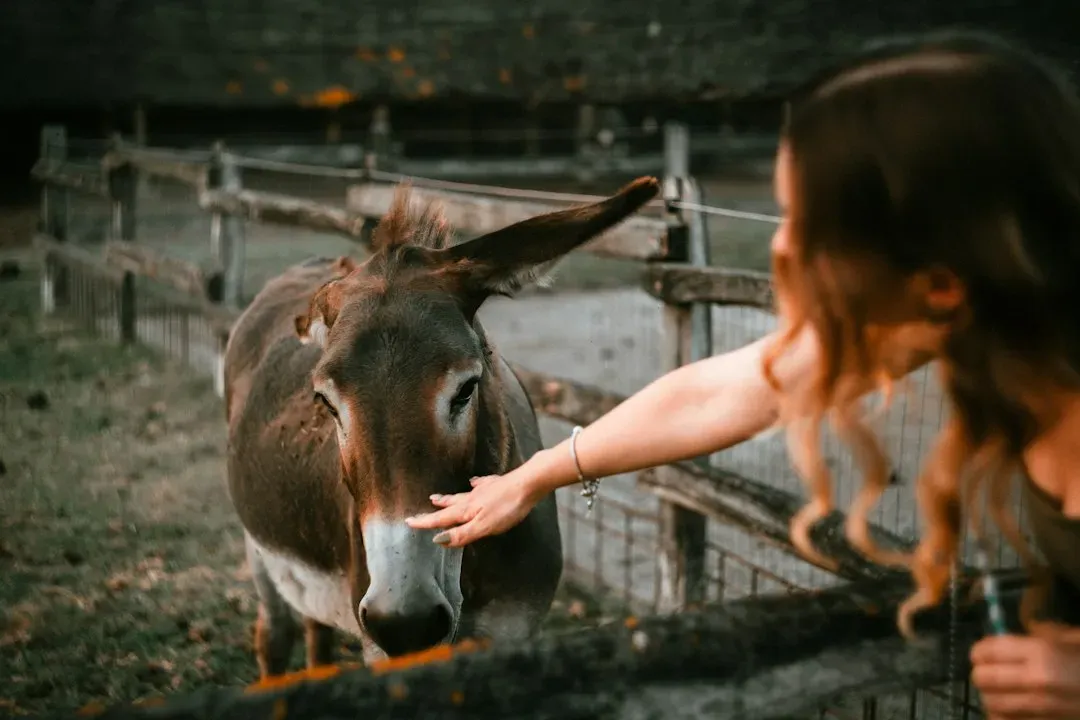
#1 – Bracing for the Other Shoe to Drop
🔥 Would you like to save this?
We'll email this post to you, so you can come back to it later!
The deepest change isn’t a behavior at all. It’s an animal that finally stops expecting something bad.
Some rescues flinch at a raised hand, cringe at a dropped item, or freeze when you move quickly. They’re not being dramatic. They’re predicting.
Predictability gives them evidence. Each calm morning, each steady meal, and each gentle hand adds a data point. Over weeks and months, the animal’s body slowly learns that surprises don’t always mean harm.
Experts often point to a wider idea from animal research: when outcomes feel random and uncontrollable, animals can become withdrawn or shut down. Reliable routines give them a way to forecast and, in a small way, control their world.
The truth most adopters learn is that boring is the gift. The same walk, the same bowl, and the same voice at the same hour may feel dull to you. To a rescue, they’re proof.
Why It Stands Out
- It costs nothing: no gear, no gadgets, just consistency
- It builds on itself: every calm day makes the next one easier to trust
- It works for dogs and cats: the rhythm matters more than the species
- It supports every other fix: training lands better in a calmer body
Here’s the uncomfortable opinion: most adopters overinvest in dramatic gestures and underinvest in dull consistency. The big adventure day does less than the same calm routine repeated for weeks.
Predictability won’t fix everything. Medical problems, serious aggression, and true separation anxiety still need professionals. But it quietly dissolves the hypervigilance, guarding, panic, and bracing that look like personality and are often just fear.
Skip the “dominance” shortcuts and the forced cuddles. Build the boring rhythm first, then watch what your rescue stops doing. Which of these 13 changed first for yours, and how long did it take?

- 11 Things Vets Secretly Notice About an Owner Long Before the Animal - November 6, 2026
- 13 Things a Rescue Animal Stops Doing Once a Routine Becomes Predictable - November 6, 2026
- 13 Things a Rescue Animal Stops Doing Once a Routine Becomes Predictable - November 6, 2026