
Your dog is sitting with one leg kicked out like a tiny comedian. Your cat hasn’t left that corner since breakfast, and you figure she’s just being chill. Most people think a quiet pet is a happy pet, and that belief is one of the costliest assumptions in pet care.
Animals are built to hide weakness, and cats rarely cry out when they hurt. The clues don’t come as yelps. They show up in posture: where a leg lands, how low the head hangs, how a tail is tucked. Vets learn to read these signals in seconds, often before you’ve finished describing the problem. Some of the 13 postures below look adorable, some look lazy, and one looks like a joyful stretch when it isn’t. Keep reading for #1, because plenty of owners film it for social media without knowing what it can mean.
#13 – The Sideways Sit Everyone Thinks Is Cute
🔥 Would you like to save this?
We'll email this post to you, so you can come back to it later!
A leg kicked out to the side can say more than a limp ever will.
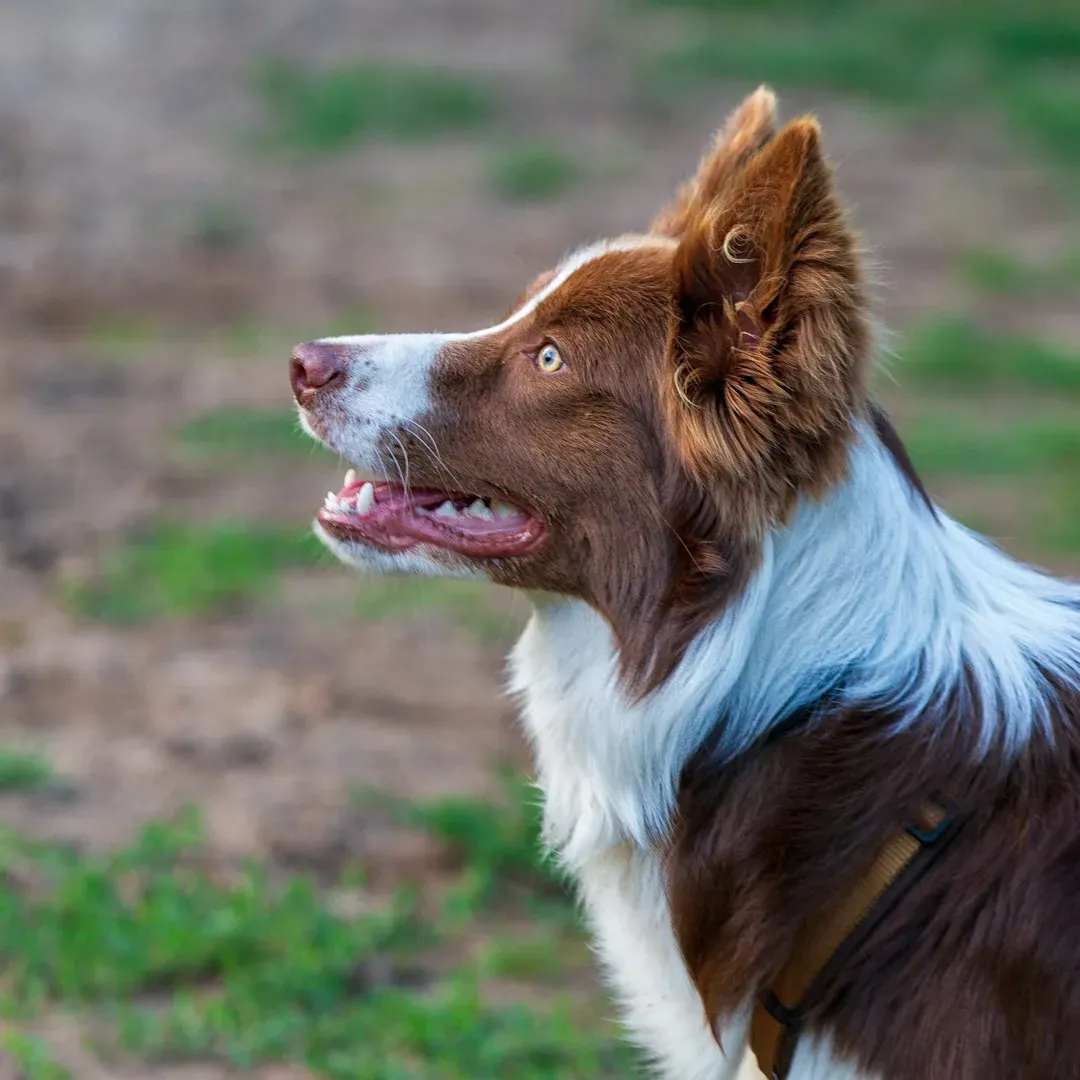
Plenty of owners laugh at the dog that sits with one hind leg splayed. Vets look twice. Sitting with one leg kicked out to the side instead of tucked neatly underneath is on the list of posture changes that deserve attention.
The reason is simple. Pets change their posture to avoid discomfort and protect painful or weakened areas. A sore knee, hip, or back can make a normal tucked sit uncomfortable, so the dog invents a workaround. People call it a “lazy sit,” and the nickname is part of the problem. It makes a compensation sound like a personality quirk.
Posture changes are often some of the earliest clues that a dog is dealing with pain, stiffness, or nerve issues. That’s the part most owners don’t realize. The workaround shows up well before anything dramatic, like limping or crying out.
Context is everything, though. Some young, bendy dogs sit this way for years with no trouble, and one odd sit proves nothing. What vets want to know:
- Which leg is it, and is it always the same one?
- Does it happen every time, or only after exercise?
- Does the dog get up stiffly afterward?
- Is the sit new, or has the dog always done it?
But that’s nothing compared to what a cat’s body is hiding in #12…
#12 – The Hunched Sit With the Head Tucked Down
🔥 Would you like to save this?
We'll email this post to you, so you can come back to it later!
That “calm” cat in the corner may be doing the opposite of relaxing.
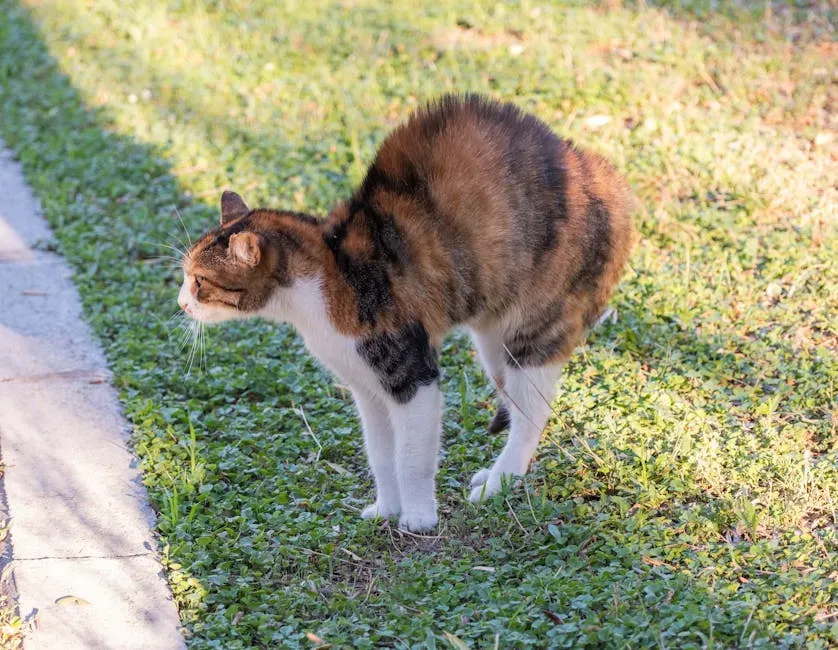
Cats are the world’s best poker players. They tend to be especially subtle and often mask discomfort until it’s advanced. That’s why a hunched sit with the head tucked low is such a big flag.
Today’s Veterinary Practice describes painful cats as sitting stiffly on their chest, with the head tucked under or lying flat. By contrast, a cat that isn’t in pain has a pose that’s relaxed in a subtle way, not stiff and tense. The difference is easy to miss from across the room, which is exactly why it gets missed.
Cats hide pain as a survival instinct, and indoor cats do it too. The instinct stays strong even in a safe living room, because cats are small predators that are also prey for larger animals. Showing weakness has never paid off for them.
Here’s the uncomfortable take. Calling a cat “so low-maintenance” can mean nobody is looking closely. A cat that never fusses isn’t automatically a healthy cat.
And the longer a cat stays in that spot, the more it matters, as #11 shows…
#11 – The Pet That Hasn’t Moved Since Breakfast
🔥 Would you like to save this?
We'll email this post to you, so you can come back to it later!
Staying frozen in one place is a posture all by itself.
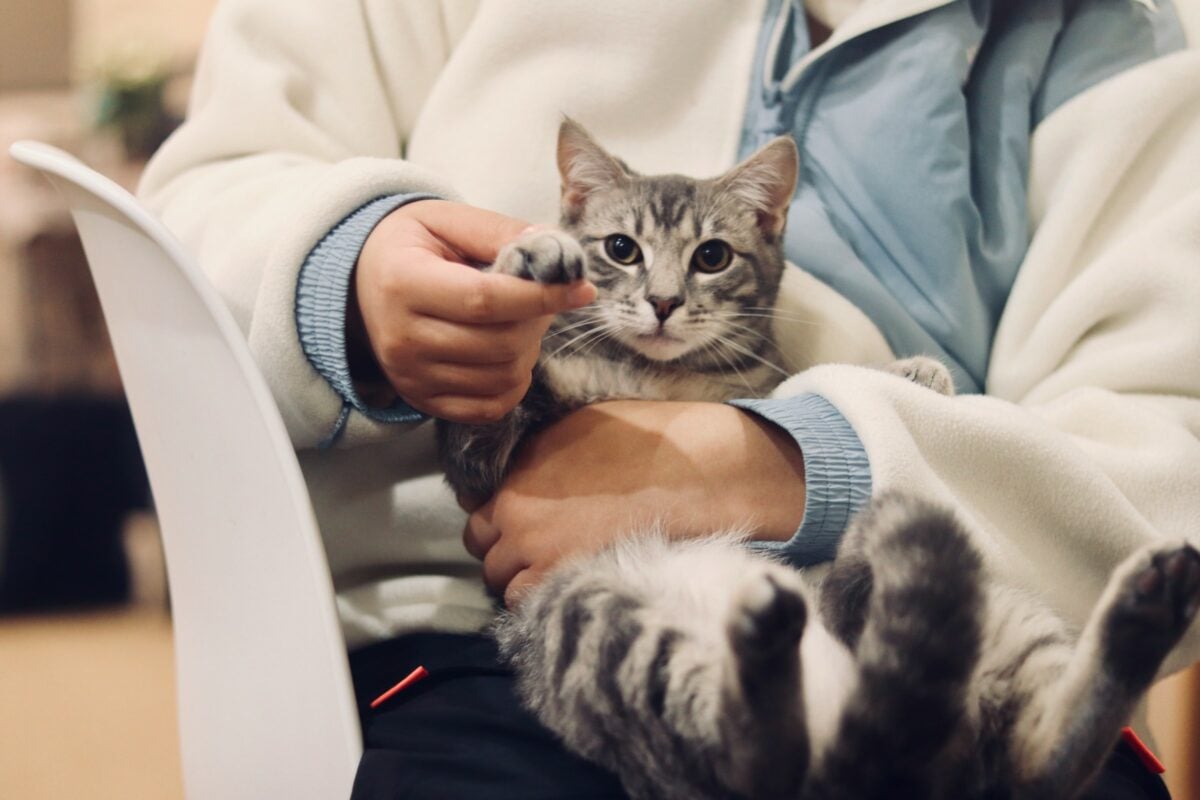
Vets don’t only study the shape of a sit. They also study how long it lasts. Painful cats tend to stay confined to a small area, usually in one position.
A cat in pain may hold a tense posture for hours. That’s what makes it so easy to mistake for a nap. A truly napping cat shifts, stretches, twitches an ear, and rearranges itself. A hurting cat often looks like a statue.
Cats are creatures of habit, so even small deviations can be significant. A missed trip to the usual sunny window or the favorite perch counts as data. So does a dog that always meets you at the door and suddenly doesn’t.
Other clues tend to travel with it:
- Withdrawal and skipped grooming
- A new hiding spot
- Social withdrawal in dogs, such as hiding or avoiding interaction
Now look at how that stillness is shaped, because #10 is where it gets specific…
#10 – The Stiff, “Hunkered Down” Curl
🔥 Would you like to save this?
We'll email this post to you, so you can come back to it later!
A tight curl and a soft curl look similar from across the room. Up close, they aren’t.
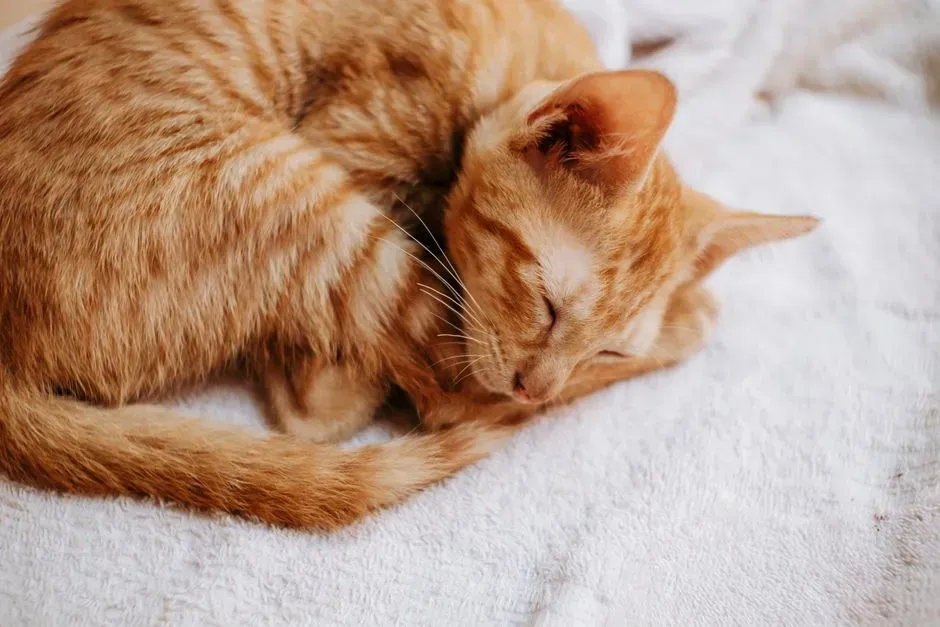
Curling up is normal cat behavior. The difference is in the details. If a painful cat is curled up, it may have a stiff, “hunkered down” look. A comfortable cat looks loose, with soft shoulders and an easy spine.
Ears add a second layer. Cats in pain or feeling sick hold their ears low and rotated to the side. Combined with a rigid body, that picture is hard to miss once you know it.
Even a cat that looks asleep can be guarding. Tension is the giveaway, not position. Most people judge a cat by whether its eyes are closed. Vets judge it by whether the body has let go.
And then there’s a signal that works the same way in cats and dogs, in #9…
#9 – The Tucked Tail
🔥 Would you like to save this?
We'll email this post to you, so you can come back to it later!
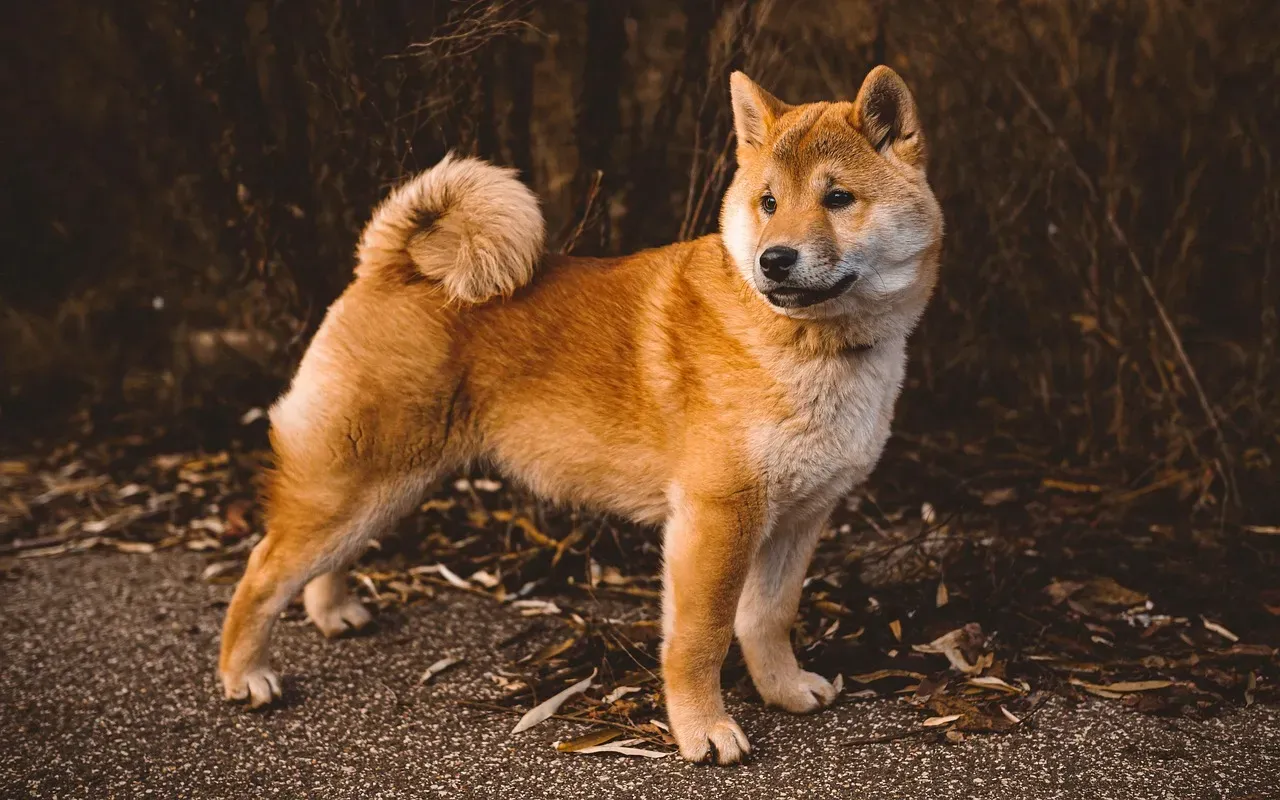
The tail never stops talking, even when the rest of the animal is silent.
Most people only watch tails for wagging. Vets watch where the tail rests. In cats, a tail kept tucked close to the body, between the hind limbs, is a sign of pain.
Dogs are trickier. A tucked tail can signal pain, but in dogs it might also indicate fear. Same tail, two very different stories.
One posture can mean pain or fear, so vets read the whole animal rather than a single body part. Happy dogs tend to carry their tails up, while pain, fear, or anxiety can bring them down or tucked.
That’s why a vet will check the ears, eyes, breathing, and surroundings before drawing a conclusion. A dog tucked beside the vacuum cleaner is not the same as a dog tucked on a quiet sofa.
Quick Compare
- Cat: a tail tucked close between the hind limbs points toward pain.
- Dog: a tucked tail can mean pain or fear, so context decides.
- Happy dog: tail usually carried up, while pain, fear, or anxiety pull it down.
- Breed baseline: a greyhound’s tail naturally rides low, while a husky’s or a pug’s curls up.
The tail is only part of the picture, and the head position in #8 adds more…
#8 – The Low-Hanging Head
🔥 Would you like to save this?
We'll email this post to you, so you can come back to it later!
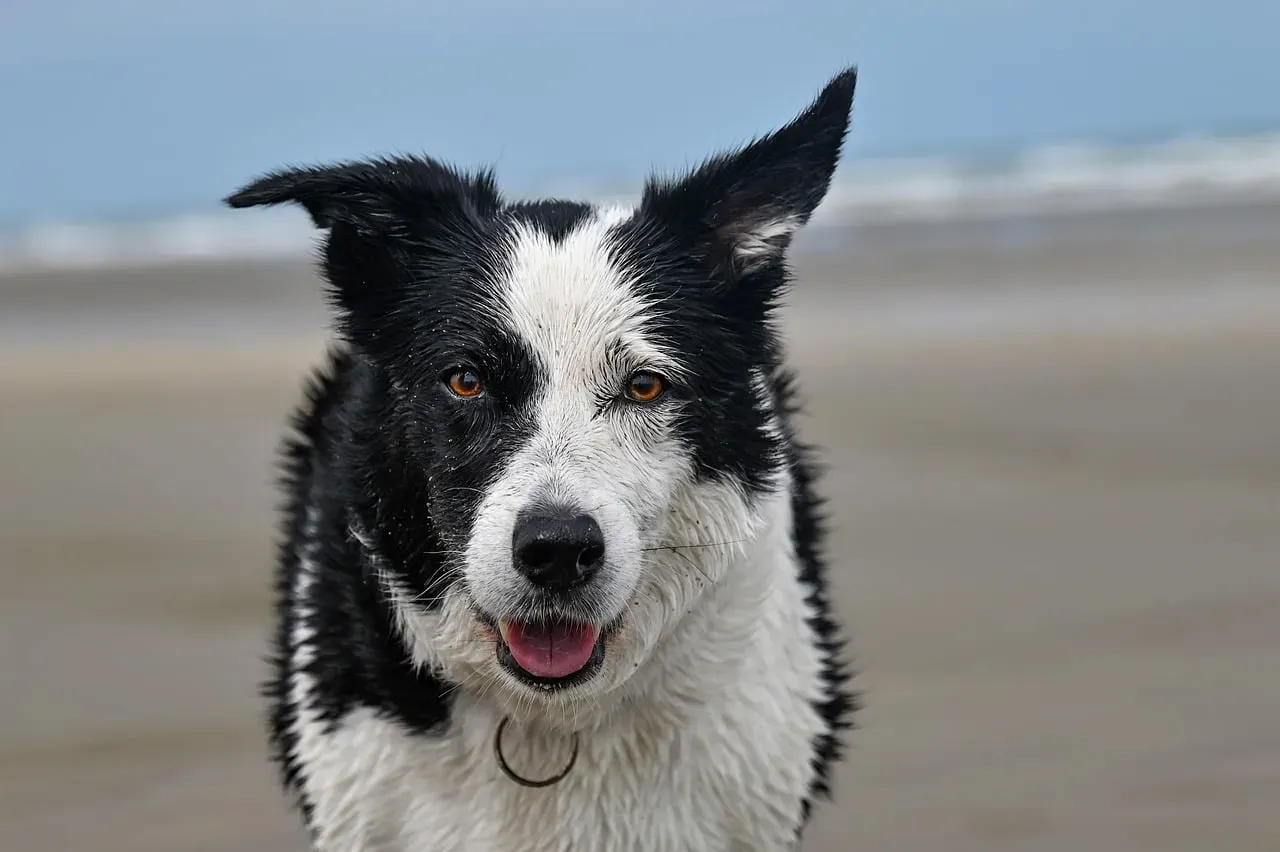
When the head sits below the shoulders, vets start asking questions.
Cornell’s veterinary team lists carrying the head low as a sign of altered posture in a painful dog. It’s subtle, so it’s easy to misread as sleepiness.
Lowering the head to eat or drink can hurt, and so can chewing, swallowing, or bending the neck. That means a dog with neck or mouth trouble may hold the head differently or avoid the bowl. A dog that hovers near its dinner but won’t commit is telling you something.
Dogs are usually easier to read than cats. Cats are more nuanced and rely on smaller shifts in posture and movement. A tiny head drop in a cat can carry as much meaning as a full slump in a dog.
Some animals can’t even stay still long enough to show you their head position, as #7 explains…

Glass Hummingbird Feeder for Outdoors Hanging, 16 oz Leak-Proof Nectar Feeder with Bee Guards & Ant Moat
Check Price on AmazonAs an Amazon Associate, we earn from qualifying purchases.
10/7/2026 1:22 pm GMTi

Dog Stairs for Bed 18" H, 4-Step Dog Steps for High Bed
Check Price on AmazonAs an Amazon Associate, we earn from qualifying purchases.
10/9/2026 2:42 pm GMTi

Earth Rated XL Dog & Puppy Pee Pads, Discreet Top, Max Absorbency
Check Price on AmazonAs an Amazon Associate, we earn from qualifying purchases.
10/7/2026 1:28 pm GMTi

Orthopedic Extra Large Dog Bed, Waterproof Washable XL Pet Bed 44"
Check Price on AmazonAs an Amazon Associate, we earn from qualifying purchases.
10/7/2026 1:32 pm GMTi

Glass Hummingbird Feeder for Outdoors Hanging
Check Price on AmazonAs an Amazon Associate, we earn from qualifying purchases.
10/7/2026 1:21 pm GMTi
#7 – The Pet That Can’t Settle

🔥 Would you like to save this?
We'll email this post to you, so you can come back to it later!
Sometimes the loudest sign is the inability to sit still at all.
Here’s a twist. Vets also read stillness by its absence. Painful pets may become restless and struggle to get comfortable, so they pace, circle, or frequently change positions.
Cornell lists pacing and an inability to settle as signs of restlessness linked to pain. A dog that lies down, gets up, turns twice, and lies down again isn’t being fussy. The animal is searching for a position that doesn’t hurt. Watching that search tells a vet nearly as much as any exam.
Restlessness has an urgent version, too. A dog that paces, drools, retches without bringing anything up, and has a swollen belly needs an emergency vet right away. That cluster can point to a life-threatening stomach problem, and it starts by looking like a dog who can’t get comfortable.
Things worth noting at home:
- How often does your pet change position?
- Does it happen at night or after meals?
- Does the pacing stop when they finally lie down?
But the movement between positions reveals even more, which brings us to #6…
#6 – The Sit-to-Flop Transition
🔥 Would you like to save this?
We'll email this post to you, so you can come back to it later!
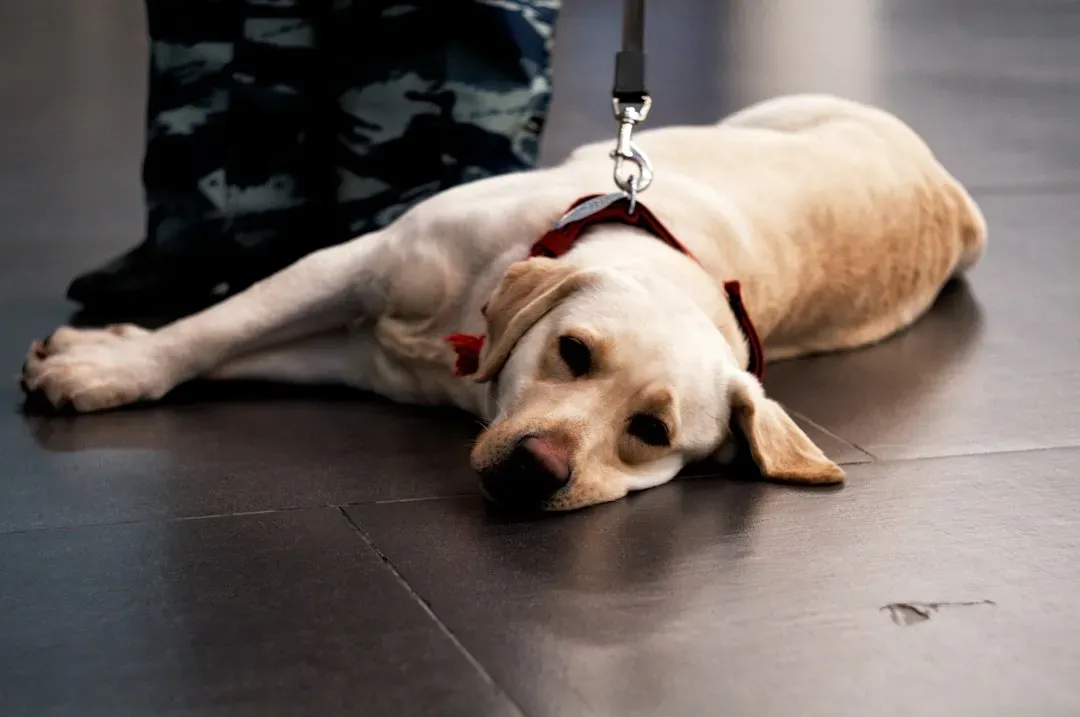
How an animal gets down matters as much as how it sits.
A healthy dog usually lowers itself in a smooth sequence. AAHA lists flopping into a down position instead of gradually reclining as a common posture change. You may know the sound: a heavy thud on the kitchen floor, like a sack of flour dropped from a counter.
The same source flags struggling to move from one position to another. Cornell adds difficulty sitting, climbing stairs, and getting up from rest. Cats show it differently. They may stop jumping onto the couch or windowsill, or take a pause before leaping.
Many owners write off a clumsy flop as personality. Vets treat it as a mobility clue, especially when it’s new.
Next up, a clue that shows up before a pet even moves, in #5…
#5 – The Uneven Weight Shift
🔥 Would you like to save this?
We'll email this post to you, so you can come back to it later!
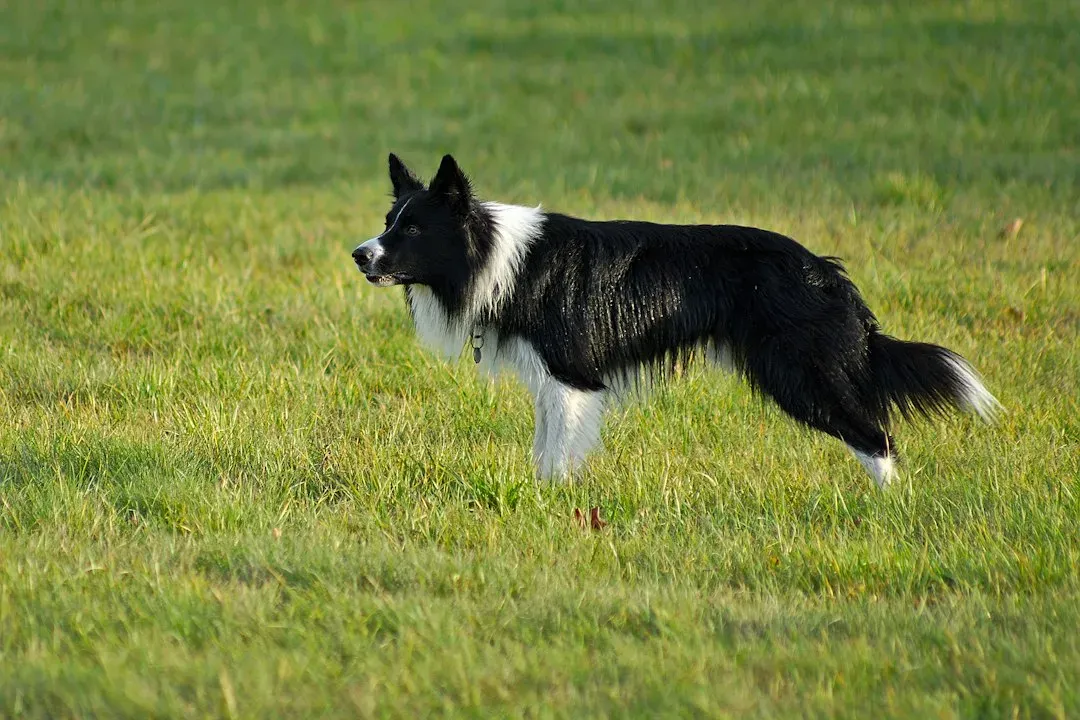
Pets can’t tell you which side hurts. They can show you.
Watch where the weight lands. Standing with more weight on the front legs or on one side of the body appears on the list of posture changes to watch. Sitting and standing still make it easiest to see. Dogs already carry more weight on their front legs than their back ones, so when the balance tips further forward, it can mean the hind end hurts.
You may also notice one side of the body being favored more than the other. It’s often a quiet lean, not a limp.
Worth Knowing
- Vets often watch from behind, checking whether a sit looks square and symmetrical.
- Compare left and right: shoulders, hips, and where each paw lands.
- Note the time of day the lean is most obvious.
- Use the same spot and angle each time you look, so changes stand out.
Some dogs seem stiffer in the morning or after rest, while others worsen later in the day. Timing can point toward different causes, which is why the “when” is as useful as the “what.”
Here’s the debate. Many owners call it “slowing down.” Experts push back, saying posture and neurologic changes are not just quirks or normal signs of aging.
There’s a more serious shape of the spine to consider, in #4…
#4 – The Arched Back
🔥 Would you like to save this?
We'll email this post to you, so you can come back to it later!
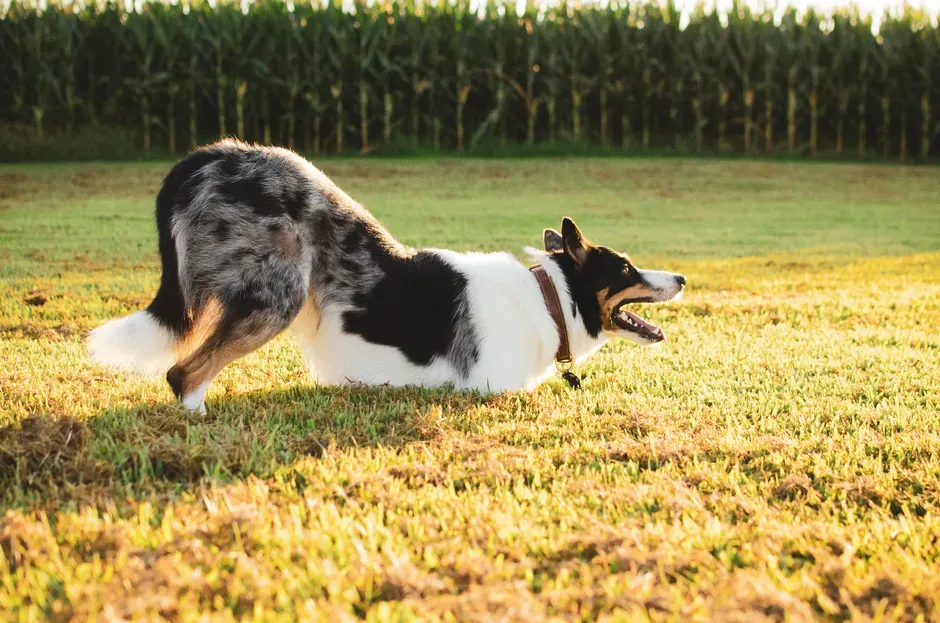
A rounded spine while sitting or standing is one of the oldest warning signs in the book.
An arched or hunched back is listed among the most common posture changes in painful pets. Hunched, tense posture is associated with back or abdominal pain. The belly often looks tucked up, as if the animal is trying to fold around the hurt.
That’s the catch. The same shape can come from the spine or from the belly, so the back isn’t always where the problem is. Only an exam sorts it out.
An arched back paired with reluctance to move, sudden balance changes, or rapid muscle loss shouldn’t be ignored. That combination moves it from “watch it” to “call the vet.”
In some dogs, neurologic signs relate to pain affecting the spine, such as arthritis or changes between the vertebrae. Only a veterinarian can determine what is going on in an individual dog.
Next, a sign that has nothing to do with legs or spine and everything to do with air, in #3…

PetSafe Oasys Pet Fountain, 1/2 Gallon (64 oz), Small Dogs & Cats
Check Price on AmazonAs an Amazon Associate, we earn from qualifying purchases.
10/8/2026 8:14 am GMTi

Portable Dog Water Bottle Foldable Dog Travel Water Bottle
Check Price on AmazonAs an Amazon Associate, we earn from qualifying purchases.
10/7/2026 1:29 pm GMTi

2 Pcs Halloween Pet Hat Bandana Set, Witch Pumpkin Costumes for Dogs
Check Price on AmazonAs an Amazon Associate, we earn from qualifying purchases.
10/9/2026 2:45 pm GMTi

Hand Blown Glass Hummingbird Feeders for Outdoors Hanging, 24oz Wild Bird Nectar Feeder
Check Price on AmazonAs an Amazon Associate, we earn from qualifying purchases.
10/7/2026 1:23 pm GMTi

Smart Bird Feeder with Camera Solar Powered, 2K HD Live Video, 10,000+ Bird Species AI Identification
Check Price on AmazonAs an Amazon Associate, we earn from qualifying purchases.
10/7/2026 1:22 pm GMTi
#3 – Breathing While “Resting”
🔥 Would you like to save this?
We'll email this post to you, so you can come back to it later!
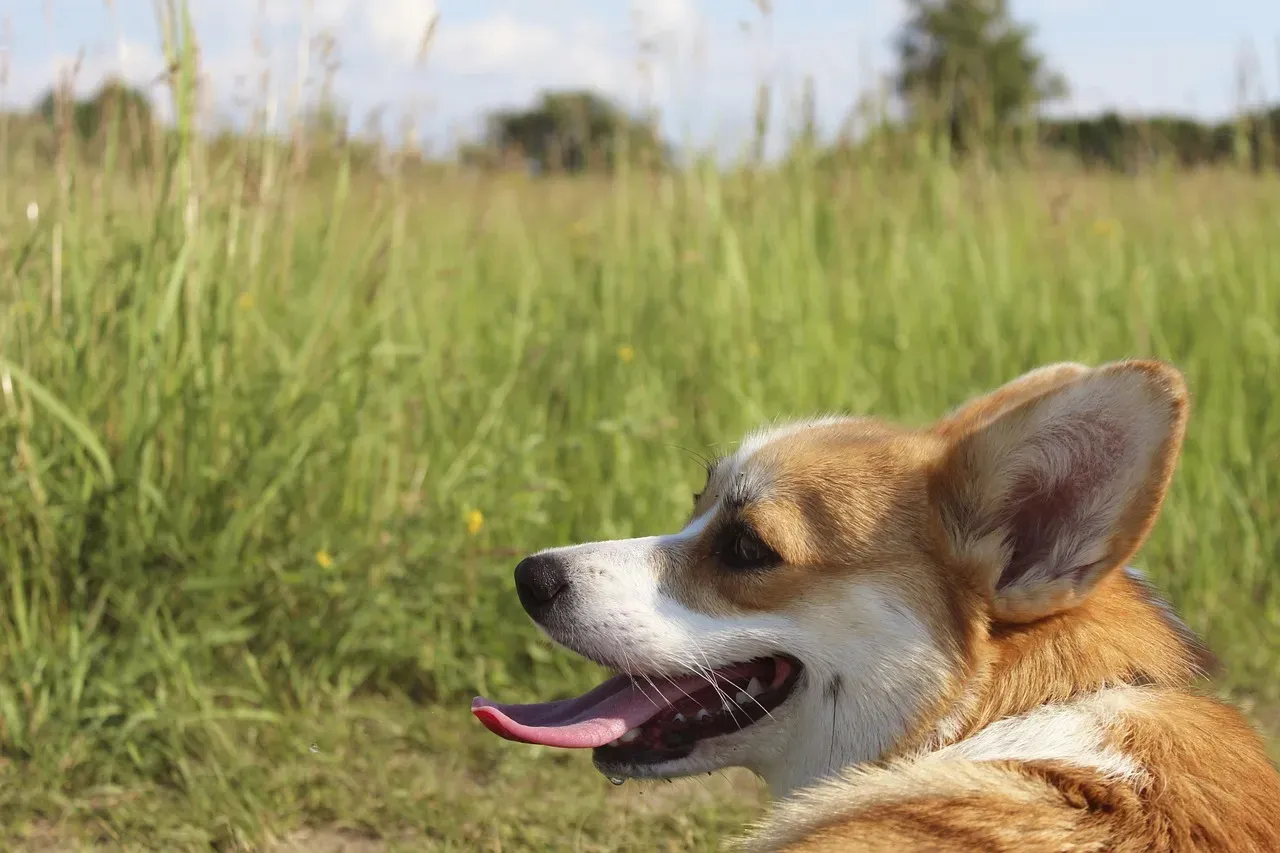
A still pet can still be working hard, and the ribcage tells on them.
Posture includes the chest and belly. In dogs recovering from surgery, signs of pain can include rapid or abdominal breathing, reluctance to move, and a hunched posture with a tense abdomen.
In cats, the same pattern appears. Painful cats are sometimes tachypneic, which means breathing faster than normal. And a cat breathing with its mouth open is a different level of alarm. Cats almost never pant like dogs, so open-mouth breathing deserves immediate attention.
An animal sitting perfectly motionless can still be breathing like it just ran. Most people don’t realize how much a quiet animal can hide behind stillness.
What vets watch while the pet is resting:
- How fast the chest rises and falls
- Whether the belly is doing extra work
- Whether the posture stays rigid or softens
For context, vets who monitor heart patients often use roughly 30 breaths per minute as the number to stay under while a pet is resting or asleep. Numbers that keep running higher are worth a conversation.
But there’s one stance that vets treat as urgent on sight, in #2…
#2 – The Elbows-Out, Neck-Stretched Sit
🔥 Would you like to save this?
We'll email this post to you, so you can come back to it later!
This posture looks stubborn. Vets see it as a plea for air.
Imagine a dog sitting upright, elbows turned out, neck stretched forward, refusing to lie down. That’s what vets call an orthopneic stance. The review links it to thoracic pain. Vets also associate it with struggling to breathe comfortably.
A pet that won’t lie down, even when exhausted, may be unable to breathe comfortably in that position. Most owners read this as restlessness or clinginess. It isn’t. An exhausted animal that stays propped up all night is making a trade-off no one would choose.
Look for these together:
- Reluctance to lie flat
- A stretched neck and wide elbows
- Visible effort in the chest or belly
If you see it, don’t wait to see if it passes. The last posture on our list is the one most often mistaken for something playful, in #1…

Halloween Cat Costume Cloak Witch Hat Pet Accessories
Check Price on AmazonAs an Amazon Associate, we earn from qualifying purchases.
10/9/2026 2:44 pm GMTi

Halloween Dog Collar with Bow, Orange Cute Ghost Collar,
Check Price on AmazonAs an Amazon Associate, we earn from qualifying purchases.
10/9/2026 2:43 pm GMTi

Professional 7 in 1 Dog Paw Cleaner for Dogs & Cats - Includes 1 Portable Paw Washer, 1 Bath Brush
Check Price on AmazonAs an Amazon Associate, we earn from qualifying purchases.
10/7/2026 1:26 pm GMTi

Air Purifiers for Home Pets Large Room Up to 3000 Ft²,HEPA Air Cleaner with Washable Double-Side Filter, PM2.5 Air Quality Monitor,15dB Sleep Mode for Bedroom Odor Dust Pollen,White
Check Price on AmazonAs an Amazon Associate, we earn from qualifying purchases.
10/8/2026 8:23 am GMTi
#1 – The “Prayer” Position

🔥 Would you like to save this?
We'll email this post to you, so you can come back to it later!
This one looks like a joyful stretch. Sometimes it’s the opposite.
The classic play bow has front legs down, rear end up. The prayer position looks nearly identical. Play bows are an invitation to play, whereas the prayer posture is typically associated with discomfort or pain.
The posture that looks like fun can signal severe abdominal pain. Today’s Veterinary Practice describes it as the hindlimbs up and the sternum and forelimbs flat on the floor. Vets think about causes such as pancreatitis or other belly trouble when they see it.
The tell is everything around it. Here’s how the two compare at a glance.
At a Glance
- Play bow: a dog bounces in and out of it, tail wagging, eyes bright.
- Prayer position: the dog holds it, may whimper, and may retreat to a corner.
- Red flag: the pose is held, repeated, and paired with a changed mood.
Honestly, this is the most misread posture in dogs. Most owners film it for social media. A vet who sees it held, repeated, and paired with a changed mood will treat it as a red flag.
Which brings us to the bigger lesson behind all thirteen…
Stillness isn’t calm. It’s data. Every posture here shows an animal doing its best to protect something that hurts, whether that’s a sore hip, an aching spine, or a struggling chest.
Our opinion: “he’s just getting old” is the laziest sentence in pet care, because posture changes aren’t just quirks or normal aging. One odd sit isn’t a diagnosis, but changes that last more than a short while or grow more noticeable call for a vet.
Watch your pet sit still for five quiet minutes this week. What did you notice that you’d always overlooked?

- 13 Things a Vet Reads From How an Animal Sits Still - November 8, 2026
- 8 Behaviours a Rescued Cat Drops Once It Settles Properly - November 8, 2026
- 9 Things a Well Cared For Dog Does in a Waiting Room - November 8, 2026