


The world of exotic pet ownership opens doors to experiences most people will never encounter. While cats may knock items off shelves and dogs might chew furniture, exotic pet behaviors can range from mildly surprising to utterly bewildering. Owners of these unconventional companions often navigate uncharted territory, dealing with situations no pet care manual could have prepared them for. From unusual dining preferences to bizarre bonding behaviors, these stories provide a fascinating glimpse into the realities of sharing your home with extraordinary animals. Let’s explore some of the strangest reports from those brave enough to welcome exotic creatures into their lives.
The Iguana That Preferred Showering With Its Owner

Several iguana owners have reported an unusual behavior that initially caught them off guard: their scaly companions insisted on joining them in the shower. One Florida-based owner described how her four-foot green iguana would scratch at the bathroom door whenever she showered. After eventually allowing the reptile in, she discovered her iguana would happily position itself under the water spray, seemingly enjoying the warm mist. Herpetologists explain this behavior connects to iguanas’ natural environment, where they experience tropical rainfall. In captivity, shower time becomes a welcome simulation of their natural habitat, with the added bonus of social bonding with their human caretaker. Some owners have even reported their iguanas developing specific preferences for water temperature, with many preferring it slightly warmer than room temperature.
The Python That Stopped Eating Due to “Depression”

A ball python owner in Texas shared a perplexing situation that had reptile specialists stumped. After the owner’s partner moved out of their shared home, the normally voracious python completely stopped eating. For over four months, the snake refused food despite appearing physically healthy. After multiple veterinary consultations and habitat adjustments yielded no changes, the owner arranged for the ex-partner to visit. Remarkably, within hours of the visit, the python accepted food for the first time in months. While experts caution against anthropomorphizing reptile behavior, some acknowledge that certain species can form recognition patterns with regular handlers. This case raises interesting questions about emotional bonding in reptiles, though most herpetologists attribute such behaviors to environmental and stress factors rather than emotional attachment. The python’s feeding strike more likely resulted from subtle ecological changes that coincided with the partner’s departure rather than “depression” as initially believed.
The Sugar Glider That Created “Treasure Collections”
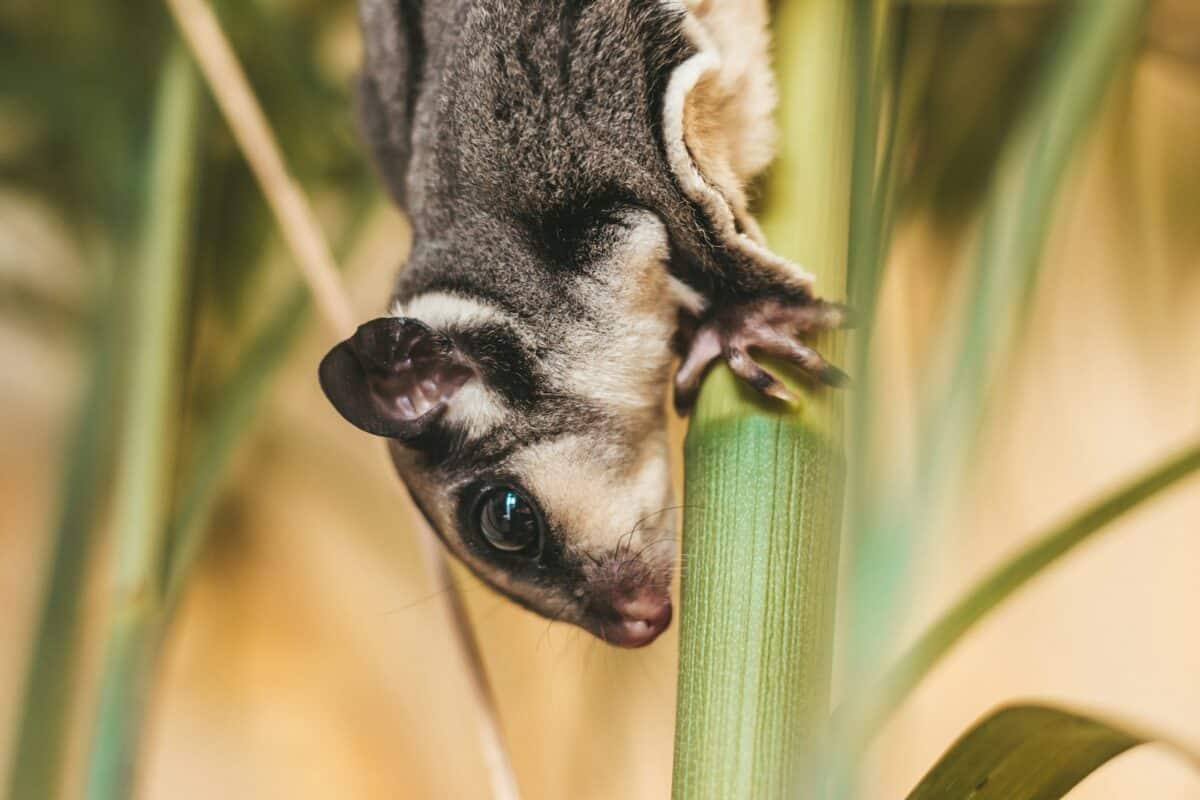
Sugar glider owners often discover their petite marsupials have kleptomaniac tendencies, but one owner’s experience stands out. A Pennsylvania woman reported her sugar glider, Pixel, systematically collected specific items from around her apartment, creating elaborate arrangements in hidden locations. Over several months, Pixel gathered exclusively shiny blue objects – from bottle caps to earrings to fragments of blue glass – and arranged them in concentric circles inside a rarely used kitchen cabinet. When the collection was discovered, it contained over 40 items, all sharing similar color characteristics. Wildlife behaviorists note that while nesting behavior is common in sugar gliders, this level of specificity and organization is highly unusual. The behavior likely represents an exaggerated form of natural gathering instincts, which in the wild would involve collecting food or nesting materials. Some experts speculate the blue preference might relate to how sugar gliders perceive certain wavelengths of light, making these objects particularly attractive to the marsupial’s vision.
The Fennec Fox That “Spoke” In Sleep

A fennec fox owner in Arizona documented an extraordinarily rare behavior that left even exotic animal specialists intrigued. Their three-year-old fennec fox would emit complex vocalizations during deep sleep cycles that eerily resembled human speech patterns. While the sounds didn’t form actual words, they contained distinct syllabic structures and intonation patterns dramatically different from the fox’s normal awake vocalizations. The owner recorded these episodes, which typically occurred during REM sleep, and submitted them to animal behaviorists for analysis. Researchers speculated this represented a form of complex dream-state vocalization, potentially influenced by the fox’s exposure to human speech. Some comparative cognition experts noted parallels to documented cases in certain parrot species and great apes, where exposure to human language can influence vocalization patterns. However, most experts agree this represents an extremely rare case, as fennec foxes typically produce a limited range of barks, whines, and chirps even in domestic settings.
The Kinkajou That Developed an Obsession with Classical Music

Among the strangest behavioral developments reported by exotic pet owners was a kinkajou in Michigan that displayed a pronounced response to classical music. The rainforest mammal, normally nocturnal and moderately active, would completely alter its behavior when Bach’s cello suites played. The owner, a music teacher, noticed the kinkajou would emerge from hiding regardless of time of day, position itself near the speakers, and remain completely motionless for the duration of the music. This behavior occurred exclusively with Bach’s cello compositions – other classical pieces or instruments failed to elicit the same response. Most remarkably, the kinkajou’s pupils would dilate significantly during these listening sessions, suggesting intense focus or emotional response. Animal neurologists who reviewed videos of the behavior suggested the specific frequencies in cello music might stimulate auditory pathways in ways similar to certain rainforest sounds. Alternative theories propose the animal might associate these specific sounds with positive experiences like feeding or socialization. Whatever the explanation, this case represents one of the most specific and consistent music preference behaviors documented in non-human primates or procyonids.
The Serval Cat That Developed a “Handwashing” Ritual

A serval owner in Colorado documented a behavior that defied typical feline patterns. Their adult female serval developed an elaborate ritual around a bathroom sink that resembled human handwashing. Several times daily, the serval would turn on the bathroom faucet (having learned this mechanism through observation), produce a precise amount of water, methodically wet and rub its front paws together for approximately 20 seconds, then turn the water off before carefully drying its paws on nearby towels. This sequence occurred consistently before meals and after using her litter box. While cats naturally exhibit cleanliness behaviors, the structured, multi-step nature of this ritual surprised ethologists who studied video documentation. The precise timing and consistent sequencing suggested a level of behavioral complexity rarely seen outside of primates. Experts theorize this represents an extraordinarily sophisticated example of observational learning, as the serval likely combined natural grooming instincts with observed human behaviors. The case provides fascinating insights into the cognitive capabilities of exotic felines when raised in close human proximity.
The Coatimundi That “Performed” for Houseplants

A coatimundi owner in New Mexico shared one of the most peculiar behavioral accounts in exotic pet literature. Their adult male coatimundi developed what appeared to be a “performance ritual” directed exclusively at houseplants. Several times weekly, typically at dusk, the Central American mammal would gather small objects like coins, bottle caps, and small toys, arranging them in front of larger houseplants. It would then perform an elaborate series of movements including somersaults, bipedal hops, and vocalizations while moving between the plants, rearranging its collected items between each “display.” These sessions lasted 10-15 minutes and occurred only when the plants’ leaves showed movement from air circulation. Wildlife biologists consulted on this case theorized the behavior might represent a modified territorial display, with the moving plants triggering responses normally reserved for other animals. Alternative explanations include play behavior combined with environmental enrichment, though the structured, repetitive nature of the displays suggests more complex motivations. Most specialists agree this represents an unprecedented behavioral adaptation unique to captive environments, highlighting how exotic species can develop entirely novel behaviors when their natural instincts interact with domestic settings.
The Skunk That Developed Color Preferences

A descented pet skunk in Illinois demonstrated an extraordinary sensory discrimination ability that challenged existing understanding of these animals’ perception. The five-year-old skunk displayed consistent and strong preferences for objects, foods, and bedding materials based strictly on color, showing particular attraction to yellow items while exhibiting active avoidance of red objects. In controlled experiments conducted with the owner’s cooperation, researchers confirmed the skunk would consistently select yellow food dishes even when identical dishes in different colors contained the same food. Similarly, when presented with identical toys differing only in color, the skunk would interact almost exclusively with yellow items while pushing red objects away with its nose. This color-based discrimination extended to bedding materials and even clothing worn by visitors. The behavior contradicted previous research suggesting skunks have limited color vision. Zoologists specializing in mustelid species theorize this might represent an unusual case of tetrachromatic vision development in captivity or alternatively, learned associations between certain colors and positive/negative experiences during critical developmental periods. The case has prompted renewed interest in sensory perception research in captive-bred mustelids.
The Capybara With Night Terrors

A capybara owner in Washington state documented a medical curiosity that veterinary specialists initially dismissed as impossible. Their adult female capybara exhibited classic symptoms of night terrors, a sleep disorder previously undocumented in rodent species. Several nights weekly, the normally placid rodent would abruptly jolt awake during deep sleep, emit loud distress vocalizations, display elevated heart rate, dilated pupils, and engage in frantic movement for 3-5 minutes before gradually returning to normal consciousness. Unlike typical startle responses, the capybara appeared genuinely disoriented during these episodes and showed no response to owner intervention. After multiple occurrences, the owner installed night-vision monitoring equipment, capturing comprehensive footage that convinced exotic animal veterinarians to investigate further. Subsequent research revealed the capybara had experienced early developmental trauma before rescue, potentially contributing to these unusual sleep disruptions. The case eventually prompted a small-scale study of sleep patterns in captive-bred versus rescued capybaras, suggesting these highly social animals may indeed experience complex neurological responses to stress and trauma that manifest during sleep cycles, challenging previous assumptions about rodent neurology.
The Binturong That Detected Medical Conditions

Perhaps one of the most medically significant cases involved a binturong (or “bearcat”) in Ontario that demonstrated an apparent ability to detect undiagnosed medical conditions in humans. The seven-year-old male binturong began exhibiting intense interest in a specific area of its owner’s neck, repeatedly sniffing and gently pawing at the same location despite no visible abnormalities. After weeks of this persistent behavior, the owner sought medical evaluation, leading to the discovery of an early-stage thyroid tumor that had produced no symptomatic indicators. Following successful treatment, the binturong ceased the behavior entirely. More remarkably, the animal later displayed similar focused attention toward a visiting relative’s abdomen, who was subsequently diagnosed with early-stage intestinal disease. Medical researchers studying this case note that binturongs possess extraordinarily sensitive olfactory systems and produce distinctive compounds in their urine with chemical structures similar to popcorn (2-acetyl-1-pyrroline). This unique metabolic pathway might enable them to detect subtle biochemical changes in nearby humans that indicate disease states. While anecdotal, this case has sparked interest in researching potential medical detection capabilities in viverrids, similar to research programs involving dogs trained to detect certain cancers.
The Sloth That “Danced” to Specific Phone Ringtones

A two-toed sloth owner in California documented one of the more improbable behavioral responses in exotic pet literature. Their adult female sloth, typically characteristically slow-moving and phlegmatic, would immediately initiate rhythmic, swaying movements whenever it heard one specific ringtone from the owner’s phone. This behavior, described as “dancing” due to its surprisingly coordinated nature, occurred exclusively in response to a ringtone with a distinctive percussion pattern at approximately 70 beats per minute. No other sounds, including similar ringtones at different tempos, elicited this response. Zoologists specializing in xenarthrans (the mammalian group including sloths) theorize the specific frequency combination might resemble certain rainforest sounds associated with either social communication or predator warnings. Alternatively, some researchers proposed the vibration patterns produced by this specific sound might stimulate the sloth’s highly specialized inner ear structures, which have evolved to detect subtle movements in tree branches that might indicate approaching threats. Regardless of mechanism, this case highlights how even notoriously slow-moving species can display rapid, specific behavioral responses to environmental stimuli when those stimuli trigger evolutionarily significant neural pathways.
The Prairie Dog Colony That Developed a “Language” with Its Owner

A family in Utah maintaining a small colony of black-tailed prairie dogs reported the development of what animal communication researchers later described as a proto-language system between the animals and their primary caretaker. Over three years, the five prairie dogs developed approximately 18-20 distinct vocalizations that appeared to have specific meanings within the human-animal relationship context. These vocalizations differed significantly from their natural alarm calls or social communications, emerging only during interactions with humans. Most remarkably, these sounds showed consistent contextual usage: specific vocalizations reliably predicted requests for certain foods, location changes, social interactions, or warning signals about household events like arriving visitors. The primary caretaker could identify with over 90% accuracy what each vocalization signified, and controlled experiments confirmed these weren’t simply conditioned responses but represented a genuine communication system with both productive and receptive elements. Comparative cognition researchers who studied this case suggest it represents one of the most developed examples of cross-species communication adaptation in a non-primate species. The prairie dogs appeared to have developed this system spontaneously rather than through deliberate training, suggesting significant cognitive flexibility and social intelligence previously underappreciated in rodent species.
The Wallaby That Orchestrated Escapes for Other Pets

Perhaps the most cognitively sophisticated case involved a Bennett’s wallaby in Tennessee that displayed problem-solving abilities that astonished both its owners and animal behaviorists. The three-year-old male wallaby demonstrated an apparent ability to deliberately free other household pets from their enclosures, specifically targeting situations where animals appeared distressed. Security camera footage revealed the marsupial systematically manipulating latches, sliding doors, and even operating simple knob mechanisms to release other animals, including rabbits, guinea pigs, and a small parrot. These weren’t random actions – the wallaby performed these behaviors only when the other animals vocalized distress calls or displayed agitation, never interfering with contented animals. Most remarkably, the wallaby developed different techniques for different enclosure types, suggesting a genuine understanding of mechanical causality rather than simple mimicry. When researchers conducted controlled tests, the wallaby successfully navigated novel locking mechanisms after brief observation periods. While marsupials generally score lower on problem-solving assessments than placental mammals with similar brain sizes, this case suggests the cognitive capabilities of macropods may be significantly underestimated. Some researchers proposed that this behavior might represent an extension of social rescue behaviors observed in some highly social species, though the cross-species nature of this case makes it particularly extraordinary.
Conclusion: What These Weird Behaviors Tell Us About Exotic Pets

These thirteen unusual cases represent more than just entertaining anecdotes – they provide valuable insights into the complex cognitive and behavioral adaptability of exotic species in captivity. When animals evolved for specific ecological niches and find themselves in domestic environments, they often develop unexpected behavioral adaptations that challenge our understanding of their capabilities. Many of these cases suggest that traditional assessments of animal intelligence and emotional complexity may significantly underestimate what’s possible when exotic species have extended human interaction, environmental enrichment, and opportunities to express their natural behavioral flexibility. For ethical exotic pet owners, these weird behaviors underscore the importance of providing not just physical care but appropriate cognitive and social stimulation tailored to each species’ unique needs. As research in comparative cognition and exotic animal behavior continues to evolve, these unusual cases remind us that the relationship between humans and the animals they keep continues to surprise even the most expert in the field.

As a little kid, I fell in love with nature, wildlife, and animals. Living in the USA, South Africa, Italy, China and Germany gave me the opportunity to discover the world's Wildlife. My favorite animals are Mountain Gorillas, Siberian Tigers, and Great White Sharks.
I'm a certified PADI Open Water Diver, went to Everest Base Camp and Trekked Gorillas in Uganda. I hold a Master of Science in Economics and Finance.
Please send any feedback to feedback@animalsaroundtheglobe.com
- Why the Great Barrier Reef Is the Best Place to Spot Sea Turtles - June 3, 2026
- 2 Animals With Super Sized Body Parts and What They are For - June 3, 2026
- Explore The Azores - June 3, 2026