

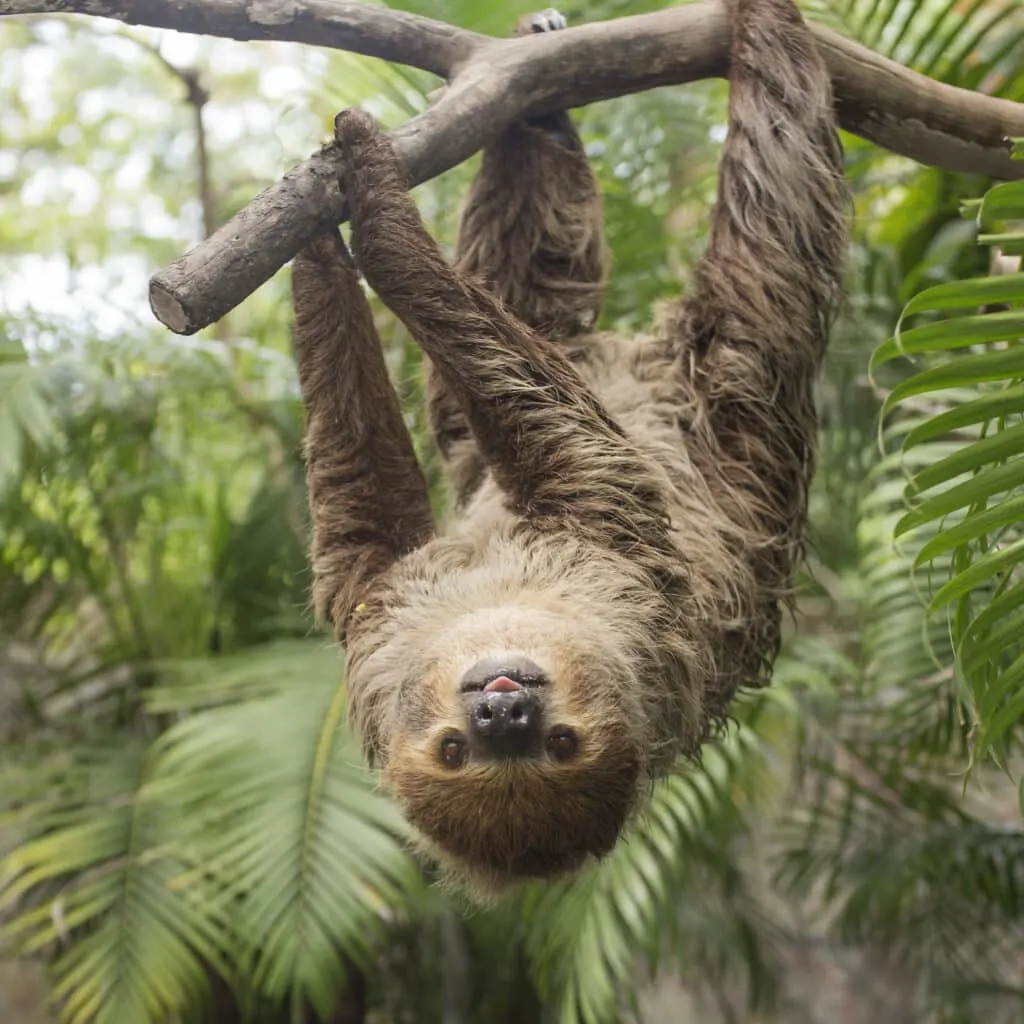
Deep in the tropical rainforests of Central and South America lives one of nature’s most misunderstood and remarkable creatures: the sloth. These slow-moving mammals have captured our hearts with their perpetual smiles and unhurried lifestyle, but there’s much more to these fascinating animals than meets the eye. Beyond their adorable appearances and leisurely pace lies a world of extraordinary adaptations and surprising capabilities. From their unique metabolic processes to their symbiotic relationships with algae, sloths have evolved remarkable traits that have allowed them to thrive in their arboreal habitats for millions of years. In this article, we’ll explore 15 captivating facts about sloths that will change the way you think about these extraordinary creatures and perhaps inspire a newfound appreciation for the art of taking life slow.
Sloths Are Much Faster in Water Than on Land

While sloths are famously slow on land—moving at an average pace of only 0.15 miles per hour—they transform into surprisingly efficient swimmers when they hit the water. Their long arms make perfect paddles, allowing them to move through water at speeds up to three times faster than their land pace. This unexpected aquatic agility serves them well, as they often need to cross rivers in their rainforest habitats. Their dense fur traps air, providing exceptional buoyancy that helps them stay afloat with minimal effort. Scientists believe this swimming ability evolved as a crucial survival mechanism, allowing sloths to expand their territory and escape predators. Some three-toed sloths have been observed holding their breath underwater for up to 40 minutes, demonstrating yet another remarkable adaptation of these seemingly sluggish creatures.
They Have an Extremely Slow Metabolism
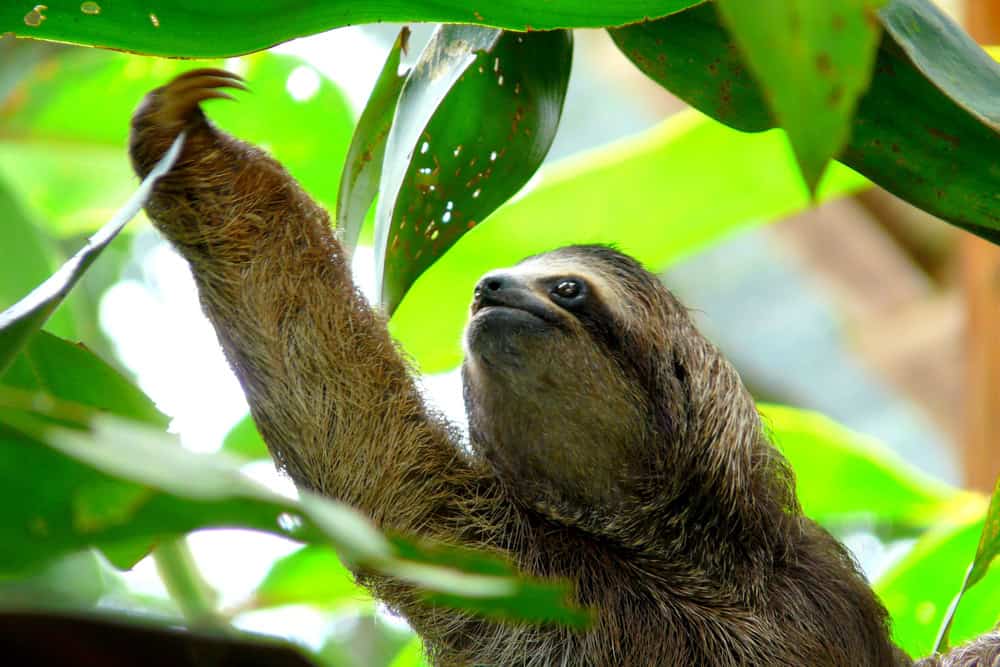
The sloth’s legendary slowness isn’t laziness—it’s a remarkable evolutionary adaptation. Their metabolic rate ranks among the slowest of any mammal on Earth, operating at just 40-45% of what would be expected for a mammal of their size. This metabolic sluggishness serves a crucial purpose: energy conservation. Sloths can take up to 30 days to digest a single leaf, extracting every possible nutrient from their low-calorie diet. Their specialized multi-chambered stomachs contain symbiotic bacteria that break down the tough cellulose in leaves through fermentation. This process is incredibly energy-efficient but extremely time-consuming. As a result of this slow metabolism, sloths maintain a body temperature between 74-92°F (23-33°C), much lower and more variable than most mammals. This metabolic strategy allows them to survive on very little food—sometimes consuming as little as 200 calories per day—which is an invaluable adaptation in an environment where high-quality food can be scarce.
Sloths Grow Algae in Their Fur as Camouflage

Perhaps one of the most extraordinary examples of symbiosis in the animal kingdom is the relationship between sloths and algae. A sloth’s fur has unique grooves and cracks that collect rainwater, creating the perfect damp environment for algae growth. Far from being a problem, this algae growth is actually beneficial to both organisms. The algae gives the sloth’s fur a greenish tint that provides excellent camouflage in the leafy canopy, helping them avoid detection by predators like harpy eagles and jaguars. In exchange, the sloth provides a stable habitat for the algae. Research has revealed that this isn’t just any algae—some species are found nowhere else on Earth except in sloth fur. This relationship goes even deeper, as studies have shown that some sloths may absorb nutrients from the algae through their skin or by licking their fur, supplementing their limited leaf diet. Additionally, the algae-rich fur hosts a complex microecosystem including fungi, bacteria, and even small invertebrates like moths and beetles.
They Only Leave Their Trees Once a Week for a Very Important Reason

Despite spending the vast majority of their lives in the treetops, sloths make a weekly journey to the forest floor for one essential purpose: to defecate. This risky descent is one of the most peculiar behaviors in the animal kingdom. Rather than simply relieving themselves from the safety of the branches, three-toed sloths will climb down to the base of their tree, dig a small hole with their tail, deposit their waste, and carefully cover it up before making the arduous climb back up. This bathroom break is remarkably consistent, occurring about once every seven days, and can account for up to one-third of a sloth’s total body weight. Scientists have proposed several theories for this dangerous behavior, including territory marking, fertilizing their favorite trees, and maintaining their specialized gut microbiome. This bathroom ritual is also the most dangerous activity in a sloth’s life—approximately half of all sloth deaths occur during these vulnerable ground excursions when they become easy targets for predators.
Sloths Can Rotate Their Heads Nearly 180 Degrees

One of the sloth’s most remarkable physical adaptations is their ability to rotate their heads nearly 180 degrees in either direction. This owl-like capability comes from having extra vertebrae in their necks—two-toed sloths have 7 cervical vertebrae (the same as humans), but three-toed sloths have 8 or 9. This anatomical difference provides extraordinary flexibility, allowing them to scan their surroundings for predators without moving their body and expending precious energy. Their neck mobility compensates for their extremely poor eyesight, giving them a wider field of vision to detect movement and potential threats. This adaptation is particularly valuable for such slow-moving creatures, as it allows them to remain motionless while still monitoring their environment. Combined with their ability to twist their limbs in unusual positions to reach food, this neck flexibility contributes to the sloth’s success as a canopy dweller, where versatile movement capabilities are essential for survival.
There Are Six Existing Species of Sloths

While often broadly categorized as either “two-toed” or “three-toed,” sloths actually comprise six distinct species belonging to two different families: Bradypodidae (three-toed sloths) and Megalonychidae (two-toed sloths). The three-toed sloth family includes the brown-throated sloth, the pale-throated sloth, and the maned sloth, while the two-toed family consists of Linnaeus’s two-toed sloth, Hoffmann’s two-toed sloth, and the recently recognized pygmy three-toed sloth. Despite their names, all sloths actually have three toes on their hind limbs—the distinction refers only to the number of digits on their forelimbs. These six species are the surviving members of a once much larger and more diverse group. Ancient sloth species included ground sloths like Megatherium, which stood 20 feet tall and weighed several tons—larger than modern elephants. The current arboreal sloth species are the result of millions of years of evolution, with fossil records indicating that sloths have been around for approximately 35-40 million years, making them one of the oldest mammal lineages in the Americas.
Sloths Sleep Far Less Than Previously Believed

Contrary to popular belief, sloths are not the sleepyheads of the animal kingdom. While they were once thought to sleep for up to 20 hours daily, scientific studies using EEG monitoring have revealed that wild sloths actually sleep just 8-10 hours per day—not much more than humans. This misconception arose because sloths remain motionless for long periods to conserve energy and avoid detection, even when fully awake. Their slow metabolism doesn’t require the recovery function that sleep provides to more active animals. Interestingly, captive sloths tend to sleep significantly more than their wild counterparts, likely due to the absence of predators and the reduced need to stay vigilant. Wild sloths have also developed the remarkable ability to shut down only half their brain during sleep (unihemispheric sleep), similar to dolphins and some birds, allowing them to remain partially alert to potential threats. This adaptation highlights how their apparent laziness is actually a sophisticated survival strategy finely tuned to their ecological niche.
They Have Incredibly Strong Grip Strength

The sloth’s seemingly relaxed demeanor belies one of their most impressive physical attributes: extraordinary grip strength. Their long, curved claws—which can grow up to 4 inches in length—work in conjunction with specialized tendons to create a “hook-like” grip that locks into place around branches. This passive locking mechanism requires no active muscle engagement to maintain, allowing sloths to hang effortlessly for hours or even sleep upside down without falling. Their grip is so powerful that sloths often remain hanging from branches even after death, until decomposition finally loosens their grasp. Each limb can support the sloth’s entire body weight independently, providing crucial redundancy for life in the treetops. This remarkable adaptation explains why sloths can easily climb with just two limbs while using their others to reach for food or navigate between branches. Their grip strength is estimated to be proportionally among the strongest of any mammal—a necessary adaptation for creatures that spend 90% of their lives suspended from branches high above the forest floor.
Sloths Can Survive Falls From Great Heights

Despite their seemingly precarious lifestyle high in the rainforest canopy, sloths possess remarkable resilience when it comes to surviving falls. Their specialized anatomy—including a small, flat skull, short ribs, and absence of a collarbone—creates a compact, flexible body that can absorb significant impact. Their slow metabolism also works to their advantage during traumatic events, as their bodies require less oxygen, giving vital organs like the brain a better chance of survival following injury. Research has documented sloths surviving falls from heights of over 100 feet with minimal injury. Their dense, algae-filled fur acts as natural cushioning, while their remarkably flexible limbs help distribute impact forces. Additionally, their internal organs are attached to their ribcage by specialized connective tissue that prevents damaging movement during falls. These adaptations don’t make sloths invincible—serious falls can still be fatal—but they provide an impressive survival advantage for an animal that spends its life navigating the precarious heights of the rainforest canopy.
Baby Sloths Learn by Mimicking Their Mothers

The bond between mother and baby sloth represents one of nature’s most enduring parental relationships. Baby sloths, called infants, cling to their mother’s belly for their first 5-6 months of life, during which time they learn crucial survival skills exclusively through observation and imitation. This extended period of dependency is necessary because young sloths must learn which of the thousands of rainforest tree species are safe to eat and which are toxic. Mothers teach their young by example, carefully selecting appropriate leaves and allowing their babies to watch their feeding habits closely. The infant sloth will then mimic this behavior, gradually building its own dietary knowledge. Interestingly, a baby sloth’s first independent action typically occurs around 4-5 weeks of age when it reaches out to sample leaves its mother is eating. Mother sloths are also responsible for teaching crucial climbing techniques and predator avoidance strategies. This intensive learning period creates a strong bond, with research suggesting that infant sloths can recognize their mother’s call among many other forest sounds, highlighting the sophisticated nature of this seemingly simple creature’s social structure.
Their Fur Grows in the Opposite Direction of Most Mammals

Sloth fur exhibits a unique adaptation among mammals: it grows from the belly toward the back, the opposite direction of almost all other furry creatures. This reversed growth pattern serves a critical purpose for animals that spend most of their time hanging upside down. When rain falls in the rainforest, this orientation allows water to flow efficiently off their bodies, preventing their thick fur from becoming waterlogged and heavy. Their specialized fur consists of two distinct layers: a soft, insulating undercoat and longer, coarser guard hairs that provide protection from the elements. Each hair has a groove running along its length that not only helps channel water but also creates the perfect environment for algae growth. Additionally, sloth fur contains microscopic cracks that absorb water like a sponge during brief rainfall, allowing them to stay hydrated by drinking directly from their own fur. Their hair also exhibits unique properties that make it resistant to fungal and bacterial growth, despite the humid conditions—a characteristic that has attracted interest from pharmaceutical researchers seeking new antimicrobial compounds.
Sloths Are Evolutionary Champions

Despite their seemingly disadvantaged physical characteristics, sloths represent one of evolution’s most successful experiments. These remarkable creatures have existed in various forms for over 35 million years, far outlasting many more physically imposing species. Their evolutionary success stems not from speed, strength, or intelligence, but from their unparalleled energy efficiency. By minimizing movement and maximizing caloric conservation, sloths have crafted a sustainable lifestyle perfectly adapted to their resource-limited environment. While ancient ground sloths went extinct around 10,000 years ago (coinciding with human arrival in the Americas), the smaller tree-dwelling species have continued to thrive. Modern sloths have survived virtually unchanged for millions of years because their strategy works—they require minimal resources, reproduce successfully (albeit slowly), and effectively avoid predation. In evolutionary terms, their apparent laziness represents a sophisticated adaptation that has stood the test of time. Their continued success challenges conventional notions about what constitutes evolutionary fitness, demonstrating that sometimes the most successful strategy isn’t being the fastest or strongest, but rather being precisely adapted to a specific ecological niche.
They Have Exceptionally Low-Energy Diets
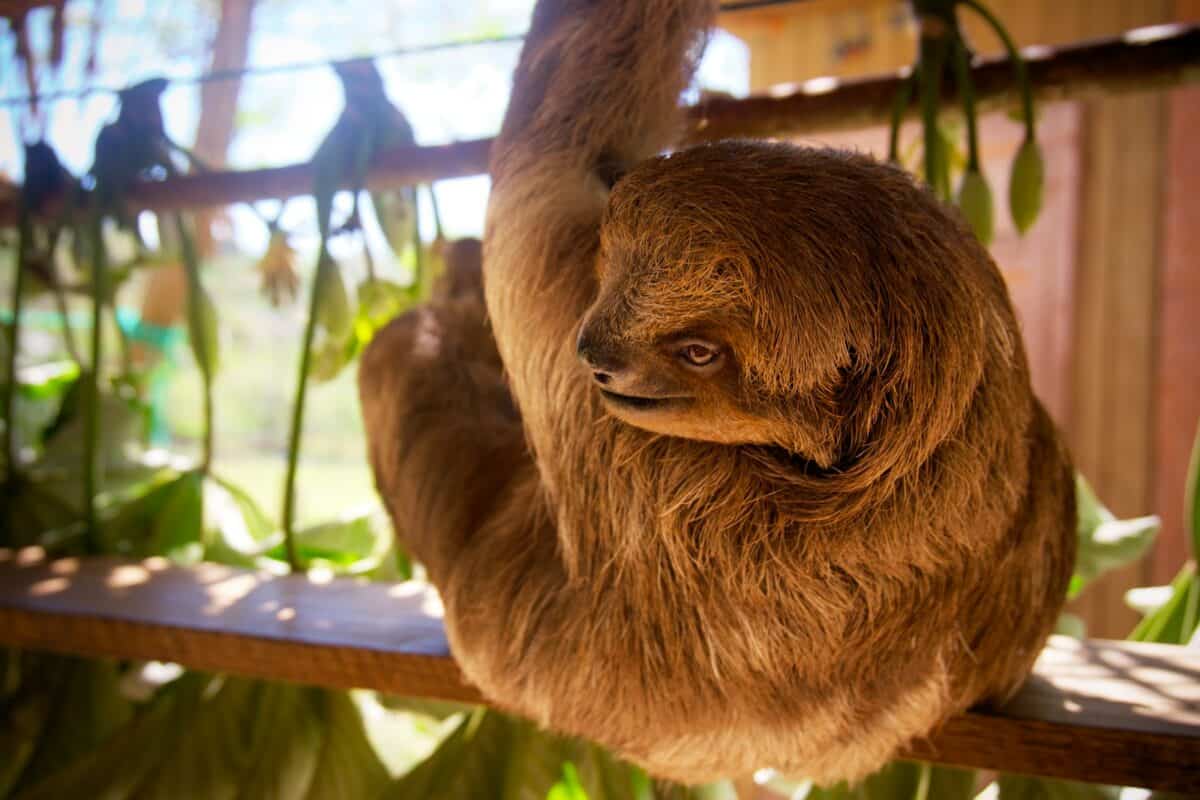
The sloth’s dietary habits are as unusual as the animal itself, perfectly aligned with their energy-conservation lifestyle. Their diet consists almost exclusively of leaves, buds, and tender shoots—foods that are abundant but nutritionally poor and difficult to digest. This dietary challenge is overcome through several specialized adaptations. Their multi-chambered stomachs function similarly to those of cows, containing microorganisms that break down cellulose through fermentation. This process is remarkably thorough but extremely slow, with complete digestion taking up to a month for a single meal. To compensate for this nutritional limitation, sloths have the lowest metabolic rate of any non-hibernating mammal, requiring just 100-200 calories daily—less than 10% of what a human needs relative to body weight. Interestingly, sloths rarely drink water directly, obtaining nearly all their hydration from the moisture in the leaves they consume or by licking dew and rainwater from leaves. Research has shown that some sloth species are highly selective feeders, with individuals showing strong preferences for specific tree species despite having dozens of options within their range, suggesting a sophisticated understanding of their nutritional needs despite their simple diet.
Sloths Have Poor Vision but Excellent Sense of Smell

In the complex sensory landscape of the rainforest, sloths have evolved a unique perceptual profile that prioritizes some senses while minimizing others. Their vision is notably poor, with color perception limited to blue and green wavelengths—essentially rendering them colorblind to reds and yellows. This visual limitation makes sense for leaf-eaters in an environment dominated by green foliage. However, what sloths lack in visual acuity, they more than compensate for with their exceptional sense of smell. Their elongated snouts house highly developed olfactory receptors that can detect specific leaf compounds from considerable distances and identify predators before they become visible. This keen smell helps them locate nutritious young leaves while avoiding toxic ones, a crucial ability given their limited mobility. Their hearing is moderately developed and particularly attuned to the frequency ranges of their predators. Interestingly, sloths have relatively poor temperature sensation, allowing them to tolerate greater body temperature fluctuations than most mammals—another energy-saving adaptation. This sensory profile perfectly illustrates how evolution has shaped the sloth’s perception to prioritize abilities that enhance survival while minimizing energy-intensive systems that provide limited benefit in their specialized ecological niche.
Conclusion:

Sloths may move slowly, but their unique adaptations and surprising behaviors have captured the curiosity of scientists and nature lovers alike. From their upside-down lifestyles and algae-covered fur to their unexpectedly strong grip and slow-motion digestion, sloths challenge our assumptions about survival in the wild. These creatures are more than just symbols of relaxation—they are marvels of evolution, perfectly suited to their rainforest homes. By understanding and appreciating the fascinating traits of sloths, we not only uncover the secrets of their survival but also highlight the importance of protecting the delicate ecosystems they call home.

As a little kid, I fell in love with nature, wildlife, and animals. Living in the USA, South Africa, Italy, China and Germany gave me the opportunity to discover the world's Wildlife. My favorite animals are Mountain Gorillas, Siberian Tigers, and Great White Sharks.
I'm a certified PADI Open Water Diver, went to Everest Base Camp and Trekked Gorillas in Uganda. I hold a Master of Science in Economics and Finance.
Please send any feedback to feedback@animalsaroundtheglobe.com
- 2 Animals With Super Sized Body Parts and What They are For - June 3, 2026
- Explore The Azores - June 3, 2026
- Protecting Wildlife from Harmful Pesticides - June 3, 2026