
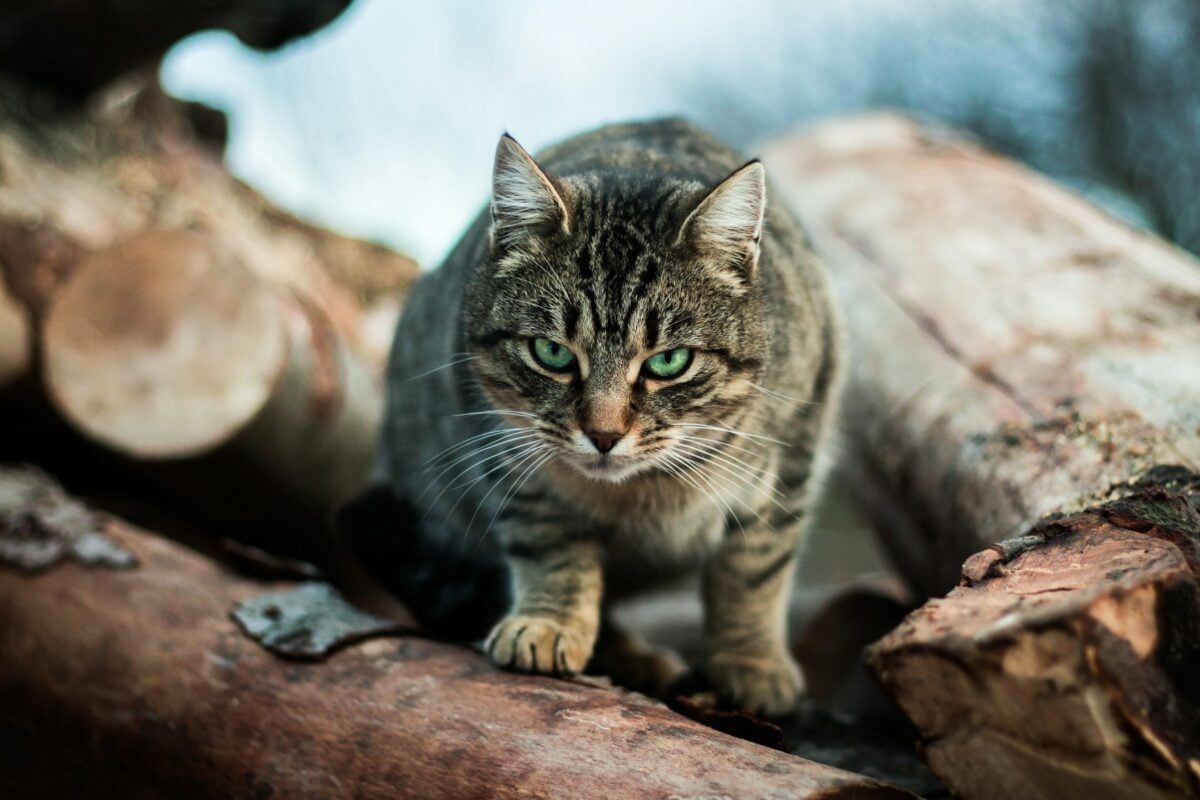
Here’s the twist before we start: your cat probably isn’t nocturnal at all. Cats are crepuscular, meaning their peak activity falls around dusk and dawn, right when you’re drifting off or barely awake. That timing is exactly why so much of their private life goes unseen, and why these 14 night habits are worth the read.
While you sleep, your cat is patrolling, stalking, grooming, listening and sometimes just keeping one ear open for trouble. Some of it is perfectly practical. Some of it is downright strange. And the habit waiting at #1 may change how you feel about that warm weight on your feet.
#14 – They Run a Secret Patrol Route
🔥 Would you like to save this?
We'll email this post to you, so you can come back to it later!
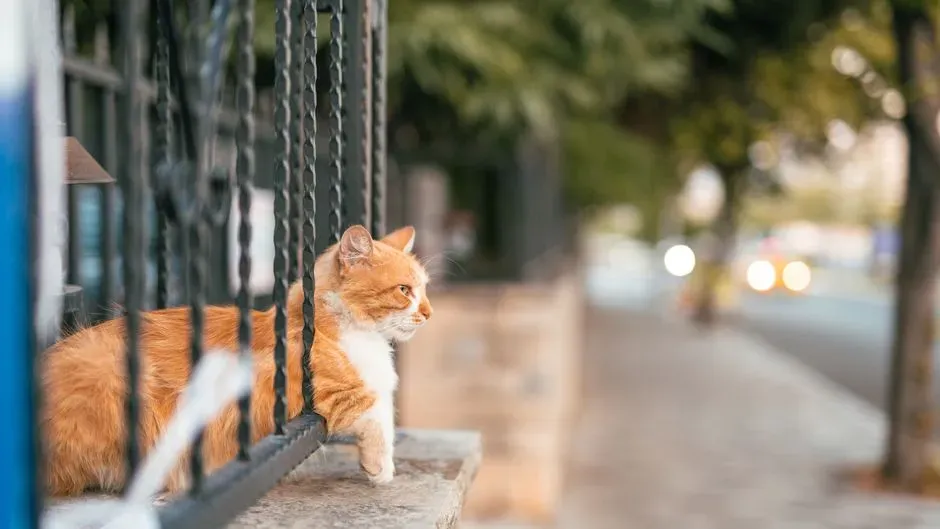
Long after your lights go out, your cat may be clocking in for a shift you’ve never seen. Cats are territorial animals, and that instinct doesn’t switch off just because the territory has a sofa and a thermostat.
Many cats walk the same circuit every night: window, front door, hallway, food bowl, favorite perch. It’s a routine check of a space they treat as theirs, a bit like a security guard rattling doorknobs.
What they’re really doing is gathering intel. Smell, sound and tiny shifts in air movement tell them whether anything has changed since the evening. A new bag by the door or an unfamiliar scent on your shoes can earn an extra-long sniff.
Cats have a specialized scent organ in the roof of the mouth, which is why they sometimes freeze mid-sniff with their mouth slightly open. Behaviorists call this the flehmen response. It helps your cat analyze scents that a plain sniff can’t fully decode.
Typical patrol stops include:
- Windows and doors, the likely entry points
- Food, water and litter areas
- Anything new, such as shoes, parcels or visitors’ bags
But the patrol is calm compared to what happens at #13…
#13 – The 3 A.M. Zoomies Have a Reason
🔥 Would you like to save this?
We'll email this post to you, so you can come back to it later!
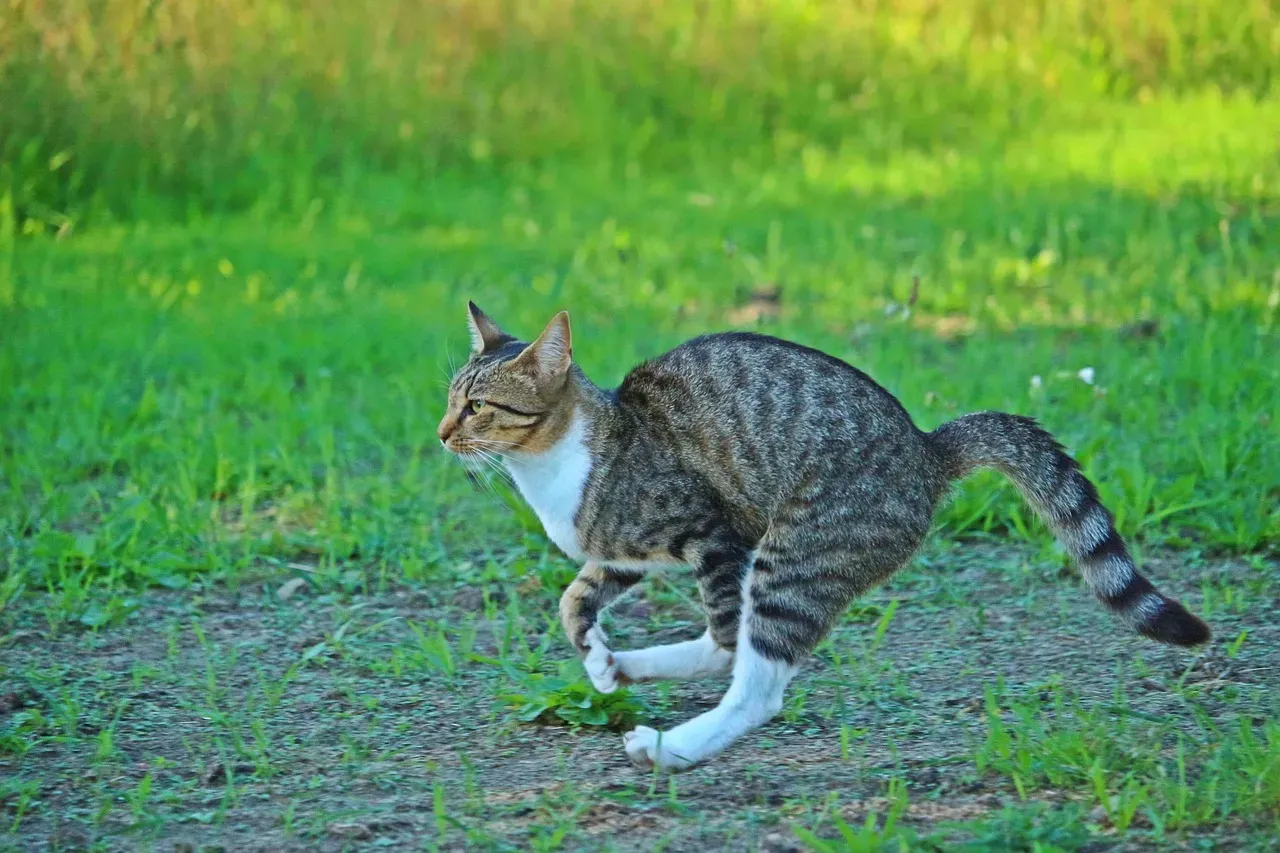
That sudden midnight sprint across your bed isn’t random madness. Behaviorists often describe these bursts as frenetic random activity periods, better known as zoomies.
Cats sleep for much of the day, so energy builds up and can release in short, explosive bouts. Indoor cats, with fewer chances to hunt, climb and chase, tend to show them most.
Zoomies usually look the same: dilated pupils, a lopsided gallop, a wall-climbing leap. The whole stalk-chase-pounce sequence can fire off with no prey in sight. It’s a hunt with the target removed.
Scolding is the instinctive response, but punishing a cat for burning off energy mostly teaches it to be wary of you, not to sleep. Scheduling works far better than discipline.
Short bursts that end in quick calm are normal. Some patterns deserve a vet’s attention:
- A sudden new night-time frenzy in an older cat
- Crying or apparent distress during the bursts
But what your cat is chasing in those quiet hours at #12 is even stranger…
#12 – They Stalk Targets That Aren’t There
🔥 Would you like to save this?
We'll email this post to you, so you can come back to it later!
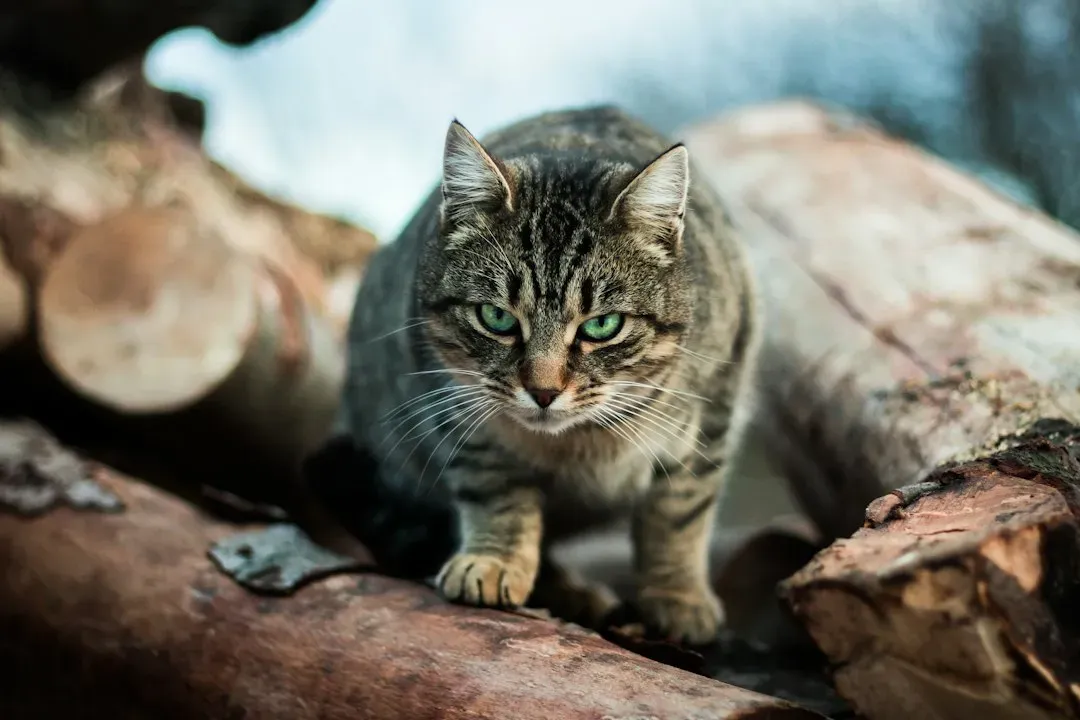
You’ve seen it: your cat locked onto an empty corner, motionless, as if the wall owes it money. That staring contest is actually a hunting drill.
Cats are obligate carnivores wired for a predatory sequence: watch, stalk, chase, pounce, bite. A well-fed pet still carries that wiring. At night, a moth, a flicker of light or a creak in the wall can suddenly become a target.
Cats are highly tuned to movement, and their hearing catches tiny rustles. Something you can’t detect, like an insect behind a baseboard, may be the reason for a long, motionless vigil.
Hunting and eating are largely separate drives in cats, which is why a fully fed cat will still ambush your ankles at 2 a.m. The urge to hunt doesn’t depend on an empty stomach.
Common night-time triggers include:
- Moving shadows and light reflections
- Insects, especially moths
- Your feet shifting under the covers
Many experts argue that the “ankle ambush” isn’t aggression. It’s a cat with no outlet. Using your hands as toys backfires, because it teaches your cat that skin is prey.
And the way your cat sees all this in the dark is the next surprise at #11…
#11 – They See Through Darkness You’d Call Pitch Black
🔥 Would you like to save this?
We'll email this post to you, so you can come back to it later!
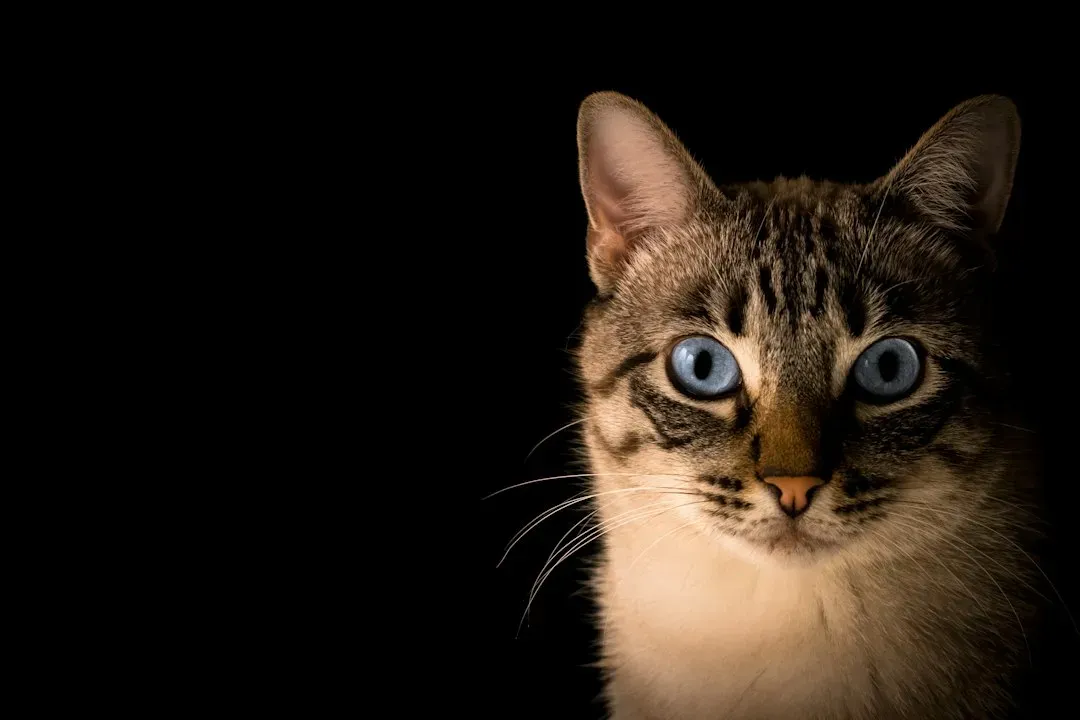
What looks like total darkness to you is a dim but usable room to your cat. Cat eyes are built for low light, with large corneas and pupils that open very wide to let in far more light than ours do. Their retinas are also rich in rod cells, which handle dim conditions.
Behind the retina sits a reflective layer called the tapetum lucidum. It bounces light back through the retina for a second chance at detection. That’s why cat eyes glow in a flashlight beam or headlights.
Cats can’t see in complete darkness. They simply need far less light than we do. Without any light at all, they’re as blind as you are.
The trade-off is that cats see a narrower range of colors than humans, and they resolve fine detail less sharply. For a dusk-and-dawn hunter, that’s a bargain.
Those huge, black pupils you see at night aren’t a sign of aggression. In dim light, they’re usually just your cat’s eyes doing their job.
But sight is only half of the night toolkit, and the other half sits on your cat’s face at #10…
#10 – Their Whiskers Work Like Night-Vision Sensors
🔥 Would you like to save this?
We'll email this post to you, so you can come back to it later!
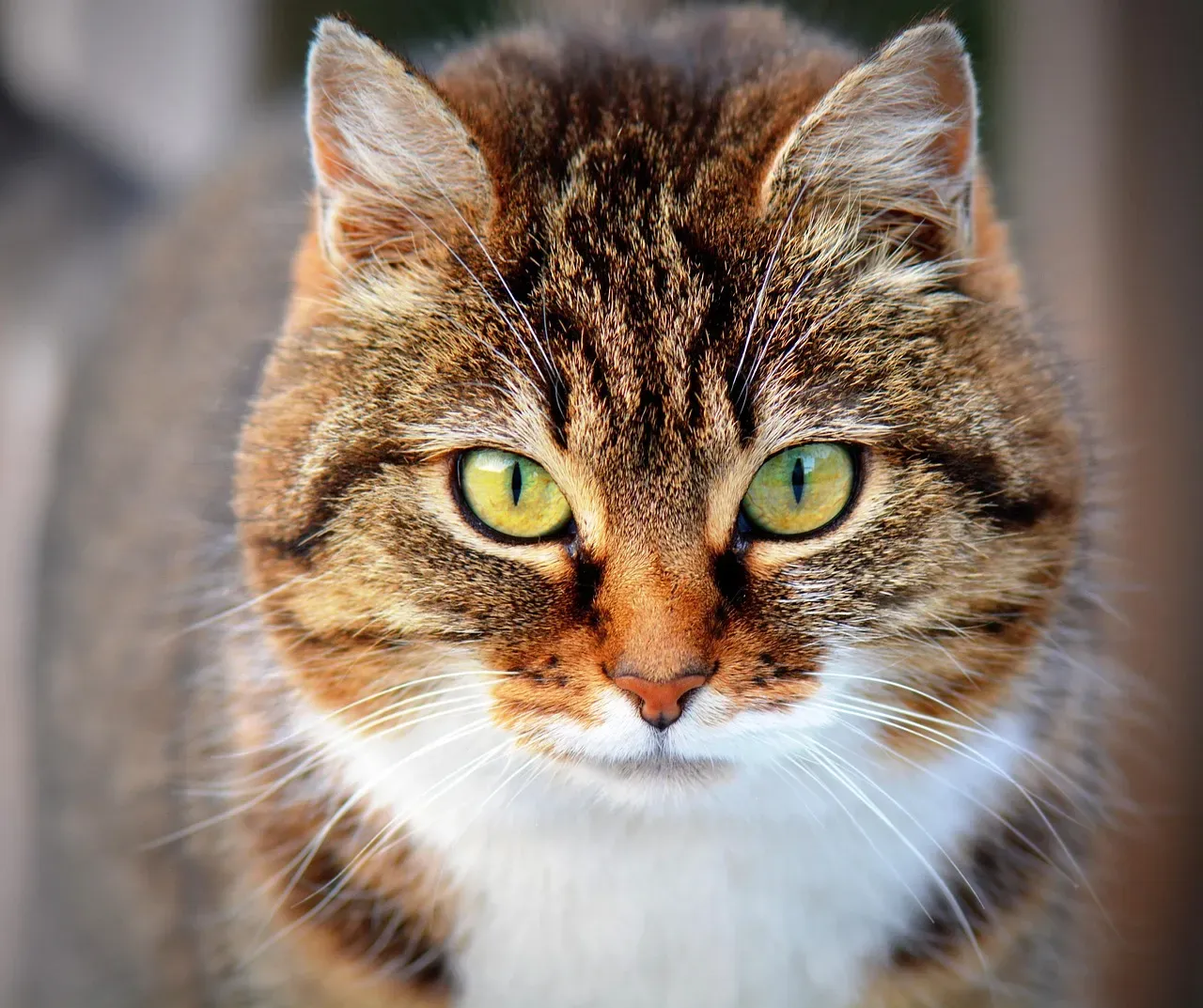
In the dark, your cat’s face is covered in sensors you can’t see working. Whiskers, or vibrissae, are thick, deeply rooted hairs. The hair itself feels nothing, but the base is packed with nerve endings, so any movement is reported straight to the brain.
Whiskers grow on the muzzle, above the eyes, on the chin and on the backs of the front legs. In the dark, they help a cat judge gaps and sense air currents bouncing off furniture or walls.
Cats can’t focus well on objects very close to their nose, so whiskers help fill in the blind spot at close range. That matters when a cat is about to grab prey.
Groomers and owners sometimes trim whiskers for neatness, but they aren’t decoration. Cutting them can leave a cat less sure of its surroundings, so leave them alone.
But the strangest part of a cat’s night is how little of it is spent in deep sleep, which we’ll get to at #9…
#9 – They Sleep in Short, Light Bursts
🔥 Would you like to save this?
We'll email this post to you, so you can come back to it later!
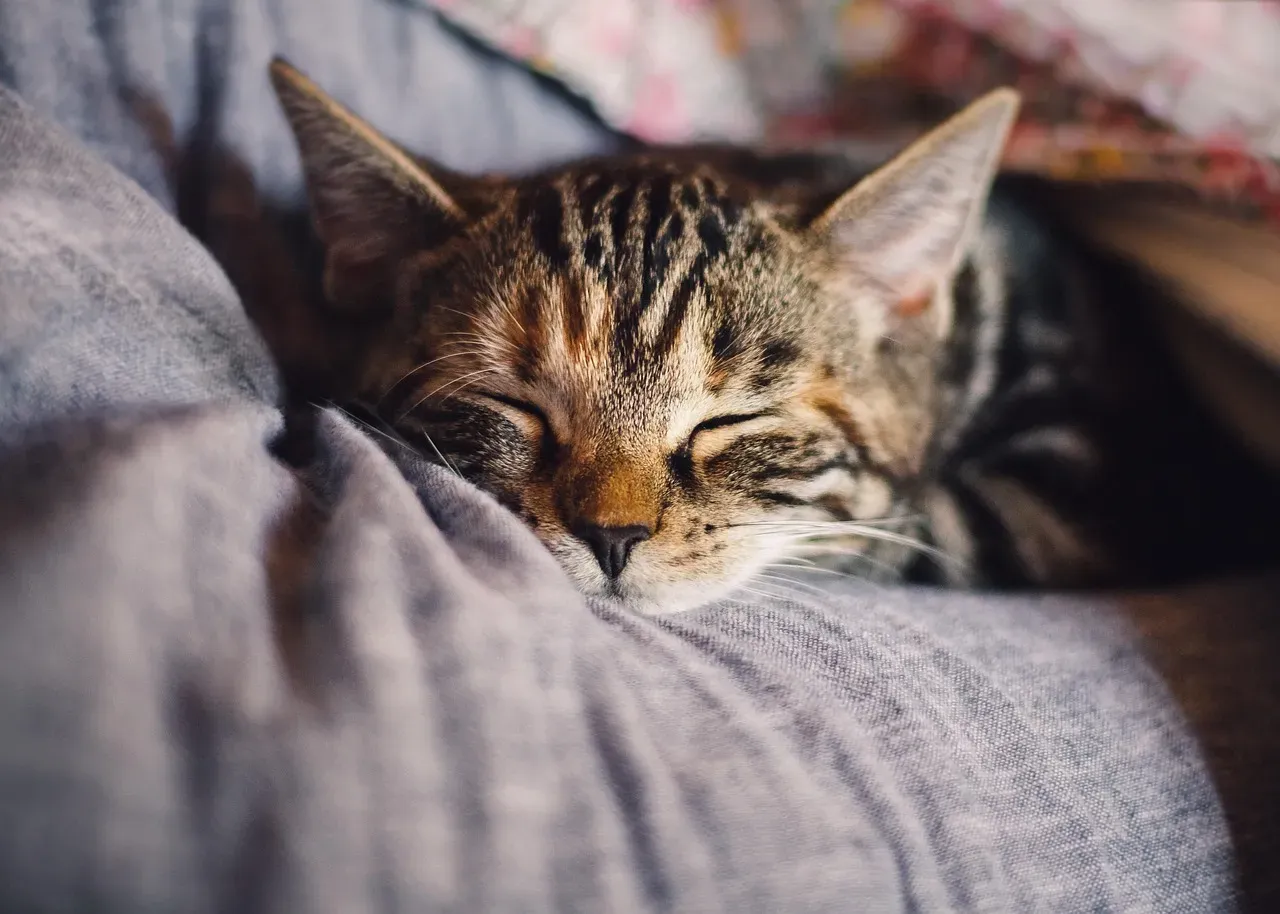
Your cat’s night isn’t one long sleep. It’s a string of light dozes. Cats sleep roughly 12 to 16 hours a day, and kittens and seniors often sleep more. Much of that is light dozing, with half-closed eyes and ears that swivel at every sound.
Deeper REM sleep does happen, but in shorter stretches. That’s when you may see twitching whiskers, paddling paws or tiny muffled sounds. Researchers assume cats dream, though nobody can say what about.
A cat can go from snoozing to a full pounce in a heartbeat, because so much of its rest is light enough to snap awake at a sound. It’s an old predator-and-prey survival habit.
Your cat’s favorite sleeping spots often shift through the night. It will chase warmth, high ground and enclosed spaces that feel safe, such as boxes or the gap behind a sofa.
Fast Facts
- A typical adult cat sleeps about 12 to 16 hours in every 24
- Kittens can sleep up to roughly 20 hours a day while they grow
- Sleep comes in many short blocks spread across day and night, not one long stretch
- Twitching whiskers and paddling paws usually point to REM sleep
If your cat twitches and makes small noises, don’t wake it. Experts generally advise leaving a sleeping cat alone, since startling it out of REM is the real mistake.
But the first thing cats do when they wake up has surprised even scientists, and we’ll get there at #8…
#8 – They Spend Hours Grooming in the Dark
🔥 Would you like to save this?
We'll email this post to you, so you can come back to it later!
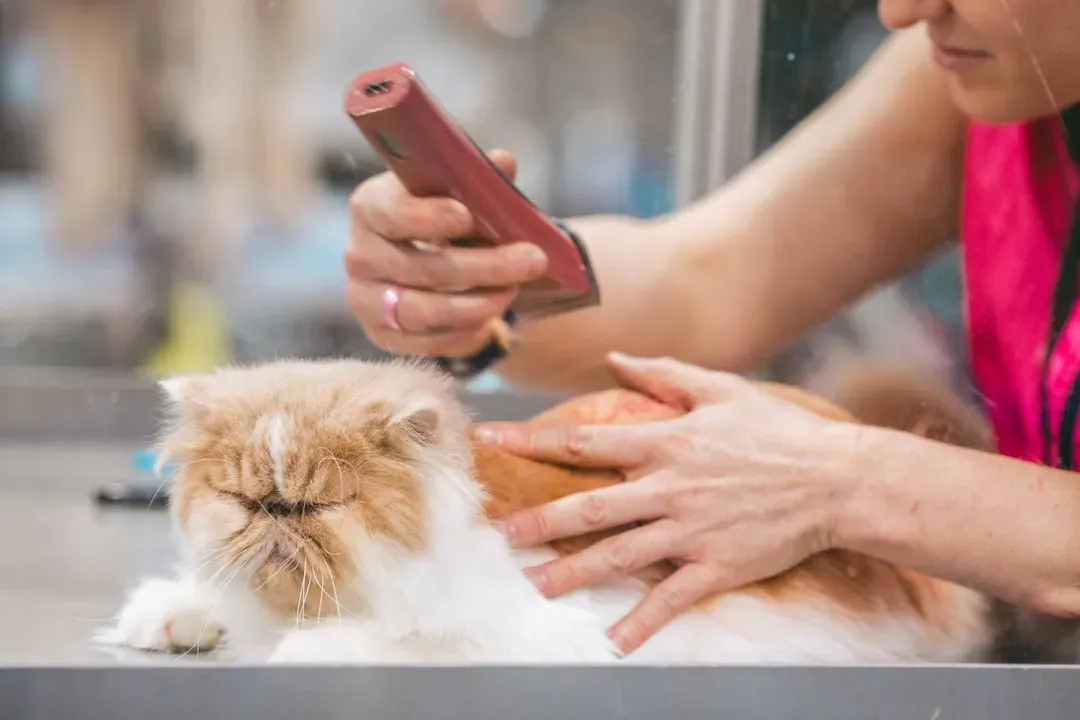
Grooming isn’t vanity. It’s a core part of the night routine, and cats spend a large share of their waking time on it. Their tongues are covered in tiny backward-facing spines called papillae, made of keratin, which work like a built-in comb.
Grooming does several jobs at once:
- Removes loose fur, dirt and some parasites
- Spreads natural oils through the coat
- Cools the cat as saliva evaporates
- Calms the cat after a stressful moment
Researchers at Georgia Tech reported in 2018 that the spines on a cat’s tongue are hollow and channel saliva down to the skin. That’s why a cat’s tongue can clean beneath the surface of the fur.
Grooming can also be a sign of trouble. Over-grooming that leaves bald patches isn’t cleanliness. Vets often link it to stress, allergies or pain, so don’t just write it off as a quirk.
But a clean cat is often a hungry cat, and that’s where the 4 a.m. trouble starts at #7…

Glass Hummingbird Feeder for Outdoors Hanging, 16 oz Leak-Proof Nectar Feeder with Bee Guards & Ant Moat
Check Price on AmazonAs an Amazon Associate, we earn from qualifying purchases.
10/7/2026 1:22 pm GMTi

Air Purifiers for Home Pets Large Room Up to 3000 Ft²,HEPA Air Cleaner with Washable Double-Side Filter, PM2.5 Air Quality Monitor,15dB Sleep Mode for Bedroom Odor Dust Pollen,White
Check Price on AmazonAs an Amazon Associate, we earn from qualifying purchases.
10/8/2026 8:23 am GMTi

Professional 7 in 1 Dog Paw Cleaner for Dogs & Cats - Includes 1 Portable Paw Washer, 1 Bath Brush
Check Price on AmazonAs an Amazon Associate, we earn from qualifying purchases.
10/7/2026 1:26 pm GMTi

Orthopedic Extra Large Dog Bed, Waterproof Washable XL Pet Bed 44"
Check Price on AmazonAs an Amazon Associate, we earn from qualifying purchases.
10/7/2026 1:32 pm GMTi

Portable Dog Water Bottle Foldable Dog Travel Water Bottle
Check Price on AmazonAs an Amazon Associate, we earn from qualifying purchases.
10/7/2026 1:29 pm GMTi
#7 – They Raid the Snack Bar (Or Wake You to Do It)

🔥 Would you like to save this?
We'll email this post to you, so you can come back to it later!
That 4 a.m. face-pat is often a very precise appointment. Wild cats eat many small meals, so a pet cat’s appetite doesn’t naturally match two bowls a day. After a long quiet stretch, hunger, or just the habit of hunger, tends to peak before dawn, when hunting would have been productive.
Cats are also expert routine learners. If you’ve ever fed your cat after being woken, you accidentally taught it that waking you works. Giving in once teaches your cat to escalate.
Cats can learn to predict meal times so well that they act restless well before the bowl appears. Most people don’t realize their cat is running on a clock, not just on hunger.
What actually helps:
- A larger meal late in the evening
- A puzzle feeder to make food take effort
- Ignoring the wake-ups completely, even when it’s hard
But the loudest thing a cat does at night is still to come at #6…
#6 – They Talk Back to the Dark

🔥 Would you like to save this?
We'll email this post to you, so you can come back to it later!
Night-time yowling isn’t random noise. It usually means something specific, and you’re probably the one being addressed.
Adult cats rarely meow at one another. The meow is largely a message aimed at humans. So when your cat calls out at night, you’re likely the intended audience.
Common causes include:
- Hunger or boredom
- Loneliness or a wish for attention
- Mating calls from unneutered cats
- Age-related confusion in senior cats
Cats can also develop cognitive decline in old age. A condition often called feline cognitive dysfunction can cause disorientation and loud night-time crying. Medical problems such as thyroid disease, high blood pressure, pain or hearing loss can do the same.
That’s why many vets would say it’s a mistake to treat sudden night-time yowling as a behavior problem. In an older cat especially, it can be a health signal. A sudden change is worth a vet visit before any training plan.
Worth Knowing
- Yowling that appears suddenly in a senior cat deserves a vet check first
- Spaying or neutering often reduces mating calls
- Red flags that travel with it: extra thirst, weight loss, litter box misses or wandering as if lost
- Some breeds, such as Siamese, are simply chattier by nature
But your cat isn’t only calling out into the dark. At #5, it’s listening too…
#5 – They Hear Sounds You’ll Never Detect
🔥 Would you like to save this?
We'll email this post to you, so you can come back to it later!
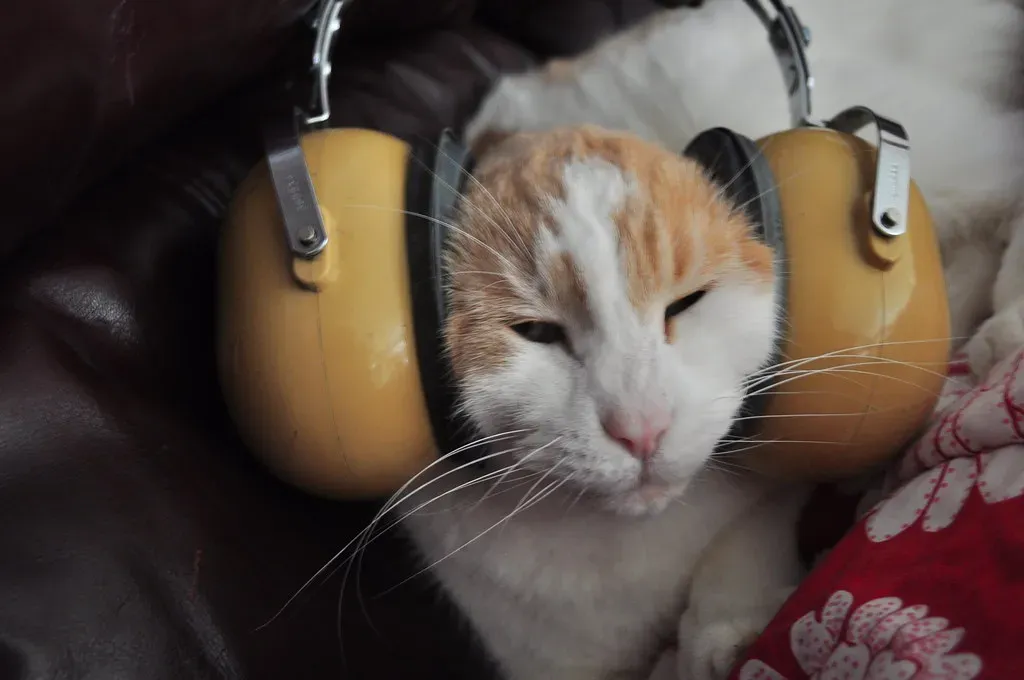
Your quiet house is actually loud, at least to a cat. Cats hear much higher frequencies than we do, well into the range that rodents use to communicate. That’s a handy trait for a species built to hunt small prey.
Their ears are equally impressive. Each ear contains more than 30 muscles, and each ear can turn on its own, so your cat can listen in two directions at once. That helps pinpoint exactly where a sound came from.
That explains the sudden head snap toward an empty wall. Common reasons include:
- Rodents or insects inside the walls
- Pipes expanding and contracting as the house cools
- Neighbors or animals outside
But the most hypnotic thing a cat does at night happens at the glass, at #4…
#4 – They Watch the Window Like It’s a Film
🔥 Would you like to save this?
We'll email this post to you, so you can come back to it later!
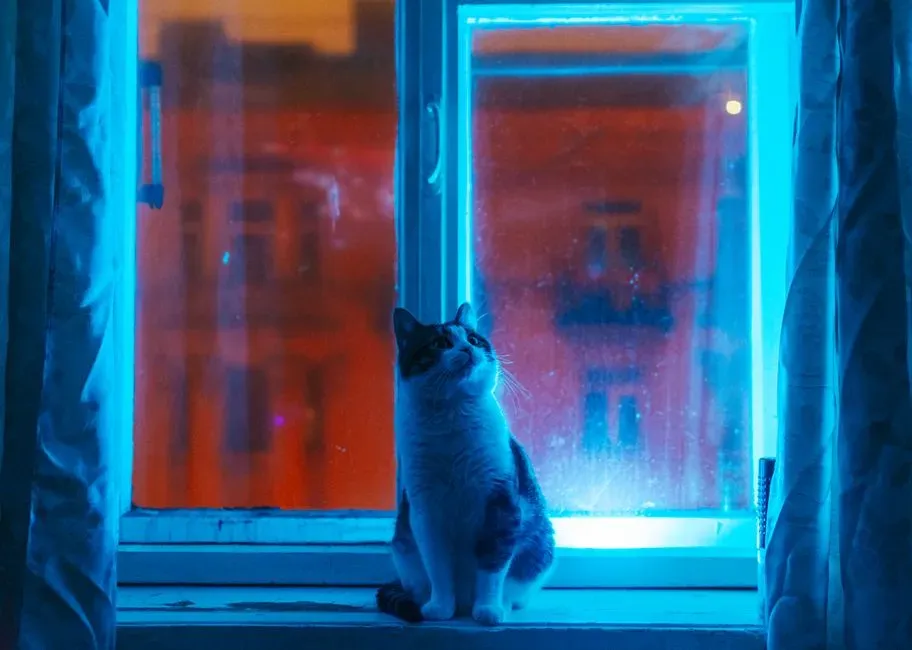
A night window is a nature documentary your cat never skips. Even after dark, glass shows moths, bats, rodents, birds, other cats and passing headlights.
A cat watching intently, with ears forward and tail twitching, is getting real stimulation. For an indoor cat, that counts as hunting practice.
Then there’s the chatter. Many cats make a rapid jaw-quivering sound when they see birds or insects. Theories include excitement, frustration at being unable to reach prey, and a rehearsal of the killing bite. Nobody has definitively explained cat chattering.
Plenty of behaviorists rank window access as one of the cheapest forms of enrichment you can give an indoor cat. A secure perch is often all it takes.
There’s a catch, though. A stray cat appearing outside at night can cause real stress, leading to spraying or even redirected aggression toward another pet in the house.
But the window isn’t the only way your cat communicates with the outside world, as #3 shows…

Halloween Cat Costume Cloak Witch Hat Pet Accessories
Check Price on AmazonAs an Amazon Associate, we earn from qualifying purchases.
10/9/2026 2:44 pm GMTi

Glass Hummingbird Feeder for Outdoors Hanging
Check Price on AmazonAs an Amazon Associate, we earn from qualifying purchases.
10/7/2026 1:21 pm GMTi

Hand Blown Glass Hummingbird Feeders for Outdoors Hanging, 24oz Wild Bird Nectar Feeder
Check Price on AmazonAs an Amazon Associate, we earn from qualifying purchases.
10/7/2026 1:23 pm GMTi

Halloween Dog Collar with Bow, Orange Cute Ghost Collar,
Check Price on AmazonAs an Amazon Associate, we earn from qualifying purchases.
10/9/2026 2:43 pm GMTi

Smart Bird Feeder with Camera Solar Powered, 2K HD Live Video, 10,000+ Bird Species AI Identification
Check Price on AmazonAs an Amazon Associate, we earn from qualifying purchases.
10/7/2026 1:22 pm GMTi
#3 – They Leave Scent Messages Everywhere
🔥 Would you like to save this?
We'll email this post to you, so you can come back to it later!
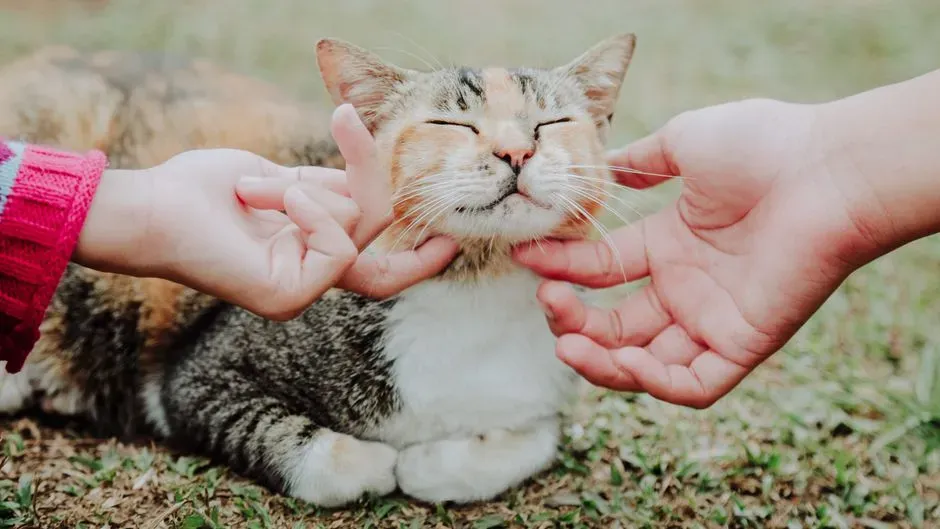
While you sleep, your cat writes notes you can’t read. Cats have scent glands on the cheeks, chin, forehead, paws and the base of the tail. When your cat rubs against furniture, it deposits scent that works like a signature.
When a cat rubs its face on you, it’s depositing scent that helps mark you as familiar and safe. In other words, you’ve been filed under “ours.”
Scratching adds a visual mark, plus scent from glands in the paws. Kneading on blankets is often linked to comfort left over from kittenhood, and it may also spread paw scent.
Key scent points on a cat:
- Cheeks and chin
- Forehead
- Paws
- Base of the tail
This is also why many veterinary groups oppose declawing, which removes the end bone of each toe. Scratching is normal communication, and a scratching post is the better answer.
Quick Compare
- Face rubbing: a friendly, familiar-and-safe scent signature
- Scratching: a visible mark plus paw scent, and a good full-body stretch
- Kneading: kitten-style comfort that may also leave paw scent
But for cats that venture outside, the scent game gets much higher stakes at #2…
#2 – They Run a Neighborhood Time-Share
🔥 Would you like to save this?
We'll email this post to you, so you can come back to it later!
For cats that go outside, the night is a carefully managed shift system. Researchers who have studied free-roaming and farm cats have described neighboring cats avoiding fights by using the same area at different times. It’s a kind of time-sharing that reduces direct confrontation.
Home ranges vary widely. A neutered town cat may stay close to home, while a rural, unneutered male can roam far. Tracking projects using GPS collars have found that many pet cats roam farther than their owners assume.
Many vets and wildlife groups argue that letting cats roam at night is the riskiest choice for both the cat and local wildlife. Road traffic is widely reported as a major danger for outdoor pet cats. Others counter that an indoor-only life can limit a cat’s welfare.
If you want a middle path:
- Use a catio or a harness walk
- Bring your cat in by dusk
- Keep a microchip and ID tag up to date
But the most surprising thing a cat does at night isn’t outside at all. It’s at #1…

Earth Rated XL Dog & Puppy Pee Pads, Discreet Top, Max Absorbency
Check Price on AmazonAs an Amazon Associate, we earn from qualifying purchases.
10/7/2026 1:28 pm GMTi

Dog Stairs for Bed 18" H, 4-Step Dog Steps for High Bed
Check Price on AmazonAs an Amazon Associate, we earn from qualifying purchases.
10/9/2026 2:42 pm GMTi

2 Pcs Halloween Pet Hat Bandana Set, Witch Pumpkin Costumes for Dogs
Check Price on AmazonAs an Amazon Associate, we earn from qualifying purchases.
10/9/2026 2:45 pm GMTi

PetSafe Oasys Pet Fountain, 1/2 Gallon (64 oz), Small Dogs & Cats
Check Price on AmazonAs an Amazon Associate, we earn from qualifying purchases.
10/8/2026 8:14 am GMTi
#1 – They Quietly Pick You as Their Safe Place
🔥 Would you like to save this?
We'll email this post to you, so you can come back to it later!
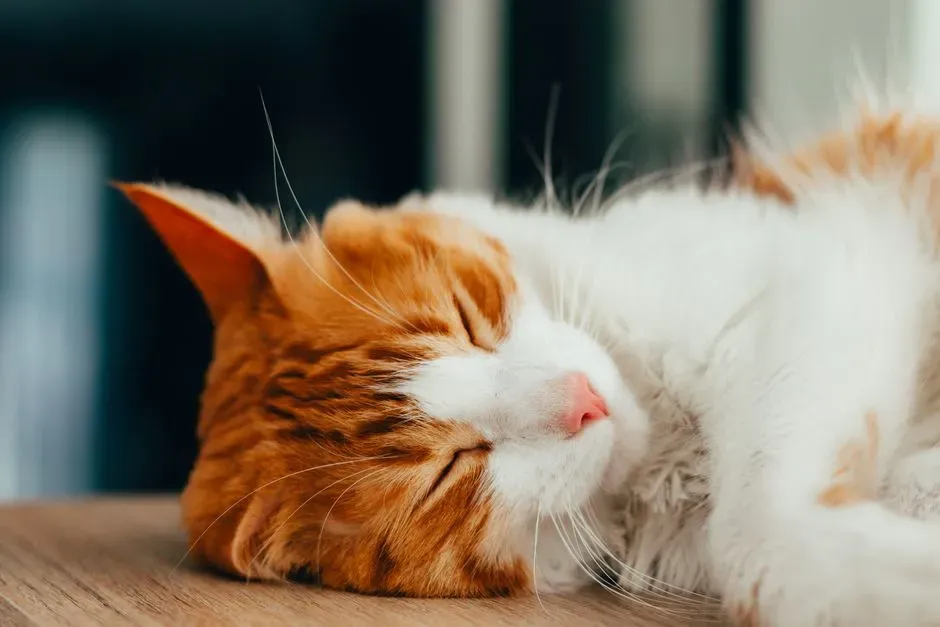
The most surprising thing a cat does at night is choose to sleep near you. A sleeping animal is vulnerable, and cats pick sleep spots based on warmth, safety and comfort. When yours settles on your bed, your feet or your pillow, that’s a decision, not an accident.
A 2019 study in Current Biology found that roughly two-thirds of pet cats showed a secure attachment style toward their owners, a proportion similar to that seen in dogs and infants. That challenges the old image of the aloof cat.
Because cats doze lightly, they often stay alert to sounds while resting beside you. Nobody can prove a cat is “guarding” you. But the pattern fits a cat that feels safest next to its person.
Shutting the bedroom door to protect your sleep is a fair choice, but it often backfires. You swap a cat on the bed for a cat scratching at the door.
Put it all together and your cat’s night isn’t idle time. It’s patrols, drills, grooming, listening, scent-marking and light, watchful sleep, all running on instincts far older than your sofa. Much of what we call misbehavior is really a predator with nowhere to put its energy.
Our view is blunt: scolding the zoomies and ignoring the 4 a.m. yowl are the two biggest mistakes owners make. Play before bed, feed on a schedule and see a vet when night-time behavior suddenly changes. Which of these 14 night habits have you actually caught your own cat doing?

- 14 Things a Cat Does at Night That Nobody Ever Sees - November 8, 2026
- 16 Things a Dog Does That Mark a Genuinely Settled Household - November 8, 2026
- 14 Breeds That Take Longest to Settle After a Move - November 8, 2026