
You flash the card at the entrance gate, the ranger waves you through, and you figure that’s the whole deal. That’s actually the smallest thing this little piece of plastic does. Behind the free entry sits a stack of half-price discounts, group perks and quiet loopholes that plenty of holders carry around for years without touching.
So yes, the click was worth it. Below are 19 things the Senior Pass can cover, from the people in your back seat to the ramp where you launch your boat. Some are generous, some come with fine print that trips people up, and one can turn a card you thought was trash into real money. The last one is just a single question at the booth, and it’s the one most holders never think to ask.
#19 – Every Passenger in Your Vehicle

🔥 Would you like to save this?
We'll email this post to you, so you can come back to it later!
Picture a couple pulling up to the gate, each holding a Senior Pass, because that’s how they’ve always done it. One of those cards is doing nothing at all.
At per-vehicle sites, the pass covers the holder and everyone riding in one private, non-commercial vehicle. That means your spouse, your friends and your neighbor in the back seat. Only the pass owner has to be 62 or older and a US citizen or permanent resident. Your passengers don’t have to qualify.
A couple driving into a per-vehicle park needs just one Senior Pass between them. Most major parks charge by the vehicle, so one card is enough to cover a carload. Some pairs still buy two out of habit.
One housekeeping note: the pass belongs to the person named on it, so the holder needs to be there and may be asked for photo ID. Show your one pass and drive through.
Wait until you see what happens when the park charges by the head instead of the car.
#18 – Three Extra Adults at Per-Person Sites

🔥 Would you like to save this?
We'll email this post to you, so you can come back to it later!
Not every park charges by the car. Some charge each person who walks, bikes or rides in.
At those sites, the pass covers the holder plus three additional adults, four adults in total. Most holders never test that limit. They just assume the pass works for them alone and pay for everyone else.
That makes the pass a quiet gift for small group trips. A holder can bring three adult friends through a per-person gate without paying for any of them. A hiking weekend with your old crew just got cheaper.
- Per-vehicle sites: the whole private vehicle is covered
- Per-person sites: you plus three adults
Next, a perk that only riders on two wheels ever hear about.
#17 – Two Motorcycles on One Pass

🔥 Would you like to save this?
We'll email this post to you, so you can come back to it later!
Riders have a perk that most car drivers never hear about.
Per-vehicle sites usually mean one car, but the pass can also cover up to two motorcycles. One guide says this has applied to all America the Beautiful passes since January 1, 2026. Parks often set a separate motorcycle entrance fee, so the savings are real.
Say you and a friend arrive on separate bikes. Your single Senior Pass covers both bikes and everyone riding them. The friend doesn’t need to be 62, and neither do you if you’re the passenger.
One card can replace two separate motorcycle entrance fees. Mention it at the booth, because gate staff don’t always bring it up first.
Fast Facts
- One pass can cover up to two motorcycles at per-vehicle sites
- Riders and passengers are covered along with the bikes
- Only the pass owner must be 62 or older and a US citizen or permanent resident
- Bring the pass owner and photo ID, since the card is not transferable
And if you travel with the grandkids instead of a riding buddy, the next one matters even more.
#16 – The Grandkids Riding Along
🔥 Would you like to save this?
We'll email this post to you, so you can come back to it later!
Family trips are where the pass quietly earns its keep.
If you’re driving to a per-vehicle park, the grandkids in the back seat are covered. At per-person sites, children under 16 enter free regardless of any pass. Grandparents don’t have to budget a gate fee for the kids.
Here’s the catch. At per-person sites, the “three additional adults” limit counts adults only, and kids don’t use up a slot. Teenagers over 16 count as adults, so check ages before you plan.
Many grandparents plan trips as if they’ll be charged for every family member. They won’t be. A family of seven can sometimes walk in for far less than they budgeted.
Now for the benefit that may be worth more than the gate waiver itself.
#15 – Half-Price Campsites
🔥 Would you like to save this?
We'll email this post to you, so you can come back to it later!
Ask a regular camper, and this is often the real reason to own the pass.
At federal campgrounds, the pass may give a 50 percent discount on some amenity fees, camping included. Over a long road trip, that discount can be worth more than the entrance waiver. A week of nightly fees cut in half adds up fast.
There’s a catch. The discount applies only to the campsite the pass owner physically occupies, not extra sites used by the rest of the party. Two tents on two sites means only one is discounted.
One more detail: the standard $80 annual pass gives no discount on camping. That’s a major reason seniors should use their own pass instead of borrowing someone else’s.
Water lovers, this next one is for you.
#14 – Boat Launch Fees

🔥 Would you like to save this?
We'll email this post to you, so you can come back to it later!
A boat ramp fee looks small until you launch every weekend.
The pass may provide a 50 percent discount on boat launch fees at participating sites. Many holders pay full price without asking, because the fee often sits at an unstaffed ramp kiosk. Nobody is there to tell you the card might help.
The discount is not automatic everywhere. It depends on whether the agency running the site offers it. That’s why anyone who fishes or paddles should check before launching, not after paying.
- Ask the ranger or read the posted fee sign
- Keep your pass handy when you pay
Some boaters carry the pass for years and still pay full price at the ramp. Don’t be one of them.
Staying near the water, there’s a perk that comes with a big asterisk.
#13 – Swimming Area Fees

🔥 Would you like to save this?
We'll email this post to you, so you can come back to it later!
Beach and swimming-area fees are on the discount list too, but this is where the internet gets a little carried away.
The NPS says the pass may provide a 50 percent discount on amenity fees for services such as swimming. The word “may” matters. Some swim areas are free anyway, and not every site charges.
Here’s the truth. A few third-party guides say the pass waives swimming fees entirely, while the NPS wording only says “may” provide half off. Trust the agency’s wording over a blog.
At sites that charge, show the pass before you pay. If the answer is no, you’ve lost nothing but ten seconds.
Now, a perk that depends entirely on who is running the show.
#12 – Ranger-Led Interpretive Tours
🔥 Would you like to save this?
We'll email this post to you, so you can come back to it later!
Not every tour is a private-company tour, and that’s the key.
The pass may discount specialized interpretive services. One guide cites ranger-guided cave tours at Mammoth Cave and Wind Cave as examples. Walking into a cave behind a ranger with a flashlight is the kind of thing worth a few dollars off. Check the current park page before you book.
The discount usually goes only to the pass owner. If a discount is offered, your companions pay full price. Plan the budget accordingly.
Tours run by private concessioners are a different story. The pass generally does not reduce fees charged by concessioners.
Here’s where the pass starts to leave the famous parks behind.
#11 – National Forests and Grasslands
🔥 Would you like to save this?
We'll email this post to you, so you can come back to it later!
The pass isn’t just for national parks, and that surprises a lot of people.
It covers standard amenity (day use) fees at national forests and grasslands. Those are the fees charged at picnic areas, trailheads and similar spots. Many holders keep the pass in the glovebox and never think of it outside the big-name parks.
This is where “free” gets practical. Forest day-use sites charge small fees that add up over a summer of weekend hikes. A few dollars here and there is easy to ignore until you add up the season.
- Trailhead parking at fee sites
- Picnic areas and developed day-use sites
Plan a trip to a national forest near you. The pass probably covers it.
And the list of agencies keeps going.

PetSafe Oasys Pet Fountain, 1/2 Gallon (64 oz), Small Dogs & Cats
Check Price on AmazonAs an Amazon Associate, we earn from qualifying purchases.
10/8/2026 8:14 am GMTi

Professional 7 in 1 Dog Paw Cleaner for Dogs & Cats - Includes 1 Portable Paw Washer, 1 Bath Brush
Check Price on AmazonAs an Amazon Associate, we earn from qualifying purchases.
10/7/2026 1:26 pm GMTi

Dog Stairs for Bed 18" H, 4-Step Dog Steps for High Bed
Check Price on AmazonAs an Amazon Associate, we earn from qualifying purchases.
10/9/2026 2:42 pm GMTi

Smart Bird Feeder with Camera Solar Powered, 2K HD Live Video, 10,000+ Bird Species AI Identification
Check Price on AmazonAs an Amazon Associate, we earn from qualifying purchases.
10/7/2026 1:22 pm GMTi

Glass Hummingbird Feeder for Outdoors Hanging, 16 oz Leak-Proof Nectar Feeder with Bee Guards & Ant Moat
Check Price on AmazonAs an Amazon Associate, we earn from qualifying purchases.
10/7/2026 1:22 pm GMTi
#10 – BLM, Reclamation and Army Corps Sites

🔥 Would you like to save this?
We'll email this post to you, so you can come back to it later!
Lakes and desert lands count too.
The pass also works at sites run by the Bureau of Land Management, the Bureau of Reclamation and the U.S. Army Corps of Engineers. Together with the Forest Service and Fish and Wildlife Service, that’s six federal agencies and thousands of recreation locations.
Many Army Corps lakes and Reclamation reservoirs sit right next to towns and are rarely thought of as “pass” destinations. That makes them easy day trips for holders, with no cross-country drive required.
Check each site’s page for fees. Not every site charges, and not every fee is covered.
Next, a stop you’ve probably driven right past.
#9 – National Wildlife Refuges

🔥 Would you like to save this?
We'll email this post to you, so you can come back to it later!
Refuges might be the most overlooked stop on a pass.
The pass covers entrance fees at national wildlife refuges. The Fish and Wildlife Service is one of the agencies on the list. Many refuges offer wildlife drives, bird walks and quiet trails.
Most holders have probably driven past a refuge sign without stopping. That’s a missed experience more than a missed bargain, because many refuges charge little or nothing.
At a Glance
- National Park Service: parks, monuments and recreation areas
- Forest Service: national forests and grasslands
- Fish and Wildlife Service: wildlife refuges
- Bureau of Land Management: public lands
- Bureau of Reclamation and Army Corps of Engineers: lakes and reservoirs
Still, if a refuge does charge, the pass handles it. Look up refuges near your regular routes. They’re usually quieter than the headline parks.
Now we get to the fine print that confuses even seasoned campers.
#8 – The Utility Fee Quirk
🔥 Would you like to save this?
We'll email this post to you, so you can come back to it later!
This one has tripped up campers who’ve been doing this for decades.
If a campground charges for electric or water hookups as a separate line, there’s no discount on that fee. But the discount may apply if the utility charge is bundled into the campsite fee.
Two campgrounds can charge the same total price, and only one of them gives you half off. It depends on how the bill is built, not on how much it adds up to.
So read the fee breakdown before reserving. A bundled rate and an itemized rate can look identical on the surface and land very differently at checkout.
Every park writes its own fee rules, and the next example shows how much that matters.
#7 – Boat Permits at Recreation Areas

🔥 Would you like to save this?
We'll email this post to you, so you can come back to it later!
Some parks charge permits rather than launch fees.
At Curecanti National Recreation Area, visitors with a Senior or Access Pass receive a 50% discount on boat permits. The same page says campground fees get the same 50% discount.
That’s two separate discounts at one park, and many holders only claim the entry waiver. Every site sets its own fees, so check each park’s page.
- Look for a “Fees & Passes” page
- Note which charges list the pass
Never assume the discount works the same at the next park.
Then there’s an agency that isn’t even part of the program.
#6 – Tennessee Valley Authority Camping

🔥 Would you like to save this?
We'll email this post to you, so you can come back to it later!
The TVA isn’t one of the issuing agencies, but it’s still worth a question.
One source says the Tennessee Valley Authority doesn’t issue the passes, yet it may honor Senior and Access passes for camping discounts. That’s a “may,” not a promise, and it depends on the site.
An agency outside the pass program can still choose to honor it. That’s a rare bit of goodwill, and it only reaches holders who ask.
Don’t count on it. Call ahead, or check the site’s fee page.
Now for the one that might have you digging through a kitchen drawer.

Halloween Dog Collar with Bow, Orange Cute Ghost Collar,
Check Price on AmazonAs an Amazon Associate, we earn from qualifying purchases.
10/9/2026 2:43 pm GMTi

Earth Rated XL Dog & Puppy Pee Pads, Discreet Top, Max Absorbency
Check Price on AmazonAs an Amazon Associate, we earn from qualifying purchases.
10/7/2026 1:28 pm GMTi

2 Pcs Halloween Pet Hat Bandana Set, Witch Pumpkin Costumes for Dogs
Check Price on AmazonAs an Amazon Associate, we earn from qualifying purchases.
10/9/2026 2:45 pm GMTi

Hand Blown Glass Hummingbird Feeders for Outdoors Hanging, 24oz Wild Bird Nectar Feeder
Check Price on AmazonAs an Amazon Associate, we earn from qualifying purchases.
10/7/2026 1:23 pm GMTi

Halloween Cat Costume Cloak Witch Hat Pet Accessories
Check Price on AmazonAs an Amazon Associate, we earn from qualifying purchases.
10/9/2026 2:44 pm GMTi
#5 – Expired Annual Passes Still Count

🔥 Would you like to save this?
We'll email this post to you, so you can come back to it later!
Your old pass isn’t worthless, even if it expired years ago.
Four annual Senior Passes can be traded in for a lifetime pass. Each annual pass you turn in takes $20 off the $80 lifetime price, even if it has already expired.
Holders who throw away expired annual passes are throwing away credit. Keep the cards in a drawer.
Here’s the math. Four annual passes at $20 equal $80, which is the lifetime price. Turning in fewer than four takes $20 off for each one.
And if your card is even older, the next one could be completely free.
#4 – The Golden Age Passport Swap
🔥 Would you like to save this?
We'll email this post to you, so you can come back to it later!
Some holders have carried this card for decades.
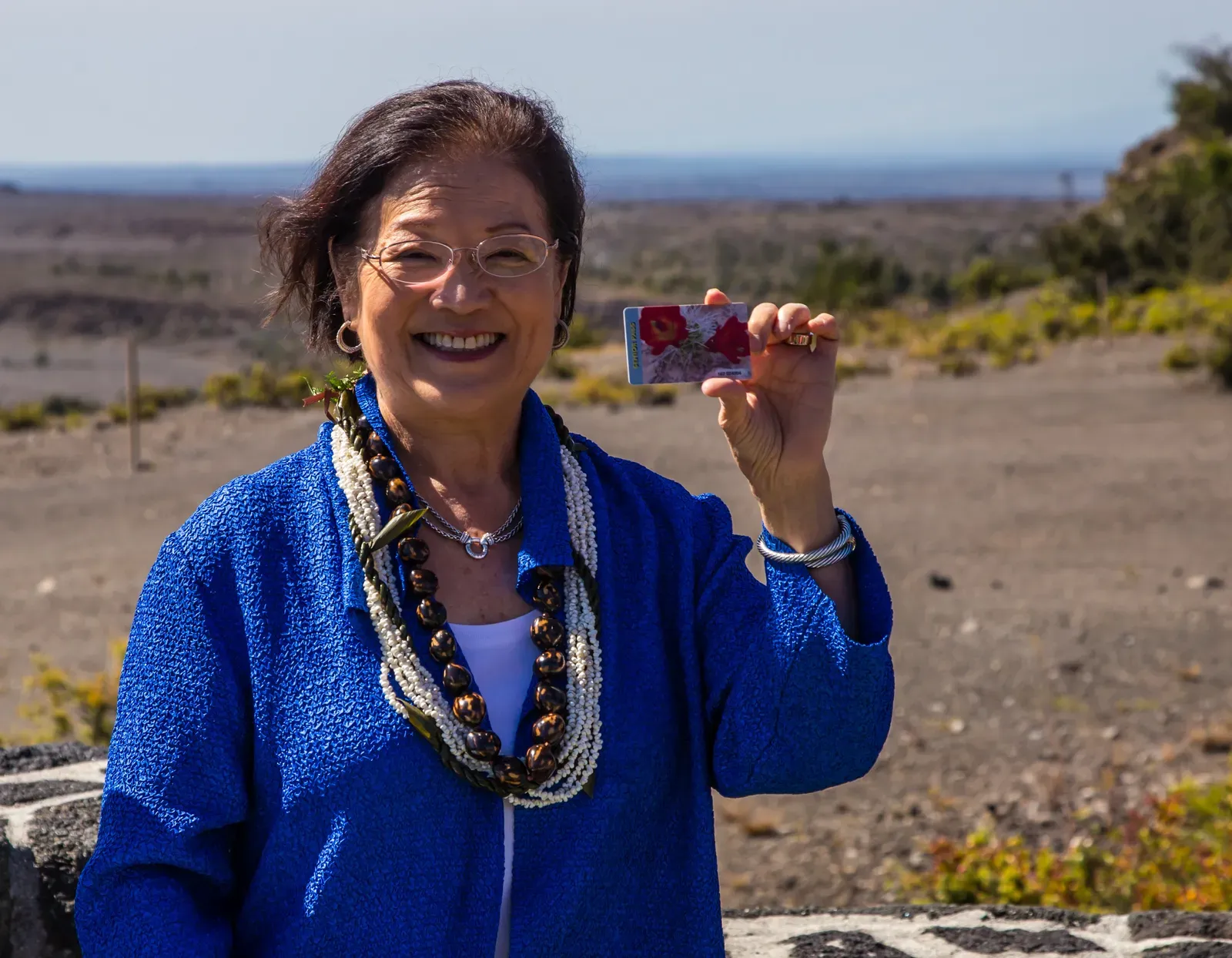
Golden Age Passports are no longer sold, but they continue to be honored according to the pass’s provisions. One guide says they can be exchanged in person for a free Senior Lifetime Pass.
An old Golden Age Passport may be worth an $80 lifetime pass for free. Many holders never swap, because the old card still works.
Swapping gets you the current design and the current benefits. Ask at a fee-charging federal site.
Not everyone wants to wait for a trip to a ranger station, though.
#3 – The Digital Pass

🔥 Would you like to save this?
We'll email this post to you, so you can come back to it later!
You don’t have to wait for the mail.
Recreation.gov sells a $20 Digital Senior Annual Pass, and physical passes cost an extra $7.50 for shipping. It’s valid for 12 months, through the end of the same month the following year.
The same pass covers entrance and standard amenity fees and can discount some expanded fees such as camping. Digital means no wait for delivery and no card to lose in the glovebox.
In my opinion, though, holders who plan more than a few trips should skip the annual and go for the lifetime version.
Which brings us to the biggest money question of all.

Portable Dog Water Bottle Foldable Dog Travel Water Bottle
Check Price on AmazonAs an Amazon Associate, we earn from qualifying purchases.
10/7/2026 1:29 pm GMTi

Orthopedic Extra Large Dog Bed, Waterproof Washable XL Pet Bed 44"
Check Price on AmazonAs an Amazon Associate, we earn from qualifying purchases.
10/7/2026 1:32 pm GMTi

Glass Hummingbird Feeder for Outdoors Hanging
Check Price on AmazonAs an Amazon Associate, we earn from qualifying purchases.
10/7/2026 1:21 pm GMTi

Air Purifiers for Home Pets Large Room Up to 3000 Ft²,HEPA Air Cleaner with Washable Double-Side Filter, PM2.5 Air Quality Monitor,15dB Sleep Mode for Bedroom Odor Dust Pollen,White
Check Price on AmazonAs an Amazon Associate, we earn from qualifying purchases.
10/8/2026 8:23 am GMTi
#2 – A Lifetime of Free Entry
🔥 Would you like to save this?
We'll email this post to you, so you can come back to it later!
The best benefit is the one that keeps going.
The Senior Lifetime Pass costs $80 once. The standard annual pass costs $80 every year, or $800 over ten years. That’s the biggest gap between the two products.
A standard annual pass holder pays 10 times as much over a decade and gets no camping discount. The lifetime holder pays once and gets the amenity discount too.
The pass isn’t free, but it’s about as cheap as a lifetime benefit gets. The $20 Senior Annual only makes sense if you’re not sure you’ll use the pass much.
Quick Compare
- Senior Lifetime: $80 once, with the amenity discount
- Senior Annual: $20 a year, or $200 over ten years
- Standard Annual: $80 a year, or $800 over ten years, with no camping discount
And the last perk on the list costs nothing at all.
#1 – The Discount You Have to Ask For

🔥 Would you like to save this?
We'll email this post to you, so you can come back to it later!
The biggest benefit is also the easiest to miss.
Discounts aren’t always automatic. One guide suggests asking at the gate which amenity fees at that specific site qualify for the 50% discount, since it varies by site and activity.
Holders who never ask never get it. Staff are busy, and the pass doesn’t announce itself.
Keep in mind what the pass won’t do. It generally doesn’t cover or reduce special recreation permit fees or concessioner fees. Ask first, then decide.
The Senior Pass does far more than open the gate. It covers your whole vehicle, up to four adults at per-person sites and two motorcycles. It can also halve some camping, boating, swimming and tour fees, and it works at forests, refuges and lakes, not just the famous parks.
My take: buy the lifetime pass at a federal site, keep your old annual cards for credit, and ask at every fee booth. The holders who save the most aren’t the ones with the fanciest card. They’re the ones willing to say, “Does my pass cover that?”
So which perk did you never use until now?

- 19 Things the Senior Pass Covers at a National Park That Holders Never Claim - November 9, 2026
- 9 Permits Dropped for Birders Over 62 at Federal Sites Nationwide - November 9, 2026
- 19 Wildlife Refuge Charges Waived for Americans Over 62 Every Single Day - November 9, 2026