
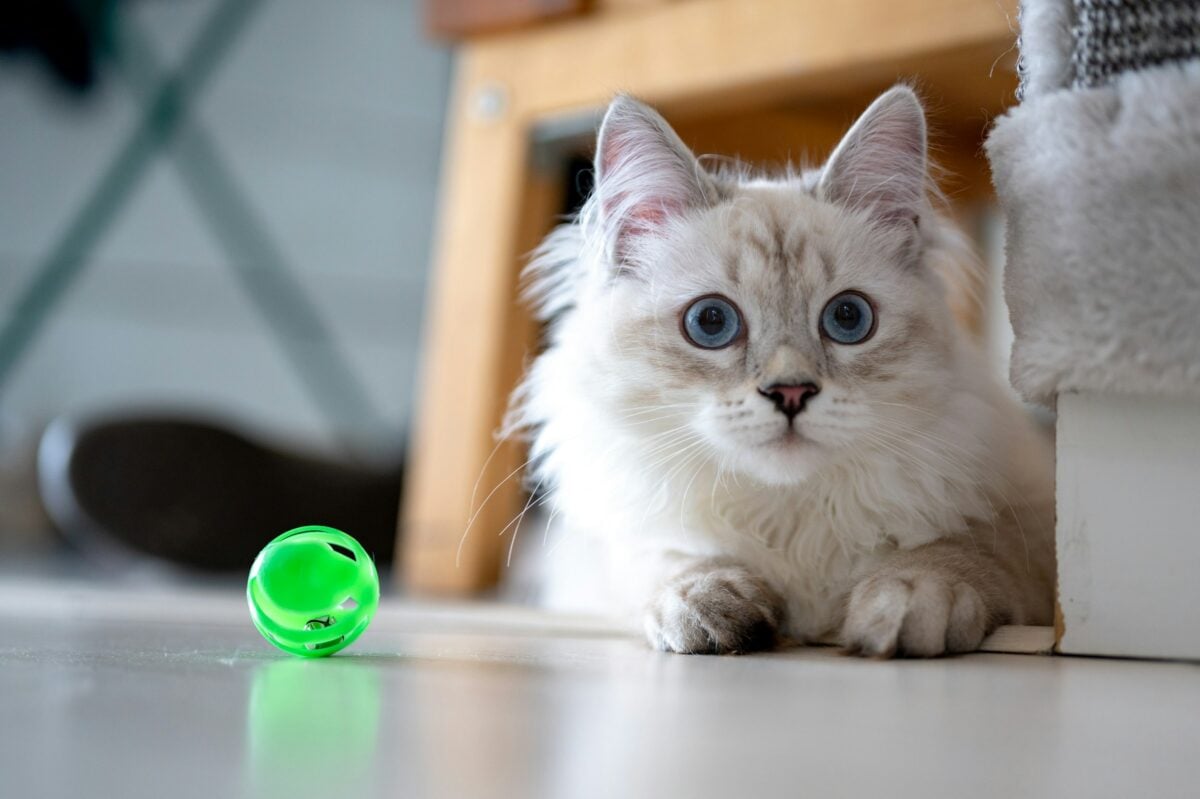
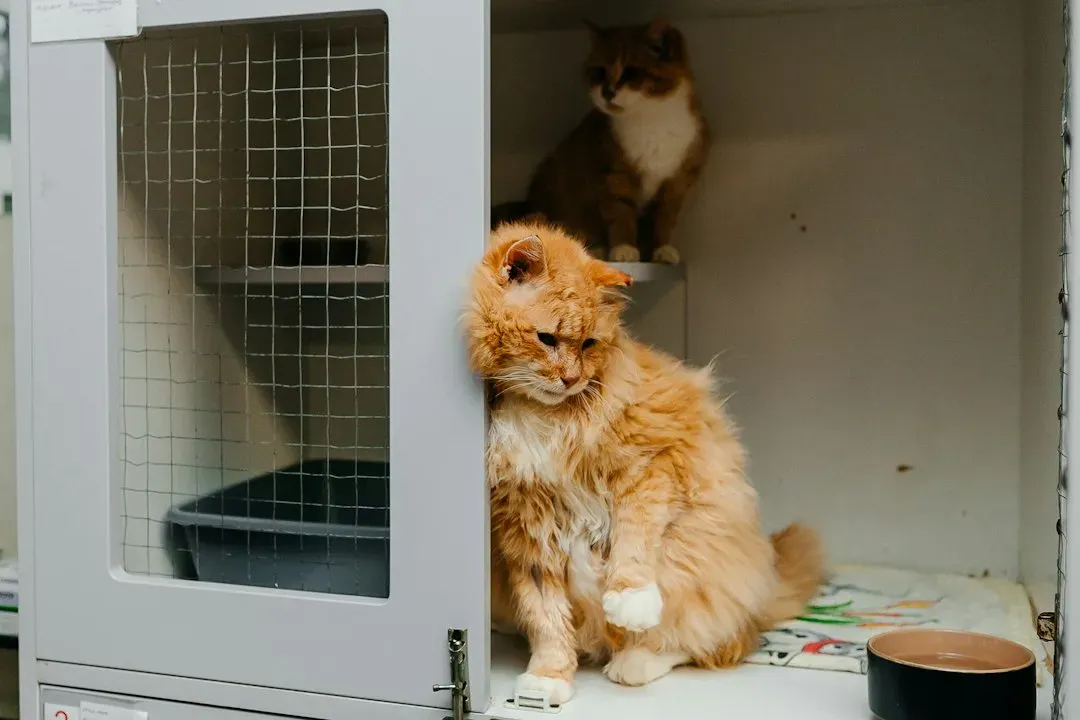
Walk the cat room of almost any shelter and you’ll hear the same sentence from visitors: “Oh, that one’s so calm.” The cat in the back corner is silent and still, and it looks like the dream pet, with no fuss, no noise and no demands. Shelter behaviorists often read that silence very differently.
A cat that has stopped reaching, calling and watching may not be relaxed at all. It may have learned that nothing it does changes anything. Cats can’t tell us that, but their bodies can, and here are 22 signs staff and adopters actually watch for. Some look like peace, and a few look like good manners. The last one, saved for the end, changes how you read all the others.
#22 – It No Longer Rushes to the Front When People Walk By
🔥 Would you like to save this?
We'll email this post to you, so you can come back to it later!
A cat that ignores a passing crowd isn’t always shy. Sometimes it has simply done the math.
Early on, many shelter cats surge toward the bars at every footstep. They rub, chirp and stretch a paw through the gap. That is a cat still testing whether effort pays off.
When that behavior fades, staff notice quickly. The cat hasn’t become calmer. It has stopped spending energy on people who keep walking past. Picture waiting at a bus stop where every bus rolls by without slowing down, and you’ll understand why it stops waving.
Context matters, though. Some cats are naturally reserved, and a confident, relaxed cat may skip the greeting too. The key is change over time, because a cat that used to come forward and now doesn’t is telling you something.
But the next sign is one that most visitors mistake for pure contentment…
#21 – It Sleeps Straight Through Visiting Hours
🔥 Would you like to save this?
We'll email this post to you, so you can come back to it later!
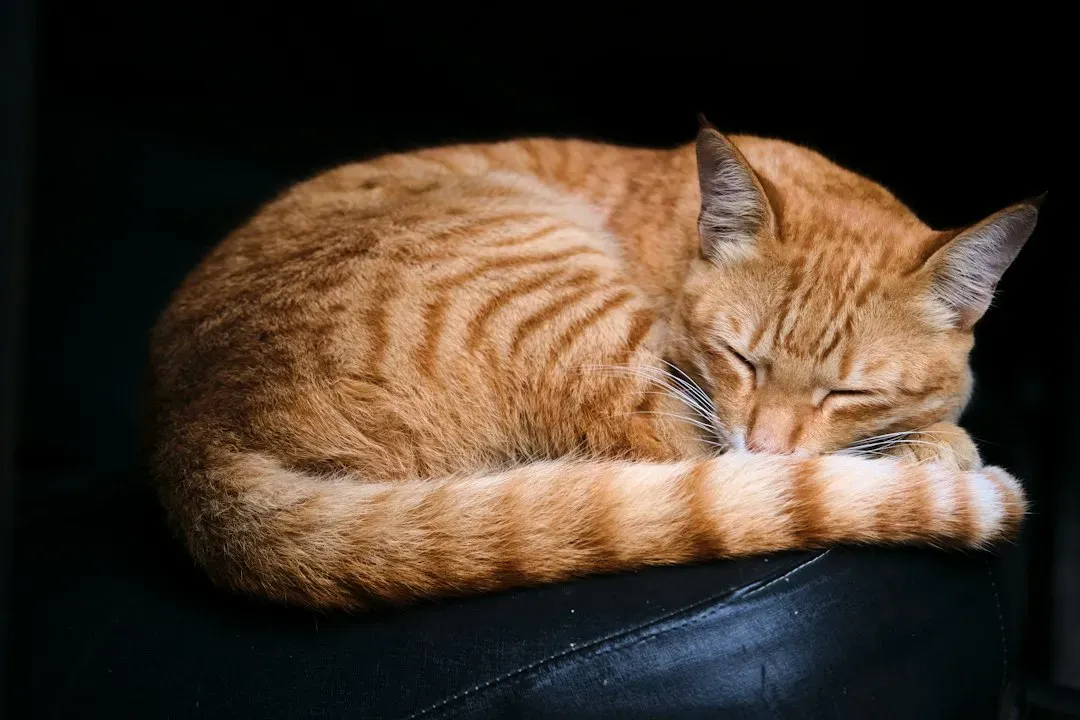
Sleep is the most misread behavior in any shelter. A cat curled up in the corner looks like the picture of peace.
Cats naturally sleep a lot, and a nap at noon is perfectly normal. Nobody should panic over a snooze.
The red flag is sleeping through the busiest, loudest hours of the day, when a curious cat would normally be alert and watching. For some cats, sleep becomes a way to switch the whole environment off.
Experts often describe this as avoidance. If you can’t leave, you can at least check out. Look at the sleeping posture too, because a tight curl with the face tucked in is very different from a loose, sprawled nap with a belly showing.
And what happens when it’s awake may be even more telling…
#20 – It Faces the Wall Instead of the Door
🔥 Would you like to save this?
We'll email this post to you, so you can come back to it later!
Body orientation is a quiet language of its own, and it’s easy to miss. You have to notice which way the cat is pointing.
A hopeful cat tends to position itself where it can see the action. A cat that turns its back to the cage front is doing the opposite.
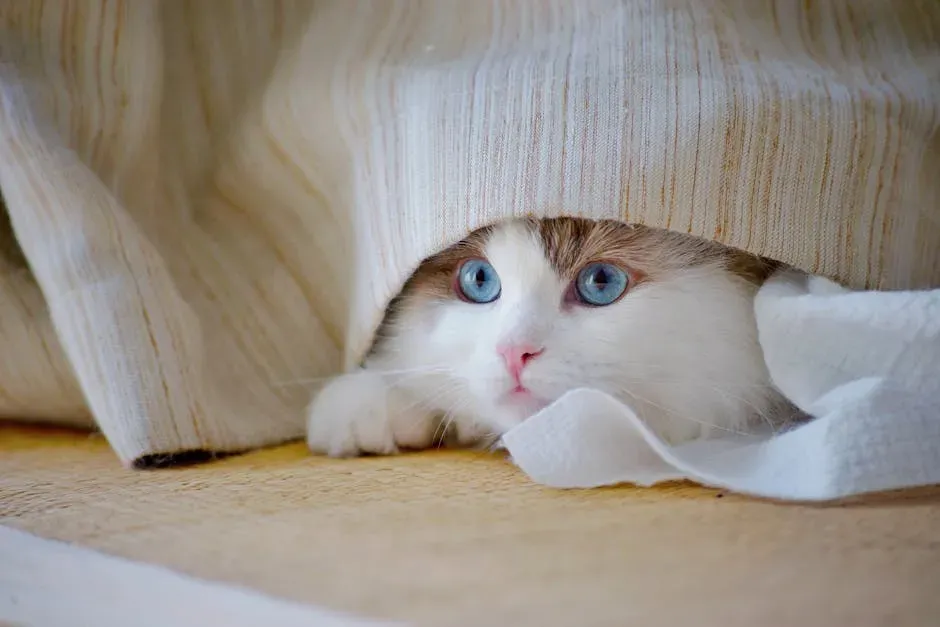
Turns out, turning away is one of the oldest “please don’t see me” signals in the cat playbook. In a cage there’s nowhere to go, so the body does the only thing it can and hides in plain sight.
Shelters that offer a hiding box or covered space often see this behavior ease. Many experts argue that open-front cages with no hiding spot are among the most stressful setups a cat can face.
- Back to the door, head low
- Face pressed toward a corner or wall
- Little reaction when someone stops at the cage
That last point leads straight into the next sign…
#19 – New Voices Don’t Even Make Its Ears Twitch
🔥 Would you like to save this?
We'll email this post to you, so you can come back to it later!
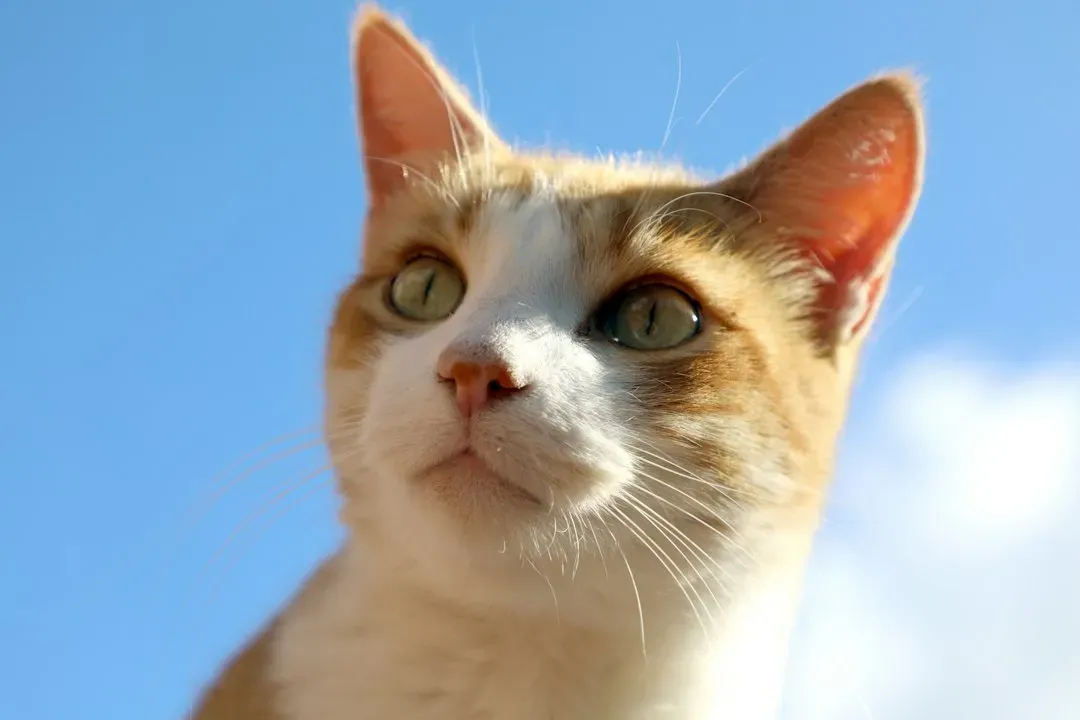
Ears are the cat’s honest radar. They swivel independently, and they rarely lie.
A curious cat rotates its ears toward every unfamiliar sound, such as a new voice, a rattling door or a dropped key. A cat that has stopped expecting change may barely flick them.
Here’s the catch: ignoring everything can look identical to being unbothered. The difference lies in the rest of the body, including tension, flat posture and tight eyes.
Quick Compare: Used to It vs. Shut Down
- Habituated: ears drift loosely, eyes soft, body relaxed, naps sprawled out
- Resigned: ears flat or frozen, eyes tight or blank, body low and guarded
- Best clue: how the cat acted in its first days compared with now
Habituation is real, and cats do get used to noise. But habituation looks relaxed and loose, while resignation looks flat and guarded.
But there’s one sound the cat almost always still notices…
#18 – It Reacts to Exactly One Thing: Food
🔥 Would you like to save this?
We'll email this post to you, so you can come back to it later!
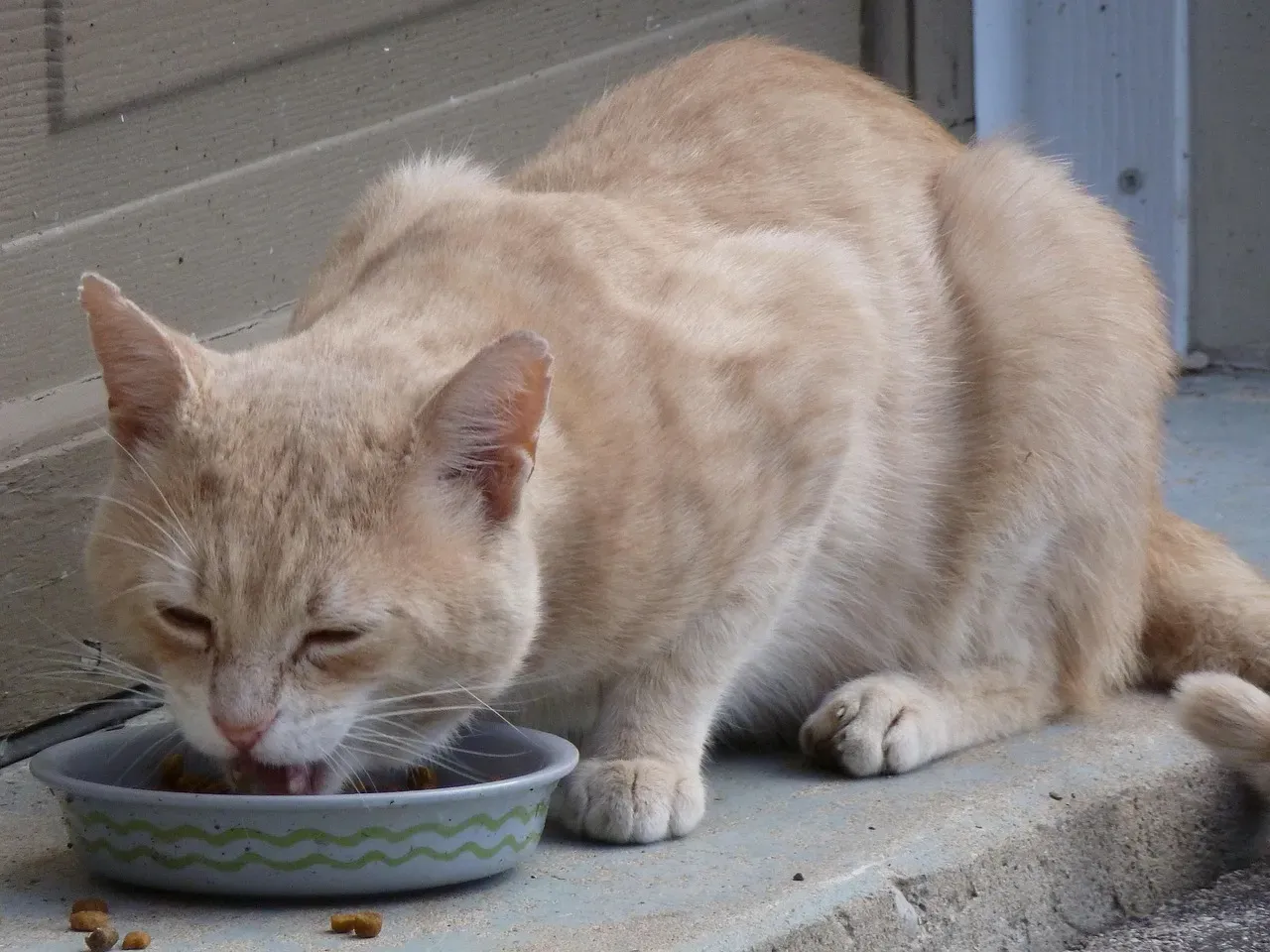
In a shelter, routine can become the whole world. When everything else is out of a cat’s control, the one thing that arrives on schedule starts to matter enormously.
Many long-stay cats respond sharply to the squeak of a food cart or a particular set of footsteps. Everything else gets ignored.
Most people don’t realize that a cat’s focus can narrow to the one predictable event in a day. It isn’t greed. It’s the only dependable thing on offer.
Be careful here, though. A cat that stops eating altogether is a medical concern, not just a mood. Cats that go without food for days can develop a serious liver condition, which is why staff monitor appetite so closely.
- Eager at feeding, flat the rest of the day
- Eats only when nobody is watching
- Skips meals entirely (tell a vet or staff immediately)
The next sign shows up on the cat’s coat…
#17 – Its Grooming Has Changed (Too Little or Too Much)
🔥 Would you like to save this?
We'll email this post to you, so you can come back to it later!
Fur tells the story that the face won’t. A cat can hold a blank expression, but its coat is harder to control.
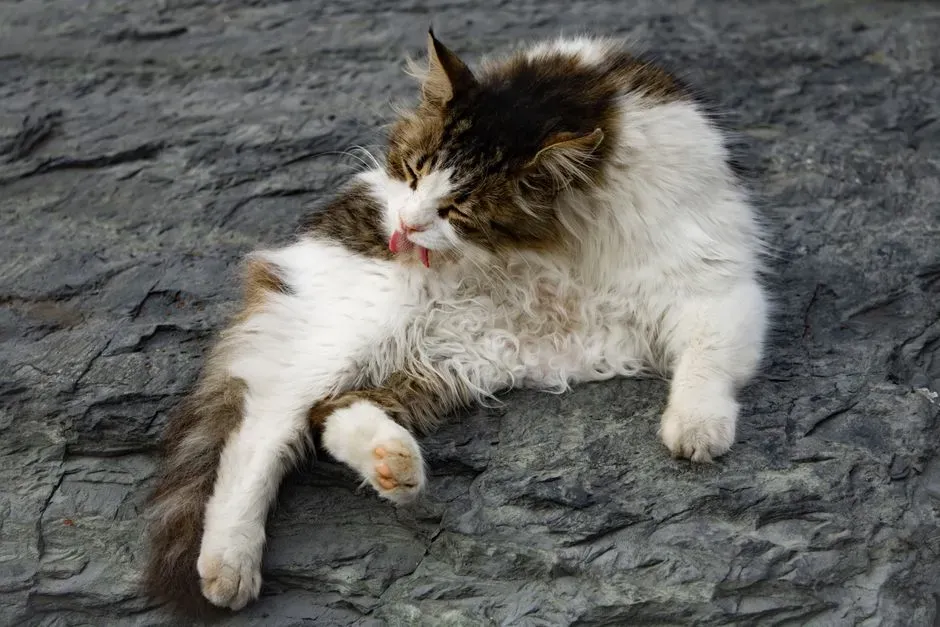
Healthy cats groom in a steady, relaxed rhythm. Stress can disrupt that in two opposite directions.
Some cats stop grooming and look unkempt, with greasy or matted fur. Others over-groom, licking the same spot again and again. Experts call the second pattern a possible displacement behavior, a way to self-soothe under pressure.
Neither sign proves a cat has given up. Skin issues, pain or dental problems can also change grooming, which is why a vet check is always part of the picture.
But there’s a posture that says even more than the coat…
#16 – It Sits Frozen in a Tight “Loaf”
🔥 Would you like to save this?
We'll email this post to you, so you can come back to it later!
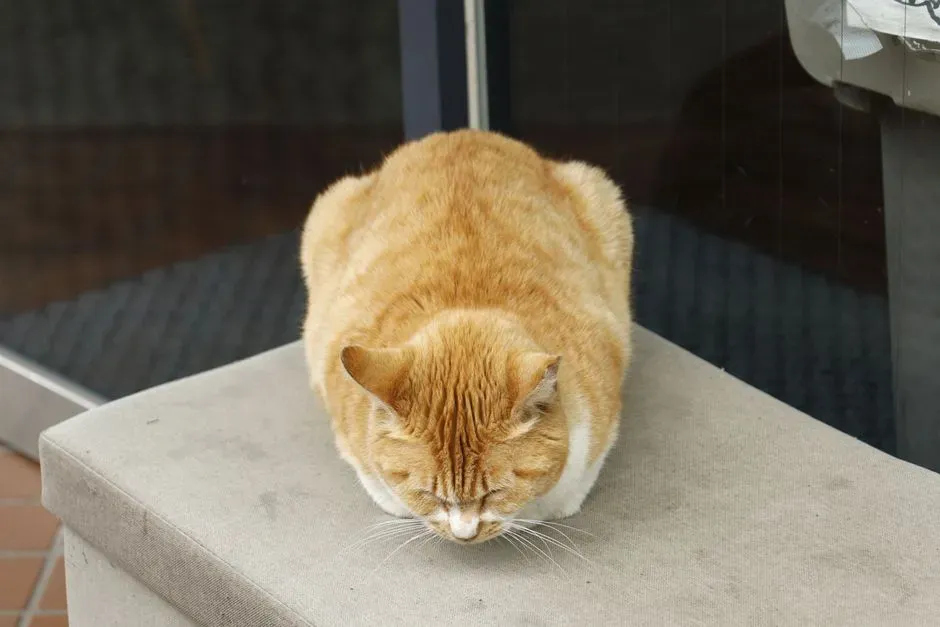
Stillness isn’t always peace, and the loaf is the best example. It’s one of the most photographed cat shapes, and one of the most misunderstood.
A relaxed loaf has soft eyes, loose shoulders and a tail tucked comfortably. A tense one looks very different.
Watch for paws tucked fully under the body, a rigid back and wide, unblinking eyes. That’s a cat bracing for whatever comes next, and it can hold the pose for hours.
Many adopters pick the “quiet” cat precisely because it looks serene. Shelter behaviorists often warn that a very still cat may be the most stressed one in the room.
- Weight shifted back, ready to flee
- Ears slightly sideways or flattened
- Whiskers pulled tight against the face
The next sign is something you’d normally hear, not see…
#15 – The Cat Has Gone Silent
🔥 Would you like to save this?
We'll email this post to you, so you can come back to it later!
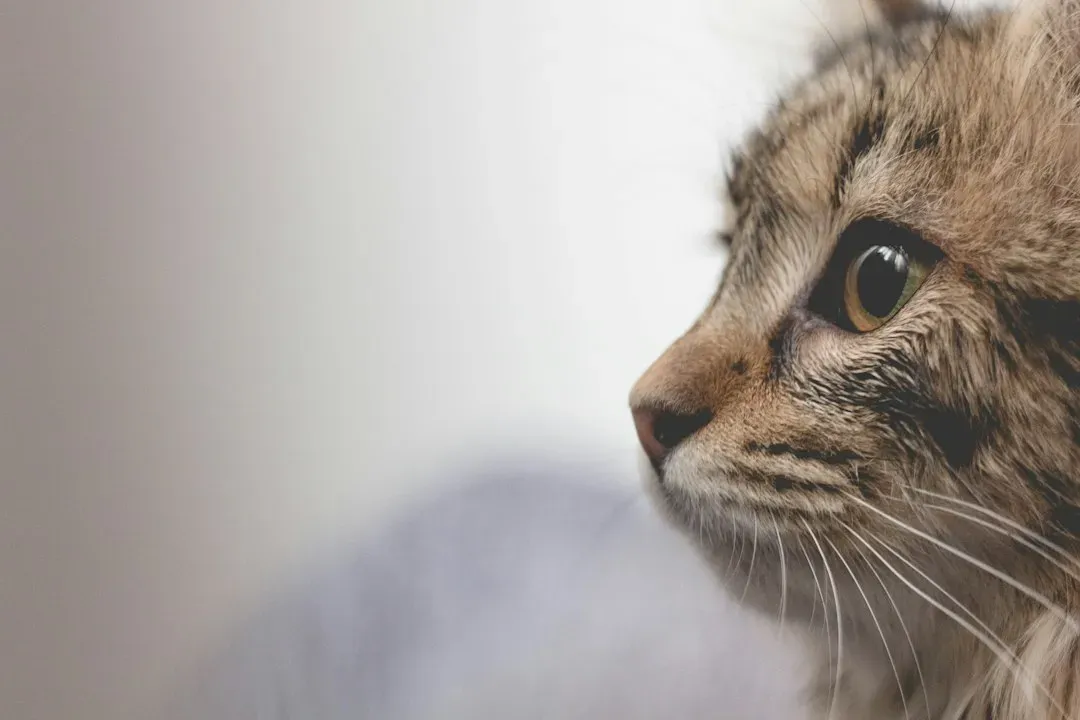
Silence is a loud signal. In a room full of animals, the quietest one is easy to overlook.
Many new arrivals meow constantly. It’s one of the main ways cats call for attention and contact.
When that stops, the cat may have concluded the calling doesn’t work. Not every cat is vocal, so compare the cat to its own earlier behavior, not to the cat in the next cage.
Here’s a controversial take. Some experts argue that the “quiet, well-behaved” label shelters sometimes use can hide a cat in distress. Treating the loudest cat as the neediest one may be a mistake.
But silence isn’t the only thing that disappears…
#14 – It Practically Lives in Its Hiding Spot
🔥 Would you like to save this?
We'll email this post to you, so you can come back to it later!
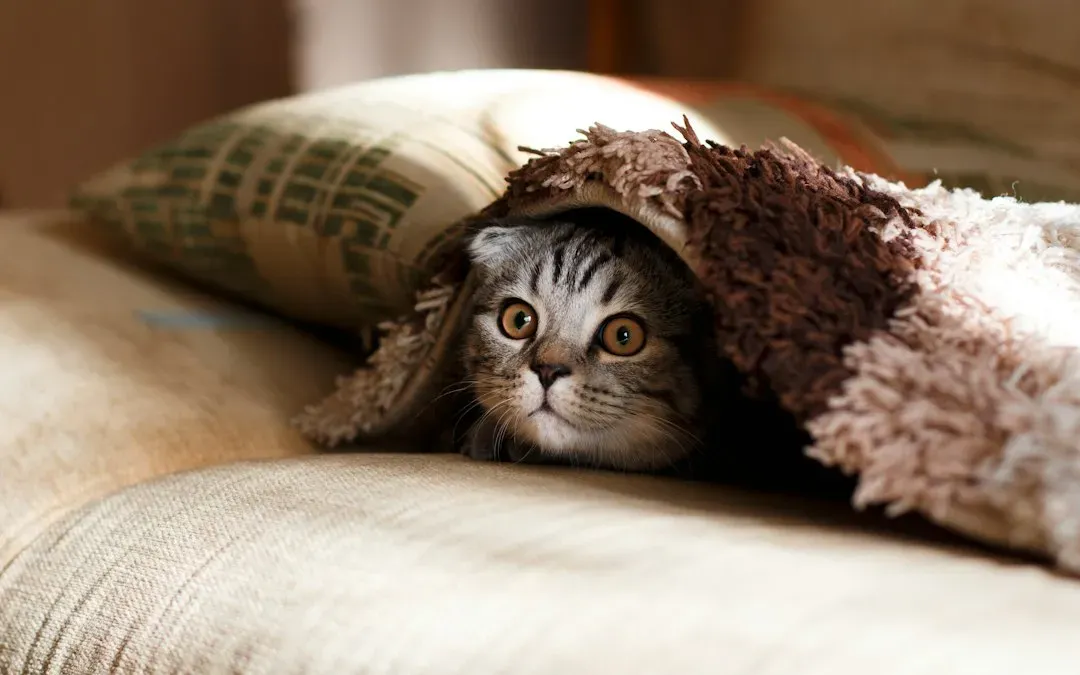
A hiding spot is a coping tool, not a problem. Taking it away is usually the bigger mistake.
Research on shelter cats has found that providing a hiding box can help cats settle in more quickly. Hiding is how cats regulate stress.
The trouble starts when hiding becomes the only thing the cat does. A cat that never leaves cover, even for food or the litter box, is signaling that it feels unsafe everywhere.
Some cats even stay in or beside the litter box all day. It’s small, enclosed and predictable, so it can feel like the safest real estate available.
- Comes out only when the room is empty
- Never explores even when the door is open
- Retreats instantly if a person approaches
That leads to a sign that surprises many first-time adopters…
#13 – Toys Might as Well Not Exist
🔥 Would you like to save this?
We'll email this post to you, so you can come back to it later!
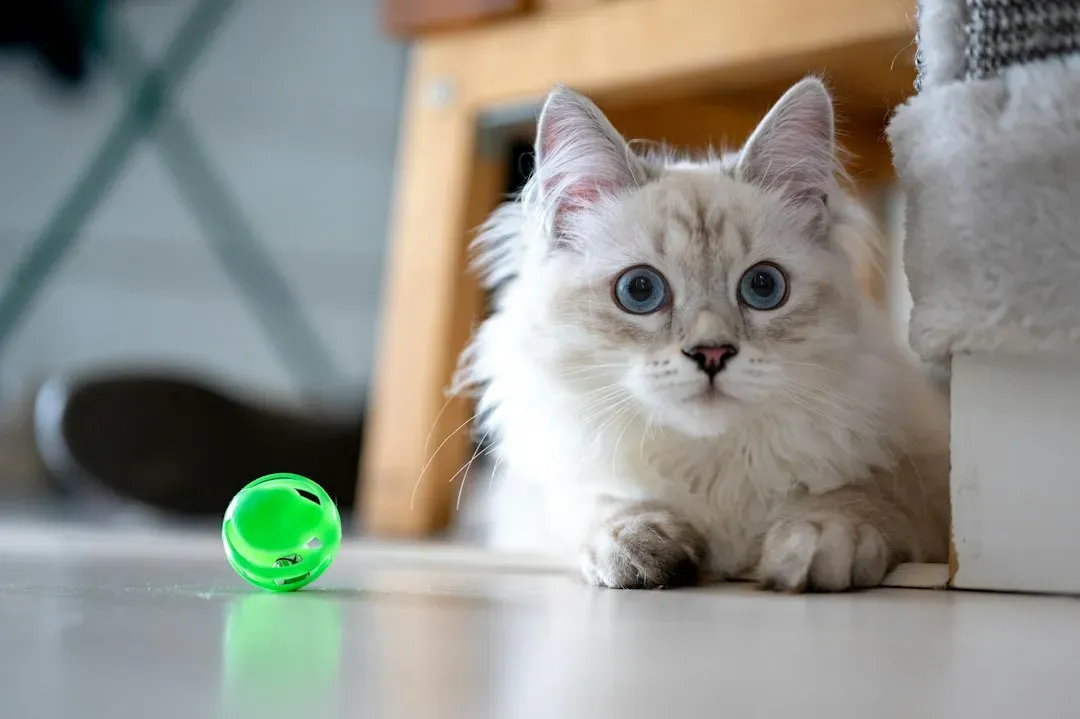
Play is a luxury of feeling safe. A cat can’t hunt for fun when part of its brain is busy watching for danger.
Cats are natural hunters, and a stalking, pouncing cat is one with spare mental energy.
When a toy dangles in front of a cat and gets no reaction, the cat may be too stressed to switch on its hunting instincts. Play needs safety first.
That’s why experts often suggest trying again in a quiet space away from the cage. Some cats who ignore toys in the kennel play within minutes in a calm room.
But what happens when you actually touch the cat is even more revealing…
#12 – It Lets You Handle It Like a Limp Doll
🔥 Would you like to save this?
We'll email this post to you, so you can come back to it later!
Tolerating isn’t the same as enjoying. This is the sign that fools the most people, because it feels like a gift.
Some cats go completely slack when picked up or petted. Staff sometimes call this “shutting down.”
It can look like the perfect, docile cat. But a cat that doesn’t react at all may simply have stopped resisting. True comfort usually comes with small, active signs like leaning in, soft eyes and a relaxed posture.
Experts say to look for choice. A comfortable cat will lean into your hand or move closer, while a shut-down cat just endures.
- Body stays stiff or limp, no leaning in
- Eyes fixed on one point or half-closed
- No response when petting stops
The next sign involves a famous cat gesture…

PetSafe Oasys Pet Fountain, 1/2 Gallon (64 oz), Small Dogs & Cats
Check Price on AmazonAs an Amazon Associate, we earn from qualifying purchases.
10/8/2026 8:14 am GMTi

Orthopedic Extra Large Dog Bed, Waterproof Washable XL Pet Bed 44"
Check Price on AmazonAs an Amazon Associate, we earn from qualifying purchases.
10/7/2026 1:32 pm GMTi

Glass Hummingbird Feeder for Outdoors Hanging, 16 oz Leak-Proof Nectar Feeder with Bee Guards & Ant Moat
Check Price on AmazonAs an Amazon Associate, we earn from qualifying purchases.
10/7/2026 1:22 pm GMTi

Earth Rated XL Dog & Puppy Pee Pads, Discreet Top, Max Absorbency
Check Price on AmazonAs an Amazon Associate, we earn from qualifying purchases.
10/7/2026 1:28 pm GMTi

Glass Hummingbird Feeder for Outdoors Hanging
Check Price on AmazonAs an Amazon Associate, we earn from qualifying purchases.
10/7/2026 1:21 pm GMTi
#11 – The Slow Blinks Have Stopped
🔥 Would you like to save this?
We'll email this post to you, so you can come back to it later!
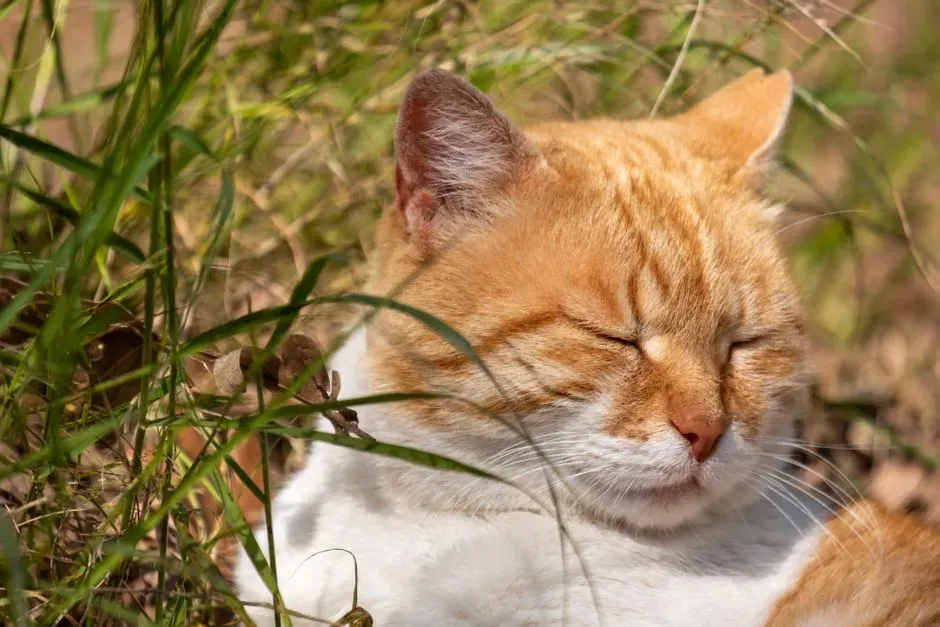
A slow blink is a cat’s gentlest message. Once you know to look for it, you’ll notice how much it says.
A 2020 study published in Scientific Reports found that cats were more likely to approach people who slow-blinked at them. It’s often called a “cat smile.”
Worth Knowing: Slow-Blink Basics
- The 2020 study in Scientific Reports found cats were more likely to approach a person who had slow-blinked at them
- A relaxed face and a gentle, unhurried blink work best
- A hard, fixed stare can read as a threat
- Let the cat answer in its own time, or not at all
A cat that once returned slow blinks and now looks away may be pulling back. Cats use eye contact sparingly, and a hard stare often means tension, not affection.
Don’t take it personally. Try sitting sideways, looking away and blinking slowly, then let the cat decide whether to respond.
But there’s a quieter scent-based clue that most people miss…
#10 – It Has Stopped Rubbing on Things
🔥 Would you like to save this?
We'll email this post to you, so you can come back to it later!
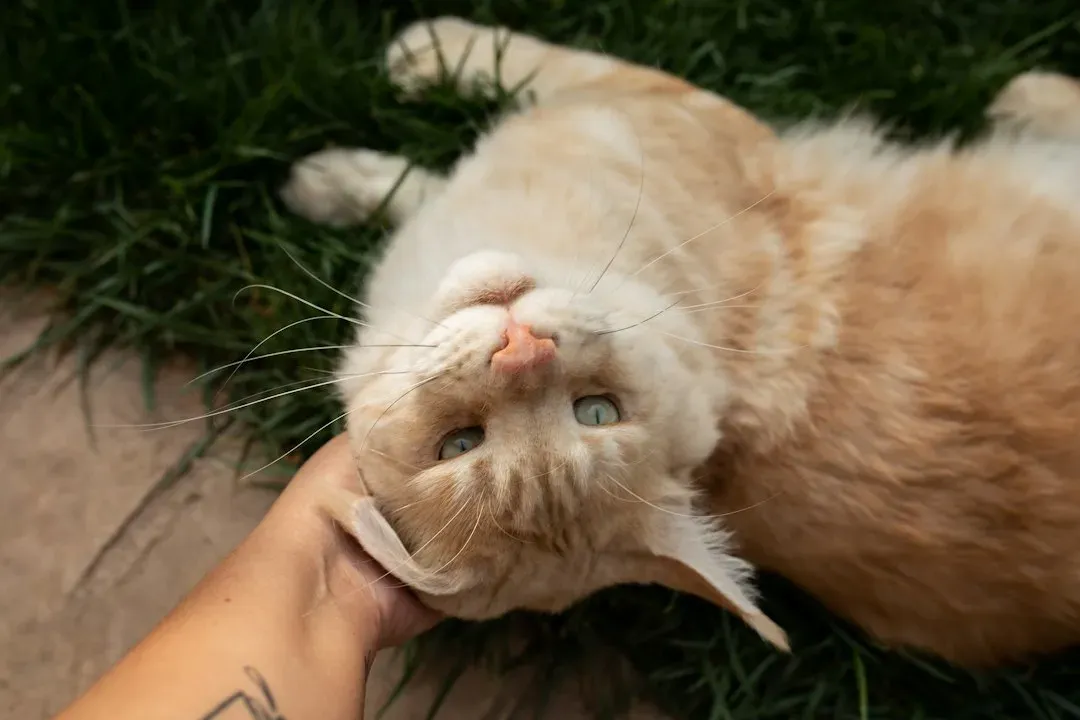
Cheek rubbing is a cat’s way of signing its name in scent. You can’t smell it, but the cat can.
Cats rub their faces on objects to deposit scent, which helps them feel at home. A comfortable cat will rub on bars, bowls and your hand.
When rubbing disappears, the cat may not feel settled enough to claim anything at all. A bare cage with no familiar scent is hard on a species that relies so heavily on smell.
This is one reason experts argue for sending a blanket or towel along with a cat when it moves. Familiar scent can make an unfamiliar space feel more manageable.
- No face rubbing on the bars or toys
- No head-bumping toward visitors
- Little interest in sniffing new objects
The tail has its own story…
#9 – The Tail Stays Low and Tucked
🔥 Would you like to save this?
We'll email this post to you, so you can come back to it later!
The tail is the cat’s mood meter, and it’s visible from across the room.
A confident cat carries its tail up, often with a small curl at the tip. That’s the classic friendly greeting.
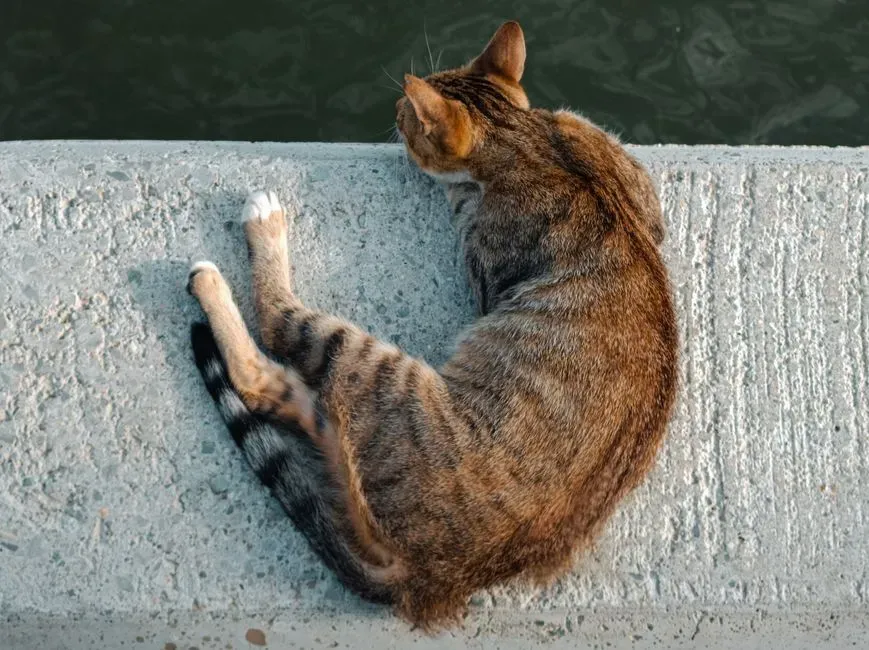
A tail held low or tucked close to the body is a different signal. A tail carried low, day after day, is a sign of ongoing unease. Occasional low tails mean little, and the pattern is what counts.
Combine it with other signs, such as a hunched back or flattened ears, and the picture becomes clearer. No single sign is a diagnosis, but clusters are informative.
And the next sign shows up the moment the door opens…
#8 – It Doesn’t Step Out When the Door Opens
🔥 Would you like to save this?
We'll email this post to you, so you can come back to it later!
Open doors are the real test. Anyone can look uninterested through bars, but an open door takes away the excuse.
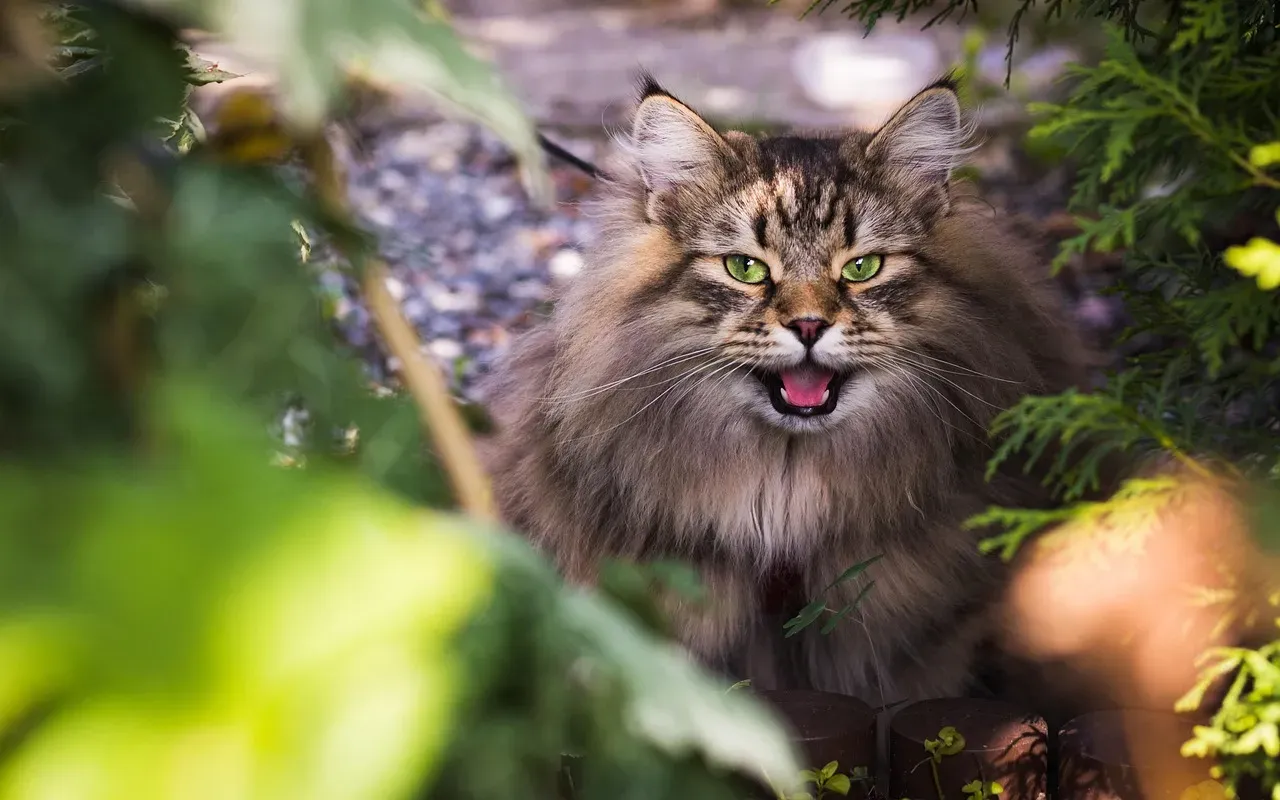
A curious cat will peek out, sniff, or even bolt for freedom. That’s a cat still hungry for new information.
When a cage door swings open and the cat doesn’t move, the cat may have learned that the outside brings nothing good. Some cats hold back out of fear, others out of resignation.
Experts say the answer isn’t to drag the cat out. Letting it choose the pace works better than forcing exploration.
- Stays at the back of the cage
- Watches the open door without moving
- Takes a long time to leave, if it leaves at all
Next, a pattern that shows how rigid its world has become…
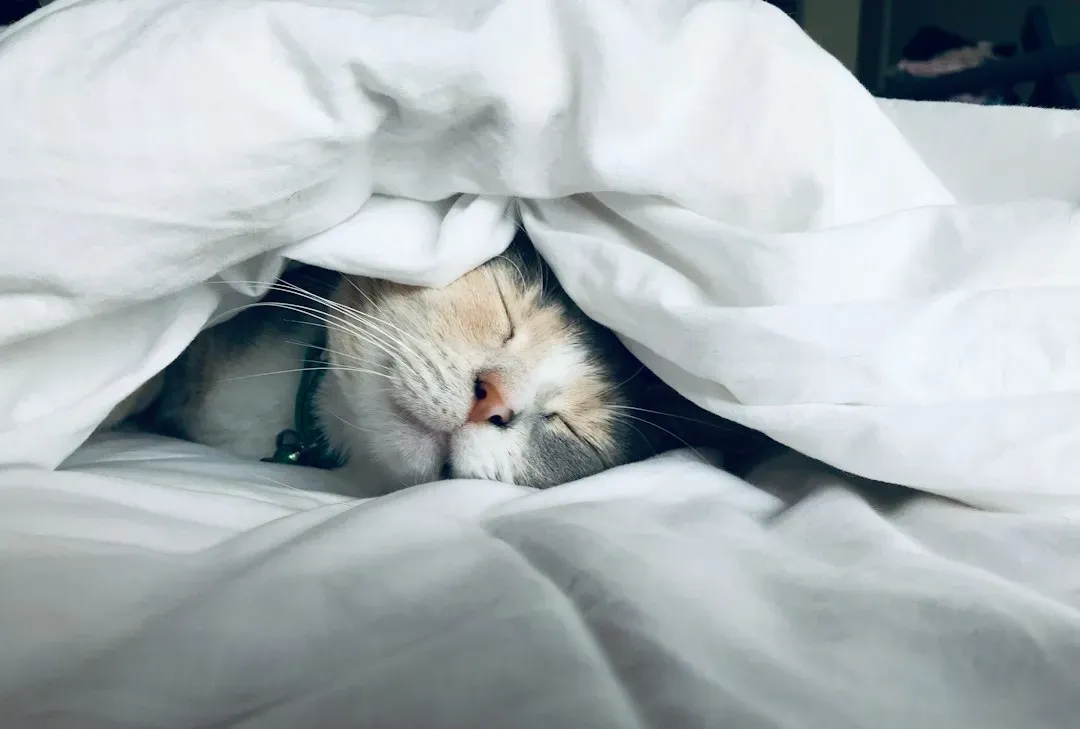
#7 – Its Day Follows a Rigid, Repeating Script
🔥 Would you like to save this?
We'll email this post to you, so you can come back to it later!
Predictability can become a trap. What starts as comfort can slowly shrink a cat’s world.
Some long-stay cats settle into a fixed routine, with the same corner, the same sleeping spot and the same time to eat. Routine is soothing for cats, up to a point.
Here’s where it gets complicated. A routine that never flexes may mean the cat has stopped seeking anything new. It’s not necessarily distress, but it is a narrowed life.
Many experts argue that the shelter’s own structure can reinforce this. Rigid schedules, minimal enrichment and the same view every day can shrink a cat’s interest in the world.
But what about the cats who used to be social?
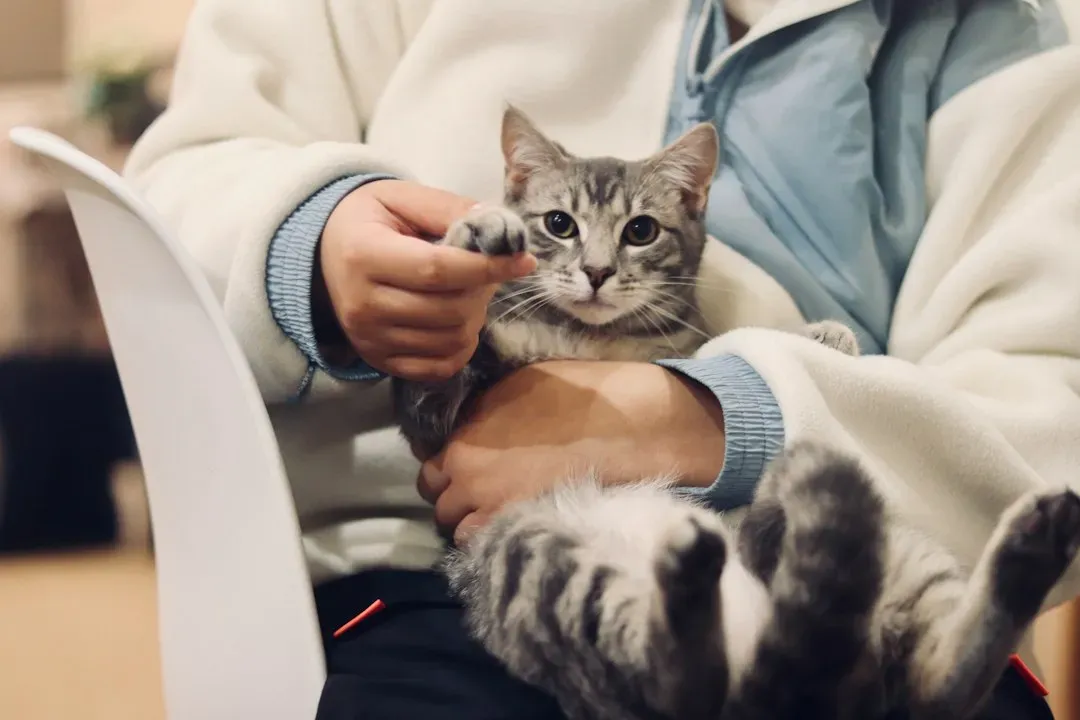
#6 – It No Longer Greets Its Favorite Volunteer
🔥 Would you like to save this?
We'll email this post to you, so you can come back to it later!
Fading recognition is a hard sign to watch. It often hurts the people who notice it more than anyone.
Some cats form clear bonds with a particular staffer. They trot over, chirp and rub the moment that person arrives.
When that greeting quietly stops, the change can signal that even a trusted relationship isn’t buffering the stress. Volunteers are often the first to notice.
That’s one reason experts recommend sharing observations. A volunteer’s note that “she used to greet me” can help staff spot a decline early.
- Keep notes on changes in greeting behavior
- Report any sudden shift to staff
- Don’t punish or pressure a withdrawn cat
The next sign looks like calm, but it isn’t…

Dog Stairs for Bed 18" H, 4-Step Dog Steps for High Bed
Check Price on AmazonAs an Amazon Associate, we earn from qualifying purchases.
10/9/2026 2:42 pm GMTi

Halloween Cat Costume Cloak Witch Hat Pet Accessories
Check Price on AmazonAs an Amazon Associate, we earn from qualifying purchases.
10/9/2026 2:44 pm GMTi

Halloween Dog Collar with Bow, Orange Cute Ghost Collar,
Check Price on AmazonAs an Amazon Associate, we earn from qualifying purchases.
10/9/2026 2:43 pm GMTi

Professional 7 in 1 Dog Paw Cleaner for Dogs & Cats - Includes 1 Portable Paw Washer, 1 Bath Brush
Check Price on AmazonAs an Amazon Associate, we earn from qualifying purchases.
10/7/2026 1:26 pm GMTi

Hand Blown Glass Hummingbird Feeders for Outdoors Hanging, 24oz Wild Bird Nectar Feeder
Check Price on AmazonAs an Amazon Associate, we earn from qualifying purchases.
10/7/2026 1:23 pm GMTi
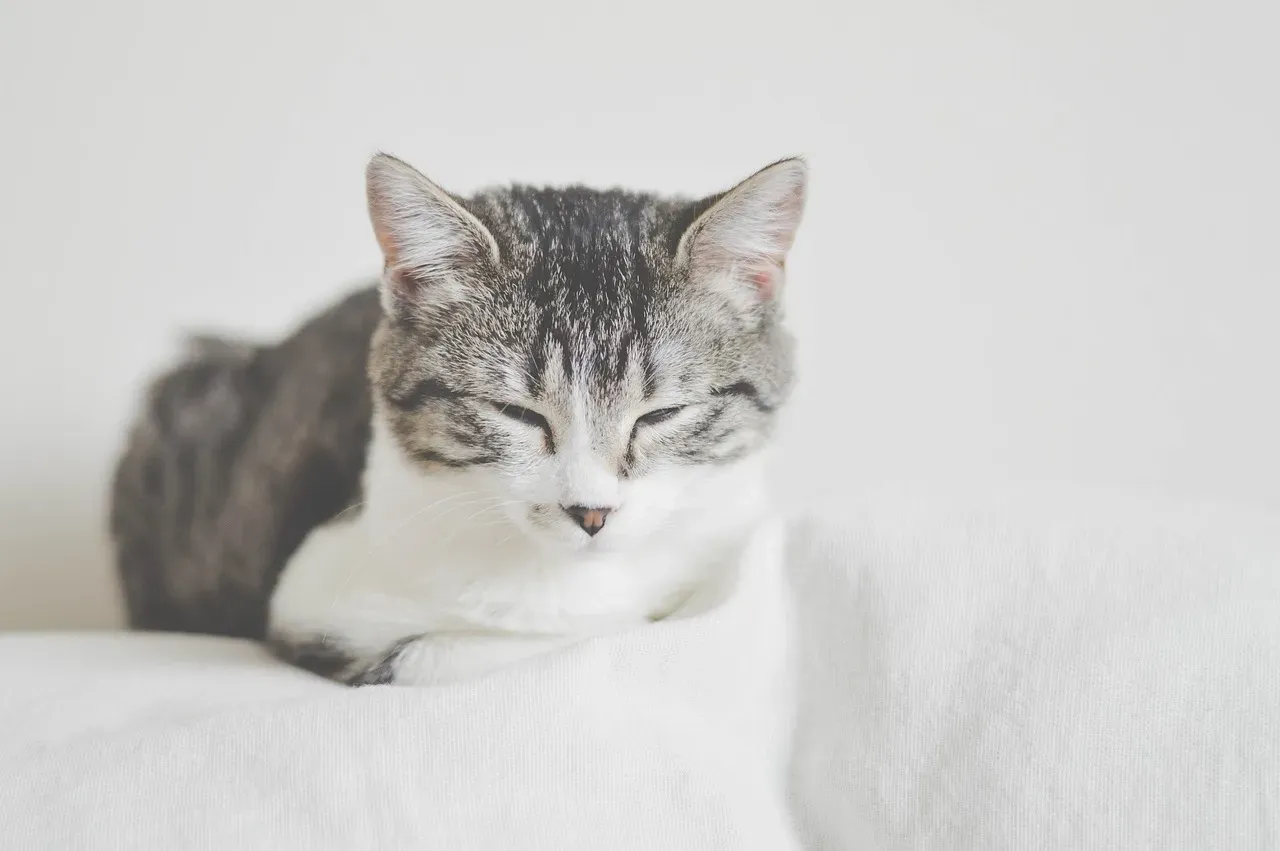
#5 – Loud Noises No Longer Make It Flinch
🔥 Would you like to save this?
We'll email this post to you, so you can come back to it later!
Not startling can be a red flag. Most of us assume a cat that stays unfazed is a tough one.
Shelters are noisy places. Barking dogs, clanging doors and constant chatter are daily background.
Some cats adapt well and truly relax. But a cat that shows no reaction whatsoever, with a stiff, fixed posture, may be emotionally flattened rather than adjusted.
Telling the two apart takes practice. Relaxed cats have soft faces and loose bodies, while flattened cats often seem blank and disengaged.
But the next sign is about comfort behaviors that quietly vanish…
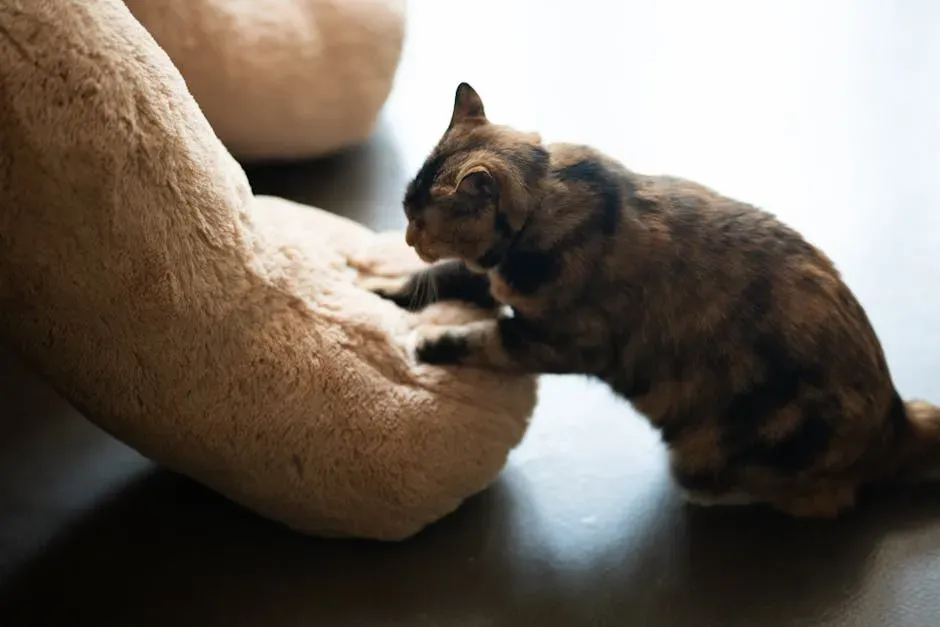
#4 – Kneading and Comfort Behaviors Disappear
🔥 Would you like to save this?
We'll email this post to you, so you can come back to it later!
Kneading is a leftover from kittenhood. It’s a little piece of early comfort that adult cats carry with them.
Many cats knead soft surfaces when relaxed. It’s tied to early nursing and often signals contentment.
When a cat that once kneaded its blanket stops completely, it may have lost the ease that makes comfort behaviors possible. Cats don’t do these things when they feel unsafe.
Purring is trickier. Cats purr when content, but also sometimes when stressed or in pain, which is why experts look at the whole body and not the purr alone.
- No kneading on blankets or bedding
- No relaxed, sprawled sleeping
- Purring only with tense body language
Physical changes can show it too…
#3 – Its Coat and Weight Quietly Decline
🔥 Would you like to save this?
We'll email this post to you, so you can come back to it later!
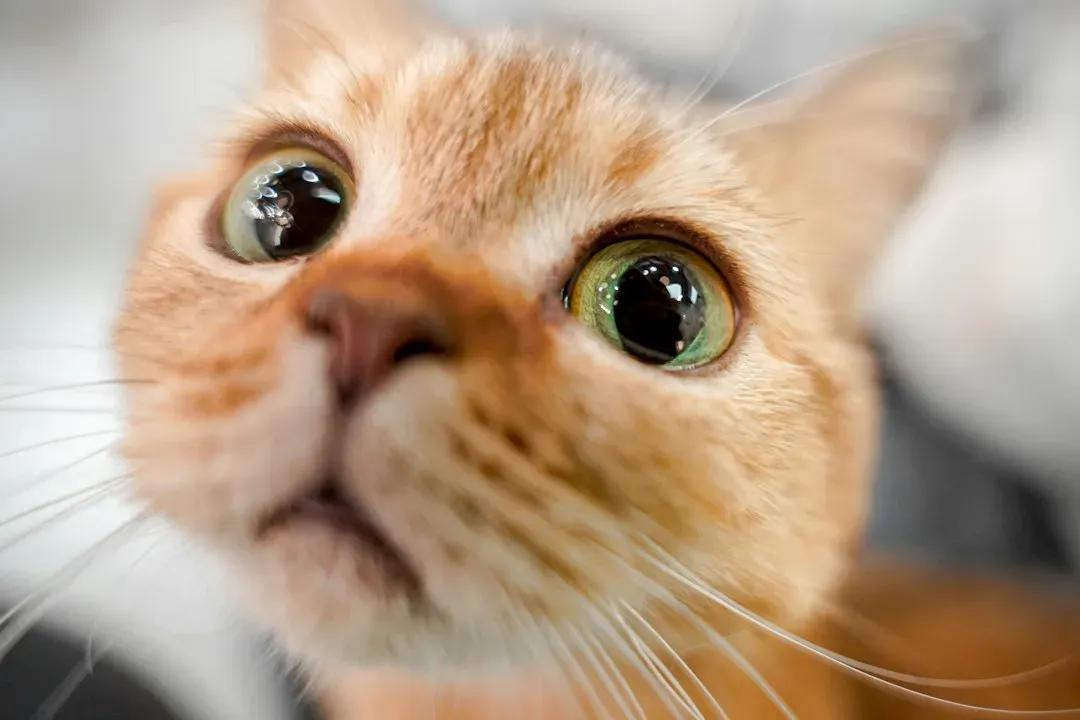
The body keeps score. Even when a cat hides its feelings, its health can still reflect them.
Long-term stress can show up as a dull coat, weight loss or a drop in appetite. Staff monitor weight for exactly this reason.
Stress can also make cats more vulnerable to illness. Upper respiratory infections are a well-known problem in crowded shelters, and stress is thought to contribute.
At a Glance: Changes Worth Reporting
- Eating noticeably less, or skipping meals for more than a day
- A dull, greasy or patchy coat
- Visible weight loss or a thinning frame
- Sneezing, watery eyes or nasal discharge
That’s why any physical change should be treated as a medical issue first. Behavior and health are tightly linked in cats, and one can easily hide the other.
But there’s one response that might surprise you…
#2 – It Barely Reacts to Its Own Name
🔥 Would you like to save this?
We'll email this post to you, so you can come back to it later!
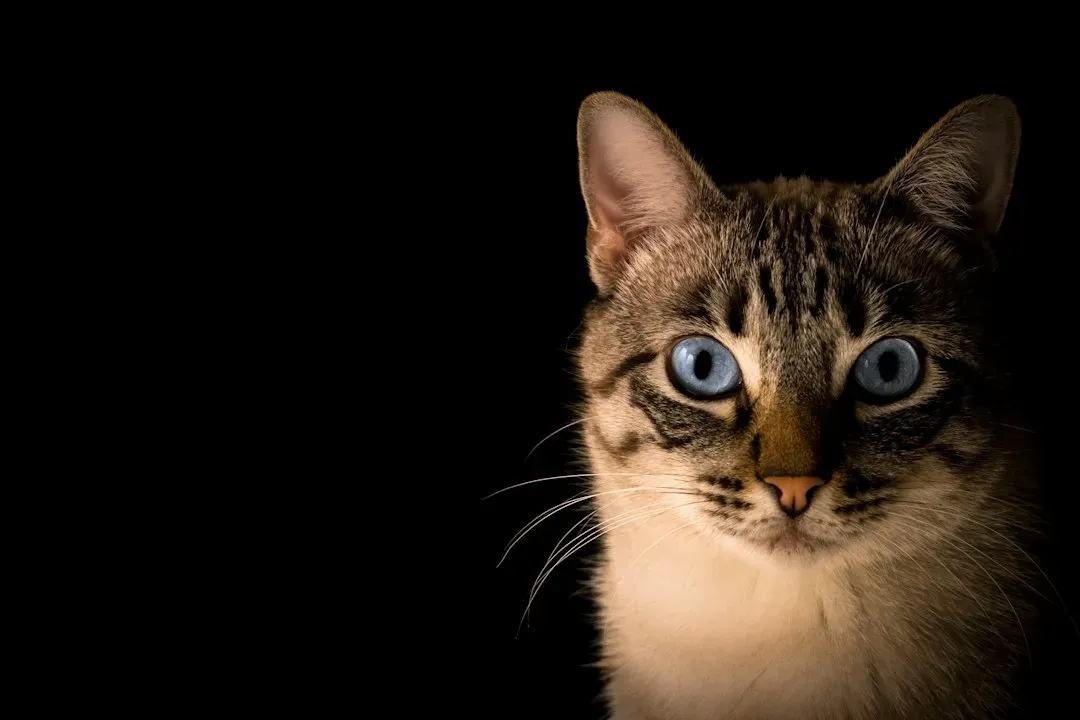
Names matter more to cats than people think. They just don’t always want you to know it.
A 2019 Japanese study published in Scientific Reports found that domestic cats can tell their own name from other words. They can recognize it even when they choose not to respond.
So a cat that ignores its name isn’t necessarily clueless. Cats often hear us perfectly well and just don’t bother.
In a shelter, though, a sudden drop in response can reflect withdrawal. A soft, consistent voice and a reward for any response can slowly rebuild the link.
- Say the name calmly, then offer a treat
- Avoid shouting or loud tones
- Reward even a small glance or ear flick
And the last sign may be the most important one of all…

Air Purifiers for Home Pets Large Room Up to 3000 Ft²,HEPA Air Cleaner with Washable Double-Side Filter, PM2.5 Air Quality Monitor,15dB Sleep Mode for Bedroom Odor Dust Pollen,White
Check Price on AmazonAs an Amazon Associate, we earn from qualifying purchases.
10/8/2026 8:23 am GMTi

Smart Bird Feeder with Camera Solar Powered, 2K HD Live Video, 10,000+ Bird Species AI Identification
Check Price on AmazonAs an Amazon Associate, we earn from qualifying purchases.
10/7/2026 1:22 pm GMTi

2 Pcs Halloween Pet Hat Bandana Set, Witch Pumpkin Costumes for Dogs
Check Price on AmazonAs an Amazon Associate, we earn from qualifying purchases.
10/9/2026 2:45 pm GMTi

Portable Dog Water Bottle Foldable Dog Travel Water Bottle
Check Price on AmazonAs an Amazon Associate, we earn from qualifying purchases.
10/7/2026 1:29 pm GMTi
#1 – It Still Watches the Door When It Thinks No One Is Looking
🔥 Would you like to save this?
We'll email this post to you, so you can come back to it later!
The best news hides in the saddest sign. This is the one that changes how you read everything above it.
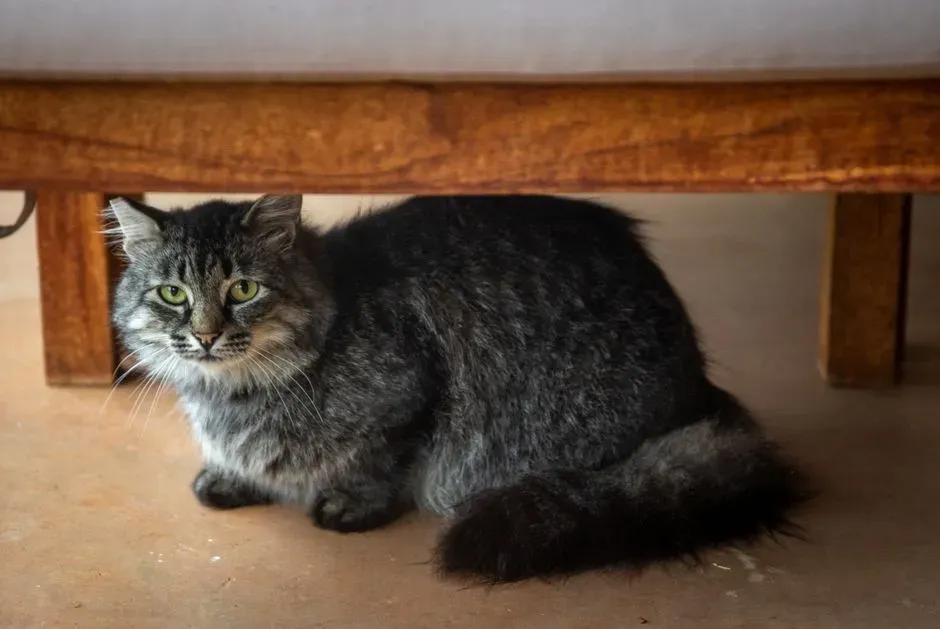
Behaviorists often note that withdrawn cats may still track people with quick, careful glances. They look away the moment you notice.
That watchfulness suggests the cat hasn’t completely stopped paying attention. It may have stopped showing it, which isn’t the same thing.
Why It Stands Out
- It shows interest is still alive beneath the stillness
- It often appears before any bolder sign of trust
- Many rescues use a “3-3-3” rule of thumb: roughly 3 days to decompress, 3 weeks to learn the routine, 3 months to feel at home
- It’s a guideline, not a promise, and every cat moves at its own pace
Plenty of cats described as shut down in shelters begin to open up after a calm, quiet adjustment period in a home. Experts often recommend a small room, a hiding spot and patience. Many adopters report the cat’s personality coming out over weeks, though every cat is different.
We can’t read a cat’s mind, and no single sign proves a cat has “given up.” But a cluster of them, especially a change from earlier behavior, deserves attention.
Our view is that the quiet cat is the one shelters and visitors most often misjudge. Calm and resigned can look alike, and adopters who choose by “easy” may skip the cats who need them most. Shelters should also offer hiding spots, enrichment and calm meeting spaces by default, because behavior in a cage is only part of the story.
The cat in the back corner isn’t asking for much. It’s waiting to see whether anything, finally, is going to change. Have you ever adopted a cat who seemed shut down at first, and what was the first sign it was coming out of its shell?

- 22 Signs a Shelter Cat Has Stopped Expecting the House to Change - November 6, 2026
- 25 Rituals a Rescue Cat Develops Around Whoever Opens the Door - November 6, 2026
- 20 Gentle Habits an Old Dog Keeps Once the House Has Emptied - November 6, 2026