

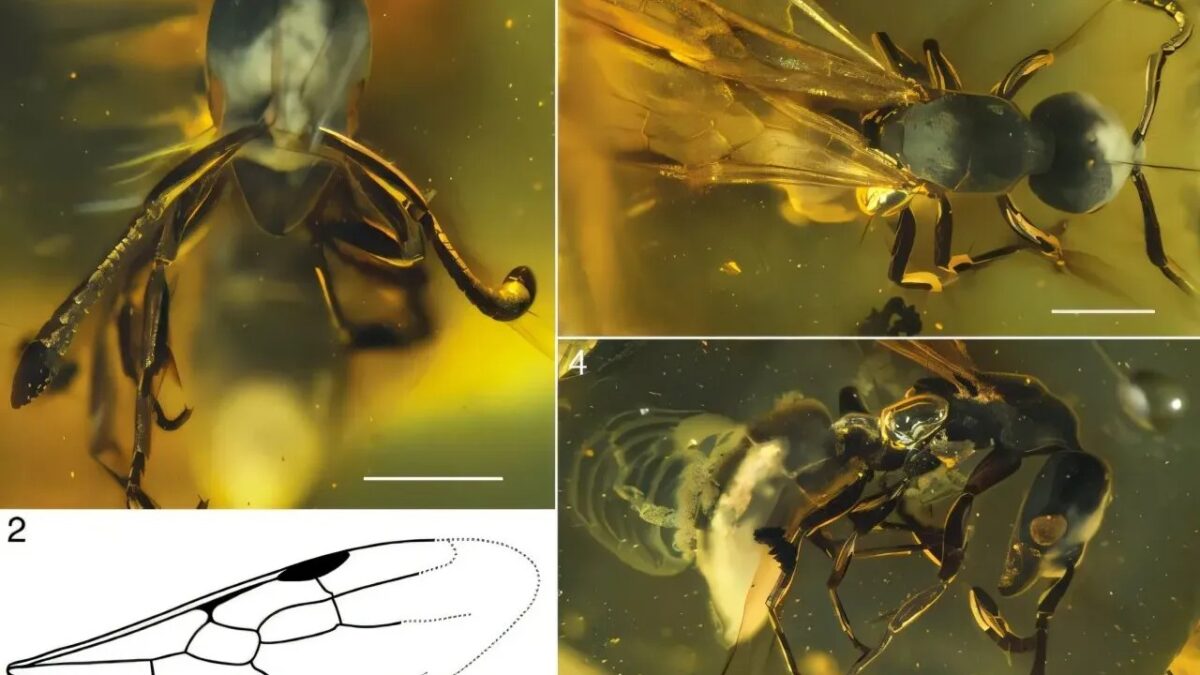
Somewhere deep in a piece of ancient amber, a queen ant has been waiting. Waiting for millions of years, perfectly preserved, locked in golden resin that hardened long before humans ever walked the earth. It sounds like something from a science fiction novel, but this is real, and the discovery is genuinely stunning.
Scientists have just identified a previously unknown species of ant queen fossilized in Dominican amber, and what they found challenges some long-held assumptions about ant evolution and tropical ecosystems. This isn’t just another fossil discovery. It’s a window into a world that vanished tens of millions of years ago. Let’s dive in.
A Discovery Hidden in Plain Sight for Millions of Years
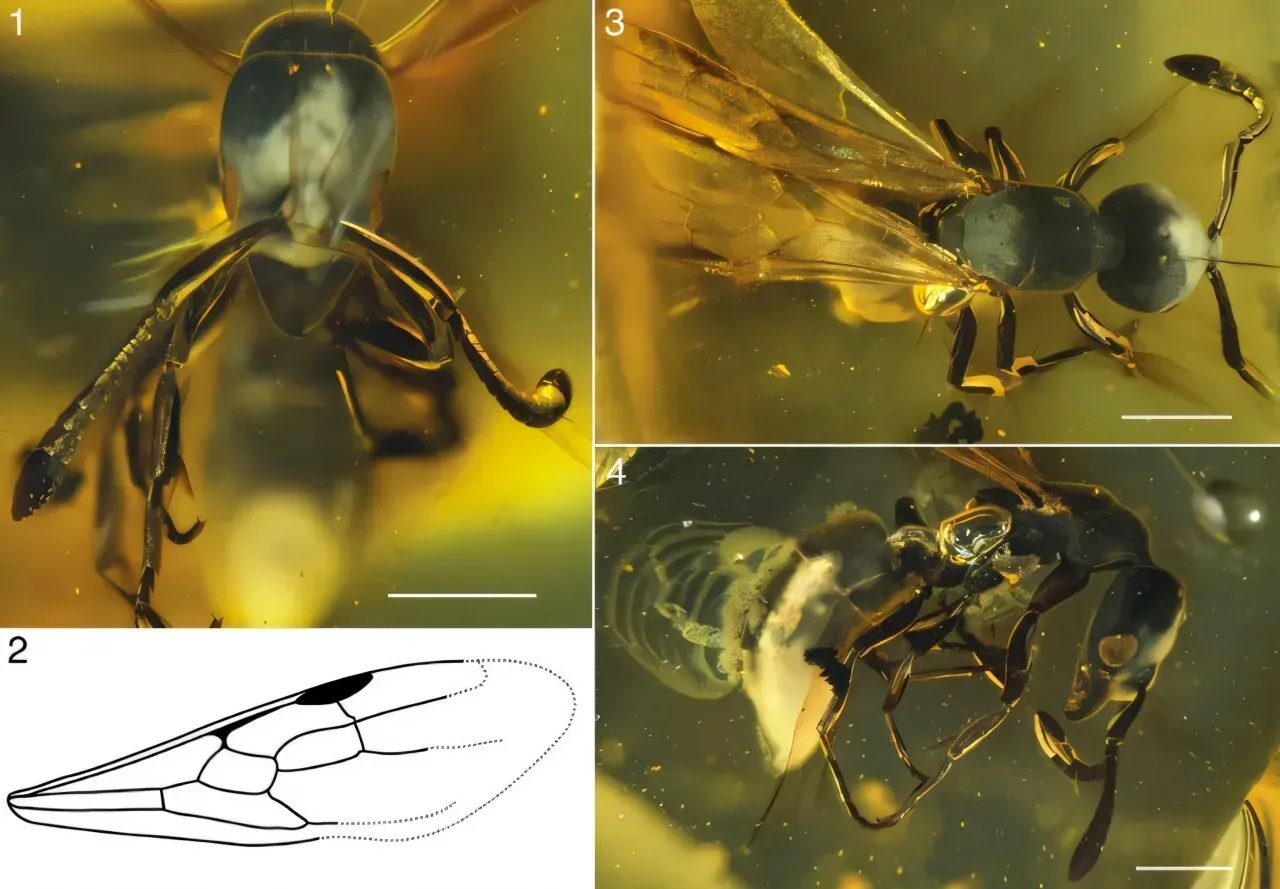
Here’s the thing about amber fossils: they’re deceptive. From the outside, a piece of amber just looks like a glowing orange stone, maybe something you’d see in a jewelry shop. Inside this particular piece, though, was something extraordinary – a fully preserved ant queen, complete with remarkable anatomical detail that scientists rarely get to study at this level of resolution.
The specimen was discovered within Dominican amber, which originates from the island of Hispaniola, the same island that today is shared by Haiti and the Dominican Republic. Dominican amber is famous among paleontologists because it captures an almost photographic snapshot of life from the Eocene to Miocene epochs, roughly 15 to 45 million years ago. The clarity and preservation quality of this amber is almost unmatched anywhere on Earth.
What Makes This Ant Queen So Special
Not all fossil ants are created equal, and this queen is genuinely in a class of her own. Queens are far rarer in the fossil record than worker ants, mostly because queens spend much of their lives inside nests rather than foraging in open environments where they might encounter resin. Finding one this well preserved is, honestly, a bit like winning the lottery.
The specimen belongs to a previously undescribed species, meaning scientists have formally named it and classified it as new to science. The morphology, meaning the physical structure and body shape, shows unique features that don’t quite match any known living or fossil species. That combination of rarity and novelty is what makes paleontologists genuinely excited, and I think it’s the kind of discovery that reminds us how much we still don’t know about life’s history on this planet.
Reading the Anatomy: What the Fossil Reveals
One of the most fascinating aspects of amber preservation is how much biological information survives. In this case, researchers could examine the ant queen’s body structure in impressive detail, from the shape of her thorax to features of her wings and head capsule. These physical characteristics are what allow scientists to classify species and understand evolutionary relationships.
The queen’s anatomy suggests she belonged to a lineage with specific behavioral and ecological traits that differ from modern ant queens we see today. Studying these differences helps scientists reconstruct what ancient Caribbean ecosystems might have looked like, what kind of vegetation existed, and how ant communities were organized millions of years ago. It’s almost like reading an ancient diary, except the diary is made of chitin and hardened tree resin.
Dominican Amber: A Treasure Chest of Prehistoric Life
Dominican amber deserves its own moment of appreciation here. It has produced some of the most remarkable fossil discoveries of the last century, including ancient frogs, lizards, insects, plants, and even microorganisms. The amber forms from the resin of an extinct tree related to the modern Hymenaea genus, and its chemical properties make it unusually transparent and stable over geological timescales.
For ant researchers specifically, Dominican amber has been extraordinarily generous. Dozens of ant species have been described from these deposits, and each new one adds another data point to the complex puzzle of how ants diversified and spread across the Americas. Roughly about one third of all known fossil ant species from the Caribbean region come from Dominican amber alone, which tells you just how important this source material is to the scientific community.
What This Means for Our Understanding of Ant Evolution
Let’s be real for a second: ants are wildly underappreciated as evolutionary success stories. They’ve been around for over 100 million years, they’ve colonized nearly every landmass on Earth, and their social structures rival anything humans have built in terms of complexity. Discovering a new species from the distant past adds another chapter to that already remarkable story.
This particular queen helps fill a gap in our understanding of how ant lineages diversified in the Caribbean during a period of significant geological and climatic change. The Caribbean islands have a complex history involving rising sea levels, shifting land connections, and changing climates, all of which influenced which species could survive and where. Understanding which ants lived there, and when, gives scientists a more complete picture of how island ecosystems evolved over deep time.
The Science of Naming a New Species
Formally describing a new species is not a casual affair. It requires rigorous documentation, detailed morphological analysis, comparison against all known related species, and publication in a peer-reviewed scientific journal. The researchers involved in this study went through exactly that process to confirm that this ant queen genuinely represents something new to science.
The formal naming of a species also carries significant cultural and scientific weight. Species names often honor researchers, reference geographic origins, or describe a distinctive physical trait. It’s hard to say for sure what inspired the name chosen for this particular species without seeing the full publication details, but the naming itself marks a permanent addition to the global registry of life on Earth. Once a species is named and described, it becomes part of the scientific record forever.
Why Fossils Like This Still Matter in 2026
Some people might wonder why a tiny fossilized ant queen generates scientific excitement in an era of genetic sequencing, satellite imaging, and artificial intelligence research tools. The answer is surprisingly simple: fossils tell us things that no living specimen ever can. They are direct physical evidence of life that existed before human memory, before recorded history, before almost anything we recognize as familiar.
In 2026, with biodiversity loss accelerating and ecosystems under pressure on every continent, understanding the deep history of life has never felt more urgent. Knowing which species existed, how they adapted, and what caused lineages to disappear gives scientists critical context for conservation decisions today. This ant queen, frozen in amber for perhaps 35 million years, is not just a curiosity. She is a data point in the largest story ever told, the story of life on Earth.
A Final Thought Worth Sitting With
There is something deeply humbling about this discovery. A creature that lived, flew, founded a colony, and eventually got caught in tree resin millions of years before humans existed has now been examined, named, and recorded by those very humans. The amber preserved her so well that scientists can reconstruct details of her anatomy with remarkable precision.
Honestly, I find that almost poetic. The randomness of it, the sheer improbability that this one queen happened to land near resin, got trapped, survived geological upheaval, ended up in a collector’s hands, and was eventually recognized as something entirely new, is staggering. Science often works this way, through patience, curiosity, and the occasional stroke of extraordinary luck.
What do you think: does a discovery like this change how you see the world beneath your feet? Drop your thoughts in the comments below.

- Urban Coyotes Show Remarkable Adaptability, Learning to Thrive in City Environments - July 22, 2026
- Beavers Are Nature’s Engineers, Creating Vital Habitats for Other Wildlife Species - July 21, 2026
- The Recovery of the California Condor Offers Hope for Other Critically Endangered Birds - July 21, 2026