

Worried about unexpected vet bills?
Pet insurance can cover thousands in unexpected vet costs. Get a free quote from Lemonade in under 2 minutes.
Get My Free Quote →Sponsored · Opens Lemonade.com
Creating a thriving freshwater aquarium requires more than just clean water and proper filtration—understanding the social needs of your fish is equally important. Some species naturally school or shoal in the wild, finding safety and companionship in numbers. These fish often display heightened colors, reduced stress levels, and more natural behaviors when kept in appropriate groups. On the flip side, certain species are territorial by nature and require ample space to establish their domains, becoming stressed or aggressive when forced to share limited territory.
Whether you’re a beginner or experienced aquarist, knowing which fish thrive in groups and which need their personal space can make the difference between a harmonious tank and a chaotic one. This knowledge allows you to create an environment where your aquatic pets can exhibit their natural behaviors while maintaining optimal health. In this article, we’ll explore eight freshwater species that flourish in groups and three that prefer more solitary living arrangements, helping you make informed decisions for your underwater community.
Neon Tetras The Classic Schooling Fish
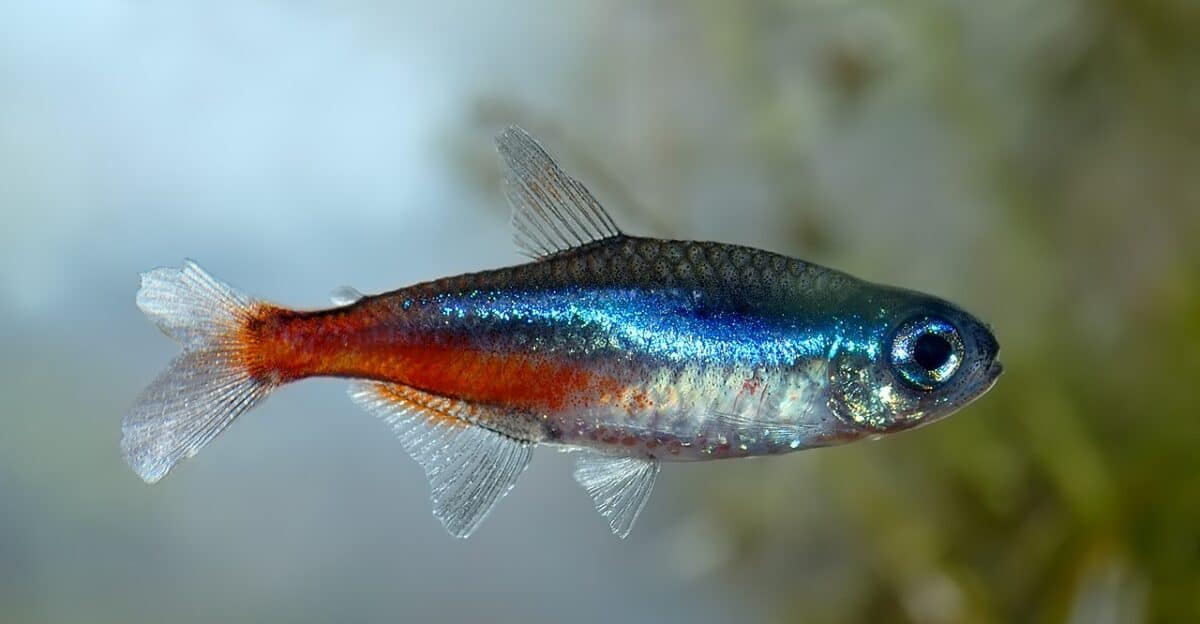
Neon tetras (Paracheirodon innesi) have earned their place as one of the most popular aquarium fish worldwide, and for good reason. These small, vibrant fish showcase a stunning electric blue stripe running along their bodies, complemented by a striking red streak on their lower half. In the wild Amazon basin, neon tetras gather in massive schools numbering in the thousands, using their collective presence and flashy coloration as protection against predators.
In home aquariums, neon tetras should be kept in groups of at least six, though ten or more is ideal. When kept in proper schools, these fish display fascinating synchronized swimming patterns and more vivid coloration. Solitary neon tetras often become pale, skittish, and prone to stress-related illnesses. They’re peaceful community fish that thrive in planted tanks with subdued lighting, making them perfect companions for other non-aggressive species in community setups. With proper care and companionship, these hardy fish can live up to 10 years, bringing dynamic movement and color to your aquarium.
Corydoras Catfish The Social Bottom Dwellers
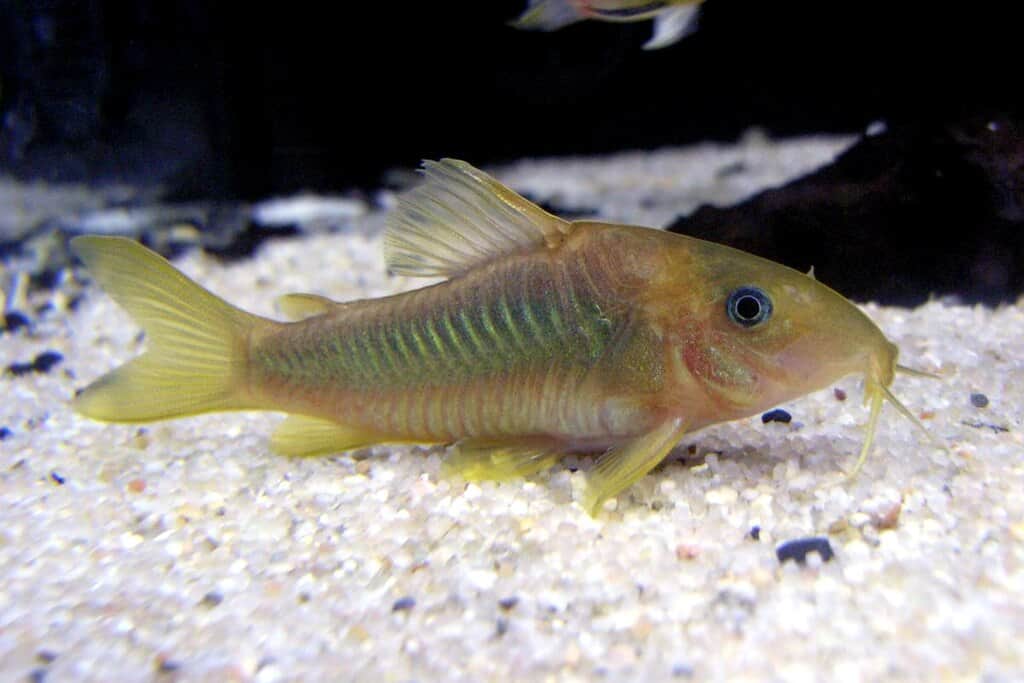
Corydoras catfish, affectionately known as “cories,” are armored catfish native to South American waters. These peaceful bottom dwellers come in numerous species and varieties, from the popular bronze cory (Corydoras aeneus) to the panda cory (Corydoras panda) with its distinctive black-and-white markings. Despite their reputation as cleanup crew, corydoras are highly social creatures that demonstrate complex social behaviors when kept in groups of their own kind.
For optimal health and natural behavior, corydoras should be kept in shoals of at least six individuals, preferably of the same species. When properly grouped, these catfish engage in coordinated feeding behaviors, playful chasing, and synchronized breeding dances. They’ll often rest together in tight clusters, particularly during quiet periods in the aquarium. Solitary corydoras typically become inactive, hiding excessively and showing signs of stress. With their peaceful nature and modest size (typically 2-3 inches), these sociable catfish make excellent additions to community tanks while adding activity to the bottom level of your aquarium.
Harlequin Rasboras Elegant Schooling Midwater Swimmers
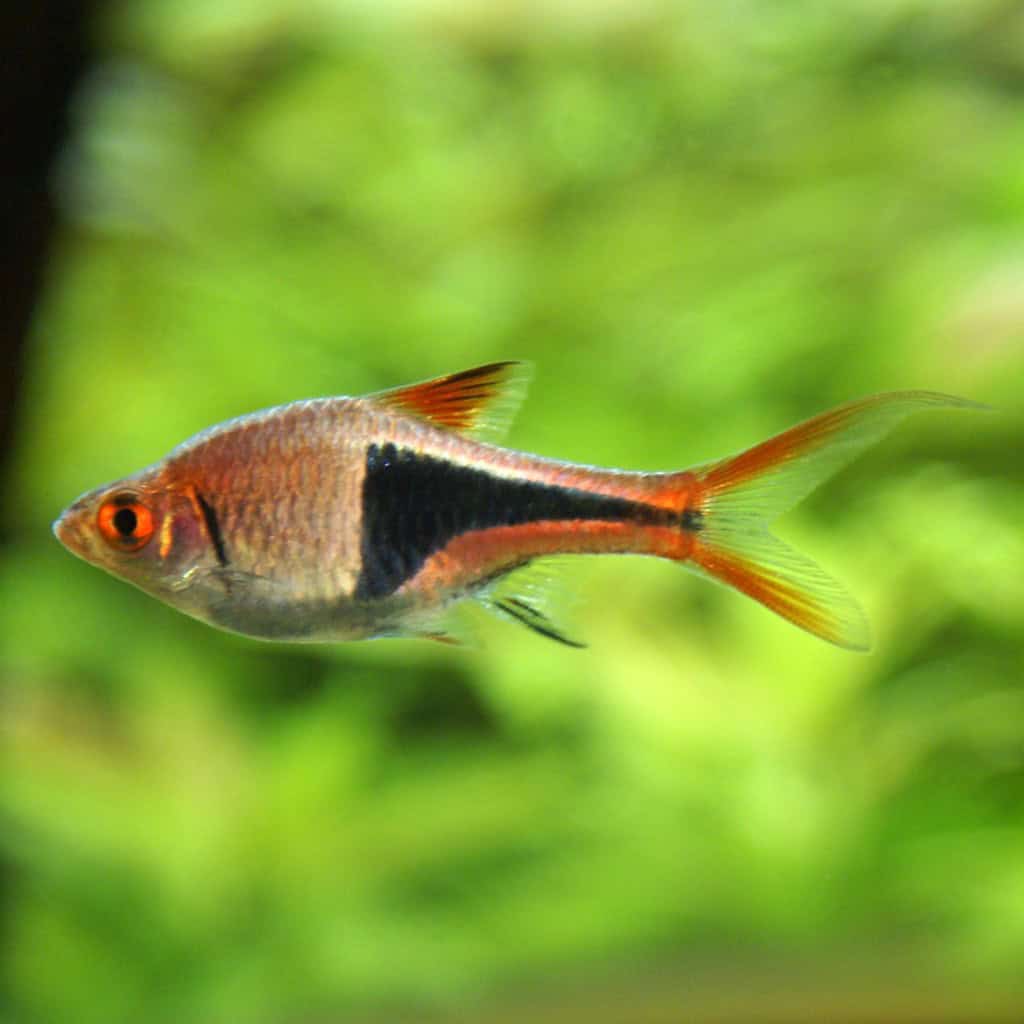
Harlequin rasboras (Trigonostigma heteromorpha) are distinctive fish native to Southeast Asia, characterized by their copper-orange bodies and the prominent black triangular patch on their rear half. These peaceful, active swimmers naturally inhabit blackwater streams and ponds in countries like Thailand, Malaysia, and Singapore. In their natural environment, harlequin rasboras form tight-knit schools that move together with remarkable coordination, offering protection from predators while efficiently locating food sources.
In the aquarium setting, harlequin rasboras thrive when kept in groups of eight or more individuals. When maintained in proper schools, these fish display more confident behavior, richer coloration, and fascinating group dynamics as they weave through plants and open water. They typically occupy the middle water column, making them ideal companions for bottom-dwelling species like corydoras and top-dwelling fish like guppies. With a modest adult size of about 2 inches, peaceful temperament, and adaptability to various water conditions, harlequin rasboras are excellent choices for community tanks of 20 gallons or larger. Their elegant appearance and graceful schooling behavior add both beauty and movement to planted aquariums.
Cherry Barbs Vibrant Schoolers with Personality
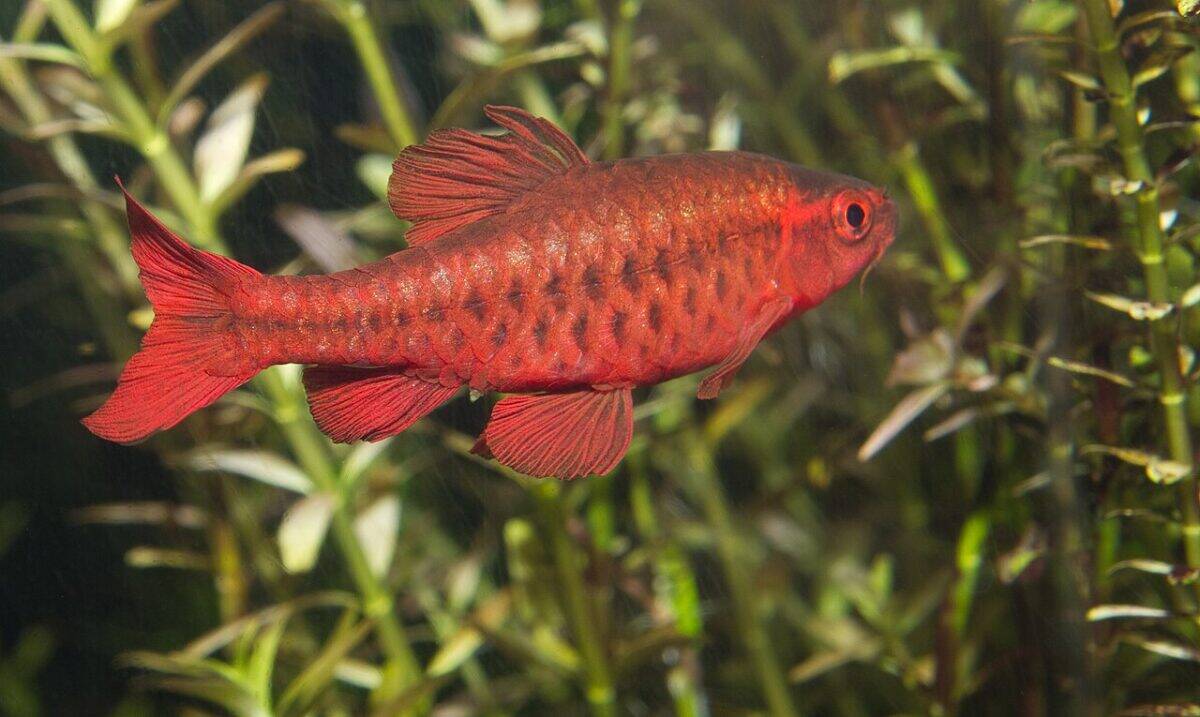
Cherry barbs (Puntius titteya) originate from the streams and rivers of Sri Lanka, where these small, active fish naturally gather in loose schools. Male cherry barbs develop a brilliant crimson coloration when mature, especially during courtship, while females maintain a more subdued peachy-gold hue. These fish have become increasingly popular in the aquarium hobby due to their striking appearance, hardy nature, and generally peaceful temperament.
For cherry barbs to display their best colors and most natural behaviors, they should be kept in groups of at least six individuals, with a balanced ratio of males to females (ideally more females than males). In proper groups, male cherry barbs engage in harmless display behaviors, spreading their fins and intensifying their red coloration to impress females without causing stress or injury to tankmates. These adaptable fish thrive in planted aquariums with some open swimming space, generally occupying the middle to lower sections of the water column. With their modest size of 2 inches, relatively peaceful nature, and striking coloration, cherry barbs make excellent additions to community tanks of 20 gallons or more, bringing vibrant color and active swimming patterns to the aquarium landscape.
Zebra Danios Hardy Schoolers for Beginners
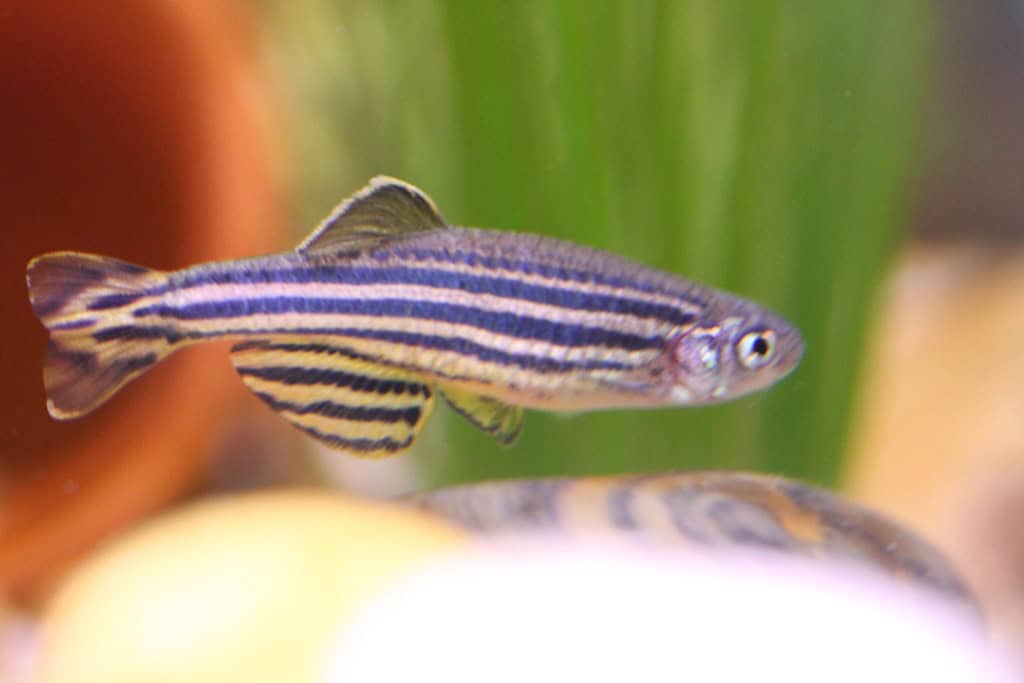
Zebra danios (Danio rerio) have earned their reputation as one of the most beginner-friendly aquarium fish available. Native to the streams and rivers of India, Bangladesh, and Nepal, these small, striped fish are instantly recognizable by their distinctive horizontal blue and silver stripes running the length of their bodies. In nature, zebra danios form large, active schools that dart through flowing waters, using their speed and numbers to evade predators while searching for small invertebrates and insects to eat.
In the home aquarium, zebra danios should be kept in groups of at least six individuals, though larger groups of ten or more will showcase their most natural behaviors. These energetic fish are constantly on the move, primarily occupying the upper and middle sections of the water column. When kept in proper schools, zebra danios display reduced stress levels, more consistent feeding behaviors, and fascinating synchronized swimming patterns. Their hardiness, adaptability to various water conditions, and compatibility with many other community fish make them excellent starter fish. With their modest size of 2 inches, peaceful nature, and high activity level, zebra danios add constant movement and energy to community tanks while being forgiving of novice mistakes in fish keeping.
Rummynose Tetras The Ultimate Schooling Fish
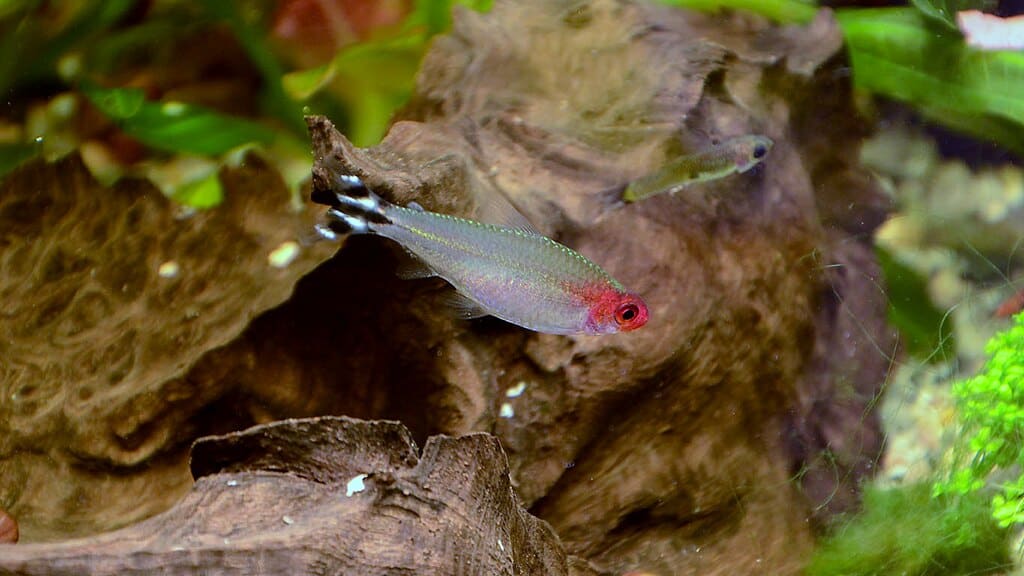
Rummynose tetras (Hemigrammus rhodostomus) are often considered the “gold standard” of schooling behavior in the aquarium hobby. Native to the blackwater tributaries of the Amazon River, these distinctive fish are characterized by their bright red “rummynose” heads, silvery bodies, and striking black-and-white striped tails. Perhaps more than any other commonly available aquarium fish, rummynose tetras display tight, highly coordinated schooling behavior that makes them a centerpiece in well-maintained community tanks.
For optimal health and behavior, rummynose tetras should be kept in groups of at least eight to ten individuals, though larger schools are even more impressive. When properly grouped, these fish swim in perfect formation, turning and changing direction simultaneously with military-like precision. Their vibrant red heads also serve as excellent water quality indicators, fading quickly when conditions deteriorate. While slightly more sensitive to water parameters than some other tetras, established rummynose schools are relatively hardy in stable, mature aquariums. Typically reaching about 2 inches in length, these peaceful schoolers are ideal companions for community tanks of 20 gallons or larger, particularly in planted aquascapes where their coordinated movements create a mesmerizing display against the green background.
Kuhli Loaches The Social Noodles

Kuhli loaches (Pangio kuhlii) are unique eel-like fish native to Southeast Asian streams and rivers, particularly in Malaysia, Indonesia, and Thailand. These distinctive bottom dwellers are sometimes called “coolie loaches” or affectionately referred to as “water noodles” by aquarium enthusiasts. With their elongated bodies (reaching 3-4 inches), distinctive brown-and-cream striped pattern, and barbels around their mouths, kuhli loaches have a quirky charm that makes them popular among aquarists seeking something different from typical community fish.
Despite their somewhat shy nature, kuhli loaches are surprisingly social fish that should be kept in groups of at least six individuals. When maintained in proper groups, these nocturnal fish become notably more confident, active, and visible in the aquarium. They’ll often be found intertwined with one another in fascinating “loach piles” during rest periods, and group feeding becomes a lively affair as they wiggle and squirm through substrate searching for food. Their peaceful nature and propensity for exploring every nook and cranny make them excellent tankmates for community setups, though their sensitivity to medications and preference for soft, acidic water should be considered. A well-established group of kuhli loaches adds fascinating behavior and movement to the bottom level of planted aquariums, particularly during evening hours when they’re most active.
Guppies The Sociable Live-Bearers

Guppies (Poecilia reticulata) are among the most recognizable and widely kept aquarium fish worldwide. Native to the freshwater streams and rivers of South America and the Caribbean, these colorful live-bearers have been selectively bred for generations to produce an astonishing variety of tail shapes and color patterns. Male guppies are typically smaller (about 1.5 inches) with vibrant colors and elaborate fins, while females are larger (up to 2.5 inches) with more subdued coloration and practical rounded tails.
While not strict schoolers like tetras or danios, guppies are highly social fish that thrive in groups where they can establish their natural social hierarchies. Keeping at least six guppies, with a ratio of two or three females to each male, creates a dynamic but peaceful community within your aquarium. In proper groups, males will display to females and engage in harmless competition with other males, while females form loose social bonds. Their constant movement in the upper and middle water columns, combined with their brilliant colors, brings life and vibrancy to community tanks. As live-bearers, guppies will readily reproduce in proper conditions, allowing aquarists to observe fascinating natural behaviors and life cycles. Their adaptability to various water conditions and peaceful temperament make them excellent community fish for both beginners and experienced hobbyists alike.
Betta Fish The Solitary Splendor
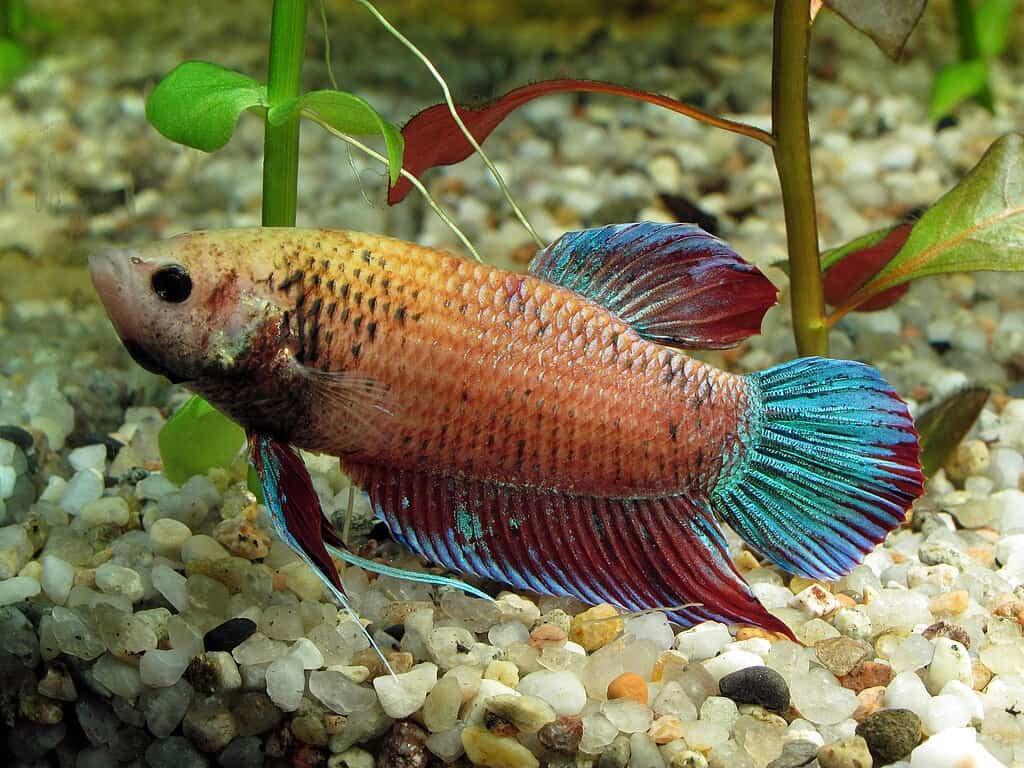
Betta fish (Betta splendens), also known as Siamese fighting fish, are renowned for their spectacular finnage and vibrant colors. Native to the shallow rice paddies, canals, and slow-moving streams of Thailand (formerly Siam), these labyrinth fish have evolved to thrive in oxygen-depleted waters by breathing atmospheric air. In the wild, male bettas establish and fiercely defend territories against other males, using their elaborate fin displays both for intimidation and to attract females. This territorial behavior has been intensified through centuries of selective breeding for fighting competitions and, more recently, for ornamental qualities.
Unlike the schooling species discussed earlier, male betta fish absolutely require their own space without other male bettas present. Housing multiple male bettas together invariably leads to severe fighting, fin damage, and often death. Female bettas can sometimes coexist in carefully planned “sororities” with sufficient space and hiding places, but even these arrangements carry risks. The optimal setup for a male betta is either a species tank of at least 5 gallons with appropriate filtration, heating, and enrichment, or a carefully selected community tank with peaceful, non-fin-nipping species that won’t trigger the betta’s territorial responses. While they don’t need companions of their own species, bettas are intelligent, interactive fish that recognize their owners and benefit from environmental stimulation. Their stunning appearance and curious personalities make them rewarding pets for those willing to respect their space requirements.
Oscar Fish The Aquatic Canines
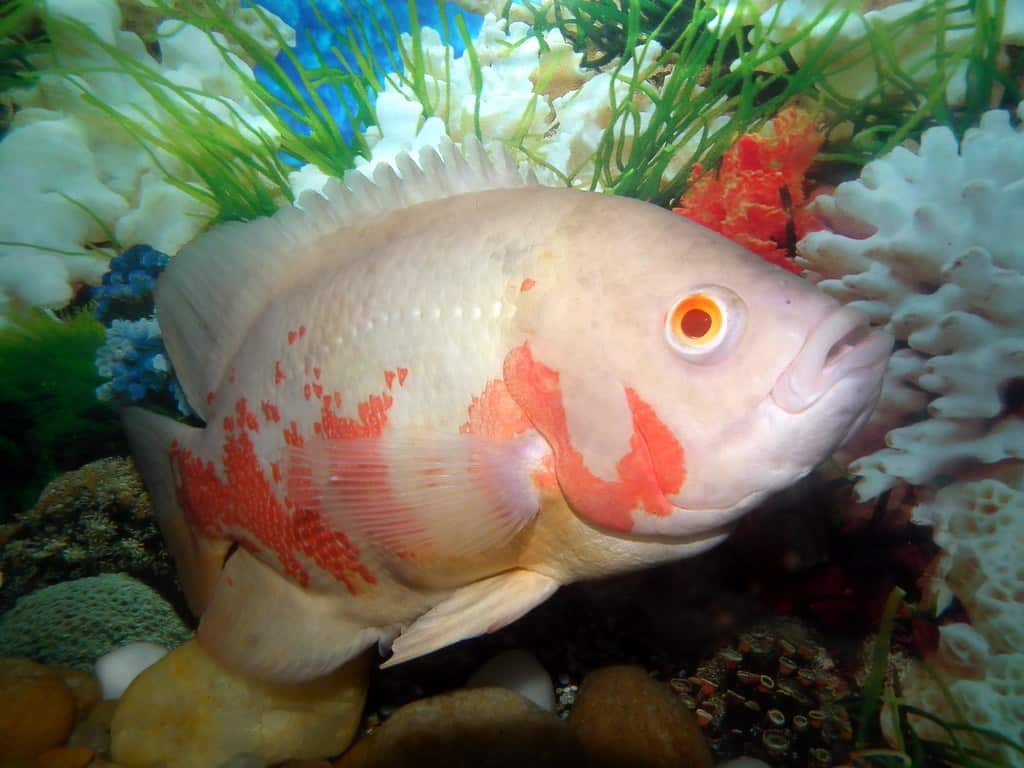
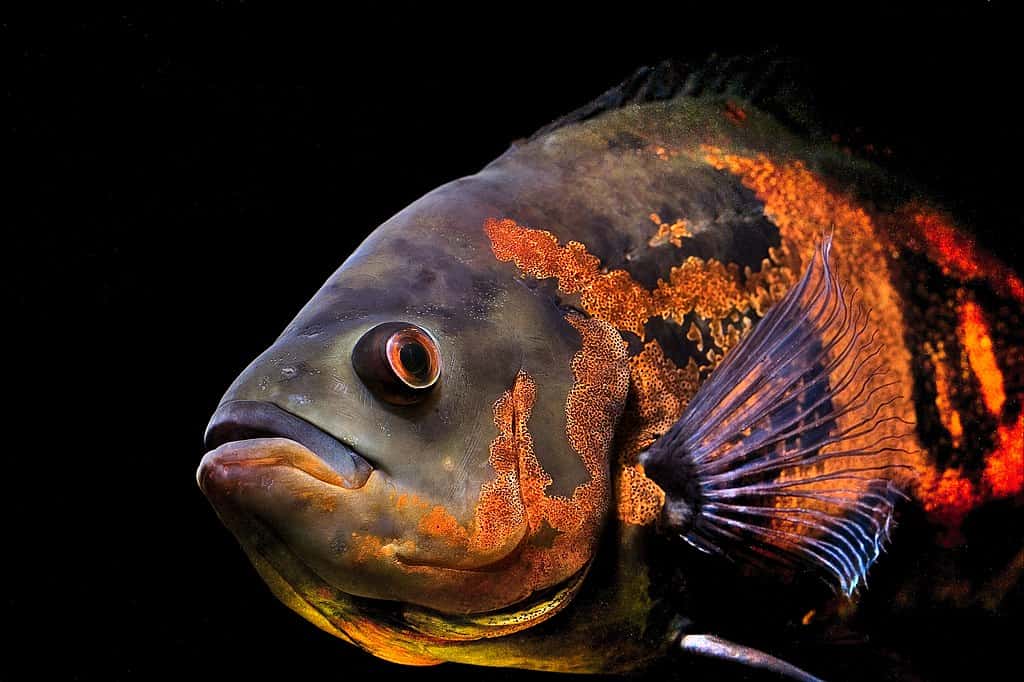
Oscar fish (Astronotus ocellatus) are large South American cichlids native to the Amazon River basin, where they inhabit slow-moving waters with plenty of hiding places. Known for their remarkable intelligence, interactive personalities, and expressive faces, oscars have earned the nickname “aquatic dogs” among enthusiasts. These impressive fish can recognize their owners, learn simple tricks, and display distinct personalities ranging from shy to boldly curious. Their natural coloration features a dark body with orange-ringed ocelli (eye-spots), though selective breeding has produced albino, tiger, red, and other color varieties.
Oscars are definitively territorial fish that require substantial personal space to thrive. A single oscar needs a minimum of 75 gallons, with pairs or trios demanding tanks of 125 gallons or larger with carefully designed territories for each fish. When cramped or forced to share limited space with too many tankmates, oscars become stressed, aggressive, and prone to health issues. They’re also notorious for rearranging tank decorations and uprooting plants to suit their preferences. While not strictly solitary by nature—they can form bonds with compatible tank mates of appropriate size—oscars demand respect for their territorial needs and significant swimming space. Their size (up to 12-14 inches), messy eating habits, and substantial bioload also require powerful filtration systems. For aquarists willing to provide the necessary space and care, oscars reward with dog-like interaction and recognition that few other fish species can match.
Jack Dempsey Cichlids Territorial Powerhouses
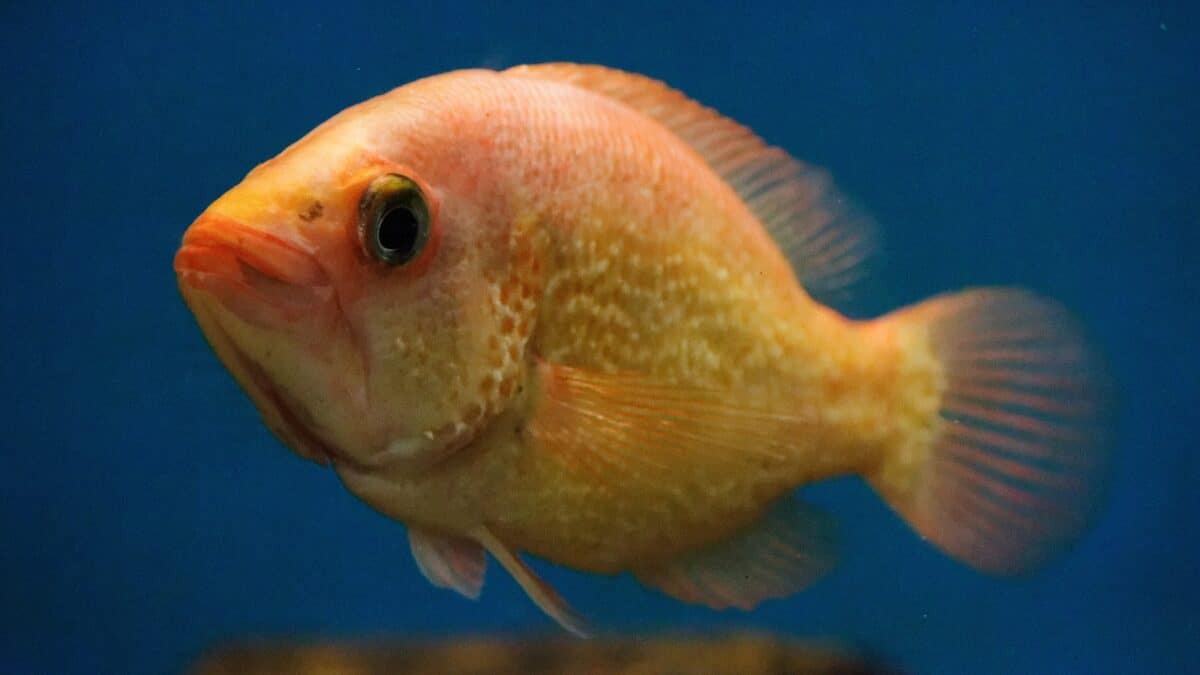
Jack Dempsey cichlids (Rocio octofasciata), named after the famous heavyweight boxing champion due to their tenacious fighting spirit, are striking Central American cichlids native to the waters of Mexico, Honduras, and Guatemala. In their natural habitat, these robust fish claim and defend territories around rocky outcroppings and submerged logs. Their dark bodies are adorned with iridescent blue-green spangles and red highlights on their fins, creating a metallic sheen that intensifies with age and during breeding periods. Electric blue variants have been selectively bred to enhance their already impressive coloration.
Jack Dempseys exemplify fish that require substantial personal space rather than companionship. A single adult specimen needs a minimum of 55 gallons, while breeding pairs should have at least 75 gallons with carefully arranged territory boundaries using rocks and driftwood. These cichlids become increasingly territorial as they mature, often showing aggression toward fish that invade their established boundaries. While mated pairs can form strong bonds and work together to protect their young, they typically remain hostile toward other fish, including members of their own species outside breeding contexts. Their powerful bodies (reaching 8-10 inches), strong jaws, and territorial nature make them unsuitable for community tanks with smaller or more passive species. For cichlid enthusiasts who appreciate their bold personalities and striking appearance, Jack Dempseys make rewarding pets when their space requirements and territorial nature are properly accommodated.
Conclusion: Creating the Perfect Environment for Your Fish

Whether you’re an experienced aquarist or just starting out, understanding the social needs of freshwater fish is essential to creating a healthy and harmonious tank. Schooling species like neon tetras, zebra danios, and cory catfish rely on groups for comfort, security, and natural behavior. Watching these fish interact in coordinated movements and communal feeding can be both calming and captivating—a true reflection of life in the wild.
On the other hand, some species prefer solitude or defined territory to avoid stress and conflict. Fish like bettas or certain cichlids may become aggressive or withdrawn when housed too closely with others. Knowing which fish thrive in groups and which need space helps ensure the well-being of all your aquatic pets. With proper planning and care, you can build a thriving freshwater community that suits both your fish and your vision.
Worried about unexpected vet bills?
Pet insurance can cover thousands in unexpected vet costs. Get a free quote from Lemonade in under 2 minutes.
Get My Free Quote →Sponsored · Opens Lemonade.com

As a little kid, I fell in love with nature, wildlife, and animals. Living in the USA, South Africa, Italy, China and Germany gave me the opportunity to discover the world's Wildlife. My favorite animals are Mountain Gorillas, Siberian Tigers, and Great White Sharks.
I'm a certified PADI Open Water Diver, went to Everest Base Camp and Trekked Gorillas in Uganda. I hold a Master of Science in Economics and Finance.
Please send any feedback to feedback@animalsaroundtheglobe.com
- 15 Times Animals Disrupted Everyday Life in the U.S. - June 8, 2026
- How to Safely Introduce a New Pet to Your Home - June 8, 2026
- 9 Animals With the Most Vibrant Colors in Nature - June 8, 2026