
Most people believe a feral cat that moves indoors will eventually “settle down” and act like any other house cat. That’s the myth. Years of safe meals and soft blankets don’t erase what the street taught. The hiding, the scanning and the split-second flinch aren’t bad manners. They’re survival software that never fully uninstalls.
Below are eight habits behavior experts and shelter workers say a formerly feral cat tends to keep for life, and why knowing them changes how you live with one. One of them is the habit vets worry about most. Another is the one that makes people tear up. Both are waiting near the end.
#8 – Hiding Becomes a Permanent Coping Strategy
🔥 Would you like to save this?
We'll email this post to you, so you can come back to it later!
A formerly feral cat can disappear from a room faster than you can finish a sentence.
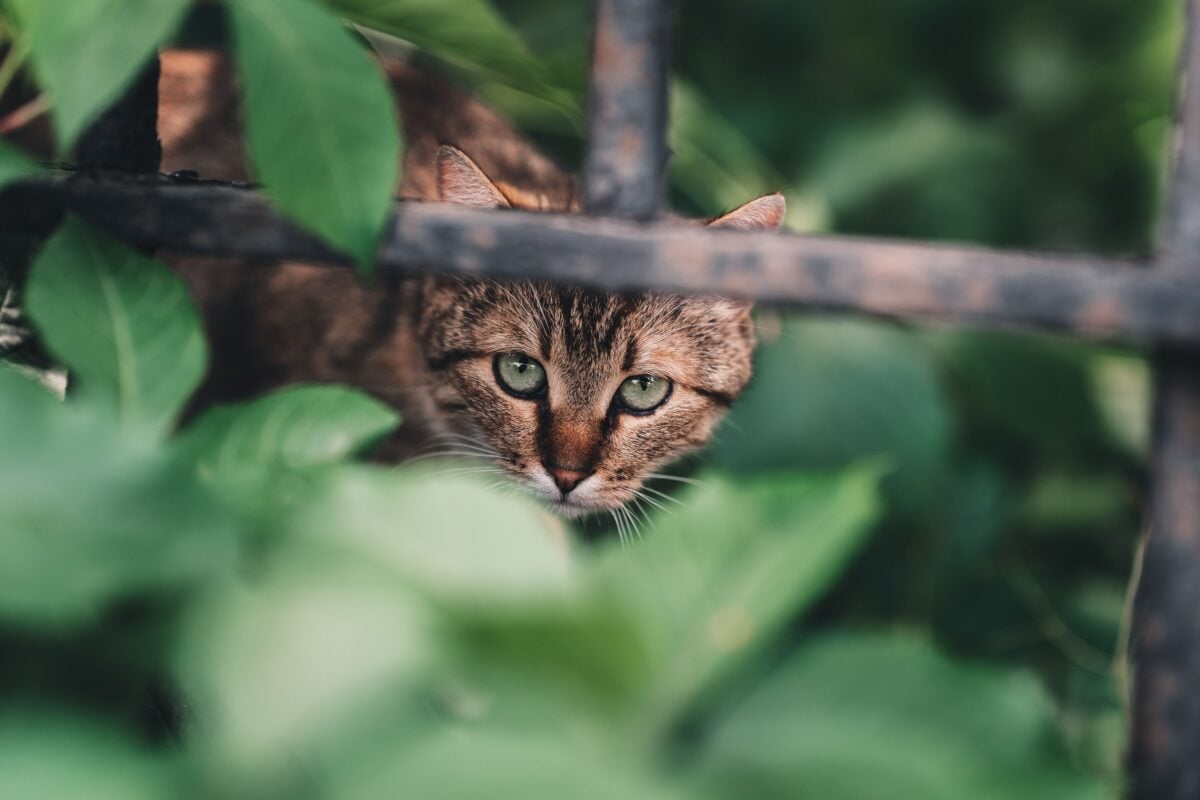
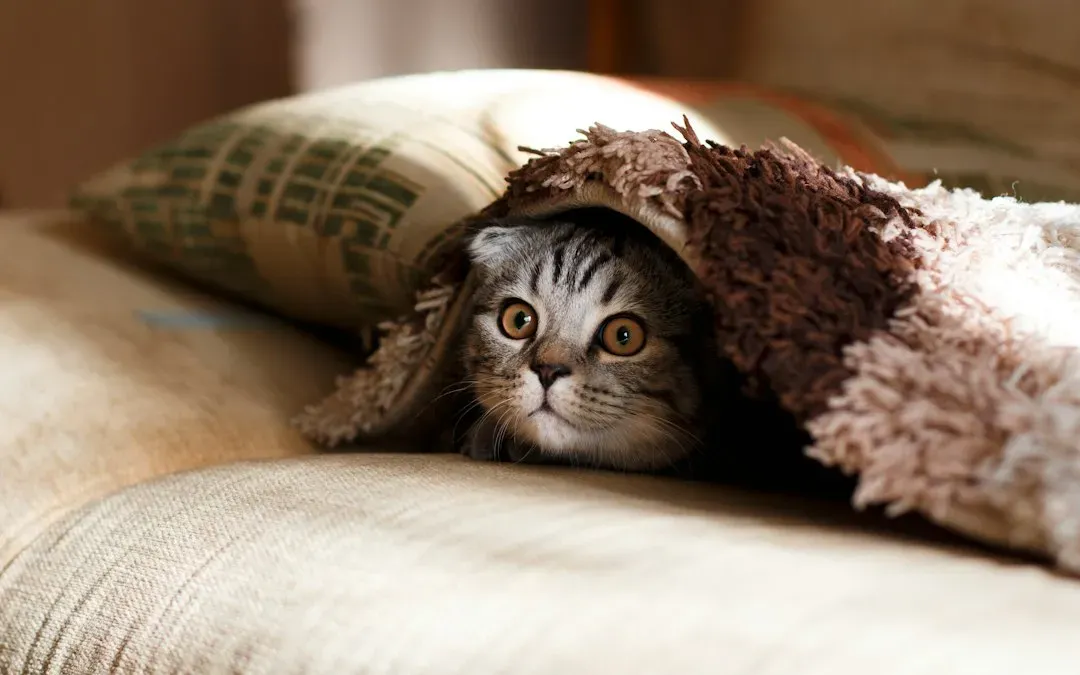
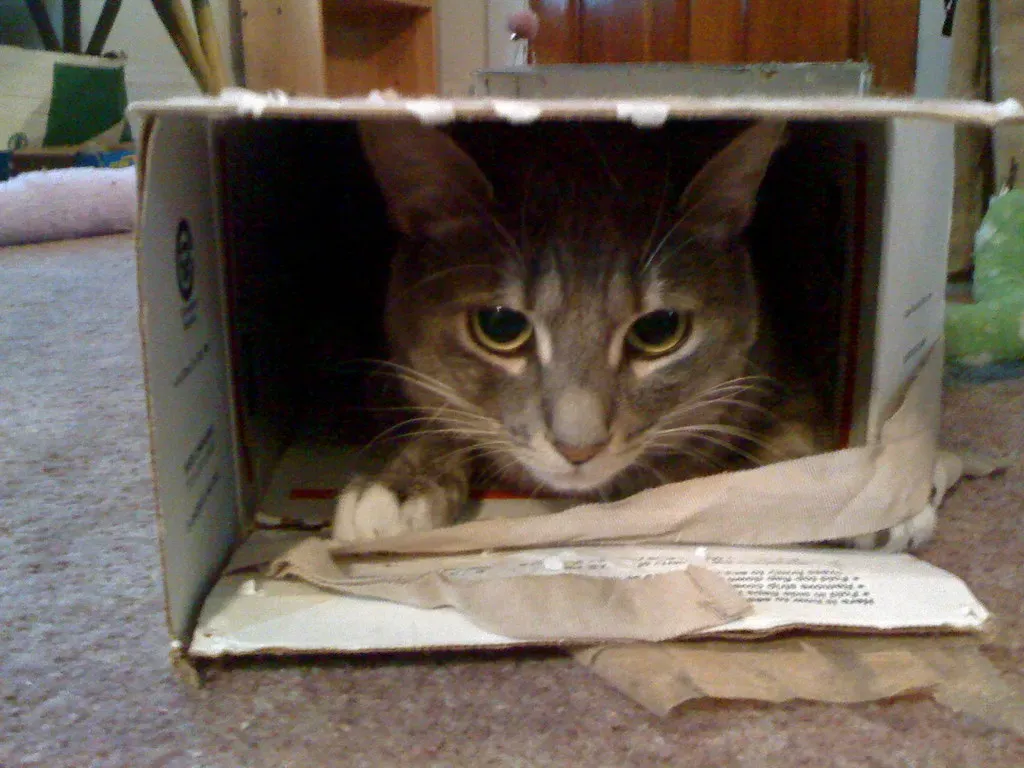
Every cat hides sometimes. A formerly feral cat hides with intention. Families say the favorite spot, whether under the bed, behind the washer or inside the closet, often stays the same for years. It’s almost always a spot with a wall behind it and one way out, which makes sense for an animal that once had to assume trouble could come from any direction.
Here’s the part that surprises people. A formerly feral cat can hide even when it’s deeply bonded and affectionate. Hiding isn’t a sign you’ve failed. It’s a sign the cat still reaches for its oldest tool.
Triggers can be small, and many ex-ferals still vanish for hours when something shifts:
- New furniture or stacked moving boxes
- Thunderstorms
- Guests in the house
Taking the hiding spot away is the mistake. Shelter research has found that giving newly arrived cats a hiding box lowers their stress. Chasing a spooked cat to “reassure” it usually backfires, and rescue guides advise you not to force the cat out of its hiding places.
Some adopters insist a cat must be dragged into the open “for its own good.” Experts say that gets the logic backwards. The cat who is allowed to hide is the cat who learns, slowly, that coming out is safe.
But hiding is only the start of what the street left behind, and #7 shows up at every single meal.
#7 – Mealtime Never Feels Fully Safe

🔥 Would you like to save this?
We'll email this post to you, so you can come back to it later!
A full bowl and a locked front door still don’t convince some ex-ferals that dinner is secure.
Many formerly feral cats still gulp quickly and glance around between bites. One rescue guide says plainly that food may be a constant issue with your feral cat. Think about the history. Meals outdoors were unpredictable, and competition was real. A cat that ate slowly could end up not eating at all.
Lifelong food habits can include:
- Speed-eating so fast the cat occasionally vomits it back up
- Guarding the bowl from other pets who aren’t even interested in it
- Pacing or crying if feeding time shifts by even thirty minutes
The oddest one is the stash. Some will “bury” or stash leftover food nearby, as if hiding a stockpile for later. It looks silly in a carpeted living room, where a cat might paw at the floor beside the bowl as if covering something up. To the cat, it’s sensible planning.
Worth Knowing
- Outdoor cats hunt small prey again and again, so small, frequent meals feel natural to them.
- A feeding spot away from doorways, litter boxes and other pets lowers the pressure to gulp.
- Fixed meal times matter more than fancy bowls for many anxious eaters.
- Vomiting after most meals is worth a vet conversation, not just a slower bowl.
Scolding any of this is a mistake. The cat isn’t being greedy or rude. It’s running an old budget. Predictable mealtimes and a quiet feeding spot away from other pets give anxious eaters fewer reasons to bolt their food. A slow-feeder bowl or a puzzle feeder can also help a speed-eater pace itself, as long as it doesn’t turn mealtime into a new source of frustration.
And if you share a home with a stash-prone cat, the safest move is to leave the stash alone. Quietly clean up old food, but don’t make a show of it.
That anxious speed at the bowl is mild compared with what a sudden noise does, and #6 explains why.
#6 – The “Flight Distance” Stays Hard-Wired
🔥 Would you like to save this?
We'll email this post to you, so you can come back to it later!
Walk across the room too fast and you may see a cat leave before you’ve finished the step.
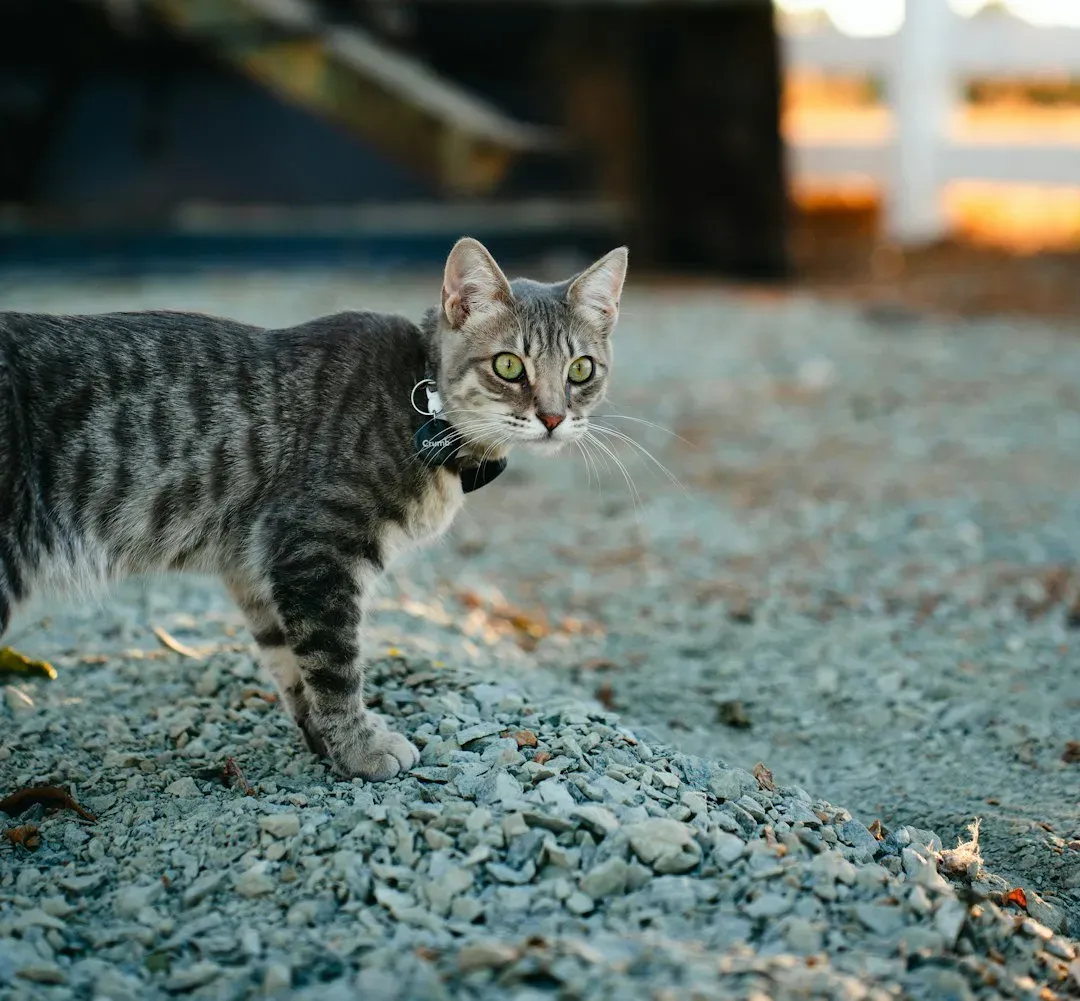
Researchers and behaviorists talk about flight distance, the gap a cat needs before it feels safe enough to stay put. A cat raised in a stable home from kittenhood will usually tolerate you walking past, vacuuming nearby, or dropping a pan without flinching much. A formerly feral cat tends to come with a permanently extended flight distance instead. The invisible bubble around it is simply bigger.
Sound works the same way. Cats hear far higher-pitched sounds than people do, and many ex-ferals keep a lifelong hypersensitivity to sudden or unfamiliar noise. That includes dropped pans, slammed cabinet doors and the beep of a smoke alarm.
Even cats socialized as kittens can hide during illness or fireworks, so an ex-feral’s reaction is simply louder and lasts longer. Periods of illness or neighborhood fireworks can trigger temporary hiding and skittishness even in a fully domestic cat.
What helps:
- Move slowly and avoid approaching head-on
- Keep household noise predictable where you can
- Give the cat a quiet room on loud days, such as holidays
Be wary of advice that says to “just expose them until they get used to it.” Forced exposure can reinforce the fear it was meant to cure.
Even a cat that tolerates your footsteps can’t switch off its guard, and #5 is clearest at bedtime.
#5 – They Sleep Like They’re Still on Patrol
🔥 Would you like to save this?
We'll email this post to you, so you can come back to it later!
Look closely at a sleeping ex-feral and you’ll often catch one ear still rotating.
A typical house cat will sprawl belly-up in the middle of the floor without a single worry. A formerly feral cat may sleep, technically, but it rarely fully shuts off. Many pick a “watch spot” that keeps every doorway in view. From there, it can nap and monitor the house at the same time.
The same instinct shapes their daily routine. Lifelong territorial habits can show up as extreme vigilance at the window whenever a neighborhood cat wanders past, or the same patrol route walked through the house at almost the exact same time every single day. You could set a clock by it.

Smart Bird Feeder with Camera Solar Powered, 2K HD Live Video, 10,000+ Bird Species AI Identification
Check Price on AmazonAs an Amazon Associate, we earn from qualifying purchases.
10/7/2026 1:22 pm GMTi

Dog Stairs for Bed 18" H, 4-Step Dog Steps for High Bed
Check Price on AmazonAs an Amazon Associate, we earn from qualifying purchases.
10/9/2026 2:42 pm GMTi

Air Purifiers for Home Pets Large Room Up to 3000 Ft²,HEPA Air Cleaner with Washable Double-Side Filter, PM2.5 Air Quality Monitor,15dB Sleep Mode for Bedroom Odor Dust Pollen,White
Check Price on AmazonAs an Amazon Associate, we earn from qualifying purchases.
10/8/2026 8:23 am GMTi

Hand Blown Glass Hummingbird Feeders for Outdoors Hanging, 24oz Wild Bird Nectar Feeder
Check Price on AmazonAs an Amazon Associate, we earn from qualifying purchases.
10/7/2026 1:23 pm GMTi

Orthopedic Extra Large Dog Bed, Waterproof Washable XL Pet Bed 44"
Check Price on AmazonAs an Amazon Associate, we earn from qualifying purchases.
10/7/2026 1:32 pm GMTi
Quick Compare
- Typical house cat: Sprawls in the open, belly up, in the middle of the room.
- Formerly feral cat: Tucks in near a wall or perch with a clear line to the doorway.
- On waking: One stretches slowly. The other is often alert before the eyes fully open.
This is also where the house itself matters. A cat with a high perch available often shows fewer stress behaviors than a cat stuck at floor level, which is why many behaviorists treat vertical space as basic equipment, not a luxury. Height lets a cat see everything and be reached by almost nothing.
Practical upgrades:
- A sturdy shelf or cat tree by a window
- A perch with a view of the main door
- A covered bed in the same room, not tucked away in a separate one
Some owners say a cat that “never relaxes” is unhappy. That’s too simple. A cat that dozes in a spot with a clear view and an exit may be as relaxed as it can get.
And if you’ve ever reached to pet a cat in that watchful state, you already know what #4 means.
#4 – Touch Happens on Their Terms Only
🔥 Would you like to save this?
We'll email this post to you, so you can come back to it later!
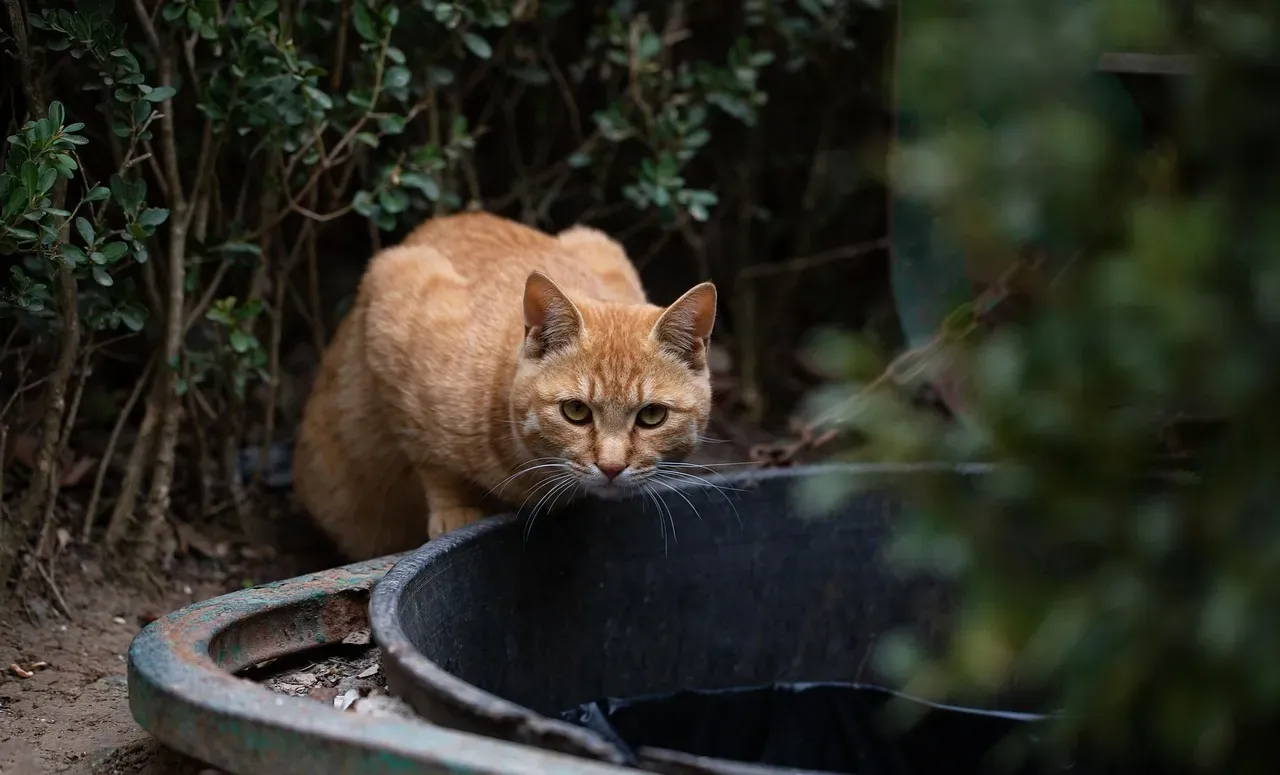
You can feed a formerly feral cat for years and still not get to pick it up.
Many once-wild cats will sit beside you for years and still resist being picked up. Families describe cats that tolerate petting in specific places, such as the head or cheeks, and walk away when it goes further. Restraint can feel like being caught, and a cat that remembers needing to flee often reacts fast.
That’s why proximity comes first. Many bond best when they stay in the room, then on the same couch, then at arm’s length, before ever settling in a lap, if they do at all. One rescue guide treats being petted from head to hindquarters as the true breakthrough from feral to tame.
Timelines are long. An adult feral cat can require a few months or up to a year or more to socialize.
Rules of thumb from rescue guides:
- Keep fingers and fist together when approaching, because spread fingers resemble claws
- Watch body language and back off if the cat is growling or warning you
Here’s the opinion that annoys people. Plenty of adopters treat lap time as the final exam. Experts increasingly say it’s the wrong scorecard. A cat that chooses to sit within reach is telling you more than a cat you’ve managed to hold.
Touch isn’t the only thing these cats ration, and #3 is about the other one.
#3 – They Talk in Whispers, Not Meows

🔥 Would you like to save this?
We'll email this post to you, so you can come back to it later!
You might own a formerly feral cat for a year before you hear a proper meow.
It sounds like a defect, but it’s actually normal feline biology. Meowing is largely a cat-to-human tool. Kittens meow to their mothers, but adults mostly use body language, scent and posture with other cats. A cat that never built a close relationship with people early on may skip the habit entirely.
Ex-ferals often barely meow at all. What they use instead is subtle:
- The sideways sit, with the body angled away from you
- The slow blink, a calm signal many cats use
- Tail and ear position that changes within seconds
Turns out, they’re also fluent in cat. Formerly feral cats are often far better at reading other cats than most indoor-only cats who never had much feline social contact growing up. That’s one reason rescue guides note that feral cats will often bond strongly with other felines, and why many do better with a feline companion than alone.
That cuts both ways. Some will tolerate a second cat but resist a person. Introductions still need patience, since sudden aggression or spraying can follow when a new pet is introduced too quickly.
But the cat that talks least often hides the most important message of all, and #2 is the one vets worry about.

Portable Dog Water Bottle Foldable Dog Travel Water Bottle
Check Price on AmazonAs an Amazon Associate, we earn from qualifying purchases.
10/7/2026 1:29 pm GMTi

Halloween Dog Collar with Bow, Orange Cute Ghost Collar,
Check Price on AmazonAs an Amazon Associate, we earn from qualifying purchases.
10/9/2026 2:43 pm GMTi

Earth Rated XL Dog & Puppy Pee Pads, Discreet Top, Max Absorbency
Check Price on AmazonAs an Amazon Associate, we earn from qualifying purchases.
10/7/2026 1:28 pm GMTi

Glass Hummingbird Feeder for Outdoors Hanging
Check Price on AmazonAs an Amazon Associate, we earn from qualifying purchases.
10/7/2026 1:21 pm GMTi

Professional 7 in 1 Dog Paw Cleaner for Dogs & Cats - Includes 1 Portable Paw Washer, 1 Bath Brush
Check Price on AmazonAs an Amazon Associate, we earn from qualifying purchases.
10/7/2026 1:26 pm GMTi
#2 – They Hide Pain Better Than Almost Any Cat
🔥 Would you like to save this?
We'll email this post to you, so you can come back to it later!
The most dangerous habit on this list is the one you’ll never see.
Every cat masks pain. But formerly feral cats can be almost too good at it, because on the street, showing weakness was genuinely dangerous. A limping, wincing cat is an easy target. That makes health checks more important, not less.
The warning signs are tiny. Subtle changes matter far more here than with almost any other cat type: slightly less play, a small shift in posture, hiding in a different spot than usual. Rescue writers also list hiding more than usual among stress signals. Illness or pain increases defensive behavior and hiding, and can make an otherwise socialized cat act feral temporarily.
A cat that suddenly seems “more feral” may not be regressing at all. It may be hurting. That’s the reading many owners miss, and the mistake can delay care.
Watch for changes in:
- Appetite and eating speed
- Favorite resting spots
- Grooming
- Willingness to play
Plenty of people write off a withdrawn ex-feral as “just being how he is.” That’s a risky assumption. Any sustained change from your cat’s own baseline deserves a call to the vet.
Yet for all this caution, the number one habit on this list is the one that melts people.
#1 – They Pick Their Person and Stay Loyal
🔥 Would you like to save this?
We'll email this post to you, so you can come back to it later!
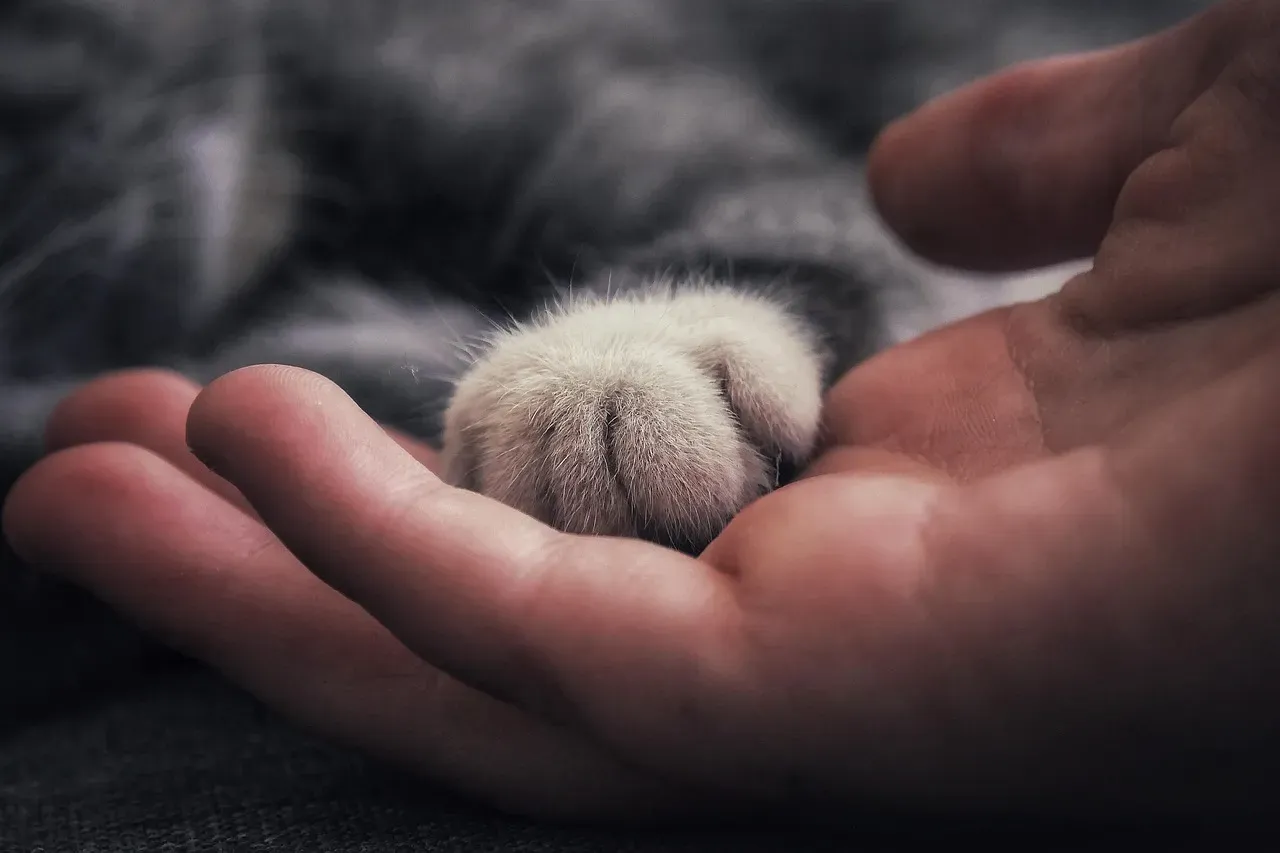
A formerly feral cat may ignore the entire household and still adore exactly one human.
Many formerly feral cats choose a single trusted human. Guests often don’t believe the cat exists, because it vanishes the moment a stranger walks in. Then you sit down and the same cat appears beside you.
An adult cat rescued years later may never become a lap cat, yet still become deeply attached. A formerly feral cat decides when it’s safe, who is safe, and how close is close enough. When you’re the answer to all three, it means something.

2 Pcs Halloween Pet Hat Bandana Set, Witch Pumpkin Costumes for Dogs
Check Price on AmazonAs an Amazon Associate, we earn from qualifying purchases.
10/9/2026 2:45 pm GMTi

Halloween Cat Costume Cloak Witch Hat Pet Accessories
Check Price on AmazonAs an Amazon Associate, we earn from qualifying purchases.
10/9/2026 2:44 pm GMTi

PetSafe Oasys Pet Fountain, 1/2 Gallon (64 oz), Small Dogs & Cats
Check Price on AmazonAs an Amazon Associate, we earn from qualifying purchases.
10/8/2026 8:14 am GMTi

Glass Hummingbird Feeder for Outdoors Hanging, 16 oz Leak-Proof Nectar Feeder with Bee Guards & Ant Moat
Check Price on AmazonAs an Amazon Associate, we earn from qualifying purchases.
10/7/2026 1:22 pm GMTi
At a Glance
- Quiet signs of trust count: a slow blink, a sideways sit, a nap within reach.
- The cat that appears the moment you sit down has made a choice.
- Stress from moves, guests or new pets can bring old hiding back for a while.
- Trust can return, but it rebuilds on the cat’s schedule.
That trust is real, but it isn’t unbreakable. Long periods living outdoors teach avoidance, hiding and aggression as survival tools, and those behaviors can resurface under stress. New people, new pets, loud noise or moving house can all trigger a retreat. In one account, a barn cat retreated for weeks during a house move before gradually resuming trust.
Rescue experts frame the goal differently from most adopters. More than anything, socializing an adult feral means learning to appreciate her for who she is. The same guide advises, “Don’t have expectations of this cat.”
That might be the hardest advice here, and it leads to one conclusion.
Formerly feral cats don’t stop being who they were, and they shouldn’t have to. The hiding, the guarded meals and the quiet voice aren’t problems to fix. They’re a history to respect.
The adopters who do best are the ones who stop chasing a lap cat and start rewarding small, voluntary steps. Judge success by trust, not by cuddles. A cat that sits across the room and chooses your company has given you more than a cat that merely endures being held.
If your once-wild cat broke one of these rules, which one was it?

- 8 Things a Formerly Feral Cat Keeps Doing for Life - November 8, 2026
- 14 Things a Dog Still Remembers From the Day It Was Collected - November 8, 2026
- 19 Quiet Habits a Dog Builds Around One Person’s Daily Routine - November 8, 2026