
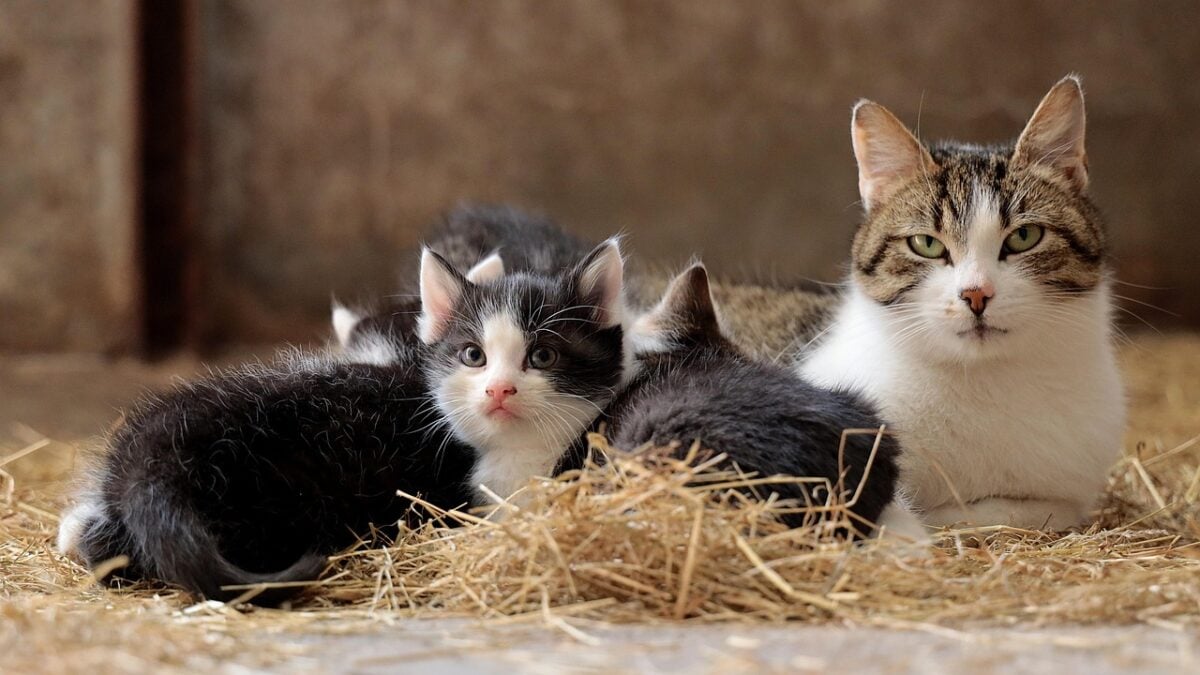
Picture the classic barn cat: lean, scrappy and kept hungry on purpose so it will “earn its keep.” It’s one of the oldest bits of farm wisdom around, and it’s mostly backwards. The cats that actually clear out grain rooms share a short list of habits that don’t fade with age, comfort or a full belly.
Some of those habits are inherited from wild ancestors. Some are taught in the first weeks of life. One of them has nothing to do with hunting, and it’s the one that most surprises people who think they know barn cats. It’s waiting at #1, but the first few might change how you read your own barn.
#9 – Patrolling at Dawn and Dusk
🔥 Would you like to save this?
We'll email this post to you, so you can come back to it later!
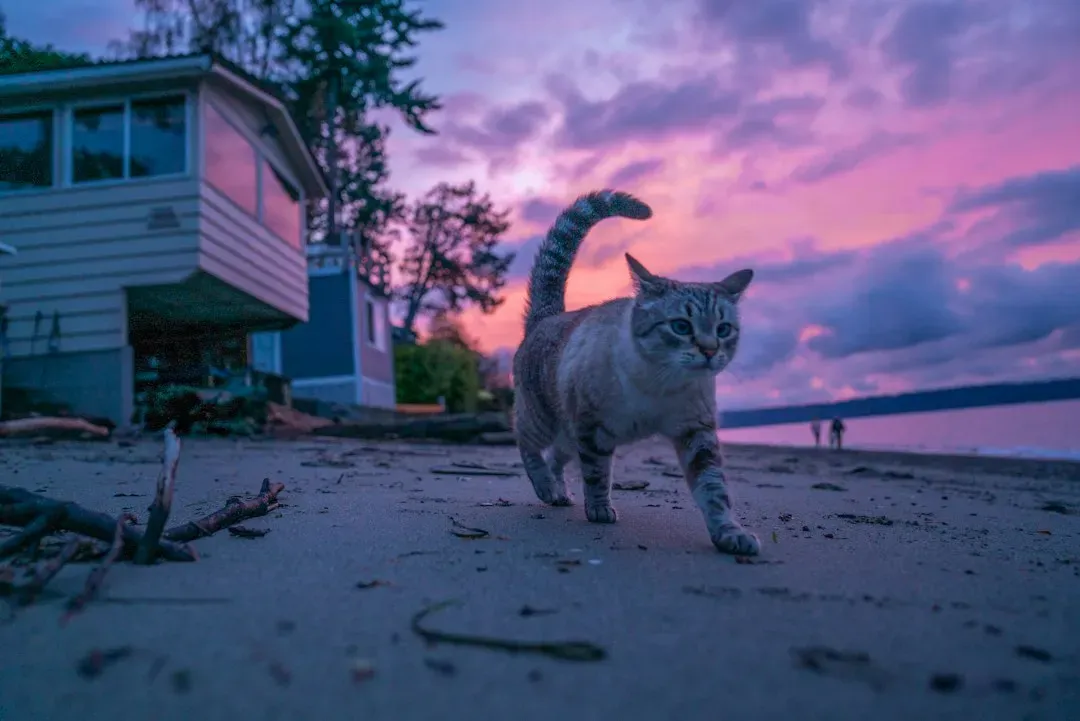
A working farm cat keeps office hours, and they aren’t yours.
Domestic cats are crepuscular, meaning they’re most active at twilight. That rhythm tracks their prey, because small birds and rodents forage at those hours, which makes them easiest to intercept. The cat that vanishes at noon and reappears at sunset isn’t slacking. It’s clocking in.
Cats are also built for the dim shift. A reflective layer behind the eye helps them make the most of faint light, and their hearing reaches the high-pitched squeaks rodents make. For a cat, the dark isn’t a handicap. It’s the advantage.
Fast Facts
- Peak activity falls at twilight, when prey is also on the move
- A reflective layer behind the eye boosts vision in faint light
- Hearing reaches the high-pitched squeaks rodents make
- A sleeping cat at midday is off shift, not off the job
This is why midday checks mislead people so badly. You walk into the barn at 1 p.m., see a cat asleep on a hay bale and decide it does nothing. You are watching the cat’s break time, not its shift.
Here’s what a typical patrol looks like:
- Long rest through the bright middle of the day
- Slow loops around feed rooms, hay storage and outbuildings at first and last light
- Quiet pauses along fence lines and walls where rodents travel
But the signals a cat leaves behind on those patrols are even stranger, and they bring us to #8.
#8 – Marking Ground Like It’s Their Job
🔥 Would you like to save this?
We'll email this post to you, so you can come back to it later!
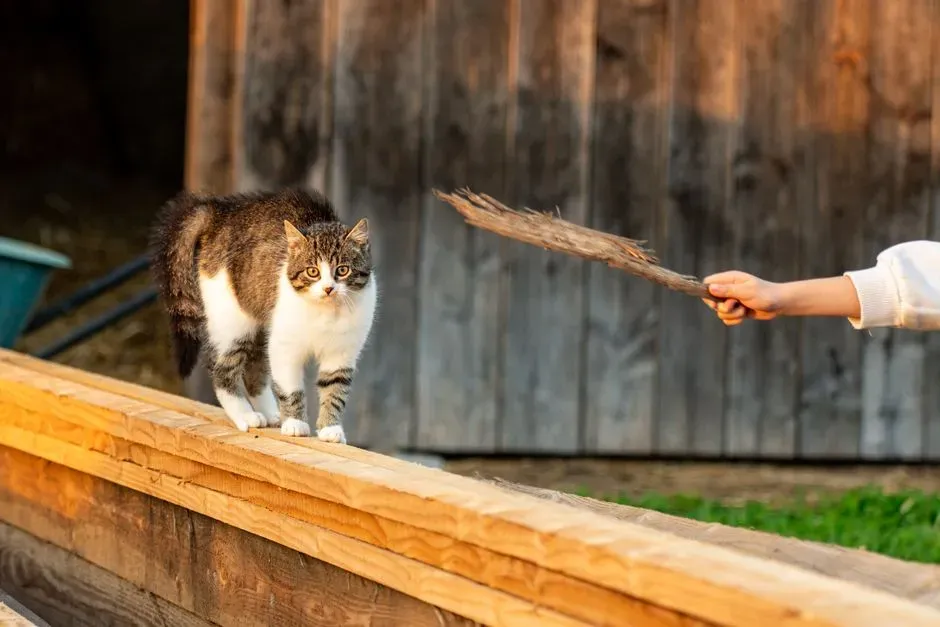
Every post, wall and feed bin on your farm carries a message, and humans aren’t the audience.
Barn cats mark their ground in several ways. They urinate along their routes, scratch surfaces and rub their faces on corners, leaving scent behind each time. When cats urinate in their territory, rodents can smell the ammonia and may know to steer clear. Marking can help cut rodent numbers by deterring prey animals, so the scent may do part of the work before a paw is ever raised.
Now for a take that will annoy some cat lovers. One lone cat may not be the pest plan you think it is. Researchers studied 40 rural homesteads. Homesteads with only cats, or only dogs, showed no difference in rodent foraging activity compared with homesteads with neither.
The twist is what happened when both were present. Different types of predator together likely create a heightened landscape of fear for foraging rodents. The study was small and observational, so treat it as a strong hint, not a verdict.
Scent is only half of the cat’s toolkit, though. The other half is a strange disconnect between hunting and eating, and that’s #7.
#7 – Hunting on a Full Stomach
🔥 Would you like to save this?
We'll email this post to you, so you can come back to it later!
The old advice to keep your barn cat hungry so it will hunt is actually backwards.
Many property owners still believe supplemental food switches off the mousing instinct. Research supports that regular access to human-provided food does not suppress hunting behavior in cats, and they may keep killing even when prey populations are low.
A Georgia study of farm cats found the same pattern. The cats received some daily dry food, yet their hunting instinct was not suppressed. Hunting seems to be set off by cues like movement, not by an empty stomach. One cited finding on free-roaming cats reported that only 28% of prey items were actually eaten. Many kills were simply left.
There’s an uncomfortable flip side. Free-ranging cats may help control non-native rodents on a farm, but they can also exert extreme pressure on native wildlife. A full bowl won’t stop a cat from hunting, and it won’t aim the hunting only at the mice you want gone.
Of course, wanting to hunt and succeeding are two very different things, as #6 shows.
#6 – Waiting Beside the Hole
🔥 Would you like to save this?
We'll email this post to you, so you can come back to it later!
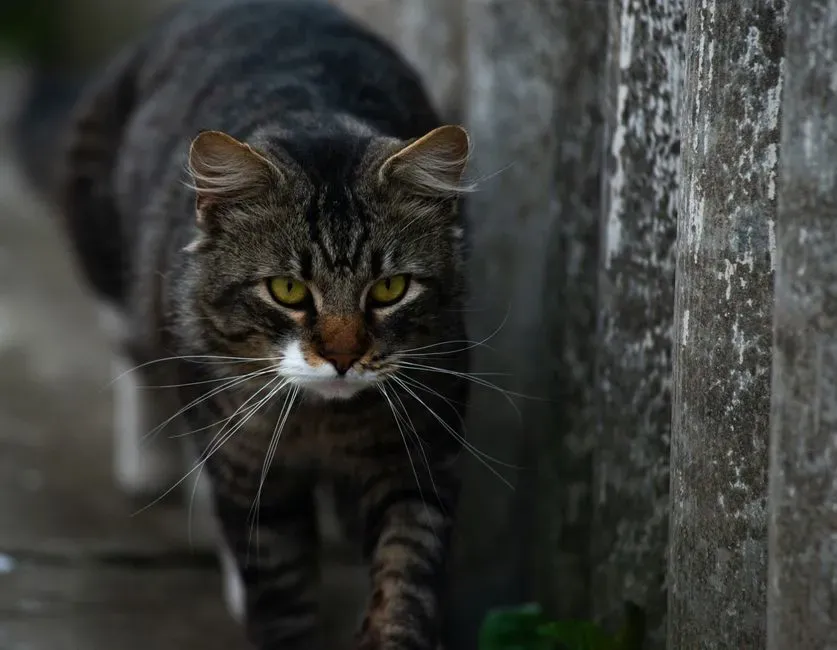
Hunting looks glamorous from a distance, but most of it is waiting.
A barn cat settles in next to a hole and lets the prey come to it. There’s no chase, no drama and no audience. Barn cats also show stalking, which serves as good hunting practice. Patience is the entire technique, and the cat’s ears and whiskers do the sensing while the body stays perfectly still.
Cover matters too. In one study, cats spent more time at microsites with high vegetation cover, possibly to conceal themselves while hunting. That’s why a tidy, bare yard can be a poor hunting ground, while tall grass at the edge of a barn is prime real estate.
Barn cats are generally independent, self-sustaining solitary hunters. No teamwork and no hunting parties. Each cat works its own spot alone.
Now the contrarian bit. Some farmers insist cats are the answer to rats. One experienced farm keeper argues the opposite. A good working terrier is more efficient at finding and killing rodents in the barn, especially rats. Cats, by that account, catch mice and voles at night.
Then there’s the question of what the cat does with whatever it catches, which leads straight to #5.

Smart Bird Feeder with Camera Solar Powered, 2K HD Live Video, 10,000+ Bird Species AI Identification
Check Price on AmazonAs an Amazon Associate, we earn from qualifying purchases.
10/7/2026 1:22 pm GMTi

2 Pcs Halloween Pet Hat Bandana Set, Witch Pumpkin Costumes for Dogs
Check Price on AmazonAs an Amazon Associate, we earn from qualifying purchases.
10/9/2026 2:45 pm GMTi

Earth Rated XL Dog & Puppy Pee Pads, Discreet Top, Max Absorbency
Check Price on AmazonAs an Amazon Associate, we earn from qualifying purchases.
10/7/2026 1:28 pm GMTi

Dog Stairs for Bed 18" H, 4-Step Dog Steps for High Bed
Check Price on AmazonAs an Amazon Associate, we earn from qualifying purchases.
10/9/2026 2:42 pm GMTi

Professional 7 in 1 Dog Paw Cleaner for Dogs & Cats - Includes 1 Portable Paw Washer, 1 Bath Brush
Check Price on AmazonAs an Amazon Associate, we earn from qualifying purchases.
10/7/2026 1:26 pm GMTi
#5 – Eating Small, Eating Often, Eating Variety
🔥 Would you like to save this?
We'll email this post to you, so you can come back to it later!
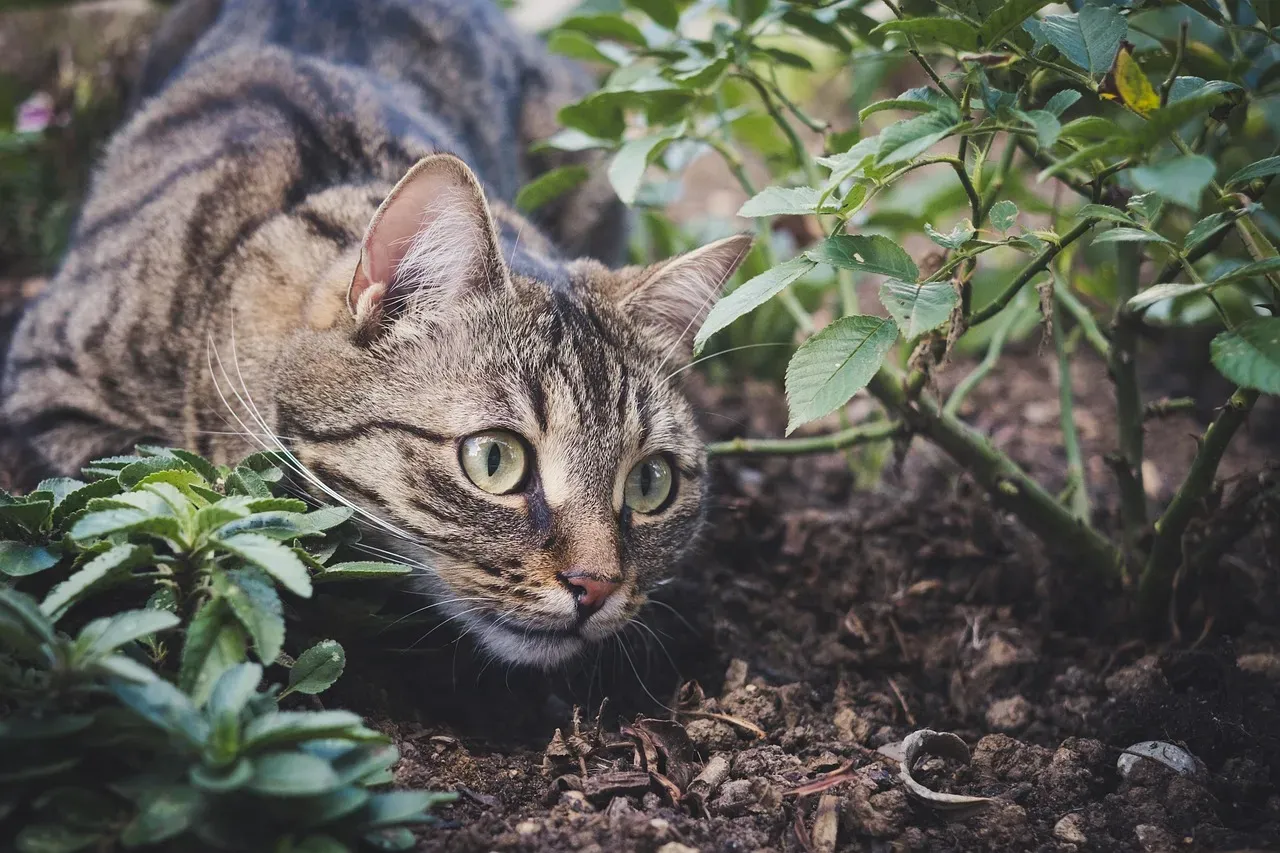
A farm cat’s dinner is never one big plate.
Cats typically eat 10 to 20 small meals throughout the day and night. That fits a lifestyle built around small prey. One mouse is a snack, not a feast, so the cat keeps working.
Small rodents make up about 40% or more of feral cats’ diets, with rabbits, insects, frogs and birds making up the rest. On farms, the picture is similar. Farm cats are partly supplied with food and milk, but mainly subsist on hunting rodents such as black rats, brown rats and voles.
Here’s what rounds out the menu:
- Rodents and rabbits are usually the preferred prey
- Birds, insects and reptiles fill gaps
- What gets hunted depends on mammal availability and geographic location
The “pest controller” is also a flexible generalist. When the mice thin out, the menu shifts. That adaptability is why cats can persist on a farm for generations, and also why they can affect wildlife you didn’t plan to feed them.
At a Glance
- Meals per day: typically 10 to 20 small ones, day and night
- Core diet: small rodents, about 40% or more for feral cats
- Farm favorites: black rats, brown rats and voles
- Backup menu: rabbits, insects, frogs, reptiles and birds
But the habit that puzzles owners most isn’t about food at all. It’s about distance, which is #4.
#4 – Keeping Humans at Arm’s Length
🔥 Would you like to save this?
We'll email this post to you, so you can come back to it later!
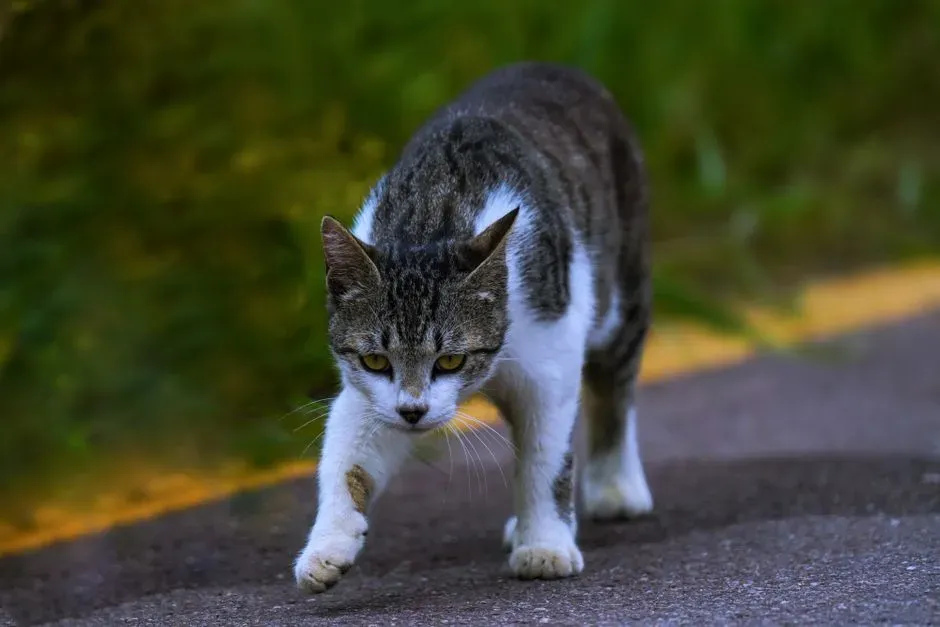
Your barn cat can trust you completely and still refuse to be picked up.
Some feral cats become more comfortable with people who regularly feed them, but even with long-term socialization they usually remain aloof. Kittens that miss human contact in their first couple of months often stay wary for life. That is not a failure of your relationship. It’s the job description showing through.
One farm keeper puts it bluntly. These cats may never be as affectionate as a house cat, but they can be very good at hunting rodents. The distance is the feature, not the bug. An overly bold cat is more likely to nap in the farmhouse than patrol the grain room.
Here’s the unpopular opinion. Forcing cuddles on a barn cat is a mistake. Look for the signs that actually matter:
- It shows up for food on a predictable schedule
- It tolerates your presence without bolting
- It keeps working when you aren’t around
Respect the boundary and the relationship tends to stay stable. Push it and you may simply lose the cat.
That wary instinct has a physical side too, and it shapes how a farm cat rests, as #3 explains.
#3 – Sleeping Light and Resting in Pieces
🔥 Would you like to save this?
We'll email this post to you, so you can come back to it later!
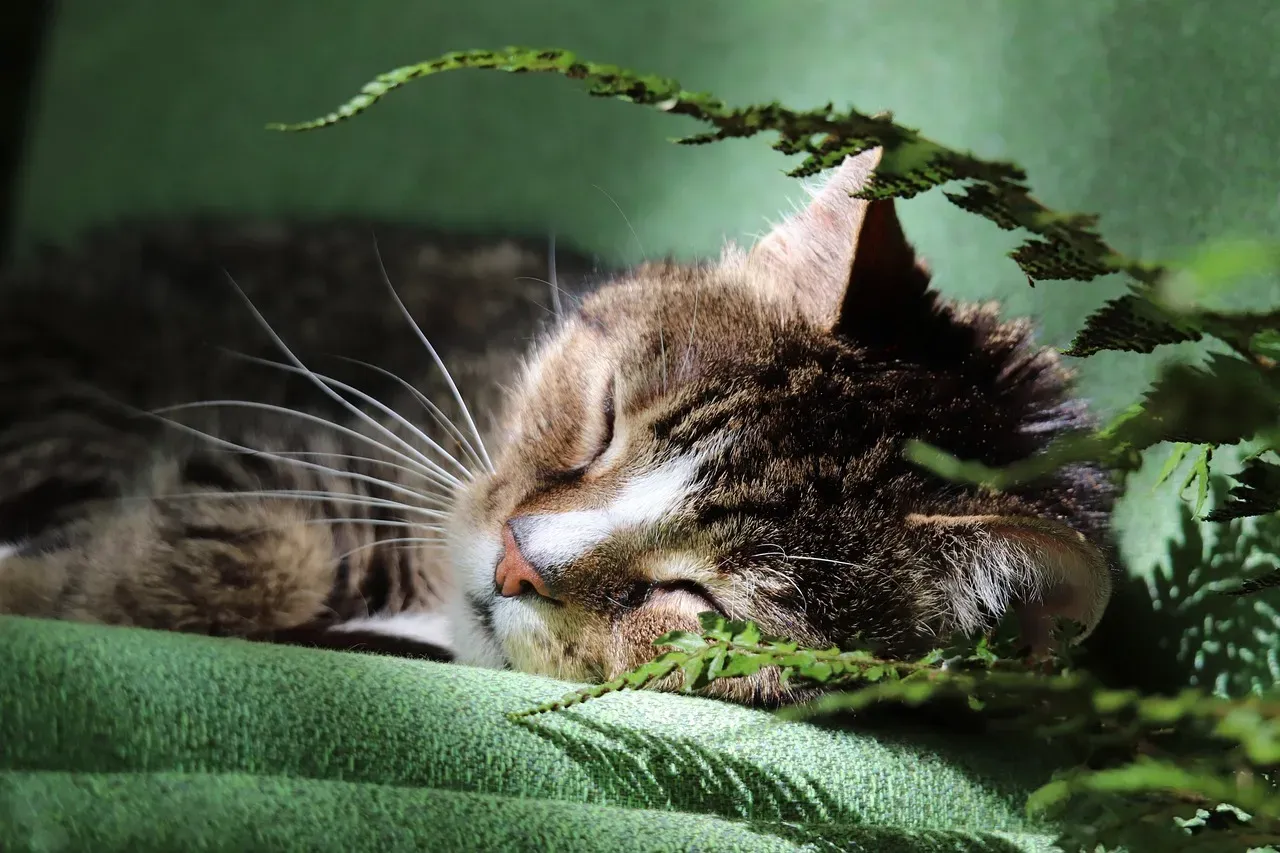
Working cats rarely get the deep, uninterrupted naps of a sofa cat.
Farm life is not restful. Living outside, chasing and eating rodents and running from big dogs all demand strong bodies and lots of energy. One activity summary estimates that free-roaming cats rest around 11 to 14 hours a day, but in a more fragmented way, interrupted by territorial defense, weather and hunting. Figures like this vary from cat to cat.
That light sleep exists for a reason, because the risks on a farm are real and often invisible. Farm cats can die from eating the corpses of poisoned rodents. That is the quiet danger of running poison and cats on the same property.
My opinion: pairing rodenticide with working cats is one of the most self-defeating moves on a farm. You are paying for a predator and then loading its prey with a toxin. Pick a strategy and commit to it.
Even a light sleeper needs somewhere to come back to, and that’s where #2 comes in.

PetSafe Oasys Pet Fountain, 1/2 Gallon (64 oz), Small Dogs & Cats
Check Price on AmazonAs an Amazon Associate, we earn from qualifying purchases.
10/8/2026 8:14 am GMTi

Halloween Cat Costume Cloak Witch Hat Pet Accessories
Check Price on AmazonAs an Amazon Associate, we earn from qualifying purchases.
10/9/2026 2:44 pm GMTi

Halloween Dog Collar with Bow, Orange Cute Ghost Collar,
Check Price on AmazonAs an Amazon Associate, we earn from qualifying purchases.
10/9/2026 2:43 pm GMTi

Orthopedic Extra Large Dog Bed, Waterproof Washable XL Pet Bed 44"
Check Price on AmazonAs an Amazon Associate, we earn from qualifying purchases.
10/7/2026 1:32 pm GMTi

Glass Hummingbird Feeder for Outdoors Hanging, 16 oz Leak-Proof Nectar Feeder with Bee Guards & Ant Moat
Check Price on AmazonAs an Amazon Associate, we earn from qualifying purchases.
10/7/2026 1:22 pm GMTi
#2 – Treating the Barn as Home Base
🔥 Would you like to save this?
We'll email this post to you, so you can come back to it later!
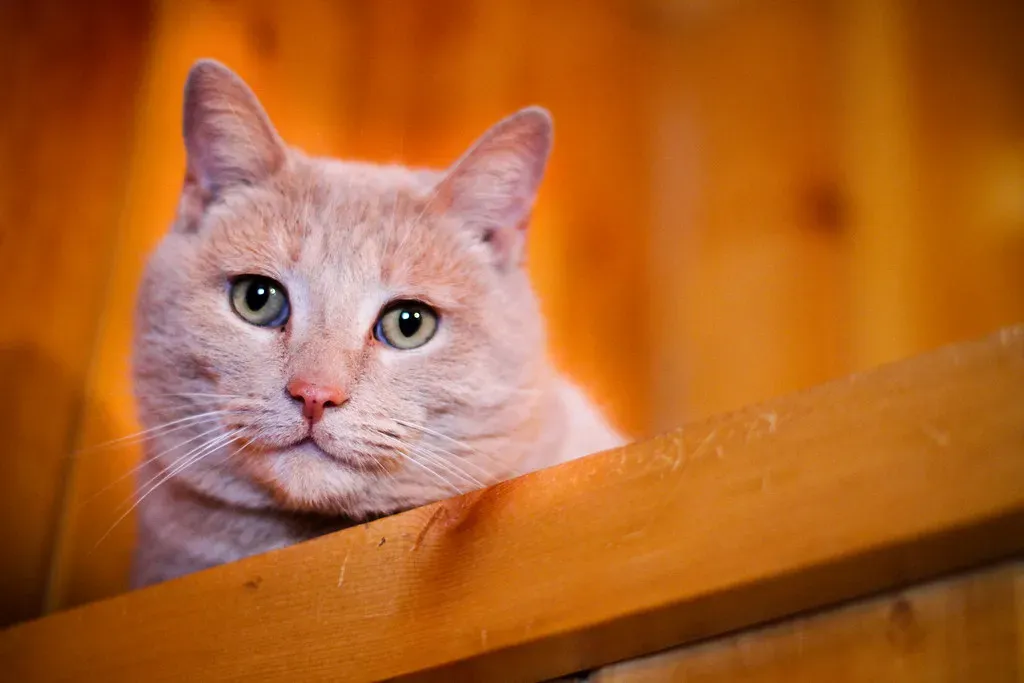
A farm cat that wanders off isn’t ungrateful. It just hasn’t learned where home is yet.
Moving a feral cat to a barn takes more than opening a crate. The thinking is that confined cats begin to associate the barn with food and shelter, so they don’t stray far once released. With some training, feral cats can often be acclimated to stay around a barn and hunt mice.
The good news is how adaptable cats are. In a pinch, nearly any feral or stray cat transported to a farm will quickly adapt to farm life. Scientists have even measured how far free-ranging farm cats roam, which they call a home range. The barn is the anchor of that range.
What anchors a cat in practice:
- Food in a consistent, predictable spot
- Real shelter from weather
- Time to settle before being released
Responsibility matters too. Working cat programs usually provide cats that are spayed or neutered and fully vaccinated. That is a sensible standard for any farm.
And the most surprising habit of all has nothing to do with a single cat. That’s #1.
#1 – Raising Kittens as a Team
🔥 Would you like to save this?
We'll email this post to you, so you can come back to it later!
The habit that keeps a farm’s cat population going isn’t hunting. It’s sharing.
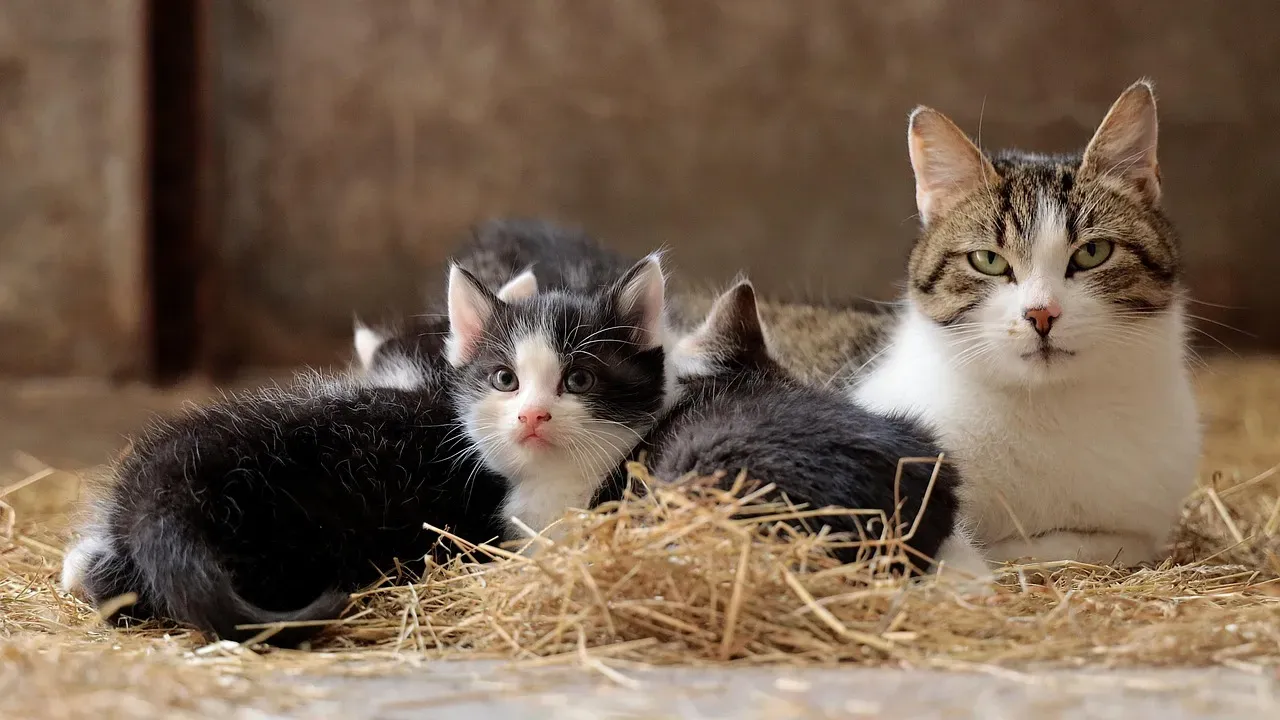
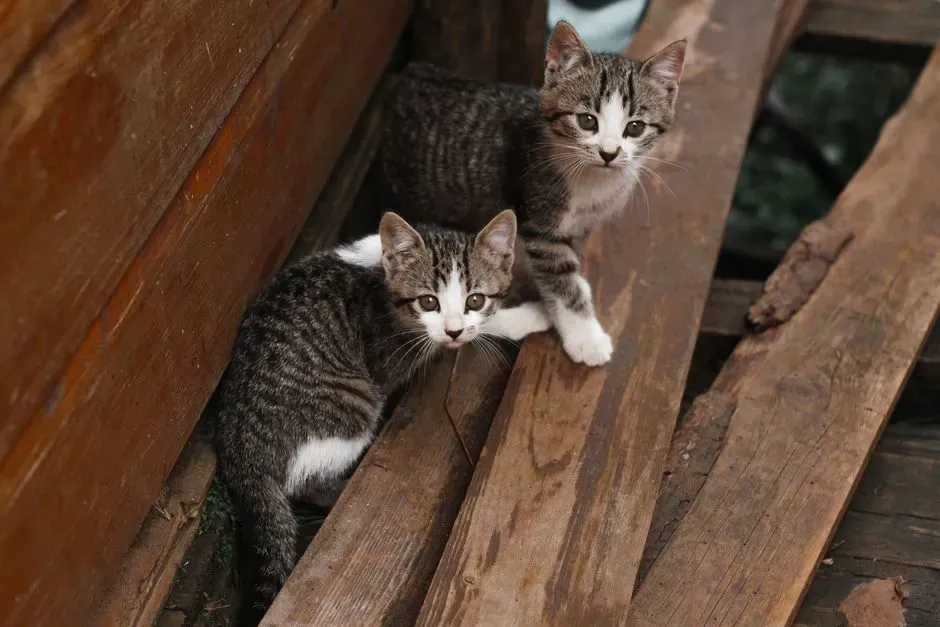
On many farms, cats aren’t loners at home. In England, farm cat colonies are present on most farms and can consist of up to 30 cats. Female farm cats use communal nests and take care of kittens belonging to other colony members. That behaviour is called allomothering.
Skills pass down through that shared nursery. Barn cats play hunting games with prey to sharpen their instincts and help youngsters perfect their skills. The practice is part of the education, and it continues across generations. That’s how barn cat populations can serve multiple generations by culling nearby rodents.

Air Purifiers for Home Pets Large Room Up to 3000 Ft²,HEPA Air Cleaner with Washable Double-Side Filter, PM2.5 Air Quality Monitor,15dB Sleep Mode for Bedroom Odor Dust Pollen,White
Check Price on AmazonAs an Amazon Associate, we earn from qualifying purchases.
10/8/2026 8:23 am GMTi

Hand Blown Glass Hummingbird Feeders for Outdoors Hanging, 24oz Wild Bird Nectar Feeder
Check Price on AmazonAs an Amazon Associate, we earn from qualifying purchases.
10/7/2026 1:23 pm GMTi

Portable Dog Water Bottle Foldable Dog Travel Water Bottle
Check Price on AmazonAs an Amazon Associate, we earn from qualifying purchases.
10/7/2026 1:29 pm GMTi

Glass Hummingbird Feeder for Outdoors Hanging
Check Price on AmazonAs an Amazon Associate, we earn from qualifying purchases.
10/7/2026 1:21 pm GMTi
Why It Stands Out
- Colonies on English farms can reach up to 30 cats
- Mothers share communal nests and care for each other’s kittens
- Play with prey helps youngsters sharpen their instincts
- Skills carry across generations, not just from one cat
Here’s my firm view. Colony management matters far more than adding cats. Feral cat problems are fed by careless owners and by “feeders” who hoard high numbers of cats outdoors. Spaying and neutering every cat is the responsible baseline. A self-sustaining colony needs a plan, not just a food bowl.
Put these nine habits together and a pattern emerges that most farm advice gets wrong. A working farm cat is valuable because of its habits, not its hunger or its friendliness. It patrols at twilight, marks its ground, hunts even when fed, waits patiently, eats often, keeps its distance, rests lightly, anchors to the barn and raises kittens communally.
Starving a barn cat doesn’t make it a better hunter. Poisoning rodents puts it at risk. Expecting a lap cat is a mistake. My verdict: feed them, neuter them, give them shelter, and keep the poison off the property.
If your barn cat still keeps its distance, is it failing at its job, or doing it perfectly?

- 9 Habits a Working Farm Cat Never Loses - November 9, 2026
- 9 Things a Cat Only Does Around the Person Who Feeds It - November 9, 2026
- 19 Things the Senior Pass Covers at a National Park That Holders Never Claim - November 9, 2026