
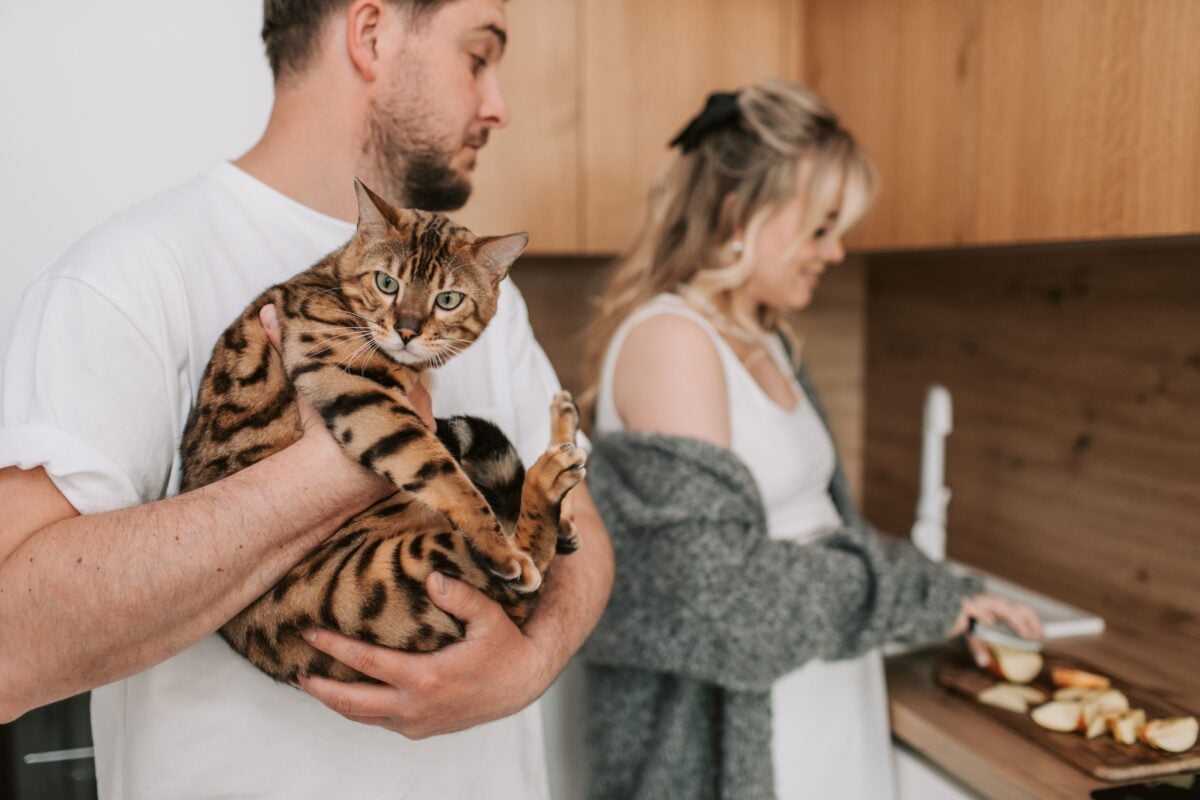
“My cat only loves me for the food.” You’ve probably said it, half-joking, while a furry shape wound itself around your ankles at 6 a.m. It’s the lazy explanation, and it only covers part of the story. Cats do save certain behaviors for people they’ve learned to trust, and the person with the food bowl is often where that trust begins.
The nine behaviors below are real, and several have been studied by researchers. Some look like plain begging but are doing something far more complicated. One is a sound that seems built to resemble a crying baby. Another is a blink your cat treats very differently when a stranger offers it. And the last one explains how your cat can ignore you completely and still know exactly who you are.
#9 – The Tail-Up Greeting
🔥 Would you like to save this?
We'll email this post to you, so you can come back to it later!
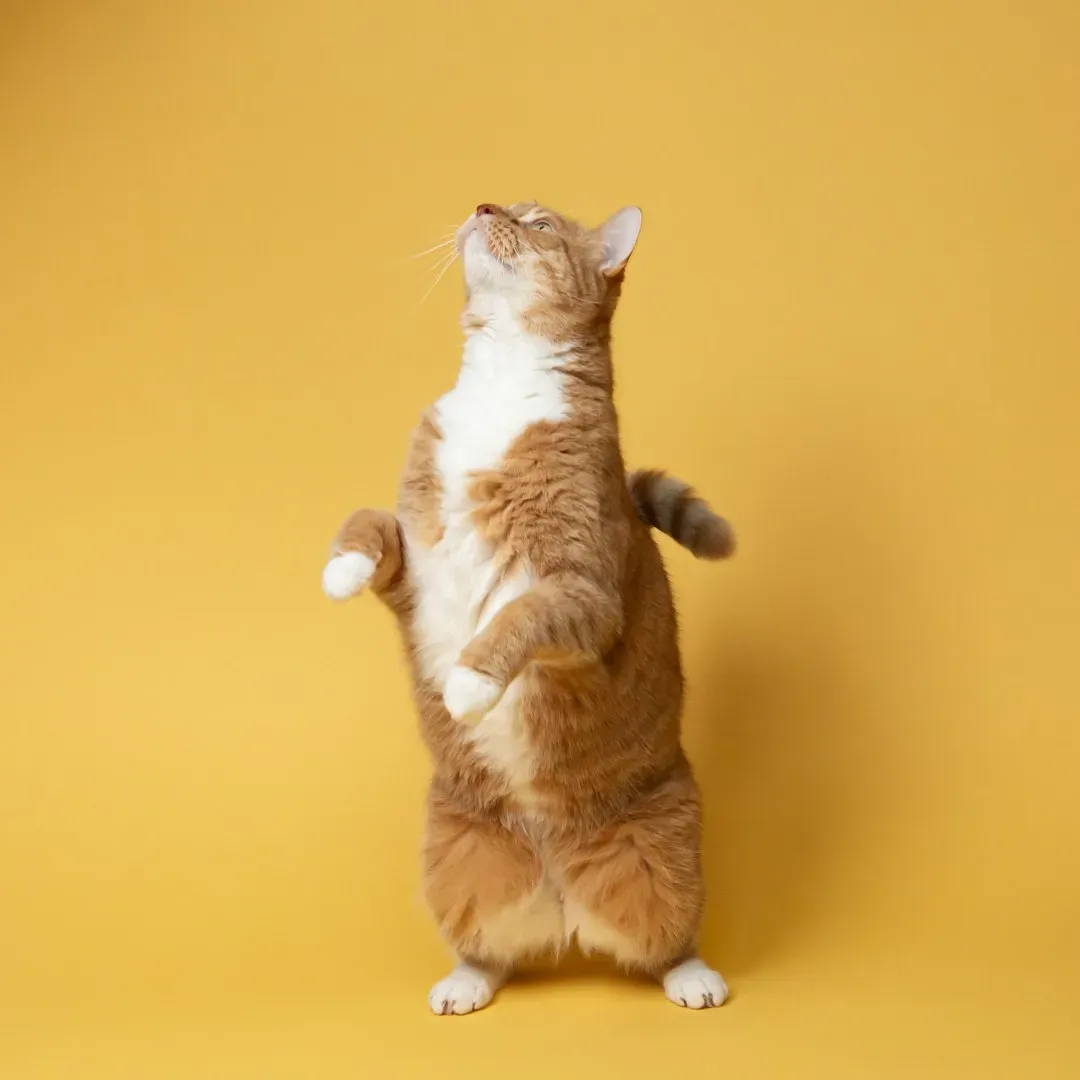
Your cat’s tail goes up like a flagpole the moment you walk in.
Most people read this as “feed me.” It’s actually a greeting. Among cats, an upright tail works as an invitation to interact, and it appears to have carried over into life with humans. In other words, your cat is treating you like a fellow cat.
Here’s the part most owners miss. The posture is thought to trace back to kittenhood, when little ones lift their tails toward their mother. Wild and feral cats do not typically aim this greeting at humans, which suggests domestic cats developed it for living with people. It’s a skill your cat may reserve for people it has learned to trust.
The follow-up move matters too. Cats that approached a human with their tail up most often rubbed against the person’s leg, a clearly positive interaction. The tail goes up first and the rub comes second.
At a Glance
- The signal: Tail held straight up as you approach
- What it means: A friendly greeting, not just a food request
- Where it comes from: Kittens lifting their tails toward their mother
- What usually follows: A rub against your leg
Watch the tip as well. A tail held high with a soft curl or hook at the end is often the relaxed, friendly version of the signal.
But the tail is only the opening line, and what comes next is much louder…
#8 – The Solicitation Purr
🔥 Would you like to save this?
We'll email this post to you, so you can come back to it later!
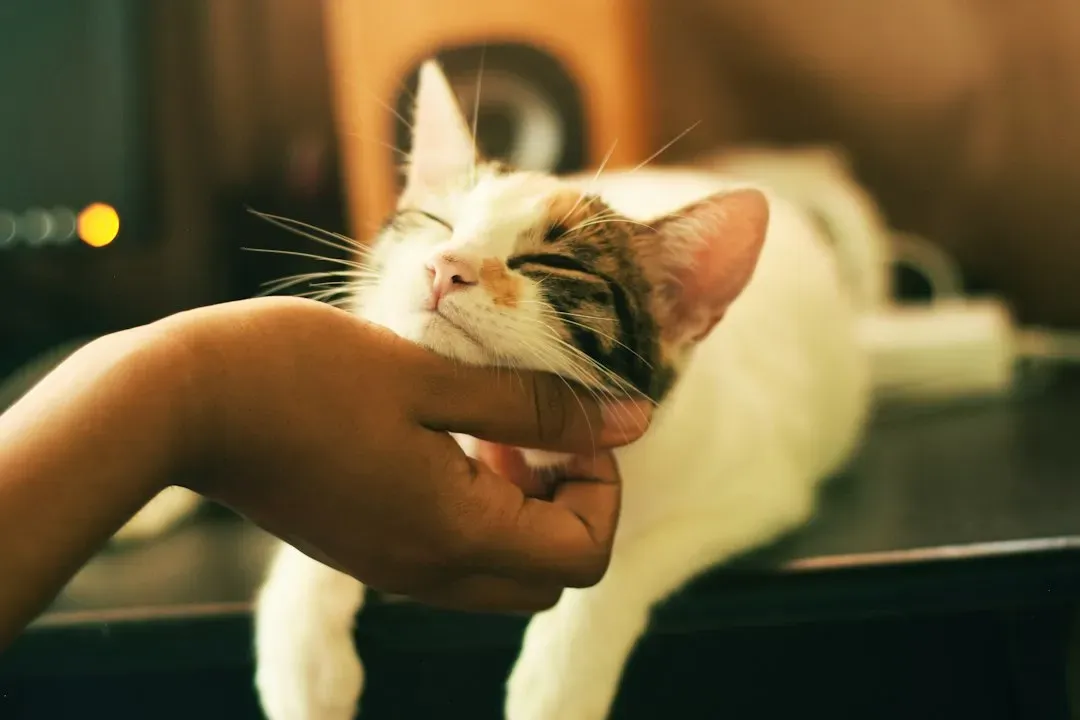
Your cat purrs differently when it wants something.
Purring isn’t only a contentment sound. Researchers have described a special version called the “solicitation purr.” Cats have been shown to attract and manipulate human attention effectively with it. It’s a tool, and cats use it on specific people.
The research behind it is the fascinating part. A well-known study from the University of Sussex found that this purr carries a high-pitched, cry-like element tucked inside the normal rumble. Listeners rated these purrs as more urgent, and also more annoying.
The sound resembles the pitch of a baby’s cry, which would explain why it’s so hard to ignore. Cats seem to have worked out that this particular noise gets a human out of bed.
Owners who feed their cats regularly often learn to tell the difference without trying. It’s usually most noticeable early in the morning, near the food area, when your own ears are least interested in negotiating.
- Where you’ll hear it: Often near the kitchen or food bowl
- What it sounds like: A purr with a thin, whiny note layered in
- What it means: “Pay attention to me, now”
Purring is only one of the tricks, because there’s an even quieter signal your cat is sending with its eyes…
#7 – The Slow Blink
🔥 Would you like to save this?
We'll email this post to you, so you can come back to it later!
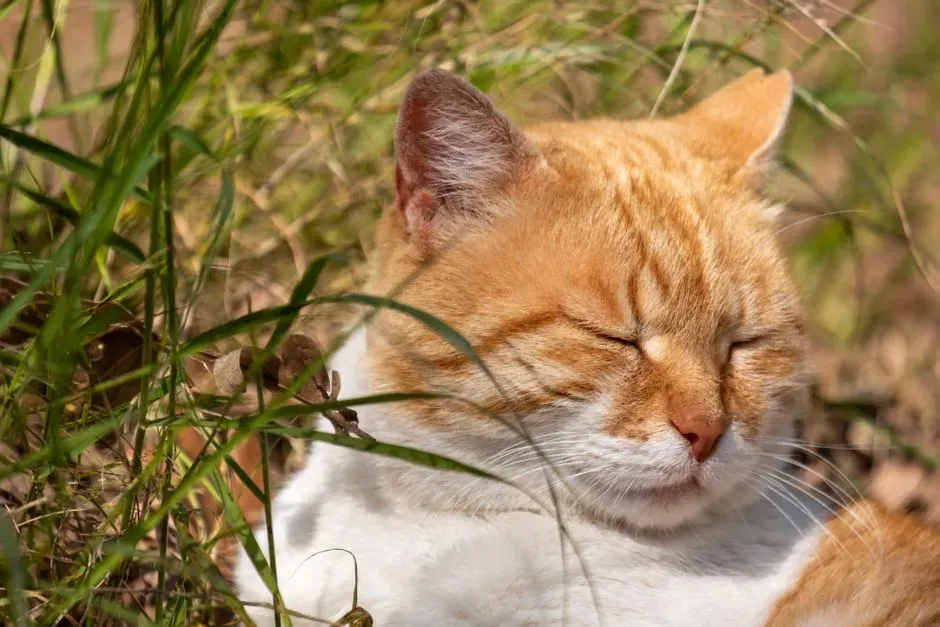
Your cat closes its eyes slowly while looking at you.
Don’t mistake this for sleepiness. In cat language, a hard stare is a challenge, so deliberately softening the eyes says the opposite. Researchers have studied it directly. In a 2020 Sussex study of 21 cats, half-blinks and eye narrowing occurred more often after owners slow blinked at their cats than when there was no owner–cat interaction.
The key detail is who gets the signal. Cats half-blinked and narrowed their eyes more frequently when their owner slow blinked at them than when a stranger did the exact same thing. Your cat treats your blink differently from a stranger’s. That’s a real, measurable difference.
Strangers aren’t shut out completely, though. Cats were more likely to approach the experimenter after a slow blink than after a neutral expression. The blink works on strangers too, but it works best between cats and the people they know.
Quick Compare
- Owner slow blinks: Cats half-blink and narrow their eyes more often
- Stranger slow blinks: A weaker eye response, but cats still tend to approach
- Neutral expression: Cats were less likely to approach
Here’s my opinion: the “cat smile” label is a bit of a stretch. The science backs slow blinks as positive communication, not literal smiles.
If the eyes are subtle, the next behavior is anything but…
#6 – The Chatty, Human-Only Meow
🔥 Would you like to save this?
We'll email this post to you, so you can come back to it later!
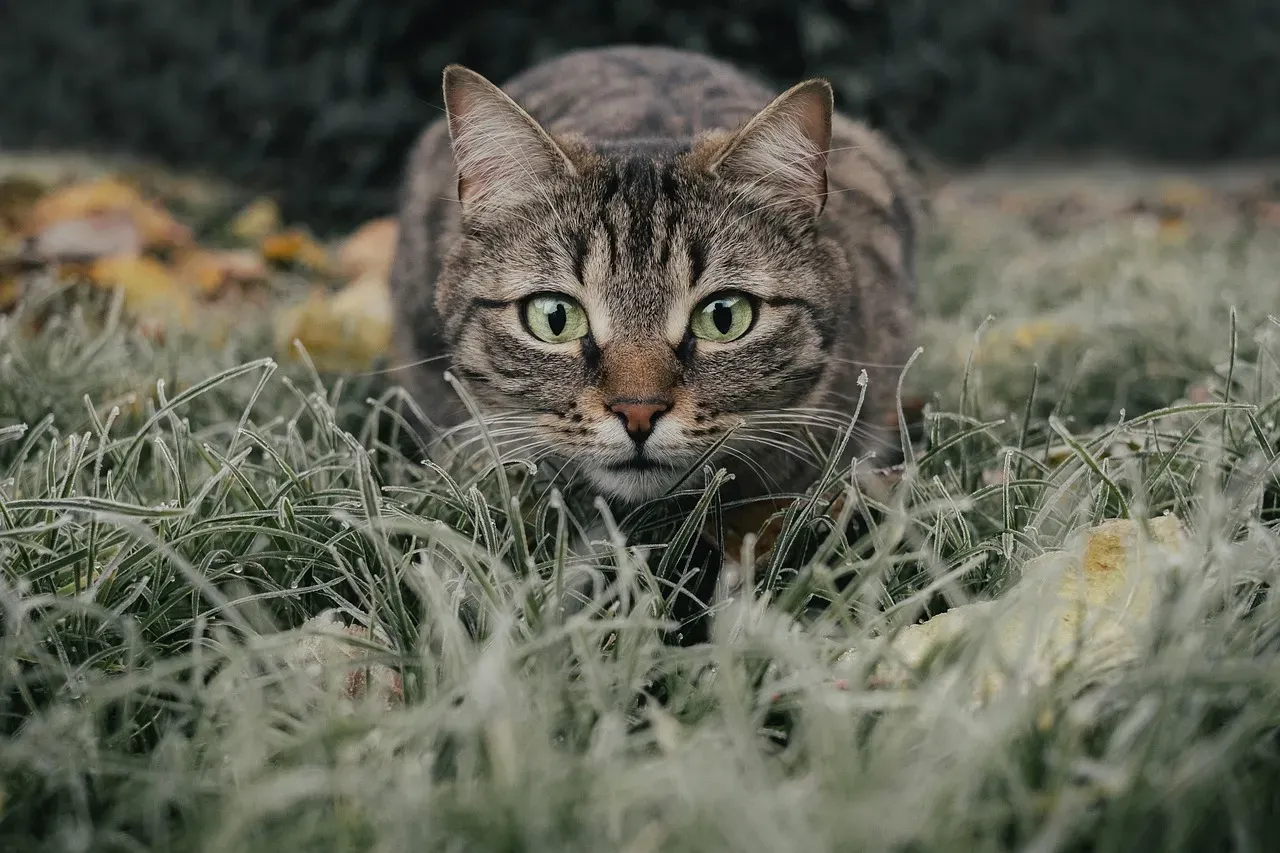
Your cat talks to you in a way it barely talks to other cats.
Adult cats mostly don’t meow at each other. The meow appears to be aimed largely at people. Kittens meow at their mothers, but adult cats seem to have kept the sound and expanded it just for us.
Many cats develop a personal “vocabulary” with the person they live with. Owners often report a short, specific sound for breakfast, another for the door, and another for attention. The sounds can differ from cat to cat, which suggests the meanings are partly learned together.
This is where cupboard love gets more complicated. Your cat may vocalize more at the person who feeds it simply because that person responds. Every reply teaches the cat that talking works, and over time the two of you build a private language.
- Short, sharp meow: Usually a greeting or a quick demand
- Long, drawn-out meow: Often a more insistent request
- Chirps and trills: Commonly used as friendly greetings
One caution: a sudden change in how much your cat vocalizes can signal a health issue, especially in older cats. If the volume jumps for no obvious reason, don’t just dismiss the noise. Mention it to your vet.
But sound is only half the performance. The other half is physical choreography around your ankles…

Dog Stairs for Bed 18" H, 4-Step Dog Steps for High Bed
Check Price on AmazonAs an Amazon Associate, we earn from qualifying purchases.
10/9/2026 2:42 pm GMTi

Smart Bird Feeder with Camera Solar Powered, 2K HD Live Video, 10,000+ Bird Species AI Identification
Check Price on AmazonAs an Amazon Associate, we earn from qualifying purchases.
10/7/2026 1:22 pm GMTi

Portable Dog Water Bottle Foldable Dog Travel Water Bottle
Check Price on AmazonAs an Amazon Associate, we earn from qualifying purchases.
10/7/2026 1:29 pm GMTi

Earth Rated XL Dog & Puppy Pee Pads, Discreet Top, Max Absorbency
Check Price on AmazonAs an Amazon Associate, we earn from qualifying purchases.
10/7/2026 1:28 pm GMTi

Halloween Cat Costume Cloak Witch Hat Pet Accessories
Check Price on AmazonAs an Amazon Associate, we earn from qualifying purchases.
10/9/2026 2:44 pm GMTi
#5 – The Kitchen Shadow Routine
🔥 Would you like to save this?
We'll email this post to you, so you can come back to it later!
Your cat knows your schedule better than you do.
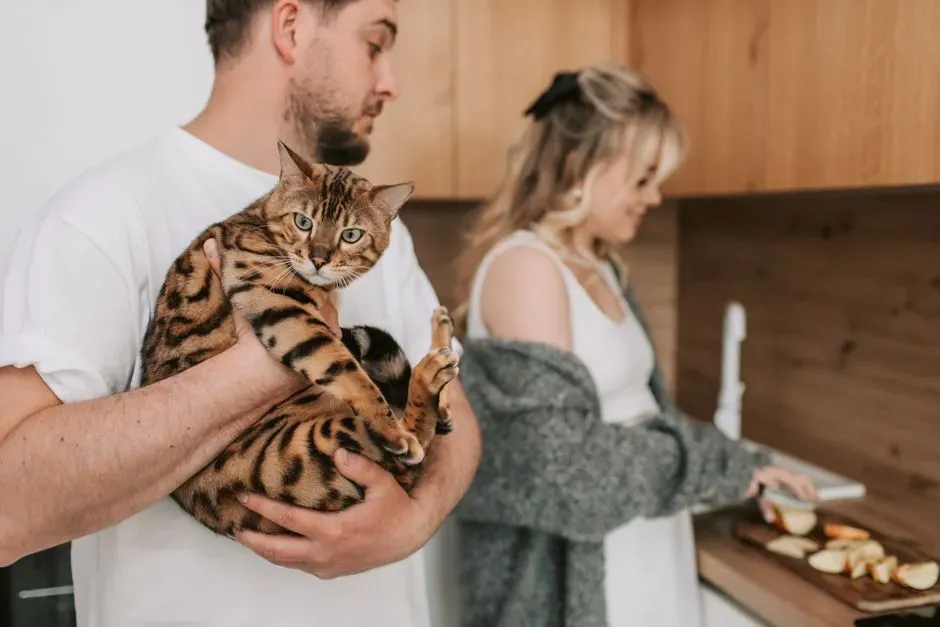
Many cats begin appearing minutes before mealtime. They hover near the kitchen, circle your legs, or sit by the bowl. Cats pick up on routine cues like footsteps, cupboard doors, and rustling bags. Their hearing is far sharper than ours, so they often catch those sounds before you’ve even decided to cook.
The behavior is often strongest around whoever is most reliably linked to food. Cats are also naturally most active around dawn and dusk, which helps explain why the shadowing tends to peak when you’re groggy in the morning or winding down at night.
It isn’t only about food, though. Cats are creatures of habit, and a predictable routine lowers their stress. Your cat follows you partly because you’re the person who makes its day predictable.
Worth Knowing
- Common cues: Footsteps, cupboard doors, and rustling bags
- Peak hours: Dawn and dusk, when cats are naturally most active
- Biggest audience: Whoever is most reliably linked to food
- Hidden benefit: A steady routine helps keep a cat’s stress lower
Here’s a controversial take: “my cat only loves me for food” is often a mistake. Both can be true. Affection and appetite aren’t opposites, and a cat can enjoy you for who you are while still wanting breakfast.
And once your cat is close enough, it starts marking you as its own…
#4 – Head Bunting and Cheek Rubbing
🔥 Would you like to save this?
We'll email this post to you, so you can come back to it later!
Your cat is leaving its scent on you on purpose.
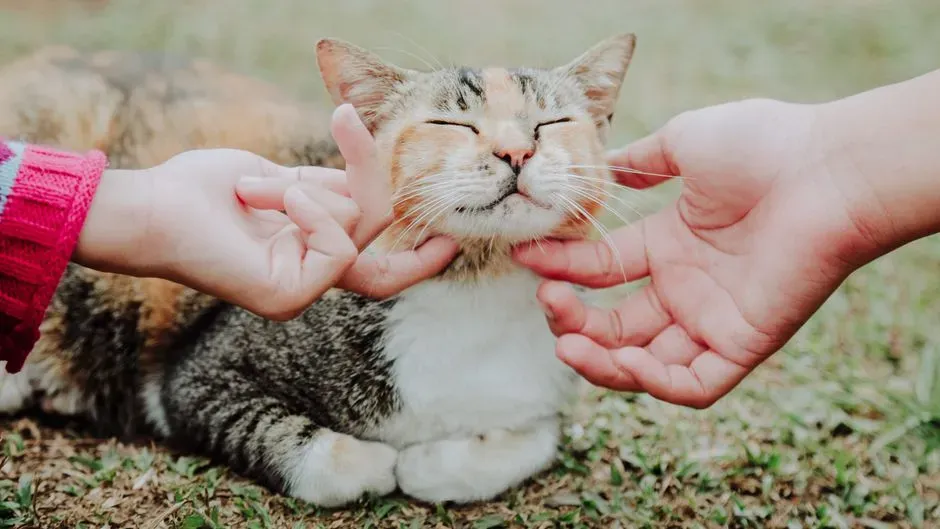
When a cat presses its forehead or cheek into you, it’s doing more than asking for a scratch. Cats have scent glands around the face, and rubbing deposits a familiar smell on whatever they touch. You’re being marked as part of the cat’s safe, familiar territory.
Cats do this to furniture, doorframes, and each other. Cats that live together often rub against one another, which helps create a shared scent. Doing it to a person suggests your cat sees you as part of its group, and experts generally read it as a positive, bonding behavior.
The timing is worth watching. Many cats rub hardest when you come home, since you’ve been carrying outside smells. Rubbing helps replace those with a scent they recognize.
It’s a small, quiet act of ownership. You may think you adopted the cat, but the cat has been quietly filing its own paperwork.
Marking is only one way cats show comfort, and the next one goes back to kittenhood…
#3 – Kneading
🔥 Would you like to save this?
We'll email this post to you, so you can come back to it later!
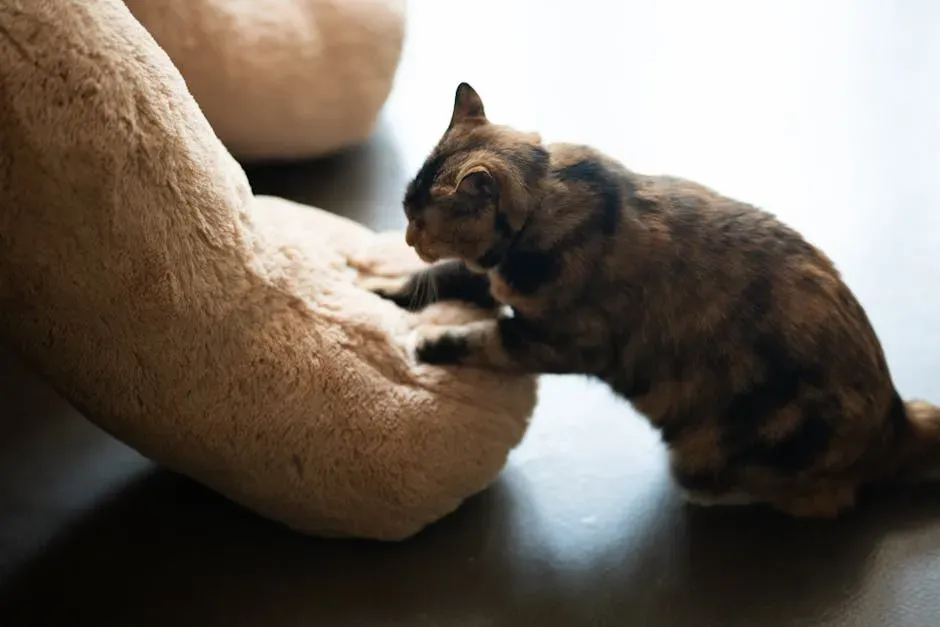
Your cat pushes its paws into you like it’s making dough.
Kneading is commonly linked to nursing. Kittens push against their mother to encourage milk flow, and many adult cats seem to carry the habit into comfortable moments. It tends to show up when a cat is relaxed, often right before settling down on your lap.
Not every cat kneads, and that’s normal. Some do it constantly, some never. It isn’t a measure of how much your cat likes you.
Some owners assume it’s purely love. Others, including some behaviorists, say it’s also a self-soothing habit. Cats also have scent glands in their paws, so some think kneading may leave a little personal signature on you as well. The honest answer is that nobody knows the full motive, so be wary of any article that claims certainty.
If the claws hurt, don’t punish your cat. Put a thick blanket under it, or keep its claws trimmed.
- Where it happens: Soft surfaces like laps, blankets, and beds
- When it happens: Usually when relaxed and sleepy
- What it suggests: Comfort, and likely trust
But comfort doesn’t get more vulnerable than the next behavior…

Glass Hummingbird Feeder for Outdoors Hanging, 16 oz Leak-Proof Nectar Feeder with Bee Guards & Ant Moat
Check Price on AmazonAs an Amazon Associate, we earn from qualifying purchases.
10/7/2026 1:22 pm GMTi

Professional 7 in 1 Dog Paw Cleaner for Dogs & Cats - Includes 1 Portable Paw Washer, 1 Bath Brush
Check Price on AmazonAs an Amazon Associate, we earn from qualifying purchases.
10/7/2026 1:26 pm GMTi

Halloween Dog Collar with Bow, Orange Cute Ghost Collar,
Check Price on AmazonAs an Amazon Associate, we earn from qualifying purchases.
10/9/2026 2:43 pm GMTi

Glass Hummingbird Feeder for Outdoors Hanging
Check Price on AmazonAs an Amazon Associate, we earn from qualifying purchases.
10/7/2026 1:21 pm GMTi

Air Purifiers for Home Pets Large Room Up to 3000 Ft²,HEPA Air Cleaner with Washable Double-Side Filter, PM2.5 Air Quality Monitor,15dB Sleep Mode for Bedroom Odor Dust Pollen,White
Check Price on AmazonAs an Amazon Associate, we earn from qualifying purchases.
10/8/2026 8:23 am GMTi
#2 – Showing the Belly
🔥 Would you like to save this?
We'll email this post to you, so you can come back to it later!
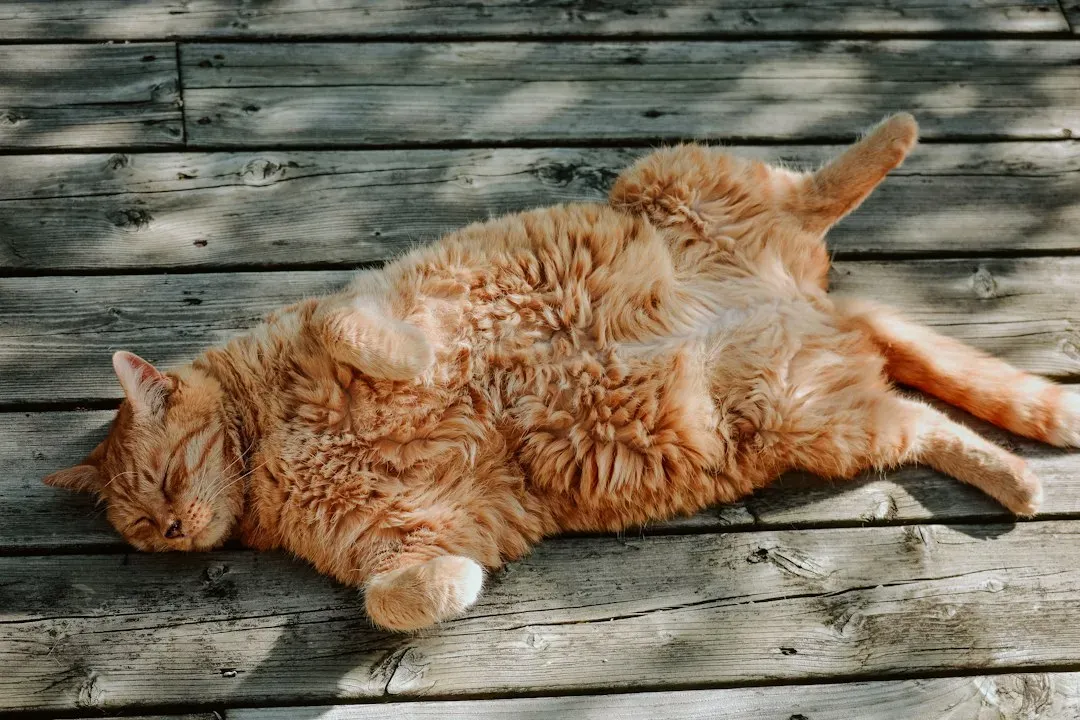
Your cat flops over and exposes its softest spot.
The belly is the most vulnerable part of a cat’s body. A cat that rolls over near you is signaling that it feels safe. Most people don’t realize it’s often not an invitation to rub the belly. Many cats will grab or kick if you touch it.
The truth is that a belly display usually means “I trust you here.” It doesn’t automatically mean “pet me here.” Some cats love belly rubs, but plenty don’t. Context matters too, because a cat on its back during a scuffle is also positioned to use all four sets of claws.
Read the rest of the body. Slow blinks, relaxed paws, and a loose tail suggest comfort. A twitching tail or flattened ears suggest you should stop.
Which brings us to the behavior that no stranger can fake…
#1 – Reacting to Your Voice
🔥 Would you like to save this?
We'll email this post to you, so you can come back to it later!
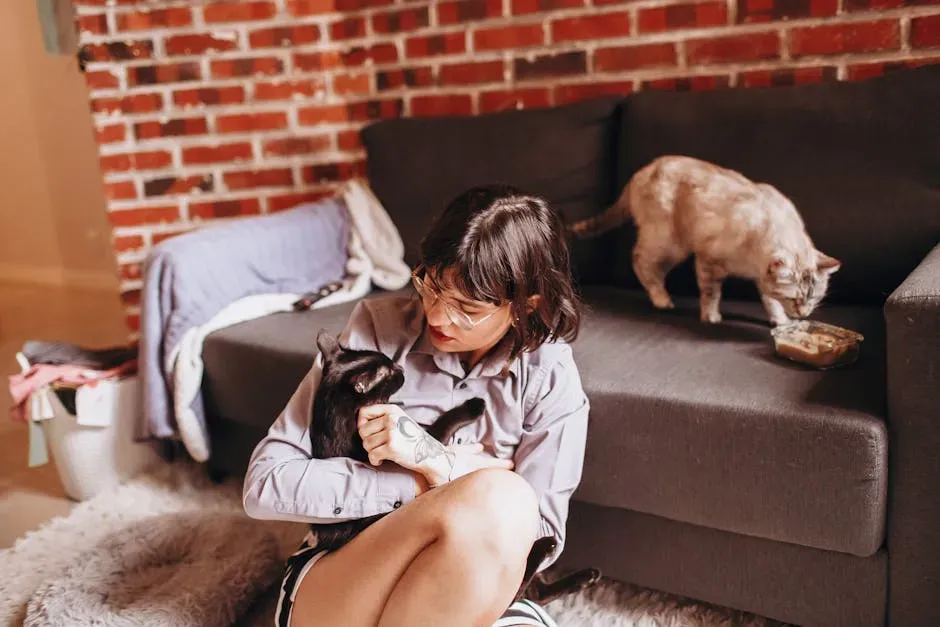
Your cat knows your voice from a stranger’s.
Cats can tell the difference, even when they don’t act like it. In a 2013 Japanese study of 20 cats, most reacted less and less as three strangers called their name, then reacted again when their owner called. The cats noticed, even if they didn’t run over.
That’s a classic cat move. A cat can recognize you and still choose not to come. Experts say this is why cats get a reputation for being aloof. They aren’t ignoring you because they don’t know you. They just don’t always show it.
The research on who a cat bonds with is also more nuanced than the food story suggests. A well-known 2019 Oregon State study found that roughly two-thirds of cats showed secure attachment to their owners, a rate in the same range as dogs and human infants.

2 Pcs Halloween Pet Hat Bandana Set, Witch Pumpkin Costumes for Dogs
Check Price on AmazonAs an Amazon Associate, we earn from qualifying purchases.
10/9/2026 2:45 pm GMTi

Hand Blown Glass Hummingbird Feeders for Outdoors Hanging, 24oz Wild Bird Nectar Feeder
Check Price on AmazonAs an Amazon Associate, we earn from qualifying purchases.
10/7/2026 1:23 pm GMTi

Orthopedic Extra Large Dog Bed, Waterproof Washable XL Pet Bed 44"
Check Price on AmazonAs an Amazon Associate, we earn from qualifying purchases.
10/7/2026 1:32 pm GMTi

PetSafe Oasys Pet Fountain, 1/2 Gallon (64 oz), Small Dogs & Cats
Check Price on AmazonAs an Amazon Associate, we earn from qualifying purchases.
10/8/2026 8:14 am GMTi
Why It Stands Out
- 2013 Japanese study: 20 cats noticed when their owner’s voice replaced a stranger’s
- 2019 Oregon State study: Roughly two-thirds of cats showed secure attachment
- The catch: Recognition doesn’t always mean the cat will come running
- The takeaway: Your cat knows exactly who you are
I’d argue this is the real answer to the headline. Food may open the door, but recognition is what keeps your cat in the room.
The cupboard-love theory is only half right, and I think it’s the less interesting half. Yes, the person who feeds the cat usually gets the full show: the tail-up greeting, the solicitation purr, the slow blinks. But food alone doesn’t explain a cat that marks you with its face, kneads you into a nap, or trusts you enough to flop over and expose its belly.
Familiarity, routine, and trust do the heavy lifting. Cats narrowed their eyes more often when their owner slow blinked at them than when a stranger did, and that tells you what you need to know. The bowl may be how you got hired, but the job turned into something else.
So if your cat only does these things around you, take it as a compliment. Which one surprised you most?

- 9 Things a Cat Only Does Around the Person Who Feeds It - November 9, 2026
- 19 Things the Senior Pass Covers at a National Park That Holders Never Claim - November 9, 2026
- 9 Permits Dropped for Birders Over 62 at Federal Sites Nationwide - November 9, 2026