


Bald eagles, America’s national bird, are remarkable creatures not only for their impressive appearance but also for their specific and strategic nesting preferences. These majestic raptors don’t build their homes just anywhere—they carefully select locations that offer safety, access to food, and suitable conditions for raising their young. Understanding their nesting habits provides valuable insights into their behavior and conservation needs.
With wingspans reaching up to 8 feet and weighing between 6.5 to 14 pounds, bald eagles need substantial nests to accommodate their size. Their nests, called eyries, are among the largest of any North American bird, sometimes weighing up to a ton and measuring 5-6 feet in diameter and 2-4 feet deep. Eagles often return to the same nest year after year, adding new materials each breeding season, which explains why some nests grow to such impressive dimensions over time.
Tall Trees Near Water Bodies
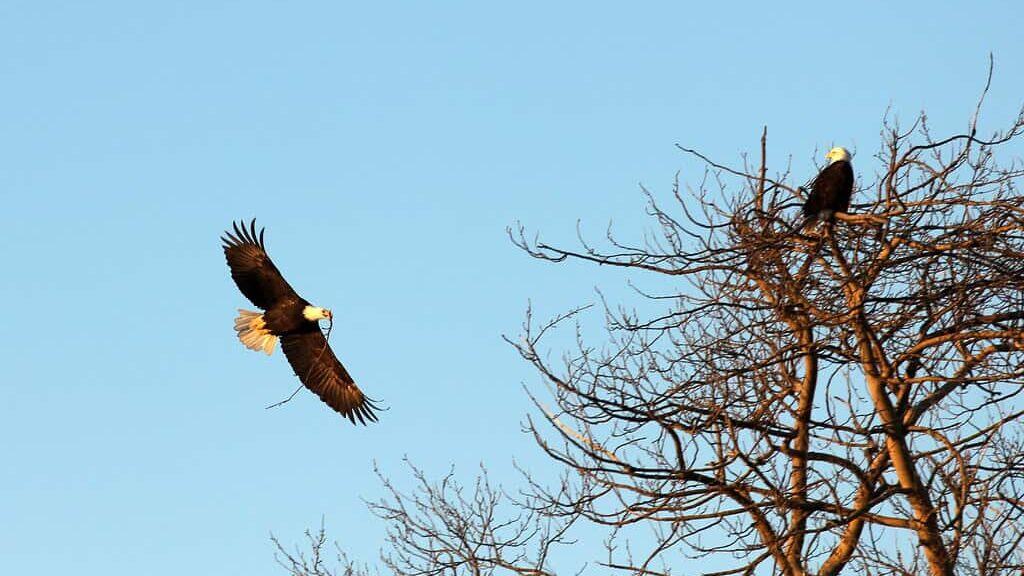
The most classic and preferred nesting location for bald eagles is in tall, mature trees situated near bodies of water. Eagles typically select trees that stand taller than the surrounding forest canopy, providing them with a commanding view of their territory. These trees are usually robust enough to support their massive nests, with strong, broad branches that form a solid foundation. Species like white pines, cottonwoods, and Douglas firs are common choices due to their height and strength.
Proximity to water is crucial as fish constitute a major portion of the bald eagle’s diet. Nests are typically built within one mile of lakes, rivers, reservoirs, marshes, or coastal areas, allowing adults to easily spot and access their primary food source. This strategic location also provides an unobstructed flight path for the eagles as they come and go from their nest, carrying food for their young or materials for nest maintenance.
Coastal Cliff Faces
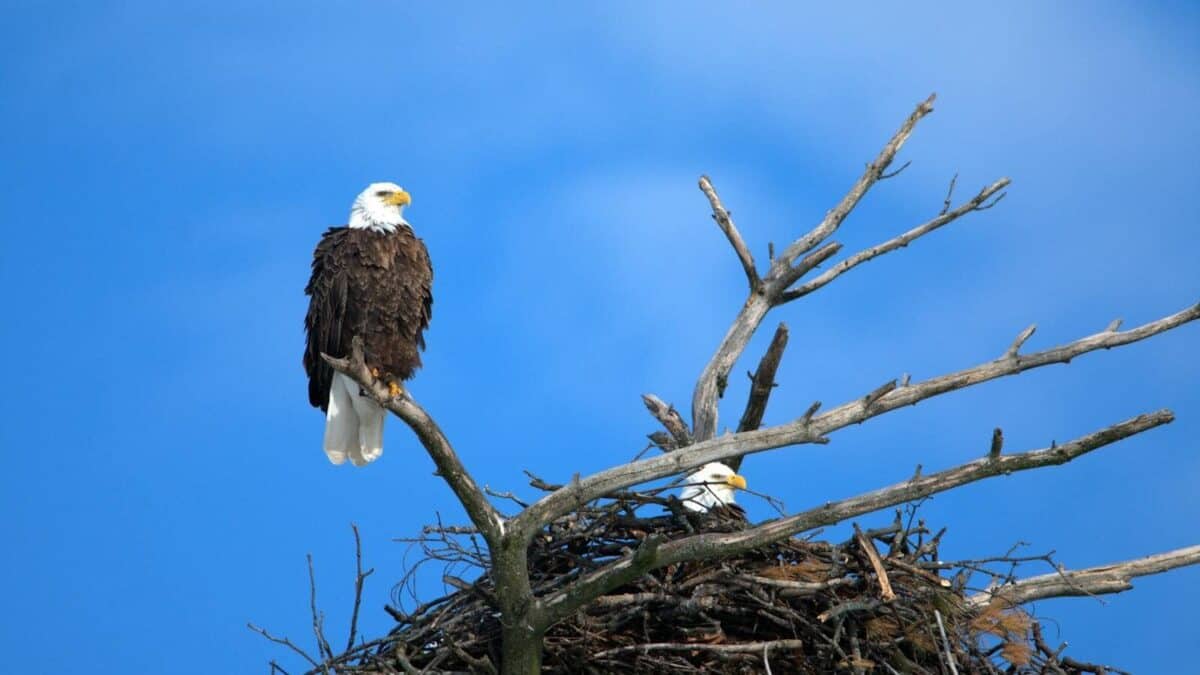
In areas where tall trees are scarce, particularly along certain coastal regions, bald eagles adapt by building nests on cliff faces and ledges. These elevated positions offer similar advantages to tall trees: excellent visibility, protection from ground predators, and easy access to fishing grounds. Coastal cliffs are particularly advantageous as they often overlook rich marine ecosystems teeming with fish and other prey.
Alaska’s Aleutian Islands and parts of California’s coast feature bald eagle nests perched on dramatic seaside cliffs. These locations not only provide eagles with panoramic views for hunting but also expose them to strong winds that aid in takeoffs and landings—an important consideration for these massive birds. The inaccessibility of these cliff nests also offers natural protection from human disturbance and most land-based predators.
Man-Made Structures
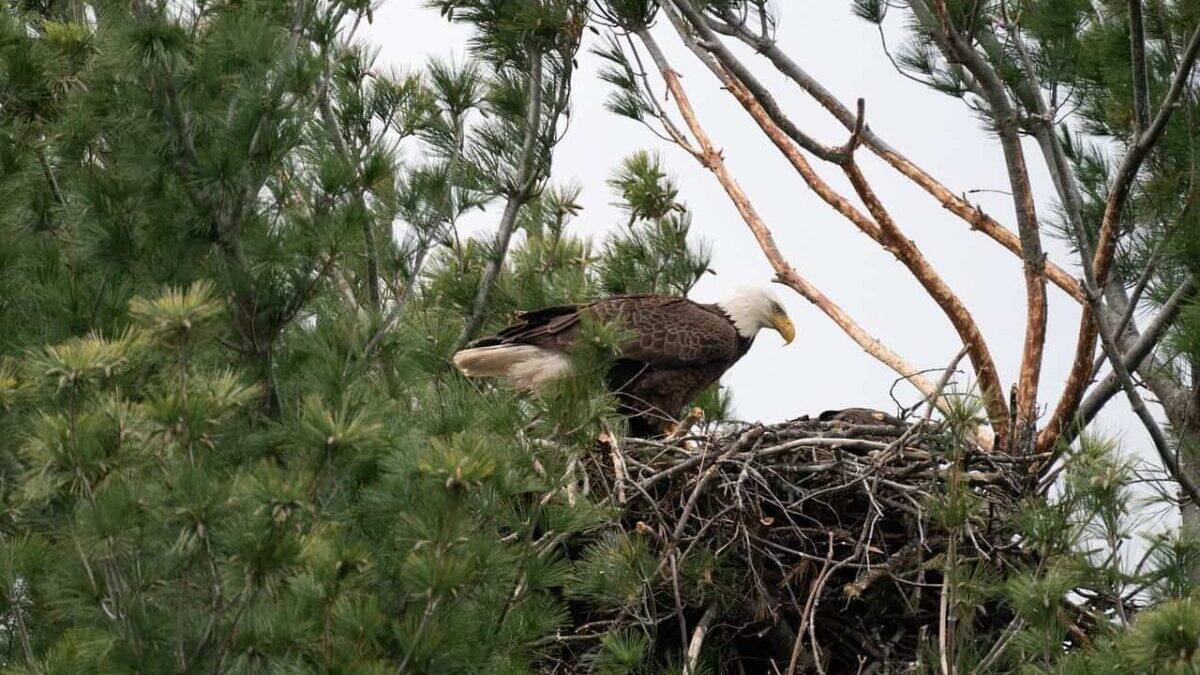
As human development has altered natural landscapes, bald eagles have demonstrated remarkable adaptability by utilizing man-made structures for nesting. Electrical transmission towers, communication towers, and artificial nesting platforms specifically designed for raptors have all been successfully colonized by nesting eagles. These structures often share characteristics with preferred natural sites: they’re tall, sturdy, and frequently located near water bodies.
In Minnesota, Florida, and other states with robust eagle populations, wildlife agencies have installed artificial nesting platforms to support eagle recovery. These platforms have proven particularly successful in areas where suitable natural nesting sites are limited. The eagles’ willingness to use these artificial structures has been an important factor in their population recovery and adaptation to changing environments.
Island Habitats
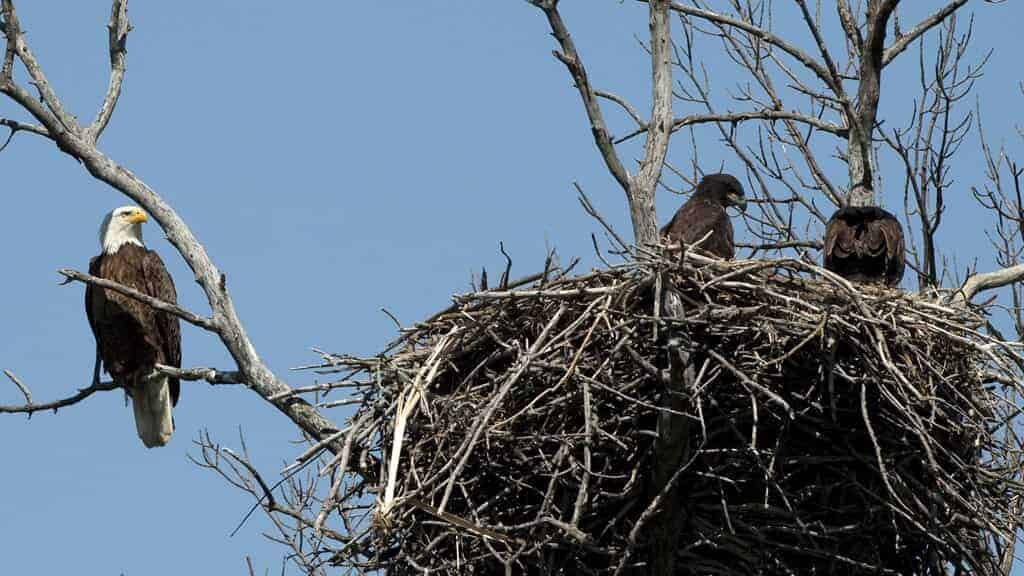
Islands, particularly those in lakes, rivers, or just offshore in coastal areas, represent prime real estate for nesting bald eagles. These locations offer a natural buffer against many mainland predators and reduce the likelihood of human disturbance. Islands with mature trees combine the advantages of elevation with the security of water barriers, creating ideal nesting conditions for cautious eagle pairs.
The Chesapeake Bay region, with its numerous islands and abundant fish populations, supports one of the densest concentrations of nesting bald eagles in the lower 48 states. Similarly, islands in the Great Lakes and along the Pacific Northwest coast provide essential nesting habitat for significant eagle populations. These island nests benefit from the rich aquatic ecosystems surrounding them, ensuring plentiful food sources for growing eagle families.
Remote Wetlands
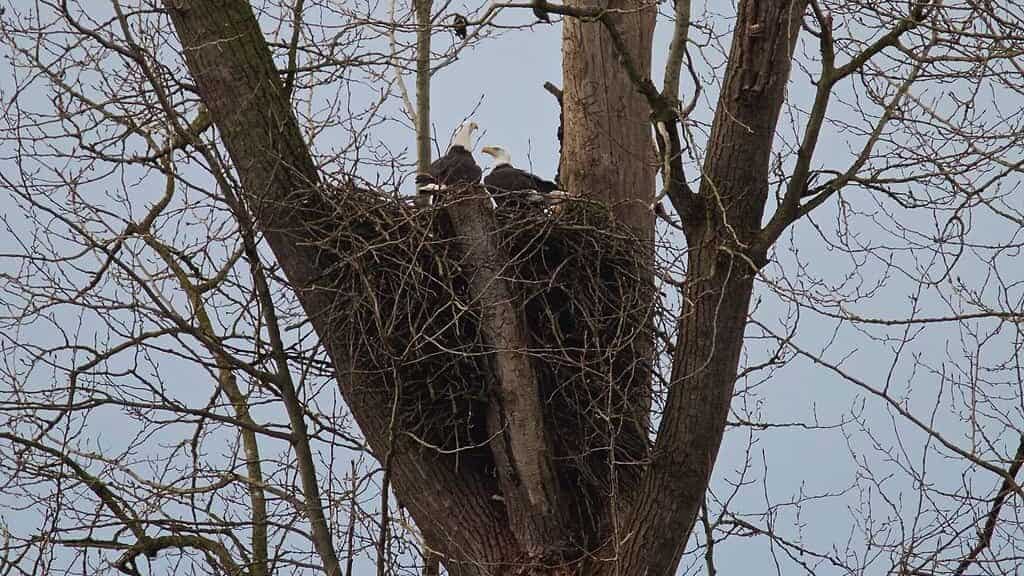
Extensive wetland ecosystems, particularly those with scattered tall trees rising above marshes or swamps, attract nesting bald eagles due to their biological productivity and relative isolation. These wetland environments offer abundant food resources beyond just fish, including waterfowl, small mammals, and reptiles. The diverse diet available in wetlands provides eagles with nutritional security, especially important during the demanding nesting season.
Florida’s Everglades and the vast wetland complexes of the Mississippi River Delta host substantial bald eagle nesting populations. These areas combine the advantages of plentiful food with reduced human presence. Additionally, the complex network of waterways in these ecosystems creates natural barriers that help protect nests from disturbance and predation, contributing to higher nesting success rates.
Old-Growth Forests

Old-growth forests, particularly those adjacent to large bodies of water, provide ideal nesting habitat for bald eagles. These ancient forests feature massive trees with strong, broad branches capable of supporting the eagles’ enormous nests. The structural diversity of old-growth forests also creates beneficial microclimates and offers multiple perching options within the territory, which eagles use for hunting, resting, and keeping watch over their domain.
The Pacific Northwest’s remaining old-growth forests, particularly those along coastal areas and river systems, support significant eagle nesting populations. In these ecosystems, trees like Douglas firs and Sitka spruce can reach heights of over 200 feet, giving eagles commanding views of their surroundings. The preservation of these ancient forests has been crucial for maintaining healthy eagle populations in regions where they traditionally nested.
Secluded Lakes
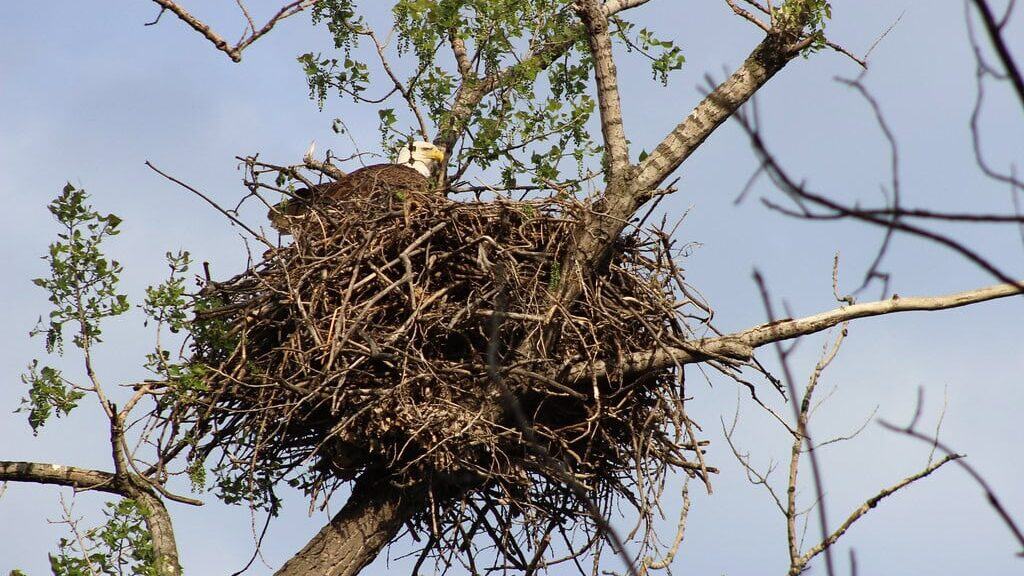
Inland lakes, especially those surrounded by mature forests and minimal human development, represent prime nesting habitat for bald eagles across North America. These secluded lake environments combine excellent fishing opportunities with reduced disturbance, creating ideal conditions for raising young eagles. Lakes with irregular shorelines, islands, and varied depths tend to support more diverse fish populations, making them particularly attractive to nesting eagles.
The northern lakes region spanning Minnesota, Wisconsin, Michigan, and into Canada hosts numerous nesting eagle pairs who take advantage of these pristine habitats. Eagles nesting around lakes typically select trees that provide both a clear view of the water and quick access for hunting. During winter, they may remain near lakes with areas of open water or relocate to rivers or coastal areas where fishing remains possible despite ice cover.
Protected Bays and Estuaries

Sheltered bays, coves, and estuaries where rivers meet the sea create productive ecosystems that attract nesting bald eagles. These transitional environments support diverse fish species and offer relatively calm waters for efficient hunting. The mixing of fresh and salt water in estuaries creates particularly rich feeding grounds, supporting abundant prey for eagle families throughout the breeding season.
The Chesapeake Bay, Puget Sound, and the estuaries of Alaska’s rivers host significant concentrations of nesting eagles. These protected waterways often feature mature trees along their shores that provide suitable nesting sites with commanding views. Additionally, the varied hunting opportunities in these environments—from shallow-water fishing to scavenging along shorelines—allow eagles to adapt their feeding strategies as conditions change throughout the year.
River Corridors

Major river systems with healthy riparian forests serve as important nesting corridors for bald eagles across North America. These linear habitats provide essential connectivity between populations and offer reliable food sources as rivers concentrate fish and other prey. Eagles nesting along rivers typically select the tallest trees on banks or bluffs overlooking the water, providing them with excellent hunting visibility.
The Mississippi, Missouri, Columbia, and other major river systems support substantial eagle nesting populations. These waterways not only provide food but also serve as important migration routes and connectivity corridors between eagle populations. During winter, portions of these rivers that remain ice-free due to current or human activities become critical feeding areas, sometimes attracting dozens or even hundreds of eagles to particularly productive locations.
Heavily Developed Areas

Bald eagles typically avoid nesting in heavily developed urban and suburban environments due to several factors that compromise their nesting success. The constant noise, light pollution, and human activity in densely populated areas create stress for these naturally wary birds. Additionally, developed landscapes often lack the combination of suitable tall trees and productive nearby waterways that eagles require for successful breeding.
The few exceptions to this rule—eagles that do nest in urban settings—typically occur in cities with significant water features and remaining patches of mature trees, such as along Seattle’s Lake Washington or near Minnesota’s urban lakes. These urban-adapted eagles have demonstrated remarkable tolerance for human activity but remain the exception rather than the rule. Conservation efforts in urban areas often focus on preserving riparian buffers and mature trees to maintain potential nesting habitat.
Areas With Frequent Human Disturbance

Locations with consistent human presence and activity, such as popular recreational areas, busy marinas, and heavily trafficked waterways, are typically avoided by nesting bald eagles. Eagles are particularly sensitive to disturbance during the early nesting period when they’re establishing territories and beginning incubation. Human activities like boating, hiking, or construction work near potential nest sites can cause eagles to abandon nesting attempts entirely.
Research has shown that different types of human activities affect eagles to varying degrees, with unpredictable movements and loud noises causing more disturbance than consistent, predictable patterns. This is why buffer zones and seasonal restrictions around active eagle nests have become important management tools. The legal protection of nesting sites under the Bald and Golden Eagle Protection Act establishes minimum buffer distances to limit disturbance during critical nesting periods.
Contaminated Habitats

Areas with significant environmental contamination, particularly water bodies affected by pollutants that bioaccumulate in fish, are often abandoned by nesting eagles. The bald eagle’s position at the top of the aquatic food chain makes it particularly vulnerable to environmental toxins. Historically, contamination from DDT and other persistent chemicals led to catastrophic reproductive failures in eagle populations across North America, driving the species toward extinction before DDT was banned in 1972.
Today, eagles continue to avoid or experience reduced nesting success in areas contaminated with heavy metals, PCBs, and other industrial pollutants. These chemicals can affect egg shell thickness, embryo development, and chick survival. The eagles’ sensitivity to environmental quality makes them important indicator species, with their presence or absence often reflecting the overall health of an ecosystem.
Areas With Limited Food Resources
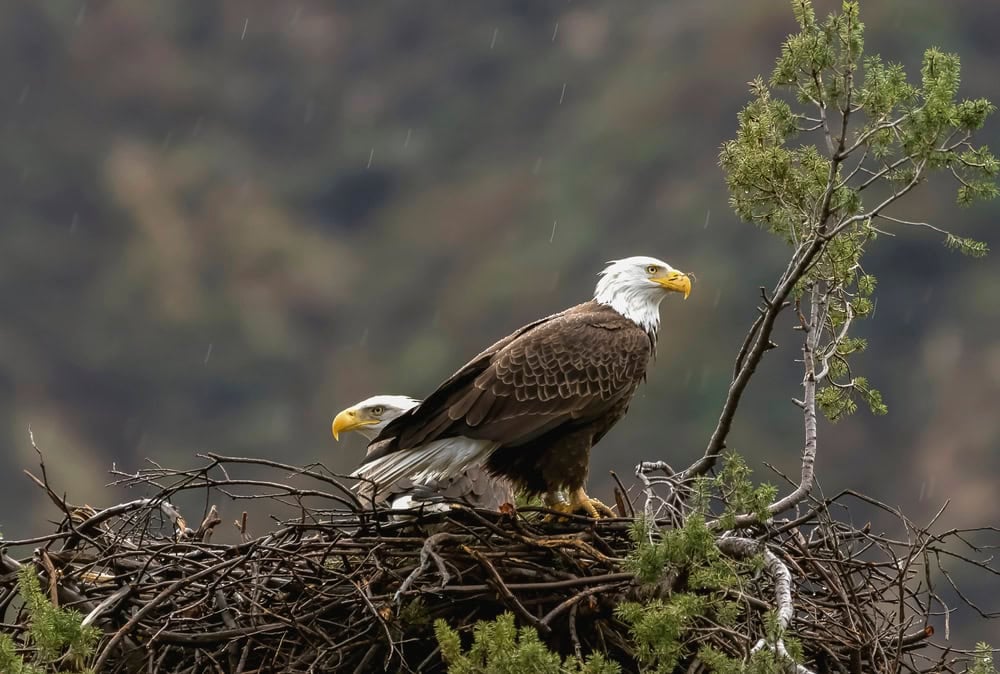
Bald eagles abandon or avoid nesting in locations where food resources are scarce or unreliable, regardless of the availability of suitable nesting trees. A breeding pair of eagles requires substantial food to successfully raise their young, with some estimates suggesting they need to catch 1-2 pounds of fish daily during the nesting season. Areas with depleted fish stocks, whether from overfishing, pollution, or habitat degradation, cannot support breeding eagles.
The crucial link between food availability and nesting success explains why eagles concentrate around productive waters and may abandon previously used territories when prey populations decline. Conservation efforts for eagles must therefore address not only the protection of nesting sites but also the health of the aquatic ecosystems that provide their food. Fishery management, water quality improvement, and habitat restoration all contribute to creating conditions where eagles can successfully nest and reproduce.
Regions With Few Suitable Trees

Open landscapes with few or no tall trees present significant challenges for nesting bald eagles. In the Great Plains, extensive agricultural areas, and regions where forests have been heavily harvested, eagles struggle to find adequate nesting structures. While they occasionally adapt by nesting on cliffs or man-made structures, these alternatives are not always available or suitable, leading eagles to avoid these tree-poor regions for nesting purposes.
This limitation explains why eagle nesting density tends to be lower in prairie states compared to forested regions with abundant waterways. Conservation initiatives in these areas often include protecting existing large trees near water and sometimes installing artificial nesting platforms to provide alternatives. The eagles’ dependence on large trees makes forest management practices that preserve potential nest trees an important component of long-term conservation strategies.
Areas Prone to Severe Weather Events

Locations regularly impacted by extreme weather events, such as hurricanes, tornados, or intense windstorms, may be avoided or abandoned by nesting bald eagles. These powerful birds generally construct their nests to withstand normal weather conditions, but catastrophic storms can destroy even the most robust eagle nests. After experiencing nest failure due to weather, eagles may relocate to more sheltered locations within their territory or abandon the area entirely.
Coastal regions along the Gulf of Mexico and Atlantic seaboard, despite offering excellent fishing opportunities, can present challenges for nesting eagles due to hurricane risk. Climate change may exacerbate this issue as severe weather events become more frequent and intense. Some eagles appear to select nesting locations that offer some protection from prevailing storm directions, such as trees on the leeward side of hills or in sheltered valleys, demonstrating their adaptability to local conditions.
Understanding Eagle Nesting for Conservation

Recognizing the specific habitat requirements and preferences of nesting bald eagles is crucial for effective conservation of this iconic species. Despite their remarkable recovery from the brink of extinction, bald eagles continue to face challenges from habitat loss, environmental contamination, climate change, and human disturbance. Conservation strategies that protect both preferred nesting habitats and the ecosystems that support them are essential for ensuring the continued success of this species.
The bald eagle’s specific nesting preferences—favoring tall trees near productive waters in relatively undisturbed areas—highlight the importance of preserving riparian corridors, protecting water quality, and maintaining mature forest stands. Their avoidance of heavily developed areas, contaminated habitats, and locations with frequent disturbance demonstrates their ongoing vulnerability despite legal protections. By understanding what makes an ideal eagle nesting habitat, conservation efforts can be more effectively targeted to support not just eagles, but the entire ecosystems upon which they depend.
As human development continues to transform landscapes across North America, creating and maintaining the conditions necessary for successful eagle nesting will require ongoing commitment from conservation organizations, government agencies, and private landowners. The story of the bald eagle—from near-extinction to recovery—stands as a powerful reminder of both our capacity to harm and our ability to restore nature when we understand and respect the needs of wildlife. Their continued presence in our skies depends on our willingness to ensure they always have suitable places to raise the next generation.

From exploring the marine wonders in the Azores and witnessing the vast savannas of Kenya, to delving deep into the rich biodiversity of South Africa and traversing iconic landscapes in Australia and the US like Yellowstone, Chris's experiences are vast.
With a penchant for diving alongside sharks, the ocean holds a special place in his heart.
Through his academic insights, he champions wildlife conservation, striving with 'Animals Around The Globe' to cultivate a profound connection between humans and animals, enhancing our mutual appreciation.
Connect with him at Feedback@animalsaroundtheglobe.com.
- The Role of Giant Pandas in U.S. (China Diplomacy) - July 15, 2026
- These Psychedelic Sea Slugs Steal Venom and Glow Neon Bright - July 15, 2026
- Orcas of the Pacific Northwest: A Struggle for Survival - July 15, 2026