


The Saiga Antelope, with its peculiar appearance and historical significance, roams the vast steppes of Central Asia. Known for its distinctive, oversized nose, this unique animal has a story deeply intertwined with survival strategies developed over millions of years. But the most astonishing feature that sets the Saiga Antelope apart is its remarkable nose, which functions as a sophisticated natural air filter, playing a crucial role in its survival.
Anatomy of the Saiga Antelope’s Nose

The Saiga Antelope’s nose is not just an odd-looking structure; it’s a marvel of evolution tailor-made for life in harsh environments. This fleshy snout can be likened to a personal climatic control system. Its large, downward-pointing structure contains a complex network of airways and mucous membranes that work together to perform multiple essential functions.
The anatomy of the snout is designed to filter, warm, and humidify the dry, dusty air of the Eurasian steppe. The convoluted nasal chambers increase the surface area for air processing, allowing efficient removal of dust and other particulates. This ability is crucial for saigas, especially during massive migrations that can stir up large amounts of dust and debris.
Surviving the Seasons

The steppe ecosystems, where the Saiga Antelope thrives, are marked by dramatic seasonal changes, including extremely cold winters and hot, dry summers. The Saiga’s nose is a perfect adaptation to these conditions. During winter, the nasal passages warm up the frigid air before it enters the lungs, reducing heat loss and preventing hypothermia.
Conversely, in the scorching heat of summer, the snout helps to regulate body temperature by cooling the hot air before it reaches the lungs. This dual functionality ensures that the Saiga can maintain homeostasis, irrespective of the external temperature extremes.
The Saiga’s Group Behaviour and Nose Functionality
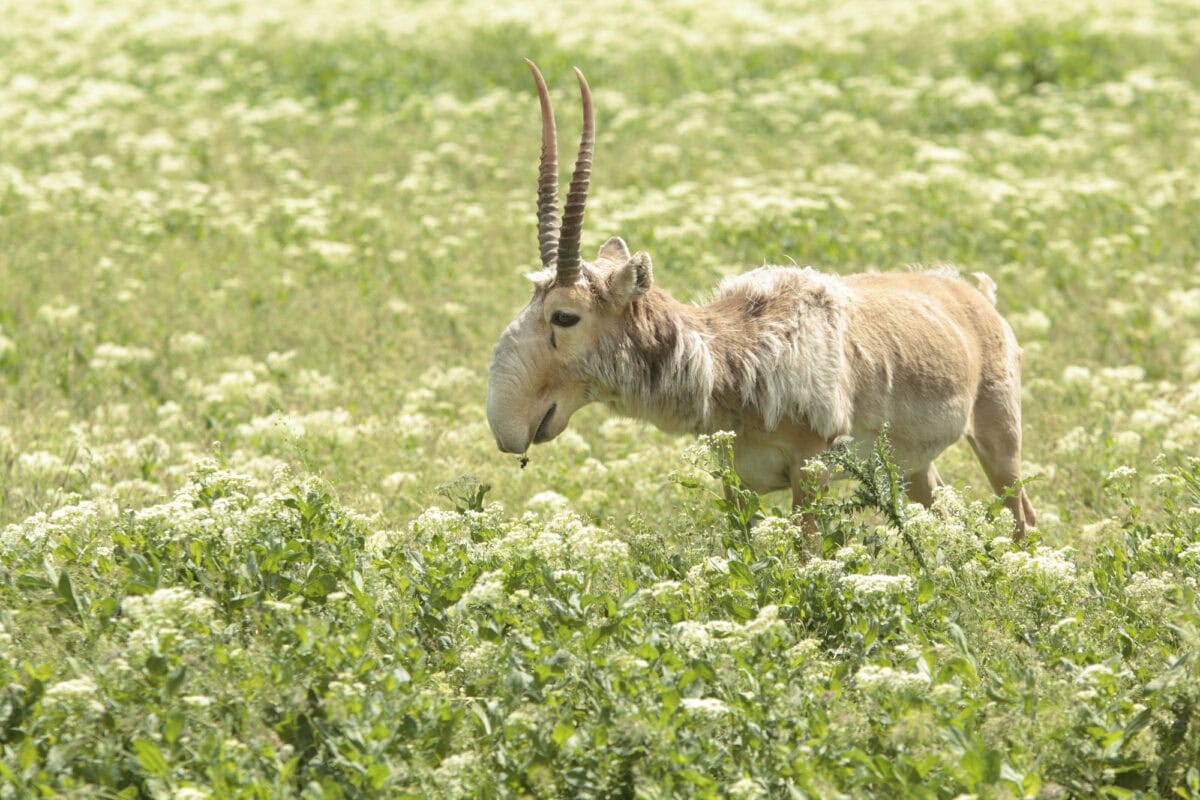
Saigas are known for their social behaviour, often moving in large herds that migrate across the steppes. During these migrations, dust clouds are a common hindrance. The saiga’s nose acts as a filter to mitigate the respiratory challenges posed by these dusty conditions. The dust-trapping mechanisms minimize the risk of respiratory infections and ensure that these animals can keep up with the herd without succumbing to the intense physical demands of migration.
Evolution’s Design A Heritage of Survival

The Saiga Antelope has been roaming the planet since the last Ice Age, demonstrating not just survival but adaptability in the face of changing environments. The unique nose of the Saiga is a testament to the marvels of evolutionary design, where natural selection has honed a feature superbly adapted to the requirements of their habitat, ensuring their continued existence through millennia.
While the Saiga nose is an extraordinary adaptation, it also serves as a reminder of the delicate balance within ecosystems and the evolutionary pressures exerted by changing climates and environments over time. Their evolutionary journey underscores how specialized adaptations can ensure survival in the most challenging conditions.
Conservation Efforts and Challenges

Despite their incredible adaptations, Saiga Antelopes face significant threats from poaching, habitat loss, and disease outbreaks, which have severely reduced their populations in recent decades. Conservation efforts are underway to protect these remarkable creatures, but challenges remain significant.
Protecting the Saiga Antelope involves addressing poaching, preserving their natural habitats, and mitigating the effects of climate change. Promoting awareness of the species’ vulnerability can help garner support for conservation initiatives aimed at sustaining populations and securing their future on the Eurasian steppes.
Conclusion: A Look Towards the Future

The Saiga Antelope, with its fascinating nasal adaptation, continues to intrigue scientists and animal lovers alike. Its nose, nature’s perfect air filter, showcases the incredible adaptability of life on Earth. As we strive to conserve these ancient creatures, understanding and appreciating their unique biology can inspire a greater commitment to preserving the diversity and complexity of our natural world.
The future of the Saiga Antelope lies in our hands, and their survival is a testament to the intricate web of life that we are all part of—a web that deserves our utmost respect and protection.

From exploring the marine wonders in the Azores and witnessing the vast savannas of Kenya, to delving deep into the rich biodiversity of South Africa and traversing iconic landscapes in Australia and the US like Yellowstone, Chris's experiences are vast.
With a penchant for diving alongside sharks, the ocean holds a special place in his heart.
Through his academic insights, he champions wildlife conservation, striving with 'Animals Around The Globe' to cultivate a profound connection between humans and animals, enhancing our mutual appreciation.
Connect with him at Feedback@animalsaroundtheglobe.com.
- Narwhals Use Their Tusks to Stun Fish - June 29, 2026
- The Lizard That Brought Fire: Aboriginal Australian Legends - June 29, 2026
- 9 Animals That Have an Extra Sense Humans Can’t Even Imagine - June 29, 2026