

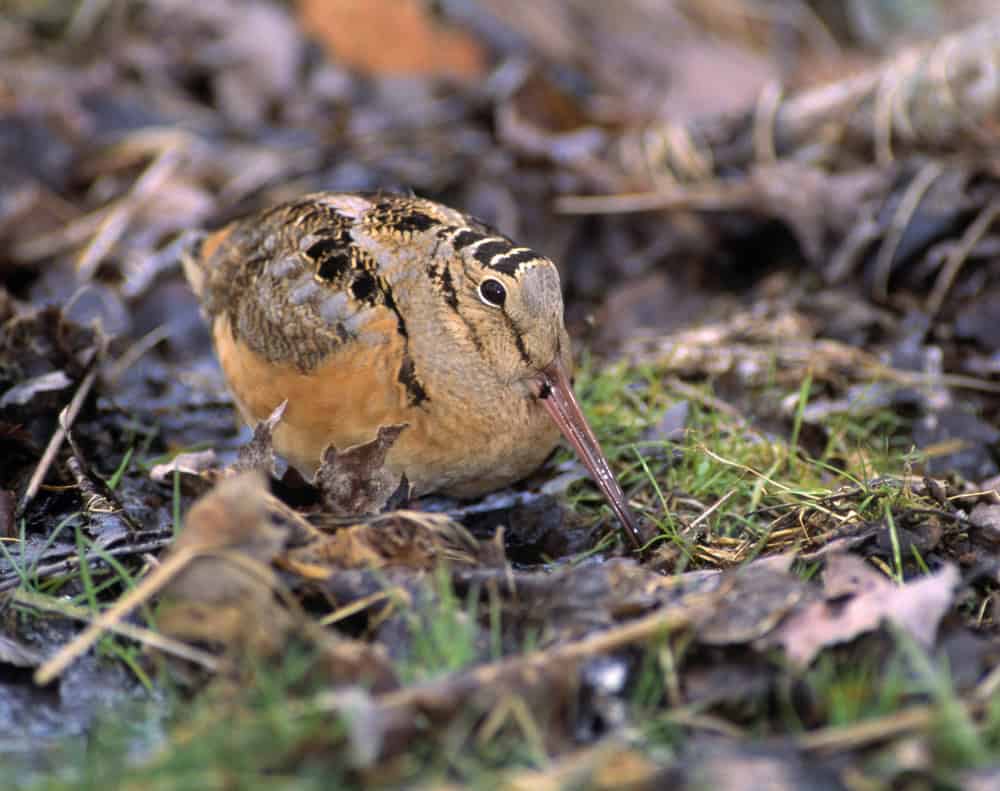
The woodcock, an unassuming bird with its cryptic plumage and inconspicuous demeanor, may not immediately capture one’s imagination. However, come springtime, the male woodcock breaks from its secretive lifestyle to put on one of nature’s most spectacular avian displays: a dazzling mating dance that captivates bird enthusiasts and scientists alike. Found predominantly in North America and parts of Eurasia, these woodland birds become nature’s aerial performers, executing a mating ritual as mysterious as it is mesmerizing.
An Introduction to the Woodcock

Belonging to the family Scolopacidae, the woodcock is known for its chunky body and long, slender bill, adapted for probing into soft earth for invertebrates. Their brown, mottled plumage provides exceptional camouflage against the leaf-littered forest floor, making spotting one during the day quite a challenge. However, as dusk approaches, the male takes center stage, beginning a nightly performance that serves as both a courtship display and territory establishment.
The Mating Display: A Dance Above and Beyond

The woodcock’s mating dance is a multi-phased event that combines auditory and aerial elements. As the sun sets, the male woodcock stations himself in a chosen ‘singing ground,’ typically an open field or clearing that serves as the stage for his show. He begins with a series of ground-based ‘peents’—nasal, buzzy calls repeated every few seconds, which alert females and other males to his presence. These calls can last for several minutes, building anticipation for what is to come.
Following this auditory prelude, the woodcock takes flight, spiraling upwards into the darkening sky. As he ascends, his wings produce a series of musical, twittering chirps, created by the airflow over specially modified outer primary feathers. This ascent can reach heights of over 300 feet, a remarkable feat for the relatively small bird. At the peak of his climb, the male woodcock hovers briefly before descending in a zig-zag pattern back to the ground, vocalizing a series of melodious warbles during his return, reminiscent of a soft, birdlike chirruping tune.
The Significance of the Dance

The mating dance serves multiple crucial functions. For female woodcocks, it is a vital aspect of mate selection. The vigor and complexity of a male’s display can indicate his fitness, influencing her choice when picking a partner. Furthermore, the display helps males establish their territory, as these ritualistic performances are also a demonstration of dominance over both the space and any rival males in the vicinity.
Conservation and Observations

While woodcock populations currently maintain a stable status, they are subject to pressures from habitat destruction and climate change. Wetlands and young forests, key components of the woodcock’s habitat, are increasingly threatened by human development. Conservation efforts focus on habitat management practices that preserve these vital ecosystems.
For those interested in observing this striking behavior, early spring evenings offer the best opportunity. Equipped with patience and a keen ear, observers can witness this unique spectacle by venturing close to the woodcock’s favored habitats at dusk. It remains one of birdwatching’s truly breathtaking experiences, showcasing a natural wonder that combines the allure of mystery with the elegance of an age-old dance.
Conclusion

The woodcock’s mating dance stands as a testament to the intricate rituals of the natural world, a choreographed blend of sound and movement that signals life’s perpetual rhythm. It not only provides insight into the wonders of avian behavior but also an opportunity to reflect on the delicate balance of ecosystems, where even the smallest actions carry profound implications. As dusk transforms to night and the peents start anew, the woodcock’s aria echoes the promise of spring and the continuity of its species.

From exploring the marine wonders in the Azores and witnessing the vast savannas of Kenya, to delving deep into the rich biodiversity of South Africa and traversing iconic landscapes in Australia and the US like Yellowstone, Chris's experiences are vast.
With a penchant for diving alongside sharks, the ocean holds a special place in his heart.
Through his academic insights, he champions wildlife conservation, striving with 'Animals Around The Globe' to cultivate a profound connection between humans and animals, enhancing our mutual appreciation.
Connect with him at Feedback@animalsaroundtheglobe.com.
- What Happens If Fireflies Stop Glowing? - July 21, 2026
- Coyotes Are Thriving in Every U.S. State — Even New York City - July 21, 2026
- The Best Cat Breeds for Highly Empathetic Owners - July 21, 2026