


The bald eagle, America’s national bird, represents freedom, strength, and majesty. These magnificent raptors possess remarkable abilities that showcase their dominance in the avian world. With wingspans reaching up to 7.5 feet and powerful talons that can exert over 400 pounds of pressure per square inch, bald eagles demonstrate their impressive power in various ways throughout their lives. From hunting techniques to territorial displays, these birds embody raw natural strength and calculated precision. In this article, we’ll explore thirteen remarkable instances where bald eagles demonstrate their extraordinary power, highlighting why these birds have captivated human imagination for centuries and earned their place as symbols of power and freedom.
13. Carrying Prey Several Times Their Weight

Bald eagles regularly demonstrate astonishing strength by lifting and carrying prey that can weigh nearly as much as they do. While an average adult bald eagle weighs between 8-14 pounds, they’ve been documented lifting prey weighing up to 15 pounds during short flights. In 2021, wildlife photographers in Maine captured footage of a bald eagle lifting a fully grown fox kit from the ground and carrying it several hundred yards. The most impressive documented case involved an eagle in Alaska that managed to lift a 15-pound salmon from the water, though it could only fly with it for about 100 yards before needing to land. This remarkable strength-to-weight ratio allows eagles to exploit food sources that would otherwise be inaccessible, demonstrating the evolutionary advantage of their powerful flight muscles and specialized skeletal structure.
12. Plunging at Speeds Over 100 MPH

When hunting, bald eagles showcase their power through breathtaking high-speed dives. These calculated hunting strikes involve the eagle folding its wings back and plummeting toward prey at speeds exceeding 100 miles per hour. Using their exceptional eyesight—about four to eight times sharper than human vision—they can spot fish swimming near the water’s surface from heights of up to one mile. In a particularly impressive display documented by researchers at Yellowstone National Park, a female bald eagle was radar-tracked diving at 108 mph before successfully grabbing a cutthroat trout. The bird’s specialized anatomy, including reinforced wing structures and aerodynamic feathers, allows it to withstand the tremendous forces generated during these high-velocity dives while maintaining precise control throughout the hunting sequence.
11. Building Massive Nests That Last Generations

The architectural prowess of bald eagles stands as a testament to their physical strength and determination. These birds construct the largest nests of any North American bird, with structures that can reach truly monumental proportions. The record-holding nest, documented in St. Petersburg, Florida, measured 9.5 feet in diameter, 20 feet deep, and weighed over two tons after years of continuous additions. Eagles transport large sticks and branches—some weighing several pounds and measuring up to 6 feet long—flying considerable distances to incorporate them into their nests. A single pair may move over a ton of materials during initial construction, adding 1-2 feet of new material each year the nest remains active. These impressive structures serve as multi-generational homes, with some nests having been continuously occupied for over 30 years, showcasing the eagles’ physical strength in creating lasting monuments to their species’ survival.
10. Talon Strength That Crushes Prey Instantly

The crushing power of a bald eagle’s talons represents one of nature’s most effective hunting weapons. These razor-sharp claws can exert pressure exceeding 400 pounds per square inch—approximately ten times the strength of an average human hand grip. When hunting, the impact force of an eagle striking its prey often kills the target instantly. Research conducted at the University of Montana documented bald eagles piercing the skulls of medium-sized mammals with single strikes. In one remarkable observation from Washington’s Olympic Peninsula, researchers witnessed a bald eagle’s talons puncturing the shell of a sea turtle—material tough enough to resist most predators. The specialized tendon locking mechanism in eagles’ feet allows them to maintain this crushing grip without muscular fatigue, enabling them to carry struggling prey for extended periods without releasing their deadly hold.
9. Stealing Prey from Other Predators

Bald eagles frequently demonstrate their dominant position in the food chain through kleptoparasitism—the practice of stealing food from other predators. This behavior, particularly common during winter months when food becomes scarce, showcases both the eagle’s physical power and strategic intelligence. In Alaska’s Chilkat Valley, researchers documented bald eagles regularly forcing adult river otters to abandon their catches. Even more impressively, groups of eagles have been observed systematically harassing osprey, forcing these skilled fishing birds to drop their catches mid-flight. Perhaps most boldly, bald eagles occasionally challenge much larger brown bears for salmon along Alaskan rivers. In 2018, wildlife photographers in British Columbia captured footage of a single adult eagle successfully driving three separate wolves away from a deer carcass, demonstrating remarkable courage and proving that the eagle’s reputation for power extends beyond mere physical strength to include intimidation and strategic thinking.
8. Surviving Extreme Weather Conditions

The physiological power of bald eagles is dramatically displayed through their ability to endure and thrive in extreme weather conditions. Unlike many birds that migrate to escape harsh winters, bald eagles often remain in northern territories year-round, withstanding temperatures as low as -20°F. Their specialized feather structure, including dense insulating underplumage, allows them to maintain body temperature even when perched on ice for hours. During a documented blizzard in Minnesota in 2019, researchers observed a nesting female remaining on her eggs despite being completely covered in several inches of snow, maintaining her 105°F body heat to keep her eggs viable. In summer conditions, eagles can endure scorching temperatures exceeding 100°F by adjusting their metabolism and employing specialized breathing techniques that cool their blood. This remarkable adaptability showcases the eagle’s physiological power and explains their successful distribution across diverse North American climates from Alaska to Florida.
7. Aerial Combat Displays

Among the most spectacular demonstrations of bald eagle power are their aerial combat displays, particularly during territorial disputes or courtship rituals. These aerial battles involve complex flight maneuvers that showcase extraordinary strength, agility, and precision. The most dramatic display, known as “cartwheeling,” involves two eagles locking talons in mid-air, then spinning rapidly while falling, sometimes dropping thousands of feet before separating just above the ground or water. In 2017, wildlife observers in British Columbia documented a cartwheeling display that lasted over 30 seconds, with the eagles completing approximately 20 full rotations while falling nearly 2,000 feet. During these high-stakes aerial contests, eagles can generate forces exceeding 8G—similar to what fighter pilots experience in extreme maneuvers. These displays serve as powerful statements of physical dominance and flying skill, resolving territorial conflicts without serious injury while demonstrating the eagles’ mastery of three-dimensional aerial space.
6. Population Recovery from Near Extinction

Perhaps the most profound demonstration of the bald eagle’s power is the species’ remarkable recovery from the brink of extinction—showcasing collective resilience rather than individual strength. By 1963, hunting, habitat destruction, and DDT poisoning had reduced the lower 48 states’ bald eagle population to just 417 nesting pairs. Following protection under the Endangered Species Act and the ban of DDT, bald eagles demonstrated extraordinary biological resilience. Their population rebounded at rates that surprised even wildlife experts, with pairs increasing by approximately 8% annually through the 1990s. By 2007, the population had recovered sufficiently to be removed from the endangered species list, and current estimates place their numbers above 316,700 individuals across North America. This demographic recovery represents a powerful testament to the species’ adaptability, reproductive capacity, and ability to reclaim territories once human pressures were reduced. The bald eagle’s comeback stands as one of wildlife conservation’s greatest success stories and demonstrates the species’ remarkable power to persist despite near-extinction.
5. Breaking Through Ice to Reach Prey
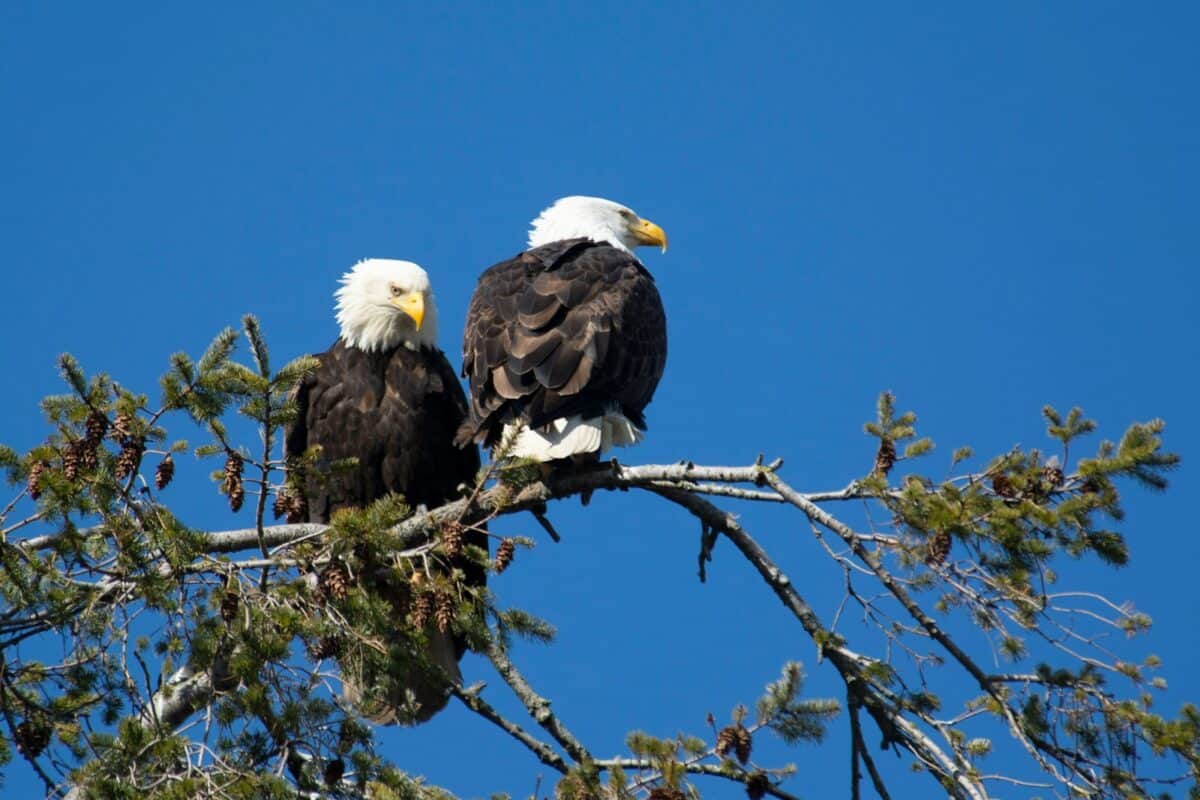
When winter transforms lakes and rivers into icy barriers between eagles and their aquatic prey, these powerful birds showcase remarkable problem-solving abilities combined with brute strength. Bald eagles have been documented breaking through ice up to two inches thick to access fish swimming below. In Minnesota’s Lake Pepin, researchers observed an adult female repeatedly striking the same section of ice with her powerful talons, eventually creating a hole large enough to reach a fish trapped below. The force required to break through solid ice has been estimated at over 200 pounds per square inch of impact pressure. In another impressive display along the Mississippi River, wildlife photographers captured footage of a bald eagle using its powerful wings to hammer repeatedly at thin ice, creating concentric fracture lines that eventually gave way. These behaviors demonstrate not only the eagle’s physical power but also its cognitive abilities in identifying prey beneath opaque surfaces and developing strategies to access food that would otherwise remain inaccessible during winter months.
4. Defending Territory Against Multiple Intruders

The territorial defense behaviors of bald eagles provide some of the most dramatic demonstrations of their power and dominance. Established breeding pairs aggressively defend territories that can span 1-2 square miles, with some documented cases of eagles successfully repelling multiple intruders simultaneously. In a remarkable incident recorded by researchers in the Chesapeake Bay area, a single male eagle successfully drove away three separate challengers within a 30-minute period, engaging in aerial combat with each before returning to his perch. Eagles defend these territories not only against other eagles but against various large birds and even mammals that might threaten their nesting areas. Their defensive displays include vocalizations that can be heard over a mile away, intimidation flights that showcase their 7-foot wingspans, and if necessary, direct physical confrontation. The eagles’ willingness to defend territory against multiple challengers, often significantly larger than themselves, demonstrates their fierce territorial instinct and the effectiveness of their power-based intimidation strategies.
3. Hunting Cooperative Prey Species
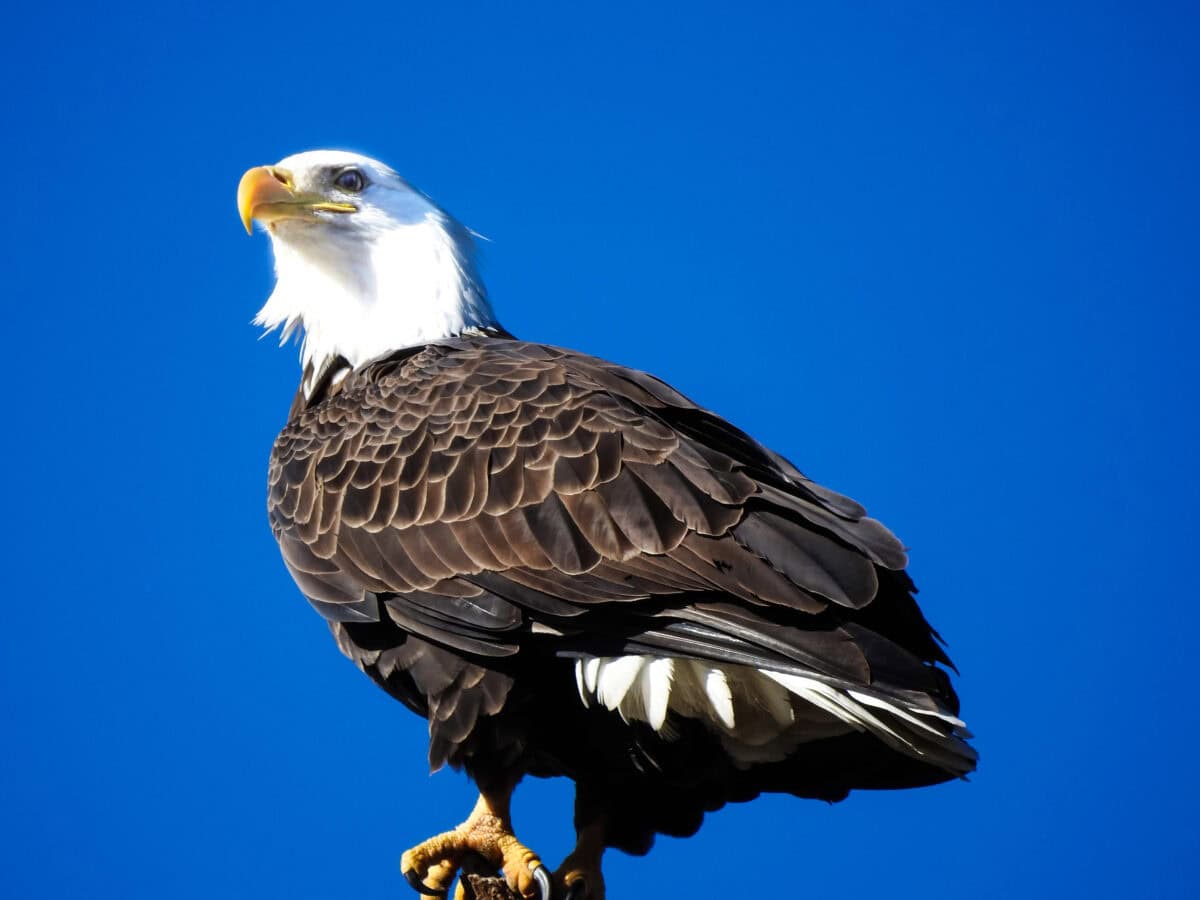
Bald eagles occasionally demonstrate their hunting prowess by targeting animals that themselves operate in coordinated groups—a challenge requiring significant power and strategic thinking. One of the most impressive examples occurs when eagles hunt flocks of waterfowl. In the wetlands of the Pacific Northwest, researchers have documented bald eagles diving into tightly packed flocks of ducks, creating chaos that allows them to isolate and capture disoriented individuals. Even more remarkably, eagles have been observed hunting colonial seabirds by repeatedly swooping over nesting colonies, forcing adult birds to abandon their protective formations. During a 2019 study in the Aleutian Islands, researchers recorded a single bald eagle successfully capturing six murres in succession from a densely packed nesting cliff. The eagle’s ability to disrupt the defensive strategies of these cooperative prey species demonstrates not only physical power but also tactical intelligence—implementing hunting strategies that systematically break down the coordinated defenses that normally protect these prey animals from predation.
2. Surviving Serious Injuries

The physiological resilience of bald eagles represents an often overlooked form of power—the ability to recover from potentially life-threatening injuries. Wildlife rehabilitation centers regularly document cases of eagles surviving traumatic injuries that would prove fatal to many other species. In 2018, an adult female in Washington state was discovered with a compound fracture of her wing after a territorial battle. Despite the severity of the injury, which had exposed bone and damaged muscle tissue, the eagle made a complete recovery following surgery and rehabilitation, eventually returning to the wild and successfully breeding the following season. Even more remarkably, a male eagle in Alaska survived being struck by a vehicle, suffering a fractured skull and damaged eye. After six months of rehabilitation, the bird recovered enough vision to be released, though with permanent partial blindness. GPS tracking showed this eagle reclaiming his territory and successfully fishing despite his impairment. This extraordinary healing capacity demonstrates the eagle’s physiological power and helps explain the species’ evolutionary success despite facing numerous environmental hazards.
1. The Cultural Impact of Eagle Power

Perhaps the most enduring testament to the bald eagle’s power lies in its profound influence on human culture and symbolism. For thousands of years before becoming America’s national emblem in 1782, bald eagles held spiritual significance for numerous Indigenous North American cultures, who recognized the bird’s exceptional qualities. The eagle’s influence extends beyond symbolism to practical matters—the U.S. military has designed aircraft and weapons systems explicitly incorporating principles observed in eagle hunting techniques. The most powerful demonstration of this cultural impact may be how eagle imagery has transcended political divisions in an otherwise polarized nation. When the U.S. Fish and Wildlife Service announced the species’ recovery in 2007, support for continued eagle protection maintained over 90% approval across all political and demographic groups—an almost unprecedented consensus in American political life. This cultural power—the ability to unite diverse human populations around a single symbol of strength and freedom—may ultimately represent the most remarkable demonstration of the bald eagle’s influence, extending its power from the physical realm into the collective human consciousness.
Conclusion: The Enduring Power of America’s Bird

The bald eagle’s demonstrations of power extend far beyond their impressive physical capabilities, embodying a complex interplay of evolutionary adaptations, behavioral intelligence, and symbolic significance. From their ability to carry prey weighing nearly as much as themselves to their remarkable population recovery after facing extinction, these birds consistently prove themselves worthy of their status as one of nature’s most powerful avian predators. Their influence spans ecological systems where they maintain balance as apex predators, cultural frameworks where they symbolize freedom and strength, and conservation narratives where they represent one of wildlife management’s greatest success stories. As we continue to protect their habitats and study their remarkable abilities, bald eagles remain powerful ambassadors for wild America—living embodiments of natural power that continue to inspire awe, respect, and a deeper connection to the natural world.

As a little kid, I fell in love with nature, wildlife, and animals. Living in the USA, South Africa, Italy, China and Germany gave me the opportunity to discover the world's Wildlife. My favorite animals are Mountain Gorillas, Siberian Tigers, and Great White Sharks.
I'm a certified PADI Open Water Diver, went to Everest Base Camp and Trekked Gorillas in Uganda. I hold a Master of Science in Economics and Finance.
Please send any feedback to feedback@animalsaroundtheglobe.com
- 14 Earthquakes That Altered the U.S. Landscape - July 28, 2026
- The 12 Loudest Animals in the World Ranked - July 28, 2026
- Why the Aye-Aye Is Madagascar’s Strangest Primate - July 28, 2026