

Across the vast North American plains, a remarkable survival strategy has endured for thousands of years: the communal defense systems of bison herds. These magnificent mammals, once numbering in the tens of millions, have perfected the art of collective protection against predators and environmental challenges. The formation and maintenance of bison herds represent one of nature’s most fascinating examples of social organization for mutual benefit. From complex communication systems to strategic positioning of vulnerable members, bison display remarkable intelligence and cohesion in their herd dynamics. This article explores the intricate ways bison form and maintain their herds, highlighting how these social structures have been critical to their survival throughout evolutionary history.
The Evolutionary History of Herd Behavior
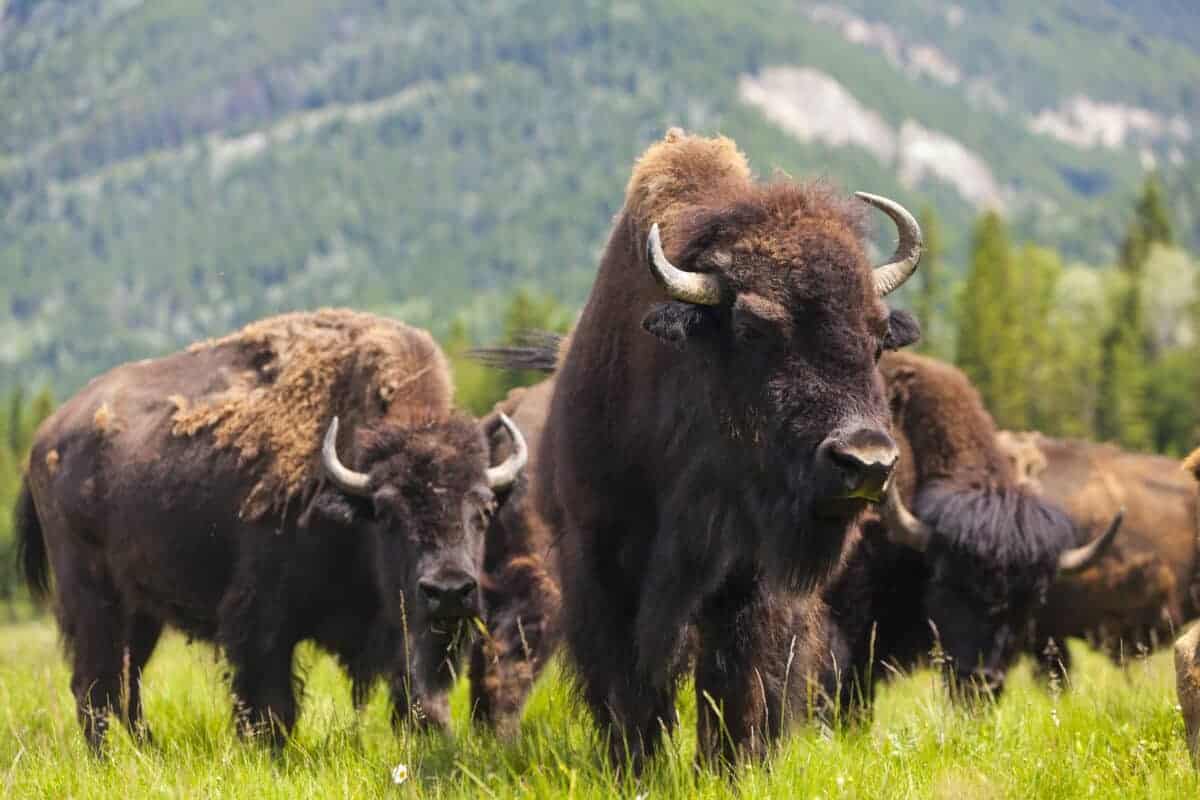
Bison have evolved their herding behavior over millions of years, with fossil records indicating that ancient bison species were already exhibiting social grouping as far back as 2 million years ago. The modern American bison (Bison bison) represents the culmination of this evolutionary development, with herding behaviors finely tuned to the specific challenges of North American ecosystems. Research suggests that these complex social structures developed primarily in response to predation pressure from wolves, bears, and historically, large cats. The evolutionary advantage was clear: bison that stayed together had significantly higher survival rates than solitary individuals. This selection pressure reinforced herding behaviors, eventually encoding them into the species’ genetic makeup and instinctual responses. Today’s bison exhibit herding behaviors remarkably similar to those observed in ancient bison preserved in natural tar pits and other paleontological sites.
The Social Structure of Bison Herds

Bison herds exhibit a sophisticated social organization that varies seasonally and according to demographic factors. The basic herd structure typically includes matrilineal groups of females and their offspring, with adult males either forming separate bachelor groups or roaming as solitary individuals except during the breeding season. Research conducted at Yellowstone National Park has documented herd sizes ranging from just a few individuals to massive congregations exceeding 1,000 animals during certain times of the year. Within these herds, complex social hierarchies determine access to resources, with dominant females (often older, experienced cows) frequently leading group movements and decision-making. This matriarchal leadership proves crucial during migration, when facing predators, or when accessing limited resources. Scientists have observed that these dominant females possess extensive knowledge of the landscape, including migration routes, water sources, and optimal grazing areas – information that benefits the entire herd.
Communication Within the Herd

Effective communication forms the backbone of bison herd cohesion. Bison utilize a diverse repertoire of vocalizations, physical gestures, and chemical signals to coordinate group activities. Their communication system includes low-frequency grunts that can travel considerable distances across open plains, alerting distant herd members to potential threats or resource discoveries. Researchers have identified at least 12 distinct vocalizations that serve different functions within the herd. Beyond vocal communication, bison rely heavily on body language, with specific postures indicating alarm, aggression, submission, or reproductive readiness. Tail position is particularly informative, with an elevated tail often signaling potential danger and triggering heightened vigilance throughout the herd. Chemical communication through scent marking and hormone detection also plays a crucial role, especially during mating season when bulls use scent to assess female reproductive status. This multi-modal communication system enables rapid information sharing that benefits the entire social group, particularly when coordinating defensive formations against predators.
The Protective Circle: Defense Formation
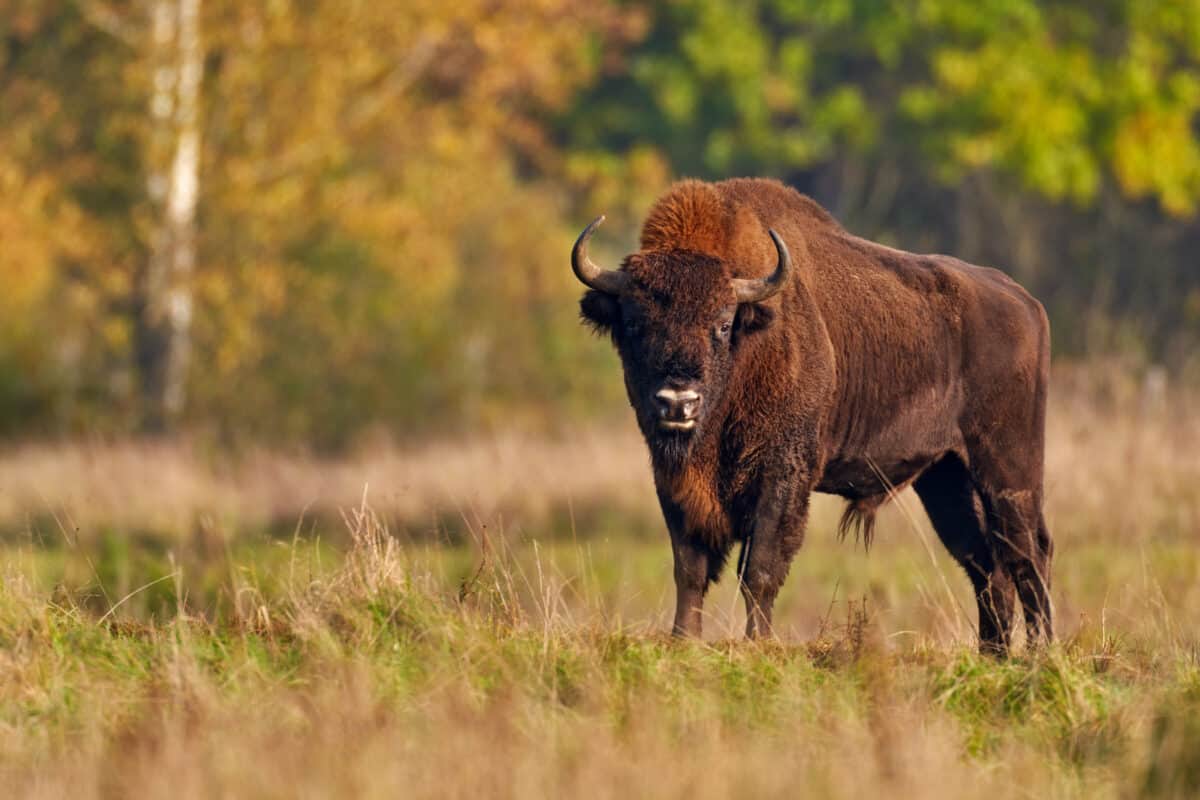
When faced with predators like wolves or historically, bears and large cats, bison implement one of nature’s most effective defensive strategies: the protective circle. This formation involves adult bison positioning themselves in an outward-facing ring around the herd’s most vulnerable members—calves and pregnant or nursing females. A study conducted in Yellowstone documented that bison can form this protective formation within seconds of detecting a threat. The circle presents an intimidating barrier of massive bodies, sharp horns, and powerful hooves to any potential attacker. Adult bulls, weighing up to 2,000 pounds, typically position themselves at the points of greatest threat, using their superior size and strength as a deterrent. This strategic positioning significantly reduces predation success rates, with research indicating that properly formed defensive circles can reduce calf predation by up to 80% compared to disorganized groups. The formation’s effectiveness lies in its elimination of vulnerable access points and the multiplication of defensive capacity, making a coordinated attack extremely dangerous for predators.
Collective Vigilance and Predator Detection

Bison herds demonstrate remarkable efficiency in predator detection through a system of distributed vigilance. By living in groups, individual bison benefit from the combined alertness of dozens or even hundreds of herd mates. Studies have shown that larger herds can detect approaching predators significantly earlier than smaller groups, providing crucial extra seconds for defensive preparations. This vigilance system operates on the principle that while some herd members are feeding, others maintain scanning behavior, constantly monitoring the surroundings for threats. Researchers at the University of Nebraska documented that in herds of 50 or more individuals, at least 15% of the herd is actively vigilant at any given moment, creating a nearly continuous surveillance system. The effectiveness of this collective vigilance is further enhanced by the bison’s excellent sensory capabilities, including keen vision that can detect movement up to a mile away, acute hearing that can register the subtle sounds of predator movement, and a highly developed sense of smell capable of detecting wolf scent over tremendous distances. When a threat is detected, the alert bison communicates danger through specific alarm signals that rapidly cascade through the entire herd.
Seasonal Variations in Herd Size and Composition

Bison herds demonstrate remarkable flexibility in both size and composition throughout the year, adapting to changing environmental conditions and biological imperatives. During summer months, when resources are abundant, herds often fragment into smaller, more dispersed groups that can more efficiently exploit available vegetation. Research in the Badlands has documented summer herds averaging 20-60 individuals. This pattern shifts dramatically in winter, when herds consolidate into much larger groups, sometimes exceeding 1,000 animals in protected areas like Yellowstone. This winter aggregation serves multiple protective functions: concentrated foraging power to access snow-covered grasses, shared body heat during extreme cold, and enhanced defensive capability against wolf packs that become more aggressive during the lean winter months. The breeding season (rut) in July and August creates another significant shift in herd dynamics, with mature bulls that normally live apart joining the female herds to compete for mating opportunities. This temporary integration increases overall herd size while adding the defensive benefit of having the largest, most powerful individuals present during a period when younger calves are still vulnerable to predation.
The Role of Maternal Protection in Calf Survival
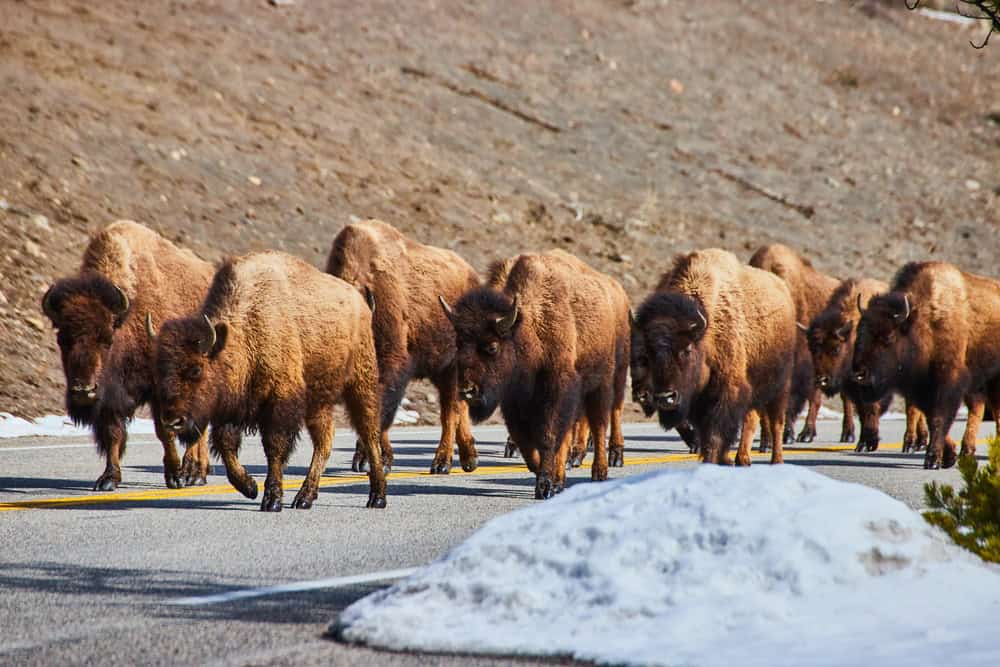
Maternal protection represents a crucial first line of defense for newborn bison calves, who are particularly vulnerable during their first few months of life. A female bison with a new calf displays extraordinarily protective behavior, positioning herself between the calf and any perceived threat. Studies conducted in Wind Cave National Park documented that mother bison will charge potential predators, including wolves and even human observers who approach too closely. This aggressive maternal defense is combined with the practice of calving synchrony, where many females in a herd give birth within a compressed timeframe, typically within a 4-6 week window in late spring. This synchronized birthing creates a “predator swamping” effect, where the sheer number of calves overwhelms the capacity of local predators to hunt them all, statistically improving survival rates across the herd. Additionally, mother bison teach their calves crucial skills for herd integration, including appropriate responses to alarm signals, proper positioning within the moving herd, and recognition of herd hierarchies. This maternal guidance ensures that young bison quickly learn the social behaviors essential for mutual protection within the larger herd structure.
Leadership Dynamics and Decision-Making

Contrary to popular assumptions about male dominance, bison herds typically follow female leadership when it comes to crucial survival decisions. Experienced matriarchs, usually older cows who have survived multiple seasons, often initiate and direct herd movements across the landscape. Research using GPS tracking collars on bison in the American Prairie Reserve revealed that these lead females determine when the herd will move to new grazing areas, choose migration routes, and locate water sources. This female leadership appears to be based on accumulated knowledge of the landscape rather than raw physical dominance. The herd’s acceptance of this leadership creates coordinated movement that benefits all members. Interestingly, studies have shown that decision-making often involves a form of “democratic” process, where direction changes only occur after a threshold number of adults orient themselves in a particular direction. This collective decision-making has been documented to produce more efficient resource utilization and improved predator avoidance compared to arbitrary movement patterns. During acute threat situations, however, leadership can shift rapidly to the most alert individual who first detects danger, regardless of their normal social status.
How Herd Size Affects Predator Defense Effectiveness

The relationship between bison herd size and predator defense effectiveness follows what ecologists call the “many eyes effect” – larger groups benefit from more vigilant individuals and earlier threat detection. Research conducted across multiple bison populations has established that predation rates per individual decrease significantly as herd size increases, following a non-linear relationship. A landmark study in Yellowstone documented that calves in small herds (fewer than 20 individuals) faced a predation risk nearly three times higher than calves in large herds (100+ individuals). This protective effect stems from several factors: improved predator detection through collective vigilance, the dilution effect (each individual representing a smaller statistical target), the confusion effect (predators struggle to isolate a single target amid many moving individuals), and the enhanced defensive capacity of multiple adults. However, there appears to be an upper threshold to these benefits. Studies suggest that herds exceeding approximately 200 individuals don’t gain significant additional predation protection, while potentially suffering from increased competition for forage. This balance between protection benefits and resource competition likely explains why bison herds naturally fragment when they grow beyond certain sizes, particularly during seasons of resource abundance.
How Bison Teach Protection Strategies to Calves

The transmission of protective behaviors from experienced bison to calves represents a fascinating blend of instinct and social learning. Newborn calves can stand within minutes of birth and begin following their mothers within hours, an instinctual behavior critical to their survival. However, the complex protective strategies that characterize bison herds require significant social learning. Researchers studying bison in Theodore Roosevelt National Park documented that calves learn appropriate positioning within the herd through a combination of maternal guidance and observational learning. When the herd moves, mothers consistently position their calves toward the center of the group, physically blocking them from drifting to vulnerable edge positions. Calves that fail to maintain proper positioning receive corrective nudges and vocalizations. Additionally, young bison learn appropriate responses to alarm signals through observation and experience. When alarm calls sound, calves watch and mimic the reactions of adults, gradually internalizing these protective behaviors. By their second year, juvenile bison demonstrate near-adult competence in appropriate defensive positioning, alarm response, and group movement coordination – essential skills that will later contribute to the collective protection of the herd.
Genetic Benefits of Herd Formation

Beyond immediate physical protection, bison herd formation confers significant genetic benefits that enhance the species’ long-term survival prospects. The social structure of herds directly influences breeding patterns and genetic diversity maintenance. In natural bison populations, the competitive mating system within large herds ensures that primarily the healthiest, most robust bulls pass their genes to the next generation. During the rut, bulls engage in impressive dominance displays and physical contests that determine breeding access, with dominant bulls sometimes siring dozens of calves in a single season. This natural selection process helps maintain genetic vigor within the population by favoring traits like disease resistance, cold tolerance, and predator avoidance abilities. Furthermore, the periodic movement of young bulls between herds, a natural dispersal behavior, prevents inbreeding and maintains genetic exchange across the broader meta-population. Conservation studies have shown that bison herds maintaining natural social structures exhibit higher genetic diversity than captive or heavily managed populations where these dynamics are disrupted. This genetic diversity proves crucial for the species’ ability to adapt to environmental changes, including shifts in climate, forage availability, and disease pressure.
The Impact of Human Disruption on Herd Protection

Human activities have significantly disrupted the natural herd dynamics of bison, with profound implications for their protective behaviors. The near-extinction of American bison in the late 19th century, when populations collapsed from an estimated 30-60 million to fewer than 1,000 individuals, created severe genetic bottlenecks and fragmented remaining herds into isolated pockets. Modern conservation efforts have increased numbers to approximately 500,000 bison across North America, but fewer than 5% of these exist in free-ranging, ecologically functional herds. Most live in relatively small, confined populations where natural protective behaviors cannot fully express. Research comparing confined herds to free-ranging populations in Yellowstone and the American Prairie Reserve has documented significant differences in vigilance levels, defensive formation complexity, and migratory responses. In many managed herds, artificial selection for docility and meat production has inadvertently reduced natural defensive behaviors. Additionally, the elimination of natural predators from many bison ranges has removed a key evolutionary driver of herd cohesion. Conservation biologists now recognize that preserving not just bison genetics but their natural behaviors, including protective herd formations, represents an essential component of true ecological restoration for this iconic species.
Conclusion: The Evolutionary Marvel of Bison Protection Strategies

The sophisticated protective strategies employed by bison herds represent one of nature’s most successful evolutionary adaptations, allowing these massive herbivores to thrive for millennia despite considerable predation pressure. Through the development of complex social structures, communication systems, and coordinated defensive formations, bison have created security through unity that far exceeds what any individual could achieve alone. The success of these strategies is evidenced by the species’ historical abundance and their ability to persist even through the catastrophic population collapse of the 19th century. Today, as conservation efforts aim to restore bison to more of their former range, understanding and preserving these natural protective behaviors becomes increasingly important. By maintaining ecologically complete herds with natural age structures, predator relationships, and sufficient space for migration, we ensure that future generations will witness not just the physical form of the American bison, but the full expression of their remarkable social behaviors that have defined the species throughout its evolutionary history.

- The Secret Language of Dolphins Decoded by Researchers - July 20, 2026
- 7 Animals That Can Survive Extreme Environments You Couldn’t - July 20, 2026
- The Longest Snake Ever Found in the U.S. - July 20, 2026