


Bald eagles are magnificent birds of prey known for their powerful presence in North American skies. As the national symbol of the United States, these raptors command respect with their impressive seven-foot wingspans and piercing yellow eyes. But beneath their majestic appearance lies a fiercely territorial and competitive nature. When two bald eagles engage in aerial combat, it creates one of nature’s most dramatic and intense spectacles.
These mid-air battles are not merely random encounters but complex interactions driven by fundamental biological imperatives including territory defense, mating rights, and resource competition. Understanding what happens during these dramatic confrontations provides fascinating insights into eagle behavior, survival strategies, and the natural selection processes that have shaped these apex aerial predators for millennia.
The Territorial Nature of Bald Eagles

Bald eagles are highly territorial birds, especially during breeding season. Each mated pair typically defends a territory ranging from 1 to 2 square miles where they establish nesting sites and hunting grounds. These territories are vital for their survival and reproductive success, as they provide the necessary resources for raising eaglets. The birds will vigorously defend these areas against intruders, particularly other eagles who might pose a threat to their nesting sites or food sources. Their territorial behavior intensifies during the breeding season, which typically runs from late fall through spring, depending on the geographic location. During this period, eagles become particularly vigilant and aggressive toward potential rivals, leading to increased likelihood of aerial confrontations when territorial boundaries are challenged.
Triggers for Mid-Air Conflicts

Several specific situations can trigger aerial battles between bald eagles. Competition for prime nesting sites often leads to confrontations, particularly as suitable tall trees near water bodies are limited in some areas. Food resources, especially concentrated sources like salmon runs or productive fishing grounds, frequently become flashpoints for conflict. Mating competition also drives aggressive encounters, with unpaired males sometimes challenging established pairs in attempts to supplant the resident male.
Additionally, juvenile eagles returning to their natal areas may face hostility from resident adults defending their territory. Environmental pressures such as habitat loss and human development have intensified these conflicts in some regions by forcing eagles into closer proximity and creating competition for increasingly limited resources. The most intense conflicts typically occur when an intruding eagle directly approaches an active nest site, triggering an immediate and aggressive defensive response.
The Initial Challenge

Eagle confrontations typically begin with distinct warning behaviors that signal territorial boundaries. Resident eagles will often perform intimidation displays including specific vocalizations—their characteristic high-pitched, chirping calls that intensify in volume and frequency when threatened. Visual displays include prominent posturing with raised hackle feathers, extended wings, and direct staring with their formidable yellow eyes.
If these warnings are ignored, the defending eagle will usually launch from its perch in pursuit of the intruder. The initial phase of aerial challenges often involves one eagle flying above the other in symbolic dominance positioning, while exchanging loud calls. This posturing sometimes resolves conflicts without physical contact, as the less confident eagle may retreat when faced with an obviously superior or more determined opponent. However, when neither eagle backs down, the encounter escalates to actual physical combat.
The Physical Combat Begins

When intimidation fails, bald eagles engage in spectacular aerial battles that showcase their remarkable flying abilities. The physical conflict typically begins with high-speed aerial pursuits, with speeds reaching 35-40 mph during chase sequences. The eagles perform complex maneuvers including steep dives, rapid direction changes, and tight spiraling patterns as they jockey for advantageous positions.
The attacking eagle generally attempts to gain altitude advantage, positioning itself above its opponent. From this superior position, it can dive toward the lower eagle. Physical strikes primarily involve powerful talons—their main weapons—which can exert pressure of up to 400 pounds per square inch. Eagles will attempt to grapple their opponent’s wings or back while avoiding similar attacks. The precise choreography of these battles reflects millions of years of evolutionary refinement in aerial combat techniques, resulting in encounters that are both violent and precisely executed.
Talon-Locking: The Most Dramatic Phase

The most iconic and dangerous aspect of bald eagle aerial combat is talon-locking, where both birds grasp each other’s feet or talons in mid-air. This creates a dramatic spinning free-fall as neither bird can effectively fly while locked together. During this phase, eagles typically continue fighting, striking with their beaks and attempting to inflict damage with their sharp talons. These grappling spirals can descend hundreds of feet before the eagles separate or impact the ground.
In some documented cases, eagles have been unable to disengage before hitting the ground or water, resulting in serious injury or death to one or both birds. Wildlife researchers have occasionally found drowned eagles that remained locked together after falling into water. This extreme fighting behavior demonstrates the intensity of territorial instincts and the high stakes of competition in eagle society. The risk of mutual destruction highlights the biological significance of the resources and mating rights being contested.
Aerial Maneuvers and Tactics
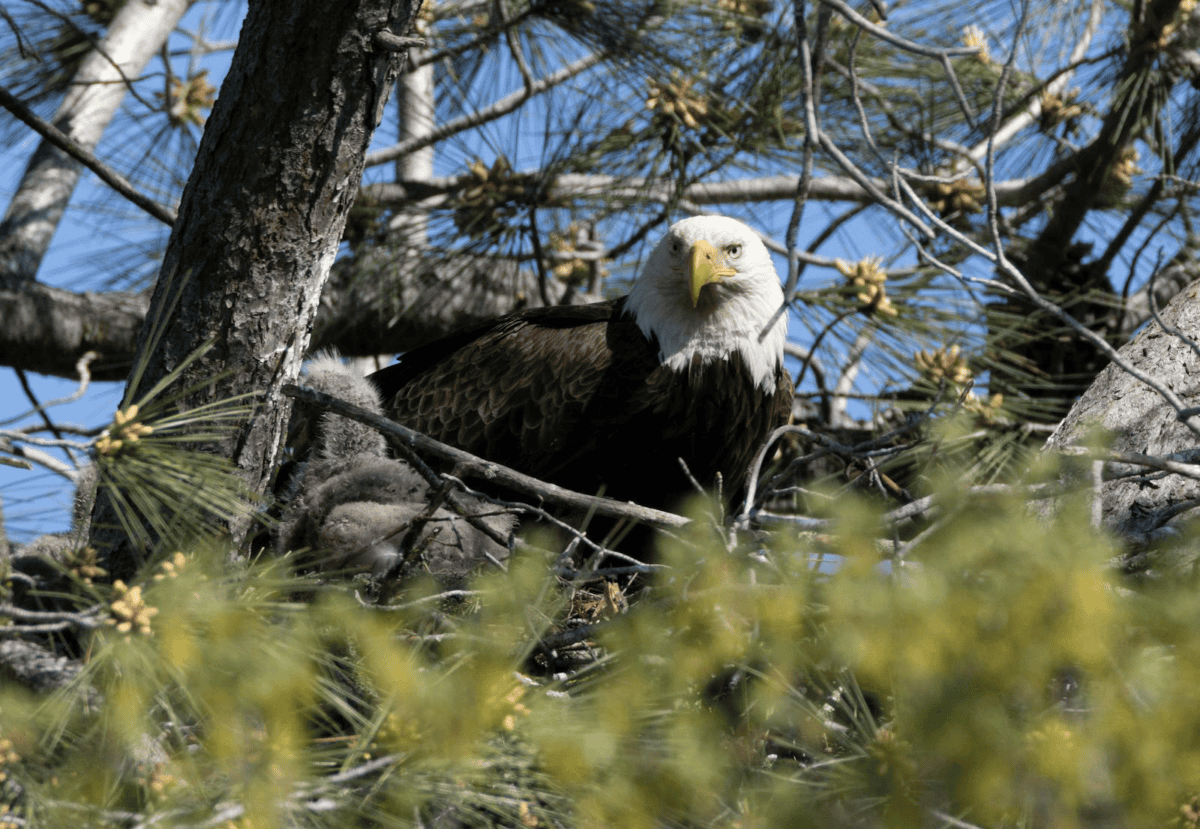
Bald eagles employ sophisticated aerial tactics during combat that showcase their exceptional flight capabilities. One common strategy involves stoop diving, where an eagle folds its wings and plummets toward its opponent at speeds exceeding 75 mph, attempting to strike with extended talons. Defensive moves include barrel rolls and sudden direction changes to evade attacks. Experienced eagles will use wind currents and thermal updrafts to gain altitude advantage or conserve energy during prolonged encounters.
More dominant eagles may drive opponents toward forestry or obstacles, limiting their maneuverability. Both offensive and defensive tactics vary based on the individual bird’s experience, physical condition, and environmental factors. Mature eagles with multiple territorial battles behind them typically display more refined tactical approaches compared to younger birds, demonstrating the learned component of combat behavior. These aerial battles represent the culmination of evolutionary adaptations specifically designed for aerial supremacy among apex predators.
Physical Damage and Injuries

Aerial combat between bald eagles can result in significant injuries to the combatants. The most common injuries include puncture wounds from talons, which can damage muscle tissue and potentially cause infection. Wing damage is particularly serious, as tears to flight feathers or wing membranes can compromise the bird’s flying ability and survival prospects. Facial injuries, including damage to eyes from beak strikes, occasionally occur during intense confrontations.
In the most severe cases, particularly following talon-locked falls, eagles can suffer broken bones, internal injuries, or fatalities. Wildlife rehabilitation centers regularly treat eagles injured in territorial disputes, with recovery rates varying significantly depending on the severity of injuries. While eagles have evolved physical adaptations to withstand considerable combat damage—including dense feathering around vital areas and remarkable healing capabilities—the potential consequences of these battles underscore their biological significance in eagle society and the evolutionary pressures that have shaped their competitive behaviors.
Resolution of Aerial Conflicts

Most eagle battles conclude when one bird clearly establishes dominance or when both combatants reach physical exhaustion. Resolution typically involves the subordinate eagle retreating from the contested territory, often pursued for some distance by the victor to reinforce the outcome. These battles establish or maintain territorial hierarchies that may persist for multiple seasons. The duration of conflicts varies widely, from brief encounters lasting seconds to extended battles continuing for 10-15 minutes of active combat.
Factors influencing the outcome include each bird’s size, age, experience, physical condition, and motivation level. Resident eagles defending established territories generally have higher motivation and higher success rates than intruders. However, younger eagles in peak physical condition may occasionally displace older territorial birds whose fighting capabilities have diminished with age. These resolution patterns reflect the natural selection processes that have shaped eagle social structures and territorial systems over evolutionary time.
Battle Differences Between Mating Pairs and Rivals

The nature of aerial combat differs significantly depending on whether the conflict involves potential mates or same-sex rivals. Male-female encounters, even when initially aggressive, may transition into courtship displays if mutual interest develops. These interactions feature distinct aerial choreography including synchronized flying, talons briefly touching, and ritualized drops and catches. In contrast, same-sex conflicts (especially male-versus-male) tend to be more intensely aggressive and potentially damaging, as they typically represent direct competition for territory or mates.
Female eagles, being larger than males by approximately 25%, generally dominate in mixed-sex territorial disputes. During breeding season, mated pairs will cooperatively defend their territory against intruders, coordinating their attacks and significantly increasing their defensive effectiveness. This mated pair cooperation represents one of the evolutionary advantages of the bald eagle’s monogamous mating system, as it enhances territorial defense capabilities and resource protection for raising offspring.
Seasonal Patterns of Aerial Combat
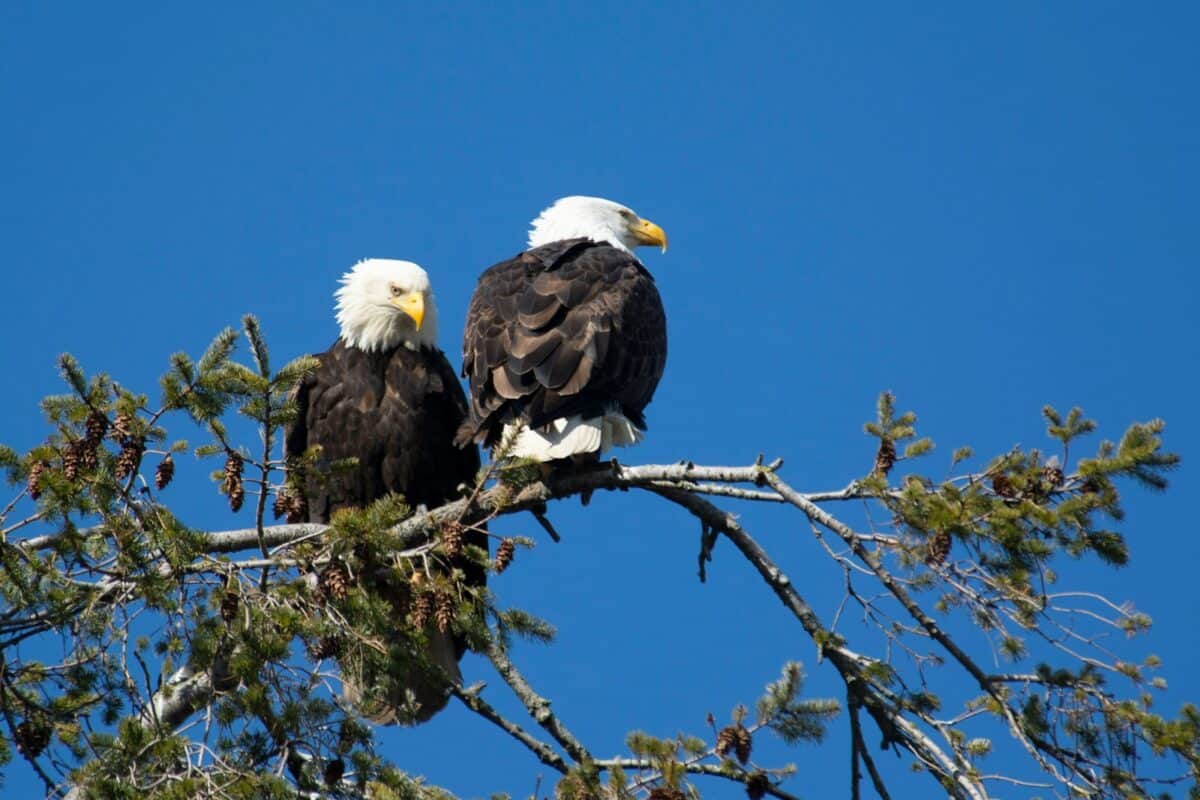
The frequency and intensity of bald eagle aerial battles follow distinct seasonal patterns aligned with their reproductive cycle. Confrontations peak during late winter and early spring (January through March in most regions), corresponding with the pair bonding and nest-building phase. During this period, territorial boundaries are vigorously established and defended. A secondary peak occurs during fall when juvenile eagles from previous breeding seasons begin competing for territory and resources.
Summer generally sees reduced conflict levels as eagles focus on raising young. Geographic factors also influence conflict patterns, with higher frequencies occurring in areas with dense eagle populations or concentrated food sources like salmon runs. Climate change has begun altering these traditional patterns in some regions, with shifting migration timing and food availability creating new competitive pressures and potentially extending conflict seasons. Long-term research indicates that eagle population recovery has increased territorial conflicts in some areas as more birds compete for limited optimal nesting habitat.
Witness Accounts and Documentation

Dramatic bald eagle battles have been documented by wildlife photographers, researchers, and citizen scientists, providing valuable insights into this behavior. Notable documented conflicts include a 2017 encounter in Minnesota where photographers captured a 20-minute battle ending with both eagles falling into a lake, separating just before impact. In Alaska’s Chilkat Valley, researchers have documented increased aerial combat frequency during salmon runs when up to 3,000 eagles congregate in a small area.
Wildlife rehabilitators report treating approximately 50-100 eagles annually across North America for injuries consistent with territorial combat. Modern high-speed photography has revealed previously unknown details of talon-locking mechanics and mid-air striking techniques. Citizen science projects tracking eagle territorial disputes have helped identify conflict hotspots and seasonal patterns, contributing significantly to our understanding of bald eagle population dynamics and territorial behaviors. These observations continue to enhance scientific understanding of how these apex predators maintain social hierarchies and population distribution across their range.
Evolutionary Significance of Aerial Combat

The aerial combat behaviors of bald eagles represent sophisticated evolutionary adaptations refined over millions of years. These confrontations serve multiple evolutionary functions beyond simple aggression. They establish and maintain a territorial distribution system that helps optimize resource utilization across the landscape, preventing overconcentration of breeding pairs in limited areas. Combat outcomes create natural selection pressures favoring individuals with superior strength, flying ability, and tactical intelligence—traits that correlate with successful hunting and offspring provision.
The ritualized nature of many confrontations (with warnings and displays preceding physical combat) represents an evolutionary compromise that allows territorial boundaries to be maintained while minimizing the risk of serious injury to these long-lived predators. Research indicates that territories won through successful combat produce significantly more offspring over time, directly linking combat success to reproductive fitness. The spectacular nature of these aerial battles provides a vivid demonstration of evolutionary principles in action, as resources, mating opportunities, and genetic legacy are determined through aerial supremacy.
Conclusion: The Bigger Picture of Eagle Aerial Combat

The mid-air battles between bald eagles represent far more than simple animal aggression—they are sophisticated biological processes that maintain the ecological balance and evolutionary fitness of North America’s most iconic raptor species. These dramatic confrontations serve critical functions in population distribution, resource allocation, and the selection of the most capable individuals to pass their genes to future generations.
For wildlife enthusiasts fortunate enough to witness these encounters, they provide an unforgettable demonstration of the power, agility, and evolutionary refinement that have made bald eagles such successful apex predators. As bald eagle populations continue to recover across North America following decades of conservation efforts, understanding these territorial dynamics becomes increasingly important for wildlife management and conservation planning. The aerial battles of bald eagles remind us that beneath the majestic appearance of these national symbols lies a complex social structure maintained through displays of strength, courage, and aerial mastery that have been perfected over millennia.

From exploring the marine wonders in the Azores and witnessing the vast savannas of Kenya, to delving deep into the rich biodiversity of South Africa and traversing iconic landscapes in Australia and the US like Yellowstone, Chris's experiences are vast.
With a penchant for diving alongside sharks, the ocean holds a special place in his heart.
Through his academic insights, he champions wildlife conservation, striving with 'Animals Around The Globe' to cultivate a profound connection between humans and animals, enhancing our mutual appreciation.
Connect with him at Feedback@animalsaroundtheglobe.com.
- Why Spiders Don’t Get Stuck in Their Own Webs - July 20, 2026
- What Scientists Found in a 10,000-Year-Old Beehive - July 20, 2026
- This Spider Builds Fake Decoys of Itself - July 20, 2026