
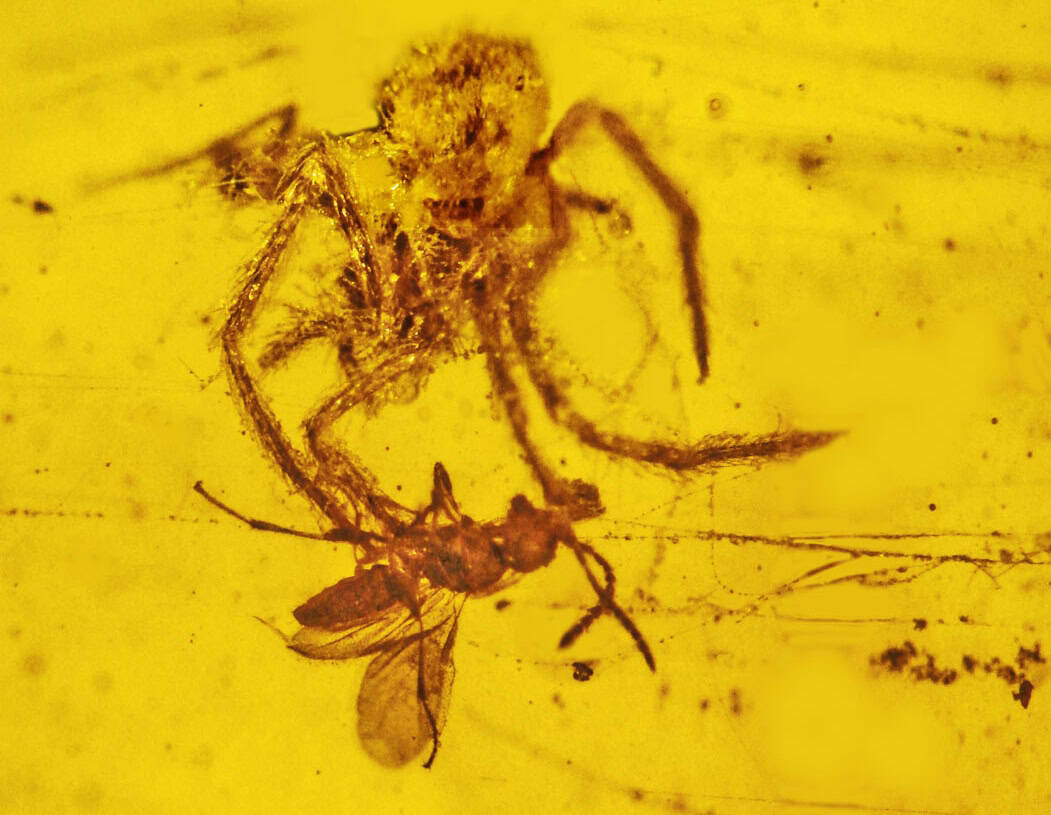
In a remarkable paleontological discovery that has sent ripples through the scientific community, researchers have unearthed the fossilized remains of a spider dating back approximately 100 million years. This extraordinary find provides a rare glimpse into the Cretaceous period and offers invaluable insights into arachnid evolution. The exceptionally well-preserved specimen was discovered encased in amber, allowing scientists to study intricate details of this ancient arthropod that walked alongside dinosaurs. This discovery not only expands our understanding of prehistoric spider species but also helps bridge crucial evolutionary gaps in the arachnid family tree.
The Remarkable Discovery in Burmese Amber
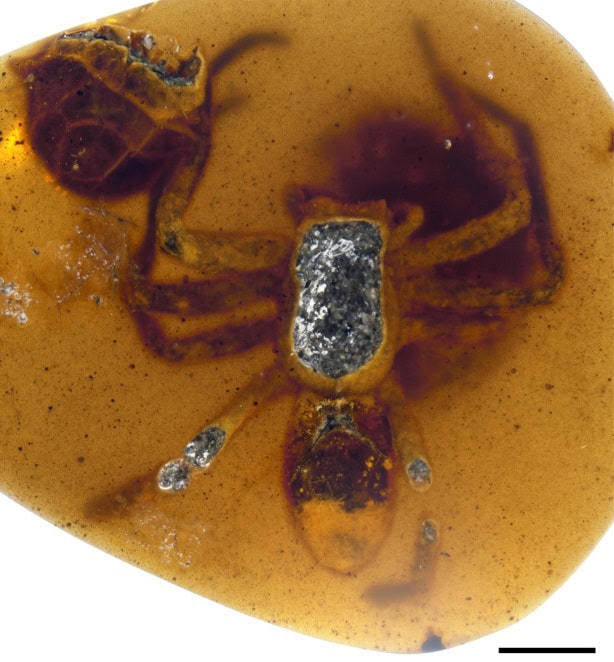
The ancient spider was discovered in a piece of amber originating from Myanmar (formerly Burma). Burmese amber has become renowned among paleontologists for its exceptional preservation quality and the abundance of prehistoric organisms found within it. This particular amber deposit dates to the mid-Cretaceous period, approximately 99 million years ago. The specimen was initially acquired by researchers after being identified in a collection of amber pieces being sold for jewelry and ornamental purposes. Upon closer examination, scientists realized they had stumbled upon something extraordinarily significant—a complete spider specimen with remarkable preservation, including minute details like specialized hairs on its legs and intact spinnerets that would have produced silk.
What Makes This Spider Unique

This 100-million-year-old spider represents one of the most complete and well-preserved specimens from the Cretaceous period ever discovered. What makes this find particularly unique is the preservation of soft tissues, which rarely survive the fossilization process. The amber has preserved not only the exoskeleton but also delicate structures like the spider’s book lungs, silk-producing organs, and even some internal anatomy. The specimen belongs to a previously unknown species that exhibits both primitive features similar to early spiders and some characteristics seen in modern species, making it a crucial evolutionary link. Scientists have noted particularly unusual features in its spinnerets and pedipalps (specialized appendages near the mouth) that don’t match any known extinct or living spider families.
The Amber Preservation Process

Amber preservation represents one of nature’s most exceptional fossilization methods. The process begins when an organism becomes trapped in sticky tree resin. Unlike other fossilization processes that replace organic material with minerals over time, amber preservation works differently. The resin contains compounds that act as natural antibacterials and antifungals, preventing decomposition of the entrapped organism. As the resin hardens through a process called polymerization, it forms copal, an intermediate stage. Over millions of years, under pressure and with the loss of volatile compounds, copal transforms into amber. This process creates a virtually oxygen-free environment that prevents decay and preserves specimens with extraordinary fidelity, allowing scientists to examine creatures like this spider as if they had been trapped just decades rather than millions of years ago.
Dating the Spider: How Scientists Determined Its Age
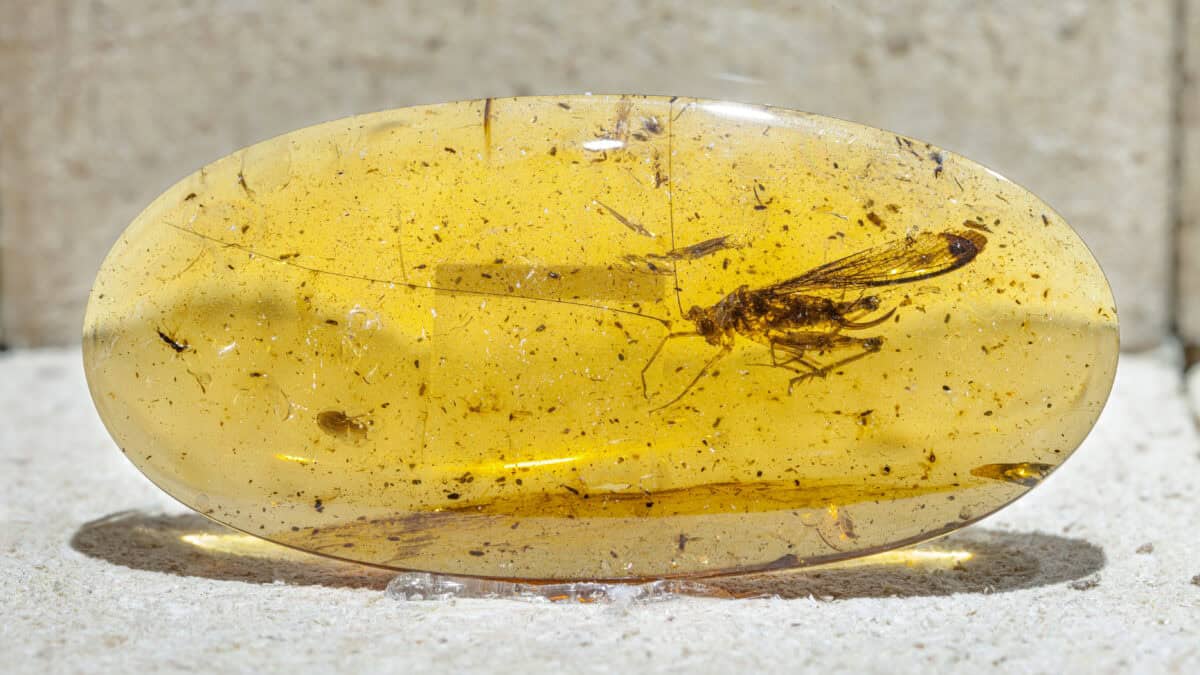
Determining the precise age of amber fossils involves multiple scientific techniques. For this specimen, researchers employed radiometric dating methods on volcanic ash layers found above and below the amber-producing strata in Myanmar. Specifically, uranium-lead dating of zircon crystals in the surrounding rock formations provided a reliable timeframe of approximately 99 million years. This places the amber in the Cenomanian age of the Cretaceous period. Researchers also used biostratigraphy, analyzing index fossils in the same deposits, to corroborate the radiometric dates. Additional confirmation came from analyzing the amber itself through infrared spectroscopy to examine its chemical composition, which aligned with amber of known Cretaceous origin. These multiple lines of evidence firmly establish that the spider lived during a time when dinosaurs dominated the landscape and flowering plants were just beginning to diversify.
Anatomical Features and Potential New Species Classification
Initial microscopic examination revealed this specimen likely represents not just a new species but potentially a new genus or even family of spiders. The spider measures approximately 7.5 millimeters in length, placing it in the medium size range for spiders of its era. It possesses eight legs with specialized setae (hair-like structures) that would have served sensory functions. Most notably, the arrangement of its eyes—eight in total, arranged in two rows—suggests a relationship to hunting spiders rather than web-builders. The spider’s chelicerae (fangs) show structures indicating it was venomous, though obviously the venom composition cannot be determined. Most significantly, the specimen shows a unique combination of features from different spider lineages: it has primitive respiratory structures similar to tarantulas, but spinnerets more similar to orb-weaving spiders. This mosaic of characteristics has led researchers to propose a new taxonomic classification, though final naming awaits peer review of the findings.
The Cretaceous Ecosystem: What Was the Spider’s World Like?
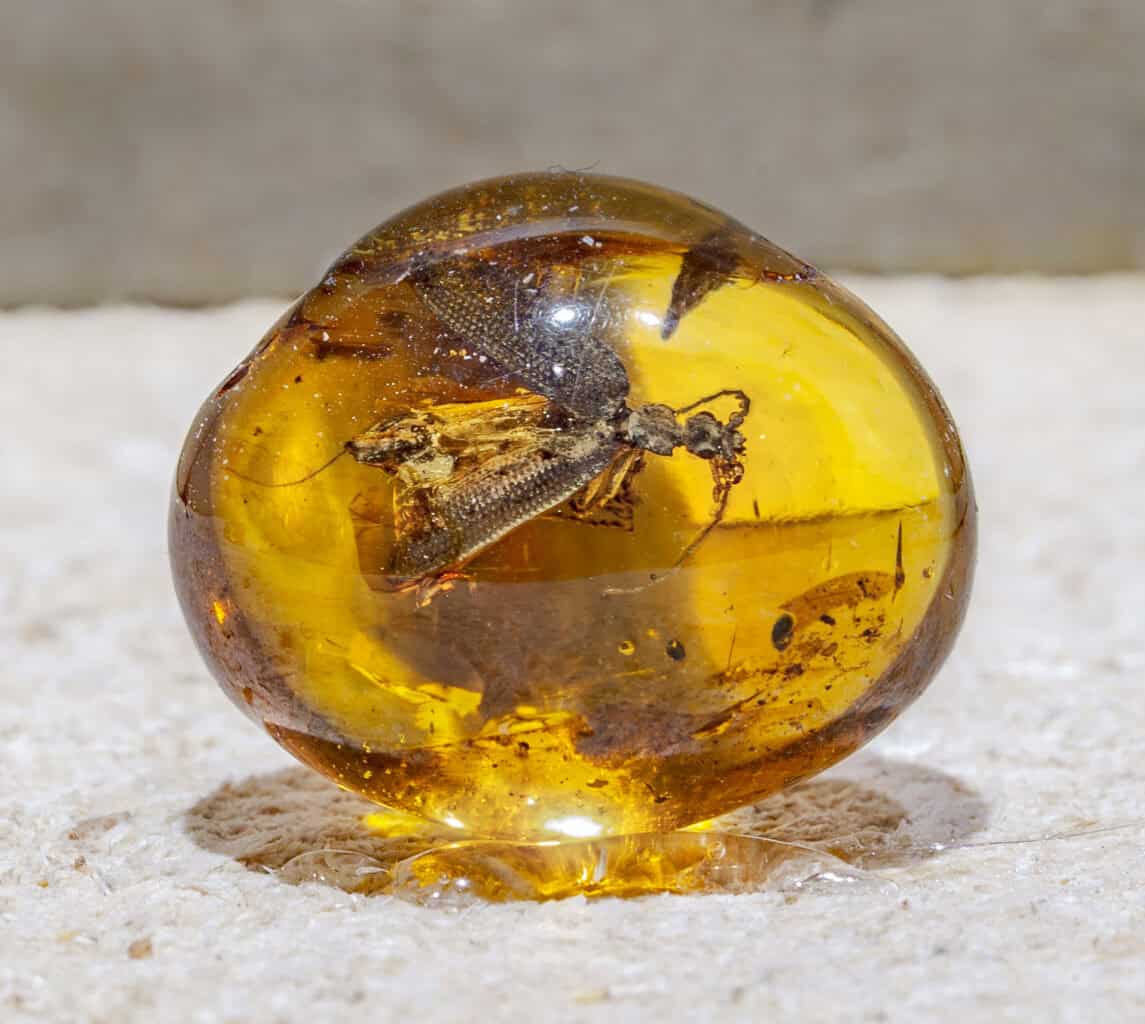
When this spider was alive approximately 100 million years ago, the Cretaceous world was dramatically different from our own. Global temperatures were significantly warmer with no polar ice caps, and atmospheric carbon dioxide levels were many times higher than today. The supercontinent Pangaea had already begun breaking apart, but modern continents were still taking shape. The area that is now Myanmar was likely a tropical coastal forest environment rich in diverse life forms. Dinosaurs dominated terrestrial ecosystems, with species like Velociraptor and early tyrannosaurs roaming the landscape. The skies were patrolled by pterosaurs and early birds. Flowering plants (angiosperms) were in the early stages of their evolutionary radiation, beginning to compete with the previously dominant conifers, ferns, and cycads. In this ancient ecosystem, our spider likely hunted small insects, possibly including early moths, beetles, and flies, many of which have also been found preserved in amber from the same deposits.
Technological Advances That Made This Study Possible

The detailed study of this ancient spider would have been impossible without recent technological innovations in paleontological research. Most crucially, researchers employed micro-computed tomography (micro-CT scanning), which uses X-rays to create cross-sectional images that can be combined to generate detailed 3D reconstructions of the specimen without damaging the amber. This allowed scientists to examine internal structures previously inaccessible in amber fossils. Additionally, confocal laser scanning microscopy provided detailed surface imaging at the microscopic level, revealing fine structures like sensory hairs and silk spigots. Advanced software algorithms helped enhance image quality and differentiate between the spider’s body and surrounding inclusions in the amber. Synchrotron radiation X-ray tomographic microscopy, available at only a few specialized research facilities worldwide, provided even higher-resolution imaging of specific anatomical features. These non-destructive techniques represent a significant advancement over historical methods that often required cutting and polishing amber specimens, risking damage to invaluable fossils.
Evolutionary Insights from the Ancient Arachnid

This remarkable specimen provides crucial evidence for understanding spider evolution during a pivotal period in Earth’s history. The Cretaceous represented a time of significant change in terrestrial ecosystems, with the radiation of flowering plants creating new niches and opportunities for arthropod evolution. The specimen exhibits a combination of primitive and derived traits that helps fill a significant gap in the spider evolutionary record. Prior to this discovery, researchers had limited fossil evidence from this specific time period, making it difficult to trace how modern spider families evolved from earlier forms. This specimen suggests that several key evolutionary innovations in spiders—including specialized silk-producing organs and advanced sensory structures—were already established 100 million years ago. The discovery also indicates that certain spider groups diversified earlier than previously believed, possibly in response to the increasing diversity of flying insects that accompanied the spread of flowering plants. This single specimen thus provides a crucial calibration point for the molecular clock analyses used to estimate when different spider lineages diverged from one another.
Comparing the Ancient Spider to Modern Relatives

Despite being separated by 100 million years of evolution, this ancient spider shares surprising similarities with spiders alive today. The basic body plan—with a cephalothorax, abdomen, eight legs, and spinnerets—remains remarkably unchanged, demonstrating the evolutionary success of this fundamental design. However, detailed comparisons reveal both similarities and important differences. The fossil spider appears most closely related to modern members of the superfamily Araneoidea, which includes orb-weaving spiders, though it lacks some specialized features of this group. The arrangement and structure of its spinnerets suggest it could produce silk, though perhaps not the complex orb webs seen in modern relatives. Its leg proportions and eye arrangement indicate it was likely an active hunter rather than a web-ambush predator. The specimen has proportionally larger chelicerae (fangs) than most modern spiders of similar size, suggesting possible differences in prey capture strategy or diet. Perhaps most significantly, certain aspects of its respiratory system appear more primitive than those of its closest modern relatives, demonstrating how even seemingly fundamental physiological systems have continued to evolve over millions of years.
Other Significant Arthropod Discoveries in Amber
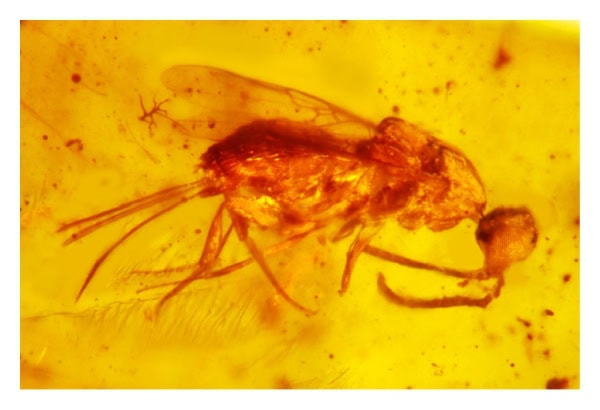
This 100-million-year-old spider joins an impressive roster of significant arthropod discoveries preserved in amber. Among the most notable is the oldest known bee, discovered in Burmese amber from the same time period, which provided crucial insights into the co-evolution of bees and flowering plants. Equally significant was the discovery of a tick preserved in amber found clinging to a dinosaur feather, directly evidencing parasitism on dinosaurs. The world’s oldest known ant specimens, dating from the Cretaceous, have dramatically revised our understanding of social insect evolution. In 2020, researchers identified the earliest known “true bug” (Hemiptera) in amber, complete with its specialized piercing mouthparts. Perhaps most spectacular was the discovery of a spider in the process of attacking a trapped insect, capturing a predation event frozen in time for 100 million years. Baltic amber, which is younger (approximately 44 million years old), has yielded remarkable specimens including pseudoscorpions, mites, and even a daddy longlegs spider with an erect penis, providing rare insights into the evolution of reproductive structures. Each of these discoveries contributes unique pieces to our understanding of arthropod evolution and ancient ecosystems.
Challenges in Studying Amber Fossils
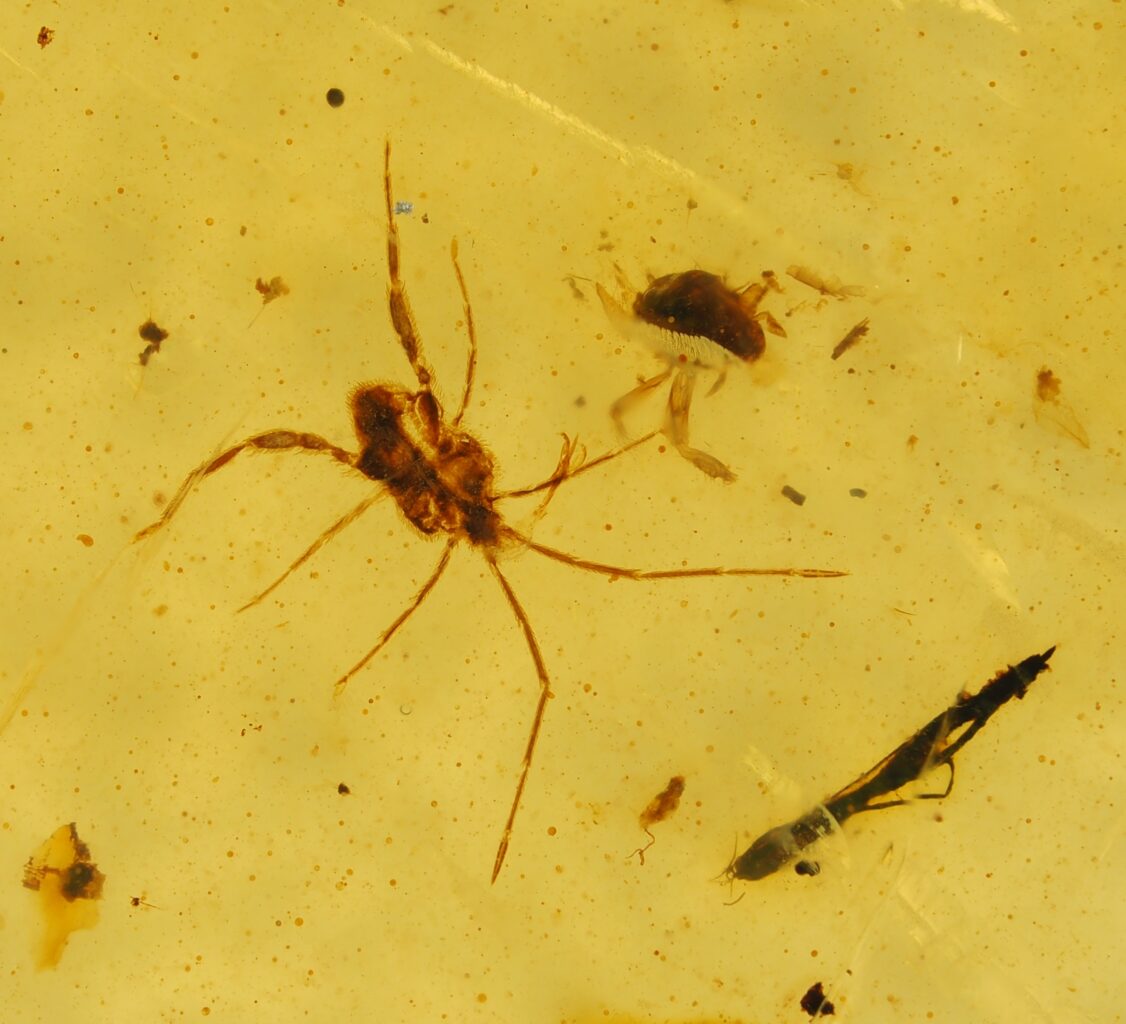
While amber provides exceptional preservation, studying specimens encased within presents unique challenges for researchers. The first significant challenge is simply visibility—amber often contains bubbles, cracks, or cloudiness that can obscure details of the enclosed specimen. Additionally, the amber’s surface typically requires careful polishing to create “windows” for observation without damaging the fossil inside. Determining the three-dimensional structure of specimens can be difficult through conventional microscopy alone, requiring advanced imaging techniques that may not be readily available to all researchers. There are also ethical and legal considerations surrounding Burmese amber specifically, as some specimens have been mined in conflict zones, raising concerns about the provenance and ethical acquisition of specimens. Another critical challenge is distinguishing authentic specimens from forgeries, as the commercial value of spectacular amber inclusions has unfortunately created a market for skillfully crafted fakes. Perhaps most fundamentally, amber primarily preserves organisms that lived in or near resin-producing trees, creating a significant sampling bias in our understanding of ancient ecosystems—ground-dwelling or aquatic organisms are rarely represented.
Future Research Directions
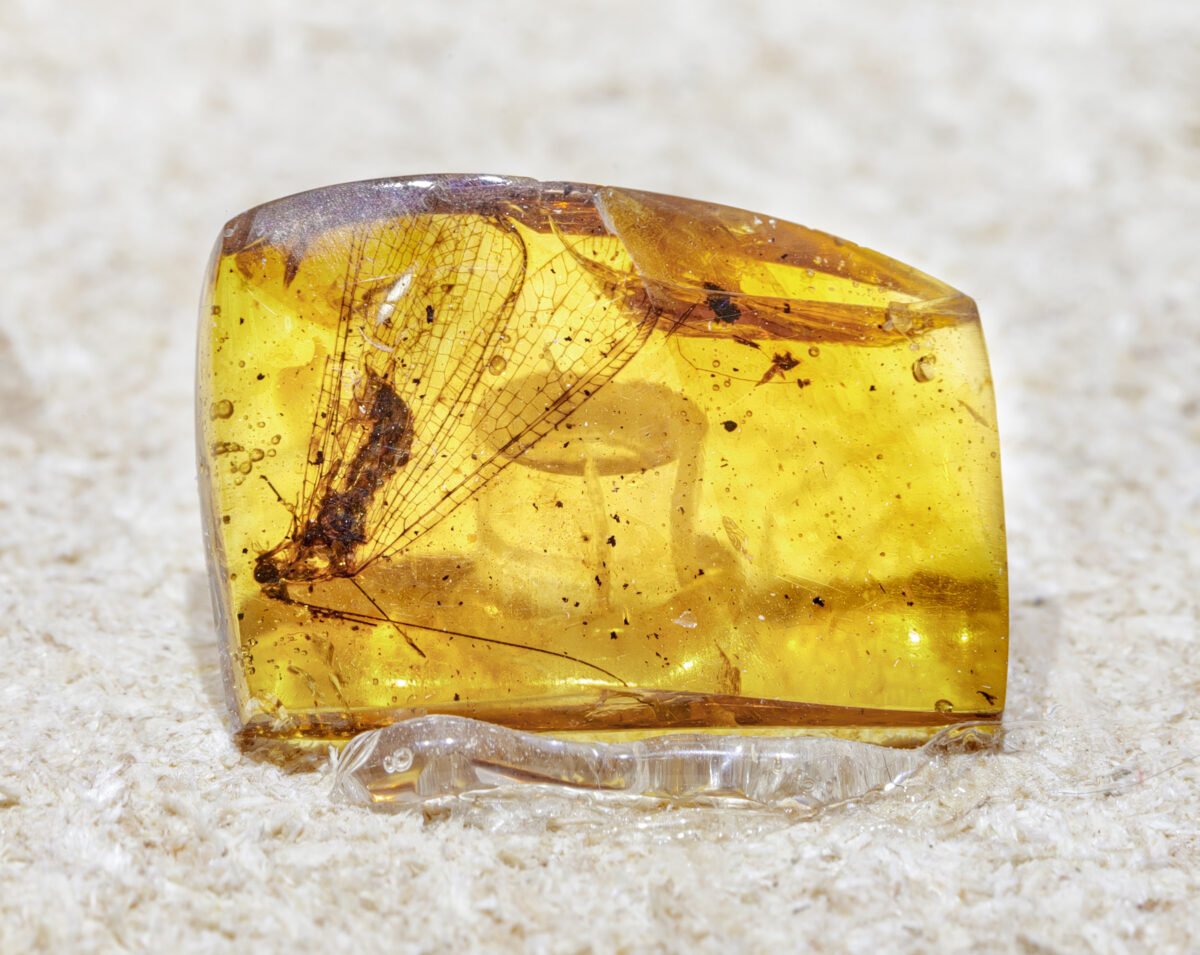
This extraordinary discovery opens numerous avenues for future research. Researchers plan to conduct more detailed comparative analyses with both extinct and extant spider species to better place this specimen in the evolutionary tree of arachnids. Advanced chemical analysis techniques might potentially extract and identify traces of ancient DNA, though this remains highly speculative given the specimen’s age. Scientists also hope to use this discovery as a reference point to reassess other ambiguous fossil spiders from the Cretaceous period. The amber piece containing the spider also includes several small insects and plant fragments, offering opportunities for broader paleoecological studies to reconstruct the spider’s habitat and potential prey. Researchers are particularly interested in investigating whether specialized structures on the spider’s legs show adaptations for specific hunting strategies or environmental conditions. The international team studying this specimen has already begun collaborating with experts in modern spider physiology to identify any potential biomimetic applications—instances where this ancient spider’s adaptations might inspire engineering solutions to contemporary problems. Finally, this discovery has prompted a systematic re-examination of existing amber collections worldwide, as similarly significant specimens may remain unidentified in museum drawers and private collections.
Conclusion

The discovery of this 100-million-year-old spider preserved in amber represents one of the most significant arachnological finds in recent decades. Through its exceptional preservation, scientists have gained unprecedented insights into spider anatomy and evolution during the Cretaceous period—a time when dinosaurs dominated the landscape and flowering plants were beginning their evolutionary diversification. The specimen’s unique combination of primitive and advanced features helps bridge important gaps in our understanding of spider evolution and provides a crucial calibration point for molecular clock analyses. Beyond its scientific significance, this ancient spider offers a tangible connection to a lost world, allowing us to literally peer through a window in time and observe an organism that lived a hundred million years ago with remarkable clarity. As research continues and technology advances, this extraordinary specimen will undoubtedly continue to yield new insights into the ancient history of one of Earth’s most successful and diverse arthropod lineages.

- Why You Should Never Approach a Sleeping Hippo - July 21, 2026
- The Truth About Hyena Intelligence and Social Power - July 21, 2026
- The Glasswing Butterfly: Nature’s Invisible Beauty - July 21, 2026