


Bird migration stands as one of nature’s most spectacular phenomena, with billions of birds embarking on perilous journeys spanning thousands of miles each year. While ornithologists have decoded many migration patterns through decades of research, some avian journeys continue to defy complete scientific understanding. These mysterious migrations challenge our knowledge of navigation, endurance, and evolutionary adaptation. From vanishing routes to inexplicable timing shifts, these 13 migration mysteries represent the frontiers of ornithological research, reminding us that even in our technologically advanced era, nature still guards some of its most fascinating secrets.
The Disappearing Blackpoll Warblers

The Blackpoll Warbler (Setophaga striata) performs one of the most extraordinary migrations known to science, yet aspects of their journey remain deeply puzzling. These tiny songbirds, weighing barely 12 grams, embark on a non-stop flight from northeastern North America to South America each fall. The most mysterious aspect is their transoceanic flight—a journey of up to 2,500 miles over open water with no opportunity to rest or feed. Despite advanced tracking technologies, scientists still cannot explain how these diminutive birds store enough energy for such a marathon journey or navigate across featureless ocean expanses with such precision. Additionally, researchers have documented inexplicable “disappearances” where entire populations seem to vanish from tracking systems, only to reappear thousands of miles away. The physiological mechanisms that allow these tiny birds to essentially double their body weight in preparation for migration and then burn it with remarkable efficiency remain poorly understood.
Bar-Headed Geese’s Himalayan Mystery

Bar-headed Geese (Anser indicus) perform what might be the most physically demanding migration on Earth, flying over the Himalayan mountains at altitudes exceeding 29,000 feet—heights where oxygen levels are only about one-third those at sea level. What baffles scientists is how these birds manage this extreme high-altitude flight when even well-trained human mountaineers struggle without supplemental oxygen. Recent studies have revealed special hemoglobin adaptations that increase oxygen-carrying capacity, but these alone don’t fully explain their extraordinary ability. Even more mysteriously, tracking studies have shown that contrary to expectations, these geese don’t gradually ascend to acclimate to altitude changes—they often climb several thousand feet in a single night, defying physiological logic. Scientists still cannot explain how their bodies prevent the potentially fatal fluid buildup in lungs that affects mammals at such altitudes. The evolutionary pathway that produced such extreme adaptations represents another enigma, as the selective pressures that would drive the development of such specialized high-altitude capabilities remain unclear.
The Arctic Tern’s Navigational Paradox

Arctic Terns (Sterna paradisaea) hold the record for the longest migration of any animal, traveling approximately 44,000 miles annually between the Arctic and Antarctic. What continues to mystify researchers is the incredible precision of their navigation across such vast distances. Despite extensive research, scientists still cannot fully explain how these birds maintain such accurate course-finding abilities through diverse conditions including changing magnetic fields, varying daylight patterns, and unpredictable weather systems. More puzzling is the “figure-eight” pattern they follow across the Atlantic Ocean, which seems unnecessarily complex yet remains remarkably consistent across generations. Recent tracking data revealed another unexplained behavior: some Arctic Terns make unexpected, extensive detours to seemingly random patches of ocean before resuming their standard route. These detours can add thousands of miles to their journey with no apparent benefit. Additionally, juvenile Arctic Terns somehow complete the full migration successfully on their first attempt without adult guidance, suggesting an innate navigational capability that transcends learned behavior—a mechanism that remains elusive to scientific understanding.
The Amur Falcon’s Mysterious Stopover

The Amur Falcon (Falco amurensis) undertakes one of the longest overwater migrations of any raptor, traveling from Siberia and northern China to southern Africa. What particularly mystifies scientists is the birds’ synchronous convergence on India’s remote Nagaland region. Each October, virtually the entire global population—estimated at over one million birds—congregates in this specific region before crossing the Indian Ocean. Researchers still cannot explain how these falcons coordinate such a massive gathering with such temporal precision, especially since they travel individually rather than in cohesive flocks during other parts of their journey. Even more perplexing, satellite tracking has revealed that these falcons make a non-stop flight of 2,400 miles across the Indian Ocean in just 60-80 hours—an endurance feat that stretches the bounds of avian physiology. The falcons’ ability to find rising thermal air currents over open water defies conventional understanding, as thermals typically form over land. Recent studies suggest they may detect subtle atmospheric pressure patterns imperceptible to current meteorological instruments, but the precise mechanism remains elusive.
The Eurasian Woodcock’s Nocturnal Puzzle

The Eurasian Woodcock (Scolopax rusticola) exhibits one of the most peculiar migration patterns in the avian world. Unlike most migratory birds, woodcocks migrate exclusively at night, and only on moonless nights—a behavior that has long puzzled ornithologists. This selective timing seems counterintuitive as darkness eliminates the possibility of visual navigation. What’s more mysterious is that woodcocks migrate as solitary birds rather than in protective flocks, yet somehow maintain similar routes across generations. Recent tracking studies revealed another inexplicable aspect of their journey: woodcocks make seemingly random stops during migration, sometimes staying in unsuitable habitat for days before resuming their journey. These stopover locations don’t appear to offer exceptional feeding opportunities or protection, contradicting established migration theory. Most baffling to researchers is evidence suggesting woodcocks adjust their departure times based on weather conditions they won’t encounter until much later in their journey and hundreds of miles away—a predictive ability that implies an unknown sensory capability. Despite decades of study, scientists still cannot explain how these birds forecast distant weather patterns with such accuracy.
The Wandering Albatross’s Endless Flight

The Wandering Albatross (Diomedea exulans) practices a form of migration so unusual it challenges the very definition of the term. These massive seabirds, with wingspans reaching 11 feet, can remain in continuous flight for months at a time, circumnavigating the entire Southern Ocean multiple times per year. What confounds scientists is that individual albatrosses follow wildly different patterns that seem to defy population-level logic—some birds fly clockwise around Antarctica, others counterclockwise, with no discernible pattern across age groups or breeding status. More mysteriously, tracking data shows these birds sometimes make sudden, dramatic course changes in the middle of open ocean, traveling hundreds of miles in a straight line toward specific patches of water with no visible features. Researchers suspect they may be detecting food sources through smell across vast distances, but the sensory capabilities required exceed known avian olfactory abilities. Perhaps most puzzling is the recent discovery that albatrosses can enter a state of hemispheric sleep, with one brain hemisphere remaining alert while the other sleeps—a capability previously unknown in birds and one that science still cannot fully explain mechanistically.
The Ruby-throated Hummingbird’s Impossible Journey

Ruby-throated Hummingbirds (Archilochus colubris) undertake what appears to be a physically impossible migration. These tiny birds, weighing merely 3-4 grams—less than a penny—fly non-stop across the Gulf of Mexico, covering approximately 500 miles without rest or food. The energetic demands of this journey push against the boundaries of known avian physiology. What particularly mystifies researchers is how these hummingbirds, with their extraordinarily high metabolic rates, store enough energy for this marathon flight. Studies show they nearly double their body weight before departure, but even this doesn’t fully explain their endurance. More perplexing is their navigation across the featureless Gulf waters, especially for first-year birds traveling alone without prior experience. Recent research has documented another unexplained phenomenon: specific departure and arrival “hotspots” that concentrate thousands of birds despite the availability of seemingly identical habitat in adjacent areas. Scientists still cannot explain why these particular locations hold such attraction or how the information about these sites transfers between generations. Equally mysterious is their ability to predict favorable tailwinds—crucial for successful crossing—despite these conditions occurring at altitudes well above where hummingbirds typically fly.
The New Caledonian Storm Petrel’s Reappearing Act

The New Caledonian Storm Petrel (Fregetta lineata) represents one of ornithology’s most perplexing mysteries. This seabird was known only from museum specimens collected in the 19th century and was presumed extinct until 2008, when living individuals were unexpectedly photographed at sea. What baffles scientists is how an entire species could essentially “disappear” for over a century despite ongoing ornithological surveys throughout its range. Even more mysterious is the birds’ annual migration, which remained completely unknown until 2022, when limited tracking data suggested they might travel thousands of miles to a region of the Pacific with no islands or land features whatsoever. Researchers still cannot locate their breeding grounds despite extensive searches across the South Pacific. The birds seem to appear suddenly in specific oceanic regions during certain months before vanishing again. Their apparent ability to breed and maintain a stable population while evading scientific detection defies explanation. Some researchers theorize they may nest in inaccessible cliff locations on remote islands, perhaps breeding nocturnally to avoid predators, but this remains speculation. The persistence of this species despite its extreme rarity and unknown breeding biology represents one of the greatest enigmas in migration research.
The Great Snipe’s Supersonic Strategy
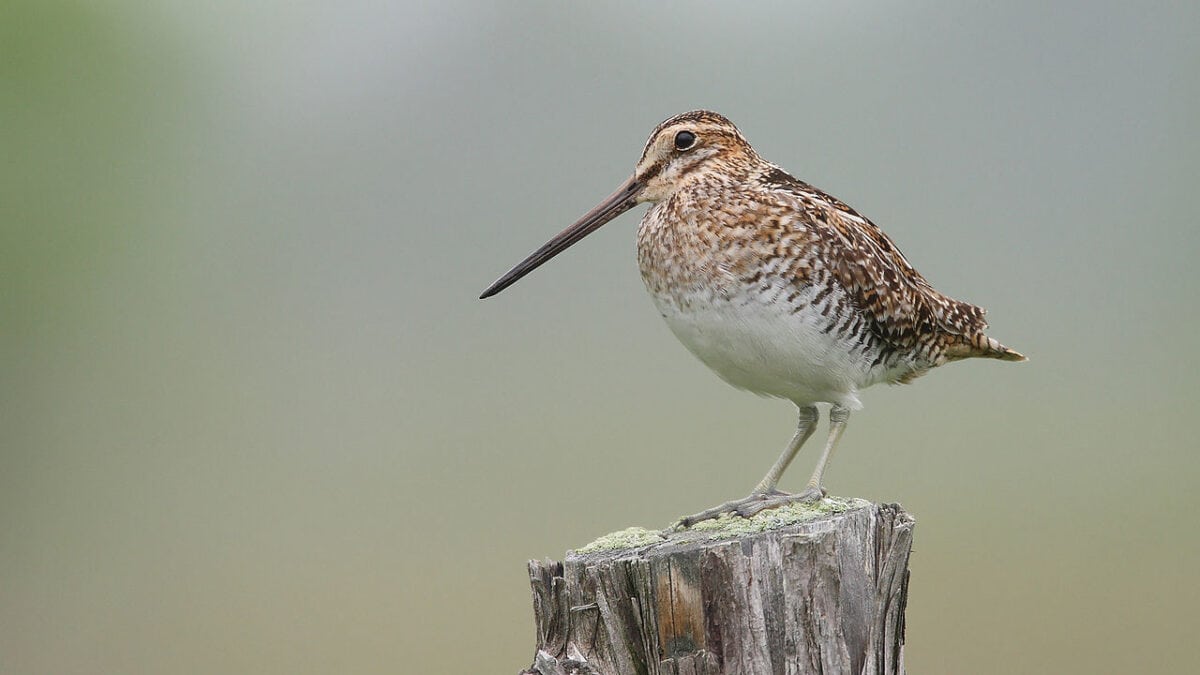
The Great Snipe (Gallinago media) performs a migration that defies aerodynamic expectations. These stocky, relatively heavy birds (weighing about 180 grams) fly at sustained speeds of 60 miles per hour during migration—a velocity typically achieved only by aerial hunters like falcons during short hunting dives, not maintained for long-distance travel. What particularly mystifies researchers is how these birds, with their non-streamlined body shape, achieve and maintain such exceptional speeds for up to 60 hours non-stop. Even more puzzling, tracking studies reveal they don’t take advantage of tailwinds as most migrants do—they maintain their remarkable speed regardless of wind conditions, sometimes even flying into headwinds without significant reduction in pace. Another unexplained aspect is their extreme altitude selection, sometimes flying at 20,000 feet despite the energetic cost of reaching such heights. Most baffling to scientists is why these birds evolved such an energetically costly migration strategy when slower, more efficient alternatives would seem advantageous. Some researchers theorize this might represent an anti-predator adaptation, but this doesn’t explain their maintained speed over vast stretches of open ocean where aerial predators are absent. The physiological mechanisms enabling this performance remain poorly understood.
The Veery’s Weather Prediction Abilities

The Veery (Catharus fuscescens), a North American thrush, demonstrates what appears to be an impossible predictive ability that has left scientists searching for explanations. Research has documented that these birds can adjust their departure dates for fall migration based on the severity of the upcoming hurricane season—sometimes delaying migration by several weeks when a particularly active tropical storm season is imminent. What confounds researchers is that this adjustment occurs in early August, long before any hurricanes have formed and months before peak hurricane season. The meteorological cues these birds might be detecting remain completely unknown, especially since professional meteorologists using advanced technology cannot make such long-range hurricane forecasts with comparable accuracy. Even more mysteriously, Veeries breeding in isolated mountain regions with no exposure to coastal weather patterns still demonstrate this predictive capability. Some scientists hypothesize they might be detecting subtle infrasound signatures from early-season oceanic patterns, but the sensory mechanisms required exceed known avian capabilities. Adding to the mystery, this predictive ability appears stronger in older birds, suggesting some learning component rather than purely innate behavior. How this knowledge transfers between generations or develops within individuals remains entirely unexplained.
The Common Swift’s Aerial Lifestyle

The Common Swift (Apus apus) challenges fundamental assumptions about bird physiology with its migration pattern. These birds spend almost their entire lives in the air, landing only to breed. Recent tracking studies confirmed what scientists long suspected but couldn’t prove: Common Swifts can remain continuously airborne for up to ten months, including throughout their entire migration and wintering period. What particularly baffles researchers is how these birds manage to sleep while flying—a necessary biological function for all known vertebrates. Current theories suggest they might sleep one brain hemisphere at a time or take microsleeps lasting only seconds, but neither explanation fully accounts for their sustained cognitive function. Even more mysterious is their movement pattern during migration, which doesn’t follow direct routes between breeding and wintering grounds but instead incorporates large loops and detours that add thousands of miles to their journey. These detours don’t correlate with known wind patterns, feeding opportunities, or geographic barriers. Most puzzling is evidence suggesting specific individuals follow nearly identical routes year after year down to particular curved segments and loops, implying these seemingly inefficient paths serve some unknown but important purpose. The evolutionary pressures that would select for such an extreme aerial lifestyle remain unclear.
The Red Knot’s Invisible Compass

The Red Knot (Calidris canutus) performs one of the longest migrations of any shorebird, traveling over 9,300 miles from Arctic breeding grounds to southern wintering areas. What particularly mystifies researchers is how juvenile Red Knots, making their first migration without adult guidance, navigate with remarkable precision to specific stopover sites they’ve never visited. These critical refueling locations might be tiny mudflats or specific beach sections that represent a minuscule target when approached from thousands of miles away. Even more perplexing, tracking studies reveal these birds often fly directly across open ocean rather than following coastlines, eliminating visual landmarks as navigational aids. The Baltic/Wadden Sea population demonstrates an especially puzzling behavior: they depart their Arctic breeding grounds and fly non-stop for over 3,000 miles to arrive at a specific section of the Wadden Sea at precise dates correlating with seasonal peaks of their prey species. The synchronization is so exact that birds arrive within a 3-5 day window annually, despite variable breeding success and weather conditions. How they forecast optimal foraging conditions at sites thousands of miles away challenges scientific understanding. Recent experiments suggest Red Knots calibrate multiple navigational systems before departure, including magnetic sensing, star patterns, and polarized light detection, but how they integrate these inputs to achieve such pinpoint accuracy remains unexplained.
The Mysterious Migration of the Eastern Curlew

The Eastern Curlew (Numenius madagascariensis), the world’s largest shorebird, undertakes a migration that contains several elements that continue to perplex scientists. These birds breed in remote northeastern Asia and winter in Australia, a journey of over 7,000 miles. What particularly confounds researchers is the Eastern Curlew’s extraordinary site fidelity—not just to general regions but to specific tiny sections of mudflats or estuaries spanning just a few hundred meters. Tracking studies show individual birds returning to precisely the same small territory year after year with almost GPS-like precision. Even more mysterious is their staging behavior in the Yellow Sea region, where birds from different breeding populations synchronize their arrivals despite traveling from locations separated by over 1,500 miles with no apparent communication. The most puzzling aspect is their departure trigger from Australia—birds begin their northward journey during seemingly random periods with no correlation to weather, food availability, or day length. Some individuals depart weeks before others with no discernible pattern, yet most manage to arrive at breeding grounds within a narrow timeframe. Scientists have documented cases where birds abort migration halfway, returning to Australia only to restart the journey days later—behavior that defies explanation. The sensory capabilities that would enable such precise navigation and timing remain unknown.
Conclusion: Understanding Nature’s Most Enduring Mysteries

The enigmatic migration patterns explored in this article represent some of nature’s most persistent scientific puzzles, challenging our understanding of avian biology, physiology, and sensory perception. Despite technological advances in tracking equipment, genetic analysis, and behavioral research, these 13 migration mysteries continue to defy complete scientific explanation, highlighting the limits of our current knowledge. The solutions to these biological riddles likely involve combinations of sensory capabilities beyond our current understanding, including potential sensitivity to Earth’s magnetic field, infrasound, polarized light, and perhaps even quantum effects that remain theoretical. As climate change alters many traditional migration patterns, understanding these behaviors becomes increasingly urgent for conservation efforts.

As a little kid, I fell in love with nature, wildlife, and animals. Living in the USA, South Africa, Italy, China and Germany gave me the opportunity to discover the world's Wildlife. My favorite animals are Mountain Gorillas, Siberian Tigers, and Great White Sharks.
I'm a certified PADI Open Water Diver, went to Everest Base Camp and Trekked Gorillas in Uganda. I hold a Master of Science in Economics and Finance.
Please send any feedback to feedback@animalsaroundtheglobe.com
- Why the Great Barrier Reef Is the Best Place to Spot Sea Turtles - June 3, 2026
- 2 Animals With Super Sized Body Parts and What They are For - June 3, 2026
- Explore The Azores - June 3, 2026