


Throughout history, the battlefield has not been the exclusive domain of human soldiers. Animals have played crucial roles in military operations across centuries and continents, often demonstrating extraordinary courage, intelligence, and loyalty. From carrier pigeons delivering messages across enemy lines to dolphins detecting underwater mines, these animal warriors have saved countless human lives while making significant contributions to military efforts. Their stories of heroism, unwavering service, and the deep bonds formed with their human counterparts amidst the chaos of war represent a unique chapter in military history that deserves recognition and remembrance.
War Horses: The Original Military Animals

Horses have been humanity’s longest-serving military partners, with their battlefield history spanning thousands of years. From ancient cavalry charges to World War I, these majestic animals carried soldiers, pulled artillery and supply wagons, and transported the wounded. During World War I alone, an estimated eight million horses died in service. The British Army, for instance, lost over 484,000 horses – one horse for every two men. These animals endured artillery barrages, machine gun fire, poison gas, and extreme weather conditions alongside their human companions. War horses like Sergeant Reckless, who served with the U.S. Marines during the Korean War, became legendary for their bravery. Reckless made 51 solo trips under enemy fire in a single day to deliver ammunition to the front lines, was wounded twice, and was later awarded numerous military decorations for her extraordinary service.
Carrier Pigeons: Messengers in the Sky

Before electronic communication became standard, carrier pigeons served as crucial messengers during wartime. These birds’ natural homing abilities made them invaluable for delivering messages across enemy lines when other communication methods failed. During World War I, the U.S. Army Signal Corps alone used approximately 600 pigeons in France. One famous war pigeon, Cher Ami, delivered 12 critical messages within the American sector at Verdun, France. On her final mission, despite being shot through the breast and leg and losing an eye, she successfully delivered a message that saved 194 men of the “Lost Battalion” who had been surrounded by German forces. For her heroic service, Cher Ami received the French Croix de Guerre with Palm. Another renowned pigeon, G.I. Joe, saved the lives of at least 100 Allied soldiers during World War II by delivering a message that stopped an Allied bombing of an Italian town that had just been recaptured by British forces.
Dogs of War: From Sentries to Medics

Dogs have served in numerous military capacities throughout history, performing roles as sentries, scouts, messengers, and even medics. During World War I, dogs pulled machine guns and ammunition carts, while in World War II, they detected mines, booby traps, and hidden enemies. The U.S. Marine Corps’ most decorated war dog, Sergeant Stubby, served for 18 months in World War I, participating in 17 battles on the Western Front. He saved his regiment from surprise mustard gas attacks, located wounded soldiers in no man’s land, and even caught a German spy by the seat of his pants. In modern warfare, military working dogs like Cairo, who participated in the raid on Osama bin Laden’s compound, continue this legacy. These canine soldiers often develop profound bonds with their handlers, demonstrating extraordinary loyalty in the most dangerous circumstances. Today’s military working dogs undergo rigorous training programs that can last up to two years before deployment, and many continue to save lives by detecting improvised explosive devices (IEDs) in conflict zones around the world.
Marine Mammals: Underwater Operatives
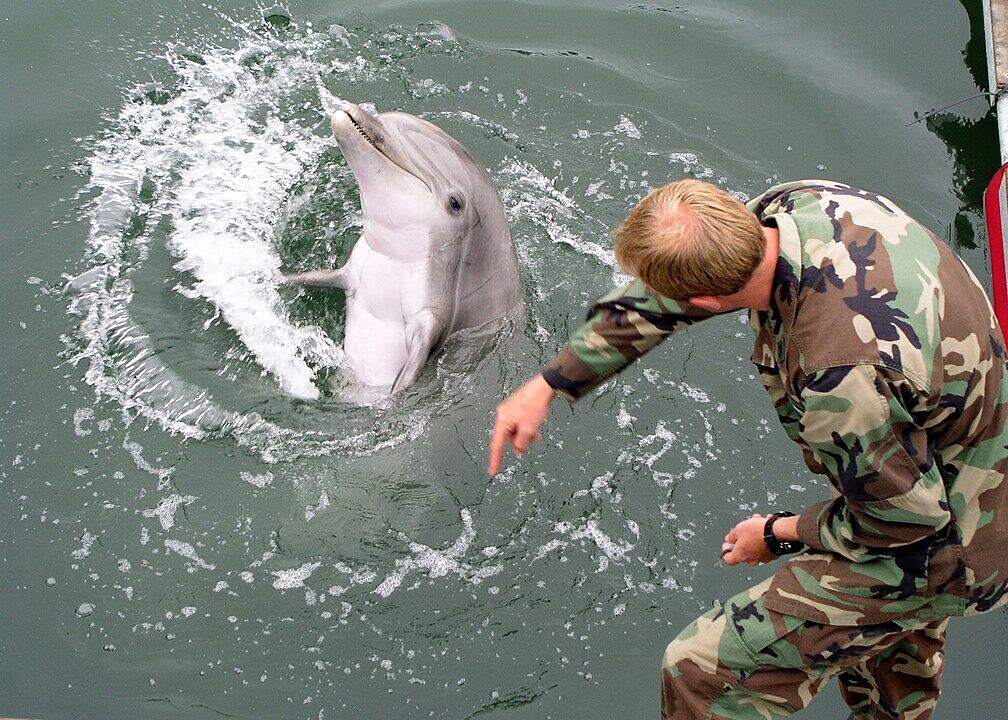
San Pedro, Calif. ñ (May 24, 2005) – Navy marine mammal handler ET2 Eric Kenas shows how a trained dolphin reacts to different hand gestures, during Lead Shield III/Roguex V, an exercise to test the portís readiness against terrorists. The Coast Guard and Navy conducted the two exercises around the ports of Los Angeles and Long Beach. The combined exercise involved 24 local, state and federal agencies in an effort to disrupt a simulated terrorist attack, respond to the consequences and maintain port operations. U.S. Navy Photo by Illustrator Draftsman 1st Class Pierre G. Georges.
Since the 1960s, marine mammals have been enlisted for military operations, with dolphins and sea lions serving as the primary marine recruits. The U.S. Navy Marine Mammal Program has trained dolphins to detect underwater mines and enemy swimmers, while sea lions have recovered equipment from the ocean floor and apprehended unauthorized divers. Dolphins’ natural biosonar capabilities far exceed artificial sonar technology in detecting objects in murky waters, making them exceptionally effective at locating potentially deadly mines. During the Vietnam War and both Iraq wars, these marine mammals saved countless lives through their detection abilities. Unlike dogs or horses, these marine recruits aren’t exposed to direct combat but still face dangers in their underwater missions. The intelligence of bottlenose dolphins in particular has made them invaluable assets – they can understand complex commands, distinguish between different types of underwater objects, and return to their handlers after completing missions. Despite controversy surrounding their use, the program continues today with approximately 70-75 dolphins and 30 sea lions in service.
Bears, Moose, and Exotic Mascots

Beyond animals formally trained for military tasks, numerous exotic animals have served as regimental mascots, boosting morale and becoming beloved companions to soldiers. Perhaps the most famous was Wojtek, a Syrian brown bear adopted by Polish II Corps soldiers during World War II. Wojtek was officially enlisted as a private, complete with his own paybook and serial number, to facilitate his transport on a British transport ship. He not only raised morale but actively assisted by carrying heavy artillery shells during the Battle of Monte Cassino in Italy. The Scottish regiment was known for its series of penguin mascots, all named Sir Nils Olav, with the current penguin holding the honorary rank of brigadier in the Norwegian King’s Guard. During World War I, the Canadian Expeditionary Force brought a black bear cub named Winnipeg to England, who later inspired A.A. Milne’s Winnie-the-Pooh character after his son Christopher Robin saw the bear at London Zoo. These unconventional animal soldiers provided emotional support to troops facing the horrors of war, often becoming symbols of their units and inspiring lasting legacies.
Elephants: Ancient Battle Tanks
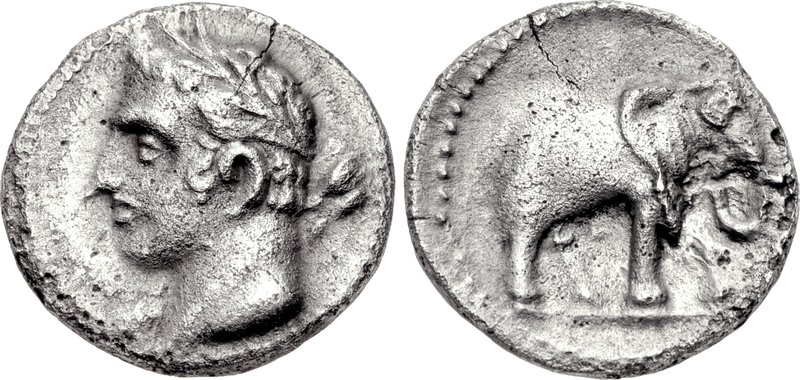
Long before the invention of tanks, elephants served as living weapons platforms on ancient battlefields. From Hannibal’s famous crossing of the Alps with 37 elephants during the Second Punic War to their extensive use in Asian armies, these massive animals were battlefield game-changers. Their imposing size alone could terrify enemy horses and soldiers unaccustomed to seeing such creatures. Armies would outfit elephants with armor and special saddles called howdahs that could carry multiple archers or spearmen, essentially creating mobile fighting platforms. In 326 BCE, Alexander the Great faced King Porus of India, who deployed approximately 200 war elephants during the Battle of the Hydaspes. The psychological impact of elephants was often as significant as their physical presence, though they could become unpredictable when wounded or frightened, sometimes turning on their own forces. While modern warfare has no place for elephant soldiers, these intelligent animals’ historical military contributions spanned thousands of years across multiple continents, fundamentally influencing battle tactics and military strategy in the ancient world.
Camels: Desert Warriors
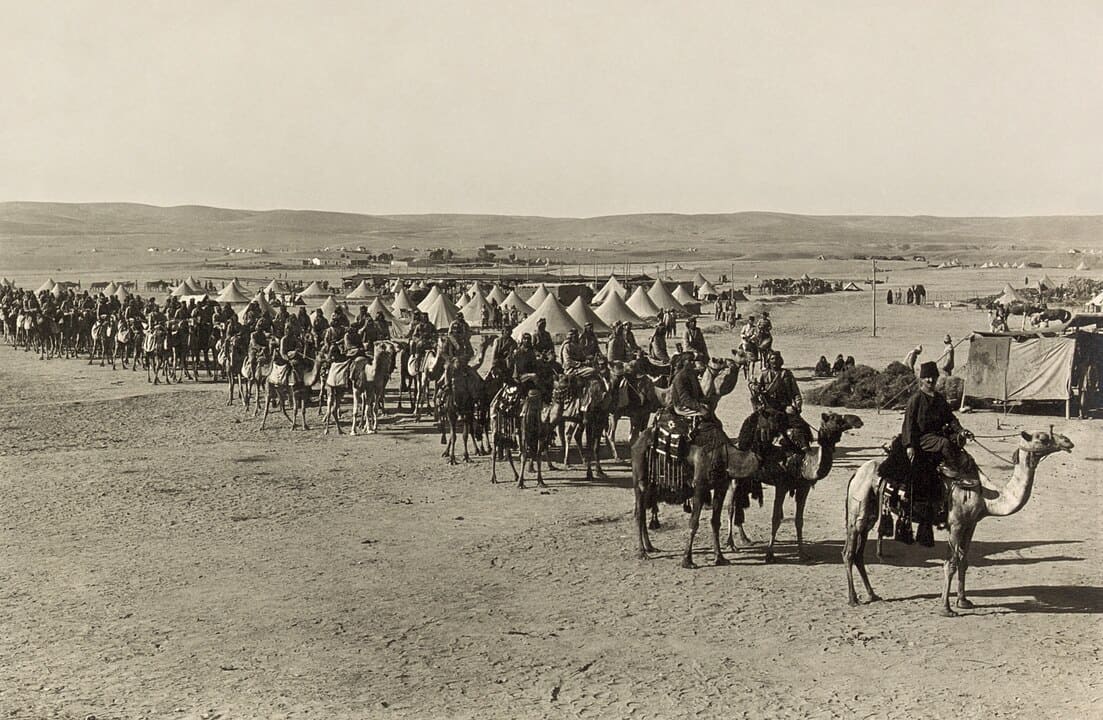
In arid environments where horses struggled to survive, camels became the preferred military mount. Their ability to travel long distances without water made them invaluable for desert warfare and supply transport. The United States experimented with the U.S. Camel Corps in the 1850s, importing camels for military use in the American Southwest. While this program was eventually abandoned during the Civil War, camels proved their military worth in the Middle East and North Africa. During World War I, the Imperial Camel Corps, composed of British, Australian, and New Zealand troops, used camels extensively for desert campaigns against the Ottoman Empire. The British Army deployed over 20,000 camels for logistical support in the Egyptian and Palestinian campaigns. Australia’s Light Horse regiments relied heavily on camels for the Sinai and Palestine Campaign. These “ships of the desert” could carry heavier loads than horses (up to 600 pounds), travel 25-30 miles per day through harsh terrain, and go up to two weeks without water, making them perfectly adapted for military operations in environments where other animals would quickly perish.
Rats and Mice: Tiny Detectors
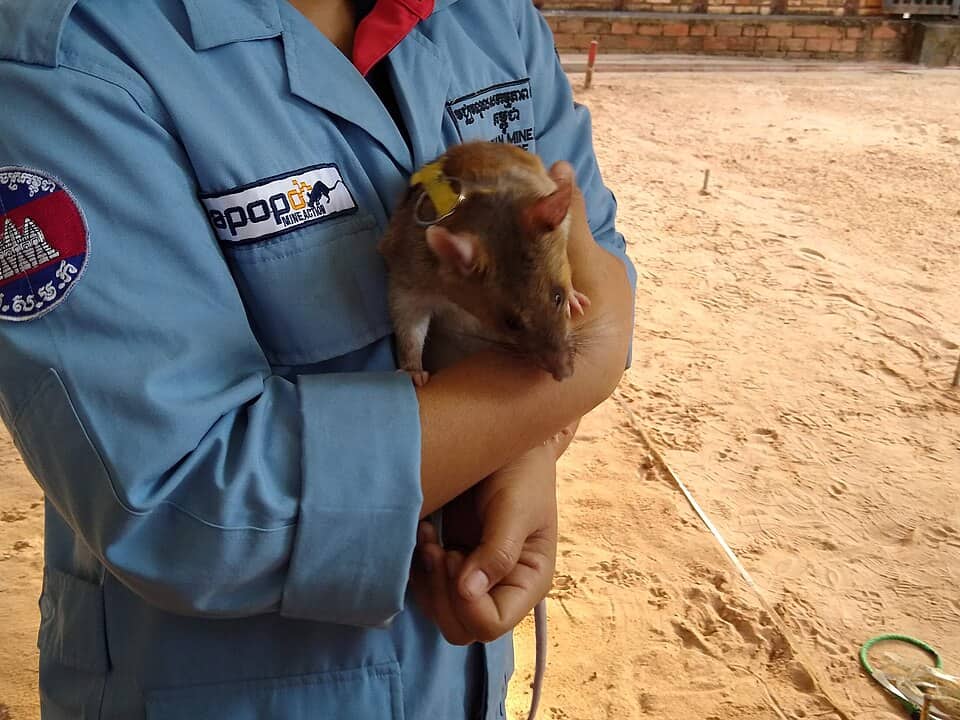
Some of the smallest animal recruits have made significant contributions to military efforts. African giant pouched rats, with their exceptional sense of smell and intelligence, have been trained to detect landmines in post-conflict zones. Organizations like APOPO have trained these “HeroRATS” to identify the scent of explosives, helping clear landmines in countries like Mozambique, Angola, and Cambodia. Unlike metal detectors, these rats can detect non-metallic mines and aren’t heavy enough to trigger explosions. One famous mine-detecting rat named Magawa was awarded the PDSA Gold Medal (the animal equivalent of the George Cross) after discovering 71 landmines and 38 unexploded ordnances during his career. During World War I, mice were kept in trenches as early warning systems for poison gas attacks, as they would show signs of distress before gas concentrations became lethal to humans. Some soldiers also used mice to detect vibrations from enemy tunneling operations. These small animals demonstrate that military contributions come in all sizes, with their natural abilities being harnessed to save human lives in both active conflicts and their aftermath.
Mules and Donkeys: The Reliable Transporters

When terrain became too difficult for motorized vehicles or even horses, mules and donkeys proved their worth through their legendary surefootedness and endurance. During World War II, mules were essential for supplying Allied troops fighting in the mountainous regions of Italy, Burma, and the China-Burma-India Theater. The U.S. Army alone used approximately 56,000 mules during World War II, with many deployed to carry supplies, ammunition, and wounded soldiers across mountainous terrain impassable to vehicles. During the Italian Campaign, pack mules navigated narrow mountain trails to supply front-line troops when mechanized transport couldn’t reach them. In modern conflicts, these animals continue to serve in Afghanistan, where American and coalition forces have used donkeys and mules to transport equipment through the country’s rugged mountains. The U.S. Marine Corps maintains specialized animal handling units like the Mountain Warfare Training Center in California, where Marines learn to work with pack animals for operations in challenging terrain. Despite technological advances, these humble animals remain irreplaceable in certain military situations where their ability to navigate difficult landscapes while carrying heavy loads makes them superior to any mechanical alternative.
Cats: Ship’s Companions and Vermin Control

While cats might not immediately come to mind as military animals, they have served alongside sailors for thousands of years, primarily as mousers on naval vessels. Ships’ cats controlled rat populations that threatened both food supplies and the structural integrity of wooden vessels by chewing through ropes and woodwork. Beyond their practical function, cats provided emotional support and companionship during long voyages, boosting sailor morale. During both World Wars, most Allied vessels had at least one ship’s cat, with some becoming famous for their service. Unsinkable Sam reportedly survived the sinking of three ships during World War II: the German battleship Bismarck, the British aircraft carrier HMS Ark Royal, and the destroyer HMS Cossack. The Royal Navy’s HMS Hermione had a cat named Convoy that would sleep on the captain’s cap before every successful escort mission, becoming a good luck symbol for the crew. In addition to serving at sea, cats were also kept in trenches during World War I to control rats and detect gas attacks, as they showed symptoms of poisoning before humans could smell the gas. Today, while their official military role has diminished with steel ships and better pest control, cats continue to serve informally on naval vessels around the world, maintaining the ancient tradition of feline sailors.
Glowworms: Nature’s Night Lights
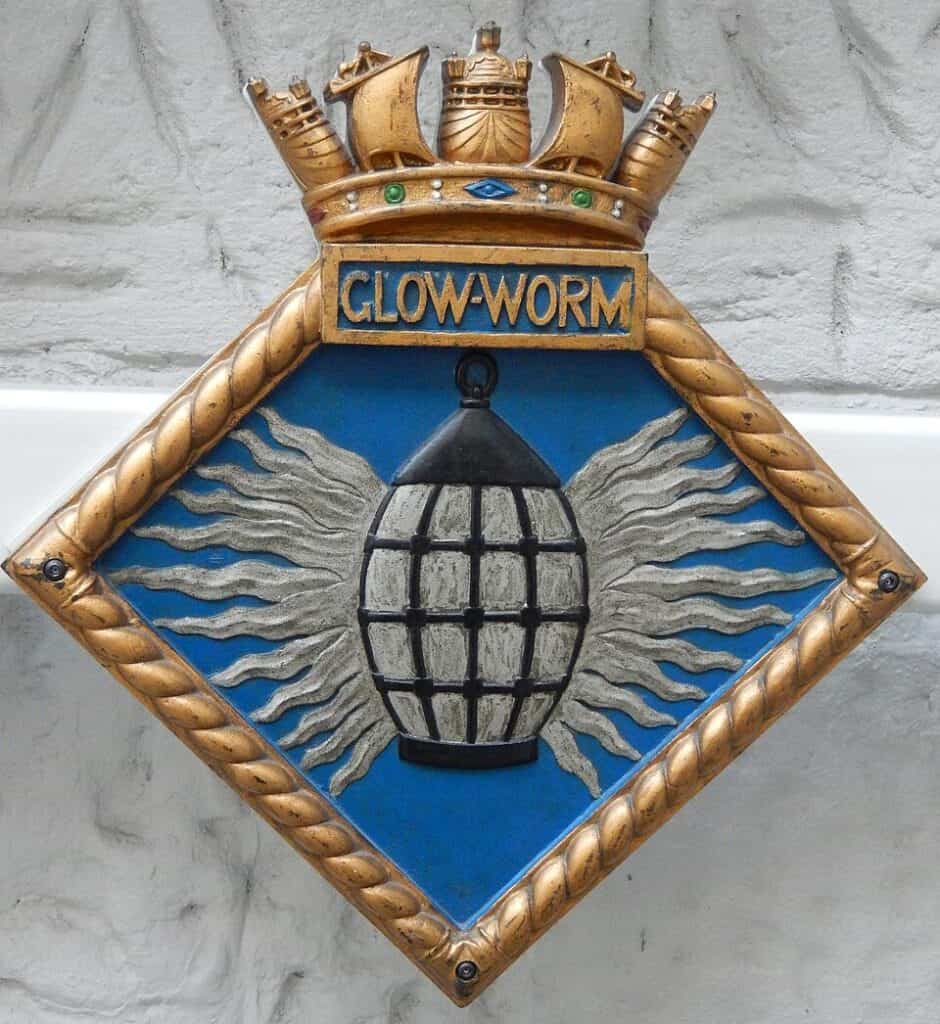
In one of the more unusual examples of animals serving in wartime, British soldiers during World War I collected glowworms to use as natural light sources in the trenches. These bioluminescent insects were gathered in jars and used to read maps, letters, and intelligence reports at night when using a lamp or flashlight might attract enemy fire. The dim, natural glow of these insects provided just enough light for soldiers to see what they were doing without revealing their positions to enemy observers or snipers. Thousands of glowworms were collected from French meadows for this purpose. Officers would sometimes keep jars of these insects in dugouts or command posts to provide continuous illumination for nighttime planning. This practice represented an ingenious adaptation of nature’s technology to meet military needs before the widespread availability of safe, low-light options for frontline troops. While their contribution might seem minor compared to horses carrying artillery or dogs locating mines, these tiny insects helped preserve operational security during nighttime activities and potentially saved lives by preventing the detection of British positions, demonstrating how even the smallest creatures found important niches in wartime service.
The Legacy and Recognition of Animal Soldiers
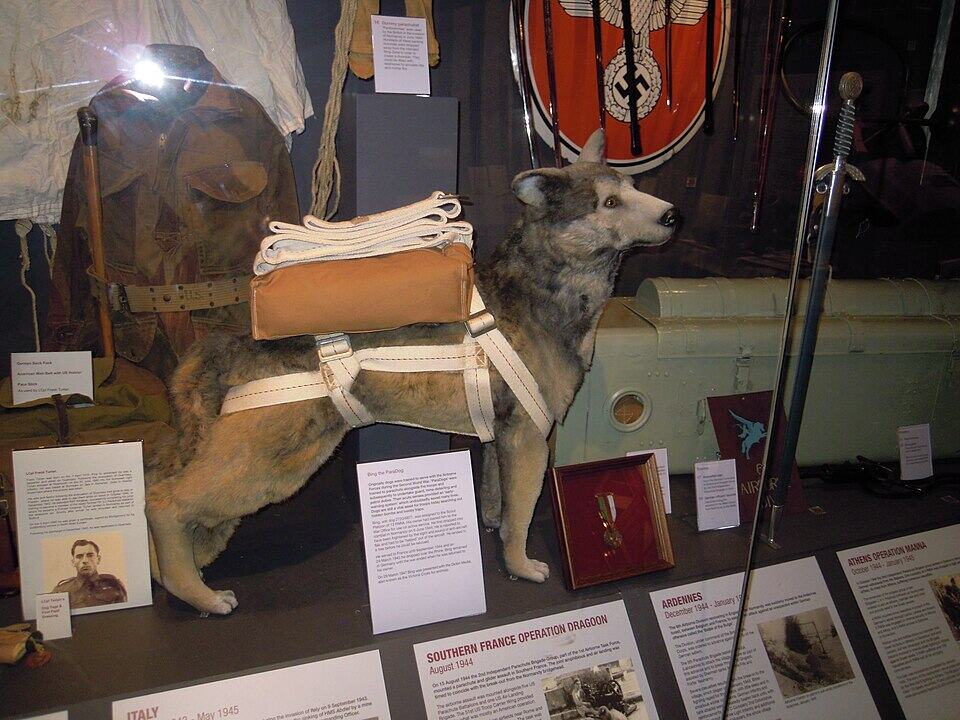
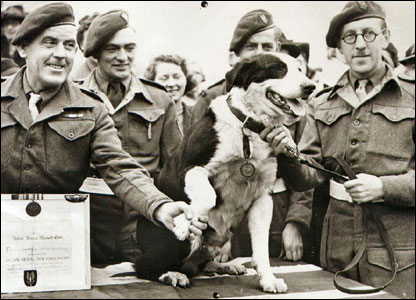
The service and sacrifice of military animals have increasingly gained recognition through monuments, medals, and remembrance initiatives worldwide. The PDSA Dickin Medal, established in 1943 by Maria Dickin, founder of the People’s Dispensary for Sick Animals, is considered the animal equivalent of the Victoria Cross. Since its inception, it has been awarded to 71 animals, including 34 dogs, 32 pigeons, 4 horses, and 1 cat. Notable recipients include Judy, a pointer and the only official canine prisoner of war during World War II, and more recently, Kuno, a Belgian Malinois who continued to attack enemy fighters during a 2019 Al-Qaeda compound raid even after being shot multiple times. The Animals in War Memorial in London’s Hyde Park, unveiled in 2004, bears the inscription “They had no choice” and commemorates the millions of animals that served and died alongside British and Allied forces. Similarly, the Australian War Animal Memorial Organization has established numerous memorials across Australia and internationally. In the United States, the National War Dogs Monument in California and the War Dog Memorial at the Michigan War Dog Memorial Cemetery honor the contributions of canine soldiers. These recognitions reflect a growing appreciation for the loyal service of animal warriors who, without understanding the conflicts they participated in, demonstrated extraordinary courage and saved countless human lives throughout military history.
Honoring Their Service: A Timeless Bond
The story of animals in warfare represents one of the most profound examples of the human-animal bond, forged in the crucible of conflict where trust and cooperation meant survival. From ancient battlefields to modern war zones, these animal soldiers have demonstrated extraordinary capabilities that frequently surpassed available technology, whether delivering messages faster than mechanical means or detecting explosives with greater accuracy than sophisticated equipment. Their service has come at a tremendous cost – millions of animals have perished in human conflicts, often displaying a loyalty and courage that humbles their human counterparts. As warfare continues to evolve with drones and robotics increasingly taking over dangerous missions, we must not forget the irreplaceable contributions made by these animal warriors throughout military history. Their legacy lives on not only in monuments and medals but in the modern working animals that continue to serve alongside armed forces worldwide, reminding us that in the most difficult circumstances, the connection between humans and animals can transcend the horrors of war to create bonds of mutual trust, respect, and even love.

- What’s Hiding in the Forests of the Pacific Northwest - July 21, 2026
- Tarsiers: The Tiny Primates with Giant Eyes - July 21, 2026
- Are Zoos Still Ethical in 2025? - July 21, 2026