

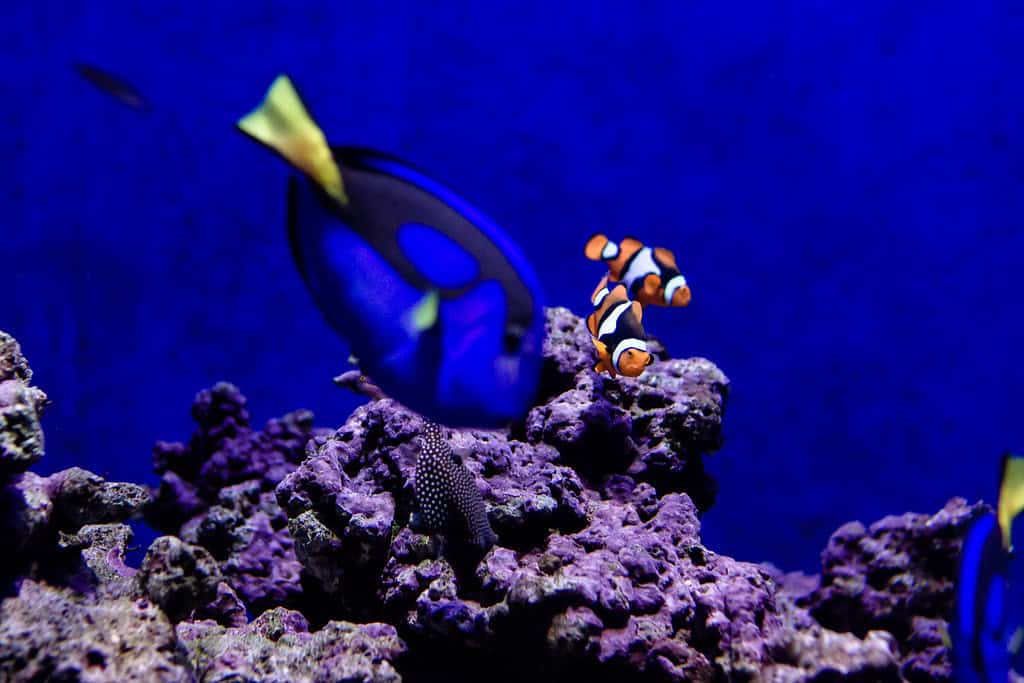
When Finding Nemo was released in 2003, audiences fell in love with the forgetful but lovable blue tang fish named Dory. Her popularity soared even further with the release of Finding Dory in 2016, where she became the star of her own adventure. But beyond the animated character lies a real marine species with fascinating characteristics and a complex story. Many viewers have wondered: what kind of fish is Dory in real life? Is she accurately portrayed in the films? And what challenges does her species face in the wild? This comprehensive article explores the real fish behind the beloved character, diving deep into the biology, habitat, behavior, and conservation status of Dory’s real-life counterpart.
The Real Identity of Dory

Dory from the Pixar films is based on a real species called the Pacific blue tang (Paracanthurus hepatus), also known as the palette surgeonfish, royal blue tang, or hippo tang. This vibrant fish belongs to the surgeonfish family Acanthuridae, a group known for their bright colors and the sharp spines near their tails.
The character’s design is remarkably accurate to the real species, capturing the distinctive royal blue body, black “palette” marking, and yellow tail that make the Pacific blue tang instantly recognizable. While the movie takes creative liberties with Dory’s personality and cognitive abilities, the physical representation is quite faithful to the natural appearance of this striking reef-dwelling species.
Physical Characteristics of Blue Tangs
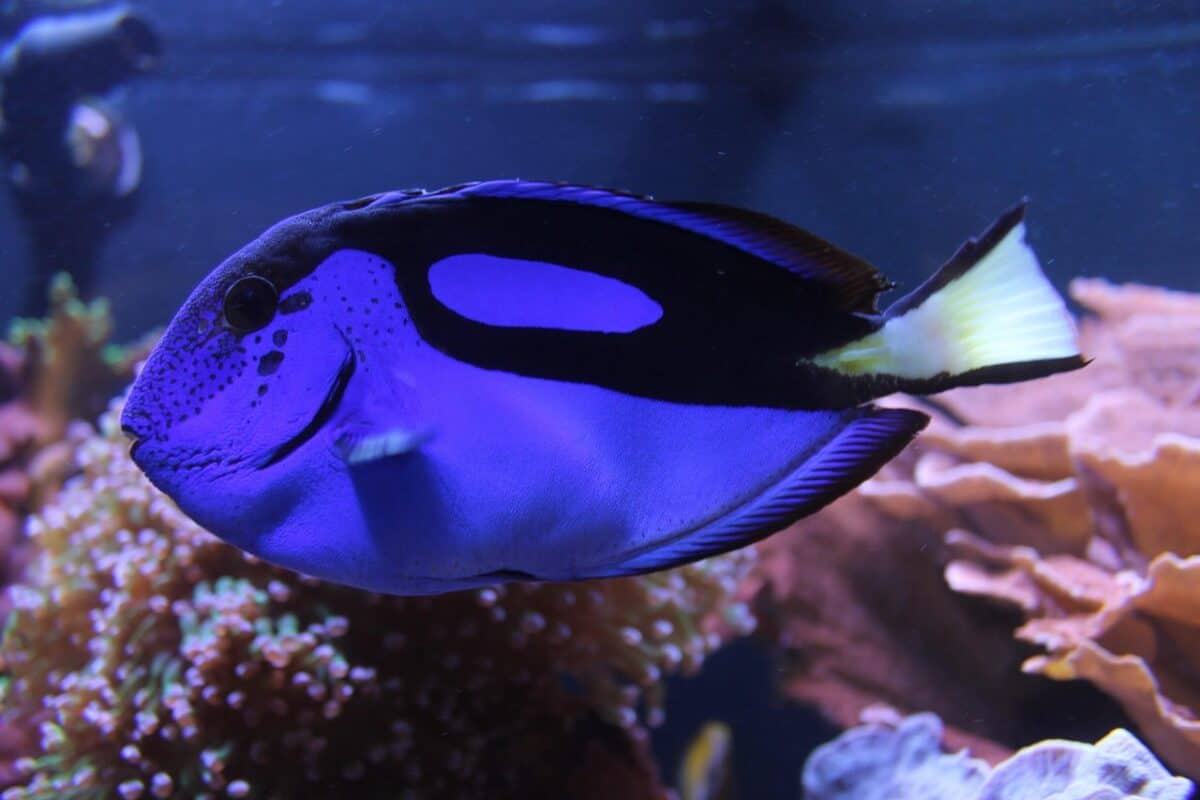
Pacific blue tangs display a stunning electric blue to purple-blue coloration across most of their bodies, with a distinctive black marking resembling an artist’s palette (hence one of their common names). Their tail fins are bright yellow, creating a striking contrast with their blue bodies. These fish typically grow to about 12 inches (30 cm) in length in the wild, though they’re usually smaller in captivity.
They have a compressed, oval-shaped body that allows them to navigate the complex structure of coral reefs efficiently. One of their most notable features is the scalpel-like modified scales called “scutes” located at the base of their tail, which gives the surgeonfish family its name. These sharp appendages can be extended when the fish feels threatened, serving as a defensive mechanism against predators.
Natural Habitat and Distribution

Unlike Dory’s adventures that took her across vast ocean distances, real Pacific blue tangs have a more defined geographical range. They are native to the Indo-Pacific region, found throughout reefs from East Africa and Sri Lanka to the Line Islands and Samoa. They’re particularly common in the coral reefs of Indonesia, Philippines, Great Barrier Reef of Australia, and other tropical marine environments in the Pacific and Indian Oceans.
Blue tangs prefer clear water environments with abundant coral growth, typically residing at depths between 6 and 131 feet (2-40 meters). They’re closely associated with coral reef ecosystems, where they find both food and shelter. As juveniles, they often hide among branching corals for protection, while adults are more commonly seen swimming in the open water above and around reefs.
Diet and Feeding Behavior

Unlike the omnivorous eating habits sometimes portrayed in the films, Pacific blue tangs are primarily herbivores with a specialized diet. They feed mainly on algae growing on coral reefs, serving an important ecological function by preventing algal overgrowth that could smother corals. Their small mouths are perfectly adapted for scraping algae from hard surfaces.
Using their sharp teeth, they methodically graze along the reef, consuming various types of benthic algae throughout the day. This constant grazing behavior means they play a crucial role in reef health as “algae controllers.” Occasionally, they may consume small amounts of zooplankton to supplement their diet, but plant matter constitutes the vast majority of their nutrition. In captivity, they require specialized diets that replicate their natural herbivorous feeding patterns.
Social Behavior and Memory

Contrary to Dory’s portrayal as a solitary fish with short-term memory loss, real blue tangs are highly social creatures. In the wild, they frequently form schools, particularly when young, which provides protection from predators and facilitates efficient feeding. As they mature, they may become more independent but still often travel in loose groups or pairs. Regarding memory, there’s no scientific evidence suggesting that blue tangs suffer from any form of short-term memory loss.
In fact, like many fish species, they demonstrate considerable cognitive abilities, including recognizing territorial boundaries, remembering feeding locations, and potentially even recognizing individual fish within their social groups. The “short-term memory loss” characteristic was a creative invention for Dory’s character and doesn’t reflect the cognitive abilities of actual blue tangs.
Reproduction and Life Cycle
Pacific blue tangs have fascinating reproductive behaviors that weren’t explored in the Pixar films. They are broadcast spawners, meaning they release eggs and sperm into the water column during mass spawning events, typically around dusk on the reef. These spawning aggregations often occur around the full moon and can involve numerous individuals gathering in the water column above the reef.
After external fertilization, the eggs float in the currents as part of the plankton until they hatch into larvae. The larval stage lasts approximately 2-3 weeks before the young fish settle on the reef. Juvenile blue tangs look remarkably different from adults, starting with a bright yellow color and gradually developing their distinctive blue coloration and black markings as they mature. They reach sexual maturity at about 1-2 years of age and can live for 8-12 years in the wild, with some individuals potentially living even longer.
The “Surgeon” in Surgeonfish

The Pacific blue tang belongs to the surgeonfish family, a name derived from the scalpel-like spines these fish possess on either side of their tail base. These modified scales, called scutes, lie flat against the body during normal swimming but can be extended when the fish feels threatened. The sharp protrusions can inflict significant cuts on predators or unwary handlers, serving as an effective defense mechanism.
When blue tangs feel threatened, they may quickly change direction, whipping their tail to deploy these natural “scalpels.” This defensive adaptation was not prominently featured in the Pixar films, perhaps to maintain Dory’s gentle and non-threatening character. However, in real life, this feature is one of the most distinctive characteristics of the surgeonfish family and an important consideration for anyone handling these fish in aquarium settings.
Conservation Status and Threats

While the Pacific blue tang is currently listed as “Least Concern” on the IUCN Red List, the species faces several significant threats. Habitat destruction through coral reef degradation is perhaps the most serious concern, as rising ocean temperatures lead to coral bleaching events that destroy the reef ecosystems blue tangs depend on. Ocean acidification from increasing carbon dioxide levels further threatens coral reef health.
Additionally, the aquarium trade has placed substantial pressure on wild populations, particularly following the release of Finding Nemo and Finding Dory, which sparked increased demand for these fish as pets. Unlike many popular aquarium fish, blue tangs cannot be commercially bred in captivity on a large scale, meaning nearly all specimens in the pet trade are wild-caught, often using destructive fishing methods like cyanide fishing that damage both the target fish and their reef habitats.
The “Dory Effect” on Wild Populations

The phenomenon known as the “Dory Effect” refers to the surge in demand for blue tang fish following the release of Finding Nemo and especially after Finding Dory. Similar to the “Nemo Effect” that increased demand for clownfish, the popularity of Dory’s character led to a significant increase in people wanting to keep blue tangs as pets. Unlike clownfish, however, which can be readily bred in captivity, commercial breeding of blue tangs has proven extremely challenging, with only limited success in recent years.
Consequently, almost all blue tangs in the aquarium trade are captured from the wild. This increased demand has led to intensified fishing pressure on wild populations and, in some cases, the use of harmful collection methods like cyanide fishing, which stuns fish for easy collection but often kills many other reef organisms in the process. Conservation organizations have worked to educate consumers about the challenges associated with keeping these fish and the impact of their collection on wild populations.
Challenges of Blue Tangs in Home Aquariums

Despite their popularity as pets, Pacific blue tangs are extremely challenging to keep in home aquariums and are generally not recommended for novice fish keepers. They require very large tanks (at minimum 180 gallons, but preferably larger) to accommodate their size, activity level, and need for swimming space. They also demand excellent water quality with stable parameters, powerful filtration systems, and complex aquascaping that mimics their natural reef environment.
Their specialized herbivorous diet requires careful attention to nutrition, including various marine algae and specially formulated foods. Blue tangs are also susceptible to various diseases in captivity, particularly marine ich (Cryptocaryon irritans) and marine velvet (Amyloodinium ocellatum), which can be difficult to treat. Additionally, their scalpel-like tail spines can make tank maintenance hazardous and can injure other tank inhabitants. For these reasons, conservation organizations and responsible aquarium trade associations often discourage the keeping of blue tangs by most home aquarists.
Accurate vs. Fictional Portrayals in Finding Nemo and Finding Dory

While Pixar did an excellent job capturing the physical appearance of the Pacific blue tang for Dory’s character, many aspects of her portrayal are creative liberties taken for storytelling purposes. The most obvious fictional element is Dory’s short-term memory loss, which has no basis in the biology of real blue tangs. Additionally, the films anthropomorphize Dory by giving her the ability to read and speak “whale,” capabilities far beyond any fish’s cognitive abilities.
The movies also simplify the complex social structures of these fish, portraying Dory as primarily solitary when real blue tangs often travel in groups. The vast oceanic journeys depicted in the films would be unlikely for real blue tangs, which generally stay within their reef habitats. However, the films do accurately capture some elements of blue tang behavior, such as their active swimming style and their association with reef environments. Despite these inaccuracies, many marine biologists appreciate how the films have increased public interest in marine life and ocean conservation.
Sustainable Alternatives for Dory Fans

For fans of Finding Dory who are inspired to keep aquariums, there are several more sustainable alternatives to purchasing wild-caught blue tangs. One option is to focus on aquacultured (captive-bred) species like clownfish, which are widely available from sustainable sources and much easier to care for than blue tangs. Another alternative is to consider similar-looking but hardier fish species that can be sustainably sourced, such as the blue damselfish or the powder blue tang (though the latter still requires advanced care).
Virtual aquariums, educational visits to public aquariums, or “adopting” a blue tang through conservation organizations are excellent no-impact alternatives that allow Dory fans to connect with these beautiful fish without contributing to wild collection. For those determined to keep marine aquariums, researching the source of all fish and corals and purchasing only from vendors committed to sustainable collection practices is essential. Many reputable public aquariums also offer educational programs about marine conservation that can provide a meaningful way for Dory enthusiasts to channel their interest in these remarkable fish.
Conclusion: Beyond the Animated Character

The Pacific blue tang, immortalized as Dory in the Pixar films, represents one of nature’s most striking reef inhabitants with its electric blue coloration and distinctive markings. While the lovable, forgetful character has captured hearts worldwide, the real fish presents a complex story of adaptation, ecological importance, and conservation challenges. Understanding the true nature of blue tangs—their herbivorous diet, social behavior, defensive adaptations, and specialized habitat requirements—helps us appreciate these remarkable creatures beyond their fictional portrayal.
As climate change and human activities continue to threaten coral reef ecosystems globally, the popularity of Dory offers a unique opportunity to channel public interest toward marine conservation efforts. By learning about the real fish behind the beloved character, we can develop a deeper appreciation for the biodiversity of our oceans and the urgent need to protect these vibrant underwater worlds for future generations.

From exploring the marine wonders in the Azores and witnessing the vast savannas of Kenya, to delving deep into the rich biodiversity of South Africa and traversing iconic landscapes in Australia and the US like Yellowstone, Chris's experiences are vast.
With a penchant for diving alongside sharks, the ocean holds a special place in his heart.
Through his academic insights, he champions wildlife conservation, striving with 'Animals Around The Globe' to cultivate a profound connection between humans and animals, enhancing our mutual appreciation.
Connect with him at Feedback@animalsaroundtheglobe.com.
- The Largest Clam Ever Dredged Up From U.S. Waters - July 22, 2026
- How Animated Films Shape What Kids Believe About Animals - July 22, 2026
- The Most Iconic Animals Saved from Extinction in the U.S. - July 22, 2026