


In the shadows of the Hollywood sign, a most unlikely resident made his home for over a decade. P-22, a male mountain lion (Puma concolor), became perhaps the most famous wild cat in America, if not the world. Unlike the human celebrities who populated the hills below him, P-22 never sought the spotlight. Yet from 2012 until his death in 2022, this remarkable puma captured the imagination of Los Angeles residents and wildlife enthusiasts globally, becoming a powerful symbol for urban wildlife conservation and coexistence.
What made P-22 extraordinary wasn’t just his choice of habitat—living in Griffith Park, an island of wilderness surrounded by the concrete jungle of Los Angeles—but how he got there. To reach his 8-square-mile territory, the young mountain lion had to cross two of the busiest freeways in America: the 405 and the 101. His improbable journey and subsequent survival in one of the most densely populated urban areas in the country transformed him from just another mountain lion into a cultural icon whose legacy continues to inspire conservation efforts well beyond Southern California.
Discovery and Scientific Significance
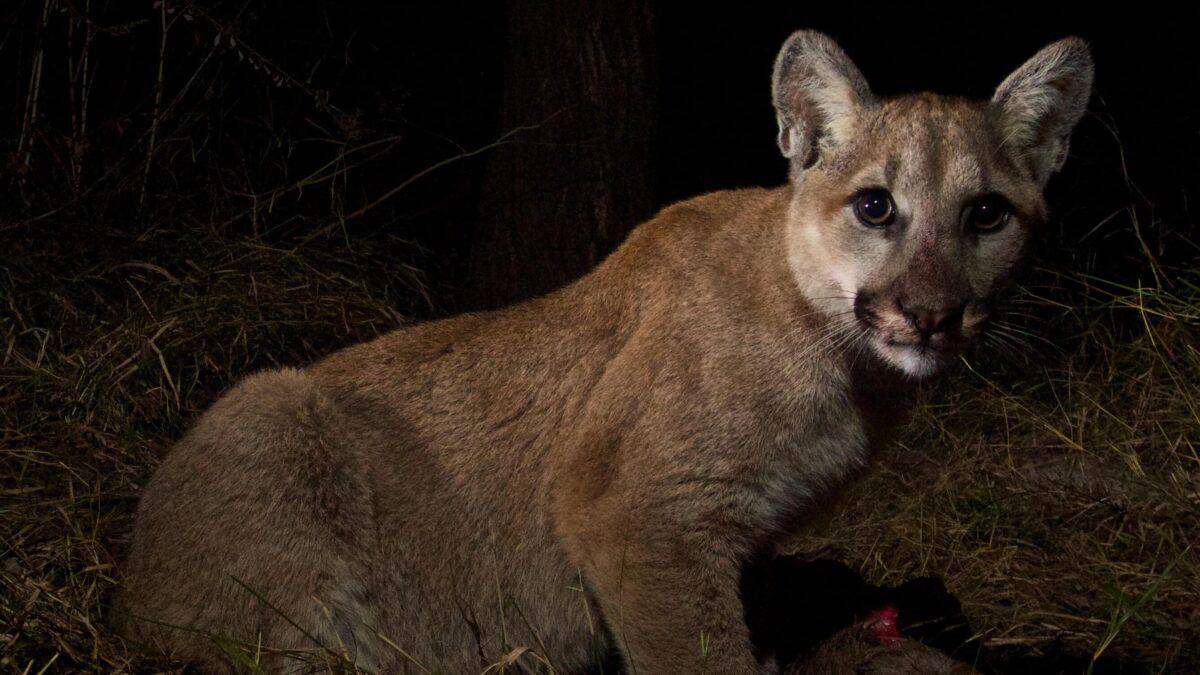
P-22’s story began in February 2012, when wildlife biologist Miguel Ordeñana captured the first images of the mountain lion on a remote camera trap in Griffith Park. The discovery sent shockwaves through the scientific community—no one had documented a mountain lion living within Los Angeles city limits before. National Park Service biologists soon captured the young male, estimated to be about 3 years old at the time, and fitted him with a GPS tracking collar. They designated him P-22, with “P” standing for puma and “22” indicating he was the 22nd mountain lion in their study.
Genetic testing revealed another surprising detail: P-22 was born in the Santa Monica Mountains, meaning he had traveled approximately 20 miles across heavily urbanized terrain to reach Griffith Park. This journey highlighted the extreme challenges facing wildlife in fragmented habitats and positioned P-22 as an important research subject for understanding how large predators might adapt to urban environments. His presence in Griffith Park—an area far too small for a typical mountain lion territory—also raised important questions about the minimum habitat requirements for these animals and the ecological impacts of isolation.
Life in the Urban Wilderness
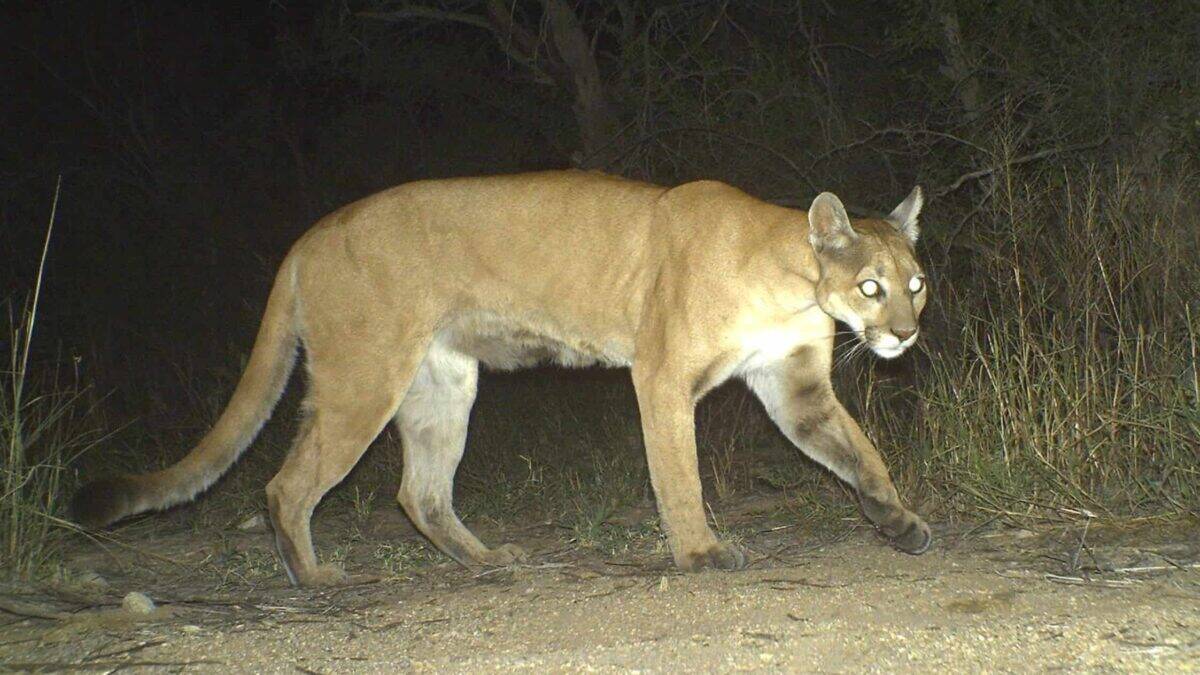
P-22’s territory in Griffith Park spanned roughly 8 square miles, a fraction of the 150-200 square miles typically required by male mountain lions. Despite this spatial constraint, he adapted remarkably well to his surroundings. Griffith Park, while small, provided enough mule deer and smaller mammals to sustain him. His diet consisted primarily of deer, coyotes, raccoons, and occasionally domestic animals that wandered into the park. Unlike many urban-dwelling wildlife, P-22 largely avoided human conflict during his decade in the park.
Living in such close proximity to humans, P-22 developed behaviors that helped him stay hidden. He became primarily nocturnal, moving through the park’s trails and canyons after dark when human activity diminished. During daylight hours, he would rest in dense vegetation, rocky outcrops, or other secluded areas. His remarkable ability to remain largely unseen in a park visited by millions of people each year earned him the nickname “the ghost cat.” Despite thousands of trail cameras and countless hikers in the park, actual sightings of P-22 remained extremely rare throughout his life.
Rise to Celebrity Status
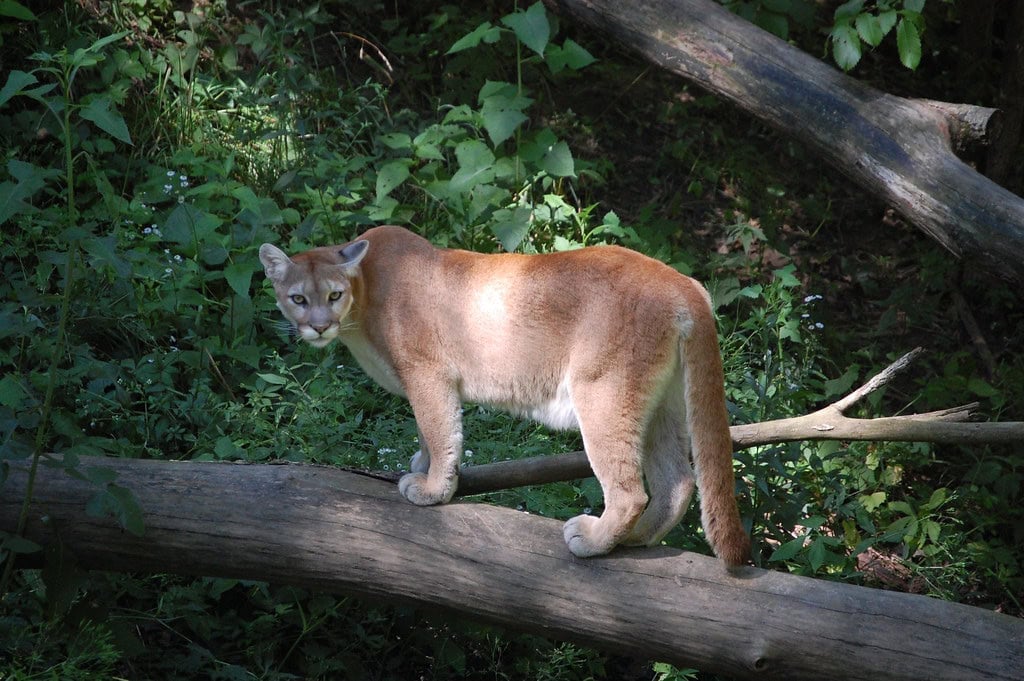
P-22’s journey from scientific curiosity to cultural phenomenon began in 2013 when National Geographic photographer Steve Winter captured a now-iconic image of the mountain lion at night with the Hollywood sign illuminated in the background. The photograph, published in the December 2013 issue, catapulted P-22 to international fame. Here was a wild predator, not in some distant wilderness, but living alongside 10 million Los Angeles residents. The juxtaposition of wilderness and urban life captured in that single image resonated deeply with people around the world.
Following the publication, P-22 quickly became a symbol of wildlife conservation in urban environments. His story was featured in documentaries, books, and countless news articles. He acquired a social media presence, fan clubs, and even an official fan day—P-22 Day—celebrated annually in Los Angeles since 2016. The mountain lion’s celebrity status transcended typical wildlife appreciation, evolving into something akin to the fame enjoyed by human celebrities in the city below. As Los Angeles City Councilmember Paul Koretz would later put it, P-22 became “the Brad Pitt of mountain lions.”
Health Challenges in an Urban Ecosystem

Life in an urban environment presented P-22 with unique health challenges throughout his years in Griffith Park. In 2014, National Park Service biologists recaptured him after noticing his deteriorating condition on camera trap images. They discovered he was suffering from mange, a parasitic skin disease, and had dangerously high levels of rat poison in his bloodstream. The poison exposure likely came from consuming animals that had ingested rodenticide, highlighting the cascading effects of urban pest control on wildlife. Following treatment, P-22 recovered, but the incident sparked significant public debate about the use of anticoagulant rodenticides in urban and suburban settings.
In 2015, P-22 faced another health crisis when he retreated into a crawl space beneath a Los Feliz home. Wildlife officials successfully encouraged him to leave, but the incident raised concerns about his well-being and adaptation to urban stress. Over the years, P-22 also sustained injuries that were likely the result of vehicle encounters, though none severe enough to require intervention. Despite these challenges, his remarkable resilience and adaptability allowed him to survive for over a decade in an environment that few would consider suitable for a large predator—a testament to both his individual tenacity and the species’ adaptability.
Conservation Impact and Legacy

Perhaps P-22’s greatest contribution was the attention he brought to wildlife conservation issues in urban environments. His presence in Los Angeles helped humanize mountain lions, transforming them in the public consciousness from fearsome predators to fellow citizens navigating a challenging landscape. This shift in perception proved invaluable for conservation efforts. In 2014, partially inspired by P-22’s story, California banned the use of certain anticoagulant rodenticides that had poisoned him and countless other wildlife. His story also catalyzed support for the Liberty Canyon Wildlife Crossing over the 101 Freeway, a $90 million project that broke ground in 2022 and will be the largest wildlife crossing in the world when completed.
P-22 also inspired educational programs across Los Angeles, helping generations of urban dwellers understand the wildlife that shares their environment. The Natural History Museum of Los Angeles County created a permanent exhibition focused on local mountain lions, with P-22 as the centerpiece. His story has been incorporated into school curricula throughout the region, teaching children about urban ecology and conservation. Through these various channels, P-22 became more than just a mountain lion—he became an ambassador for wildlife conservation and a powerful symbol of coexistence between humans and wild predators in shared landscapes.
The Solitary King of Griffith Park
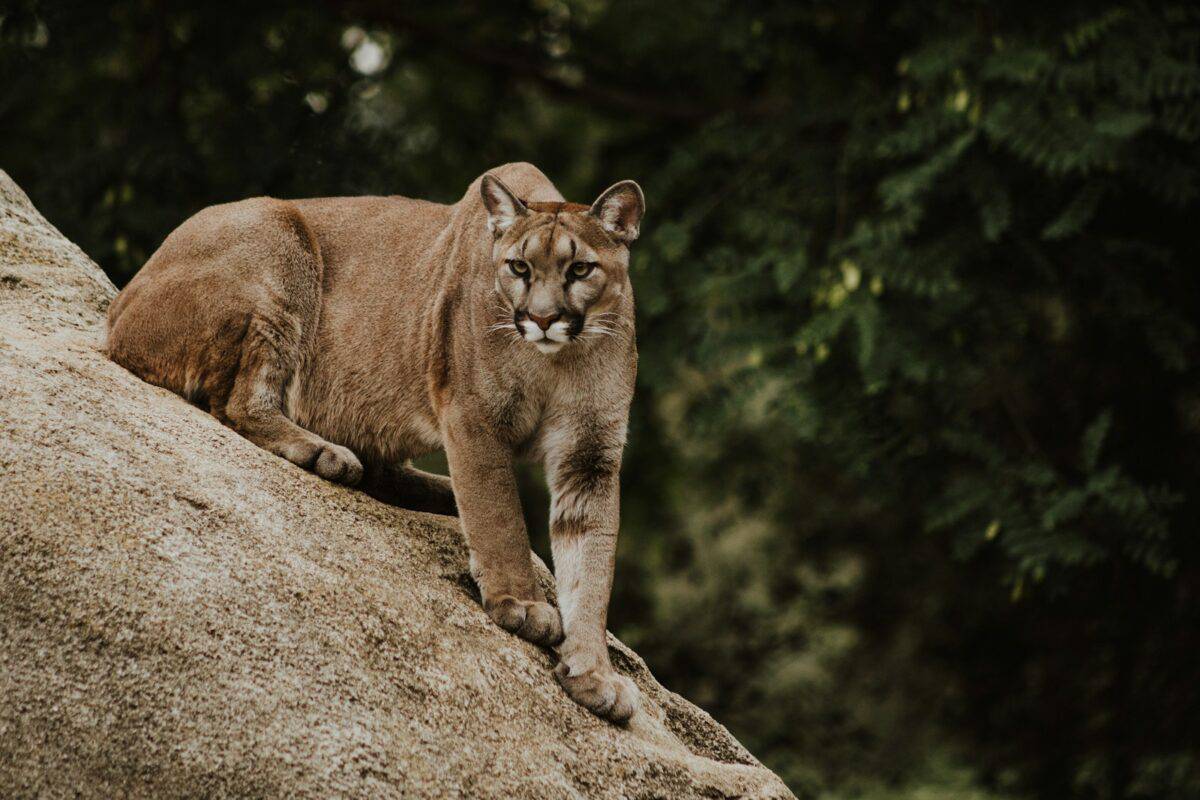
One of the most poignant aspects of P-22’s story was his solitude. Mountain lions are naturally solitary animals, but they do seek mates during breeding seasons. P-22, isolated in Griffith Park by freeways and urban development, lived his entire adult life without encountering another mountain lion. Biologists often referred to him as the “loneliest mountain lion in the world.” This isolation meant P-22 never reproduced, despite reaching reproductive maturity. The park, while sufficient to sustain a single mountain lion, was far too small to support a breeding population.
His isolation highlighted a critical conservation concern: habitat fragmentation. Throughout Southern California and many urban areas worldwide, wildlife habitat has been carved into increasingly smaller islands by roads, development, and other human infrastructure. P-22’s solitary existence became a powerful metaphor for this fragmentation, helping the public understand the importance of wildlife corridors and connected habitats. Though he lived alone, P-22’s story connected countless humans to the plight of urban wildlife and inspired action to ensure future generations of mountain lions might have better opportunities to thrive in fragmented landscapes.
Cultural Impact Beyond Conservation

P-22’s influence extended far beyond scientific circles and conservation movements, permeating Los Angeles culture in unexpected ways. Street artists created murals depicting the famous feline throughout the city. Local breweries named beers after him. Fashion designers produced P-22 themed clothing. He appeared on merchandise from t-shirts to coffee mugs, with proceeds often benefiting wildlife conservation. The mountain lion was even featured in a museum exhibition titled “The Story of P-22, L.A.’s Most Famous Feline,” which traveled throughout Southern California.
In a city defined by entertainment and celebrity, P-22 carved out his own unique place in the cultural landscape. He inspired songs, poems, and at least one play. Children’s books featuring his story introduced young readers to urban wildlife conservation. In 2017, the Natural History Museum of Los Angeles County hosted a special event called “P-22 Day Festival,” which has since become an annual celebration of urban wildlife. Through these various cultural expressions, P-22 transcended his biological identity to become something rare indeed—a wild animal that achieved cultural relevance comparable to human celebrities in the entertainment capital of the world.
Challenges and Controversies

Despite his beloved status, P-22’s presence in Griffith Park occasionally stirred controversy. In 2016, he was suspected of killing a koala at the Los Angeles Zoo, which is located within Griffith Park. Though never definitively proven, DNA evidence suggested P-22 was the likely culprit. The incident sparked debate about the risks of coexisting with predators in urban environments. Zoo officials increased security measures, and some residents questioned whether a large predator should be allowed to remain in a heavily used public park. However, city officials and wildlife agencies remained committed to allowing P-22 to stay in his adopted home.
More broadly, P-22’s fame highlighted tensions in wildlife management approaches. Some critics argued that resources devoted to tracking and celebrating a single mountain lion could have been better spent on broader conservation initiatives. Others questioned whether allowing a mountain lion to live in such a small, isolated territory was truly in the animal’s best interest. These debates reflect larger questions about how humans should manage and coexist with wildlife in increasingly urbanized landscapes—questions that have no easy answers but that P-22’s story helped bring into public discourse.
Final Days and Passing

After a decade as Griffith Park’s most famous resident, P-22’s health began to decline in late 2022. Wildlife officials noticed concerning changes in his behavior, including several incidents where he ventured into residential areas—something he had rarely done previously. On December 12, 2022, after reports of the mountain lion showing signs of distress and injuring a dog in a residential backyard, California Department of Fish and Wildlife officials made the difficult decision to capture him for evaluation. Veterinary examinations revealed severe health problems: advanced kidney disease, arthritis, extensive parasitic skin infections, and significant trauma to his head, right eye, and internal organs, likely from a vehicle strike.
Given the extent of his injuries and deteriorating condition, wildlife officials and veterinarians made the heart-wrenching decision to humanely euthanize P-22 on December 17, 2022. He was estimated to be about 12 years old—quite elderly for a wild mountain lion, especially one living in such challenging circumstances. News of his passing spread quickly, generating an outpouring of grief throughout Los Angeles and beyond. Memorial services were held in his honor, tributes appeared throughout the city, and flags at Los Angeles City Hall were lowered to half-staff—an unprecedented honor for a wild animal.
P-22’s Posthumous Impact

In death as in life, P-22 continued to make significant contributions to wildlife conservation. His remains were transferred to the Natural History Museum of Los Angeles County, where scientists conducted detailed studies to better understand the physiological impacts of urban living on large predators. These studies revealed high levels of various toxins in his system, including several types of rat poison and industrial chemicals, providing important data on the bioaccumulation of pollutants in urban wildlife. Additionally, tissue samples were preserved for future research, ensuring that P-22’s scientific legacy will continue for generations.
Beyond the scientific realm, P-22’s death reinvigorated public support for wildlife conservation initiatives. Donations to organizations working on the Liberty Canyon Wildlife Crossing surged following his passing. In February 2023, California Governor Gavin Newsom signed the “P-22 Wildlife Crossing Act,” which requires Caltrans to identify and prioritize wildlife crossing projects when planning or implementing highway projects. The state also accelerated efforts to phase out the use of second-generation anticoagulant rodenticides. These policy changes represent perhaps the most concrete aspects of P-22’s legacy—tangible improvements that will benefit countless wild animals for decades to come.
The Enduring Legacy of L.A.’s Most Famous Feline
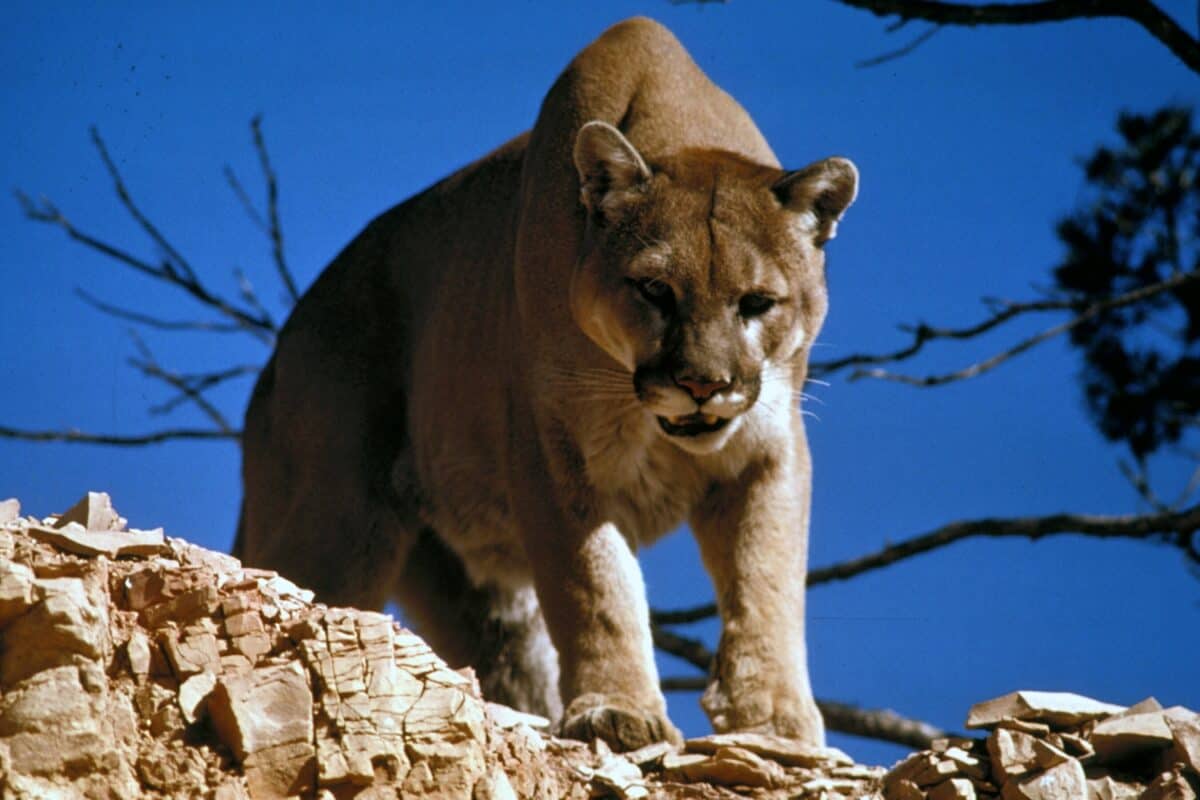
P-22’s remarkable journey from the Santa Monica Mountains to Griffith Park and into the hearts of millions represents far more than just the story of one exceptional mountain lion. His decade-long presence in the heart of Los Angeles fundamentally changed how an entire city—and perhaps the world—views urban wildlife. By living peacefully alongside humans for so many years, P-22 challenged our assumptions about where wild animals belong and demonstrated the remarkable adaptability of nature even in the most human-dominated landscapes. His legacy lives on not only in scientific data and conservation policies but in a shifted cultural perspective that increasingly values coexistence with wildlife.
The story of P-22 reminds us that even in our most urbanized environments, we remain connected to the natural world in profound and sometimes surprising ways. His life demonstrated both the challenges facing wildlife in our increasingly fragmented landscapes and the potential for creative solutions that allow humans and animals to share space. As cities continue to expand worldwide, the lessons from P-22’s unlikely life in Hollywood may prove increasingly valuable. Though he never sought the spotlight, this remarkable mountain lion became perhaps the most effective wildlife ambassador of his generation, and his impact will continue to ripple through conservation efforts long after his passing.

From exploring the marine wonders in the Azores and witnessing the vast savannas of Kenya, to delving deep into the rich biodiversity of South Africa and traversing iconic landscapes in Australia and the US like Yellowstone, Chris's experiences are vast.
With a penchant for diving alongside sharks, the ocean holds a special place in his heart.
Through his academic insights, he champions wildlife conservation, striving with 'Animals Around The Globe' to cultivate a profound connection between humans and animals, enhancing our mutual appreciation.
Connect with him at Feedback@animalsaroundtheglobe.com.
- What Scientists Found in a 10,000-Year-Old Beehive - July 20, 2026
- This Spider Builds Fake Decoys of Itself - July 20, 2026
- What Happens If a Crocodile Fights a Hippo? - July 20, 2026