

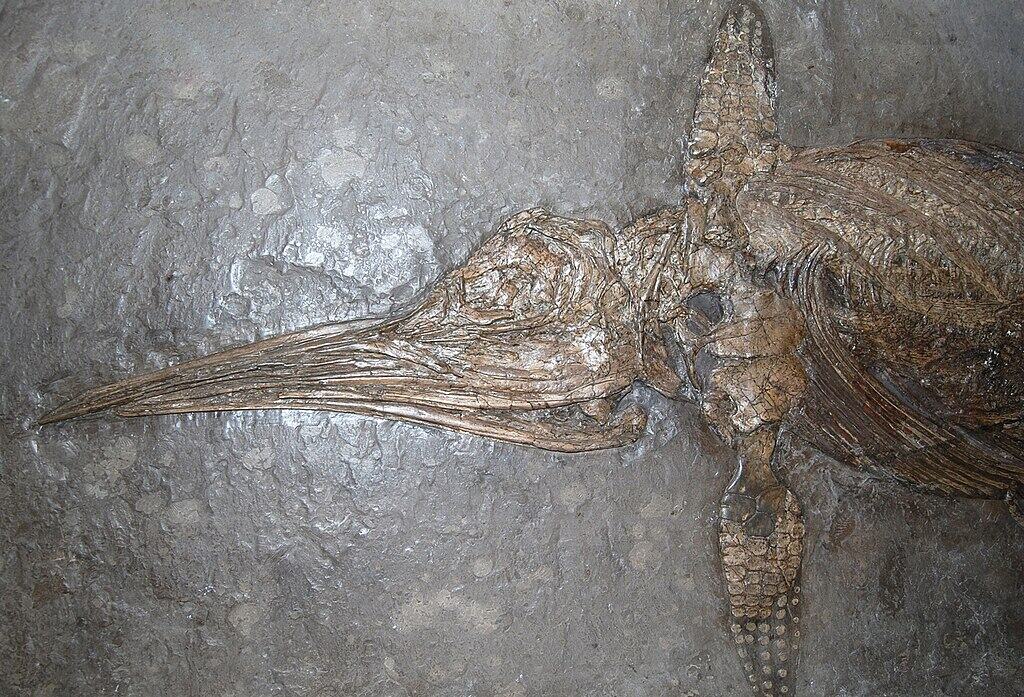
While modern sharks are some of the ocean’s most formidable predators, the prehistoric seas harbored reptilian swimmers that would make today’s great whites seem sluggish by comparison. During the Mesozoic Era (252-66 million years ago), marine reptiles evolved remarkable adaptations for aquatic life, developing streamlined bodies, powerful fins, and efficient swimming mechanics that could rival or surpass the speed and agility of modern sharks. These prehistoric marine reptiles dominated the ancient oceans, filling ecological niches similar to those occupied by sharks, whales, and dolphins today. From the dolphin-like ichthyosaurs to the long-necked plesiosaurs and massive mosasaurs, these creatures represent some of evolution’s most successful experiments in marine adaptation. Let’s dive deep into the ancient seas to explore ten prehistoric reptiles that could leave sharks in their wake.
Ichthyosaurus The Fish Lizard Built for Speed

Ichthyosaurus, whose name literally means “fish lizard,” represents one of evolution’s most spectacular examples of convergent evolution with modern dolphins and tuna. Living approximately 250-90 million years ago, these marine reptiles evolved a nearly perfect hydrodynamic body shape with a streamlined torpedo-like form. Their bodies featured crescent-shaped tail fins (unlike sharks’ asymmetrical tails) that provided powerful propulsion through vertical motion, similar to how modern dolphins swim. Studies of Ichthyosaurus fossils suggest they could reach speeds of up to 22 mph (35 km/h), significantly faster than the average cruising speed of most modern sharks, which typically maintain 5-8 mph when not in pursuit.
What made Ichthyosaurus particularly efficient swimmers was their stiff backbone that limited lateral movement combined with powerful tail flukes that generated thrust. Their flippers were designed for steering and stability rather than propulsion, allowing for precise maneuverability at high speeds. Adding to their aquatic prowess, Ichthyosaurus possessed large eyes—among the largest of any vertebrate relative to body size—enabling them to hunt effectively in low-light deep-water environments. This combination of adaptations made them supremely efficient hunters that could outpace most contemporaneous marine predators, including ancient sharks like Hybodus.
Shastasaurus The Torpedo-Shaped Giant
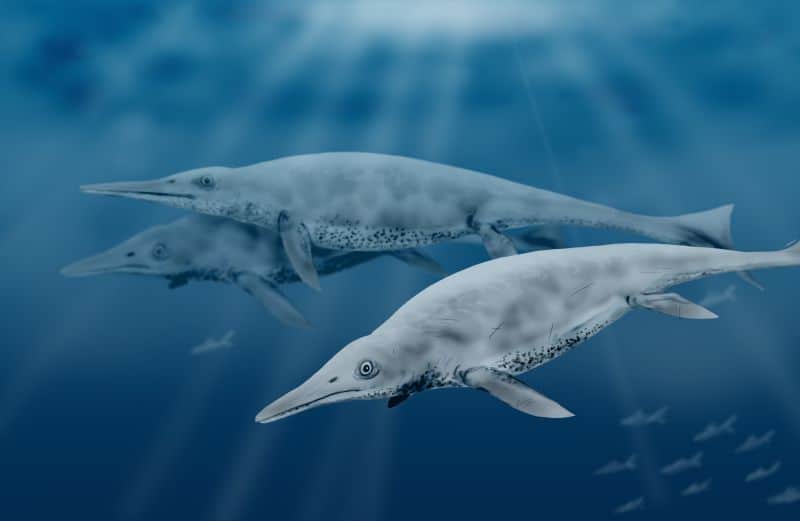
Shastasaurus, the largest known ichthyosaur, reached lengths of up to 69 feet (21 meters)—larger than any modern shark including the whale shark. This colossal marine reptile from the late Triassic period (around 235-215 million years ago) possessed an extremely streamlined body that tapered at both ends like a spindle or torpedo. Unlike many other ichthyosaurs, Shastasaurus had relatively short flippers and a shortened snout, suggesting a specialized feeding strategy. Paleontologists believe its hydrodynamic shape allowed it to sustain moderate speeds while conserving energy, making it an efficient cruiser of the ancient seas.
What makes Shastasaurus particularly noteworthy was its swimming efficiency rather than raw speed. Its massive size would have allowed it to maintain momentum with minimal energy expenditure, similar to how modern whales can undertake long migrations efficiently. Fluid dynamics studies of its body shape suggest that Shastasaurus could have maintained speeds of 11-13 mph (18-21 km/h) for extended periods—comparable to the sustained swimming speeds of great white sharks but with significantly less energy expenditure due to its optimal hydrodynamic form. This energy efficiency would have allowed Shastasaurus to outperform sharks in long-distance swimming scenarios, giving it superior range in the Triassic oceans.
Mosasaurus The Submarine Predator
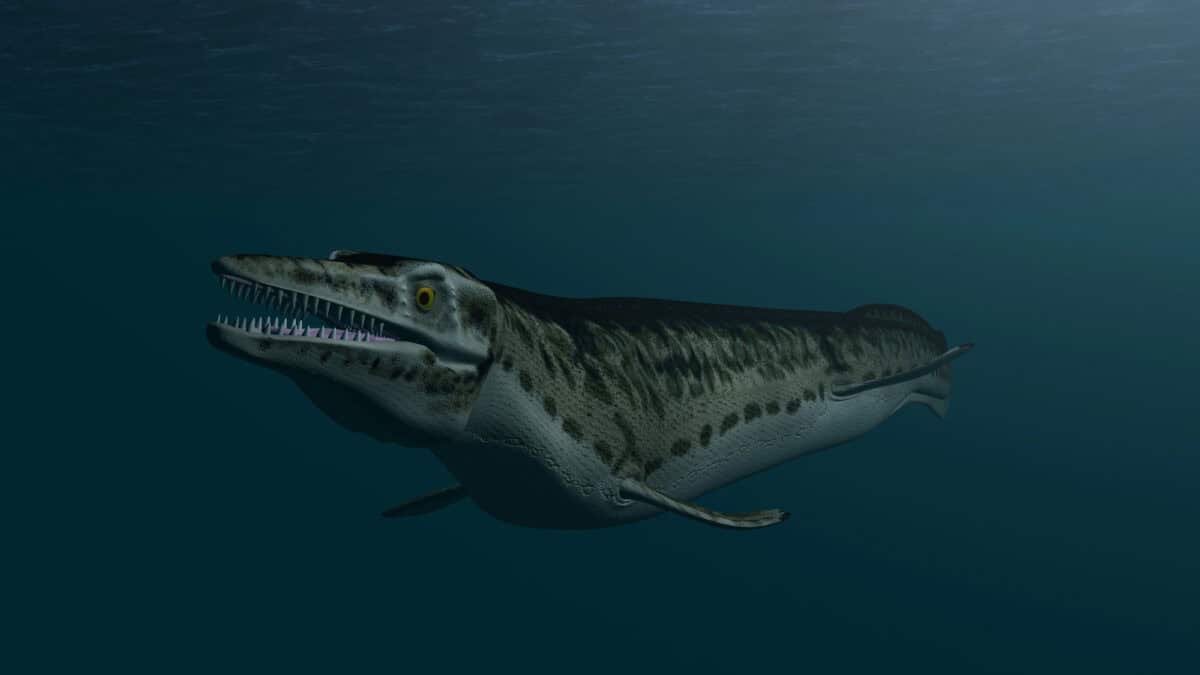
Mosasaurus represents the apex of mosasaur evolution, reaching lengths of up to 56 feet (17 meters) during the Late Cretaceous period (approximately 82-66 million years ago). Unlike ichthyosaurs, mosasaurs were not fish-shaped but rather evolved from monitor lizards that returned to the sea. Their swimming style was distinct, employing powerful undulations of their entire body and tail in a snake-like fashion. The tail of Mosasaurus featured a downward kink that supported a large fin, creating a propulsion system that generated tremendous thrust. Biomechanical analyses suggest Mosasaurus could achieve burst speeds of up to 30 mph (48 km/h)—faster than the top speed of great white sharks, which max out around 25 mph (40 km/h).
Mosasaurus combined its speed with incredible power and maneuverability. Its muscular body was equipped with four paddle-like limbs that functioned as stabilizers and steering mechanisms, allowing precise control during high-speed pursuits. The jaws of Mosasaurus contained interlocking teeth and a second set of teeth on the roof of its mouth, enabling it to secure struggling prey while swimming at high velocities. This combination of speed, power, and specialized hunting adaptations made Mosasaurus significantly more formidable than even the largest modern sharks, allowing it to dominate the Late Cretaceous oceans as the ultimate marine predator before the end-Cretaceous extinction event.
Ophthalmosaurus The Binocular Speed Demon
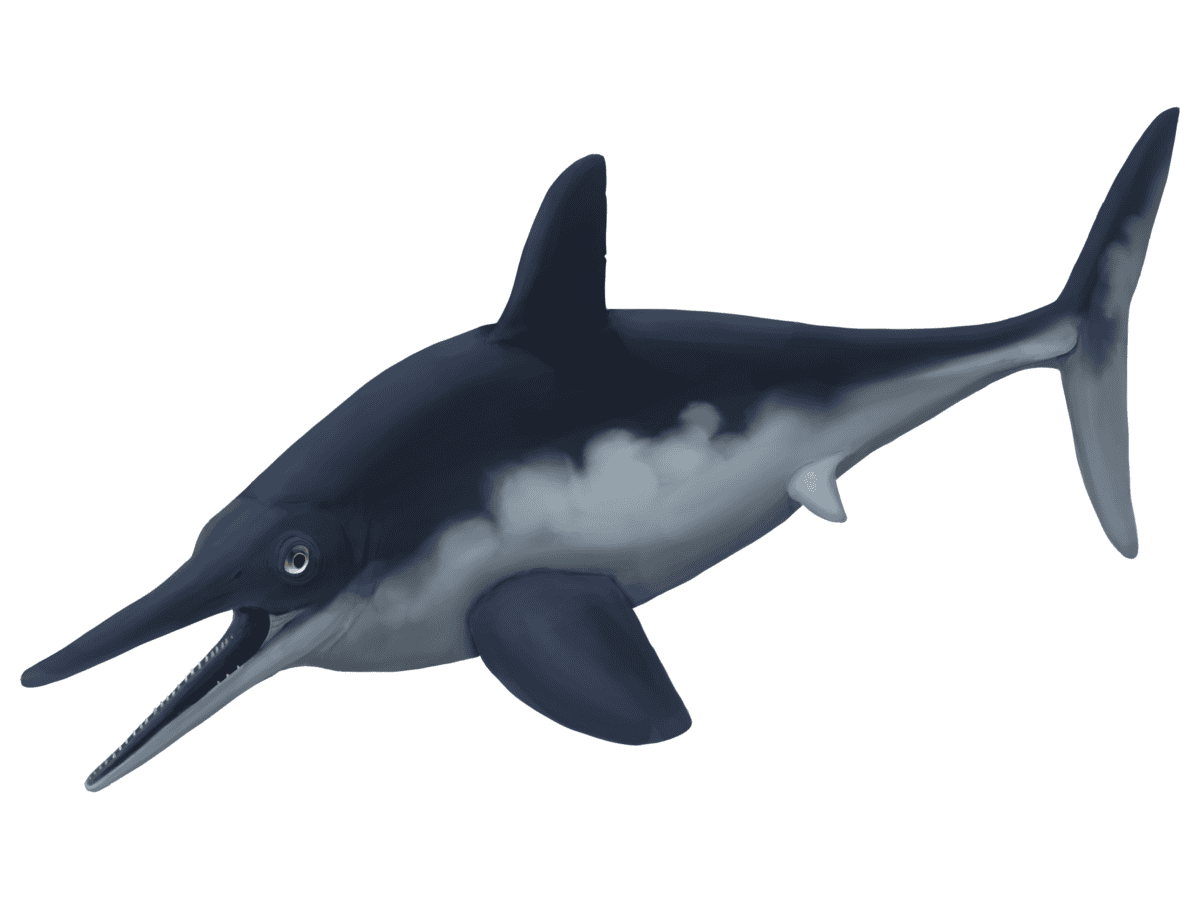
Ophthalmosaurus, whose name means “eye lizard,” was an ichthyosaur that lived during the Middle to Late Jurassic period (165-145 million years ago). This medium-sized marine reptile, reaching lengths of about 20 feet (6 meters), is notable for having the largest eyes relative to body size of any vertebrate known to science—each eye measuring up to 9 inches (23 cm) in diameter. These enormous eyes provided exceptional vision in the murky depths, giving Ophthalmosaurus a significant advantage when hunting in low-light conditions. Its streamlined body featured an exceptionally flexible spine that allowed for powerful undulating movements, generating thrust in a manner similar to modern tuna—one of the fastest fish in today’s oceans.
Hydrodynamic modeling of Ophthalmosaurus fossils suggests these creatures were among the fastest ichthyosaurs, capable of reaching speeds up to 28 mph (45 km/h) in short bursts. Their specialized vertebral structure allowed for rapid oscillation of the tail fin, while their front flippers were remarkably thin and hydrodynamically efficient for precise steering. Archaeological evidence indicates that Ophthalmosaurus regularly dove to depths exceeding 1,970 feet (600 meters), moving between depth zones faster than any modern shark species can manage. Combined with their exceptional visual capabilities, this speed and diving proficiency would have made them significantly more efficient hunters than contemporary sharks, allowing them to intercept fast-moving prey that would have eluded most other predators.
Platypterygius The Long-Distance Ocean Cruiser
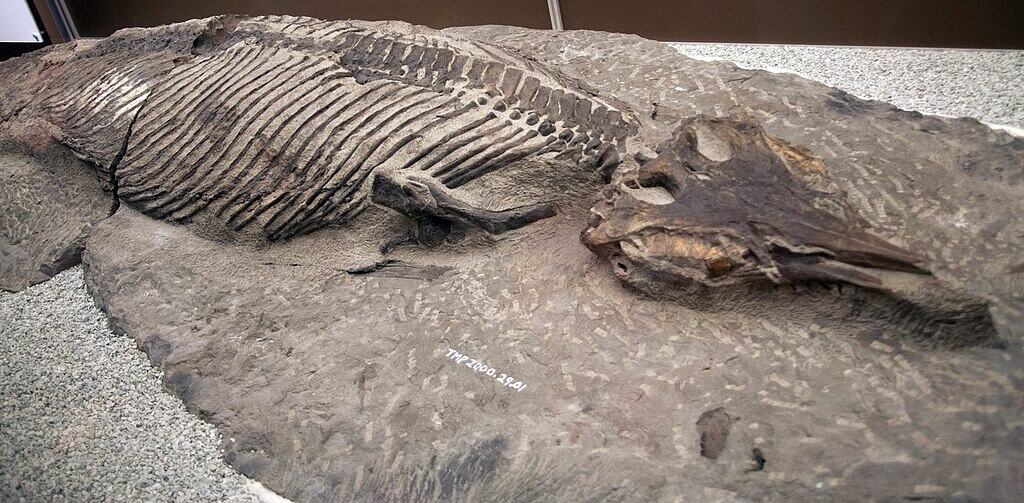
Platypterygius was one of the last surviving genera of ichthyosaurs, persisting until the early Late Cretaceous period (around 100 million years ago) before their extinction. These marine reptiles grew to impressive lengths of up to 23 feet (7 meters) and featured unusually long, narrow flippers that could span up to 7 feet (2.1 meters) from tip to tip. Unlike earlier ichthyosaurs that primarily used their tails for propulsion, Platypterygius had evolved a more complex swimming strategy that utilized both powerful tail movements and their elongated flippers to generate additional thrust and maintain precise control while swimming. Biomechanical studies suggest their modified limb structure allowed for more efficient energy use during sustained swimming.
Platypterygius had evolved exceptional long-distance swimming capabilities, with estimated cruising speeds of 15-18 mph (24-29 km/h) that could be maintained for hours. Their body composition featured specialized muscle fiber arrangements similar to those found in modern tuna and marlin, allowing for efficient oxygen utilization during extended swimming periods. Fossil evidence indicates they were among the most widely distributed marine reptiles, with specimens found on every continent including Antarctica, suggesting impressive migration capabilities that would have far exceeded those of most shark species. This combination of sustained speed and efficient long-distance swimming would have allowed Platypterygius to outperform sharks in endurance scenarios, giving them access to widely dispersed feeding grounds across the ancient oceans.
Tylosaurus The Predatory Powerhouse

Tylosaurus, a fearsome member of the mosasaur family, ruled the Late Cretaceous seas approximately 85-80 million years ago. Growing up to 50 feet (15 meters) in length, this marine reptile combined raw power with surprising speed. Unlike the dolphin-shaped ichthyosaurs, Tylosaurus retained a more elongated, serpentine body form but developed a distinctive tail fin that provided remarkable propulsion. Its swimming technique involved powerful lateral undulations of its muscular body and tail, generating tremendous thrust that paleobiologists estimate could propel it to burst speeds exceeding 25 mph (40 km/h). This impressive acceleration allowed Tylosaurus to ambush prey with explosive charges that few contemporary creatures could evade.
What made Tylosaurus particularly formidable was its combination of speed with immense striking power. Its skull, measuring up to 6 feet (1.8 meters) in length, featured a distinctive pointed snout tipped with a bony ram that it likely used to stun prey before delivering a killing bite. Fossil stomach contents reveal that Tylosaurus preyed upon sharks, large fish, smaller marine reptiles, and even birds that ventured too close to the water’s surface. Their powerful jaws could generate bite forces estimated at over 24,000 newtons—far exceeding the approximately 18,000 newtons of large great white sharks. This combination of explosive speed, formidable size, and devastating bite force made Tylosaurus one of the most dominant marine predators of all time, capable of outperforming sharks in both speed and predatory efficiency.
Stenopterygius The Agility Specialist
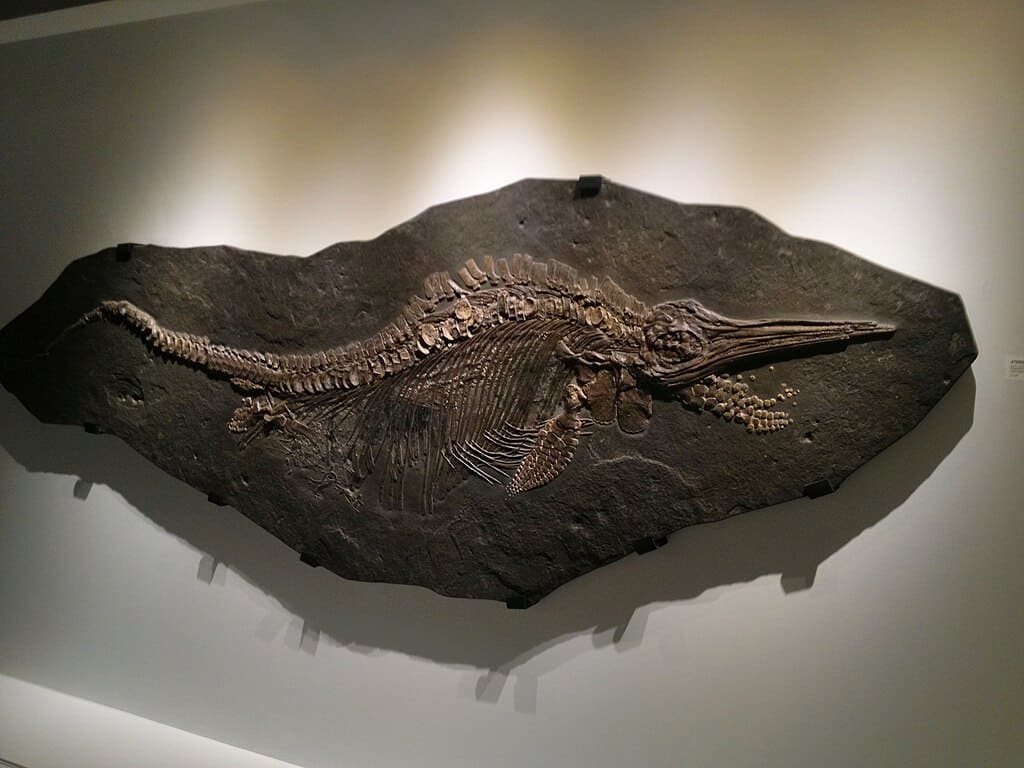
Stenopterygius was a medium-sized ichthyosaur that lived during the Early Jurassic period (approximately 183-175 million years ago). Though smaller than many marine reptiles on this list, reaching lengths of about 13 feet (4 meters), Stenopterygius compensated with exceptional maneuverability and agility. Its body featured a highly flexible spine with over 80 vertebrae, allowing for rapid changes in direction that would have been impossible for larger, more rigid predators. Paleontological evidence includes remarkably well-preserved specimens that reveal detailed soft tissue impressions, showing a highly streamlined body profile with minimal drag coefficients that would have enhanced its swimming efficiency.
The most striking adaptation of Stenopterygius was its uniquely proportioned tail fin, which featured an upper lobe roughly 20% larger than the lower lobe. This asymmetrical design generated lift as well as forward thrust, allowing for rapid vertical movements through the water column. Biomechanical analyses suggest Stenopterygius could achieve turning rates of up to 60 degrees per second—significantly outperforming modern sharks, which typically manage 20-30 degrees per second. Fossilized stomach contents reveal diets consisting primarily of fast-swimming belemnites (extinct squid-like creatures), demonstrating that Stenopterygius routinely caught prey that would have outpaced most contemporary predators. This combination of speed, agility, and hunting prowess made Stenopterygius the aquatic equivalent of a fighter jet compared to the more ponderous movements of sharks.
Temnodontosaurus The Swift Leviathan
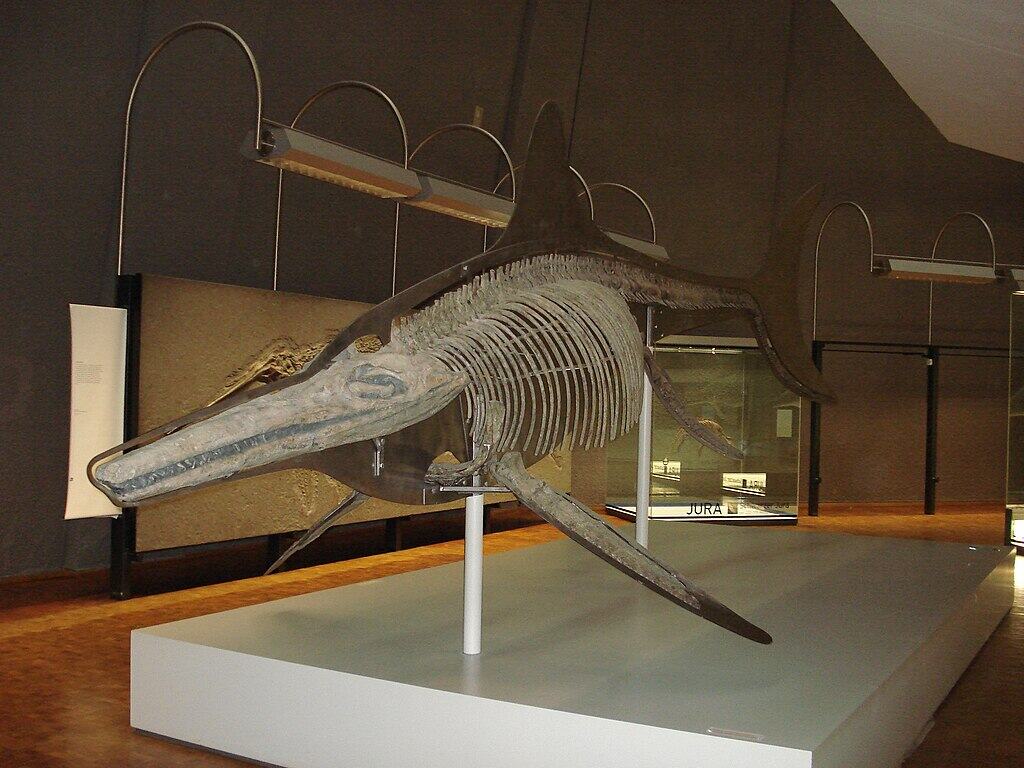
Temnodontosaurus, whose name means “cutting-tooth lizard,” was one of the largest Early Jurassic ichthyosaurs, reaching lengths of up to 33 feet (10 meters). Living approximately 195-175 million years ago, this massive predator combined size with surprising speed. Its skeleton featured adaptations clearly geared toward rapid swimming, including a rigid trunk region that minimized body drag and a powerful, crescent-shaped tail fin estimated to have comprised nearly 25% of its total body length. The extraordinary size of this propulsive organ, combined with specialized muscle attachments visible in fossil specimens, indicates Temnodontosaurus could generate tremendous thrust with each tail beat.
What distinguished Temnodontosaurus from other large marine reptiles was its extraordinary burst speed capability. Hydrodynamic modeling suggests it could accelerate from a stationary position to approximately 22 mph (35 km/h) within just a few seconds—a rate of acceleration that exceeds that of modern sharks. This rapid acceleration was complemented by massive jaws up to 6.5 feet (2 meters) long equipped with conical teeth designed for seizing rather than cutting. Fossil evidence indicates Temnodontosaurus preyed upon other marine reptiles, large fish, and even smaller members of its own species. One remarkable specimen contains the remains of a 13-foot (4-meter) plesiosaur in its stomach cavity, demonstrating that Temnodontosaurus had the speed and power to capture other large marine reptiles—a hunting capability beyond that of most shark species, which typically target smaller prey relative to their body size.
Hupehsuchus The Underwater Speedster
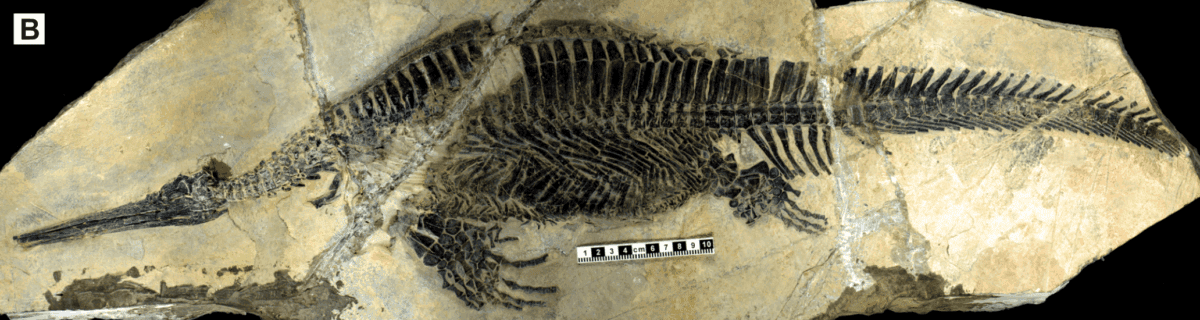
Hupehsuchus represents one of the most unusual marine reptiles on our list, living during the Early Triassic period approximately 248 million years ago. While modest in size at around 3 feet (1 meter) in length, this bizarre creature developed remarkable swimming adaptations that made it unexpectedly swift. Unlike other marine reptiles that evolved from terrestrial ancestors, Hupehsuchus appears to have adapted to aquatic life very early in reptilian evolution, developing a unique body structure with no clear modern analogues. Its body featured an unusual combination of a rigid trunk encased in overlapping armor-like plates, paired with a surprisingly flexible tail region that enabled rapid propulsion.
The swimming mechanism of Hupehsuchus was extraordinarily efficient for its time. Its body featured a deep, narrow profile that minimized water resistance, while its tail moved in rapid undulations that generated significant thrust despite its small size. Hydrodynamic studies of its unusual body shape suggest Hupehsuchus could maintain speeds of up to 15 mph (24 km/h)—remarkably fast for its diminutive size and comparable to the sustained swimming speed of modern dolphins. Most notably, Hupehsuchus evolved these advanced swimming adaptations over 30 million years before ichthyosaurs reached their peak development, making it an evolutionary pioneer in high-speed aquatic locomotion. While smaller than most sharks, Hupehsuchus could have easily outpaced the primitive shark species of its era, which had not yet evolved the streamlined forms characteristic of modern sharks.
Cryptoclidus The Underwater Flying Reptile
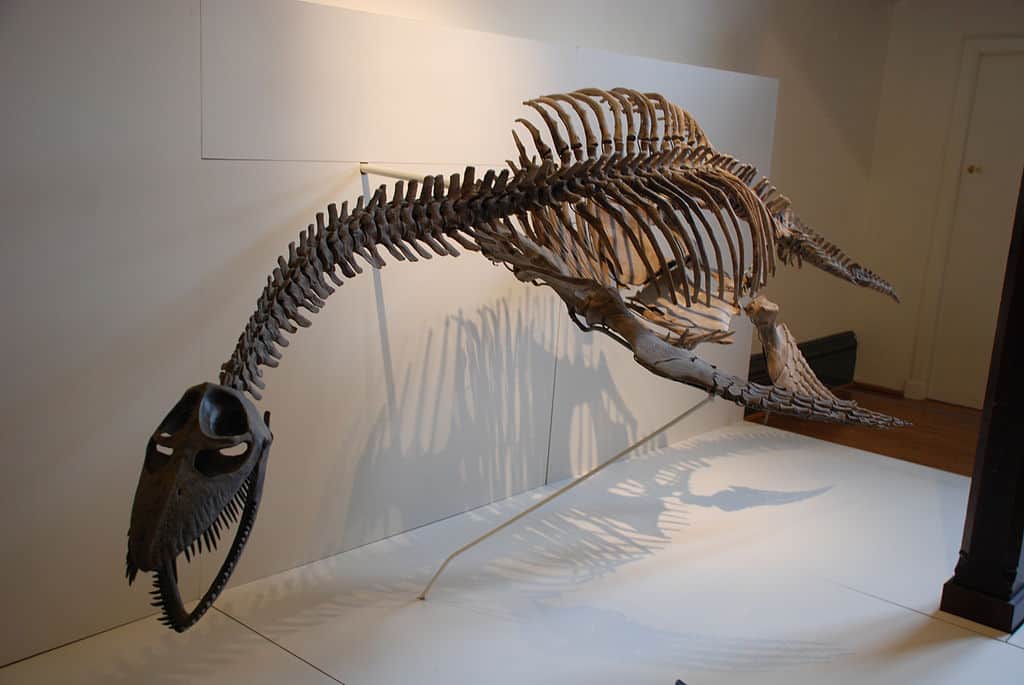
Cryptoclidus, a member of the plesiosaur family, employed a swimming technique utterly unlike any used by sharks. Living during the Middle to Late Jurassic period (around 166-155 million years ago) and reaching lengths of up to 26 feet (8 meters), this marine reptile featured four large, wing-like flippers that it used in a manner similar to how birds fly through air. Rather than undulating its body like most aquatic vertebrates, Cryptoclidus generated thrust by “flying” through water, using powerful upward and downward strokes of its flippers in a synchronized pattern. Biomechanical studies of its shoulder and hip girdles reveal extraordinarily powerful muscle attachment points that could generate tremendous force with each stroke.
What made Cryptoclidus’s swimming style superior to sharks in certain contexts was its unmatched maneuverability and acceleration capabilities. While its top speed was likely comparable to moderate-swimming sharks at around 15-18 mph (24-29 km/h), its four-flipper propulsion system allowed it to accelerate from stationary to top speed in just 2-3 seconds—roughly twice as fast as a great white shark can accelerate. Furthermore, Cryptoclidus could hover in place, swim backward, and execute tight turning maneuvers that would be physically impossible for sharks with their more rigid body plans. This exceptional maneuverability allowed Cryptoclidus to outperform sharks in complex hunting scenarios, particularly in coral reef environments or other structurally complicated habitats where agility provided a significant advantage over raw speed. Fossil evidence indicates they were supremely successful hunters, with remains showing they preyed upon fast-swimming belemnites and fish that would have required extraordinary aquatic agility to capture.
Conclusion:
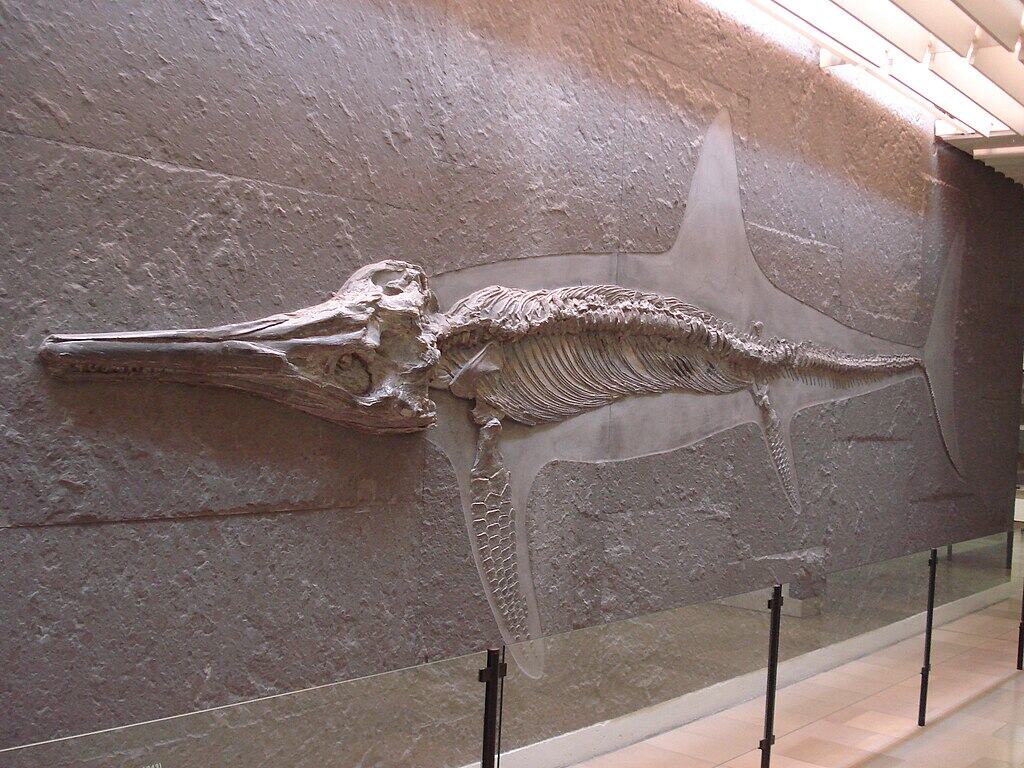
Long before modern sharks ruled the oceans, powerful prehistoric reptiles dominated the seas with speed, strength, and strategy. Creatures like the mosasaur, ichthyosaur, and plesiosaur evolved streamlined bodies, strong tails, and agile flippers that made them exceptional swimmers—sometimes even outmatching ancient sharks in both speed and hunting prowess. These marine reptiles were not only fierce predators but also highly specialized for life in the water, filling ecological roles that sharks would later inherit.
By studying these ancient swimmers, we gain a better understanding of how evolution shaped marine life through intense competition and adaptation. While they’re long extinct, fossil evidence continues to reveal the impressive capabilities of these oceanic reptiles. Their legacy reminds us that the oceans have always been a stage for giants, and in their time, these reptiles reigned supreme—swift, relentless, and built to conquer the deep.

As a little kid, I fell in love with nature, wildlife, and animals. Living in the USA, South Africa, Italy, China and Germany gave me the opportunity to discover the world's Wildlife. My favorite animals are Mountain Gorillas, Siberian Tigers, and Great White Sharks.
I'm a certified PADI Open Water Diver, went to Everest Base Camp and Trekked Gorillas in Uganda. I hold a Master of Science in Economics and Finance.
Please send any feedback to feedback@animalsaroundtheglobe.com
- 12 Animals That Look Like Monsters - July 17, 2026
- 13 Animals With Record-Breaking Speed or Strength - July 17, 2026
- The Most Camouflaged Creature Lurking in Pacific Waters - July 17, 2026