


In the rich tapestry of ancient Roman history, few stories combine military history, religious symbolism, and animal heroism quite like the tale of the Sacred Geese of the Capitol. While often overshadowed by Rome’s grand conquests and political intrigues, these vigilant birds played a crucial role in one of the city’s most vulnerable moments. During a Gallic invasion in the early 4th century BCE, when human sentries failed, it was the honking of sacred geese that saved Rome from potential destruction. This remarkable incident not only elevated the humble goose to the status of hero but also permanently established these birds as sacred animals in Roman culture, religion, and military tradition.
The Historical Context: Rome Under Siege

To understand the significance of the Capitol’s sacred geese, we must first examine the precarious situation Rome faced in 390 BCE (some sources place it in 387 BCE). The young Roman Republic, not yet the dominant Mediterranean power it would later become, was invaded by Gallic tribes led by Brennus. After defeating Roman forces at the Battle of the Allia, the Gauls marched on Rome itself, forcing most of the population to flee. However, a small contingent of Romans, including senators and military forces, retreated to the Capitoline Hill, the citadel at the heart of the city.
The Gauls besieged the Capitol for seven months, attempting various strategies to overcome the defenders who were protected by steep cliffs on most sides. The Romans, though diminished in number and resources, managed to hold their position through determination and the natural defenses of the hill. What they couldn’t know was that their ultimate salvation would come not from military strategy or reinforcements, but from an unexpected guardian – the sacred geese kept on the Capitol grounds.
Sacred Animals in Roman Religion

The Romans, like many ancient cultures, incorporated animals into their religious practices and beliefs. Certain animals were associated with specific deities and were kept in sacred precincts as living symbols of divine presence. On the Capitoline Hill stood the temple of Juno Moneta, a manifestation of the goddess Juno associated with warning and advice. The geese were considered sacred to Juno and were maintained within the temple grounds regardless of circumstances – even during the dire food shortages of the siege.
This religious significance explains why, even as the besieged Romans faced starvation during the long Gallic siege, they refused to kill and eat the sacred geese. According to historical accounts, dogs and other animals were slaughtered for food, but the geese remained untouched due to their sacred status. This reverence would prove providential, as these very birds would soon become instrumental in Rome’s salvation.
The Night of the Gallic Sneak Attack

The turning point came one night when a group of Gallic warriors attempted a daring night ascent of the Capitoline Hill. They discovered a relatively unguarded path up the steep cliffs and began their silent climb. Roman sentries, exhausted from months of vigilance and perhaps lulled by the previous failed attempts, failed to detect the approaching danger. Even the dogs, typically alert to intruders, remained quiet – possibly because they were famished from the food shortages or because many had already been consumed by the hungry defenders.
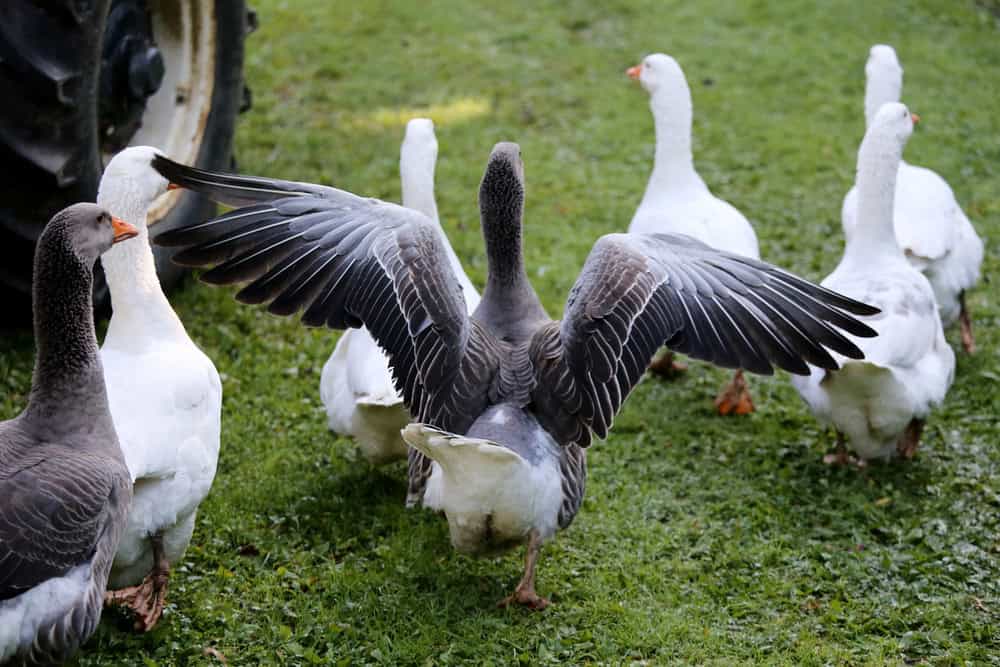
As the Gauls neared the top of the cliff, they approached the area where the sacred geese of Juno were kept. Unlike the dogs, these geese had been well-fed despite the famine, honoring their sacred status. When the Gauls disturbed their rest, the geese immediately began honking loudly, flapping their wings and creating a commotion that echoed through the night. Their cacophony served as the alarm that human and canine sentries had failed to sound.
Marcus Manlius Capitolinus: The Human Hero

The geese’s warning did not go unheeded. A Roman officer named Marcus Manlius Capitolinus, whose quarters were near the temple of Juno, was awakened by the commotion. Quickly grasping the situation, he roused other soldiers and rushed to the cliff edge where the Gauls were making their ascent. According to Livy and other Roman historians, Manlius personally confronted the lead Gallic climber, pushing him back down the cliff with his shield and spear.
The ensuing clash was brief but decisive. With the element of surprise lost, the Gallic infiltrators were vulnerable on the steep cliff face. The awakened Roman defenders drove back the attackers, sending them tumbling down the slopes. Had the sacred geese not sounded their alarm, the outcome of that night – and potentially the fate of Rome itself – might have been dramatically different. For his heroism, Manlius was awarded the honorific title “Capitolinus” and received daily rations of food from the grateful citizens.
The Aftermath and Rome’s Survival

Shortly after the failed night attack, the siege was lifted through a combination of diplomacy, payment of a ransom, and according to some accounts, the timely arrival of the Roman military leader Marcus Furius Camillus with reinforcements. While the historical details remain somewhat debated, with different Roman sources providing varying accounts, the core narrative about the geese saving the Capitol became firmly established in Roman historical tradition.
Rome would eventually rebuild from the Gallic sack, emerging stronger and more determined in its expansion. The early 4th century BCE crisis proved to be a pivotal moment in Roman history – a near-death experience for the young republic that would later shape its military organization, urban defenses, and religious practices. And throughout this recovery and the centuries of empire that followed, the story of the sacred geese remained a powerful symbol of divine protection and vigilance.
Commemorating the Geese: Religious Rituals

Following the Gallic siege, the Romans instituted several practices to commemorate the sacred geese and their life-saving intervention. Annual ceremonies were established to honor both the geese and Juno Moneta, their divine patroness. The goddess’s epithet “Moneta” (from which we derive the English word “money”) is connected to her role in warning or advising, perfectly exemplified by her sacred birds’ timely alert.
Historical sources describe a yearly procession on the anniversary of the event, during which geese were carried on luxurious cushions in a place of honor, while dogs were symbolically punished for their failure to alert the Romans. This ritualized acknowledgment of the geese’s service continued for centuries, demonstrating how deeply this event had embedded itself in Roman religious consciousness. The temple of Juno Moneta later became the site of Rome’s first mint, perhaps connecting the goddess’s watchful attributes with the careful monitoring required in currency production.
The Symbolic Significance of Geese in Roman Culture

The incident transformed the cultural perception of geese in Roman society. Beyond their practical uses for food, feathers, and down, geese became symbols of vigilance, alertness, and protective guardianship. This symbolism extended into military contexts, where lookouts and sentries were reminded of the geese’s example. The phrase “as watchful as the Capitoline geese” became proverbial, referring to exceptional attentiveness to duty.
In Roman art and literature, geese began to appear as symbols of Juno and as representations of protective vigilance. The birds featured in household decorations, military standards, and religious iconography, particularly in contexts related to safety and security. This symbolism was so powerful that even as Roman religion evolved and eventually gave way to Christianity, the motif of the vigilant goose remained embedded in European cultural consciousness.
Biological Facts: Why Geese Make Excellent Guards

From a biological perspective, the story of the Capitol’s geese aligns perfectly with what we know about these birds’ natural behaviors. Geese possess several characteristics that make them excellent natural alarm systems. They have excellent hearing and vision, remaining alert to potential threats even during the night. Unlike many domesticated birds, geese maintain much of their wild instincts, including strong territorial defense behaviors and a natural wariness toward unfamiliar presences.
When threatened or disturbed, geese produce loud, distinctive honking calls that can carry over considerable distances. They typically respond not just individually but as a group, with one goose’s alarm triggering responses from the entire flock, creating a considerable cacophony. These characteristics have made geese useful as “watch animals” throughout history, with many farms and properties still using them as living alarm systems today – a practice with direct lineage to the sacred geese of ancient Rome.
The Punishment of the Dogs: A Harsh Contrast

One of the more unsettling aspects of the Capitol geese story involves the fate of the dogs who failed to sound the alarm. According to several Roman sources, including Plutarch, the Romans instituted an annual punishment ritual for dogs to commemorate their failure during the Gallic attack. Each year, dogs would be crucified on branches of elder trees or impaled on stakes in a public ceremony, while geese were honored and celebrated. This stark contrast highlighted the Romans’ perception of the geese’s heroism versus the dogs’ perceived dereliction of duty.
Modern historians suggest this harsh treatment of dogs may have served multiple symbolic purposes beyond simple commemoration. It reinforced the importance of vigilance in defense of the state, demonstrated the serious consequences of failing in one’s duty, and ritualized the historical narrative in a way that made it immediate and visceral for each new generation. While disturbing to modern sensibilities, this practice reveals how profoundly the events of the Gallic siege had affected Roman consciousness and how seriously they took both the failure of the dogs and the salvation brought by the geese.
Historical Sources and Literary Treatments
Our knowledge of the sacred geese comes primarily from Roman historians writing centuries after the events. Livy provides the most detailed account in his monumental work “Ab Urbe Condita” (From the Founding of the City), written during the Augustan era. Plutarch, Diodorus Siculus, and other ancient writers also reference the incident, though with varying details. The chronological gap between the events and these accounts has led some modern historians to question aspects of the story, though the core narrative is generally accepted.
Beyond historical chronicles, the story featured prominently in Roman literature as an exemplum – a moral example used in rhetoric and education. The contrast between the vigilant geese and the negligent human guards provided an excellent teaching tool about duty, vigilance, and divine intervention. Roman poets like Virgil made allegorical references to the tale, and it became part of the standard repertoire of stories that educated Romans were expected to know, much like modern cultural touchstones.
The Legacy: Geese in Military and Security Contexts

The legacy of Rome’s sacred geese extended well beyond ancient times. Throughout European history, geese were kept as guard animals in military installations, monasteries, and private estates, valued for the same qualities that saved the Capitol. Their vigilance became legendary, and numerous historical accounts mention instances where geese detected approaching enemies or intruders when human sentries failed to notice them.
This practice continued into surprisingly recent times. During World War I, some military outposts reportedly used geese as early warning systems for approaching aircraft or troops. Even in the modern era, some high-security facilities have experimented with geese as supplementary security measures, finding that their natural alertness and territorial behavior make them difficult for intruders to circumvent or silence. The sacred geese of Rome thus represent one of history’s earliest documented cases of animals being deliberately employed for security purposes – a practice that has continued, in various forms, for over two millennia.
The Enduring Symbolism: What the Geese Teach Us

The story of Rome’s sacred geese continues to resonate as a powerful historical parable. It reminds us that salvation often comes from unexpected sources and that vigilance is a virtue in both personal and civic life. The tale also highlights the complex relationship between humans and animals throughout history – as companions, symbols, and sometimes saviors. The geese of the Capitol embody the unpredictable ways in which humans and animals have influenced each other’s destinies throughout the long arc of civilization.
For modern Romans and visitors to the Eternal City, the sacred geese remain a cherished part of local folklore. While the temple of Juno Moneta no longer stands, and no geese patrol the Capitoline Hill today, the story lives on in guidebooks, historical tours, and the cultural memory of Rome. It serves as a reminder that behind Rome’s grand narrative of conquest and empire lies a more intimate history – one where something as simple as a goose’s honk played a decisive role in the survival of what would become one of history’s greatest civilizations.
Conclusion: The Enduring Legacy of Rome’s Feathered Guardians

The sacred geese of Rome’s Capitoline Hill represent far more than an amusing historical anecdote – they embody the unexpected ways in which history unfolds and how small interventions can have world-changing consequences. Had these vigilant birds not raised the alarm that fateful night, Rome might have fallen completely to the Gallic invaders, potentially altering the entire course of Western civilization. Their story reminds us that history often hinges on seemingly minor events and that vigilance, whether human or avian, remains an eternal virtue. The transformation of geese from common barnyard animals to sacred symbols of divine protection demonstrates how deeply Romans integrated natural observation with religious significance, creating a rich cultural tapestry where animals and humans shared intertwined destinies. Even today, more than two millennia later, the honking guardians of the Capitol stand as powerful symbols of alertness, duty, and the unpredictable factors that shape the destiny of nations.

From exploring the marine wonders in the Azores and witnessing the vast savannas of Kenya, to delving deep into the rich biodiversity of South Africa and traversing iconic landscapes in Australia and the US like Yellowstone, Chris's experiences are vast.
With a penchant for diving alongside sharks, the ocean holds a special place in his heart.
Through his academic insights, he champions wildlife conservation, striving with 'Animals Around The Globe' to cultivate a profound connection between humans and animals, enhancing our mutual appreciation.
Connect with him at Feedback@animalsaroundtheglobe.com.
- What Scientists Found in a 10,000-Year-Old Beehive - July 20, 2026
- This Spider Builds Fake Decoys of Itself - July 20, 2026
- What Happens If a Crocodile Fights a Hippo? - July 20, 2026