

North America once hosted an impressive array of megafauna that would seem almost mythical to modern observers. From towering mammoths to predators that dwarfed today’s largest carnivores, these prehistoric giants shaped the continent’s ecosystems for millennia before vanishing relatively recently in geological terms. Most disappeared during the Quaternary extinction event at the end of the last ice age, approximately 10,000-12,000 years ago. This mass extinction coincided with both climate change and the arrival of human hunters, sparking ongoing scientific debate about which factor played the decisive role in their disappearance. Join us on a journey through time to discover 15 magnificent giants that once called North America home, whose fossils now tell tales of a lost world of ecological wonder.
Columbian Mammoth
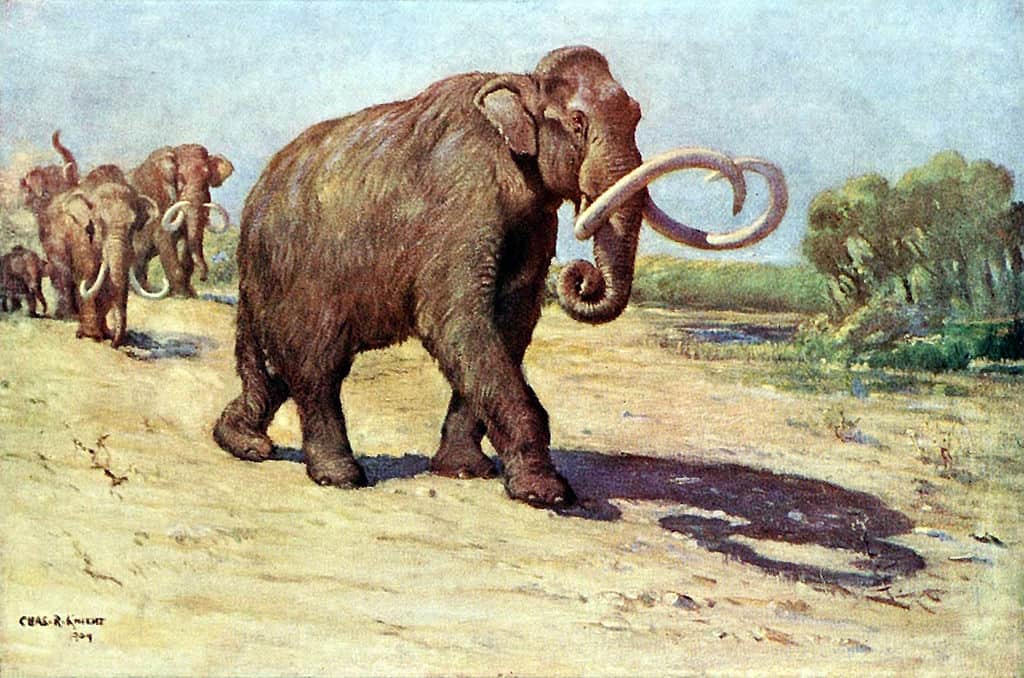
The Columbian mammoth (Mammuthus columbi) was one of North America’s most iconic ice age giants, standing up to 14 feet tall at the shoulder and weighing up to 10 tons. Unlike its relative the woolly mammoth, which preferred colder northern regions, the Columbian mammoth thrived in the temperate grasslands and savannas that stretched across what is now the United States and Mexico. With tusks that could grow to an extraordinary 16 feet long and curved in dramatic spirals, these behemoths were truly impressive sights on the Pleistocene landscape.
Columbian mammoths were adaptable herbivores, consuming up to 700 pounds of vegetation daily including grasses, shrubs, and tree foliage. Their fossils have been discovered throughout North America, with particularly notable finds at the La Brea Tar Pits in Los Angeles and Hot Springs Mammoth Site in South Dakota. Evidence suggests they coexisted with early human inhabitants, as Clovis points (distinctive stone spear tips) have been found alongside mammoth remains, indicating that human hunting may have contributed to their extinction approximately 11,000 years ago.
American Mastodon

The American mastodon (Mammut americanum) roamed North America for nearly 5 million years before disappearing around 10,000 years ago. Though often confused with mammoths, mastodons belonged to an entirely different family of proboscideans. They stood 8-10 feet tall at the shoulder and weighed up to 6 tons, with a stockier, more robust build than their mammoth cousins. Their tusks were straighter and less curved than mammoth tusks, growing up to 8 feet in length. Unlike mammoths, which were primarily grazers, mastodons were browsers that thrived in forested environments.
Mastodon teeth tell the story of their specialized diet—their molars featured cone-shaped cusps ideal for crushing leaves, twigs, and conifer needles. These woodland giants preferred the temperate forests and swamps of what is now the eastern United States and southern Canada. Remarkably complete mastodon skeletons have been discovered with stomach contents preserved, revealing their diet of spruce, fir, cypress, and other woody plants. Some fossils even show evidence of injuries that may have resulted from territorial battles between males, similar to modern elephants, suggesting complex social behaviors in these ancient giants.
Short-Faced Bear

The short-faced bear (Arctodus simus) was the most formidable land predator of Pleistocene North America, standing over 11 feet tall when rearing on its hind legs—making it the largest bear that ever lived and one of the largest terrestrial mammalian carnivores of all time. Despite its name referring to its relatively short snout compared to modern bears, its most remarkable feature was its long, slender limbs that gave it a lankier appearance than today’s bears. These adaptations likely made it an efficient runner, capable of surprising speed for its massive size of up to 2,000 pounds.
With a bite force stronger than any modern carnivore and enormous claws, the short-faced bear was equipped to take down large prey, though debate continues about whether it was primarily a predator or scavenger. Its fossils have been found from Alaska to Mexico, indicating a widespread distribution across the continent. Unlike many other North American megafauna that disappeared around 10,000 years ago, the short-faced bear seems to have vanished slightly earlier, around 11,000-12,000 years ago. Some researchers suggest that competition with newly arrived humans for large prey, along with climate-driven habitat changes, may have contributed to its extinction.
American Lion
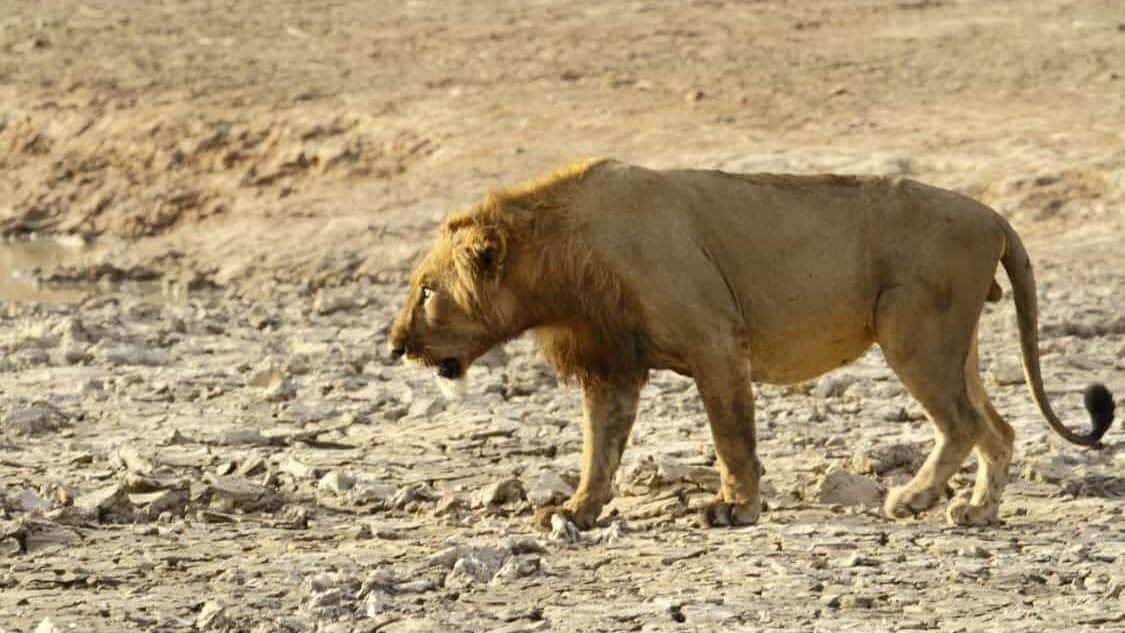
The American lion (Panthera atrox), sometimes called the North American cave lion, was the largest cat in North America during the Pleistocene epoch. At nearly 25% larger than modern African lions, these imposing predators weighed up to 800 pounds and measured up to 8 feet in length (excluding the tail). Despite their name, genetic evidence suggests they were more closely related to tigers than modern lions. Their powerful build, with robust limbs and enlarged teeth, made them formidable hunters capable of bringing down the largest herbivores of their time.
These magnificent cats ranged from Alaska to Peru, though they were most common in the southern and western United States. Fossil evidence from the famous La Brea Tar Pits in Los Angeles has yielded numerous American lion specimens, providing important insights into their anatomy and behavior. Unlike modern African lions, which thrive in open savannas, the American lion appears to have preferred mixed habitats including open woodlands and grasslands. They likely hunted in pairs or small groups, targeting large prey such as horses, bison, and possibly young mammoths and mastodons. Their extinction approximately 11,000 years ago coincided with the disappearance of many of their prey species, suggesting a complex ecological collapse at the end of the ice age.
Giant Ground Sloth

The giant ground sloths of North America, particularly Megalonyx jeffersonii and Eremotherium laurillardi, were among the most bizarre and impressive mammals of the Pleistocene. Unlike their small, tree-dwelling modern relatives, these colossal creatures stood up to 20 feet tall when rearing on their hind legs and weighed up to 4 tons. Their massive claws, which could reach nearly a foot in length, weren’t used for predation but rather for pulling down branches and digging for roots. Despite their intimidating appearance, giant ground sloths were gentle herbivores with powerful forearms and strong jaws adapted for processing tough vegetation.
Different species of ground sloths occupied various ecological niches across North America. Eremotherium preferred warmer climates and was common in the southern United States, while Megalonyx (first described by Thomas Jefferson) ranged further north. They had remarkably small heads relative to their massive bodies and possessed a thick hide with embedded bony nodules called osteoderms that provided protection. Ground sloths were likely important ecosystem engineers, shaping plant communities through their feeding habits and possibly creating clearings in forests. Evidence of cut marks on some fossils suggests human hunting, which, combined with climate change at the end of the ice age, may have driven these slow-moving giants to extinction around 10,000 years ago.
Giant Beaver
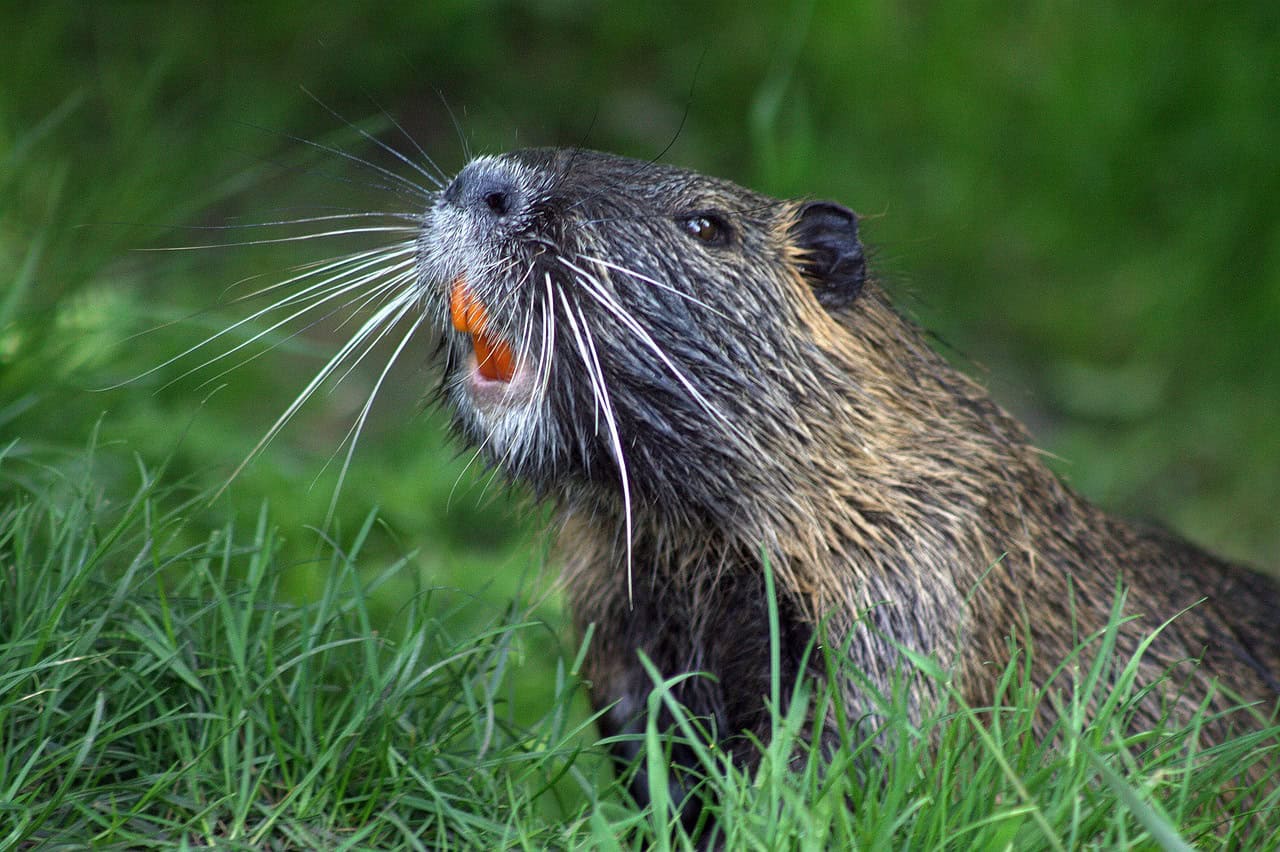
The giant beaver (Castoroides) truly lived up to its name as the largest rodent in North America during the Pleistocene epoch, reaching sizes comparable to a modern black bear. Weighing up to 220 pounds and measuring over 7 feet in length, these enormous rodents were roughly the size of a modern black bear and about 10 times larger than today’s North American beavers. Their most distinctive feature was their massive incisor teeth, which could grow to over 6 inches in length and were covered with distinctive ridged enamel, unlike the smooth-faced incisors of modern beavers.
Despite their superficial resemblance to modern beavers, giant beavers likely had different ecological roles. Anatomical evidence suggests they did not fell trees or build dams like their modern counterparts. Instead, they probably fed on aquatic vegetation in wetland environments across what is now the eastern United States and Canada, using their powerful incisors to process tough stems and rhizomes. Fossil evidence indicates they shared habitats with mastodons, ground sloths, and other Pleistocene megafauna. Giant beavers disappeared around 10,000 years ago as warming climates at the end of the ice age altered wetland ecosystems and reduced their preferred habitats, though human hunting may have also played a role in their demise.
American Cheetah

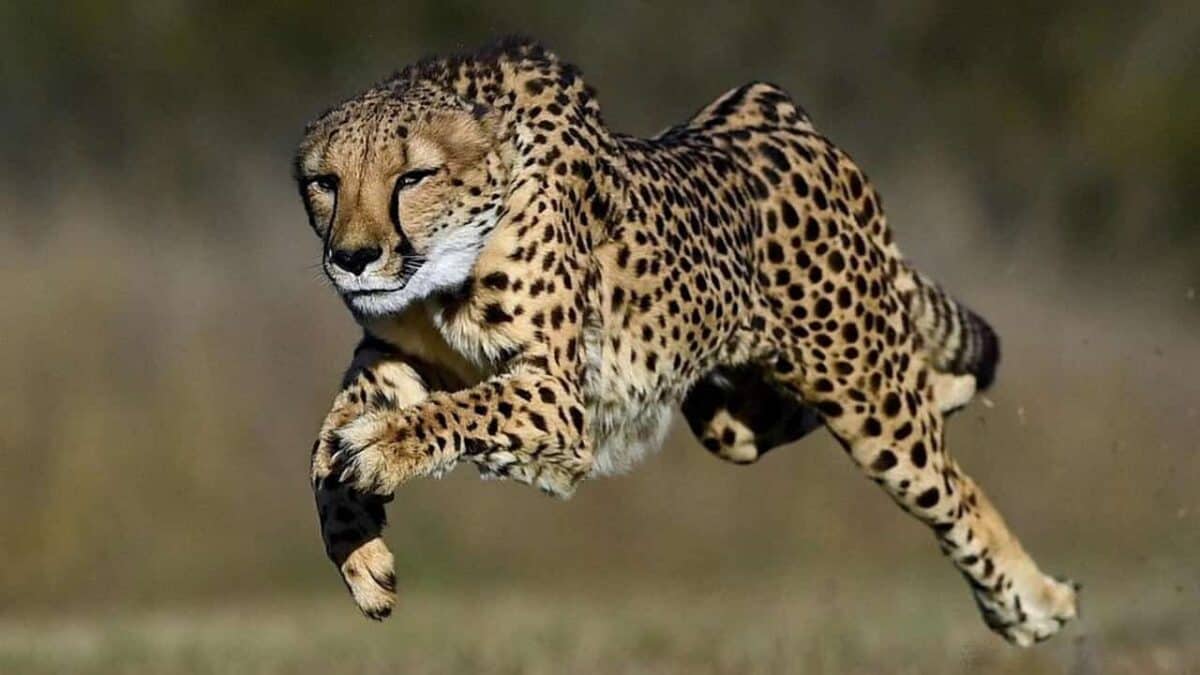
The American cheetah (Miracinonyx) represents a fascinating case of convergent evolution in North America’s Pleistocene ecosystems. Despite its common name, this remarkable predator wasn’t a true cheetah but rather a member of the puma lineage that evolved cheetah-like adaptations independently from its African counterparts. Two species are recognized: Miracinonyx inexpectatus, which retained some climbing abilities, and Miracinonyx trumani, which was more specialized for high-speed pursuit. These sleek cats weighed between 150-200 pounds and possessed long, slender limbs with partially retractable claws that provided better traction during high-speed chases.
The American cheetah likely specialized in hunting pronghorn antelope across the open plains of western North America. In fact, many biologists believe the exceptional speed of modern pronghorns—which can sustain speeds of over 50 mph despite no living predator being fast enough to catch them—evolved as a response to being hunted by American cheetahs. Unlike many other North American megafauna, the American cheetah appears to have disappeared slightly earlier than the main pulse of extinctions, vanishing around 12,000-13,000 years ago. Their extinction may have resulted from a combination of climate change affecting their prey base and competition with newly arrived human hunters targeting the same prey species.
Dire Wolf

The dire wolf (Aenocyon dirus) has captured popular imagination through fiction, but the reality of this prehistoric predator is even more fascinating. Recently reclassified into its own genus based on genetic evidence, the dire wolf was not a true wolf but rather the last member of an ancient lineage that evolved in the Americas. They were roughly 25% larger than modern gray wolves, weighing up to 175 pounds, with more robust skulls and powerful jaws capable of generating bone-crushing bite force. Their teeth and jaw structure suggest they were specialized for taking down large prey and processing carcasses more thoroughly than modern wolves.
Dire wolves were among the most common predators in Pleistocene North America, with over 4,000 individuals recovered from the La Brea Tar Pits alone. These fossils reveal that dire wolves frequently suffered from broken teeth and other injuries, suggesting a dangerous lifestyle that involved confrontations with large, struggling prey. Unlike many other North American megafauna that ranged into Beringia (the land bridge connecting Alaska and Siberia), dire wolves appear to have been restricted to the Americas, never crossing into Asia. Recent DNA studies have shown that despite their physical similarities to gray wolves, dire wolves were genetically isolated from them for millions of years and could not interbreed. They disappeared around 10,000 years ago as their large prey base diminished, leaving gray wolves as North America’s dominant canid predators.
Saber-Toothed Cat

The saber-toothed cat Smilodon fatalis stands as one of the most iconic predators of ice age North America, instantly recognizable by its dramatically elongated upper canine teeth that could reach up to 7 inches in length. Despite popular depictions, Smilodon was not closely related to tigers or lions but belonged to a separate lineage of cats that evolved their distinctive saber teeth independently. These muscular predators were built for power rather than speed, with stocky limbs, a robust neck, and powerful forelimbs that were likely used to wrestle prey to the ground before delivering a fatal bite to the throat or belly with their specialized teeth.
Smilodon was sexually dimorphic, with males weighing up to 600 pounds and females somewhat smaller. Fossil evidence suggests they were social animals that lived in groups similar to modern lions, with injured individuals showing signs of having survived and healed from serious wounds—something only possible with group support. They likely specialized in hunting larger, slower prey such as bison, camels, and ground sloths in the woodlands and mixed habitats of what is now the United States and Mexico. Over 2,000 Smilodon individuals have been recovered from the La Brea Tar Pits, providing unparalleled insights into their anatomy and lifestyle. As with many North American megafauna, Smilodon disappeared around 10,000 years ago as their prey base diminished and habitats changed at the end of the last ice age.
American Camel
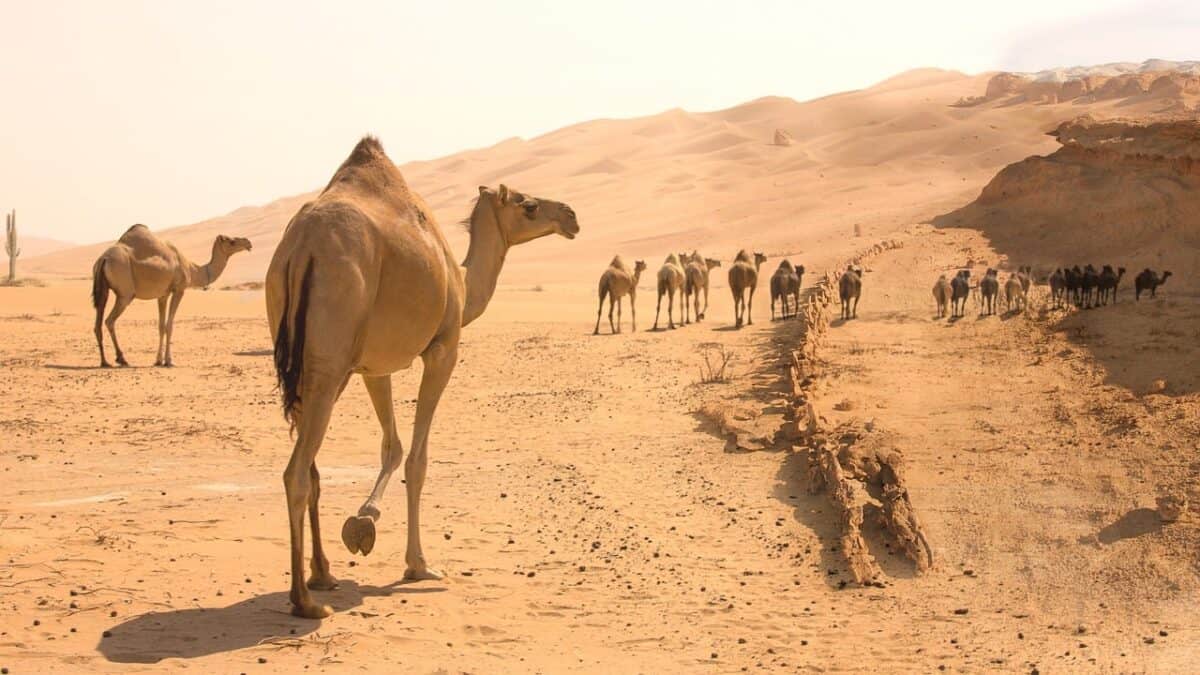
Few people realize that camels actually originated in North America before spreading to Asia and eventually Africa. During the Pleistocene, several camel species roamed the continent, with Camelops hesternus (the western camel) being among the most widespread and successful. Standing about 7 feet tall at the shoulder and weighing up to 1,800 pounds, these camels were similar in size to modern dromedaries but had longer legs and likely lacked humps. Their teeth and digestive system were adapted to process a wide variety of vegetation, allowing them to thrive across diverse habitats from Mexico to Alaska.
American camels possessed the split upper lip characteristic of modern camels, which aids in selective browsing, and had broad, two-toed feet that helped them traverse both soft and firm ground. Unlike their desert-dwelling modern relatives, Pleistocene North American camels inhabited grasslands, savannas, and open woodlands. Archaeological evidence suggests early humans hunted these animals, with butchery marks found on camel bones at several sites dating to around 13,000 years ago. Despite their successful adaptation to North American environments over millions of years, all camel species disappeared from the continent approximately 10,000 years ago. Fortunately, their relatives that had previously migrated across the Bering Land Bridge survived in Asia and Africa, preserving the camelid lineage that began in North America over 40 million years ago.
Stag-Moose
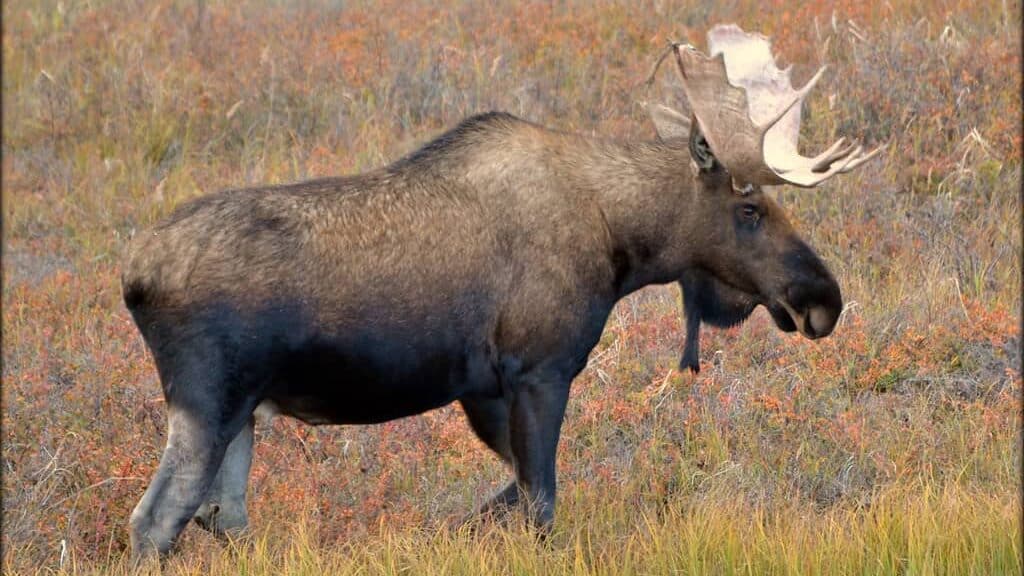
The stag-moose (Cervalces scotti), sometimes called the elk-moose, represented a unique branch of the deer family that combined features of both elk and moose. Standing about 7 feet tall at the shoulder and sporting an impressive set of palmate antlers that could span up to 8 feet, these magnificent animals were among the largest deer to ever exist. Unlike modern moose, whose antlers extend sideways, the stag-moose had antlers that projected forward and upward, creating a distinctive silhouette unlike any living cervid. Their legs were proportionally longer than those of modern moose, suggesting they were adapted for moving through deep snow and marshy terrain.
Stag-moose inhabited the forests, wetlands, and forest edges of northeastern North America during the late Pleistocene, with fossils primarily found in what is now the Great Lakes region, New England, and southern Canada. Their teeth indicate they were browsers that fed on leaves, twigs, and aquatic vegetation, similar to modern moose. One particularly well-preserved specimen discovered in Ohio had preserved stomach contents containing aquatic plants. Despite being well-adapted to cold environments, stag-moose disappeared around 11,500 years ago as the ice sheets retreated northward and forests changed in composition. Their extinction slightly preceded that of many other North American megafauna, suggesting they may have been particularly sensitive to the ecological changes occurring at the end of the ice age.
Shasta Ground Sloth

The Shasta ground sloth (Nothrotheriops shastensis) was smaller than its giant relatives but still impressive by modern standards, weighing around 550 pounds and standing about 5 feet tall. These medium-sized ground sloths were primarily found in the southwestern United States and northern Mexico, where they inhabited desert and semi-arid environments. Unlike the larger ground sloths that could rear up on their hind legs to reach high vegetation, Shasta ground sloths were more specialized for browsing on desert shrubs and succulents at ground level, using their powerful claws to dig for roots and tubers during dry periods.
One of the most remarkable discoveries related to the Shasta ground sloth comes from cave sites such as Rampart Cave in Arizona and Gypsum Cave in Nevada, where well-preserved dung deposits (coprolites) were found. These remains have provided scientists with invaluable insight into their diet, behavior, and the ancient desert ecosystems they once inhabited. Radiocarbon dating indicates that the Shasta ground sloth survived until about 10,000 years ago, overlapping with the arrival of early human populations in North America. While they were likely affected by climate shifts and the loss of suitable habitat at the end of the Ice Age, human hunting may have also played a role in their extinction. Today, their preserved remains serve as important clues to understanding the unique adaptations of prehistoric desert life.
Conclusion:
The massive creatures that once roamed North America—like the mammoth, short-faced bear, and saber-toothed cat—paint a picture of a continent teeming with awe-inspiring megafauna. These extinct giants played essential roles in shaping ancient ecosystems, serving as top predators, keystone herbivores, and environmental engineers. Their disappearance, often linked to a combination of climate change and early human activity, marked a turning point in the natural history of the continent.
Though these giants are long gone, their fossilized remains continue to teach us about evolution, extinction, and the resilience of life. Studying these creatures helps scientists better understand past ecosystems and the impacts of environmental shifts—knowledge that is increasingly important in our changing world today. Remembering North America’s extinct giants also reminds us of the fragile balance that sustains all life, and the importance of protecting the biodiversity we still have.

As a little kid, I fell in love with nature, wildlife, and animals. Living in the USA, South Africa, Italy, China and Germany gave me the opportunity to discover the world's Wildlife. My favorite animals are Mountain Gorillas, Siberian Tigers, and Great White Sharks.
I'm a certified PADI Open Water Diver, went to Everest Base Camp and Trekked Gorillas in Uganda. I hold a Master of Science in Economics and Finance.
Please send any feedback to feedback@animalsaroundtheglobe.com
- 10 Most Elusive Sea Creatures in the Gulf of Mexico - July 19, 2026
- 10 Ocean Conditions Sharks Prefer And 3 They Dislike - July 19, 2026
- The 10 Most Remote US Locations Where Wild Animals Still Rule - July 19, 2026